16 Kitchen Cabinet Color Ideas That Transform the Entire Kitchen
The kitchen cabinet color is the most impactful single paint decision in any home. Cabinets cover more surface area than any wall in the kitchen. They are seen from every position in the room. They determine the kitchen’s entire visual register before a single accessory is added.
Most people choose cabinet colors from fear. They go white because white is safe. They go grey because grey is neutral. They end up with a kitchen that is functional and forgettable.
These 16 ideas approach cabinet color with the conviction that produces kitchens worth remembering.
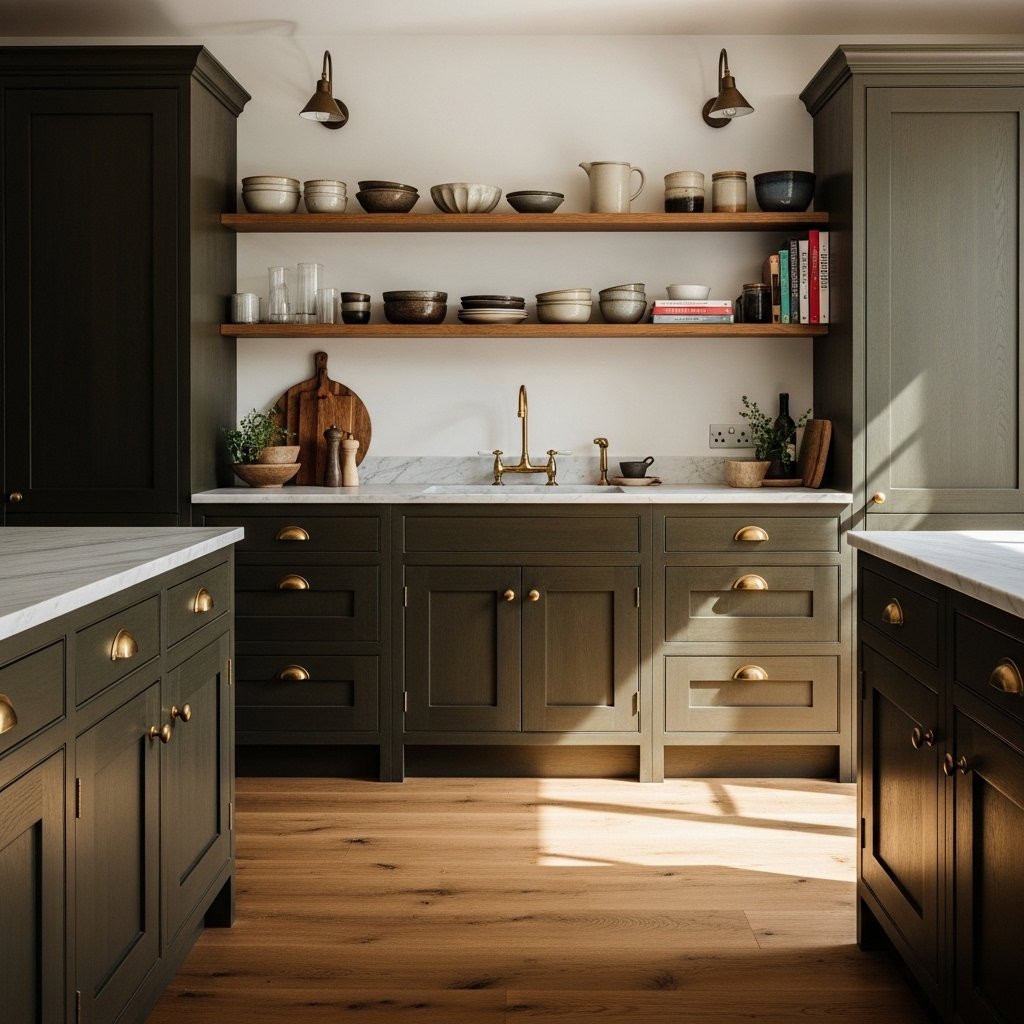
1. Deep Forest Green: The Kitchen That Looks Like It Has Always Been There
Forest green kitchen cabinets create the specific impression that the kitchen was not installed but grew into the house over many years. The color has the depth and complexity of a living material rather than a painted surface.
The correct forest green for kitchen cabinets has brown undertones that prevent it reading as cool or clinical. A green that leans blue reads as a bathroom choice. A green that leans yellow reads as institutional. The right kitchen forest green is the color of moss on wet stone, of ivy on a garden wall, of dense woodland in October.
Against forest green cabinets, warm brass hardware performs at its absolute best. The contrast between the dark organic green and the warm reflective brass creates a material pairing that is used in every high-end kitchen currently being designed for a reason.
Natural stone countertops in warm white, cream, or pale grey allow the green to be the dominant story. The countertop supports rather than competes.
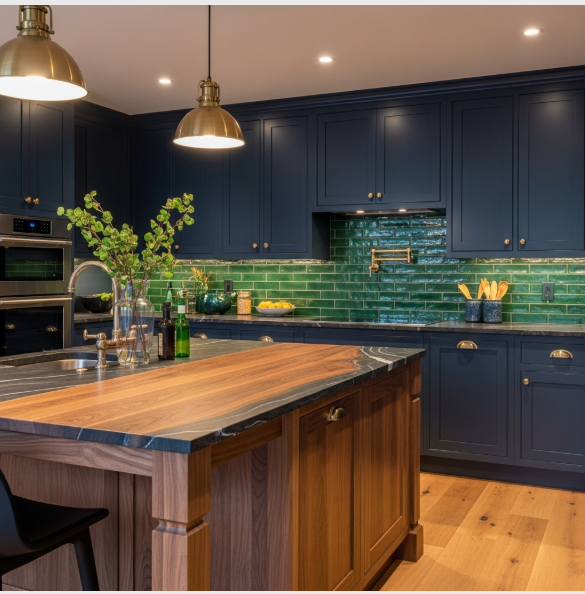
2. Warm Navy Blue: Sophisticated Without Being Cold
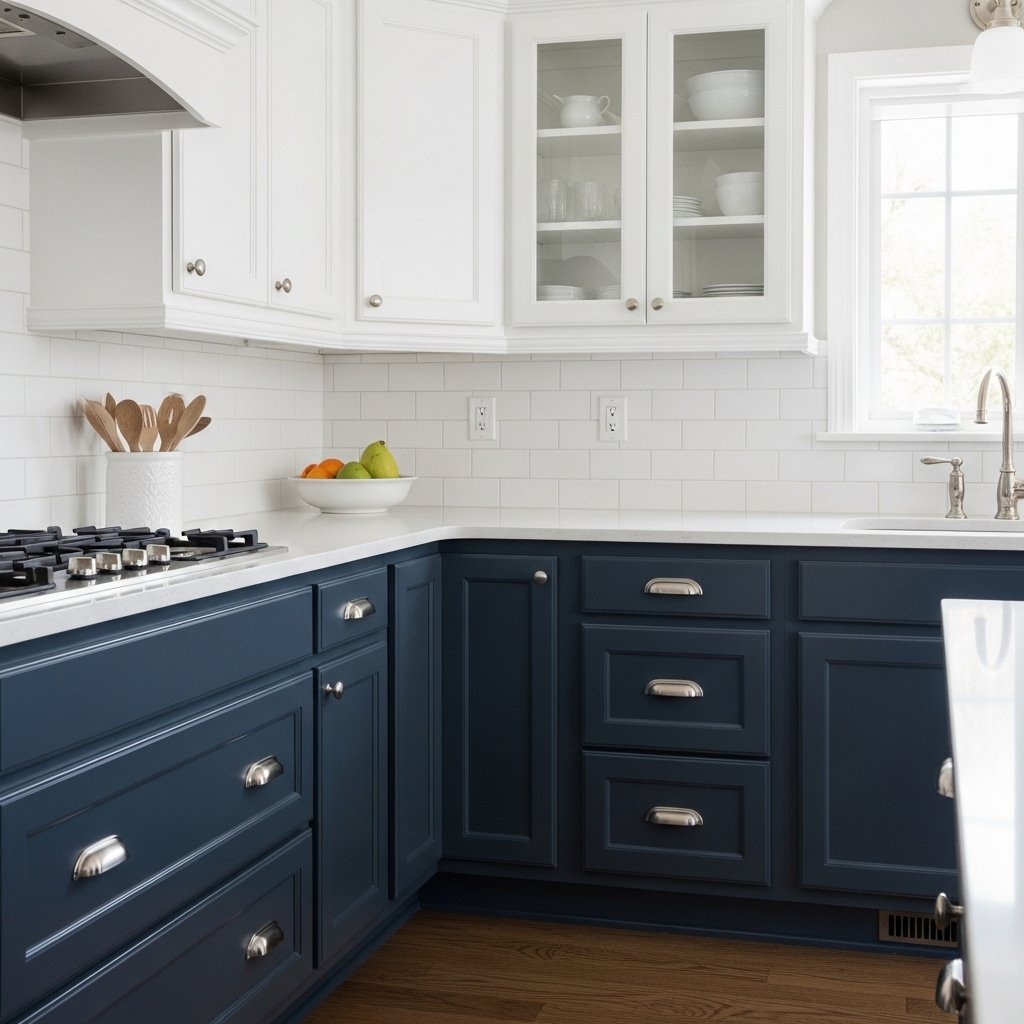
Navy blue kitchen cabinets in the correct warm tone, a blue with sufficient red content to prevent it reading as cold, create a kitchen with the sophistication of a deep color and the approachability of a warm one.
The distinction between warm navy and cold navy is critical in a kitchen. A cold navy, blue-grey with no warm undertone, creates a kitchen that feels clinical under artificial light and stark under natural light. A warm navy with red and black content feels enveloping in both.
White upper cabinets paired with navy lower cabinets create a classical two-tone kitchen that is simultaneously formal and domestic. The navy grounds the room. The white lifts it. The division between the two at counter height creates a natural visual horizon.
Polished nickel or brushed chrome hardware suits warm navy in a way that brass does not. The slightly cool silver of nickel complements the blue’s undertone rather than competing with it.
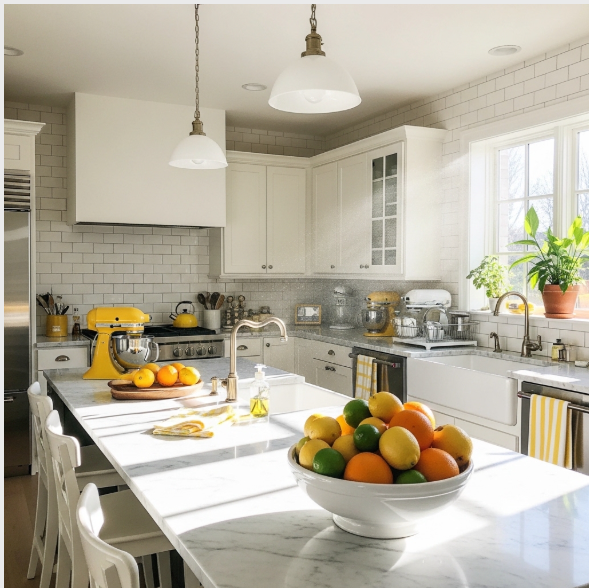
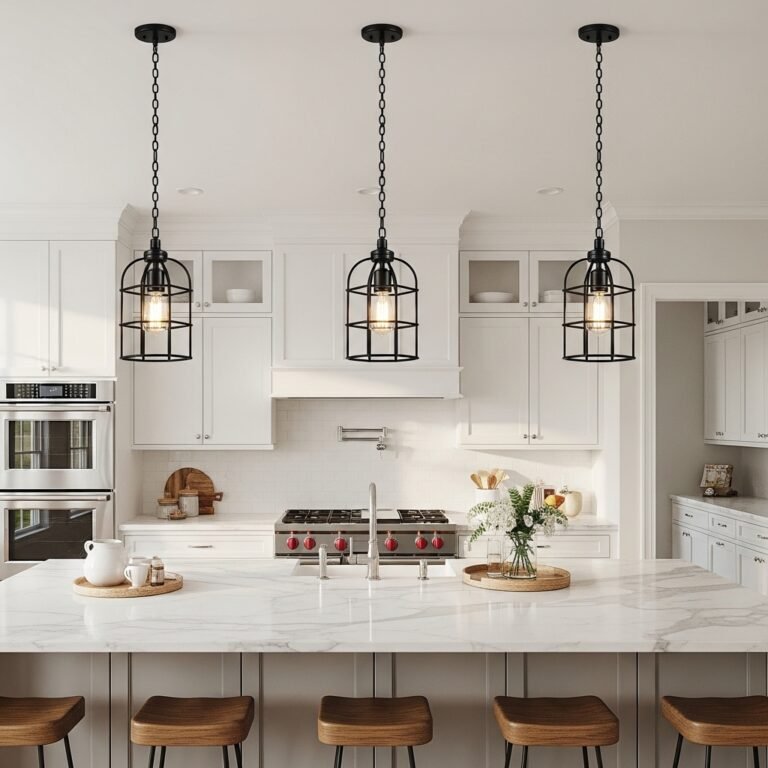
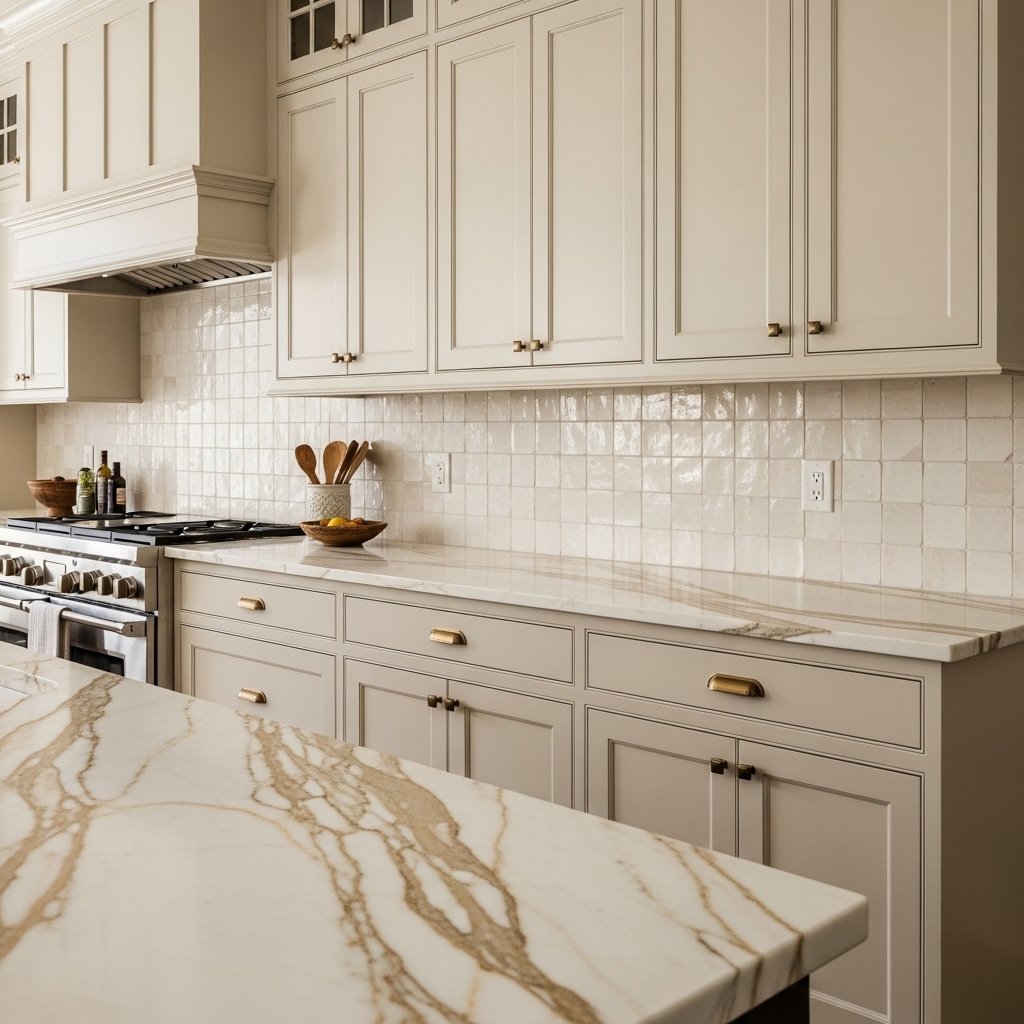
3. Warm White: The Correctly Executed Classic
White kitchen cabinets are not a neutral choice. They are a specific color decision that requires as much thought as any other cabinet color to execute correctly.
The specific white matters completely. A cool, blue-toned white creates a kitchen that feels cold under artificial light and flat under natural light. A warm, slightly cream-toned white with yellow or pink undertones creates a kitchen that responds to light beautifully at every hour of the day.
The finish matters equally. Flat matte white on kitchen cabinets marks and shows dirt immediately. A satin or eggshell finish in the correct warm white creates a surface that is wipeable, durable, and visually richer than matte.
Warm white cabinets earn their place through the quality of the countertop, the hardware, and the backsplash chosen alongside them. Against warm white, aged brass hardware, a veined marble countertop, and a handmade zellige backsplash create a kitchen of genuine beauty. Against warm white with chrome hardware and a plain quartz countertop, the cabinets simply disappear.
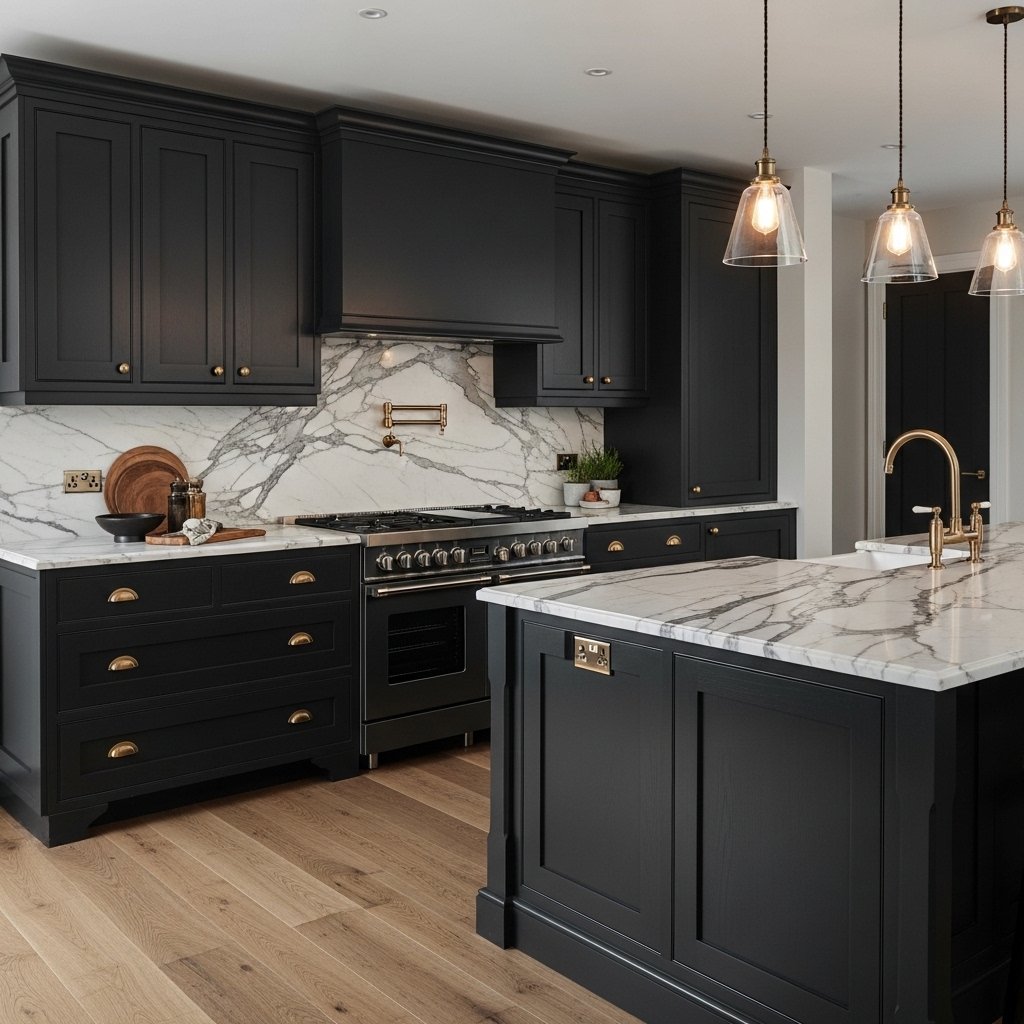
4. Matte Black: The Kitchen That Commands Attention
Matte black kitchen cabinets are the highest commitment cabinet color decision available and the one with the highest potential return when executed correctly.
Every element in a matte black kitchen must be correct because the cabinets provide no visual forgiveness. The countertop choice, the hardware, the backsplash, the flooring, and the lighting are all fully visible against the black surface without the diffusing effect that lighter colors provide.
The countertop against matte black cabinets needs warmth: white marble with warm veining, warm wood butcher block, or honed travertine. A cold white quartz against matte black creates a kitchen that reads as graphic but not warm.
Hardware in matte black matching the cabinets creates a monochromatic statement. Hardware in warm brass or aged gold creates the material contrast that reveals the quality of both.
Lighting is the critical variable. Matte black cabinets in inadequate light create a dark, heavy kitchen. The same cabinets with quality under-cabinet lighting, good pendant lights, and adequate natural light create a kitchen of extraordinary character.
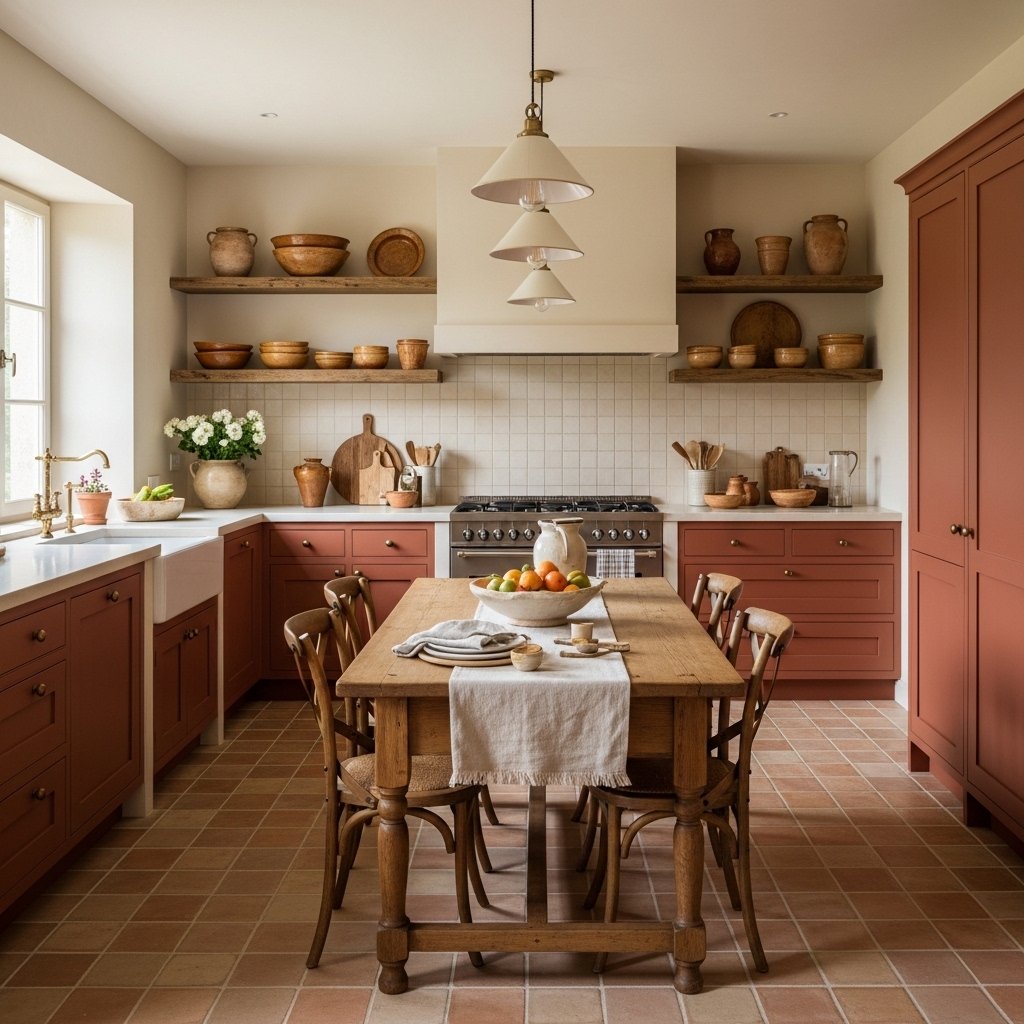
5. Warm Terracotta: The Kitchen That Feels Like Summer
Terracotta kitchen cabinets are the 2026 direction that most surprises people who see them in person and then cannot imagine why they considered anything else.
The warmth of terracotta in a kitchen, the room with the most activity, the most warmth from cooking, and the most natural gathering, is exactly appropriate to the space. The color feels as though it belongs in a kitchen the way no blue or grey color family does.
The specific terracotta for kitchen cabinets must have sufficient brown content to read as earthy rather than orange. A terracotta that leans red becomes aggressive. A terracotta that leans orange becomes demanding. The correct kitchen terracotta has the warm, grounded quality of fired clay.
Cream or natural stone countertops, reclaimed timber shelves, and simple white or cream tile backsplash allow the terracotta to be the room’s color story without visual competition.
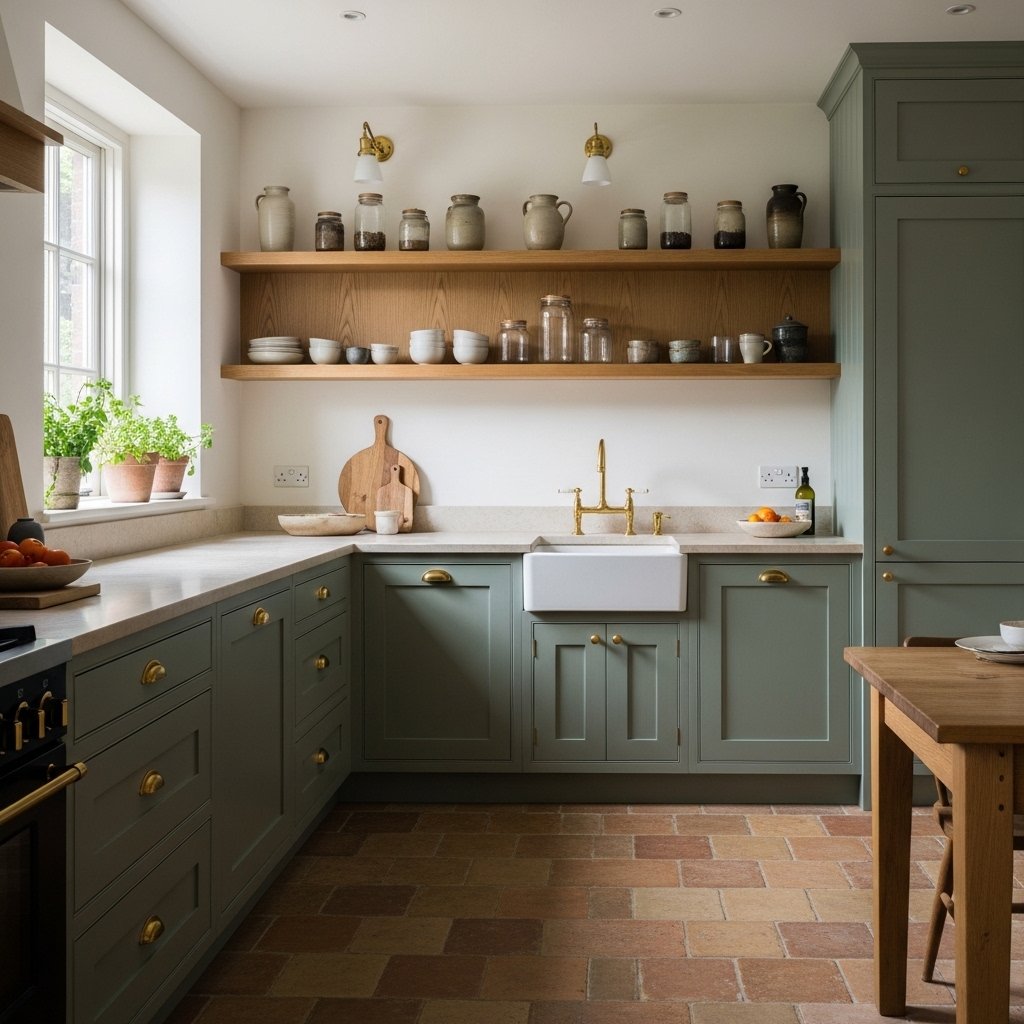
6. Sage Green: The Palette of Every Award-Winning Kitchen in 2026
Sage green kitchen cabinets are the color decision most likely to be described as “classic” in five years by the people currently calling it “on trend.” The reason is that sage green is genuinely beautiful in a kitchen context rather than merely fashionable.
The kitchen-specific quality of sage green is its relationship with natural light. Morning light makes sage green appear fresh and botanical. Afternoon light makes it appear warm and organic. Evening artificial light makes it appear deep and sophisticated. The color serves every light condition the kitchen encounters.
Sage green pairs with warm natural materials more naturally than any other cabinet color: warm oak, warm stone, terracotta, brass, and linen all belong beside sage green without requiring justification.
Specify the finish as satin rather than gloss. Gloss sage green cabinets read as too precious. Satin sage green reads as genuinely domestic.
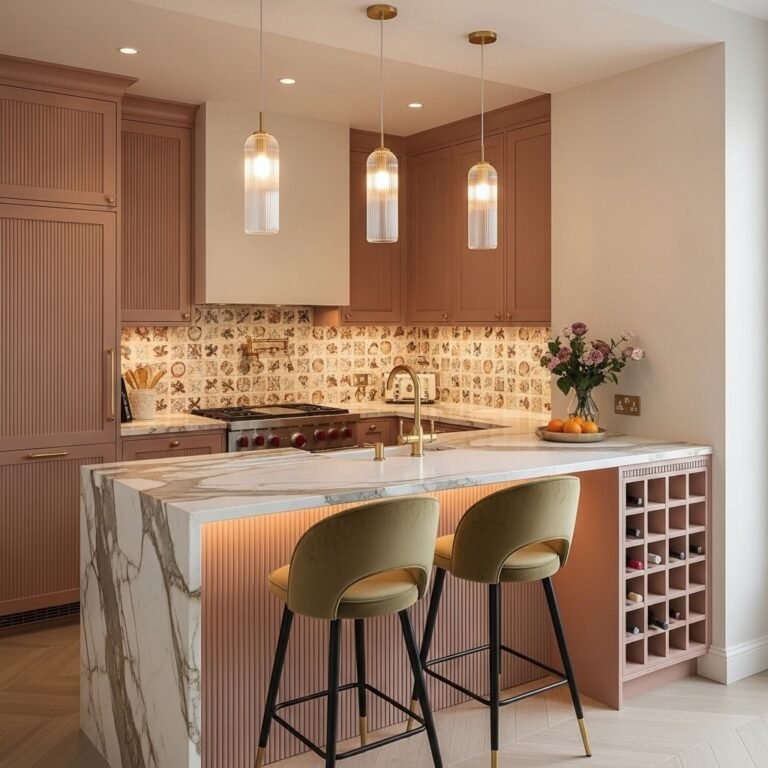
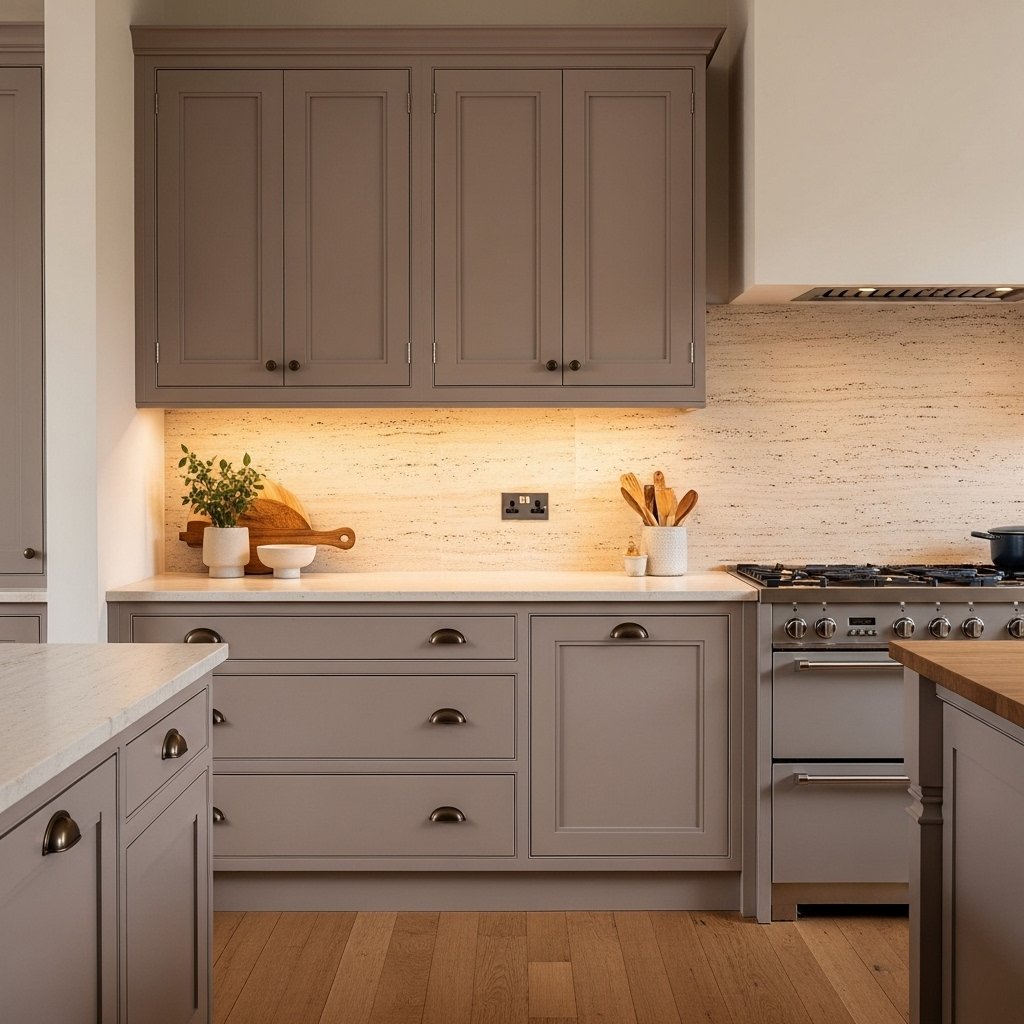
7. Dusty Rose: The Unexpectedly Perfect Kitchen Color
Dusty rose kitchen cabinets are the 2026 cabinet choice that surprises everyone who expected pink to be wrong for a kitchen and discovers it to be completely right.
The specific dusty rose that works for kitchen cabinets has significant grey content, the kind of pink that reads as a warm neutral in some lights and as a sophisticated color in others. Not sweet pink. Not bright pink. The dusty, complex rose of aged plaster or old velvet.
The kitchen designed around dusty rose cabinets tends toward a specific material language: warm white countertops, aged bronze or warm brass hardware, natural stone backsplash, and warm timber floors. These materials respond to the pink’s warmth rather than fighting its specific tone.
Women and men who live with dusty rose cabinets consistently describe the kitchen as the warmest and most welcoming room in the house. The color is working at a psychological level that the word “pink” does not communicate.
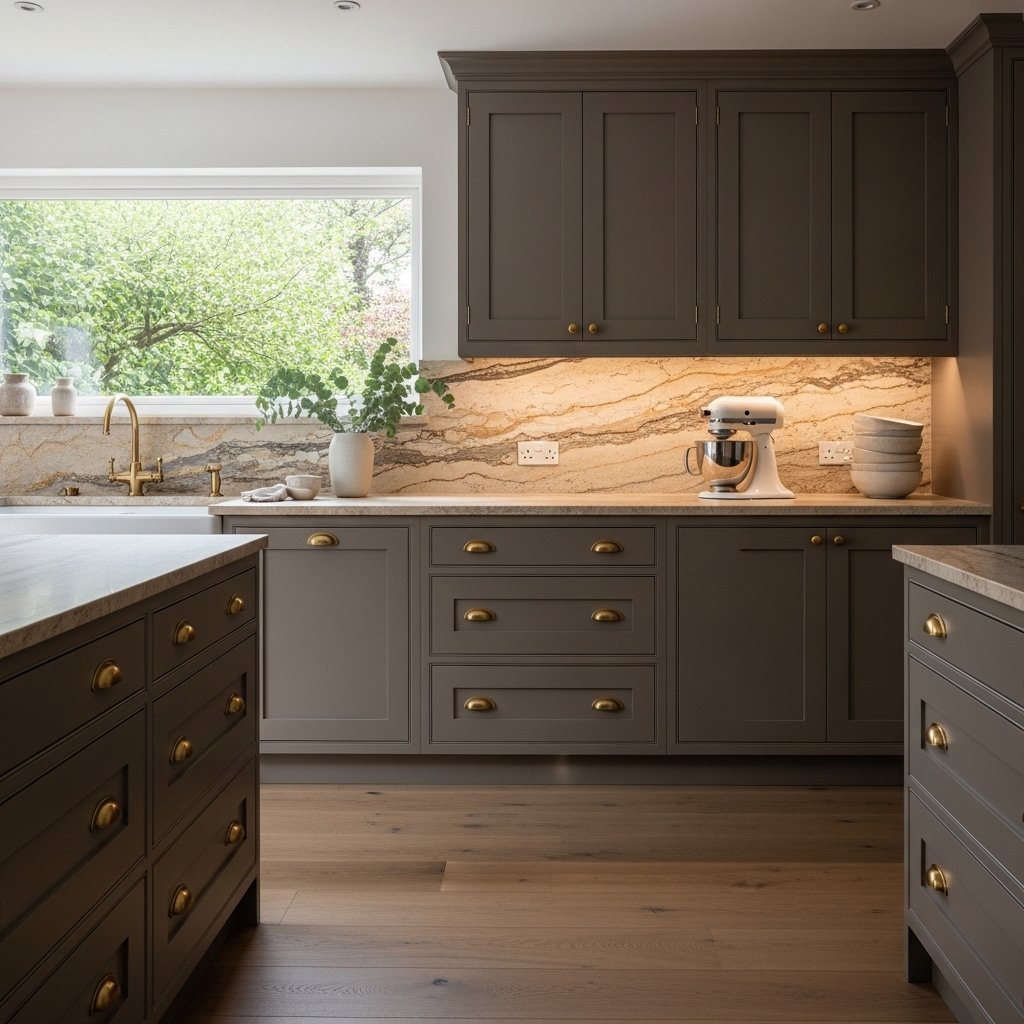
8. Charcoal Grey: The Workhorse of the Sophisticated Kitchen
Warm charcoal grey kitchen cabinets occupy the space between the drama of black and the softness of lighter tones. They are the choice for people who want depth and sophistication without the full commitment of matte black.
The critical quality in charcoal grey is warmth. A cool, blue-toned charcoal grey is the most common and the least effective kitchen cabinet choice in this family. It creates a kitchen that reads as cold, office-like, and slightly dated.
A warm charcoal grey with brown, red, or green undertones creates a kitchen with genuine depth that reads as considered rather than default. The warmth in the undertone changes the relationship of the grey with every other material in the kitchen.
Against warm charcoal, bright white countertops create high contrast and a very graphic kitchen. Warm stone countertops create a softer, more enveloping combination. The same cabinet color, two different countertop choices, two categorically different kitchens.
9. Deep Teal: The Kitchen That Earns Every Compliment
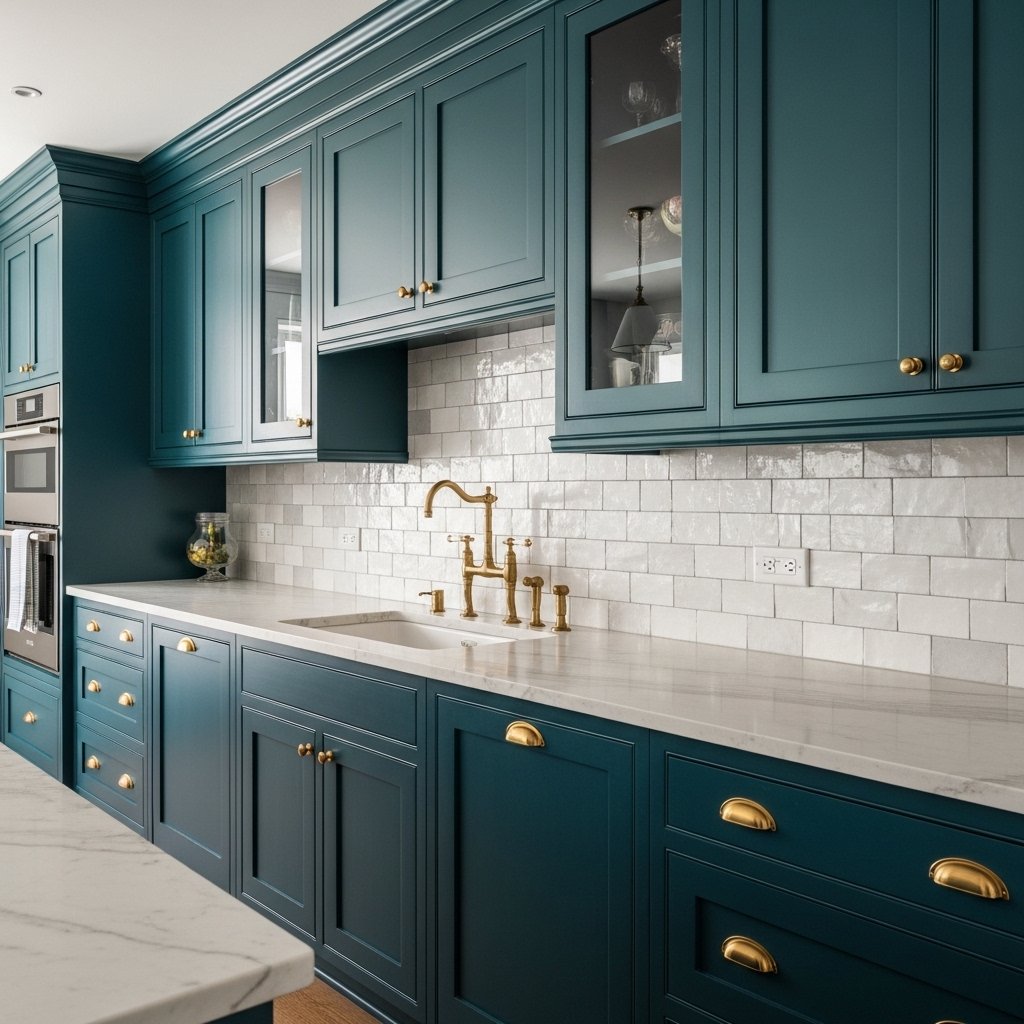
Deep teal kitchen cabinets create a room that guests consistently comment on and consistently fail to identify precisely. They know it is blue-green. They cannot quite name the specific color. This uncertainty is part of the teal’s sophistication: it shifts between blue and green depending on the light and the viewing angle.
The depth of teal matters: a pale teal reads as a beach house choice. A mid teal reads as a corporate choice. A deep teal, rich and saturated, reads as a genuine design decision.
Against deep teal cabinets, warm brass hardware creates the material contrast that the color’s complexity requires. The warmth of brass resolves the teal’s blue-green tension toward warmth rather than coldness.
Marble in white with grey veining or stone in warm cream tones suit deep teal countertops correctly. A cool white quartz pushes the kitchen toward cold. A warm stone brings it back toward warmth.
10. Two-Tone Cabinets: Dark Lower, Light Upper
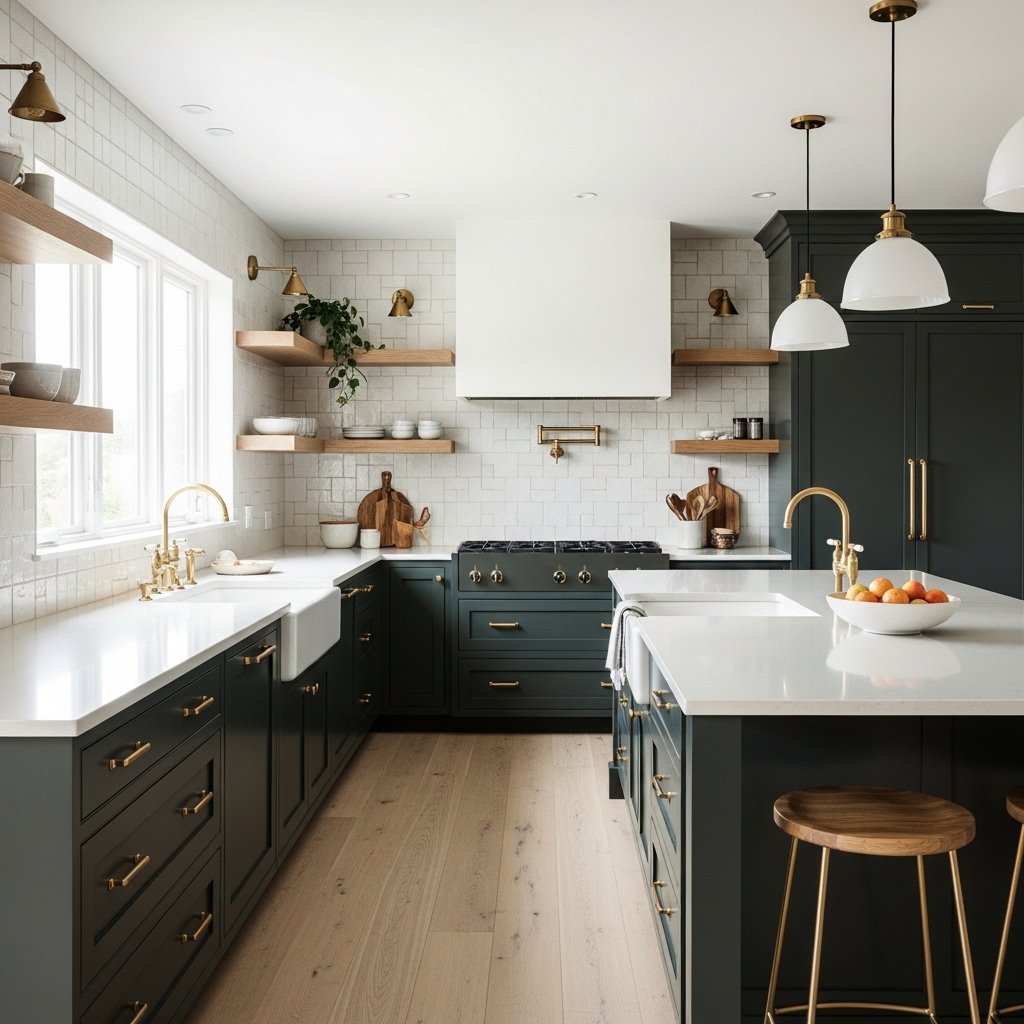
The two-tone cabinet kitchen, with deeper color on the lower cabinets and a lighter tone on the upper cabinets, is the most architecturally sophisticated cabinet color decision available.
The lower cabinets in a deep tone, forest green, navy, charcoal, or deep teal, create a visual ground for the kitchen’s work zone. The upper cabinets in white, cream, or a lighter tone of the lower cabinet color lift the room’s overhead zone and prevent the deep color from creating a heavy, enclosed atmosphere.
The relationship between the two tones should be considered rather than simply contrasting. A forest green lower cabinet with a warm white upper cabinet creates warmth. The same forest green with a cool white creates contrast. Both work. They create different kitchens from the same cabinet choice.
The open shelf option, replacing upper cabinets entirely with floating shelves in natural timber, is the most current direction for the two-tone kitchen. Dark lower cabinets, no upper cabinets, floating timber shelves above, is the kitchen specification appearing in every significant interior publication in 2026.
11. Warm Cream: Softer and More Beautiful Than White
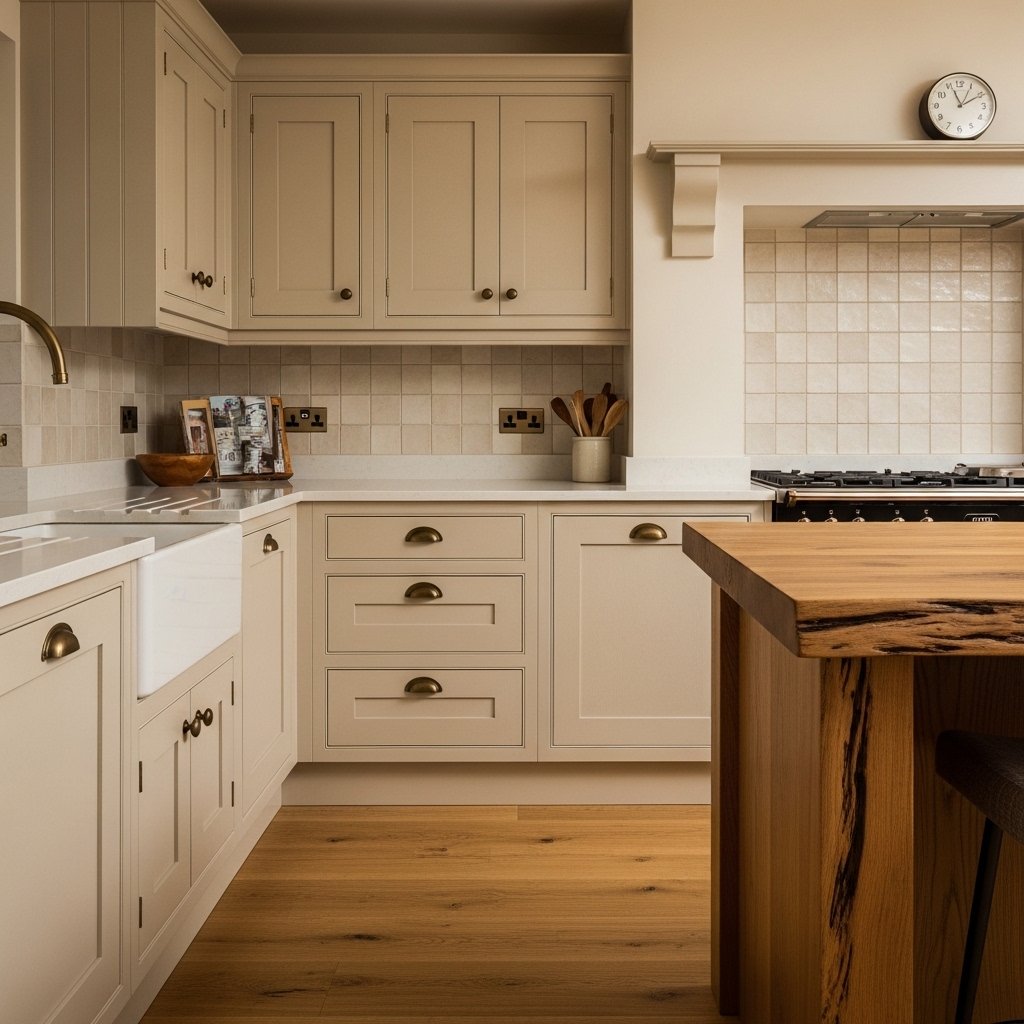
Warm cream kitchen cabinets are chosen by people who looked at white cabinets and understood that white was not quite warm enough for the kitchen they wanted.
Cream, with its yellow and sometimes pink undertones, creates a kitchen that is consistently warm at every hour and in every light condition. Cream cabinets at 7am in cool morning light still read as warm. The same kitchen with white cabinets at the same hour reads as cool and slightly clinical.
The difference between cream and warm white is subtle in a paint chip and significant on a kitchen full of cabinets. Cream has more yellow. It reads as domestic rather than architectural. It suits kitchens pursuing warmth, comfort, and the quality of a room that has been lived in.
Warm cream cabinets with aged brass hardware, a warm oak floor, and a handmade ceramic backsplash create a kitchen that feels genuinely domestic in the best sense.
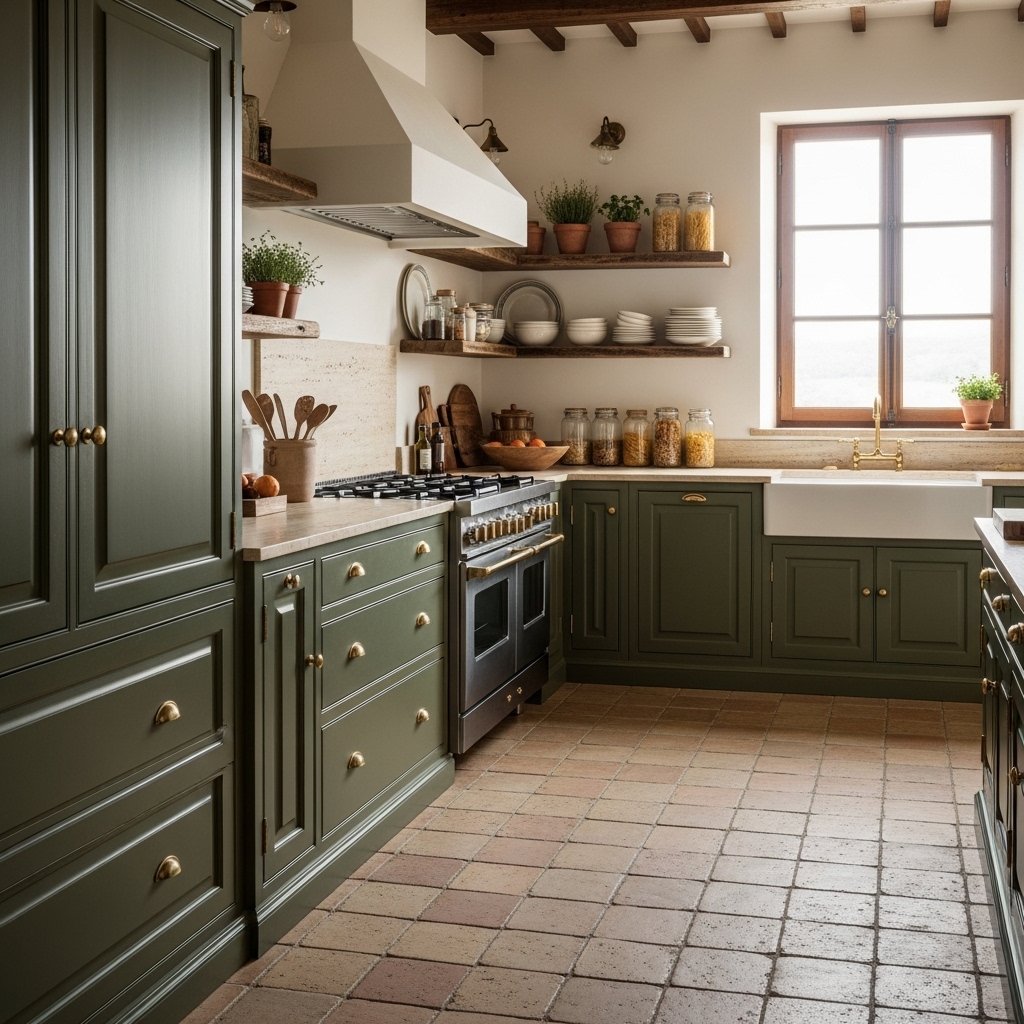
12. Olive Green: The Color That Ages Like Fine Wine
Olive green kitchen cabinets are the choice for people who want green but want something more complex, more earthy, and more time-resistant than the brighter greens currently leading the category.
Olive green has yellow, brown, and grey all simultaneously present. It is the most complex of the green cabinet tones and the one most likely to look more beautiful over time as the eye develops a relationship with its depth rather than exhausting the color’s simpler surface quality.
Against olive green cabinets, unlacquered brass hardware ages at a comparable pace. The two materials develop together over time: the brass darkening and patinating, the olive green deepening slightly in tone. A kitchen that is more beautiful after ten years of use than on the day of installation is a genuinely well-designed kitchen.
Travertine countertops and a warm terracotta tile floor complete the earthy, Mediterranean palette that olive green naturally belongs to.
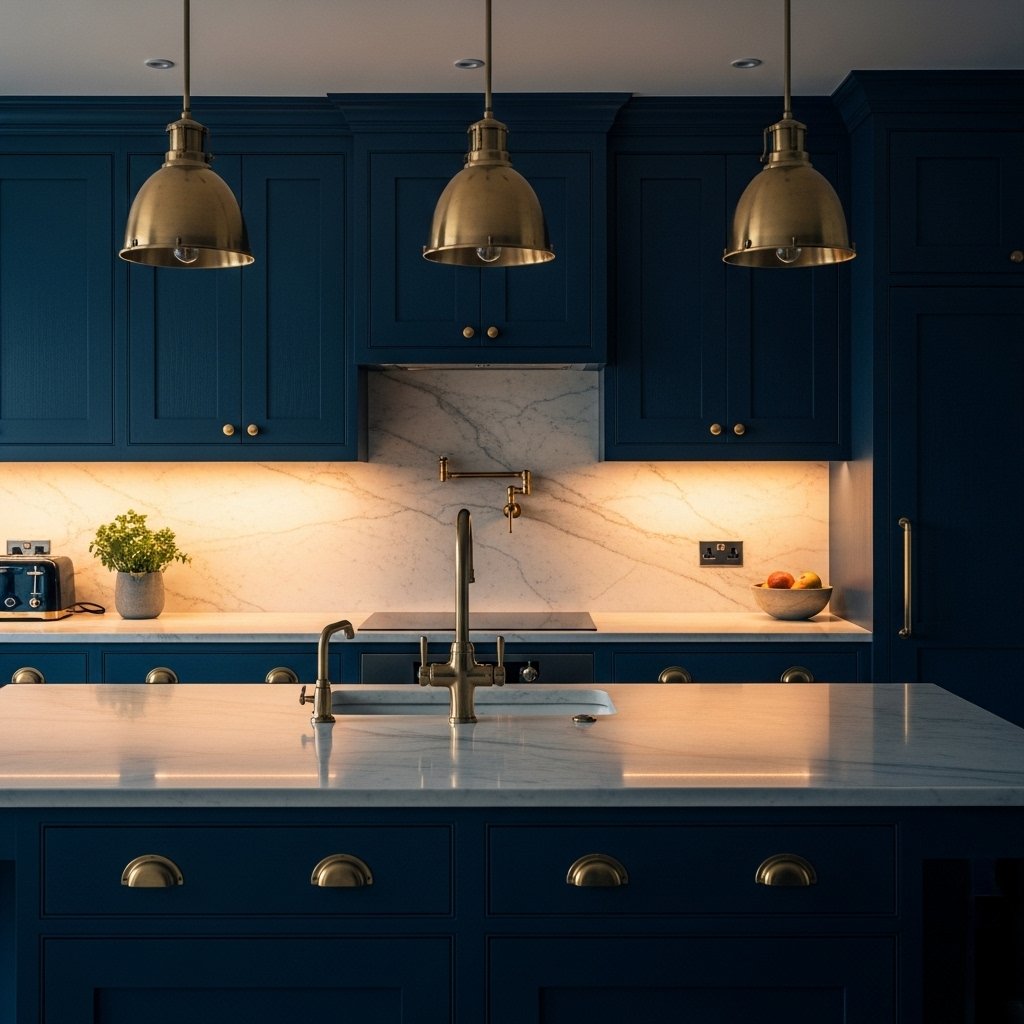
13. Midnight Blue: The Kitchen That Feels Like a Jewel Box
Midnight blue kitchen cabinets, a blue so deep it approaches black in low light and reveals its blue depth in natural light, create a kitchen with the jewel-like richness of a dark interior that has been designed with complete confidence.
The midnight blue that works for kitchens has sufficient black content to give it weight and depth. A blue that is too pure or too bright reads as a child’s bedroom choice. A midnight blue with significant black content reads as sophisticated, expensive, and genuinely architectural.
In a galley kitchen or a kitchen with adequate natural light, midnight blue cabinets create a corridor of deep color that makes the space feel designed end to end. The entry into a midnight blue kitchen is an experience rather than a transit.
Warm lighting is mandatory. Midnight blue cabinets in cool or inadequate light create oppressive darkness. Under-cabinet LED strips in warm white, warm pendant lights above, and natural light maximized create a kitchen where the midnight blue performs at its intended level.
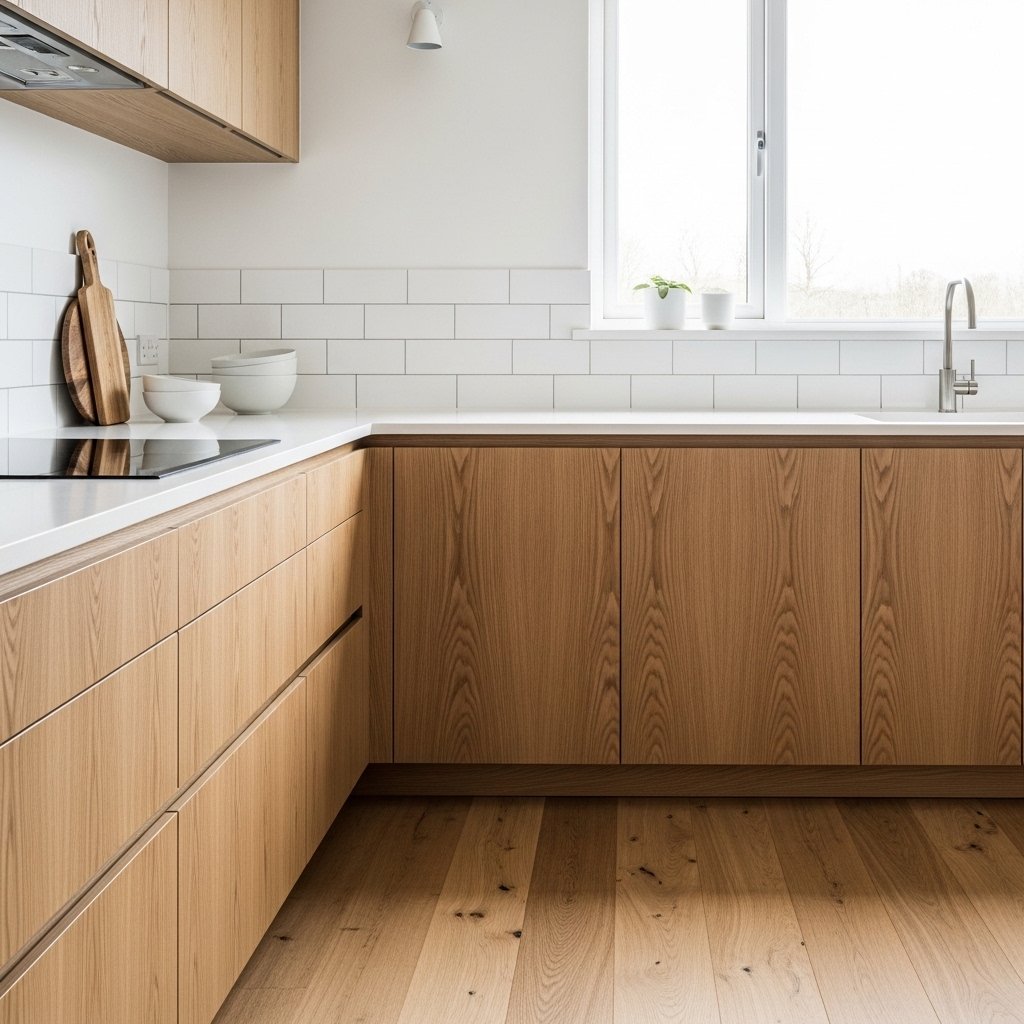
14. Raw Timber: The Kitchen Without Paint
A kitchen with unpainted timber cabinet fronts is not a kitchen that forgot to be painted. It is a kitchen that chose material honesty over color and communicates that choice with confidence.
Natural oak, walnut, or ash cabinet fronts with a clear oil or wax finish allow the grain, color variation, and natural character of the timber to be the kitchen’s primary visual material. No color competes with the wood’s own beauty.
The specific timber species determines the kitchen’s character. Oak in its natural honey tone creates a warm, Scandinavian-influenced kitchen. Walnut in its rich chocolate brown creates a warm, sophisticated kitchen. Ash in its pale, slightly grey tone creates a cool, contemporary kitchen.
Finger-pull or recessed handle profiles allow the timber face to remain uninterrupted by hardware. The cabinet face is pure material.
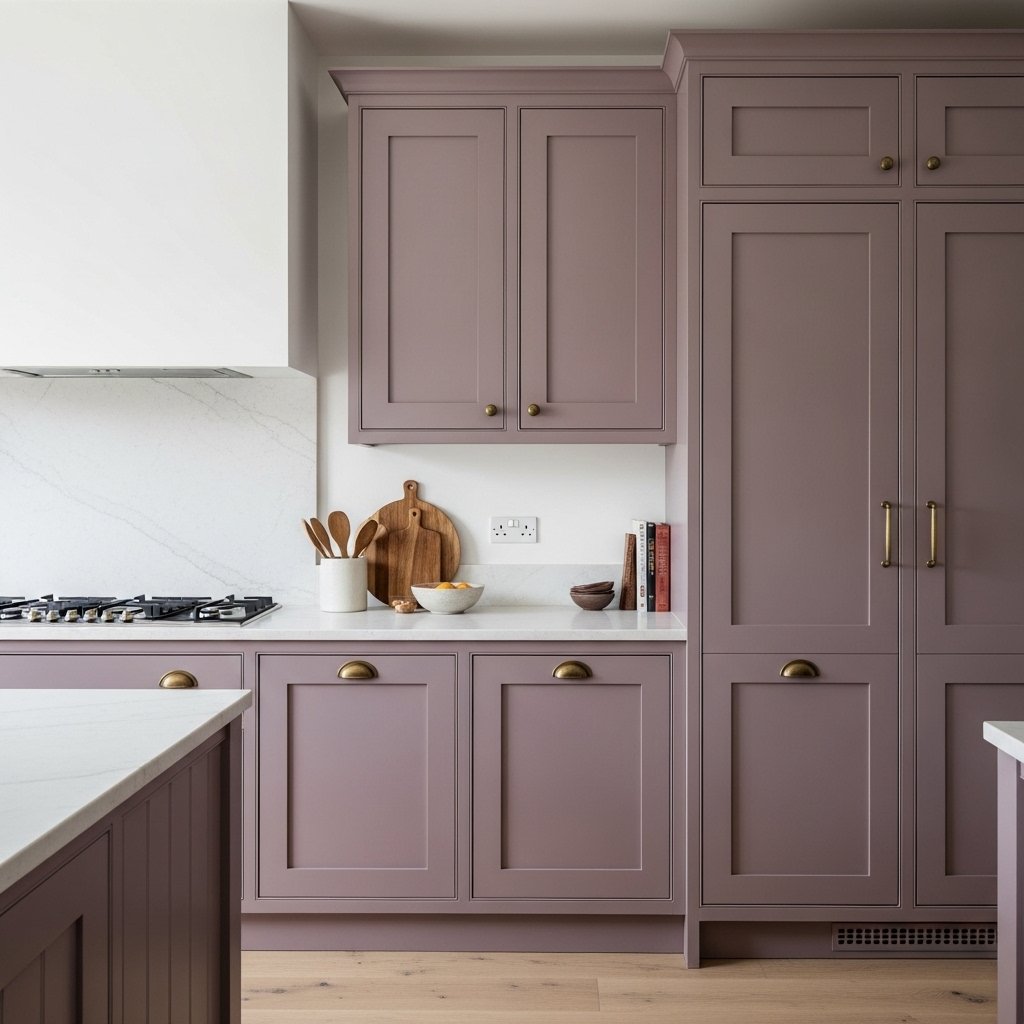
15. Warm Lilac: The Most Unexpected Correct Answer
Warm lilac kitchen cabinets are the 2026 direction that most people cannot imagine until they see it and then cannot unsee it as the obviously correct choice.
The specific warm lilac that works for kitchens has pink and grey content alongside the purple base. Not lavender, which reads as a bedroom scent. Not grape, which reads as aggressive. The kitchen lilac is dusty, complex, slightly faded, the color of wisteria petals in the second week of bloom.
Against warm lilac, aged brass hardware creates the most unexpected and most beautiful material pairing currently available in kitchen design. The warm brass resolves the lilac’s cool undertone toward warmth in a way that cool silver hardware does not.
The kitchen designed around warm lilac cabinets needs restraint in everything else: warm white walls, a simple countertop in natural stone, and minimal accessories. The color does the work. Everything else provides the context.
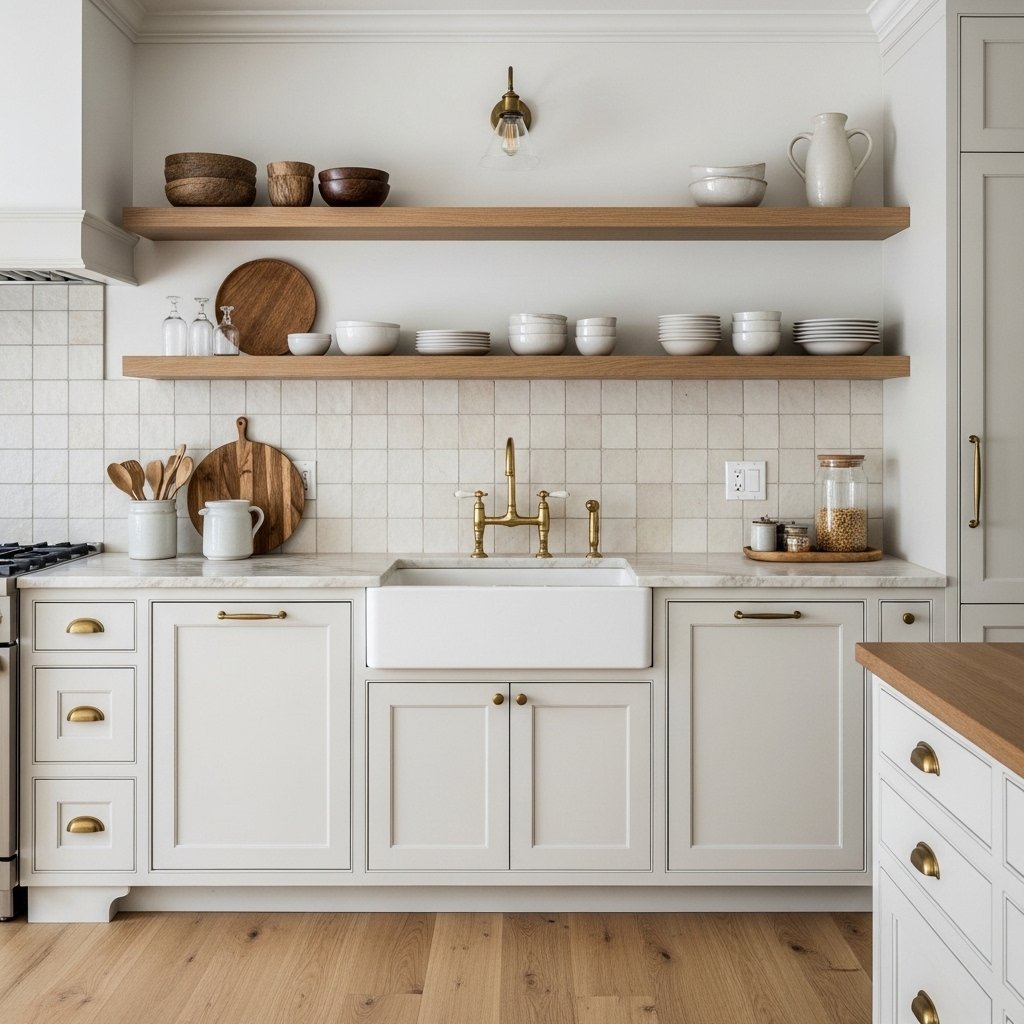
16. Bone and Aged Linen: The Anti-White White
Bone white and aged linen are the cabinet colors for people who looked at standard white and understood it was missing something without being able to name exactly what.
The missing quality is warmth. Bone, aged linen, and antique white all sit in the space between cream and white, warmer than white but not as overtly colored as cream. They have enough warm content to prevent coldness and enough lightness to prevent the kitchen from feeling enclosed.
These tones are particularly effective in kitchens that receive limited natural light. A north-facing kitchen in standard white reads as cold. The same kitchen in bone or aged linen reads as warm and slightly sun-touched even without direct sunlight.
The material combinations for bone and linen cabinets: natural timber shelves, aged brass hardware, warm stone countertops, and handmade ceramic tile backsplash. The anti-white white demands the same quality material companions as a genuinely colored cabinet and rewards them equally.