12 Home Office Setup Ideas That Make Work Feel Worth Doing
A home office is not a desk pushed against a wall with a monitor on it. It is a designed environment that produces a specific quality of focused work and communicates to the person using it that their work deserves a proper context.
The quality of the environment in which work happens affects the quality of the work. This is not a motivational claim. It is a documented psychological reality. A well-designed workspace creates the conditions for focus, creativity, and sustained effort that a poorly designed one consistently undermines.
These 12 ideas build a home office that earns its designation.
1. Position the Desk at a Window but Perpendicular to It
The desk position is the first and most consequential home office decision. It determines the quality of natural light on the work surface, the view available to resting eyes, and the relationship between the work zone and the rest of the room.
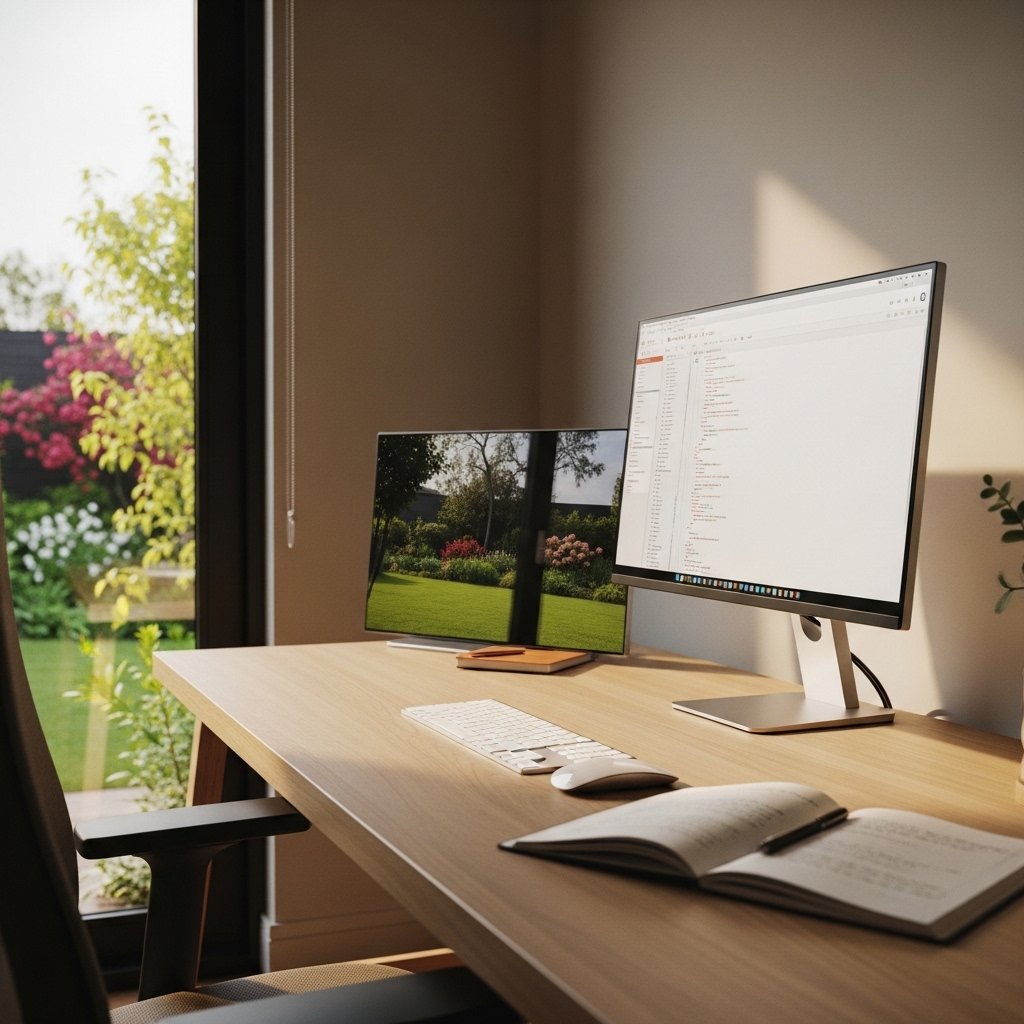
The correct desk position is perpendicular to the window rather than facing it or with the window directly behind. Facing a window creates glare on screens and visual competition between the work and the exterior view. Window behind creates a backlit situation where the screen is difficult to see and video call participants see a silhouette rather than a face.
Perpendicular to the window brings natural light from the side onto the work surface without glare. It places the exterior view in the peripheral vision rather than the direct sightline, available to resting eyes without competing with focused work.
A view of greenery, even a single tree or a garden wall with climbing plants, from the perpendicular window position reduces eye strain and cognitive fatigue during long work sessions in a measurable way.
2. Invest in a Chair Before Any Other Furniture
The chair is used for more hours in a home office than any other object. The chair is what your body is in contact with for the entirety of the working day. It is the object most worth spending money on and the one most often purchased last with the remaining budget.
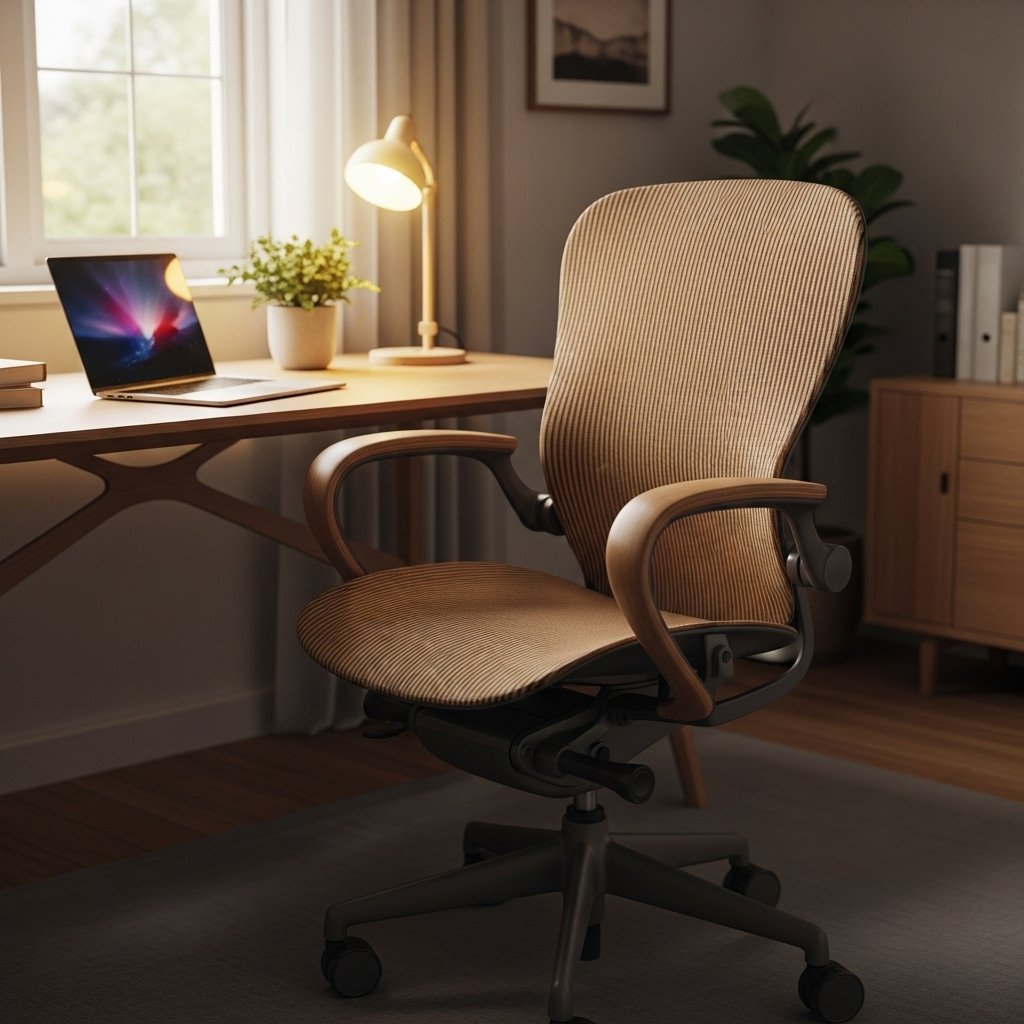
An ergonomic task chair with lumbar support, adjustable seat height, adjustable armrests, and a backrest that responds to the body’s movement is not a luxury for a person working from home full time. It is a health requirement.
The specific ergonomic chair should be tested in person if possible. The same chair fits different bodies differently. A chair that is ergonomically excellent for a person of one height and build may be incorrect for someone with different proportions.
If the ergonomic chair’s aesthetics conflict with the home office’s visual direction, consider a quality ergonomic chair in a neutral black or natural mesh that suits most interiors without requiring specific styling.
3. Build the Desk Into the Architecture
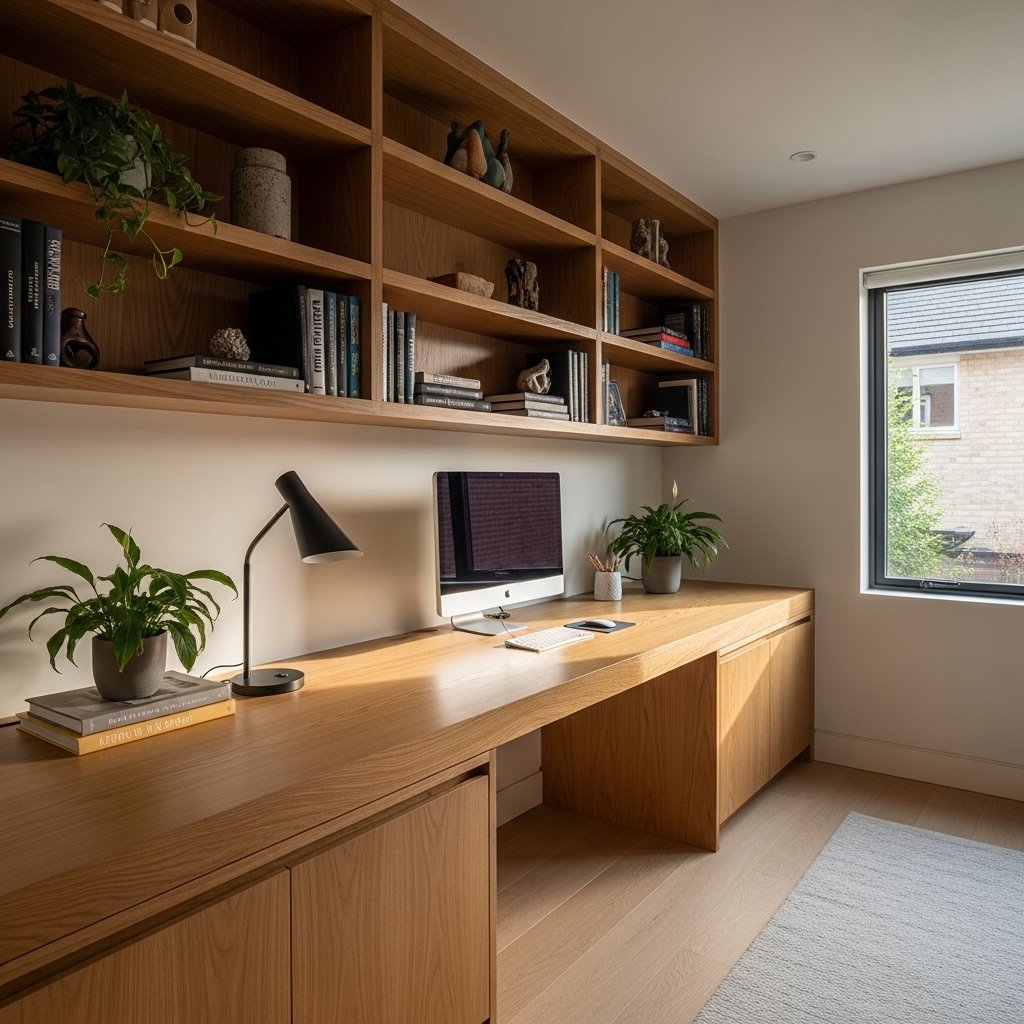
A desk that is built into the home office rather than placed within it creates a workspace with the permanence and intention that freestanding furniture rarely achieves.
A built-in desk spanning the full width of one wall, at the correct height for the individual user, with integrated storage above and below, creates a workspace that fits the room exactly rather than approximately. The desk is the correct width because the room is the correct width. There are no awkward gaps between the desk end and the wall.
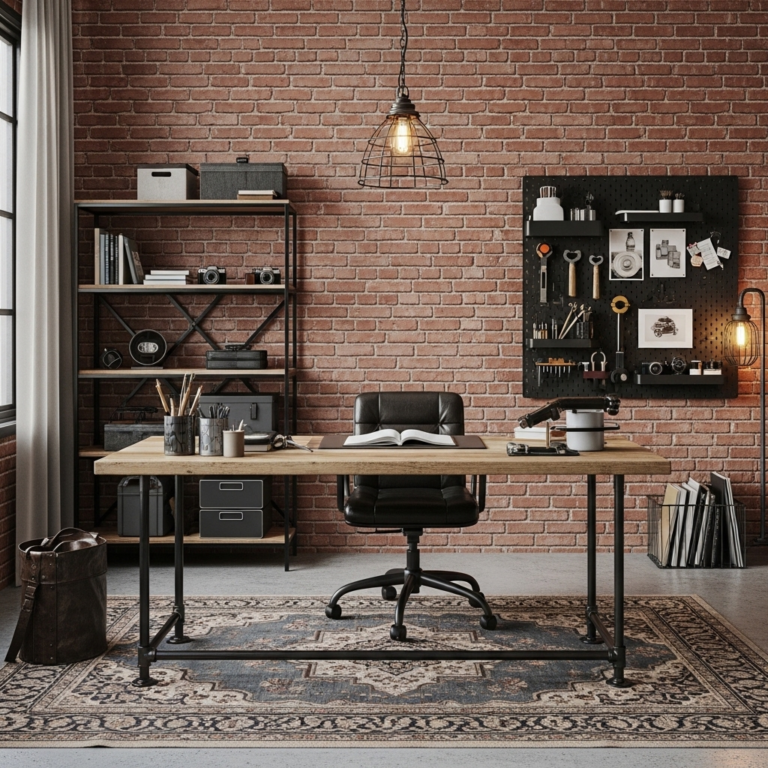
Built-in desks are achievable at a range of price points. A carpenter-built solution uses full bespoke joinery. An IKEA hack using standard units with a continuous timber desktop surface achieves a similar visual result at a fraction of the cost. The desktop material, not the cabinet construction beneath, determines the desk’s visual quality.
A thick solid timber desktop, 40mm or above, on any base creates a desk surface with material quality and visual weight that communicates the workspace’s seriousness.
4. Layer Lighting for Every Work Scenario
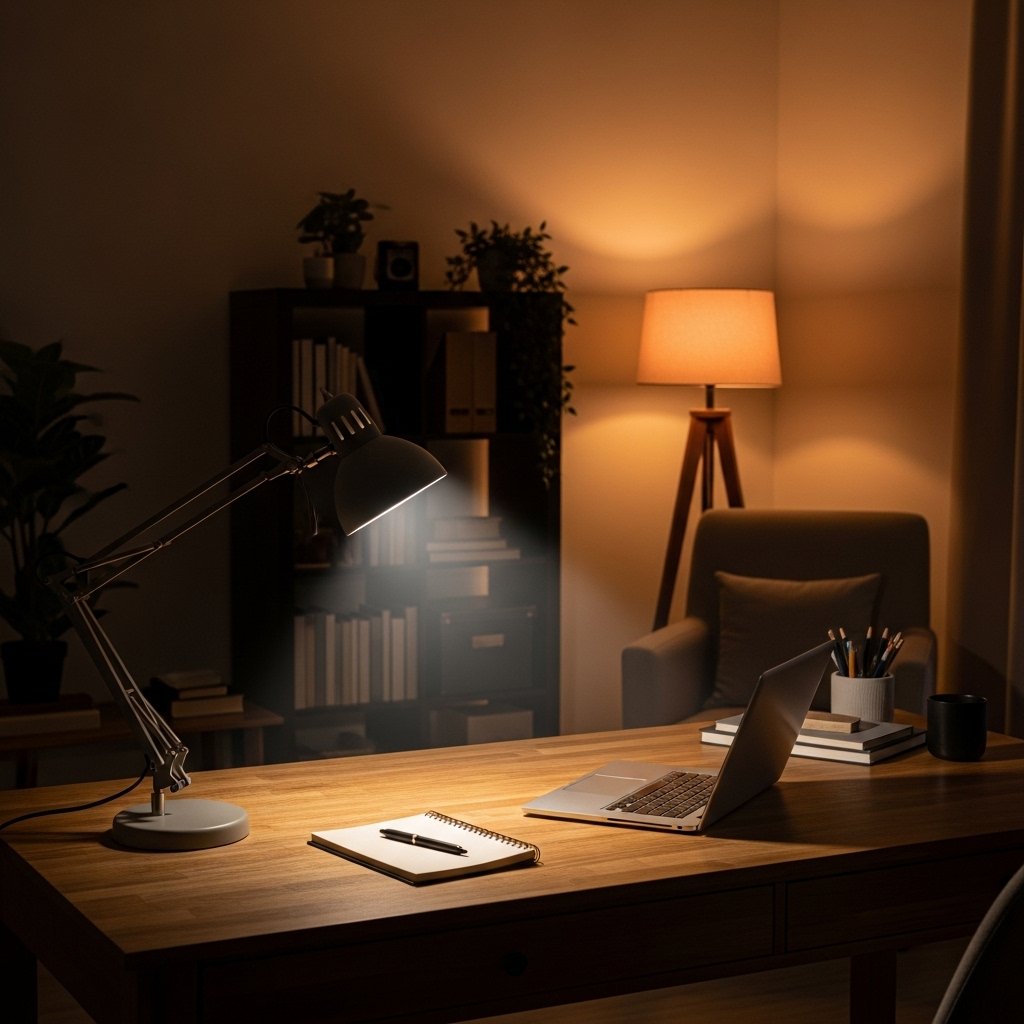
A home office lit only by an overhead light has one lighting scenario. A well-designed home office has three and can move between them.
Overhead ambient lighting on a dimmer provides the room’s general illumination. A quality adjustable task lamp at the desk provides directional, focused light for detailed work. A warm floor lamp or table lamp in the secondary seating area provides atmospheric light for reading, thinking, and video calls where the task lamp’s directional light would create unflattering shadows.
The task lamp is the most functionally important of the three. A lamp that allows adjustment of both height and direction, with a warm light temperature of 3000–4000K appropriate for concentrated work, provides the focused illumination that overhead light cannot.
The combination of dimmed overhead at 20% with a quality task lamp provides the most productive light scenario for screen-based work. The overhead provides enough ambient fill to prevent eye strain from the contrast between the bright screen and a dark room while the task lamp provides the focused desk illumination.
5. A Dedicated Bookshelf as Work Resource and Wall Treatment
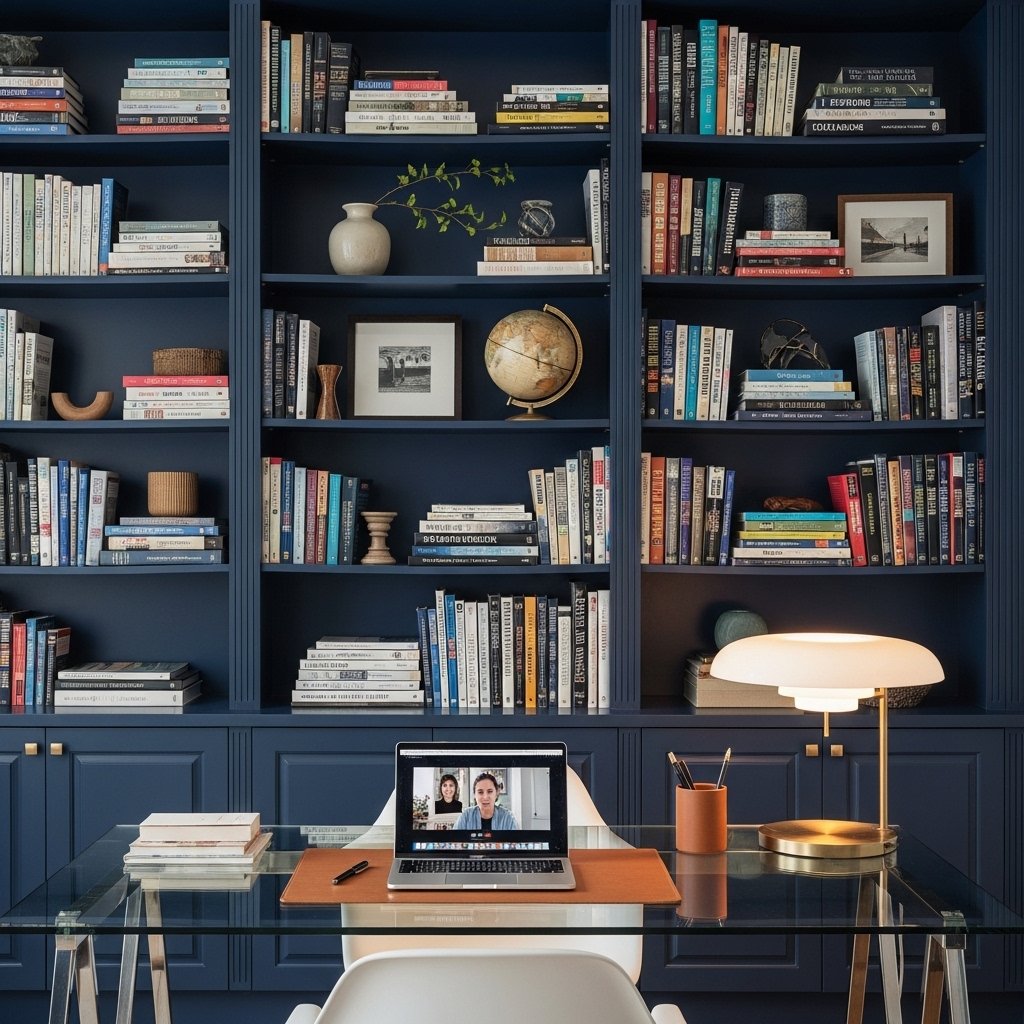
Every home office benefits from a bookshelf. Not for decoration. For the actual books, references, and physical materials that informed work requires access to.
A floor-to-ceiling bookshelf on the wall visible in video calls creates a background that communicates professional depth, personal culture, and the specific quality of a person who reads and thinks seriously. This is not a trivial consideration for people who conduct professional video calls from their home office daily.
The bookshelf in a home office should be styled simply. Books shelved densely with their spines facing forward. A few objects placed with intention. No forced aesthetic arrangement of books by color or height. The bookshelf should read as a working resource rather than a display.
Paint the bookshelf the same color as the wall for a seamless, architectural effect. Or paint it a contrasting deep tone that makes it read as a feature. Both work. The intermediate option of a bookshelf in a different but similar tone creates the weakest result.
6. Acoustic Treatment That Looks Like Design
A home office used for calls and focused work in a room with hard surfaces has an acoustic problem. Sound reflects off hard walls, floors, and ceilings and creates reverberation that makes calls sound unprofessional and sustained concentration more tiring.
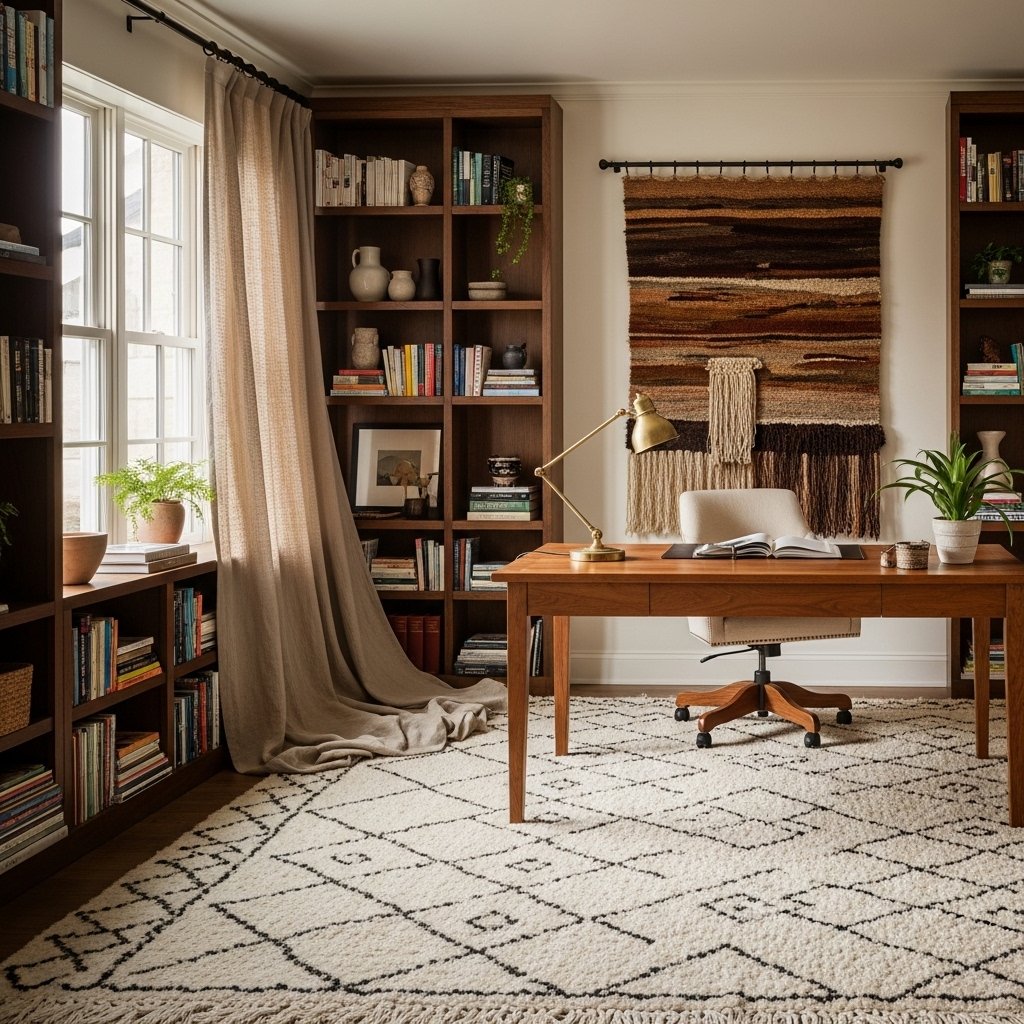
Acoustic treatment that also reads as interior design: a large wool or thick pile rug on the floor. Bookshelves full of books, which are among the most effective diffusive acoustic materials available. A large textile wall hanging or a framed acoustic panel upholstered in fabric. Heavy curtains. An upholstered chair.
Each of these elements absorbs or diffuses sound while serving a visual and functional purpose beyond acoustics. The home office that solves its acoustic problem through considered material choices rather than through foam panels produces a better looking and better sounding workspace.
7. A Secondary Seating Area for Thinking Work
The desk is for screen work. Thinking work, reading, writing by hand, planning, and the mental work that precedes execution, benefits from a different physical position.
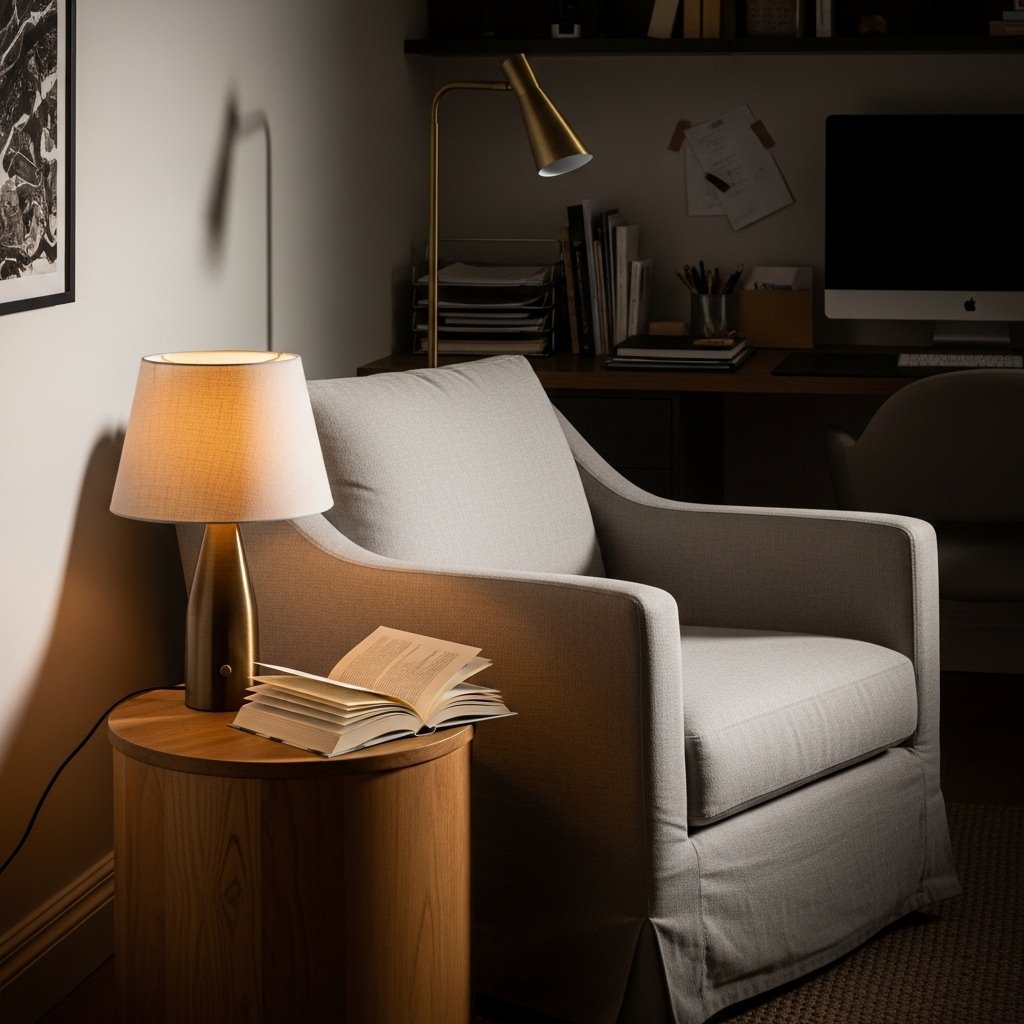
A quality armchair with a small side table and a floor lamp in a corner of the home office creates a secondary work position with a different physical posture and a different visual environment that activates a different quality of cognitive work.
The chair should be genuinely comfortable. A chair that is comfortable enough to sit in for forty-five minutes of reading without physical discomfort enables the sustained reading that desk chairs do not. The physical comfort of the chair is a precondition for the quality of the thinking done in it.
The secondary seating area signals that the home office is designed for the full range of intellectual work rather than only the execution tasks that screen and keyboard enable.
8. Cable Management as Design Priority
Visible cables in a home office are not a minor aesthetic concern. They are a daily visual irritant that undermines the quality of the workspace in a way that compounds every hour of use.
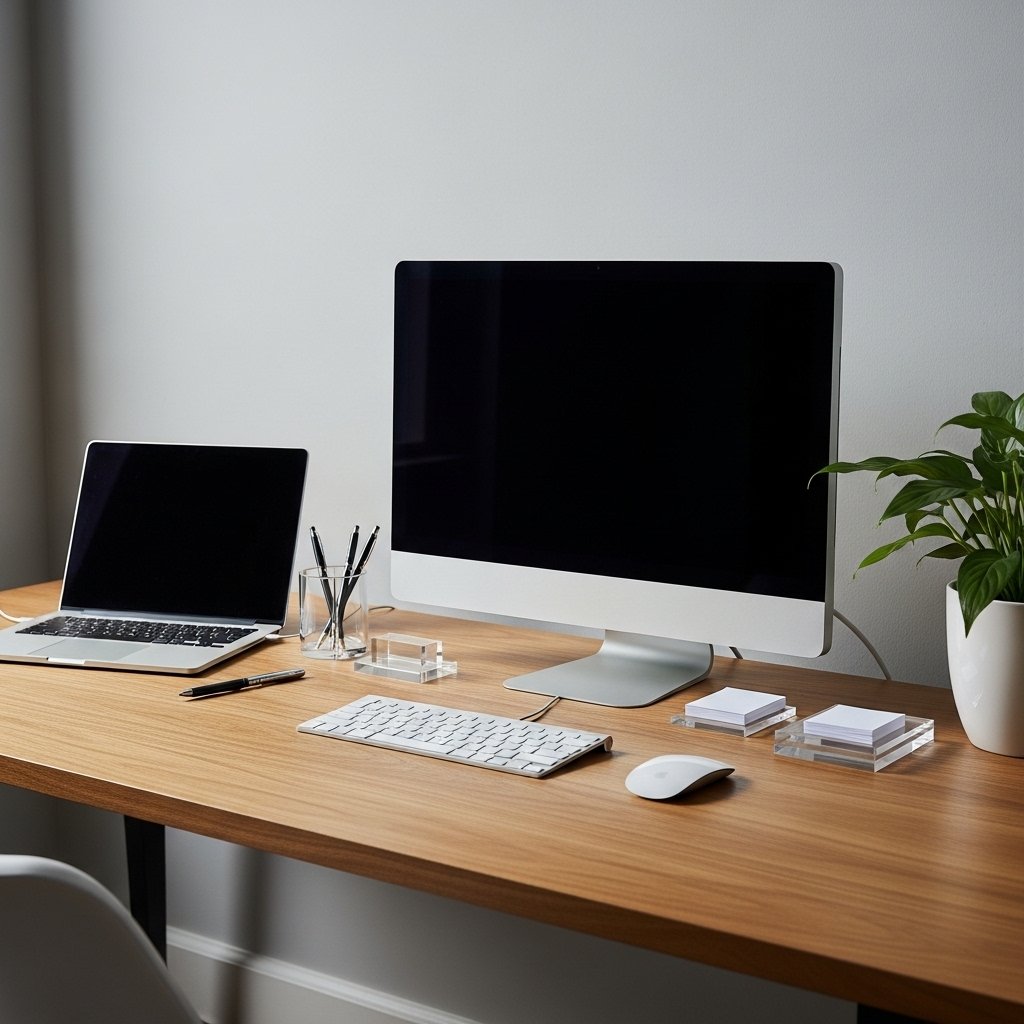
A home office without visible cables requires planning before the desk is positioned and equipment placed. Power sockets need to be in the correct position. Cable management channels route cables from desk surface to socket without crossing open floor space. A cable management tray mounted under the desk catches the cables between the equipment and the channel.
The investment in cable management, which is modest, produces a return that is visible in every photograph of the desk, every video call conducted from it, and every hour of work done with a clear visual field rather than a tangle of cables in the peripheral vision.
A wireless keyboard, wireless mouse, and a single cable from a docking hub replacing multiple individual device cables reduces the cable count to the absolute minimum before management is required.
9. Natural Materials for the Desk Surface and Accessories
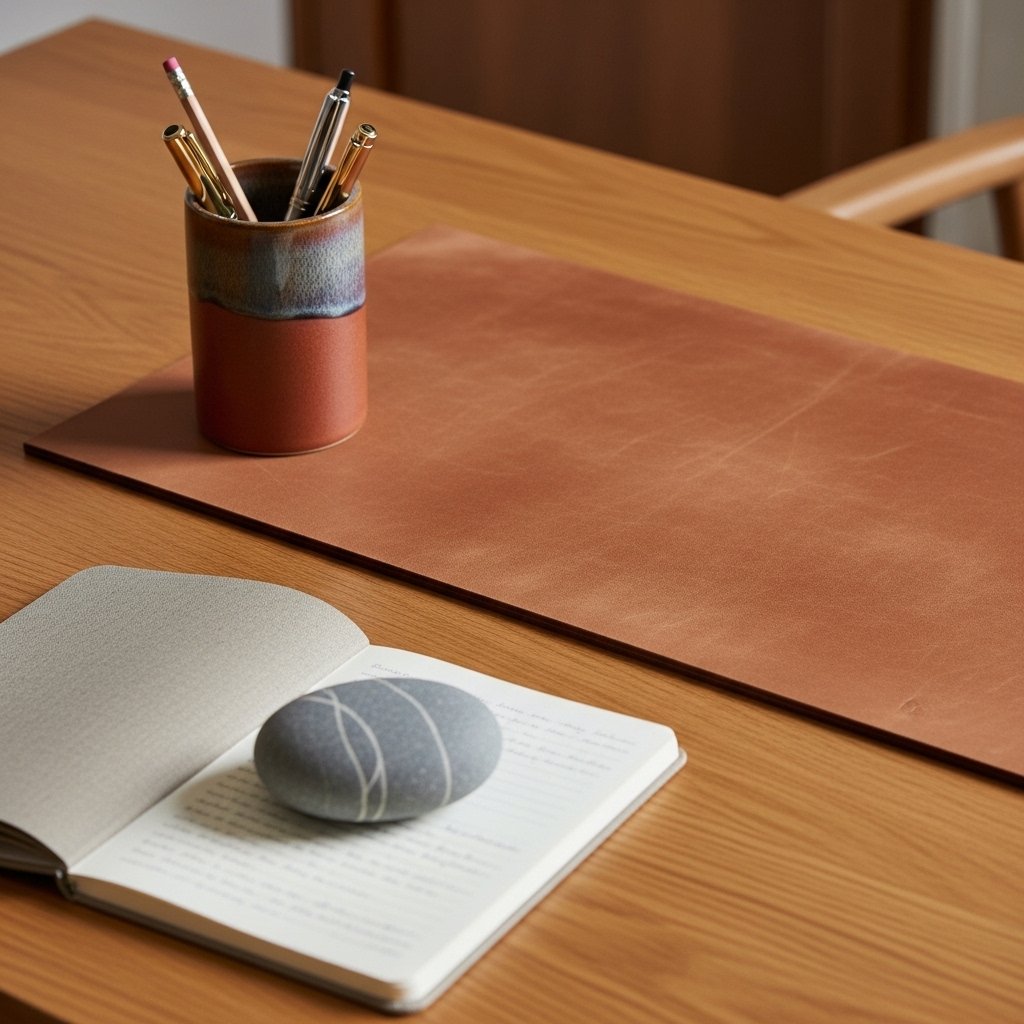
The materials at hand level in a home office, the desk surface, the mouse pad, the pen holder, the notebook, are touched and seen more hours per day than almost any other objects in the home. Their quality communicates directly to the hands as well as the eyes.
A solid timber desk surface, warm and slightly textured under the palm. A leather desk pad that develops character with use. A ceramic pen holder with a glaze that rewards close attention. A linen-covered notebook. These are objects with material quality that synthetic alternatives lack at any price point.
The investment in quality natural material accessories at a working desk is the investment with the highest sensory return relative to cost available in home office design. The materials are touched thousands of times per year. Their quality is felt thousands of times per year.
10. Plants That Survive the Office Environment
A home office without plants is a workspace that is slightly more depleted of oxygen and substantially more depleted of visual warmth than one with them.
The specific challenge of home office plants is the environment: typically less natural light than other rooms, more consistent air conditioning or heating, and often less frequent attention from the person working. The plants chosen must survive these conditions without demanding care that interrupts the working day.
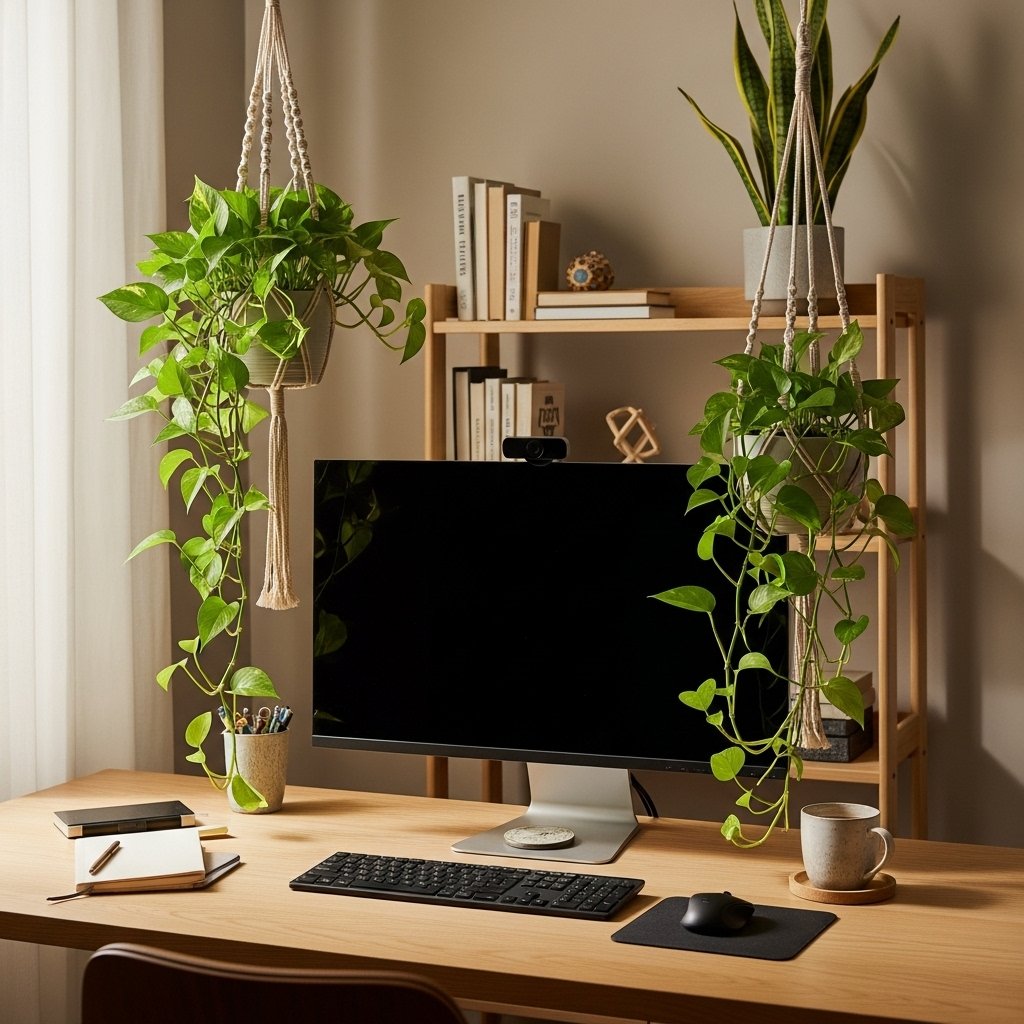
Hardy, low-maintenance plants that suit home office conditions: pothos in a hanging planter above the monitor. A snake plant beside the desk in low light. A ZZ plant on the bookshelf. A large monstera in a corner with adequate indirect light.
The pothos above the monitor is the single most effective home office plant placement. It brings green into the visual field immediately above the primary work focus point. The trailing stems soften the hard technological surface of the monitor and screen.
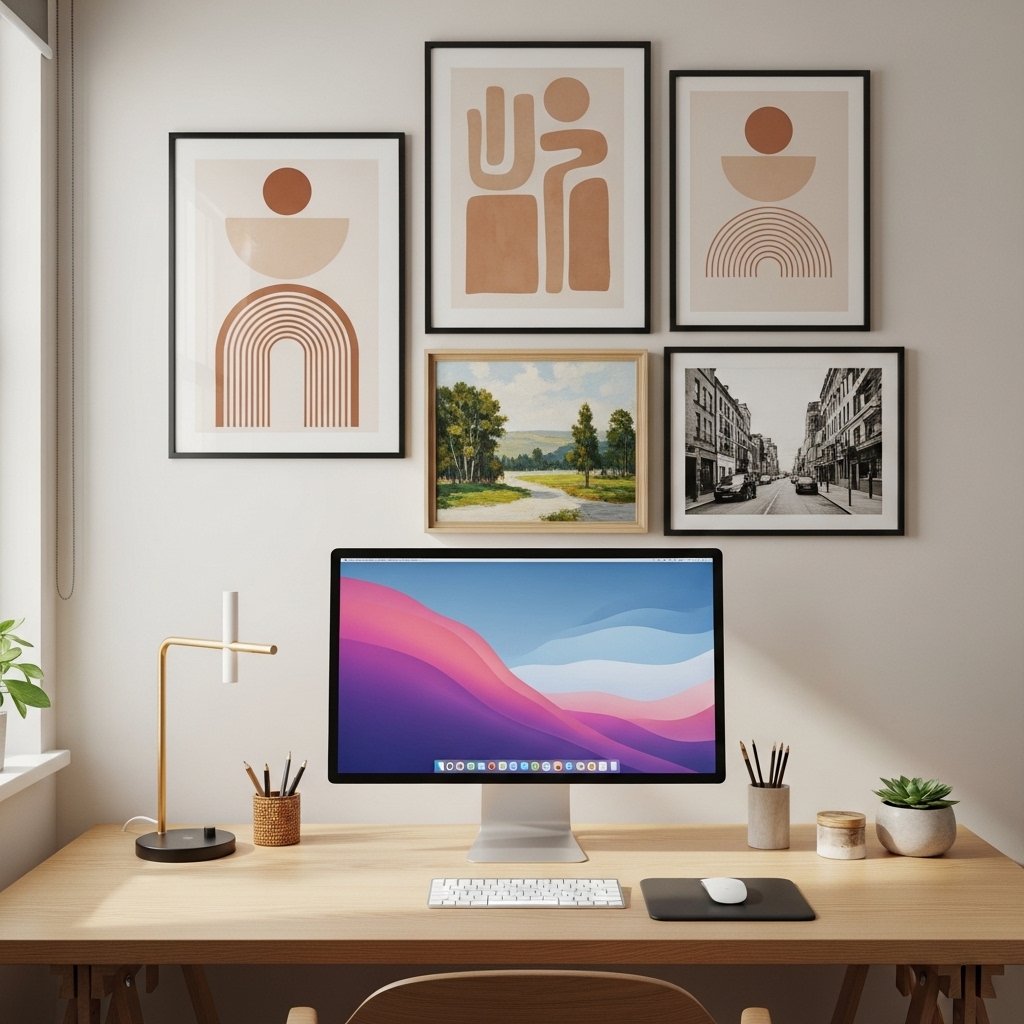
11. A Gallery Wall Behind the Desk That Earns Its Place
The wall visible in video calls from a home office is a professional backdrop that millions of people see. Its design quality communicates directly about the person presenting from in front of it.
A gallery wall behind the home office desk, composed with the same care as any other gallery wall in the home but with an awareness of its professional visibility, creates a backdrop that communicates culture, taste, and professional seriousness.
The composition should suit the camera’s viewing angle: not so high that it disappears above the frame, not so dense that it reads as chaotic at the compression quality of a video call. Three to five substantial pieces in consistent frames, spaced with breathing room, create a backdrop that reads clearly on camera.
Choose art that is professional in the sense of intentional and considered rather than in the sense of bland and inoffensive. A gallery wall of meaningful, interesting art communicates more positively than a wall of deliberately neutral prints.
12. Scent as a Productivity Tool
The home office’s scent environment is a productivity variable that receives almost no attention in workspace design despite significant evidence for its effect on cognitive performance.
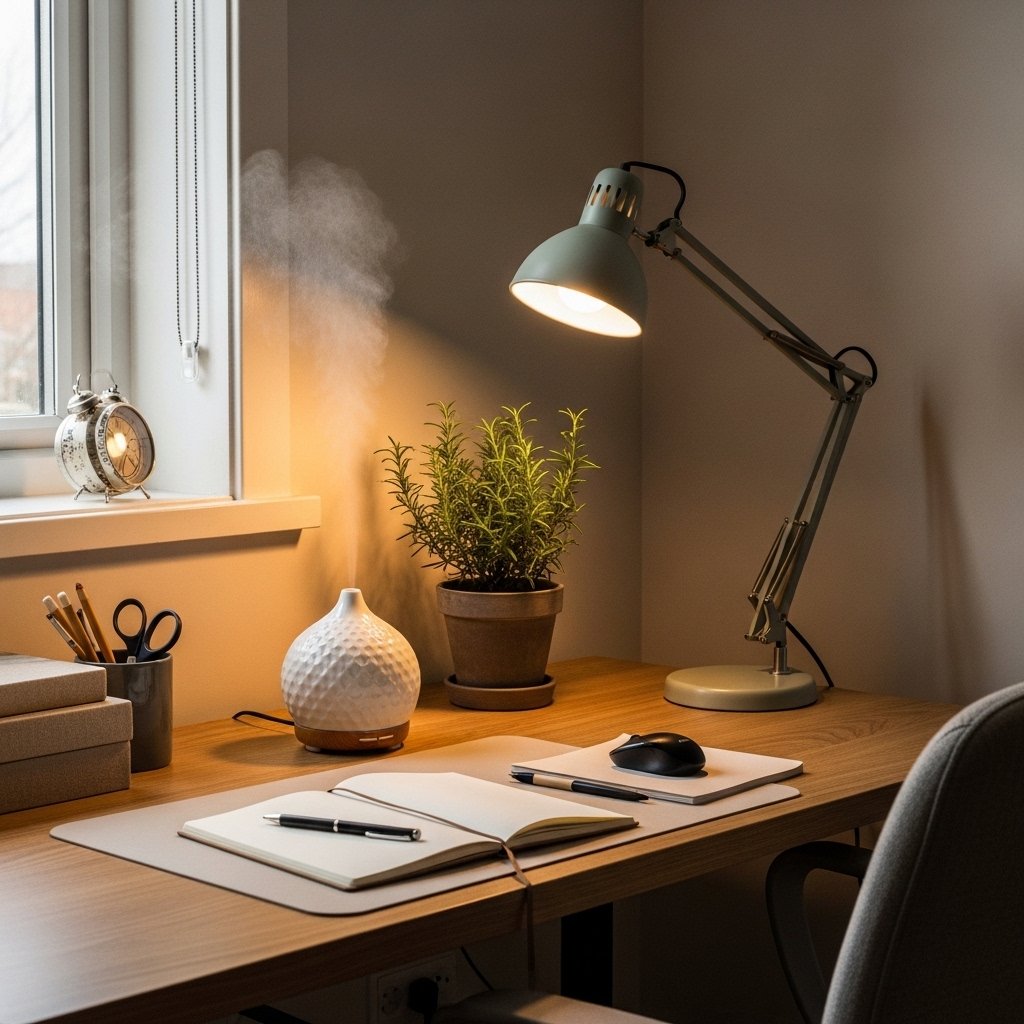
Specific scents have documented effects on cognitive function. Rosemary increases alertness and memory performance. Peppermint increases alertness and processing speed. Lemon and citrus scents increase concentration. These are not dramatic effects but they are consistent and cumulative across a working day.
A diffuser on the home office desk with a rotation of these functional scents, changed based on the day’s cognitive demands, is the simplest and cheapest productivity tool available to a home worker.
The vessel matters in a home office as in any room. A diffuser that is also a beautiful ceramic object is a design element that enhances the visual quality of the desk while serving its functional scent purpose.