14 Apartment Balcony Ideas That Make Every Square Meter Count
An apartment balcony is the most underused space in most homes. A tiled rectangle with a rusting folding chair and a dead plant. The gap between what a balcony is and what it could be is almost always enormous.
The balcony is the apartment’s outdoor room. Its connection to external air, light, and sky is something no interior room can replicate. These 14 ideas turn that potential into an actual outdoor living space worth spending time in.
1. Build a Proper Seating Arrangement That Fits
The first and most important balcony decision is seating sized correctly for the space.
Most people put outdoor furniture on a balcony without measuring and end up with pieces that are too large for the space, leaving no circulation room, or too small for the space, leaving wasted floor area that becomes dead zone. Neither serves the balcony’s potential.
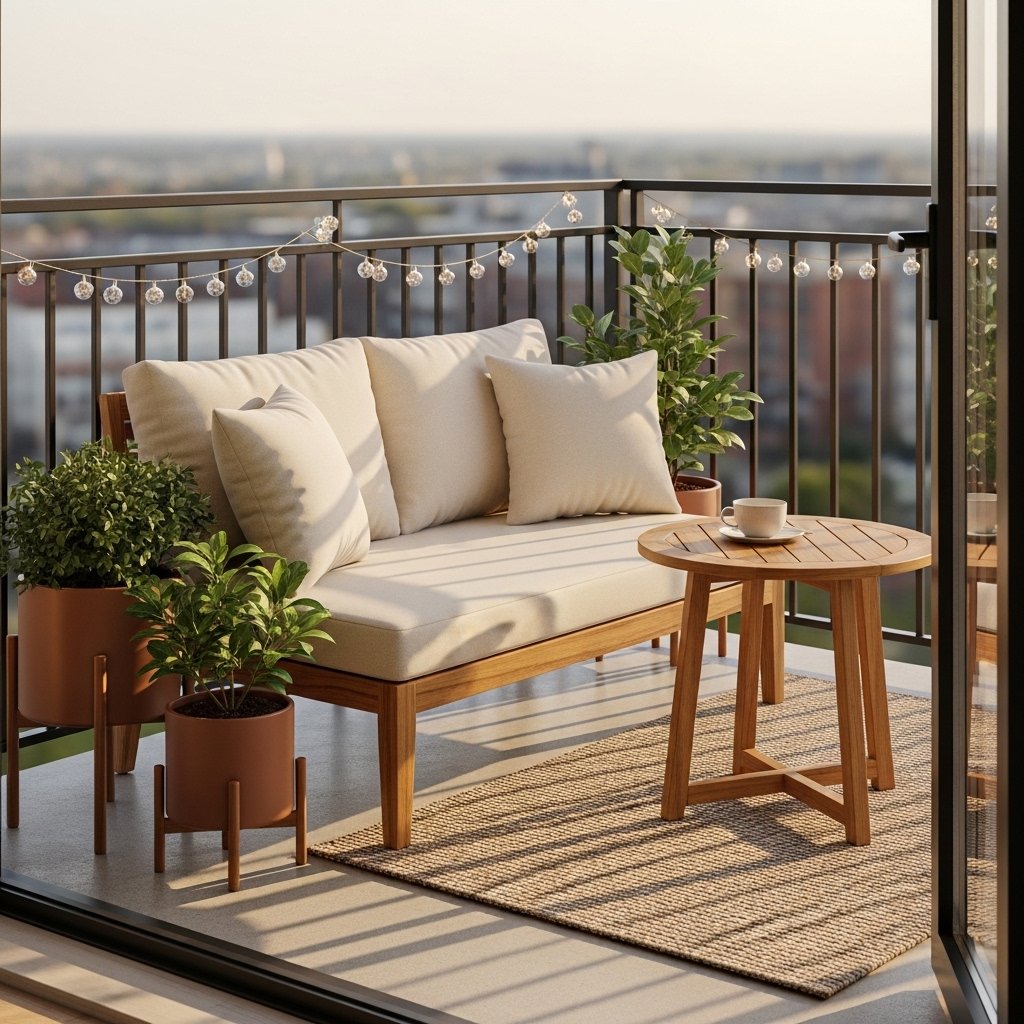
Measure the balcony precisely. Deduct 60–70cm on all circulation sides. Design the seating arrangement to fill the remaining zone deliberately. In a small balcony this means a two-person bistro set. In a medium balcony a compact loveseat with one side table. In a larger balcony a genuine sofa configuration.
Performance fabric cushions that can be left outside without damage, in a weather-resistant frame, create outdoor seating that invites use rather than requiring preparation before each use.
2. String Lights for Evening Transformation
A balcony without string lights is a balcony used only in daylight. A balcony with warm string lights is a balcony used every evening throughout the outdoor season.
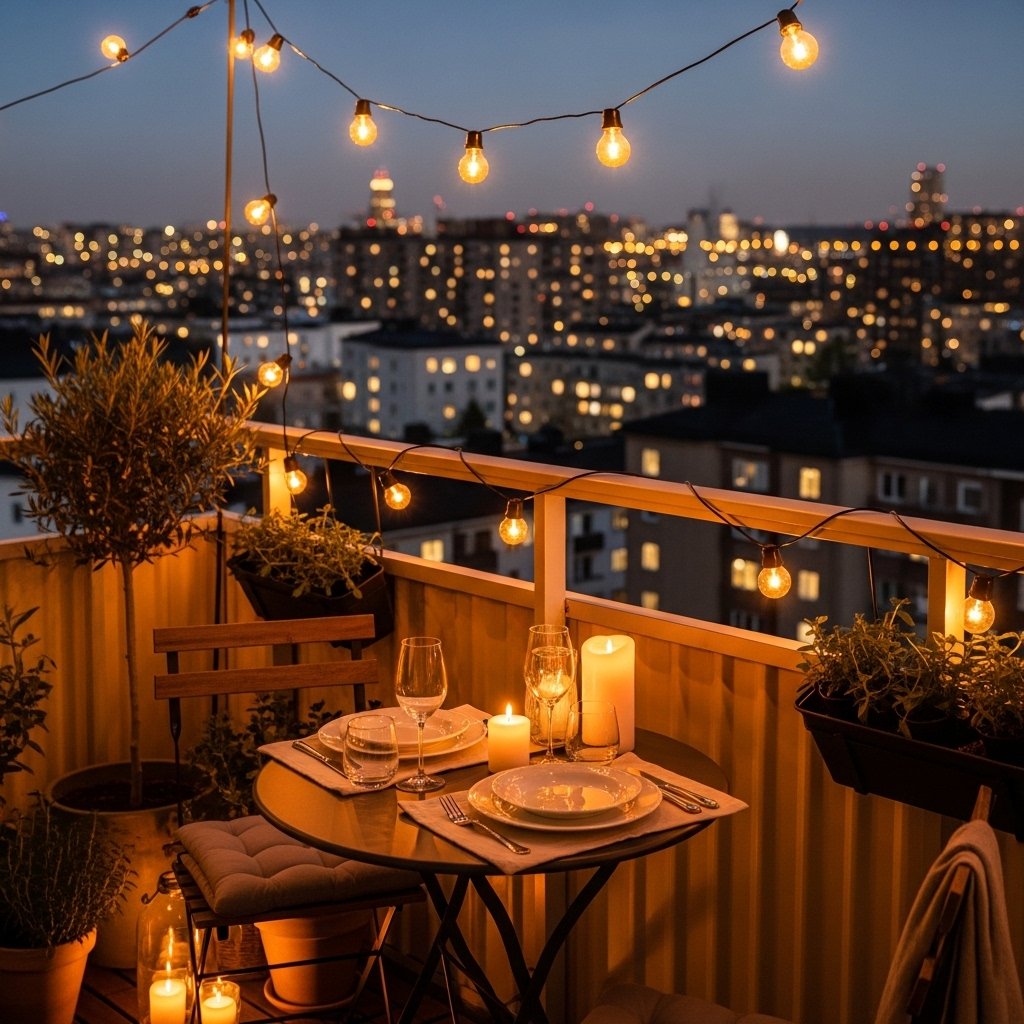
Warm micro string lights or Edison string lights strung along the balcony ceiling, the balcony railing, or between two points create the atmosphere that transforms a functional outdoor platform into a genuinely inviting space at night.
The installation requires a weatherproof outdoor power source or a battery-powered string light system with sufficient battery life for evening use. Solar-powered string lights with a panel placed in a sunny position charge during the day and illuminate automatically at dusk.
The difference between a balcony at 8pm without string lights and the same balcony with them is the difference between a surface and a destination.
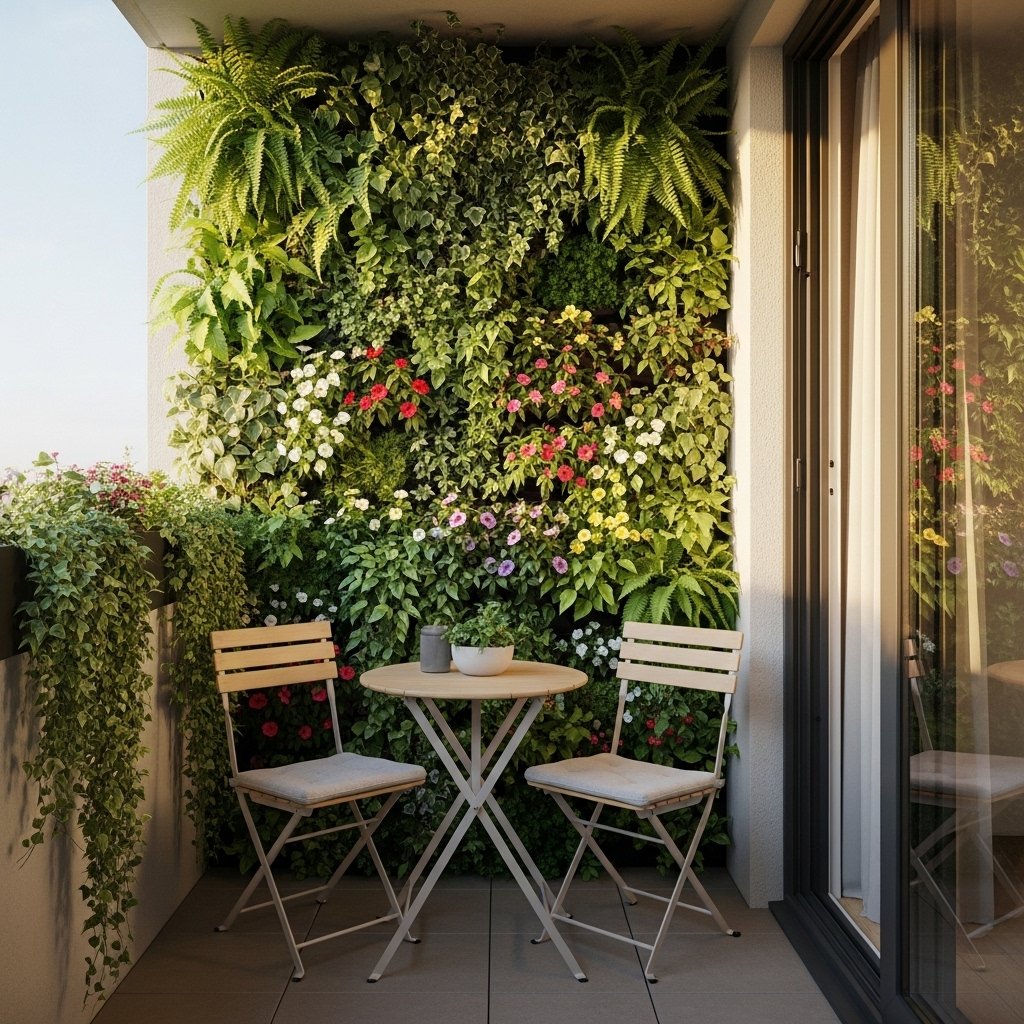
3. Vertical Planting to Create Green Walls
A balcony without vertical planting uses only its floor area for plants. A balcony with vertical planting uses its wall area as well, multiplying the green significantly without consuming any floor space.
Wall-mounted planter pockets, a mounted trellis with climbing plants trained onto it, or a freestanding ladder planter leaning against the balcony wall creates a vertical green surface that visually extends the balcony’s connection to nature beyond the few pots the floor can accommodate.
In a small balcony, a single wall covered in vertical planting creates the impression of a garden rather than a tiled platform. The volume of green relative to the floor area is dramatically different from the same quantity of plants arranged only on the floor.
Hardy plants that tolerate wind exposure at height: sedum, mind your own business, nasturtiums, climbing roses on a sheltered balcony, ivy, and compact herbs all work in vertical planting systems.
4. A Compact Dining Setup for Two
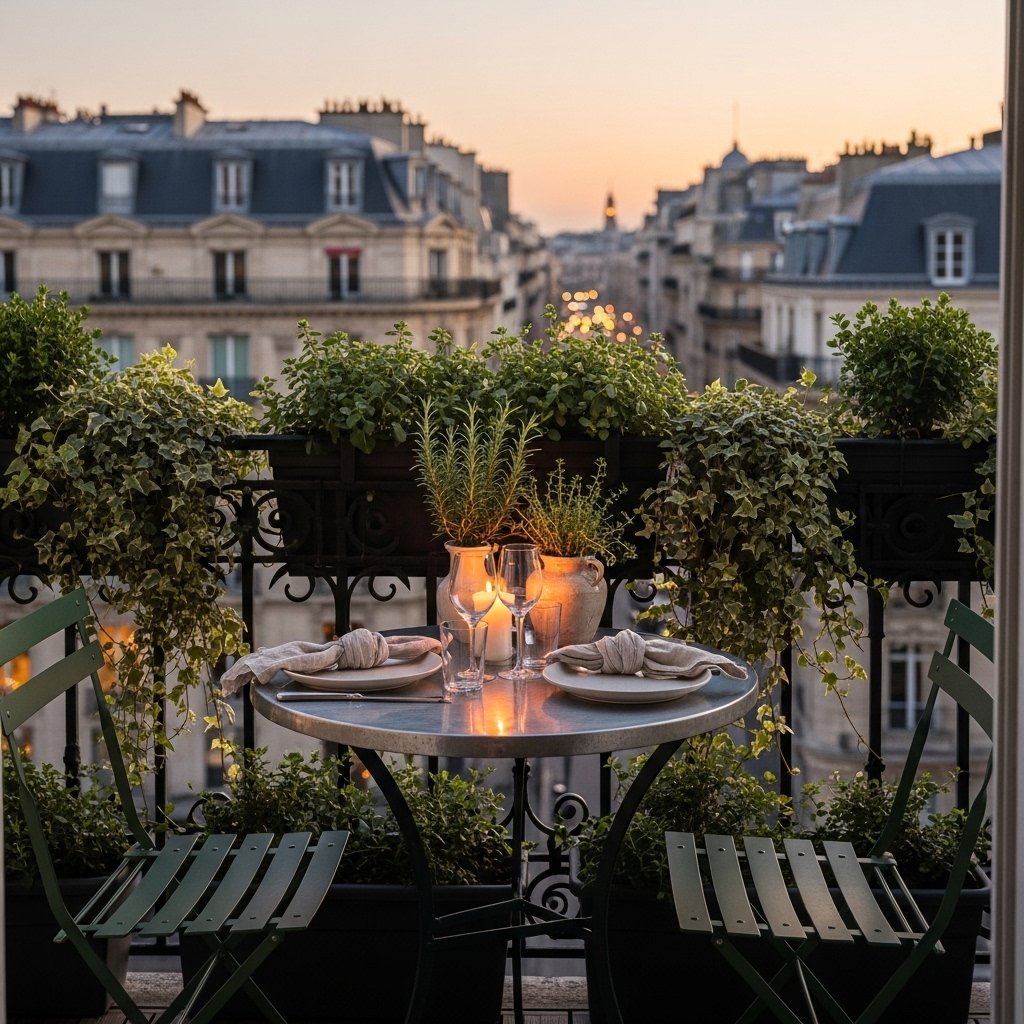
A balcony that accommodates a proper meal for two people is a balcony that changes how an apartment is used. Dinner outside on a warm evening, even on a compact urban balcony, is a qualitatively different experience from dinner inside.
A folding bistro table that stores flat against the wall when not in use, paired with two folding bistro chairs that stack when not needed, creates a dining capability in a minimal footprint that a permanent table and chairs would not permit on a small balcony.
The table setup at dinner: a small candle, a simple tablecloth or placemat, proper plates rather than camping equipment. The investment in bringing the interior dinner ritual to the balcony produces a return that transforms the balcony from a storage area to a dining destination.
5. Privacy Screening With Plants or Panels
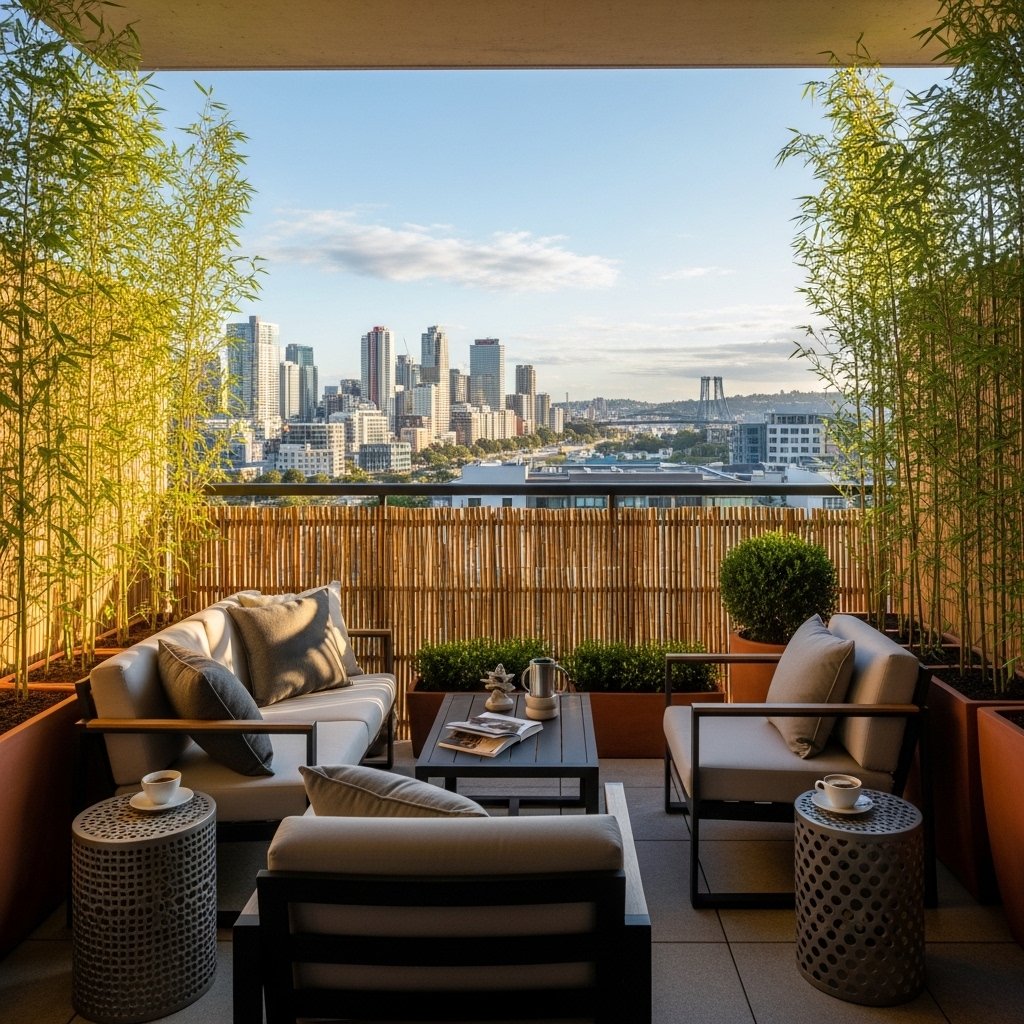
A balcony overlooked by neighbors or by other building windows is a balcony that is not fully usable. Privacy transforms a performance outdoor space into a genuinely relaxing one.
Bamboo screening panels fixed to the balcony railing or to a freestanding frame create immediate visual privacy at low cost. The bamboo ages well outdoors, developing a silver tone over time that reads as naturally weathered.
Tall potted plants, bamboo in large planters, tall ornamental grasses, or olive trees in substantial containers positioned along the railing create privacy screening that is simultaneously a planting feature.
A combination of screening panel and tall plants creates the most complete privacy solution: the panel provides immediate ground coverage while the plants fill in above and around it.
6. Outdoor Rugs to Define and Warm the Space
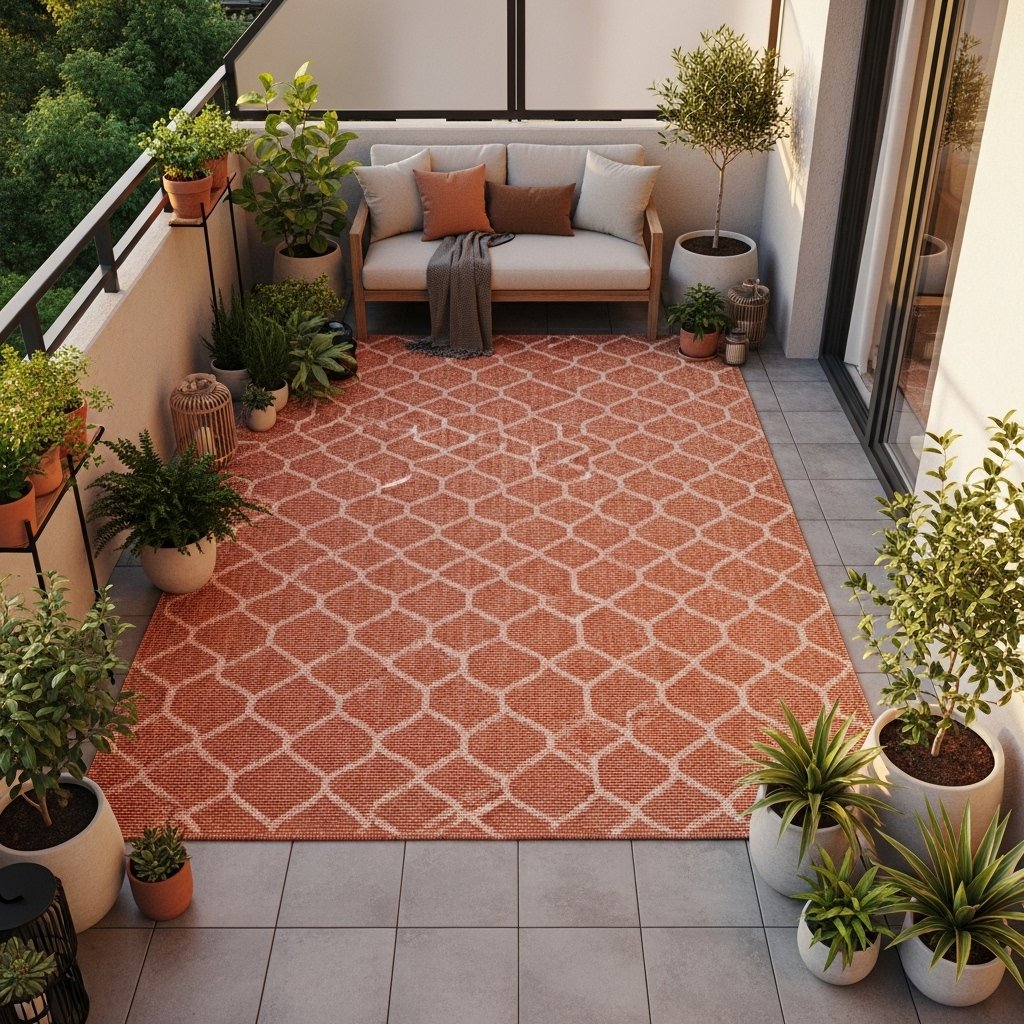
An outdoor rug on a balcony changes the sensory quality of the space immediately. Cold tile becomes warm, textured surface. The balcony begins to feel like a room rather than an extension of the building’s structural surface.
A flat-weave outdoor rug in a natural tone, a geometric pattern, or a simple stripe creates the same defining and warming effect on a balcony that a rug creates in any interior room. It establishes the zone, adds color, and creates the domestic quality that a bare tiled surface lacks.
The rug must be sized to fit the balcony’s usable area without overhanging drainage slopes. A well-sized outdoor rug that reaches the base of the railing or the base of the seating arrangement creates the room-within-the-balcony effect.
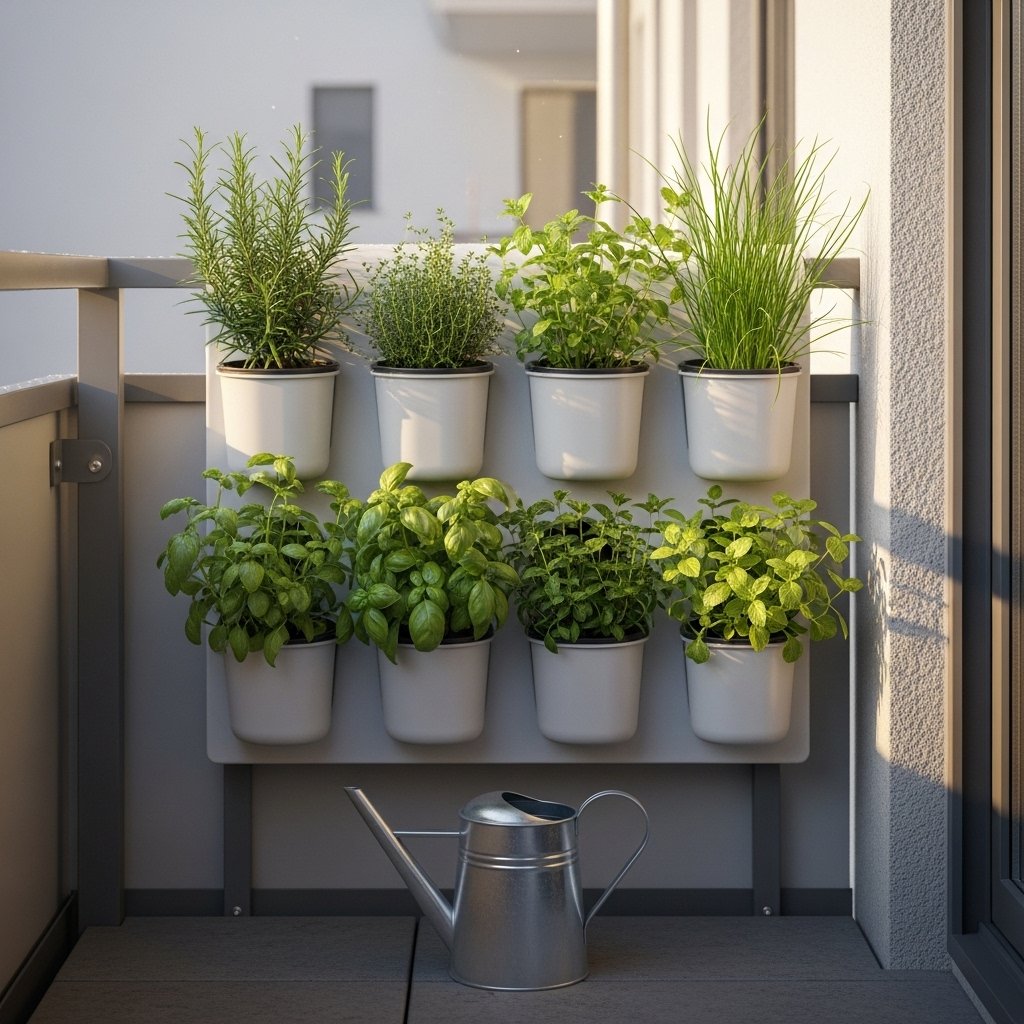
7. Herb Garden in Compact Wall-Mounted Planters
A balcony herb garden in wall-mounted planters is the apartment-dweller’s best solution to the desire for fresh food grown at home.
Wall-mounted planter systems, individual pots on horizontal rails or modular pocket systems on a wall panel, hold rosemary, thyme, basil, mint, chives, flat-leaf parsley, and sage in a vertical arrangement that takes no floor space and produces a permanent fresh herb supply throughout the growing season.
A balcony herb wall is simultaneously functional, beautiful, and fragrant. The basil in warm sun, the rosemary releasing its oil when brushed, the mint creating a specific scent that identifies the balcony as a cultivated, intentional space.
Mount the herb wall at a height convenient for harvesting. A wall too high for comfortable reach will be harvested less and the herbs will exhaust and bolt without regular cutting.
8. A Single Statement Plant at Large Scale
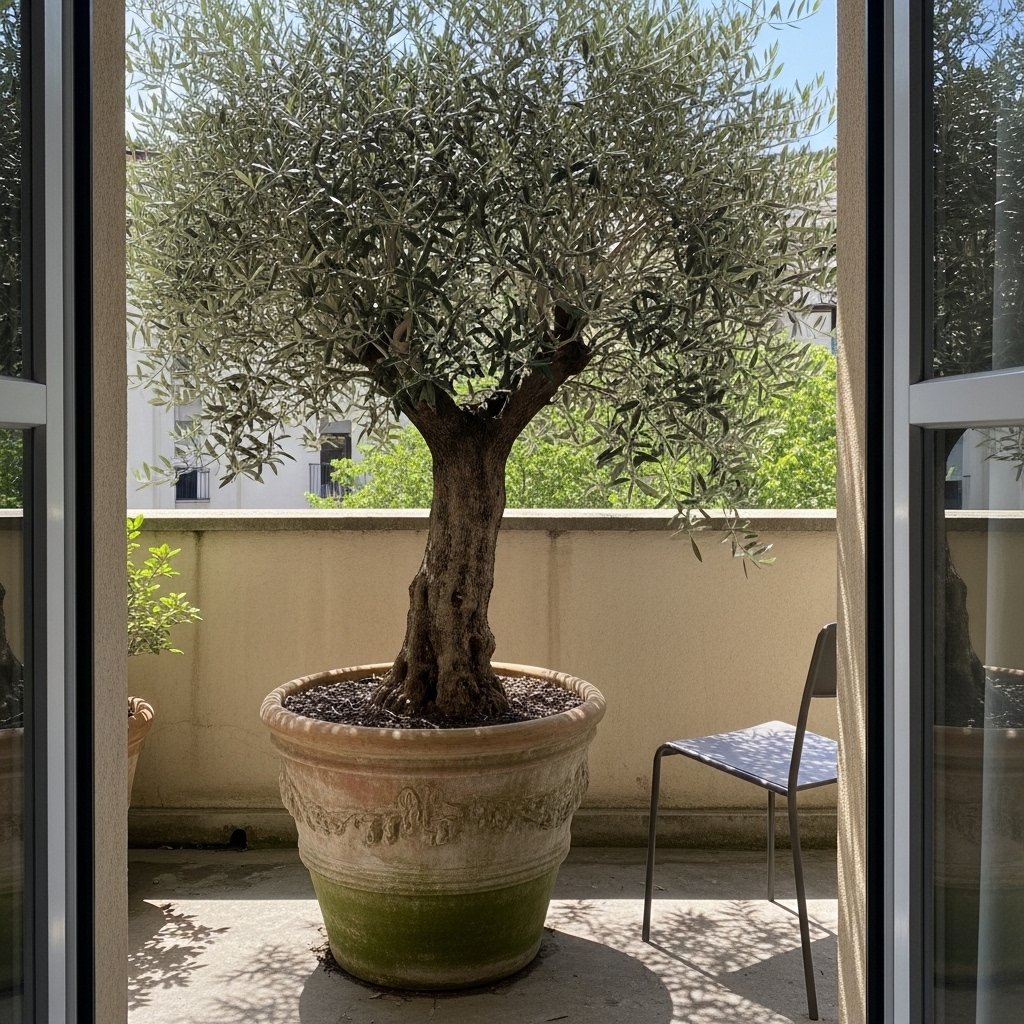
A single large, architectural plant on a balcony communicates more about the balcony’s design intention than ten small plants distributed around the perimeter.
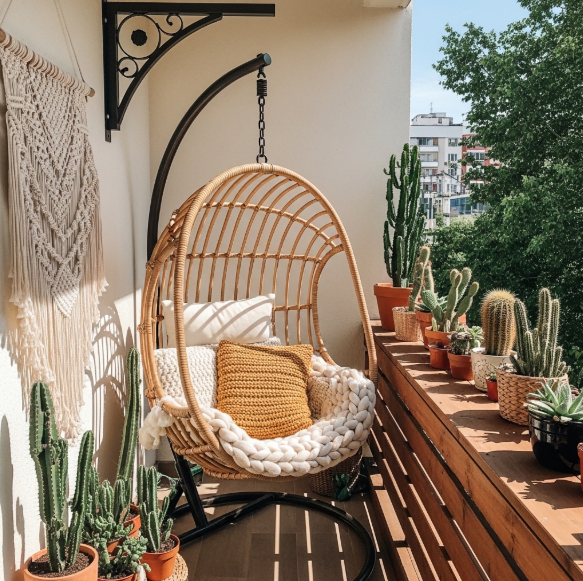
An olive tree in a large terracotta pot. A large bamboo in a wide square planter. A standard bay tree with a ball-clipped head on a clear stem. A large ornamental grass in a generous ceramic container. Each of these creates vertical presence, green mass, and genuine visual authority that small plants cannot produce.
The container is as important as the plant. A large, beautiful pot communicates that the plant was chosen with care rather than acquired. A terracotta pot aged to the correct warmth, a stone-effect planter with material weight, or a simple glazed ceramic in a tone that suits the balcony’s palette are all appropriate.
One large plant in the right position does more for a balcony’s atmosphere than any other single intervention.
9. Built-In or Fixed Seating Along the Railing
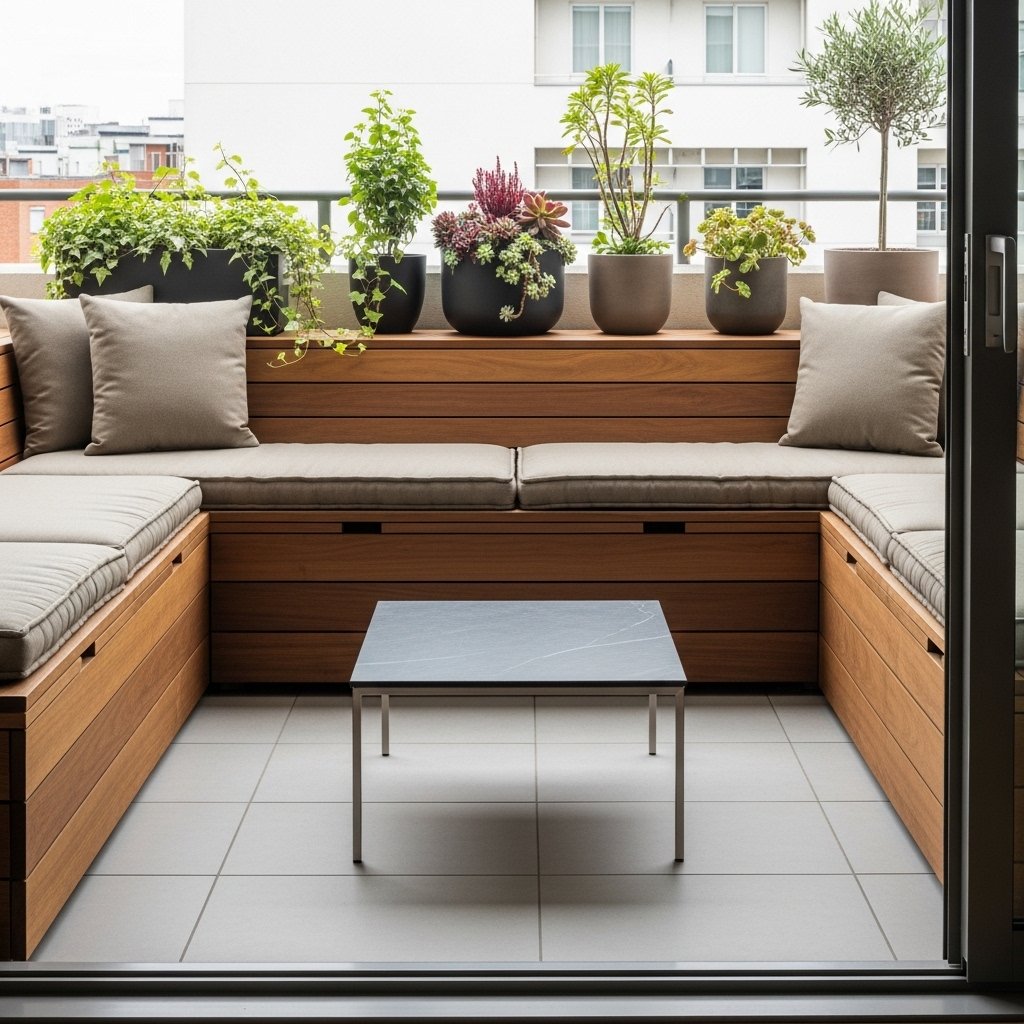
Built-in bench seating along the balcony railing, with storage beneath and cushions above, converts the railing zone from a passive safety boundary into an active seating area that maximizes the balcony’s usable area.
A timber bench built to the railing’s length, at the correct sitting height, with a seat cushion in weatherproof fabric, creates seating capacity without using any central floor space. The floor remains clear for circulation, a coffee table, or a small dining table.
Storage beneath the bench holds cushions, small gardening equipment, and outdoor tools that would otherwise require indoor storage or create visual clutter on the balcony surface.
Built-in seating is also more secure in wind than freestanding furniture. On high-rise balconies where wind load is a practical concern, built-in or very heavy freestanding furniture is the appropriate solution.
10. Candles and Lanterns for Atmospheric Evening Light
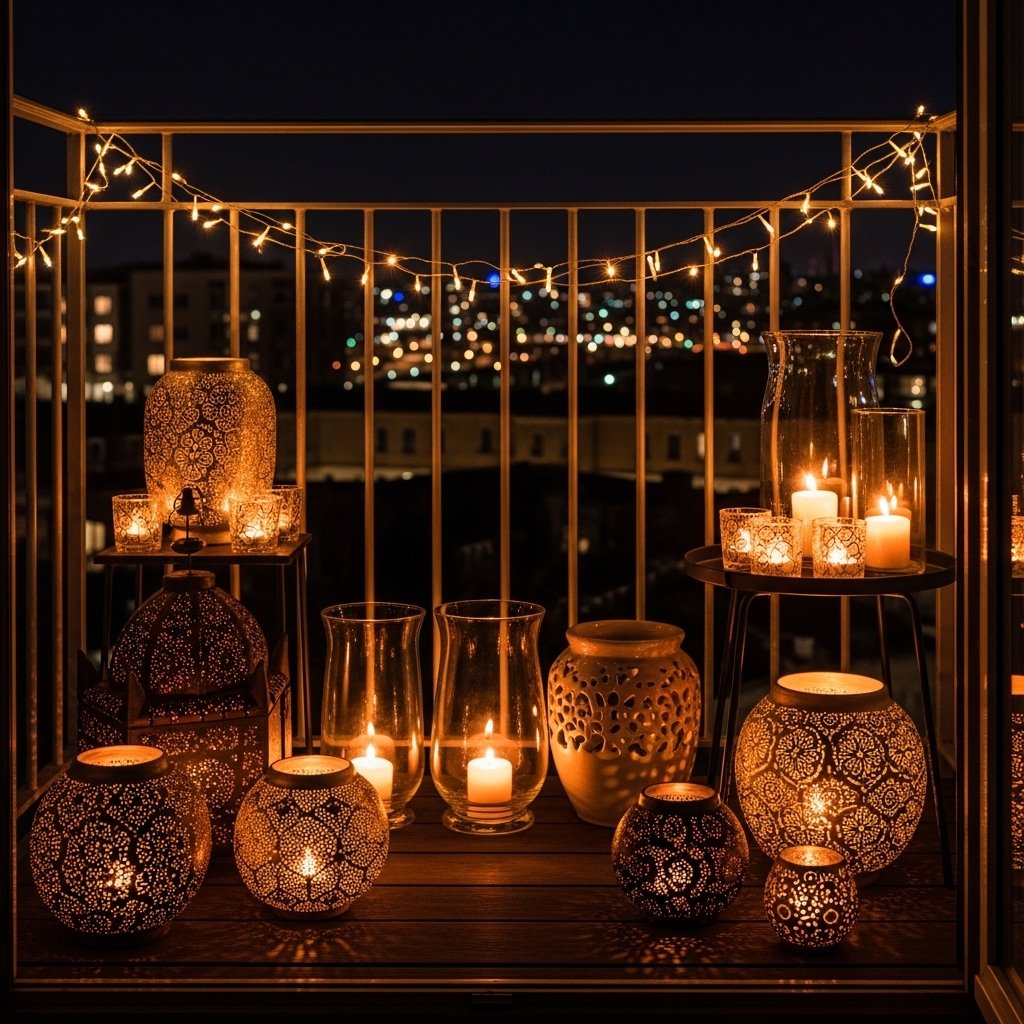
String lights provide ambient light on a balcony. Candles and lanterns provide atmosphere.
A collection of outdoor lanterns in varying heights, Moroccan punched metal, simple glass hurricanes, or ceramic lanterns with candles inside, placed at different levels, on the floor, on the railing, on a side table, creates a quality of warm, moving light at evening that transforms the balcony from a functional outdoor area to a genuinely atmospheric destination.
Battery-powered LED candles in quality glass lanterns create the visual effect of real candles without the wind-extinguishing and fire-safety concerns of open flames at height. The quality of current LED candles is high enough that the distinction from real candles is not apparent at the viewing distance of a balcony.
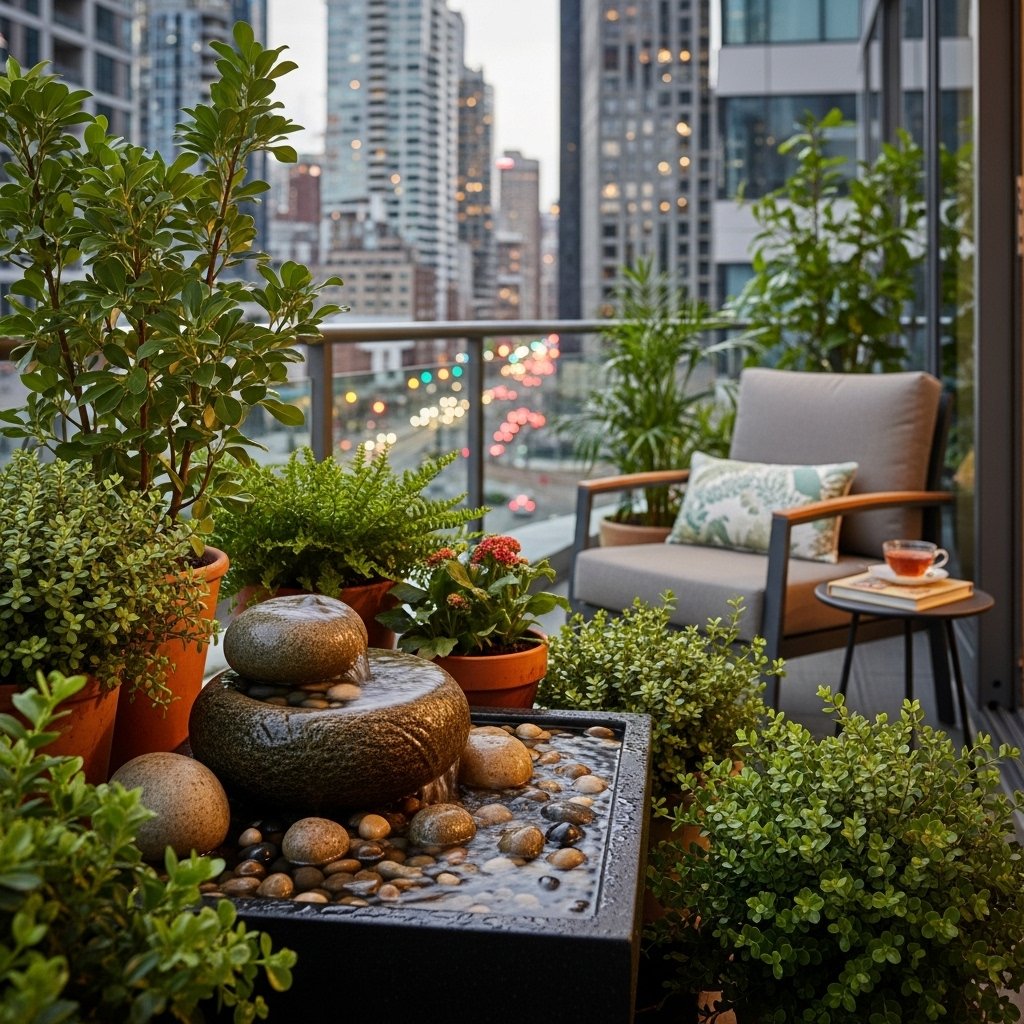
11. A Compact Water Feature for Sound and Calm
The acoustic environment of an urban apartment balcony is dominated by traffic, neighbor noise, and the general urban soundscape. A small water feature introduces a natural sound layer that masks the urban noise and creates a quality of calm that transforms the experience of sitting outside.
A self-contained tabletop water feature with a small pump circulating water over stone, bamboo, or ceramic elements creates the sound of moving water in a format that requires no plumbing and occupies a footprint of 30–40cm.
A wall-mounted water feature with a small basin below requires a power source for the pump but creates a larger, more architectural water sound that covers a broader frequency range of urban noise.
The sound of water, even a small quantity in gentle movement, has a specific psychological effect. The balcony with water running becomes a restorative space rather than simply an outdoor space.
12. An Outdoor Cinema Setup
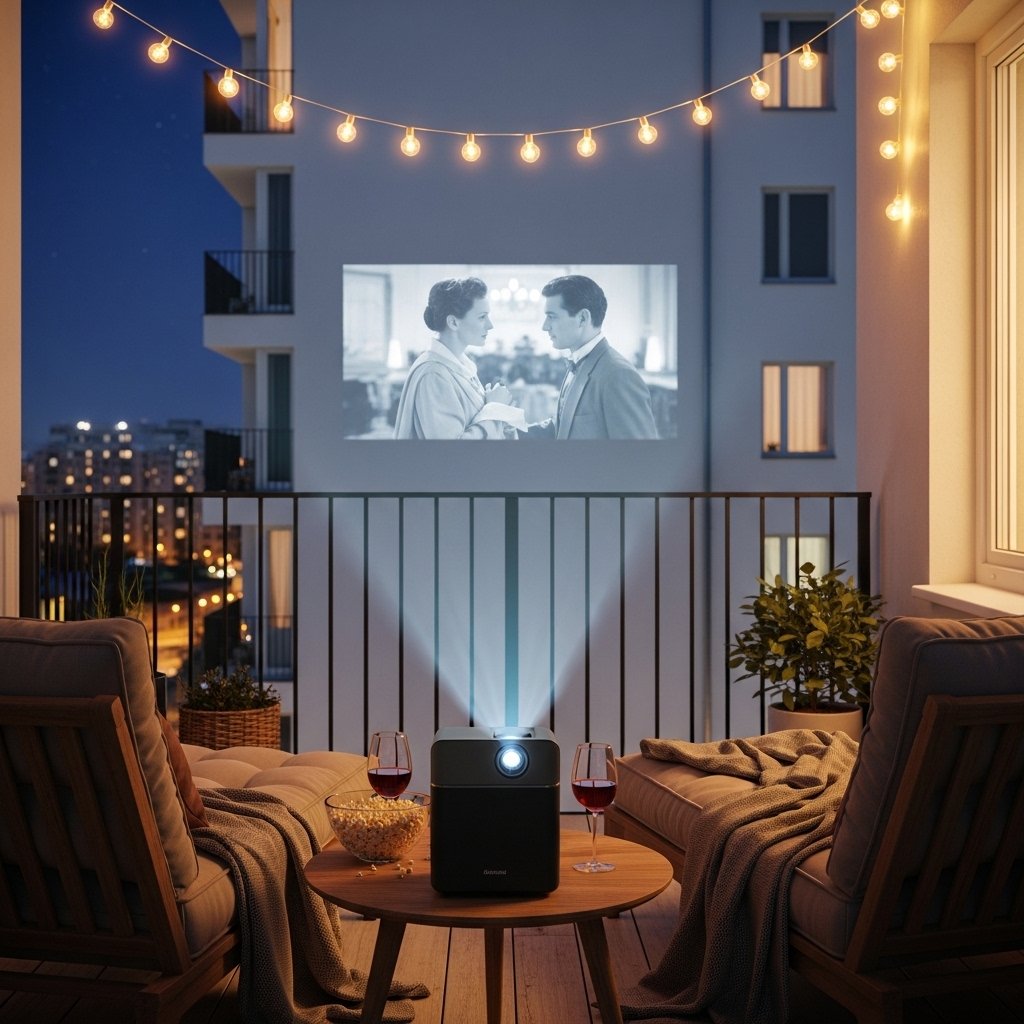
A balcony with adequate depth and a wall or external facade that can serve as a projection surface creates the possibility of an outdoor cinema experience that no indoor room of the same size can provide.
A compact projector, a white or pale wall, and outdoor seating positioned at the correct viewing distance creates a balcony cinema. The scale of the projection image on an external wall at close range creates a cinema experience that a standard television set cannot approach.
This setup requires darkness, which limits it to post-sunset use. It requires a projection surface that is flat and pale. And it requires a sound system that does not disturb neighbors at the necessary volume.
Used occasionally on warm summer evenings, an outdoor cinema setup transforms the balcony from a sitting area to an entertainment destination.
13. Maximizing a Tiny Juliet Balcony
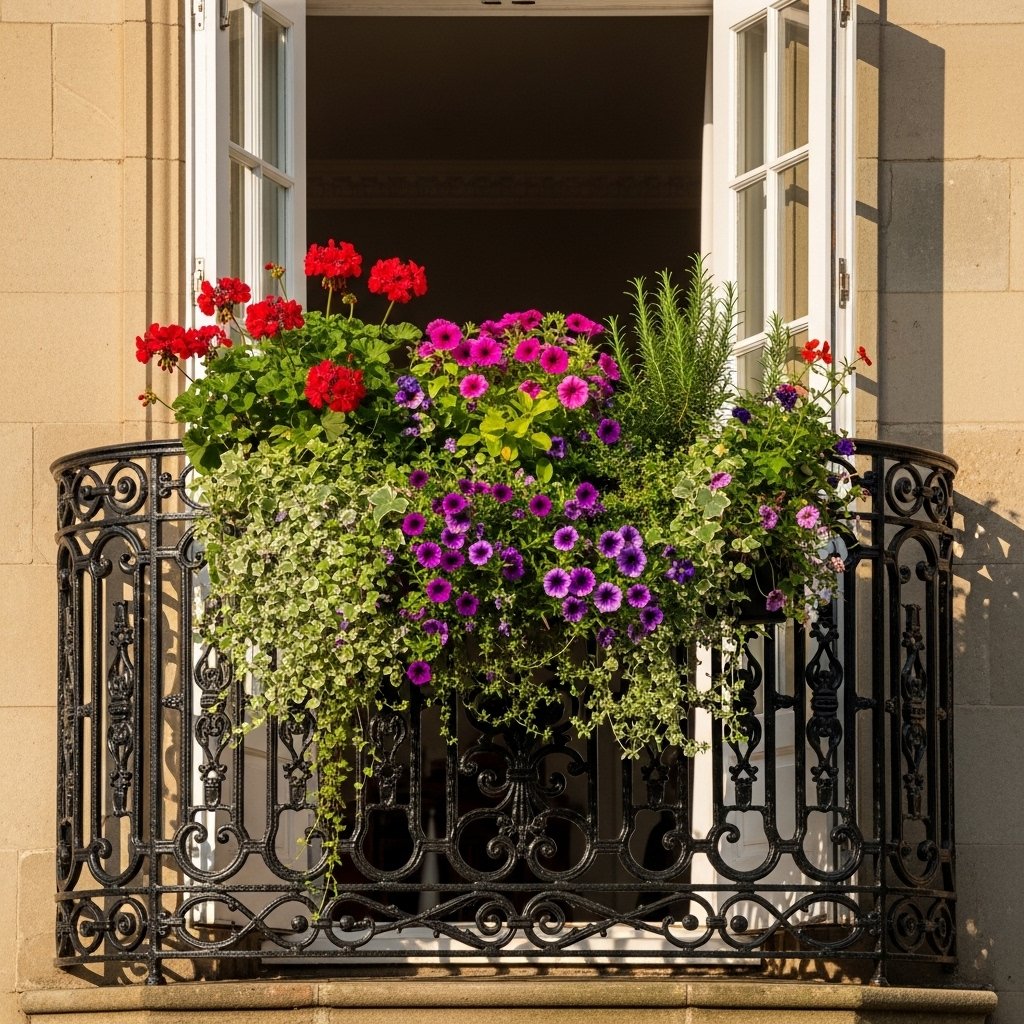
A Juliet balcony, a railing behind glass doors with no usable floor area, appears to offer no outdoor design potential. It offers more than it appears.
French doors thrown open to a Juliet balcony bring outdoor air, outdoor sound, and the psychological experience of outdoor connection into the interior room behind them. The room itself becomes the beneficiary of the balcony’s external quality.
A window box on the railing, visible from inside and outside simultaneously, creates a living garden moment at the window. Trailing plants that cascade down the outside of the railing and seasonal flowers that face inward toward the open room create beauty for both interior and exterior perspectives.
A candle or lantern placed on the railing’s inner ledge, visible from inside and reflecting in the glass doors when closed, extends the balcony’s atmospheric contribution beyond the moments when the doors are open.
14. Scent Planning for the Balcony
A balcony that smells deliberately beautiful is a balcony experience of a completely different quality from one that smells only of the city.
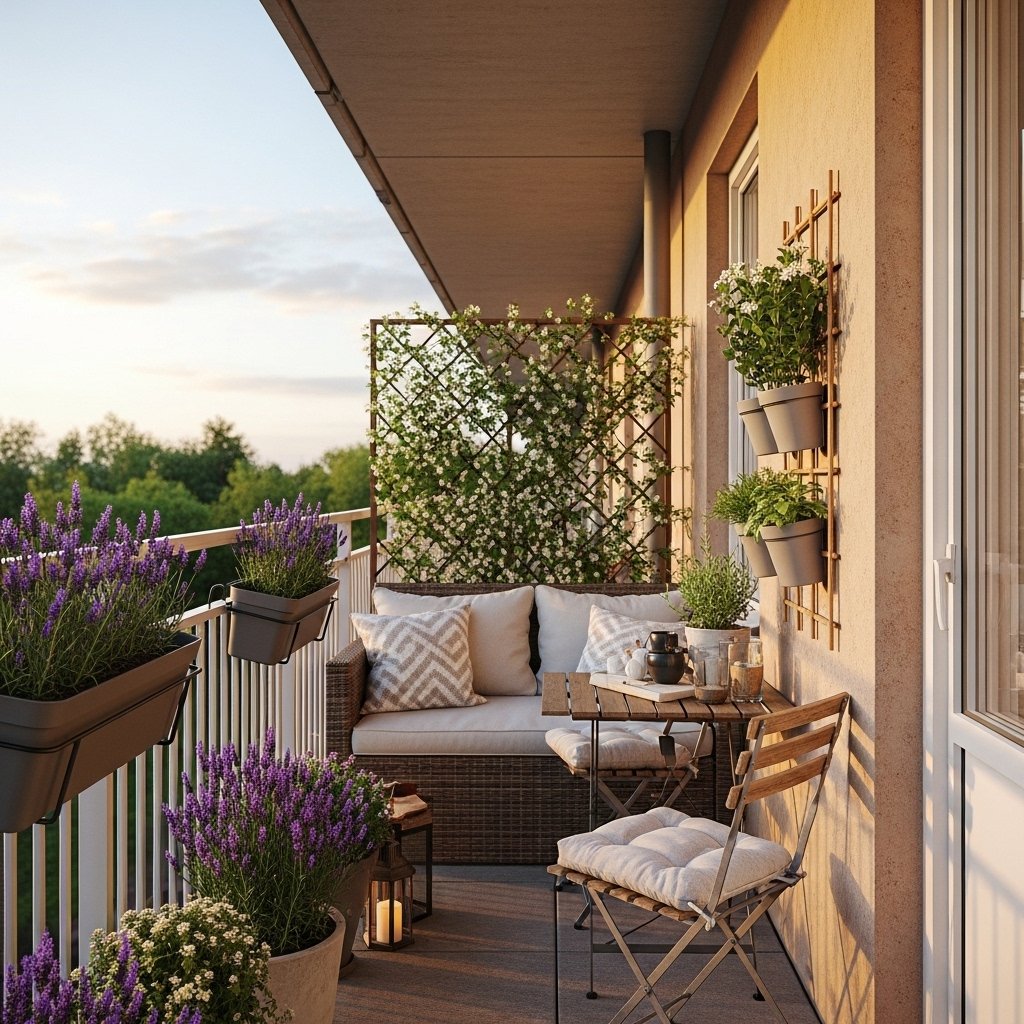
Lavender in large terracotta pots along the railing releases fragrance in warm afternoon sun with every movement of air. Jasmine trained on a small trellis creates a specific evening fragrance that makes the balcony worth going to after dark specifically for the scent.
Sweet peas in a compact container trail up a small trellis and release one of the most genuinely beautiful scents available in a container plant from late spring through summer.
Herbs used daily in cooking, basil and rosemary in particular, release fragrance when brushed, when warmed by sun, and when cut. The balcony that combines flowering scented plants with culinary herbs creates a fragrant experience that is simultaneously decorative and functional.