14 Farmhouse Kitchen Ideas That Feel Genuinely feel warm and bright
The farmhouse kitchen is the most imitated and most often failed interior in design history. Shiplap, open shelving, a farmhouse sink, and the word “gather” on a sign does not make a farmhouse kitchen. It makes a set for a home renovation television program.
The genuine farmhouse kitchen is defined by function, material honesty, and the accumulated quality of a space that has been used for cooking for decades. These 14 ideas build toward that authentic quality.
1. A True Butler’s Sink as the Kitchen’s Heart
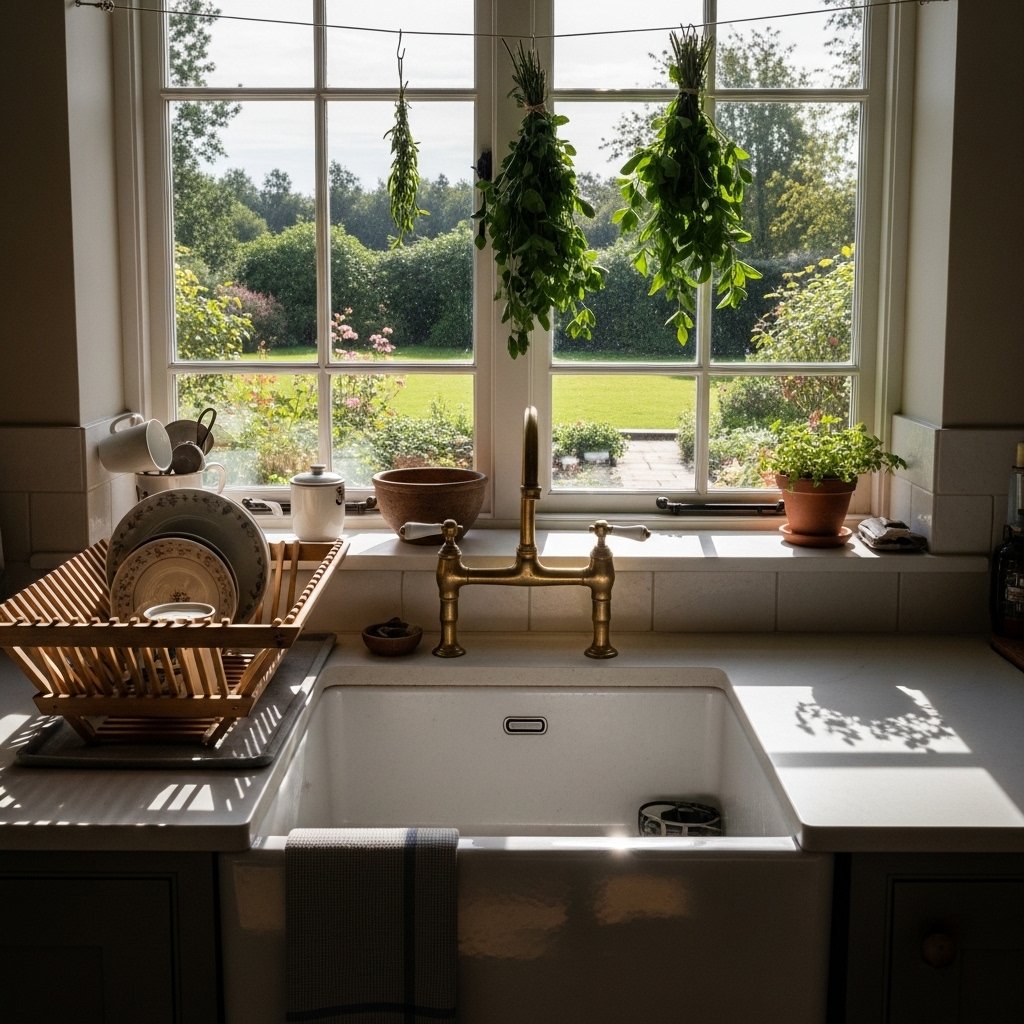
The farmhouse or butler’s sink, deep, rectangular, ceramic, and substantial in scale, is the single item most associated with the farmhouse kitchen and the one item that genuinely earns its association.
The depth of a true butler’s sink, typically 20–25cm, accommodates large pots, roasting trays, and the practical requirements of serious cooking in a way that shallow modern sinks cannot. The ceramic surface is non-reactive, heat resistant, and develops a surface patina over years of use that makes it more beautiful over time.
Belfast sink in classic white fireclay. Apron-front sink in aged ceramic. Double butler’s sink with a wooden draining rack. Each variation communicates the same thing: this kitchen was designed for actual cooking rather than for the appearance of cooking.
Position it under a window. The farmhouse kitchen tradition of the window above the sink exists because the person washing up in that kitchen spent significant time at that position and deserved a view. The tradition is correct. Honor it.
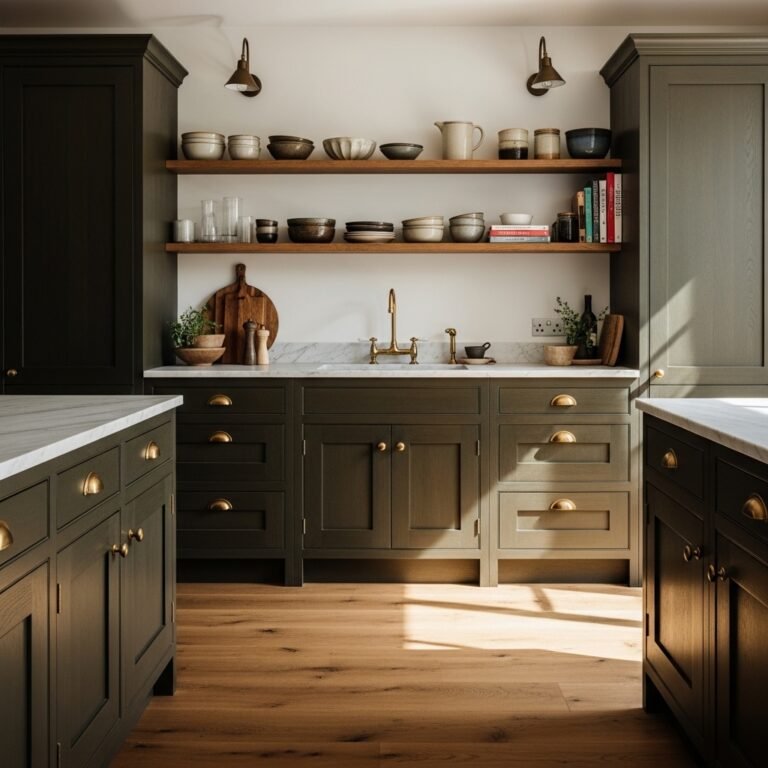
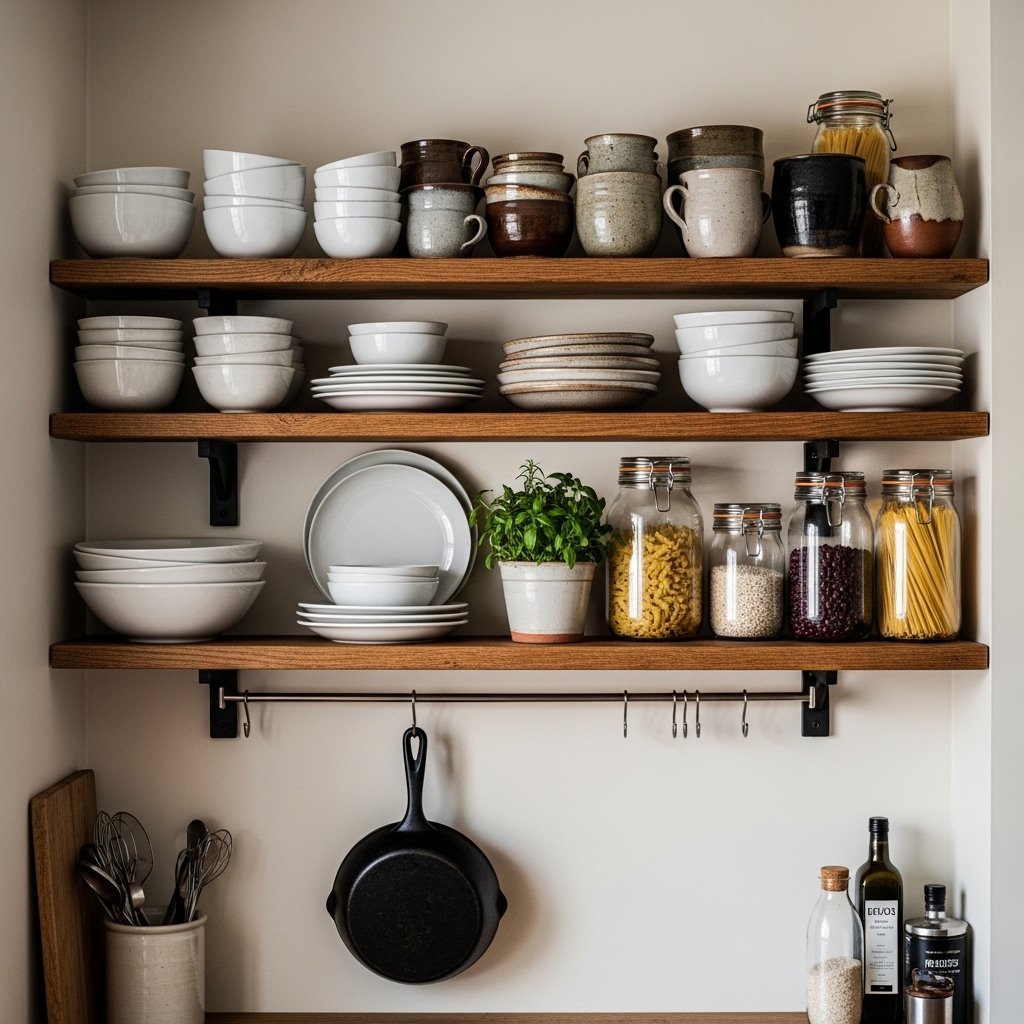
2. Open Shelving in Aged Timber
Open shelving in a farmhouse kitchen is not a trend response. It is the continuation of a storage tradition that predates fitted cabinetry by several centuries.
Before upper cabinets existed, farmhouse kitchens stored dishes, glasses, and provisions on open shelves. The display of everyday objects on open shelves is the farmhouse kitchen’s natural state. The closed upper cabinet is the modern intervention.
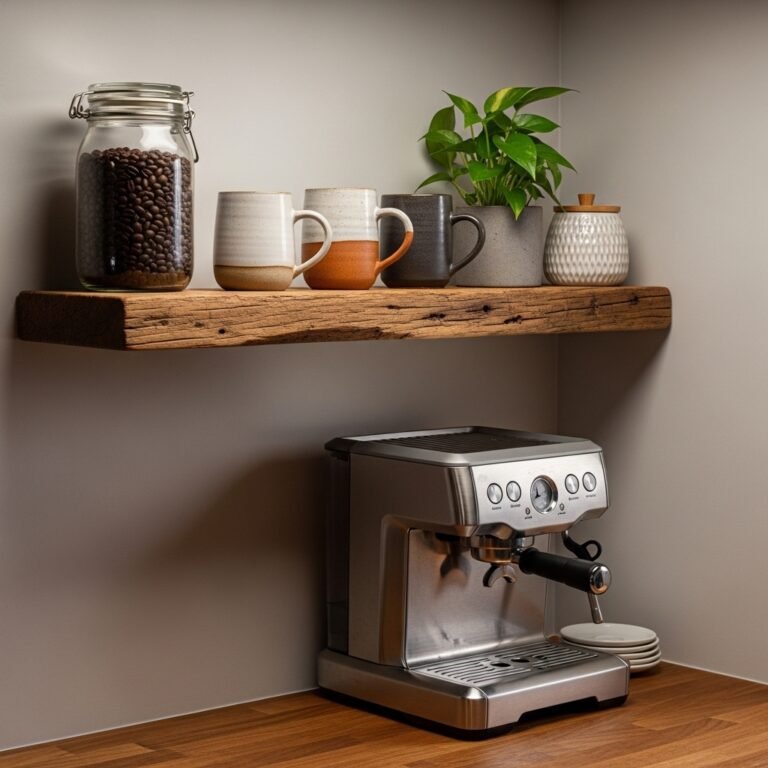
Reclaimed timber shelves with visible saw marks, nail holes, and the surface patina of age carry the farmhouse quality that new timber shelves, however well-finished, do not. Source from reclaimed timber suppliers, salvage yards, or timber merchants who stock architectural salvage.
Style with everyday objects: the dishes you actually use, the ceramics you find beautiful, the jars that hold provisions. Not objects purchased for the shelf. Objects that live there because they belong there.
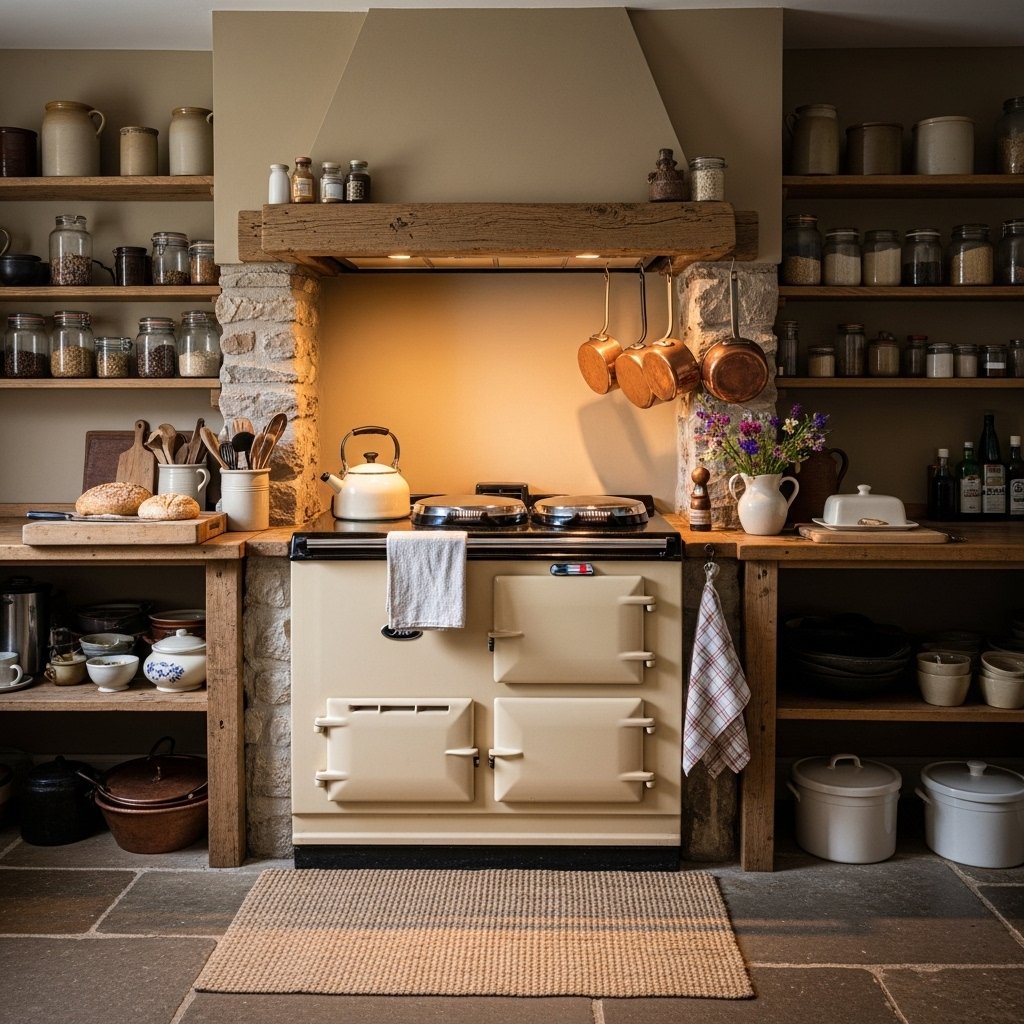
3. A Range Cooker as the Kitchen’s Architectural Center
A range cooker in a farmhouse kitchen occupies the position that the fireplace occupies in the farmhouse living room. It is the room’s heat source, its cooking center, and its architectural anchor simultaneously.
A traditional range cooker in cream, dark green, or classic black, set into an original chimney breast or alcove, with a extractor hood above finished in matching painted timber or raw stone, creates a cooking zone with genuine architectural presence.
The range cooker’s physical mass, the substantial weight and size of a quality range, creates a piece of kitchen furniture that reads as permanent rather than installed. It suggests that the kitchen was built around it rather than that it was added to an existing kitchen.
Position the kitchen’s social zone, the island or the table, to face the range. The cook should be part of the room’s social life, not turned away from it.
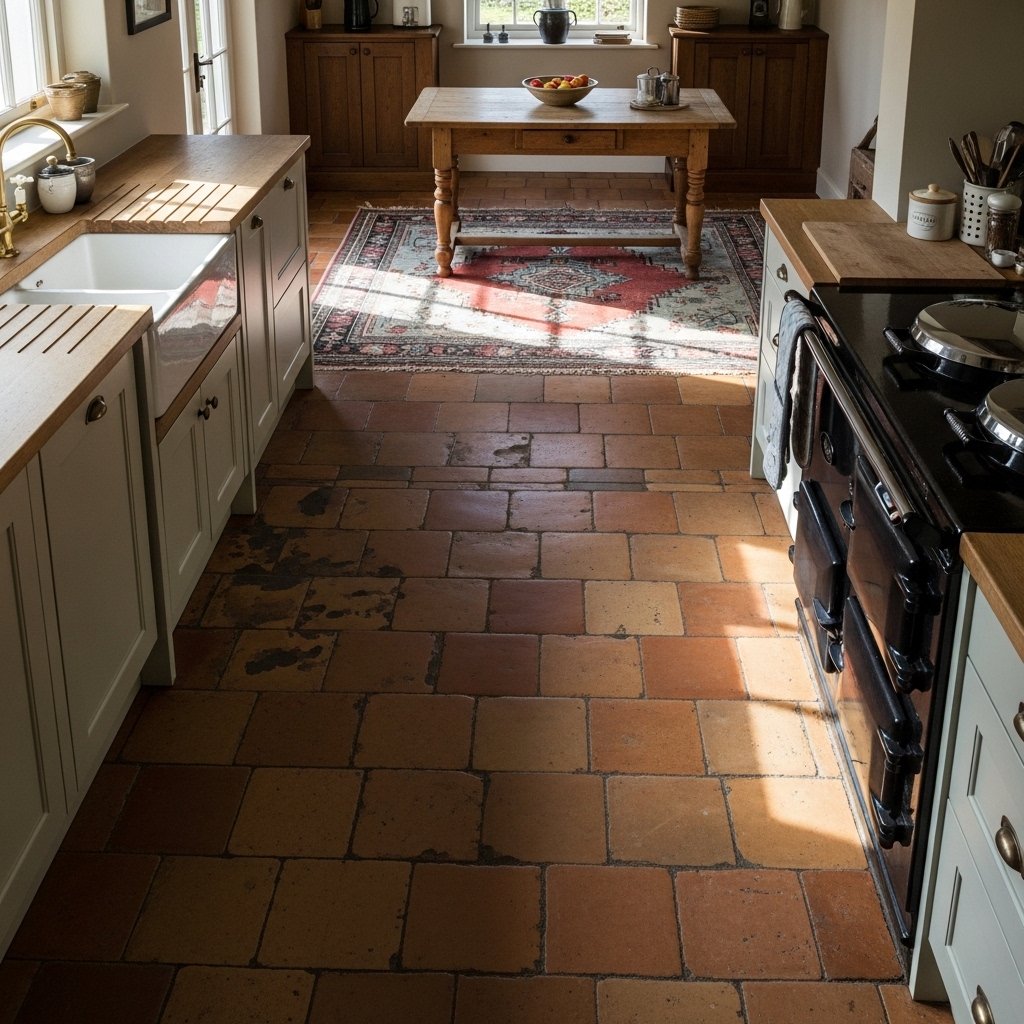
4. Reclaimed Stone or Quarry Tile Floors
The farmhouse kitchen floor has been walked on by multiple generations and it shows. The stone or quarry tile floor in a genuine farmhouse has a surface worn smooth in the most-trafficked areas, a patina of use that no new tile replicates, and a warmth from the heat that radiates into it from the range cooker over decades.
Reclaimed quarry tile, sourced from architectural salvage suppliers, carries this quality immediately because it is genuine rather than approximated. The worn surfaces, varied color depths, and slightly irregular dimensions are the marks of a previous life.
New quarry tile in terracotta red or buff tones, installed with intentionally irregular spacing and with a natural oil rather than a synthetic sealant, develops the correct quality over time. The farmhouse floor is a patient investment.
Underfloor heating beneath a stone or quarry tile farmhouse kitchen floor converts a beautiful but cold surface into the most hospitable floor in the home.
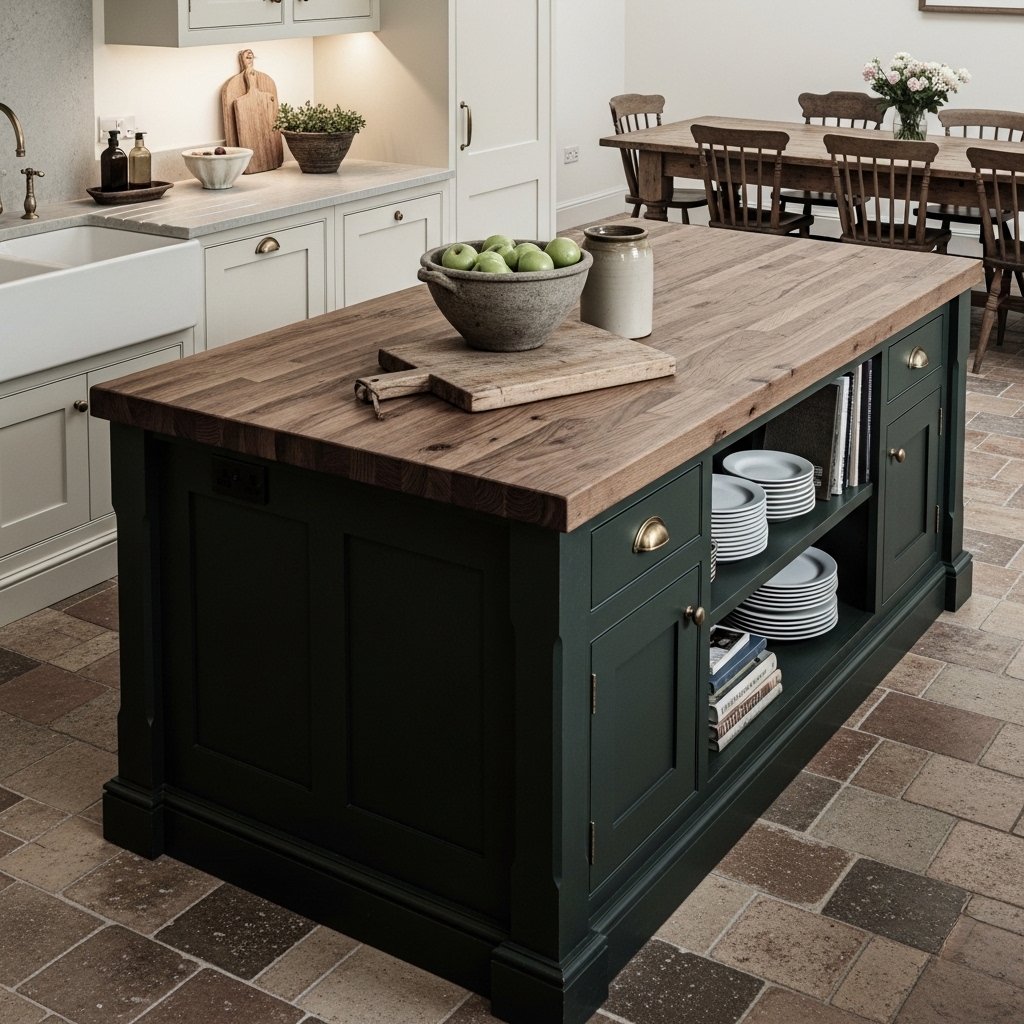
5. A Painted Kitchen Island With Contrasting Color
The farmhouse kitchen island in 2026 is not the matching-everything kitchen island of the contemporary open plan. It is a piece of furniture that appears to have been repurposed from a previous life and positioned in the kitchen.
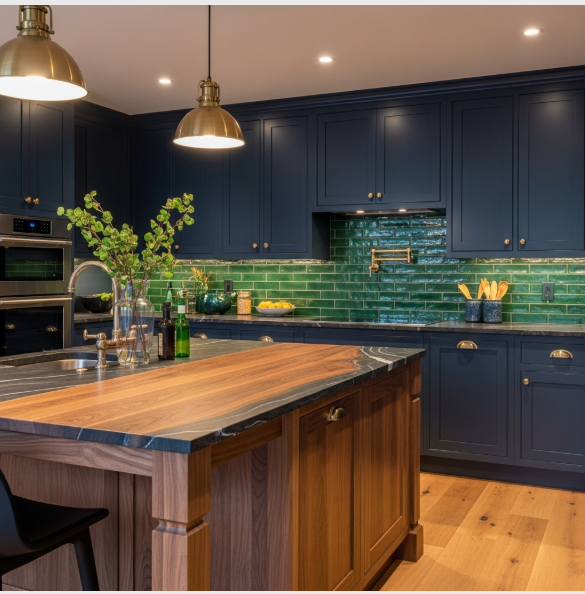
A large painted island in a contrasting color to the perimeter cabinetry, dark green island against cream perimeter cabinets, deep navy island against white perimeter, or unpainted timber island against painted surround, creates the visual impression of a found object integrated into the kitchen rather than a designed-and-manufactured matched set.
The island top material should differ from the perimeter countertop. Thick butcher block timber on the island against stone on the perimeter. Aged zinc on the island against ceramic tile on the perimeter. The material differentiation confirms the island’s status as a different object.
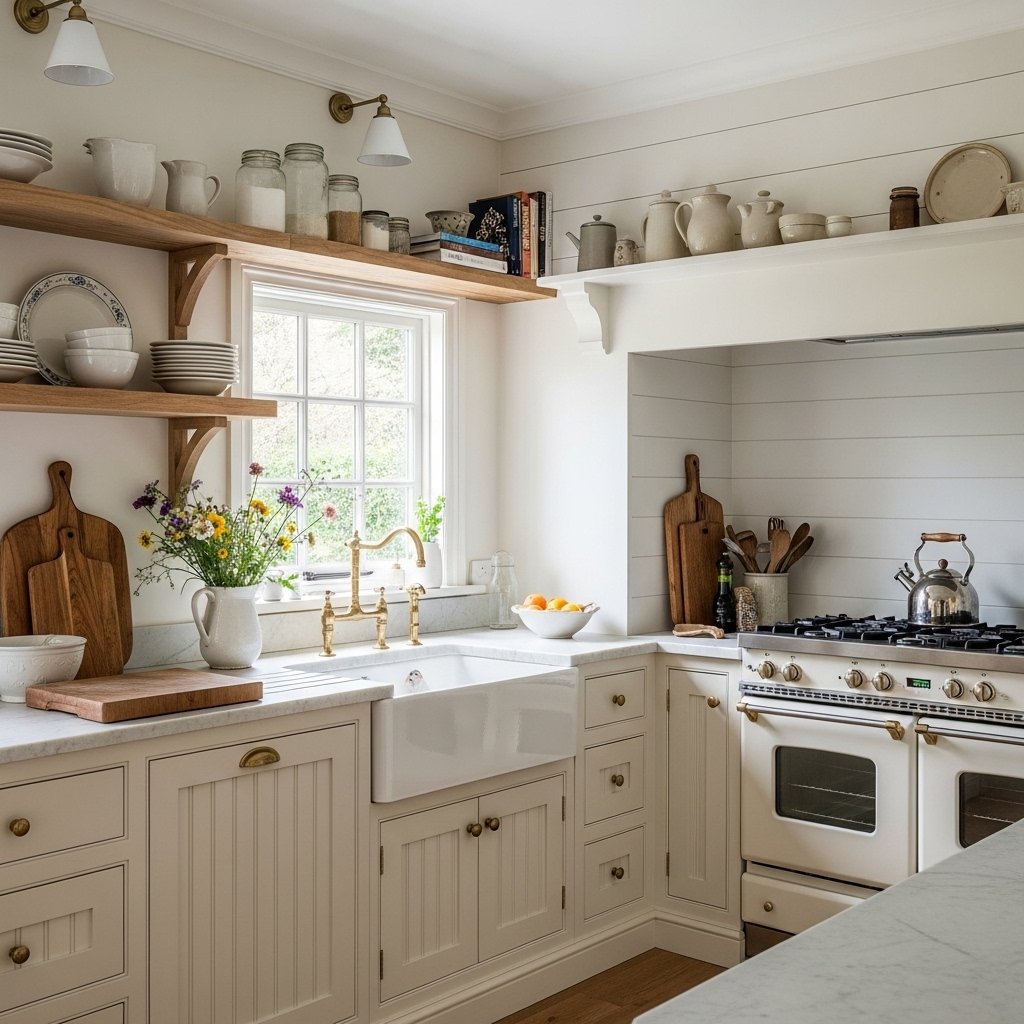
6. Beadboard or Shiplap Cabinet Doors
Beadboard panelling on cabinet doors is the farmhouse kitchen’s specific contribution to cabinetry design. The vertical or horizontal groove pattern of beadboard creates a cabinet door surface with depth and character that flat-front cabinet doors consistently lack.
Painted white or in a soft warm colour, beadboard cabinet doors create a kitchen with the specific quality of the old painted farmhouse utility room: clean, simple, functional, and quietly beautiful.
Full-height shiplap on the wall above or below open shelving, in the range alcove, or on the island side panels carries the same material language into the wall surfaces and creates a kitchen where every surface shares a material tradition.
Apply beadboard to lower cabinets with open or glass-fronted upper sections for a kitchen that is simultaneously traditional and practical.
7. Copper and Brass Cookware on Display
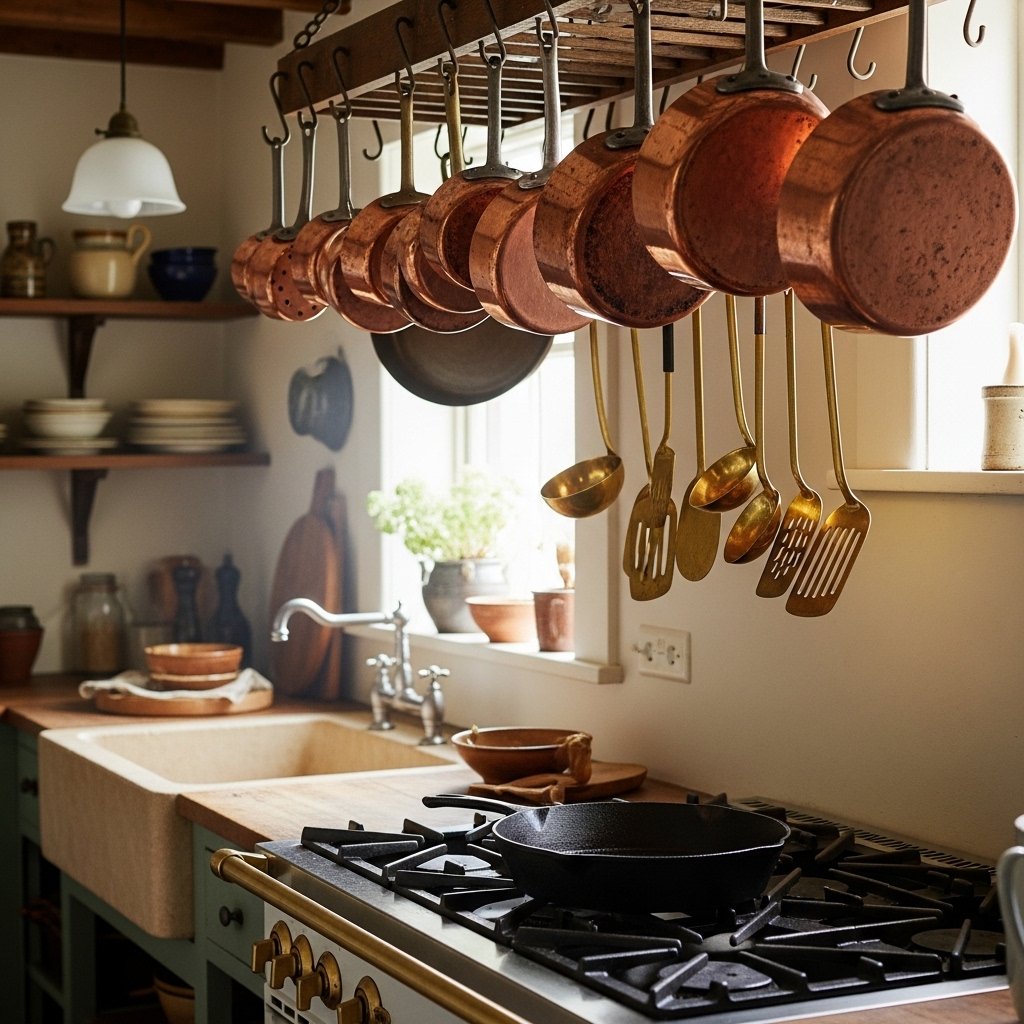
In a genuine farmhouse kitchen the cookware is not hidden. It hangs from ceiling beams, sits on open shelves, and occupies the wall beside the range in a display that is both functional and beautiful.
A collection of copper pans in varying sizes hung from a ceiling-mounted pot rack or from hooks on a wall-mounted rail creates a display with warm, reflective material quality that no decorative object can replicate. The copper develops patina over time, darkening and warming in tones that make the collection more beautiful with every year of use.
Brass ladles, copper measuring cups, cast iron skillets, and aged tin storage tins all belong to the farmhouse kitchen’s displayed cookware tradition. Each object earns its display position by being both beautiful and genuinely used.
The test: if you would not cook with it, it should not be hanging in a farmhouse kitchen as decoration. Unused display cookware reads as theatre.
8. A Large Farmhouse Table in the Kitchen
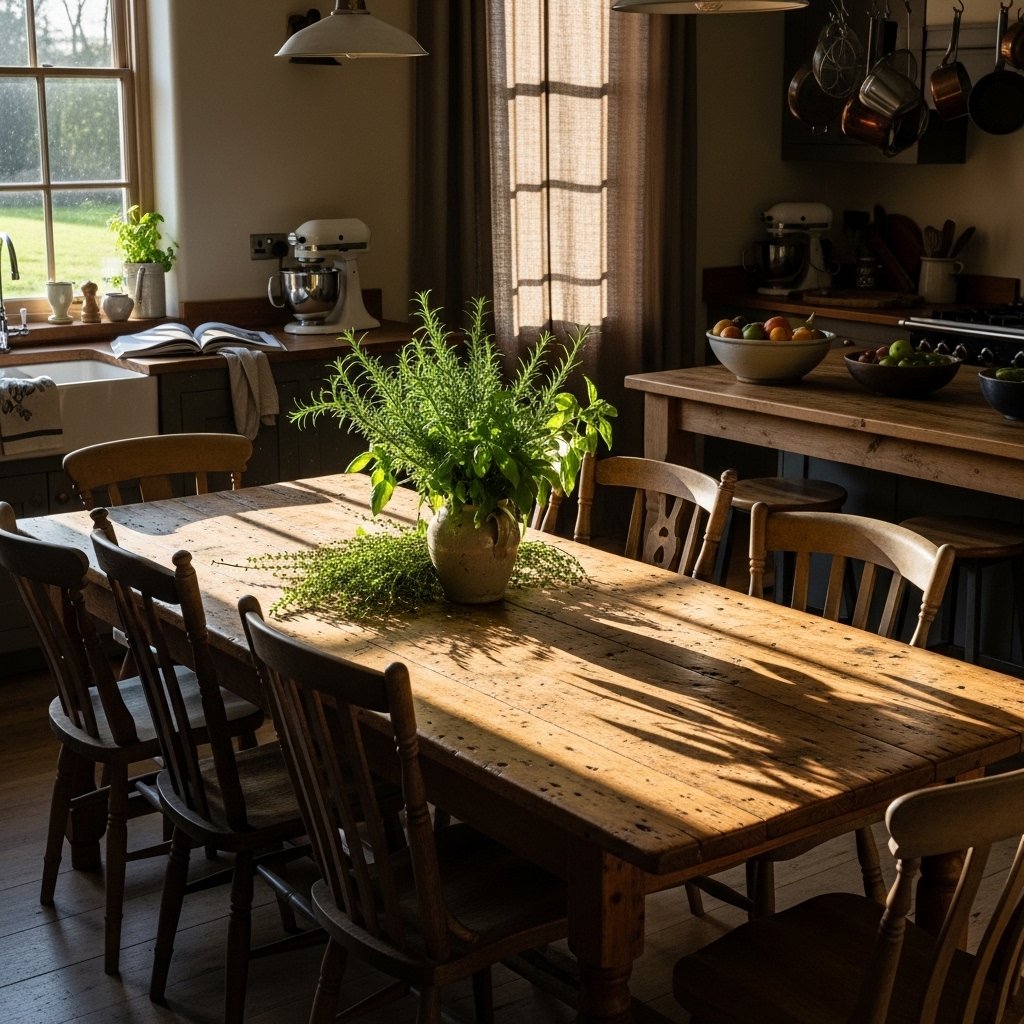
The farmhouse kitchen table is not a breakfast bar. It is not a kitchen island with stools. It is a proper table, large enough for the household and one or two extra, positioned in the kitchen because the kitchen is where the household gathers.
A large reclaimed timber table, six to eight chairs, positioned in the kitchen proper rather than in a separate dining room creates the room’s social center. The cook is part of the conversation. Prep happens at the table alongside people sitting with coffee. The distinction between kitchen and dining room dissolves.
The table should be large enough to feel generous. A table that seats six but appears to strain at the task is not generous. A table that seats six with room to spread out a cook’s preparation alongside people eating is the correct scale.
Mismatched chairs, different timber chairs that share a color or material language, create the collected quality appropriate to a kitchen table that has been used for a long time.
9. Painted Cabinets in Heritage Colors
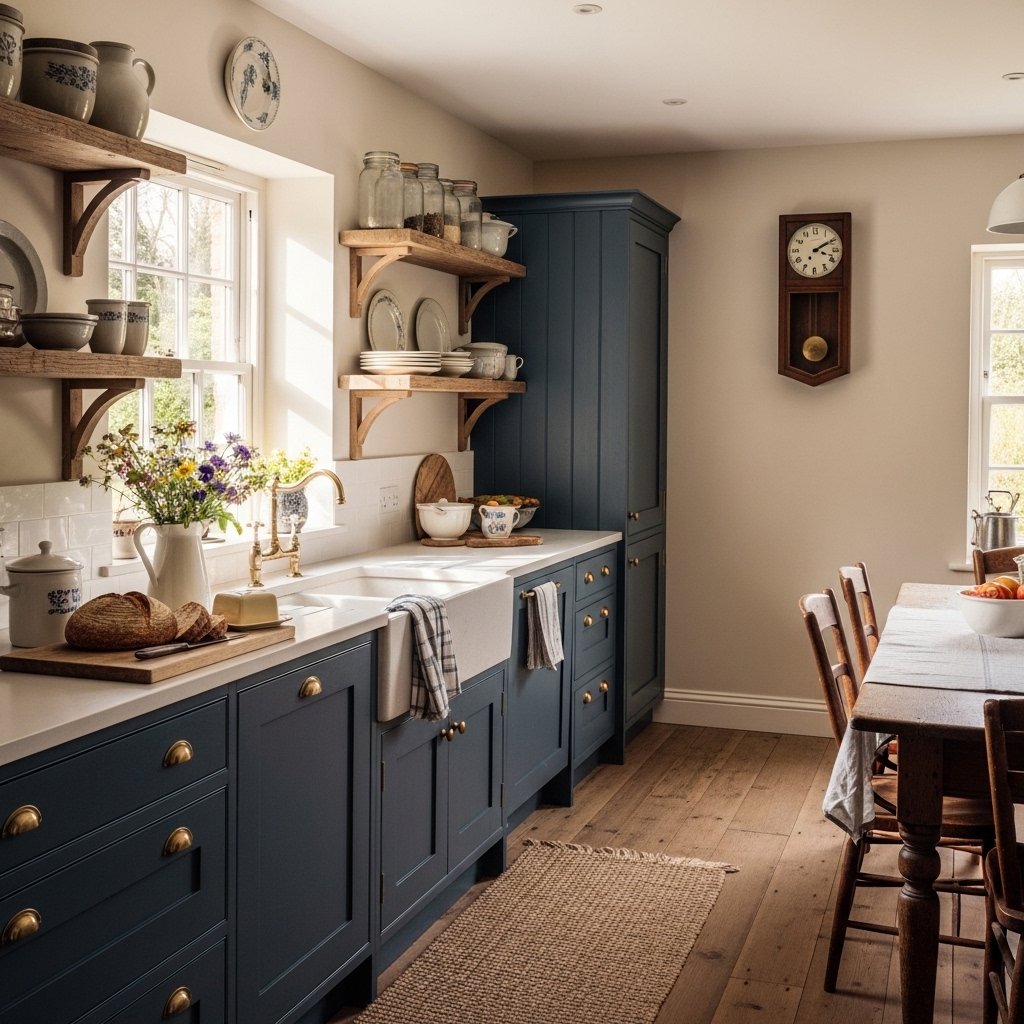
The farmhouse kitchen cabinet color is not white. White is the default. The farmhouse heritage cabinet color is the deep, slightly complex tone of a paint that has been mixed to match a specific regional agricultural tradition.
Farrow and Ball’s Mole’s Breath, Deep Roo, Railings, or Pigeon. Little Greene’s Livid, Basalt, or Obsidian. The heritage paint ranges developed from natural pigment traditions produce farmhouse kitchen cabinet colors with a depth and complexity that standard white paint ranges cannot approach.
Deep blue-grey, sage green, warm charcoal, and dusty green are the farmhouse cabinet heritage colors most consistent with the 2026 direction of the aesthetic. Each creates a kitchen with a specific regional character that white cabinets, however well made, do not communicate.
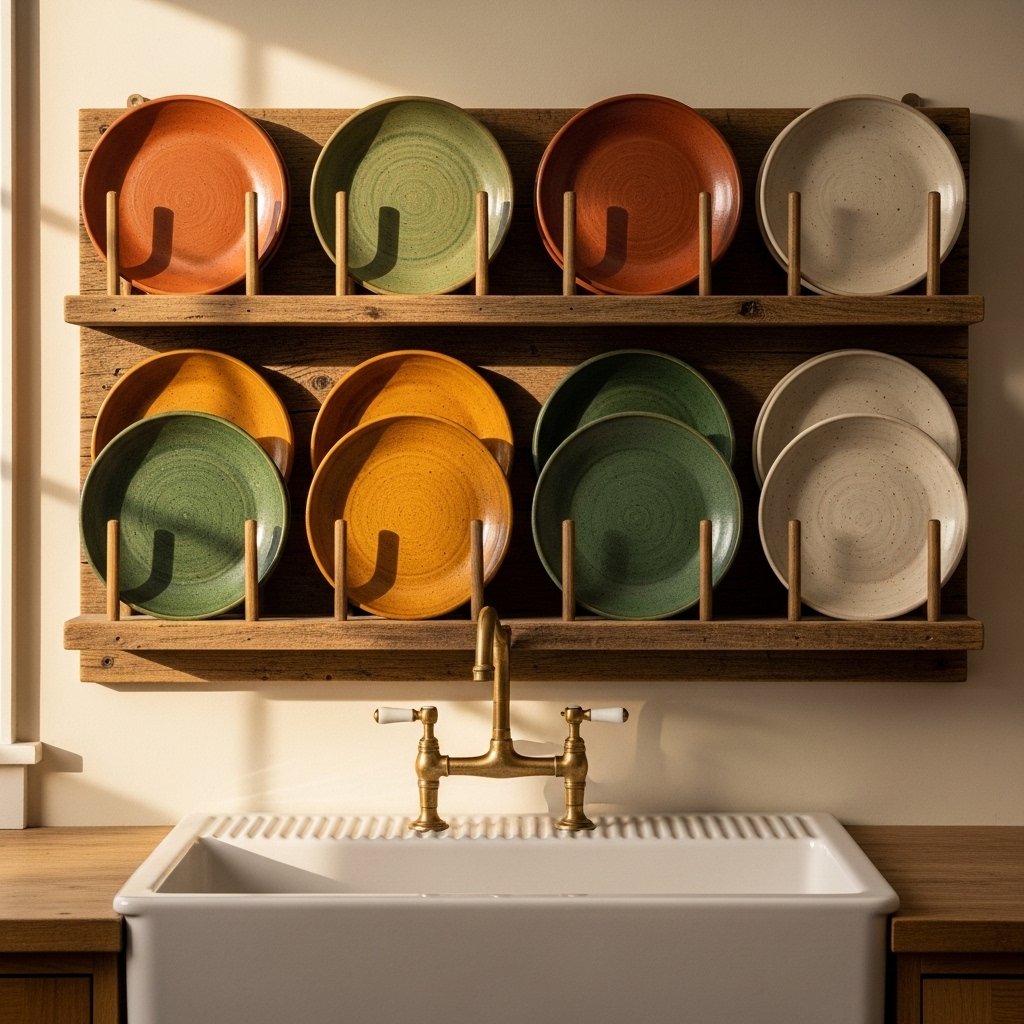
10. A Plate Rack as Functional Display
The plate rack, a wall-mounted rack that holds dinner plates vertically on display above or beside the sink, is the farmhouse kitchen’s most direct expression of the principle that functional objects are displayed because they are beautiful.
A reclaimed timber plate rack holding twelve everyday ceramic dinner plates beside the butler’s sink creates a display that is simultaneously storage and decoration. The plates are accessible. Their faces are visible. The rack itself, whether in timber with shaped slots or in painted metal with individual compartments, is an object with its own material quality.
A plate rack filled with matching handmade ceramic plates in a consistent glaze color creates a display with genuine visual impact. The same rack with mismatched vintage plates creates a display that reads as collected and personal.
The plate rack is a commitment to the open storage philosophy. The plates it holds must be beautiful enough to be seen every day. Any plate not beautiful enough to be seen daily does not belong in the rack.
11. Vintage Glass-Front Upper Cabinets
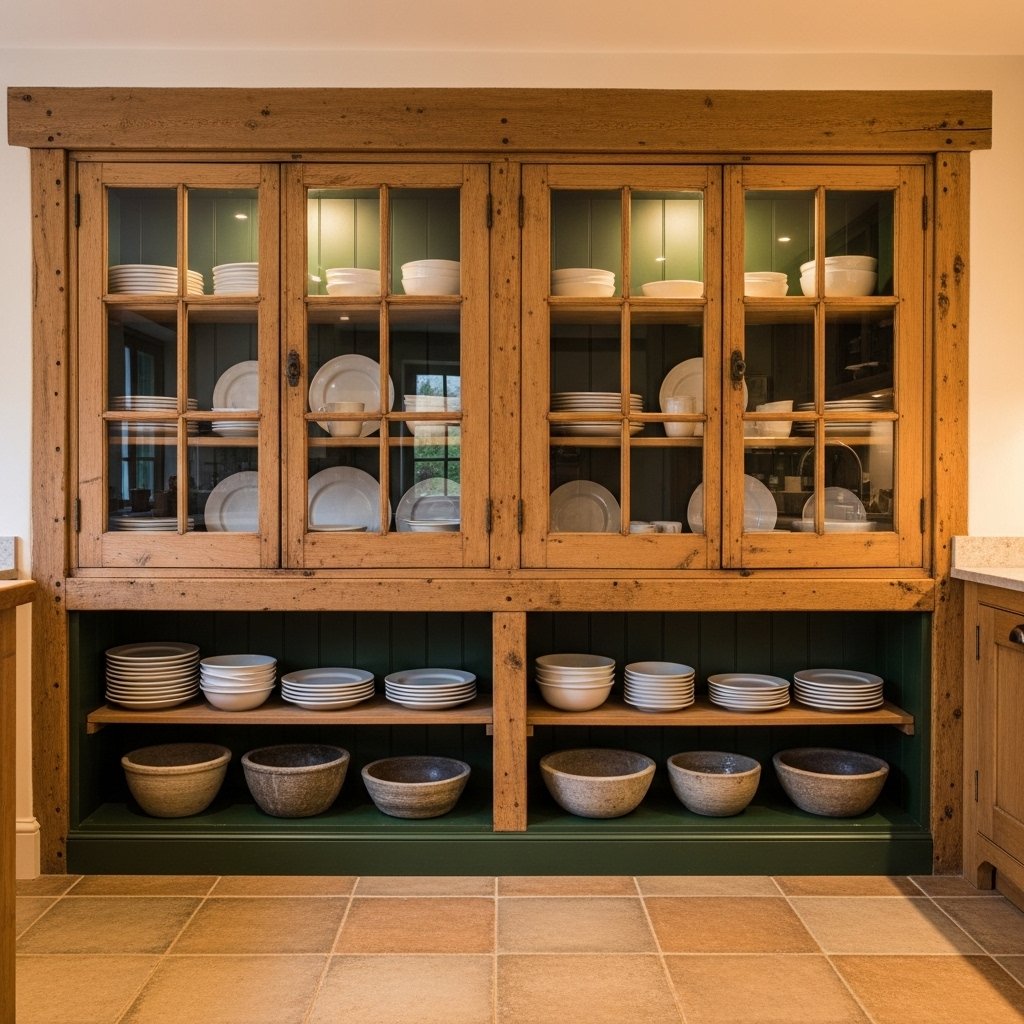
Glass-front upper cabinets in a farmhouse kitchen create a display zone that is part of the kitchen’s visual story rather than a concealed storage system.
Aged timber-framed glass cabinet doors with individual panes rather than a single sheet of glass create the specific farmhouse quality of a cabinet that appears to have always been in the kitchen rather than one that was installed last year.
Style the interior of glass-front cabinets as deliberately as any other display surface. Two or three rows of displayed objects with consistent color and material language: all white ceramic, all clear glass, all stoneware in earth tones. The discipline of the internal display makes the glass-front cabinet a designed element rather than a visible storage unit.
Paint the interior back panel of glass-front cabinets a contrasting deep color to create depth and make displayed objects appear more vivid.
12. Fresh Herbs Growing on the Windowsill
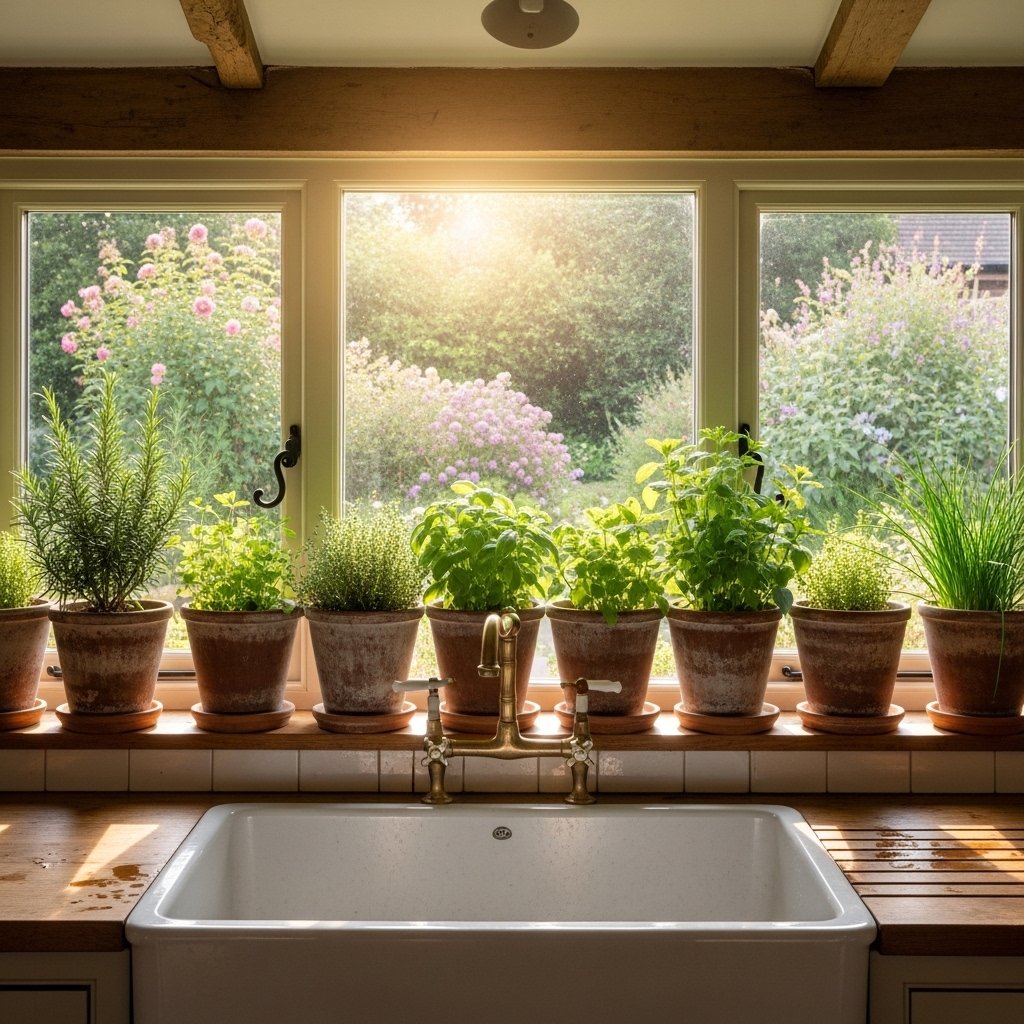
The farmhouse kitchen windowsill with actively growing herbs is not a decorative choice. It is a functional choice that happens to be one of the most beautiful things available to a kitchen.
A collection of terracotta pots holding rosemary, thyme, basil, mint, chives, and flat-leaf parsley on the kitchen windowsill above the sink creates a permanent fresh herb supply at arm’s reach while creating a living, fragrant display at the most important sight line in the kitchen.
The pots should be consistent: all terracotta, all the same size, in a row. The consistency of the vessels makes the variety of the plants appear deliberate rather than accumulated.
Water them. Use them. Replace them when they exhaust themselves. A windowsill of dead herbs is not a farmhouse kitchen moment. A windowsill of healthy, actively used herbs that smell of summer when you brush your hand across them is exactly that.
13. Timber Ceiling Beams
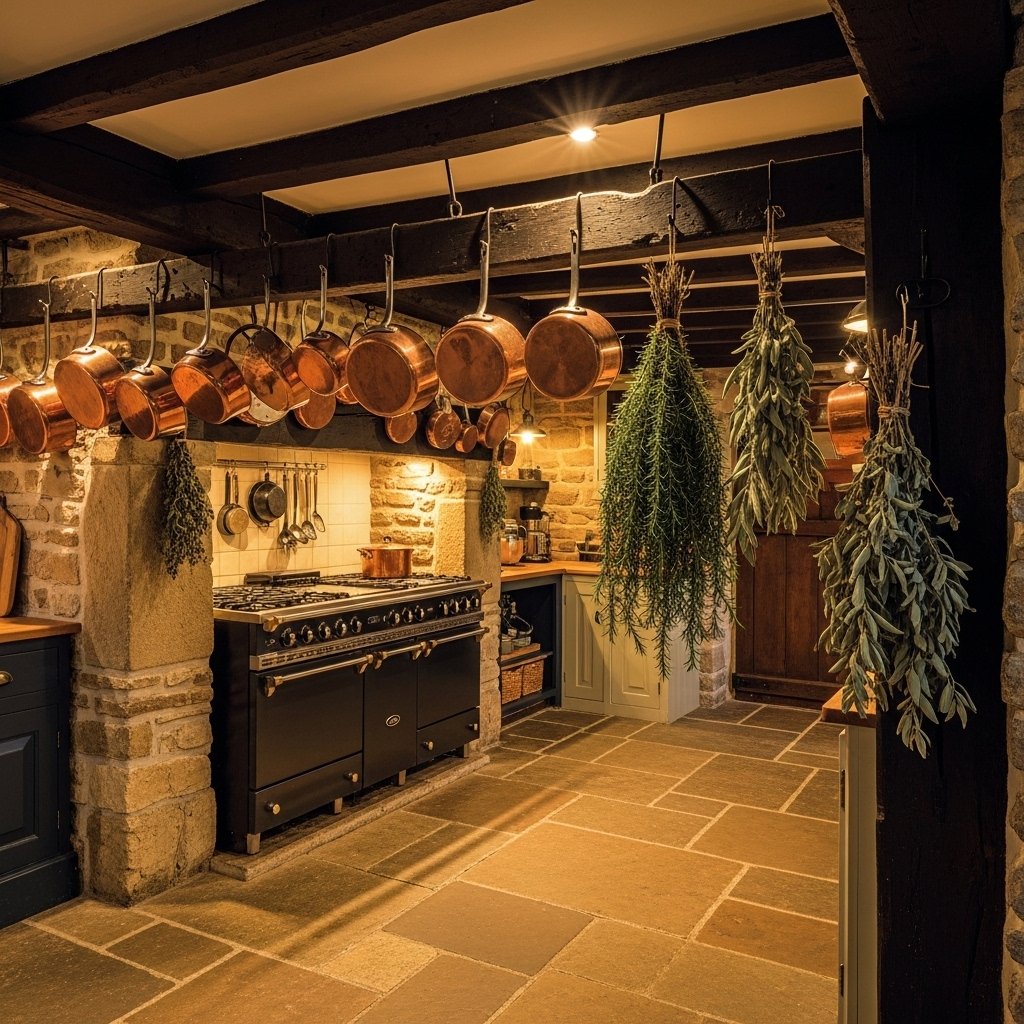
Exposed timber ceiling beams in a farmhouse kitchen are the structural element that communicates more about the building’s age and agricultural origin than any other single feature.
Original beams, if present, should be cleaned and oiled rather than painted or covered. The saw marks and tool marks in original hand-hewn beams are historical documents as much as structural elements. Painting them is the erasure of that record.
Added beams, if the original structure does not include them, should be in reclaimed timber rather than new timber dressed to appear aged. Genuine reclaimed beams carry the weathering, color variation, and nail holes of their previous structural life. New timber stained to look old carries none of these qualities convincingly.
Position pot hooks on the beams. Hang dried herbs and dried flower bunches from the beams. Use the vertical space the beams create rather than treating them only as ceiling features.
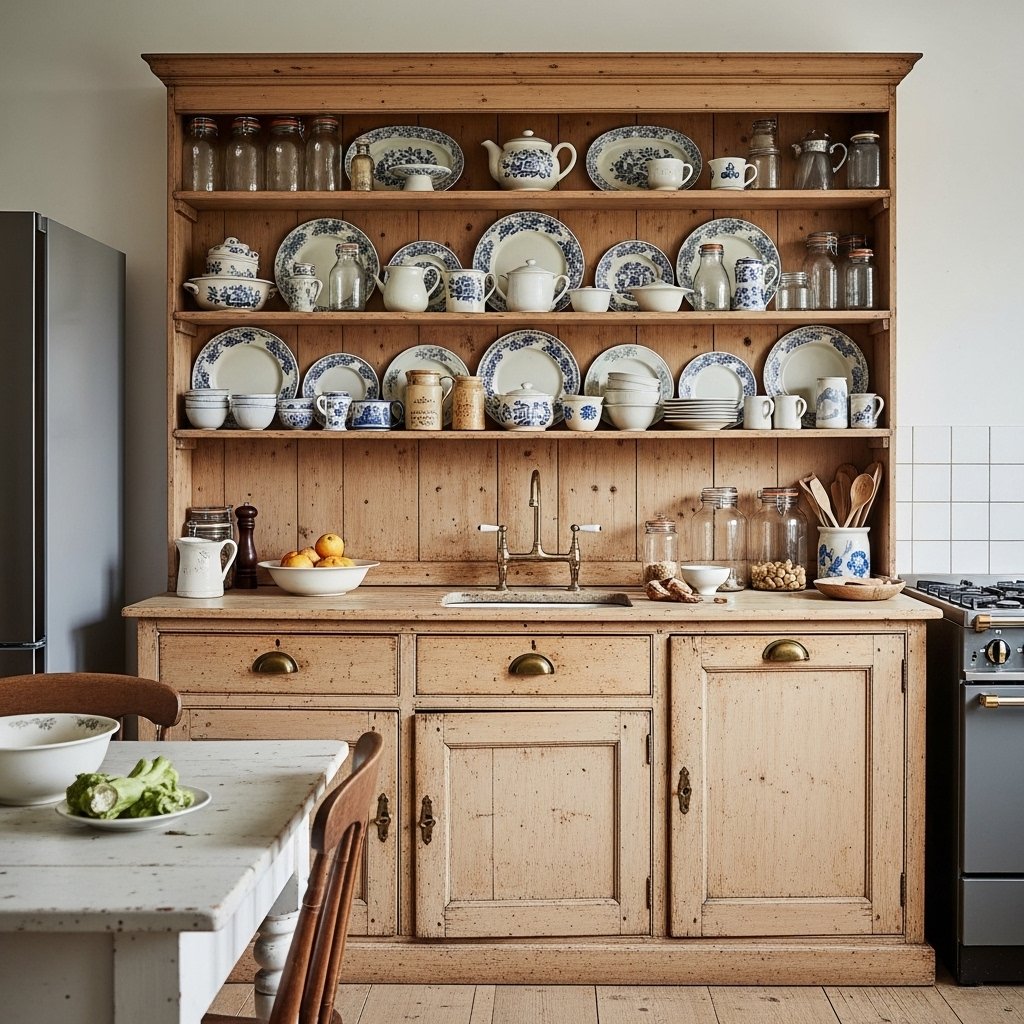
14. A Dresser as the Kitchen’s Display Furniture
The kitchen dresser, a freestanding piece of furniture with a base of cupboards and drawers and an upper structure of open shelves and display space, is the farmhouse kitchen’s alternative to fitted cabinetry.
A large pine or painted hardwood dresser against the kitchen wall, its upper shelves displaying china, ceramics, and provisions, and its lower cupboards holding everything not beautiful enough to see, creates a kitchen with the warm, domestic character of furniture rather than the functional character of fitted units.
The dresser’s age and patina are part of its quality. A dresser that has been in a kitchen for generations, with the surface evidence of decades of use, the paint worn at the edges, the handles darkened by hands, is the most authentic piece of furniture available to a farmhouse kitchen.
Source from estate sales, antique dealers, and rural auction houses. The real dressers exist and are frequently undervalued.