14 Kitchen Backsplash Ideas That Make the Whole Kitchen
The backsplash is the smallest significant surface in a kitchen. It covers less area than the floor, less than the countertop, and far less than the walls. And yet it makes more of a visual impact than any of them.
This is because the backsplash sits at eye level, between the two surfaces the eye moves between most frequently in a kitchen: the counter and the upper cabinets. It is the surface most seen and most considered during the daily work of cooking.
Get the backsplash right and the entire kitchen coheres. Get it wrong and no amount of expensive cabinetry or countertop stone recovers the room.
These 14 ideas cover every direction the kitchen backsplash can go at its most beautiful and most considered.
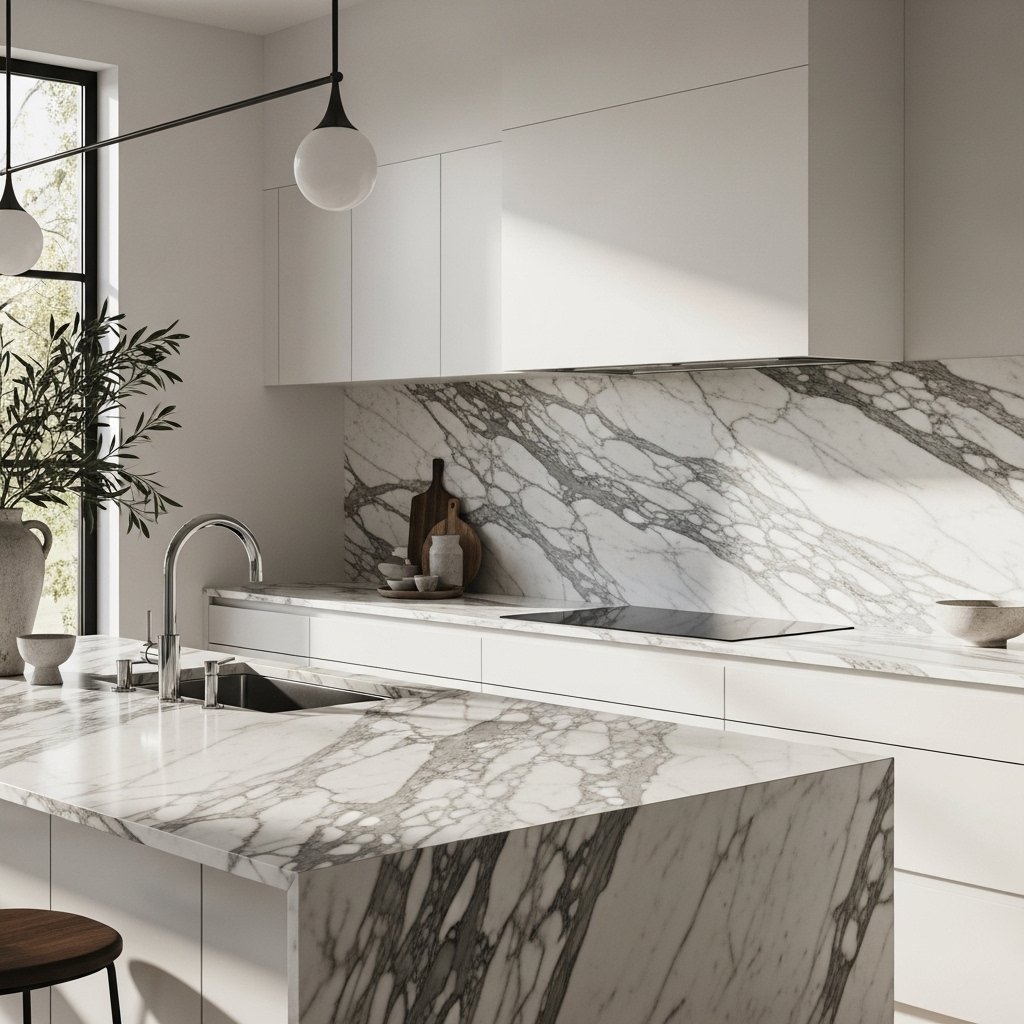
1. Full-Height Slab Backsplash in Matching Countertop Stone
The most sophisticated backsplash decision available is the one that removes the backsplash as a separate design element entirely by continuing the countertop stone up the wall as a seamless slab.
A marble, quartzite, or engineered stone countertop extended up the wall to the underside of the upper cabinets in one continuous material creates a kitchen where the counter zone reads as a single designed surface rather than a countertop, a grout line, and a tile.
The absence of grout lines is both a visual and a practical benefit. No grout lines means no grout discoloration, no grout cleaning, and no visual interruption to the stone’s natural veining. The vein runs from counter surface up the wall in an unbroken line.
Bookmatching the backsplash slab to the countertop slab, using adjacent cuts from the same block so the veining mirrors across the seam, creates a geological pattern that is unique to that specific kitchen.
2. Handmade Zellige Tile
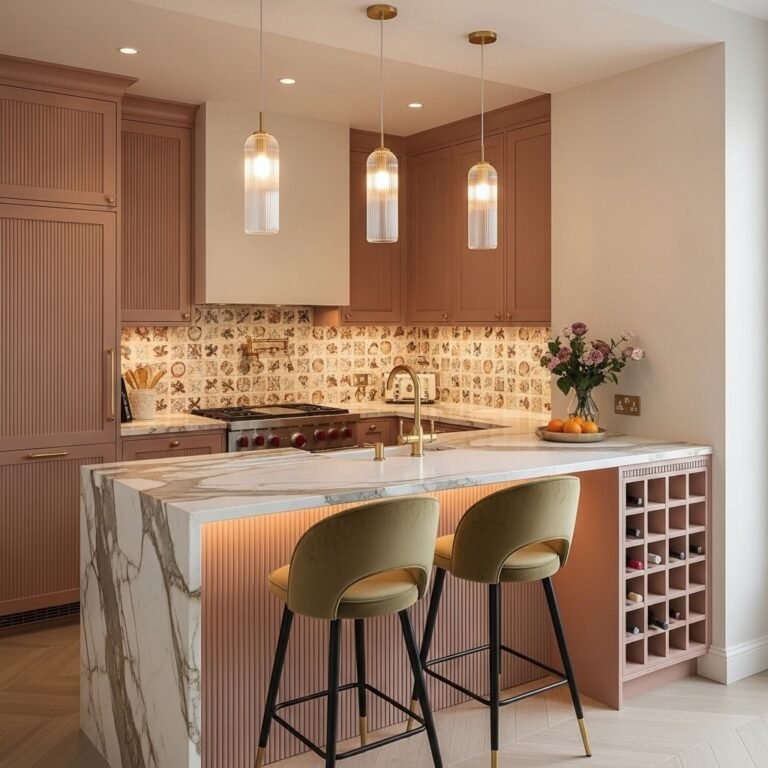
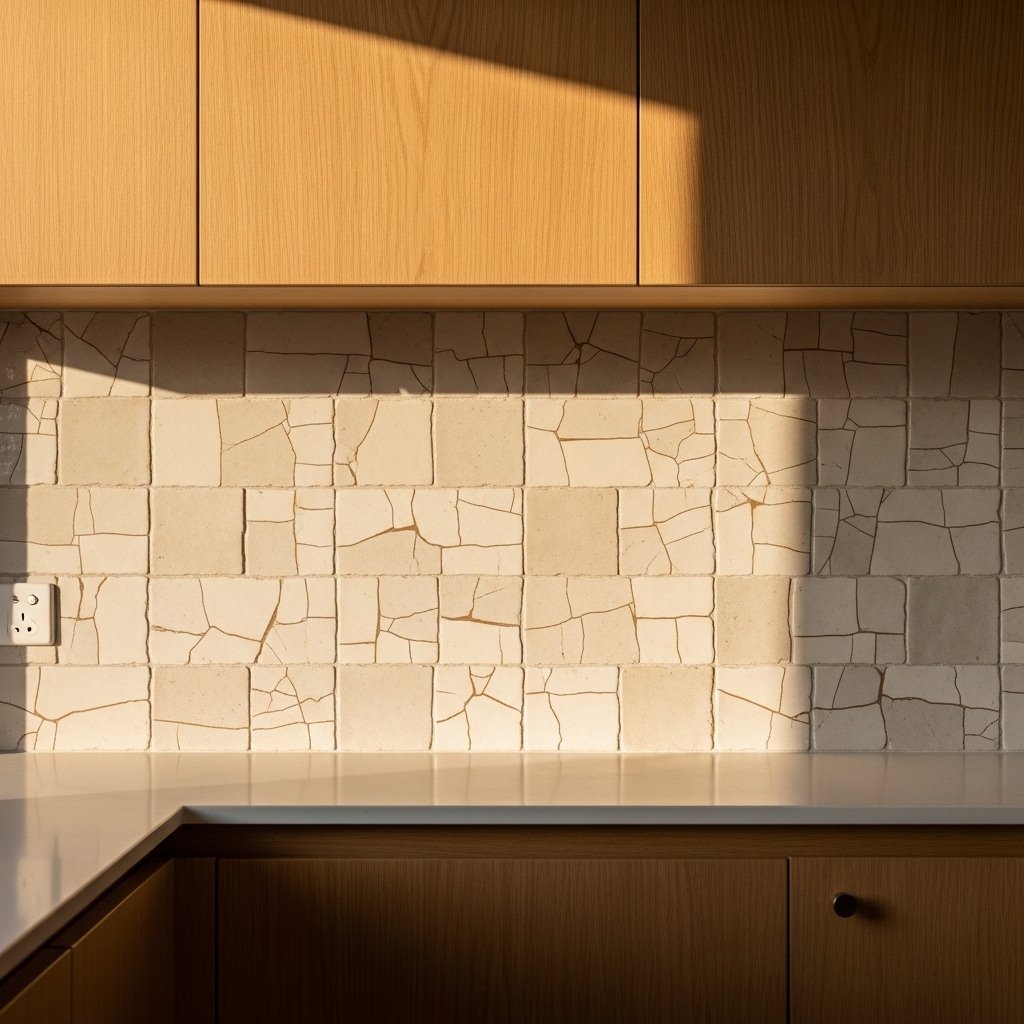
Zellige tile, the hand-cut Moroccan ceramic tile with a characteristically irregular surface, varied glaze depth, and imperfect edges, has become one of the most coveted backsplash materials in high-end kitchen design. In 2026 its dominance shows no sign of abating.
The reason for zellige’s enduring appeal is exactly its imperfection. No two tiles in a zellige installation are identical. The glaze varies in depth and color from tile to tile. The edges are hand-cut and no two cuts are identical. The light reflected by a zellige backsplash shifts and fractures in a way that a machine-made tile with a uniform surface never does.
In white, off-white, and warm cream, zellige creates a backsplash that is technically a neutral but visually rich because of the surface variation. In sage green, dusty rose, or cobalt blue it becomes the kitchen’s most vivid design statement.
3. Dark Dramatic Fluted Tile
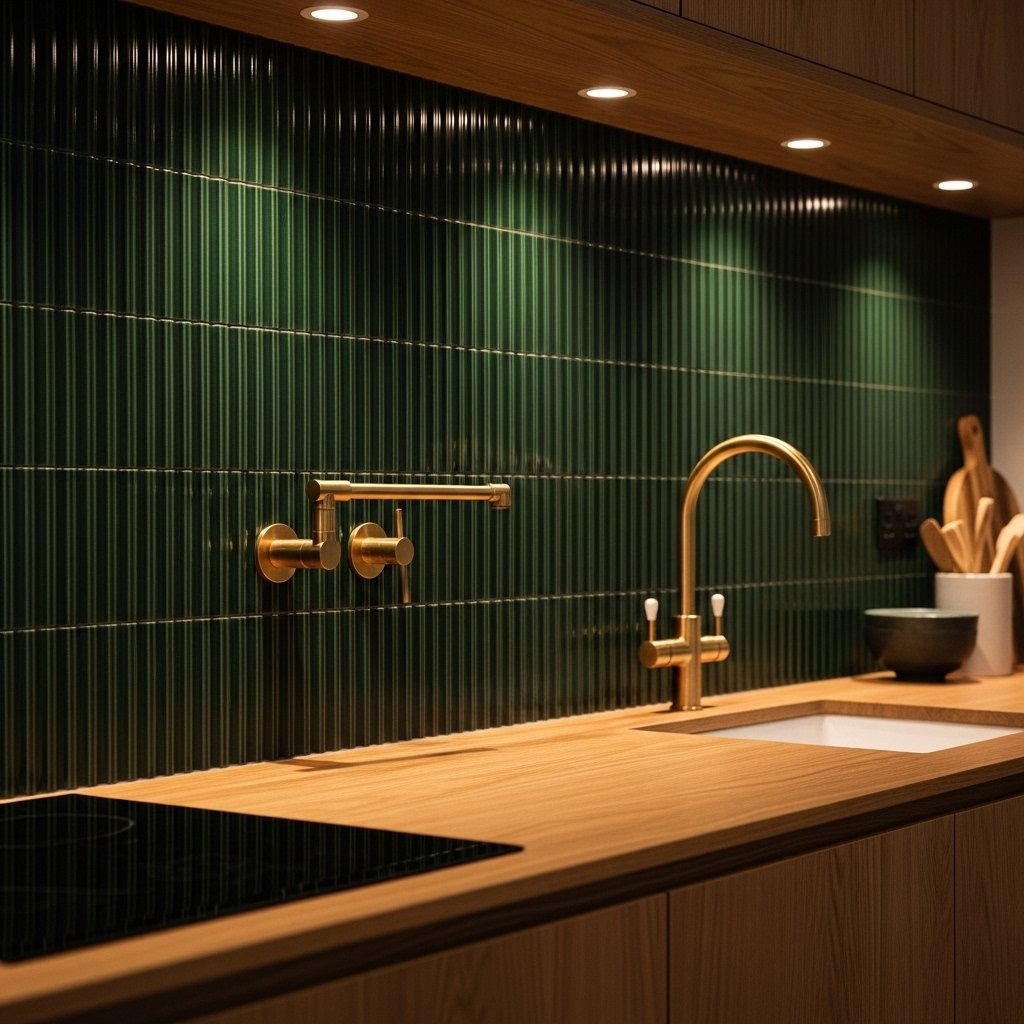
Fluted or ribbed tile applied vertically to a kitchen backsplash creates a dimensional surface that flat tiles at any price point cannot match.
The vertical ridges of a fluted tile catch light differently along their length, creating a surface that shifts between highlight and shadow as the kitchen’s light sources move through the day. A fluted backsplash in a dark tone, deep charcoal, midnight green, or matte black, creates a dramatic backdrop for a kitchen’s functional zone that makes every object placed against it appear more vivid.
The directionality of fluted tile also creates a visual elongation effect. Vertical fluting draws the eye upward and makes a kitchen feel taller than it is.
Fluted backsplash tile in a dark tone pairs specifically well with warm wood cabinetry and brushed brass or unlacquered brass fixtures. The combination of the dark textured surface, warm timber, and warm metal creates a kitchen with genuine character.
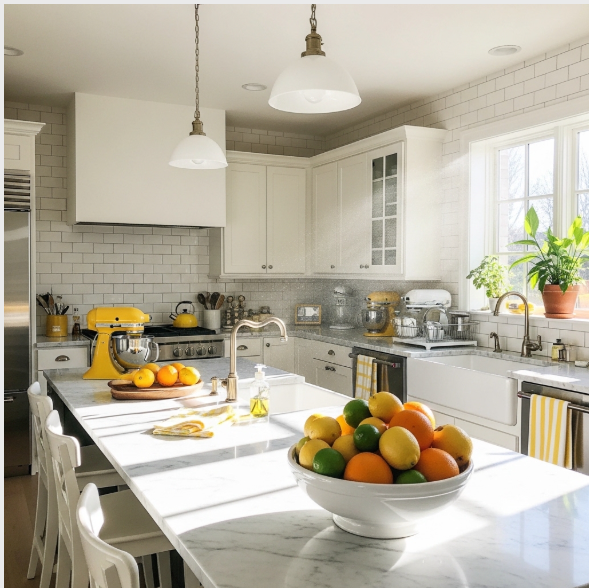
4. Classic Subway Tile Done Exceptionally Well
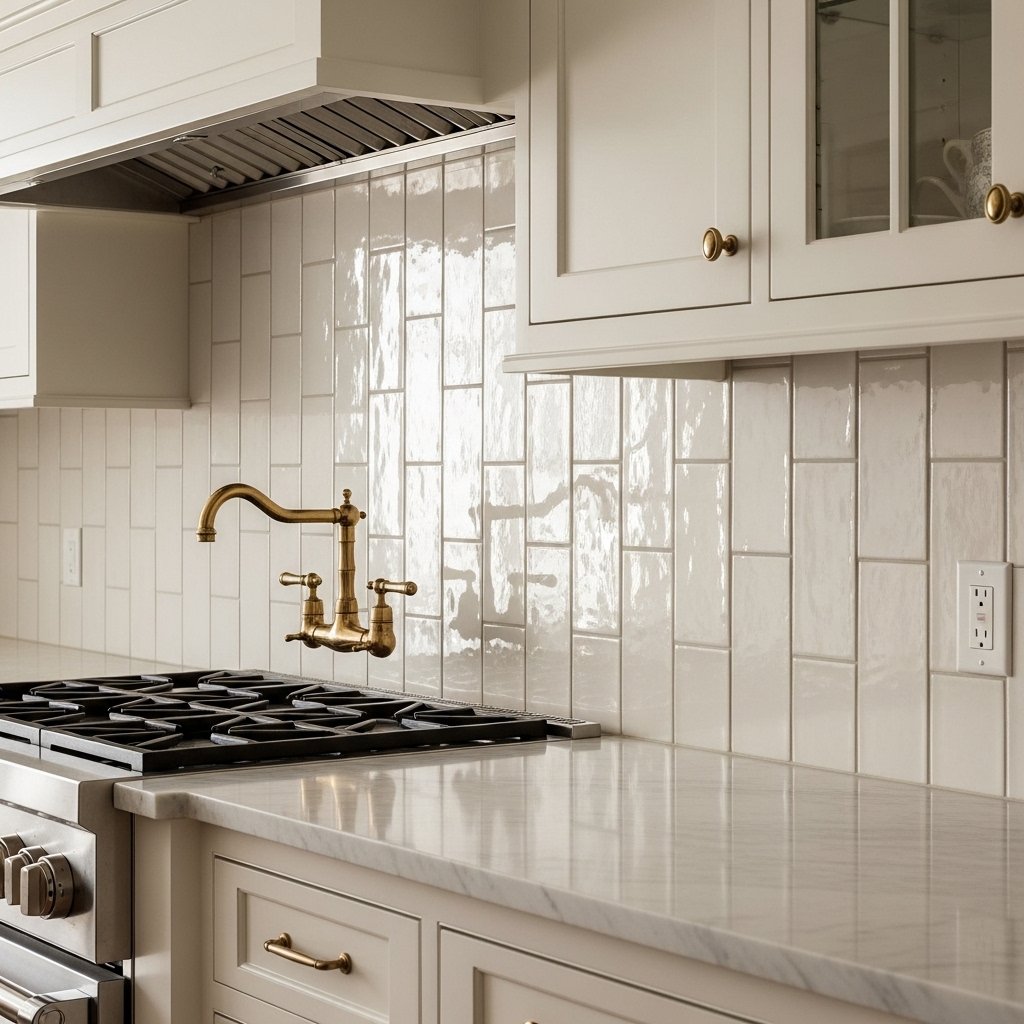
The subway tile has been in continuous use in kitchen design since the early twentieth century. In 2026 it remains one of the most reliable backsplash choices available because the format’s simplicity allows the execution details to carry all of the design weight.
The details that separate a subway tile backsplash that looks exceptional from one that looks ordinary: the tile size, the grout color, the grout width, the tile finish, and the laying pattern.
Large format subway tile, 10x30cm or 7.5x30cm, reads as more sophisticated than the standard 7.5x15cm format. A grout color that matches the tile almost exactly makes the pattern recede and the surface advance. A running bond laid vertically rather than horizontally produces a more contemporary result.
A handmade or glossy subway tile in warm white or off-white with a narrow matching grout line is still, in 2026, one of the most beautiful kitchen backsplash choices available.
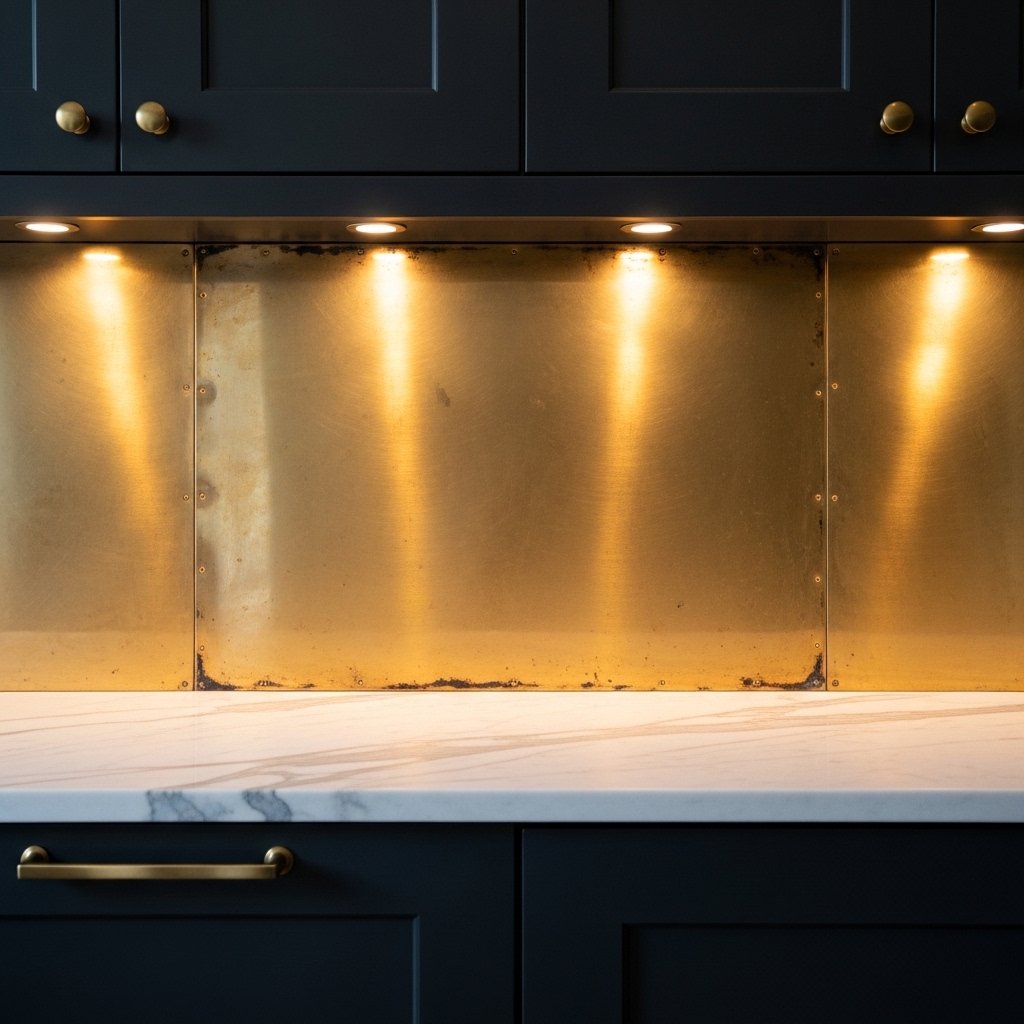
5. Unlacquered Brass Sheet Metal Backsplash
Metal as a backsplash material is not new. The pressed tin backsplashes of nineteenth century American kitchens were the original version of the concept. The 2026 interpretation replaces the ornate pressed pattern with a clean flat sheet of unlacquered brass that develops patina over time.
A full backsplash in unlacquered brass sheet metal in a kitchen is one of the most genuinely distinctive material choices available. It is not trying to look like anything else. It is brass and it behaves like brass: warm, reflective, slowly changing.
The reflective quality of a brass backsplash brings light into parts of a kitchen that tile absorbs. The kitchen appears brighter and more dynamic because the backsplash is participating in the light rather than just receiving it.
As the brass develops patina, darkening at the areas of most contact and developing irregular warm tones across the surface, the backsplash becomes increasingly unique and increasingly beautiful.
6. Terracotta and Earthy Tone Tile
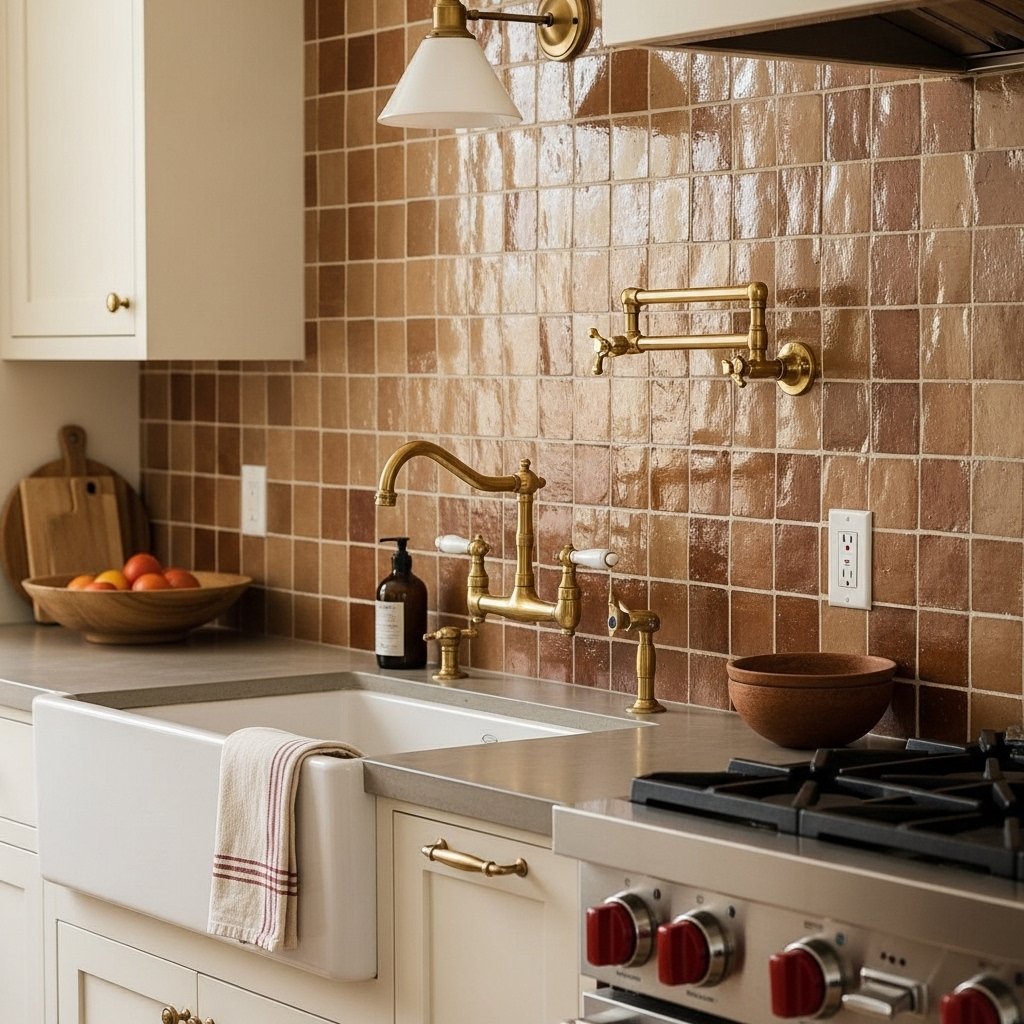
Terracotta tile on a kitchen backsplash in 2026 brings the warmth of the summer palette into the kitchen’s most functional zone and creates a material connection between the kitchen and the broader interior direction of the home.
Handmade terracotta tiles in varying warm tones, from pale sand through warm ochre through deep burnt clay, have the same surface variation quality as zellige without the high price point. The fired clay surface absorbs light rather than reflecting it, creating a warmth that ceramic and porcelain alternatives do not produce.
Square terracotta tile in a simple grid, offset brick pattern, or diagonal lay all work equally well. The material itself carries the visual interest. An elaborate pattern adds nothing and potentially subtracts from the honest simplicity of the tile.
Seal terracotta properly before installation. Unsealed terracotta in a cooking environment absorbs grease and stains irreversibly.
7. Mirrored or Smoked Glass Backsplash
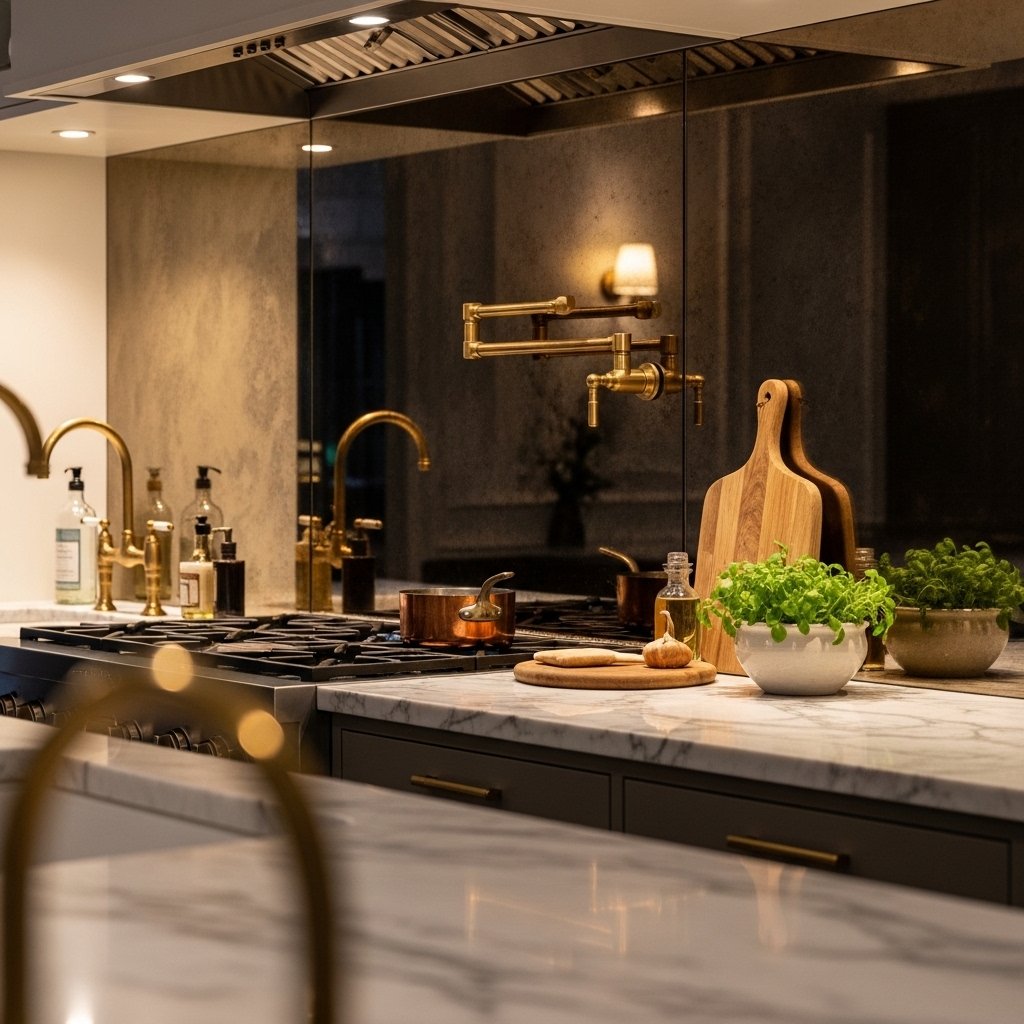
A mirrored or smoked glass backsplash does something no other backsplash material does: it makes the kitchen disappear and reappear simultaneously.
A full mirror backsplash reflects the kitchen back at itself, doubling its visual depth and bringing light from every source in the room into the cooking zone. A small kitchen with a mirror backsplash appears twice its size. The reflection of a window in a mirror backsplash brings garden views into the kitchen from an angle that no window directly on that wall would achieve.
Smoked or antiqued mirror, rather than clear mirror, softens the reflection and gives it an atmospheric quality that clear mirror lacks. The aged quality of an antique mirror backsplash suits kitchens pursuing a more layered, collected aesthetic rather than a purely contemporary one.
Both mirror formats are practical as backsplash materials: non-porous, heat resistant, and cleaning to a streak-free finish with standard glass cleaner.
8. Hand-Painted Portuguese Azulejo Tiles
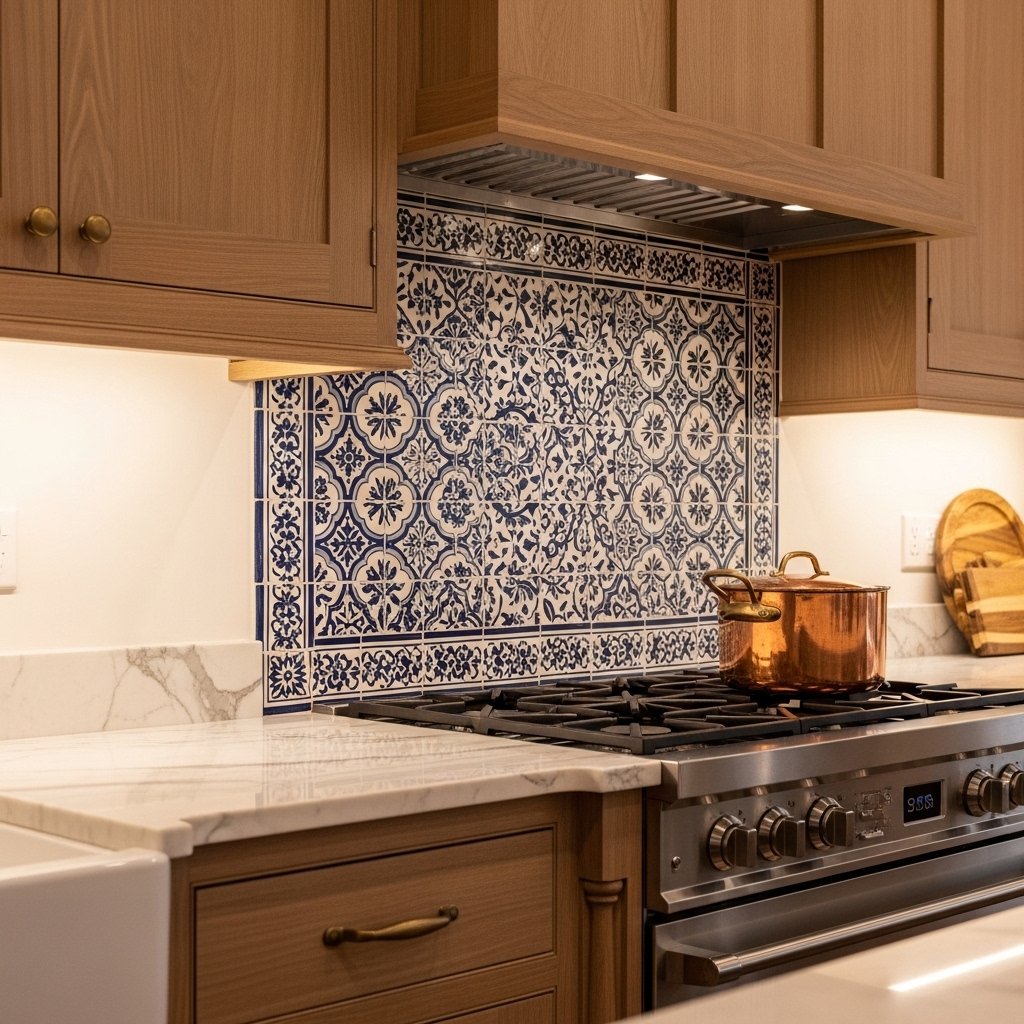
Hand-painted azulejo tiles from Portugal represent one of the oldest and most sophisticated tile traditions in European decorative arts. In 2026 they have moved from restaurant and hospitality applications into residential kitchens where their hand-painted quality and narrative richness create a backsplash unlike anything mass-produced can offer.
Traditional azulejo patterns in cobalt blue on white, or in the full polychrome palette of eighteenth century Portuguese tile, bring history, craft, and visual storytelling to a kitchen backsplash. Each tile is painted by hand. No two tiles in a hand-painted set are perfectly identical.
The installation requires thought about pattern scale relative to the backsplash area. A pattern that works beautifully across a large expanse of wall can feel cramped and busy in a small backsplash zone. Commission or select with the specific dimensions in mind.
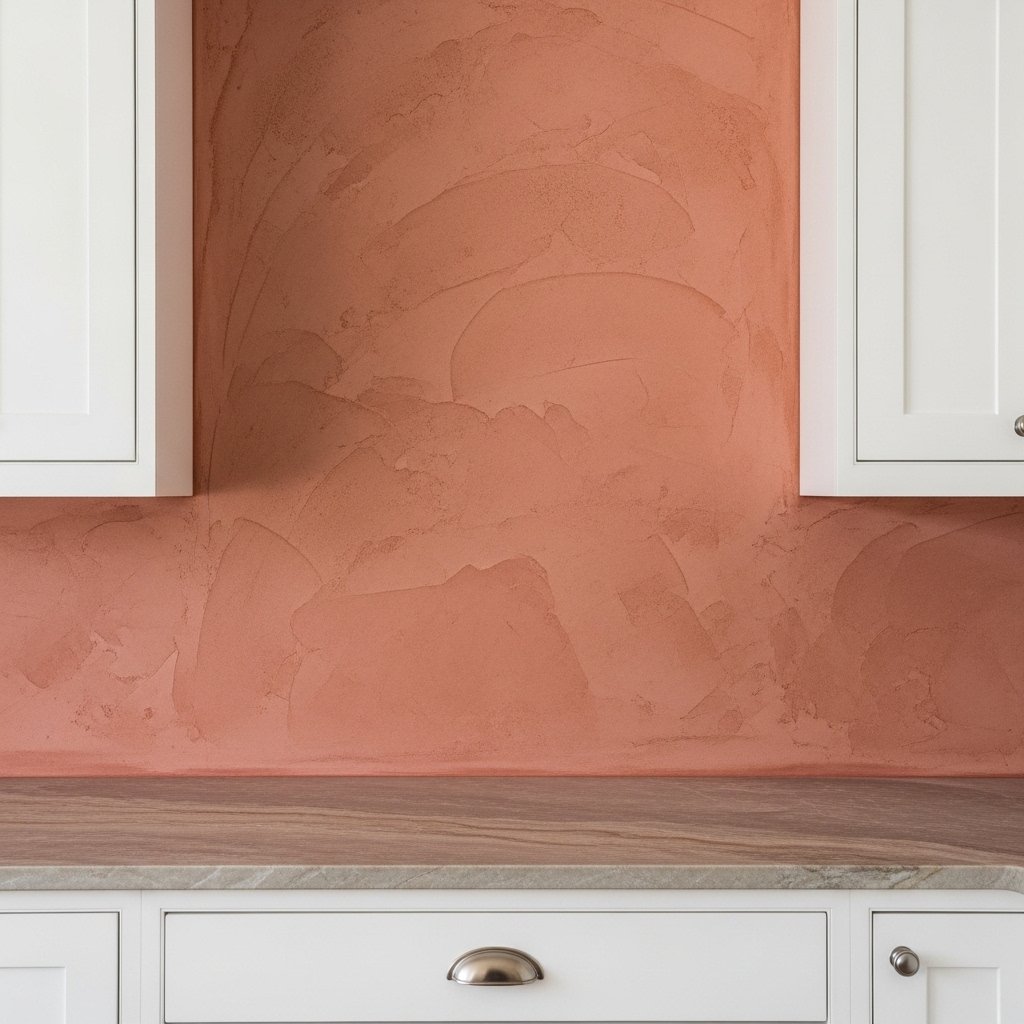
9. Limewash Plaster Backsplash
The limewash plaster backsplash is the most unexpected direction kitchen backsplash design has gone in 2026 and one of the most beautiful when executed correctly.
A properly applied limewash plaster on a kitchen backsplash creates a surface with depth, variation, and organic warmth that no tile format can replicate. The surface is sealed appropriately for kitchen use. It handles splashes and wipes clean with a damp cloth.
The visual quality of a limewash plaster backsplash is fundamentally different from tile. There are no grout lines. There is no pattern. There is only the organic variation of color and texture that the application technique produces. No two sections of the surface are identical.
In warm white, soft clay, pale terracotta, or sage green, a limewash plaster backsplash gives a kitchen the character of an old farmhouse or a Mediterranean villa. The age and warmth it implies is felt even in a newly built kitchen.
10. Penny Round Mosaic Tile
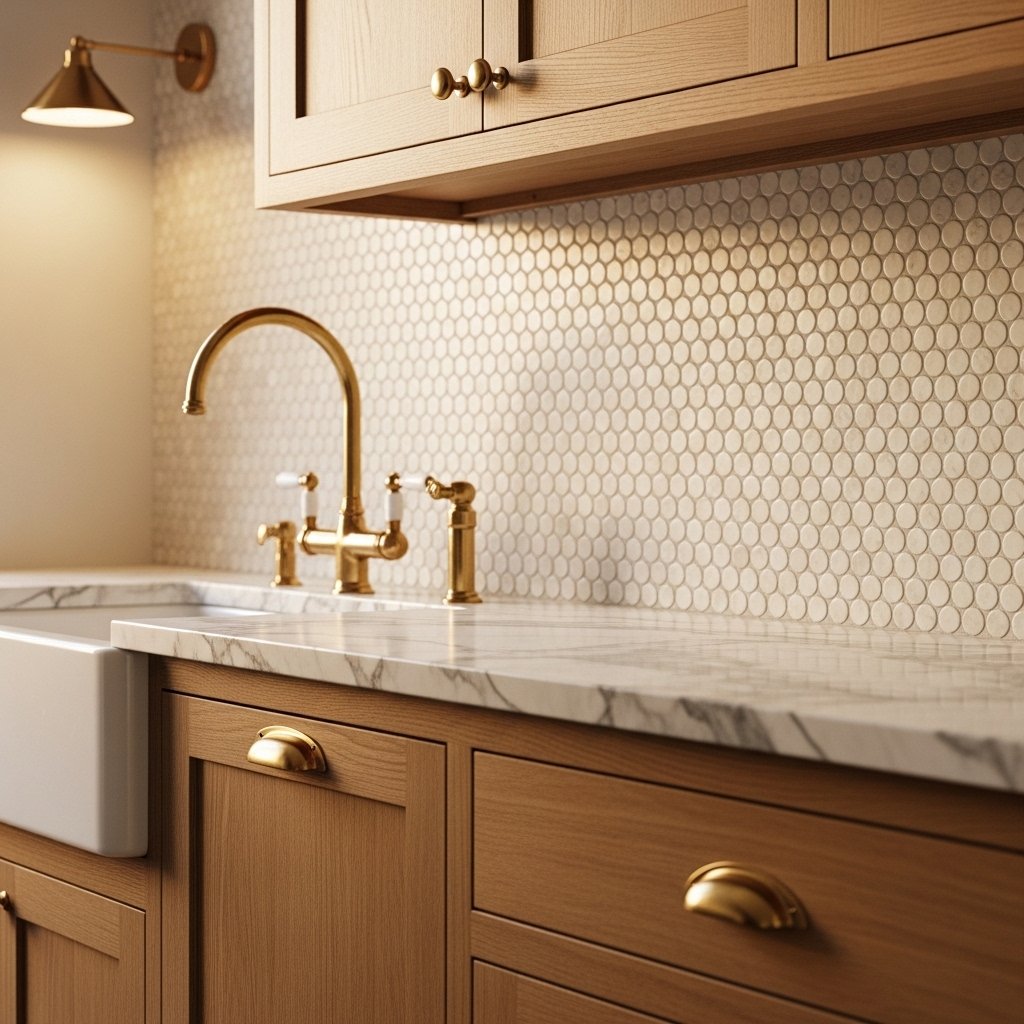
The penny round tile, a mosaic of small circular tiles typically 2–3cm in diameter laid on a mesh sheet, creates a backsplash surface with more visual texture per square centimeter than almost any other tile format.
The quantity of grout lines in a penny round installation, which is high due to the small tile size, becomes a feature rather than a maintenance concern when the grout color is chosen to complement or contrast with the tile intentionally. A dark grout with a light tile creates a graphic, high-contrast surface. A matching grout with a colored tile creates a solid-color effect with subtle texture.
In warm white, natural stone tones, or a gradient from light to deep tones across the backsplash width, penny round mosaic creates a surface with the organic quality of a natural material and the precision of a manufactured one simultaneously.
11. Maximalist Patterned Encaustic Tile
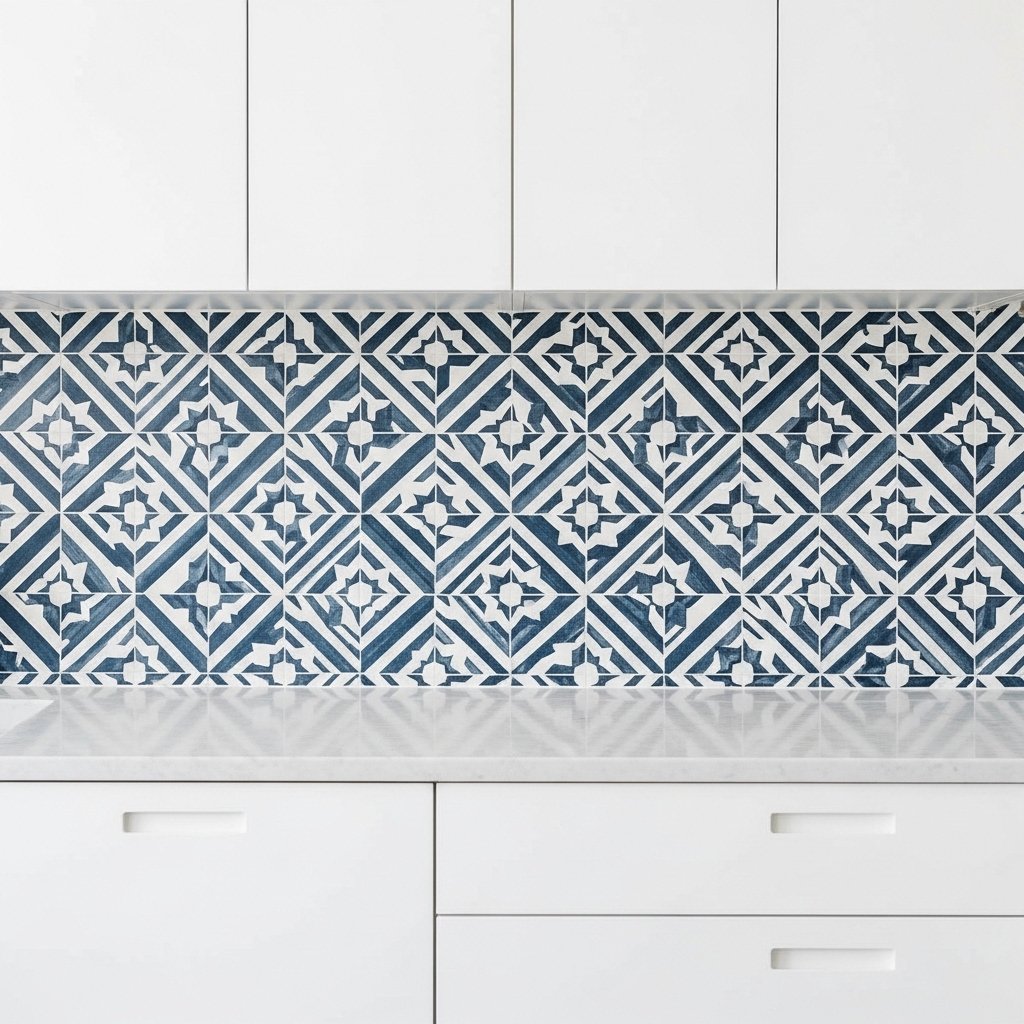
An encaustic tile backsplash in a bold geometric or floral pattern is the most committed visual statement a kitchen backsplash can make. It is not appropriate for every kitchen. In the right kitchen it is extraordinary.
Encaustic cement tiles with pattern, color, and geometric complexity work in kitchens where the cabinetry and countertop are deliberately restrained. Plain white cabinets, a simple stone countertop, and minimal accessories clear the stage for the tile’s performance.
The pattern scale relative to the backsplash area is the critical decision. A large geometric pattern in a small backsplash area gets cut awkwardly and loses its coherence. The same pattern across a full kitchen wall reads as a complete design intention.
Commission encaustic tiles from a maker who produces them correctly. Encaustic tiles are cement-based with the pattern inlaid rather than applied to the surface. The pattern cannot wear off because it is not a surface treatment. It goes all the way through.
12. Stacked Natural Stone Tile
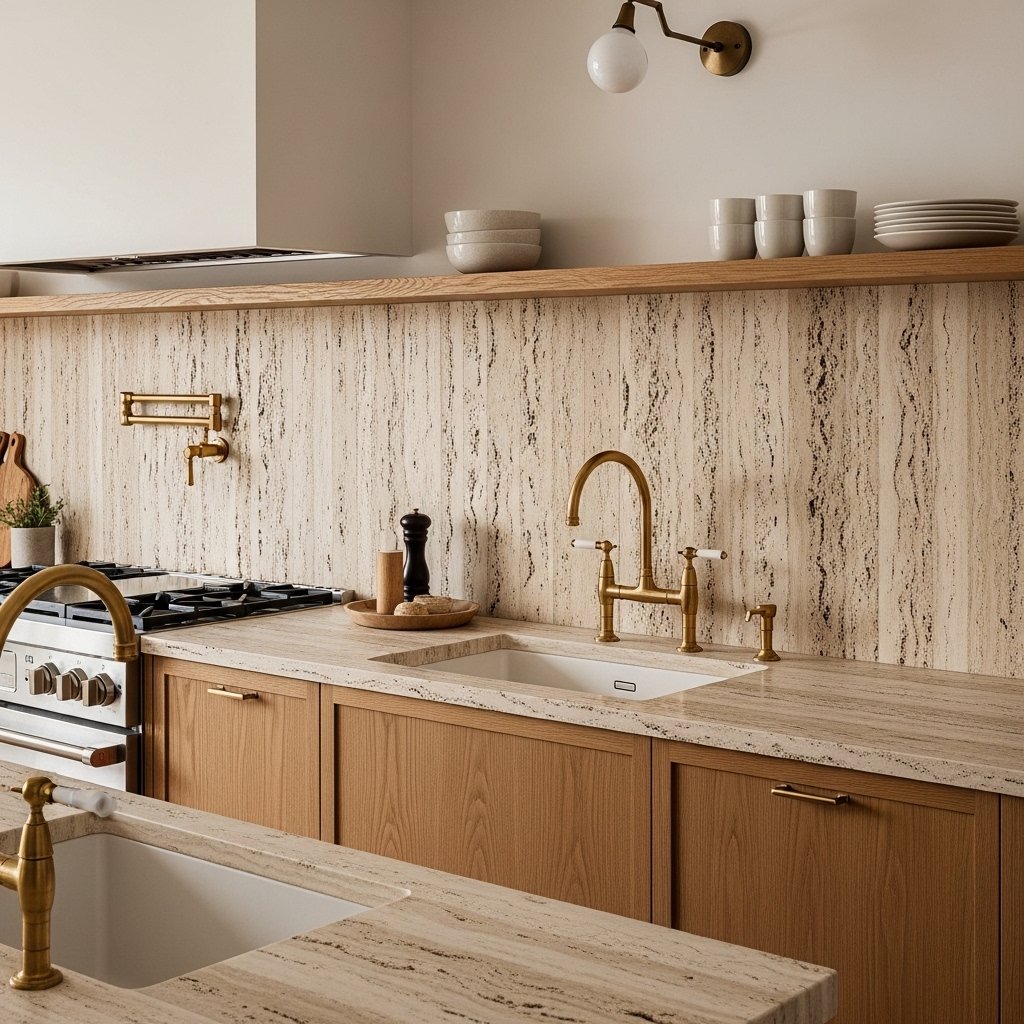
Natural stone in a stacked vertical format, thin strips of travertine, limestone, or slate laid one above the other with almost no horizontal grout line visible, creates a backsplash that reads as a stone wall section rather than a tiled surface.
The vertical stacking of natural stone strips creates a geological layering effect that references cliff faces and rock formations. Each strip is slightly different in color, texture, and surface quality from the one beside it. The overall effect is a surface with the kind of variation and character that only genuinely natural materials produce.
Travertine in its filled and honed version is the most refined choice for this application. The warm ivory and caramel tones of travertine pair naturally with warm timber cabinetry and unlacquered brass fixtures in a way that makes the material combination feel inevitable.
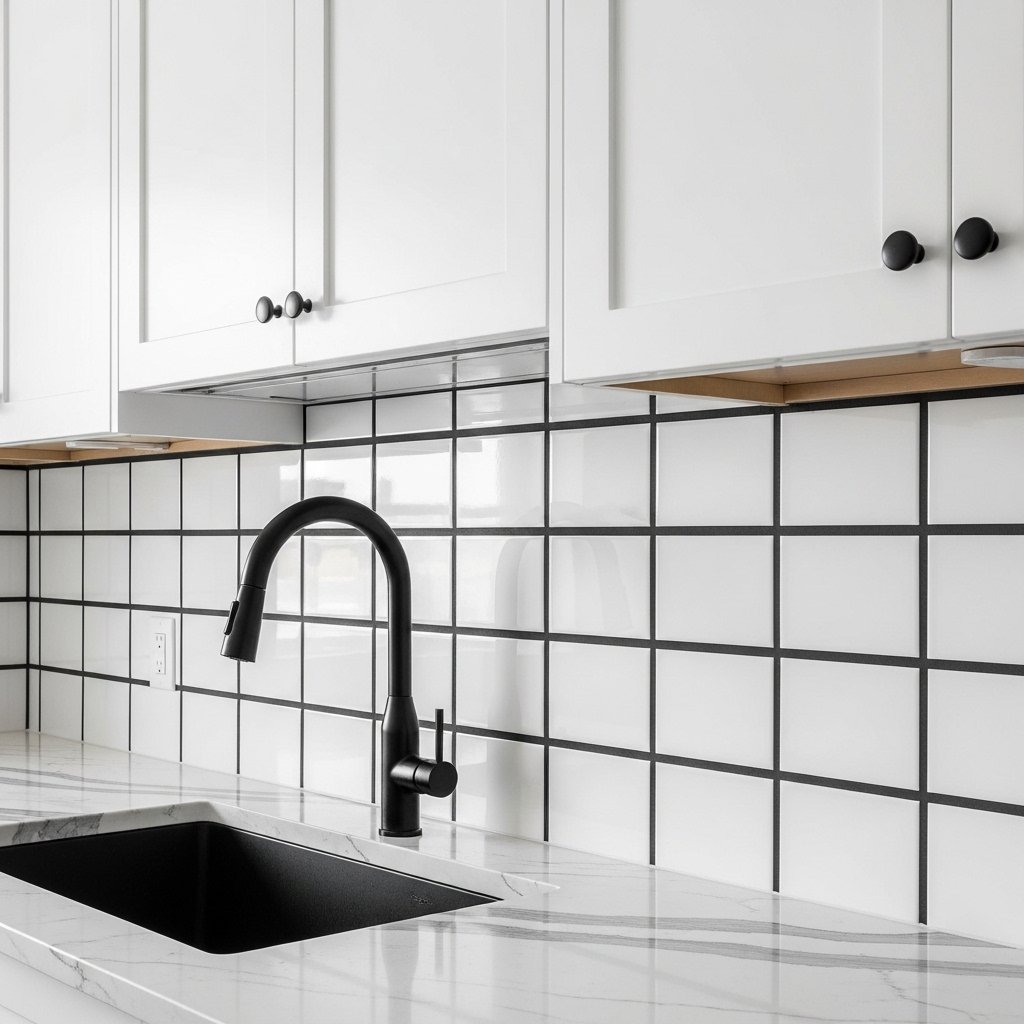
13. Colored Grout as the Design Statement
The tile itself is not always the design decision. Sometimes the design decision is the grout color applied to an otherwise standard tile.
White subway tile with deep charcoal grout. Cream tile with terracotta grout. Grey tile with black grout. The grout color defines the visual pattern of the tile installation more powerfully than the tile itself in these cases.
Charcoal or black grout with white tile creates a graphic, high-contrast grid that turns a standard subway backsplash into a bold geometric surface. The tile becomes secondary to the pattern the grout creates.
Colored grout in a tone borrowed from another element in the kitchen, the cabinet color, the countertop tone, or an accent color elsewhere, creates a material connection that a standard white or grey grout cannot.
14. Open Brick or Exposed Concrete
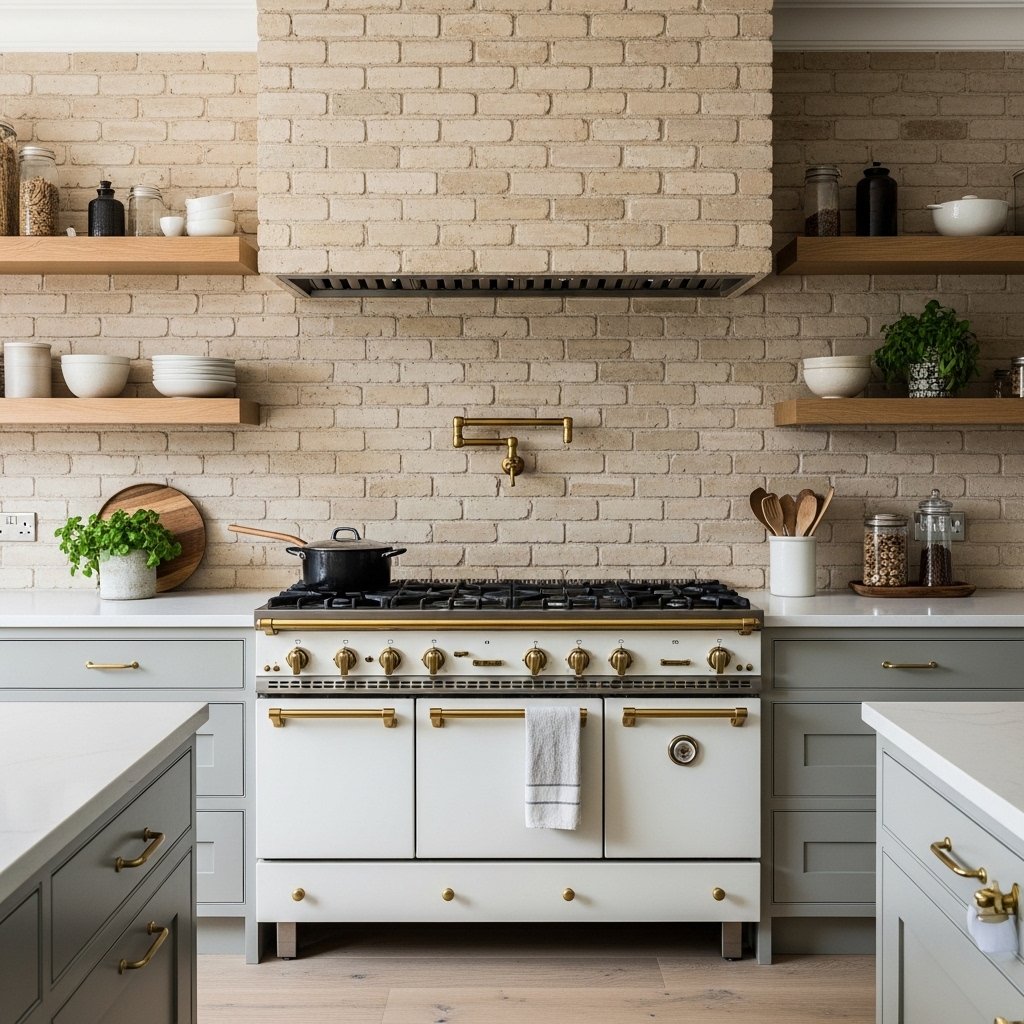
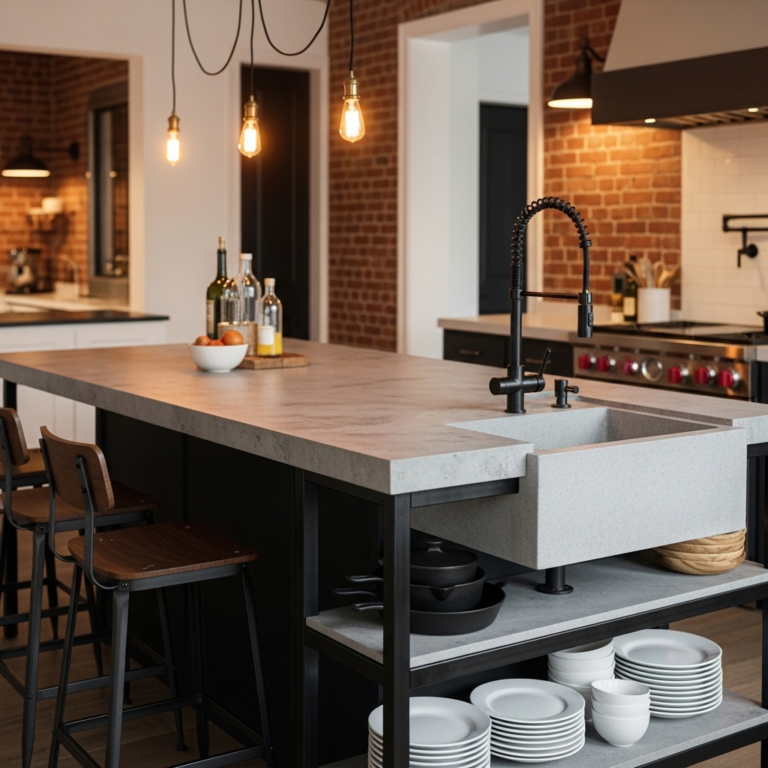
The most raw and honest backsplash in 2026 is the one that removes the applied surface material entirely and exposes the substrate: bare brick or bare concrete.
Exposed brick behind a kitchen cooking zone creates a material warmth and historical texture that no applied tile can convincingly replicate. The brick is simply the wall, sealed and treated for a kitchen environment but not covered or disguised.
Bare concrete, either the structural concrete of a building exposed intentionally or a skim coat of tinted concrete applied to an existing wall, creates a surface that is simultaneously industrial and organic. The variation in concrete’s surface, the small imperfections, the aggregate showing through, the slight color variation across the panel, gives it the character of a natural material despite being entirely manufactured.
Both materials suit kitchens with a strong design point of view. They are not neutral choices. They are architectural statements that require the surrounding kitchen to respond to them rather than ignore them.