13 Master Bathroom Ideas That Feel Like a Private Spa
By homelylofts@gmail.com | May 7, 2026
The master bathroom is the most underestimated room in a home. People spend significant money on living rooms and kitchens that guests see and almost nothing on the bathroom they use twice every single day.
A well-designed master bathroom does something no other room does. It transitions you. From sleep to the day. From the day back to rest. The quality of that transition affects everything that follows it.
These 13 ideas build a master bathroom that earns the time you spend in it.
1. Install a Freestanding Soaking Tub
A freestanding tub is the single most transformative element available to a master bathroom. Nothing else changes the room’s character as completely or as immediately.
A sculptural freestanding tub in matte white, concrete grey, stone resin, or matte black sits in a room the way a sculpture sits in a gallery. It is a functional object that also operates as the room’s primary design statement. These two qualities are not in tension. They are the same quality.
Stone resin tubs retain heat significantly longer than acrylic alternatives. The material difference is felt during every single use. A tub that stays warm for an hour produces a genuinely different bathing experience than one that cools in twenty minutes.
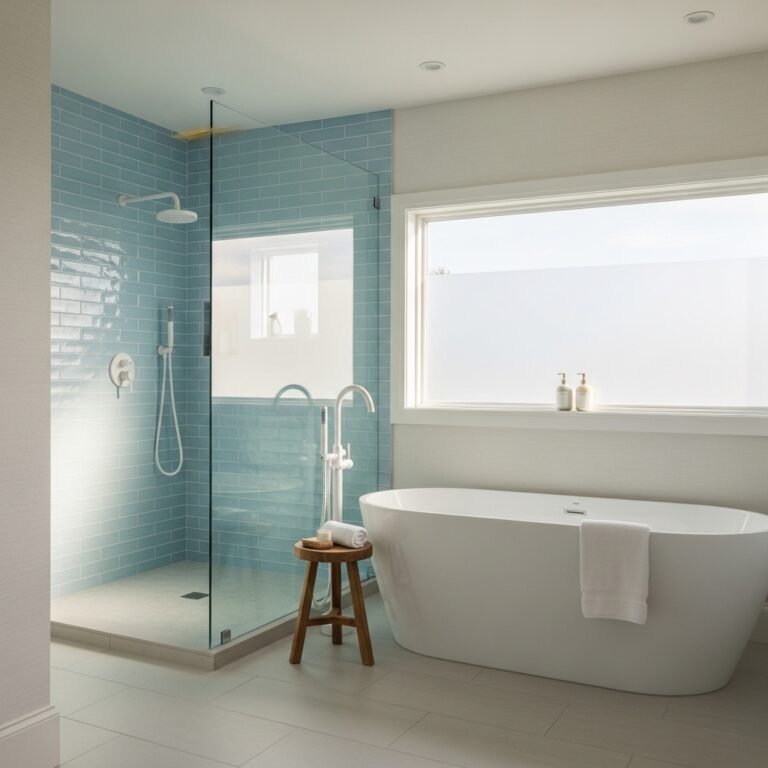
Position the tub where it receives the best natural light in the bathroom. A freestanding tub beside a window, particularly one with a garden or sky view, creates a bathing experience that no hotel can replicate because it is specific to your home and your view.
2. Use Large Format Stone Tiles Throughout
The fastest way to make a bathroom feel expensive is to reduce the number of grout lines visible on any surface. Large format tiles do exactly this.
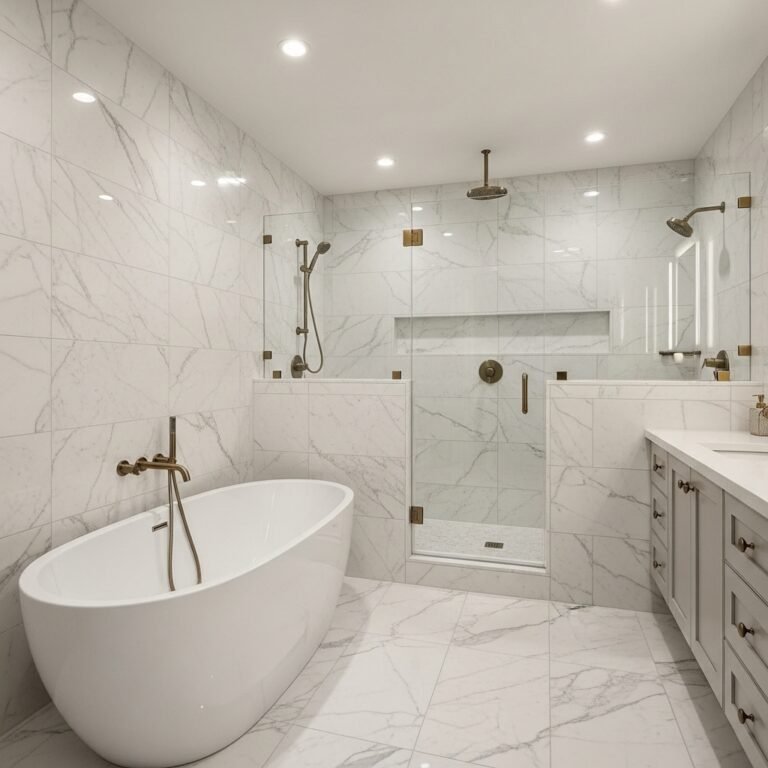
Large format marble, limestone, or porcelain tiles, 60x120cm or larger, on both floors and walls create an expansive, uninterrupted surface that small format tiles never achieve. The visual continuity reads immediately as luxury.
Bookmatched marble panels, where adjacent slabs are mirror images of each other, create a symmetrical vein pattern that transforms a tiled wall into something that looks geological and deliberate simultaneously. This technique is used in every high-end hotel bathroom for a reason.
The grout color matters as much as the tile. A grout that matches the tile color almost exactly makes grout lines disappear. A contrasting grout emphasizes every line. In a luxury bathroom, disappearing grout lines are almost always the right choice.
3. Double the Vanity
A single sink vanity in a master bathroom used by two people is a daily negotiation. A double vanity eliminates the negotiation entirely.
A wide double vanity with two sinks, two sets of storage, and two mirrors gives each person a dedicated zone. The bathroom functions twice as efficiently and feels twice as considered.
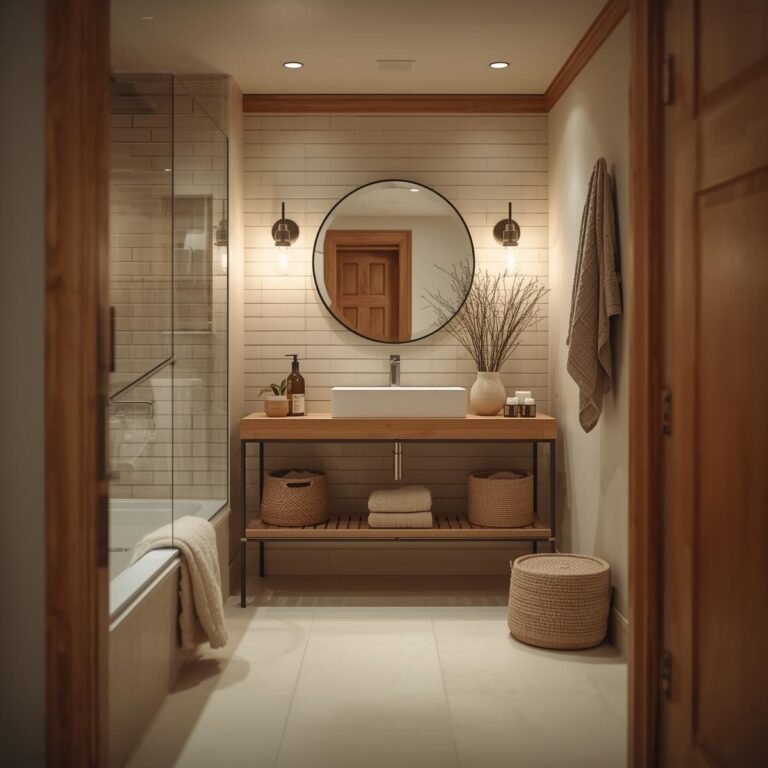
The vanity material sets the room’s design register. A marble slab countertop with undermount sinks reads as formal luxury. A stone resin vessel sink on a timber vanity base reads as organic and warm. A concrete vanity with integrated sinks reads as architectural and contemporary.
Choose the vanity material first. Everything else in the bathroom, the tile, the fixtures, the mirror, the accessories, should respond to the vanity’s material and tone.
4. Install a Frameless Walk-In Shower
A shower enclosure with a frame is a shower. A frameless glass walk-in shower is an architectural feature.
Frameless glass panels with no visible metal framework create a shower enclosure that reads as part of the room rather than a separate compartment inserted into it. The bathroom feels larger, more unified, and significantly more sophisticated.
A curbless shower entry, flush with the bathroom floor, extends the floor tile continuously from outside to inside the shower. This single detail makes a bathroom look like it was designed rather than assembled from components.
A ceiling-mounted rain shower head positioned over the center of the shower space rather than against a wall creates a bathing experience that is genuinely different from a standard wall-mounted shower. The sensation of water falling from directly overhead is one of the most effective daily luxury investments available.
5. Choose Brushed Gold or Unlacquered Brass Fixtures
Fixture finish is the jewelry of a bathroom. It appears on every functional element simultaneously and creates the room’s metallic tone from the faucets to the towel bars to the shower head.
Brushed gold and unlacquered brass are the dominant luxury fixture finishes in 2026. Both have warm undertones that work against stone surfaces, timber vanity bases, and white walls with equal effectiveness.
Unlacquered brass develops a patina over time. It darkens slightly, loses its uniformity, and develops a lived-in quality that lacquered brass never achieves. This aging process is not a flaw. It is the mark of a real material developing character rather than a coated surface maintaining a factory appearance.
Consistency across all fixtures is mandatory. Every faucet, every towel bar, every toilet paper holder, every shower fitting should share the same finish. A single chrome towel bar in a brushed gold bathroom is a visible inconsistency that interrupts the entire room’s material narrative.
6. Add Heated Floors
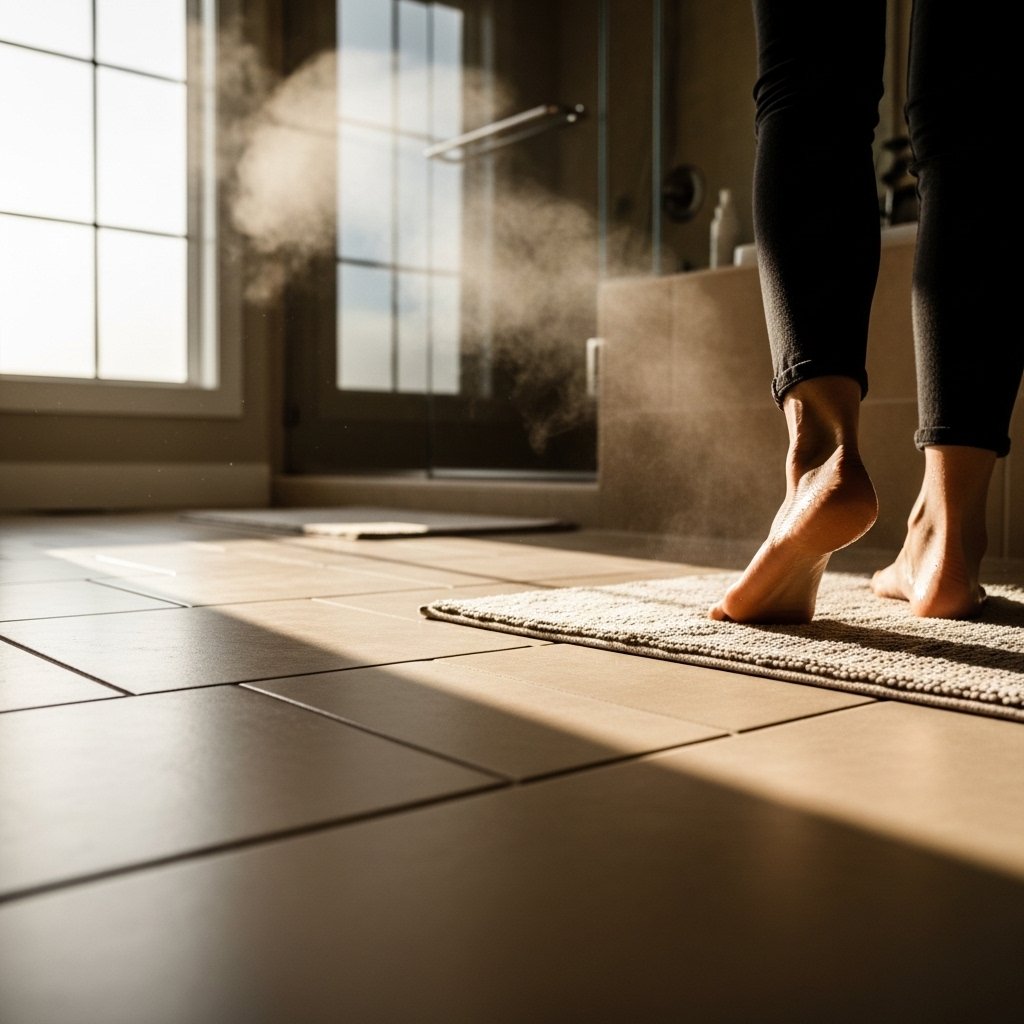
Heated floors are the bathroom upgrade with the highest daily impact relative to the cost of installation. Every single morning for the life of the home, stepping onto a warm floor rather than a cold one changes the quality of that moment.
Underfloor electric heating mats installed beneath tile floors add minimal height to the floor level and require no structural changes in most bathroom applications. The installation cost is modest relative to the daily return.
A programmable thermostat set to warm the floor thirty minutes before the usual waking time means the floor is warm when it is needed without running continuously. The energy cost of a heated bathroom floor is lower than most people expect.
This is the invisible luxury. Guests won’t see it. You will feel it every single day.
7. Build a Steam Shower
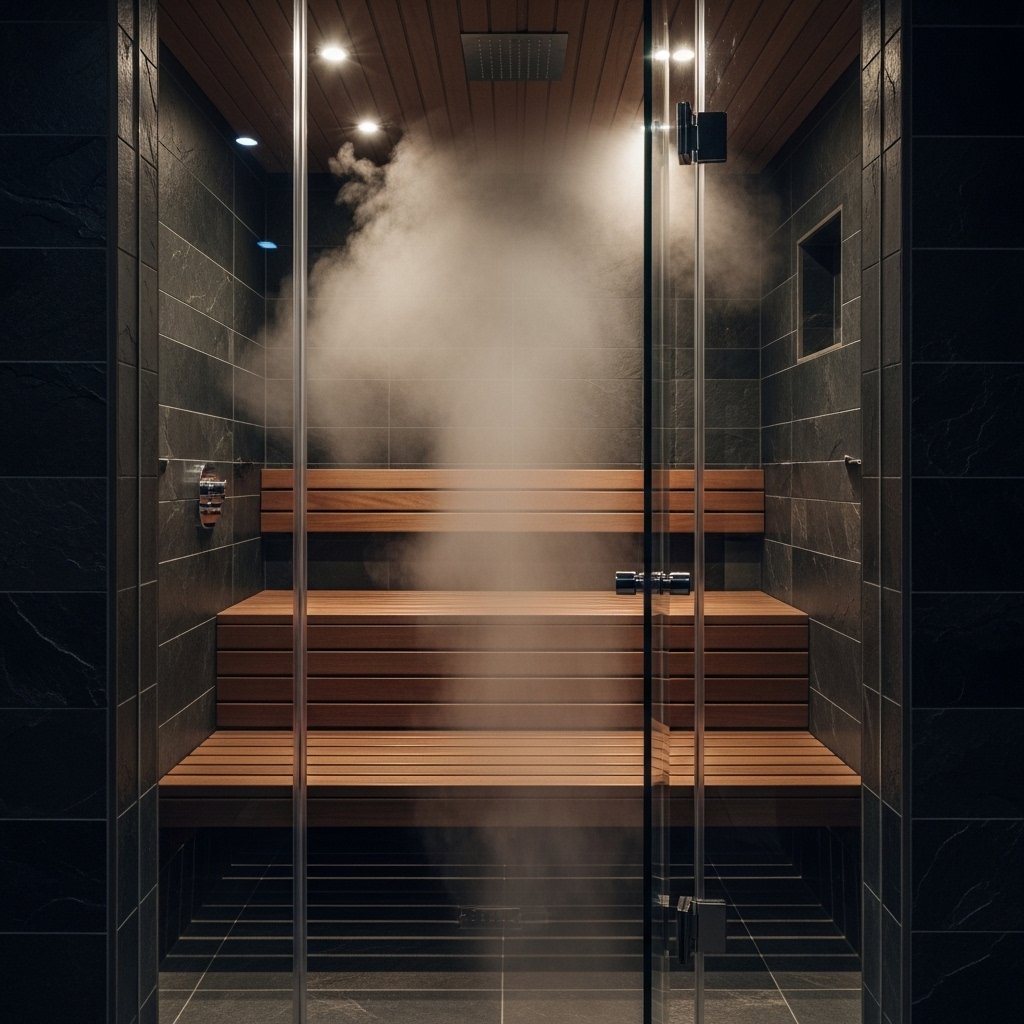
A steam shower converts the most used room in the home into a genuine wellness environment. The investment is significant. The daily return justifies it.
A fully enclosed steam shower with a steam generator, a sealed glass enclosure, a bench seat, and an aromatherapy inlet creates a spa experience that requires no appointment, no travel, and no cost per session beyond the initial installation.
The bench inside a steam shower is not optional. A bench that runs the full width of one shower wall at seating height allows you to sit in the steam rather than stand in it. The experience is completely different.
Eucalyptus oil introduced through the aromatherapy inlet turns a steam session into a respiratory treatment. This combination of heat, humidity, and essential oil is used in professional spa environments for therapeutic effect. Having it at home, daily, is one of the most quietly significant wellness investments a bathroom can make.
8. Install a Backlit Mirror or Mirror with Integrated Lighting
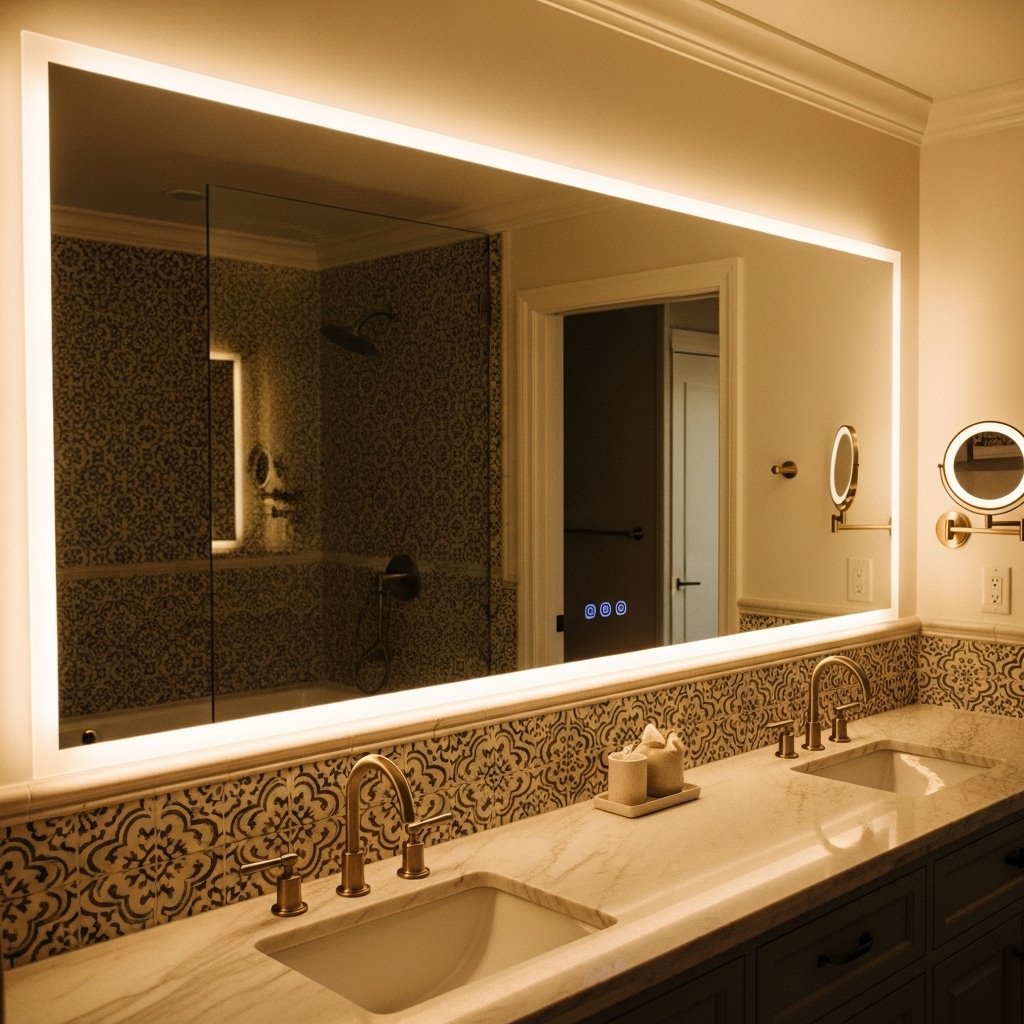
A bathroom mirror with integrated lighting eliminates the problem that most bathroom lighting creates: shadows falling across the face from overhead fixtures.
A backlit mirror produces a soft halo of light that illuminates the face from behind the reflective surface rather than from above it. The quality of light is dramatically better for both skincare application and for the general atmospheric quality of the room.
A mirror with integrated front lighting, LED strips mounted along all four edges of the mirror behind a diffusing panel, provides even illumination across the face with no shadows. The light temperature matters: 2700–3000K produces the warm, flattering light that mirrors deserve.
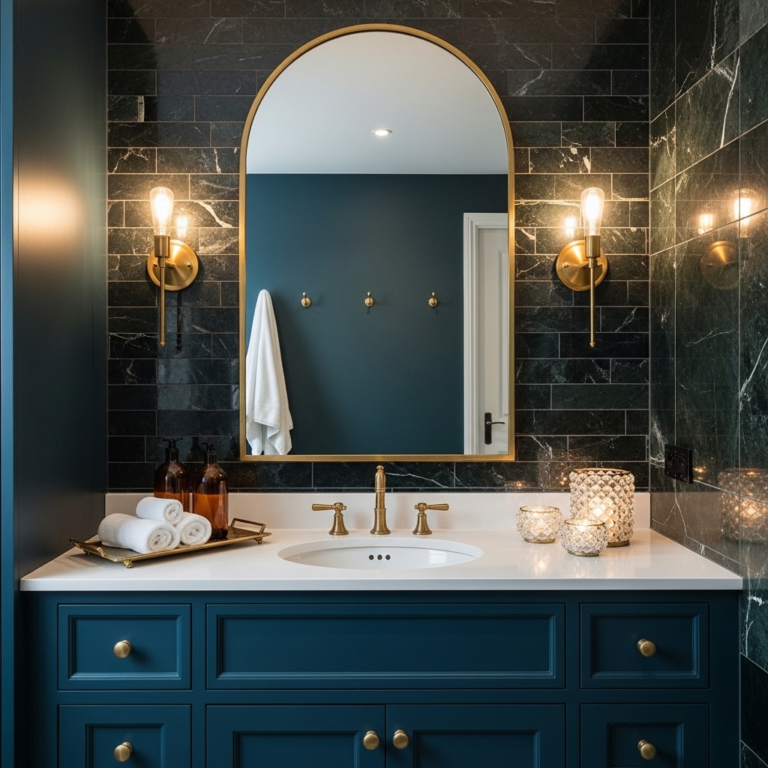
The mirror should be sized generously. A mirror that is smaller than the vanity width feels like it’s apologizing for being there. A mirror that spans the full vanity width, or extends from counter to ceiling, feels like it was planned.
9. Bring In Natural Materials and Warmth
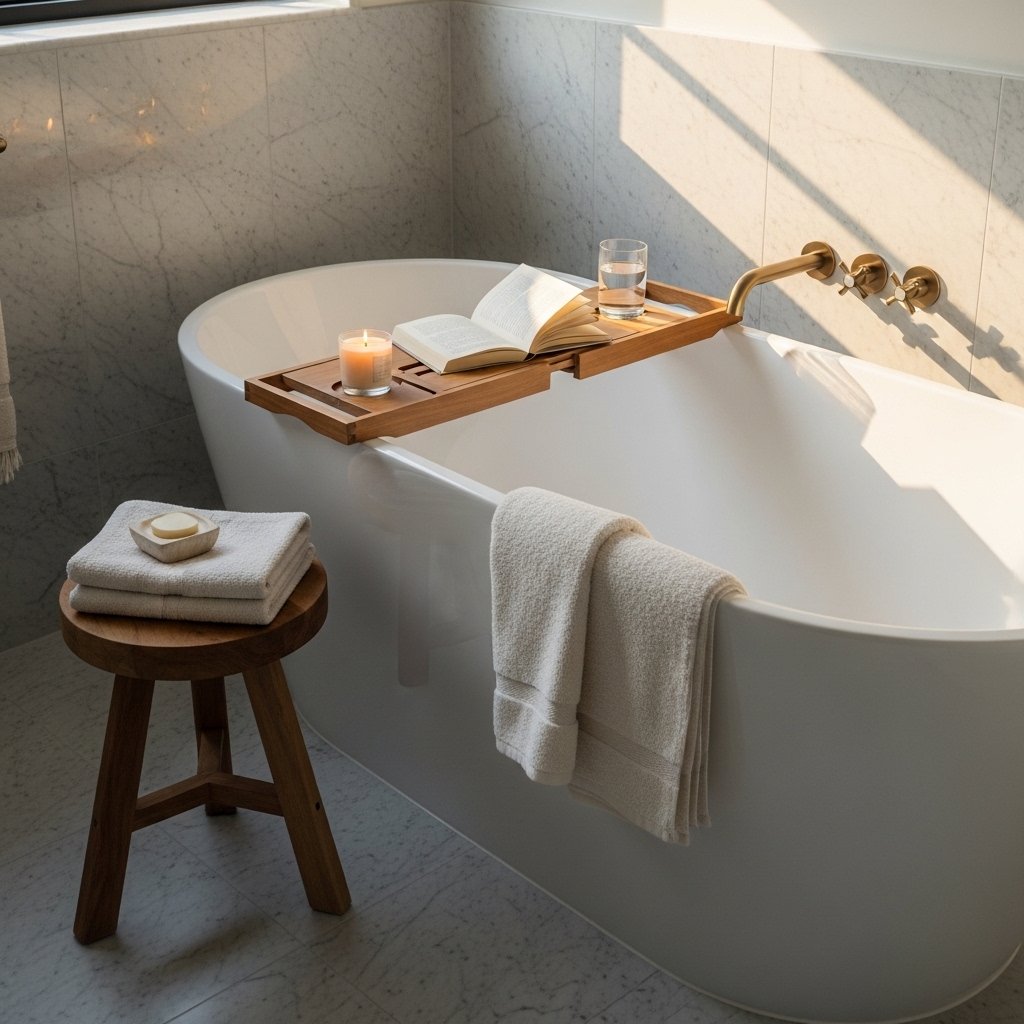
A bathroom made entirely of stone, tile, and glass feels clinical. Natural materials introduced deliberately break the hardness and bring warmth that no manufactured material replicates.
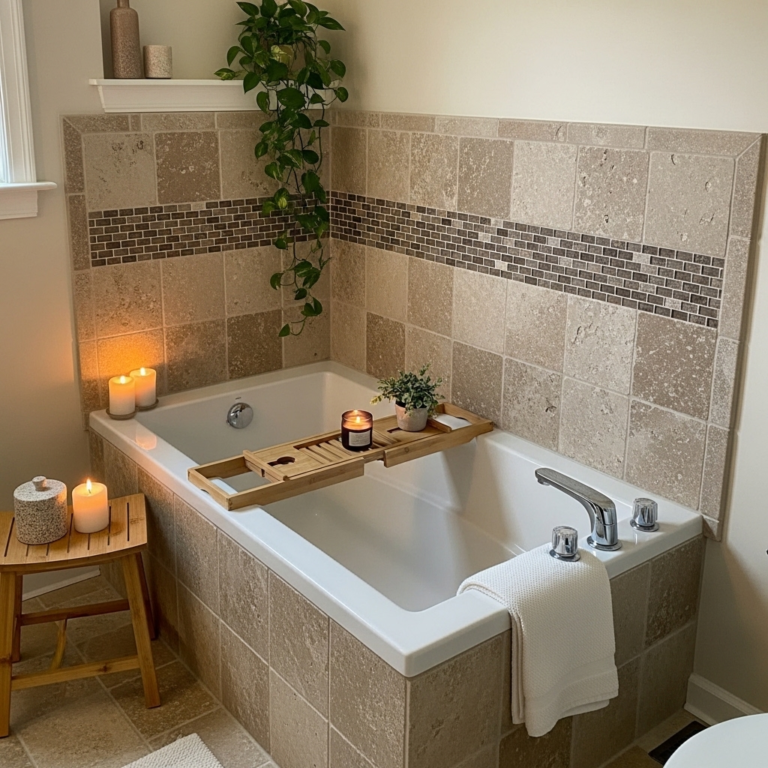
A teak or oak bath tray across the freestanding tub. A timber stool beside the shower. A woven rattan basket holding rolled towels. A live-edge timber shelf holding candles and plants. Each natural material introduction shifts the room’s atmosphere toward something more organic and inhabitable.
Timber in a bathroom requires proper sealing or the selection of naturally water-resistant species. Teak is the most water-resistant timber available for bathroom applications. It is used in boat building for this reason. It handles moisture without warping, swelling, or discoloring.
One timber element in a stone-heavy bathroom does more for the room’s warmth than ten decorative objects would.
10. Create a Towel Display Worth Seeing
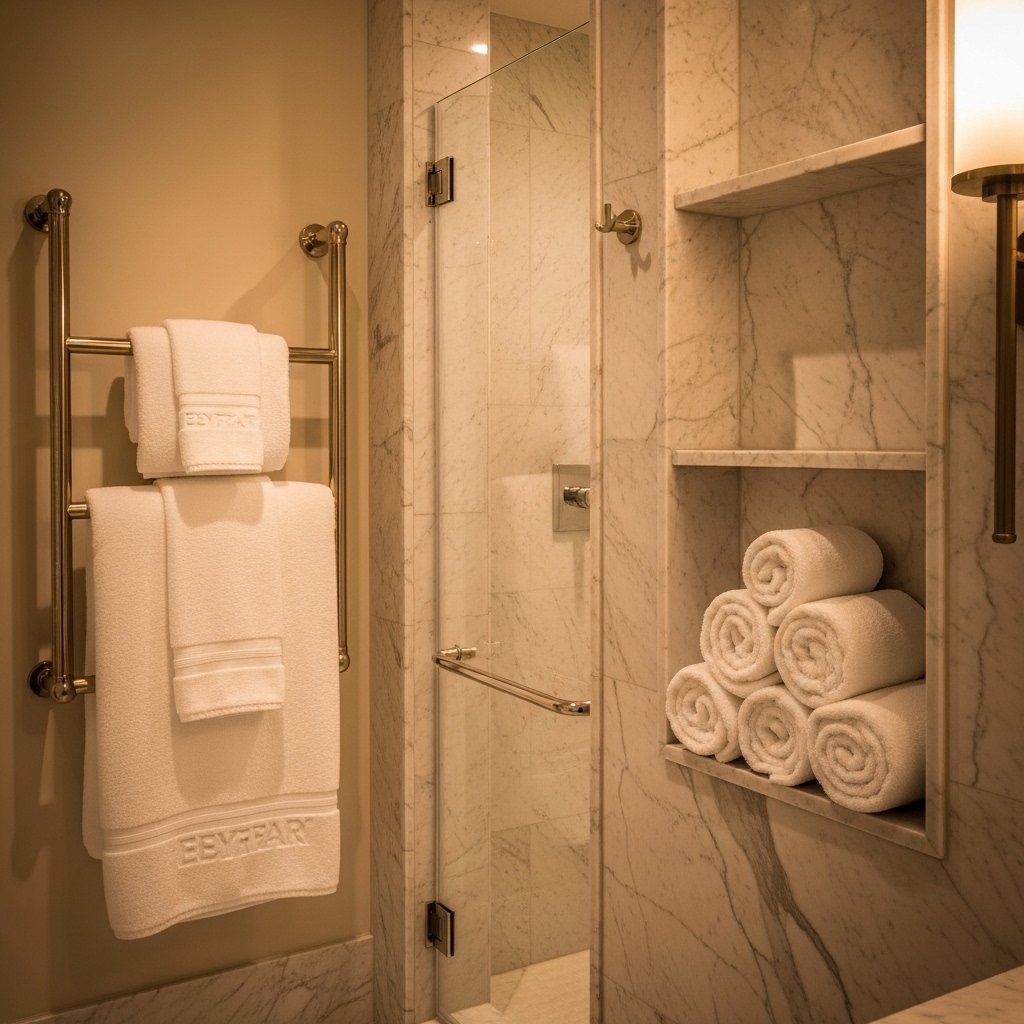
Towels in a luxury bathroom are not stuffed into a cabinet. They are displayed.
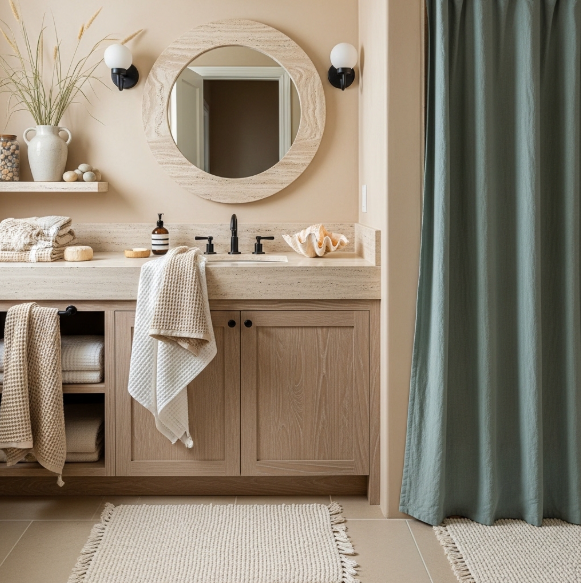
Rolled white or stone-colored towels stacked in an open niche, a ladder towel rack leaning against a tile wall, or a wall-mounted rail holding three precisely folded towels creates a visual warmth and a hotel-quality finish that a closed cabinet never achieves.
The towel quality matters here because the towels are visible. Egyptian cotton or Turkish cotton towels with a substantial GSM weight, 600 or above, hold their shape when folded, display their texture visibly, and feel dramatically different from standard towels against skin.
Choose one towel color and use it consistently throughout the bathroom. White is the most luxurious because it communicates cleanliness absolutely. Warm stone, soft grey, or deep charcoal are the 2026 alternatives that work against colored tile schemes.
11. Add a Chandelier or Sculptural Ceiling Light
A ceiling light in a bathroom is not a ventilation fitting with a bulb attached. In a luxury master bathroom it is a design statement.
A small chandelier, a sculptural pendant, or an oversized decorative flush fitting above the freestanding tub creates a vertical focal point that makes the bathroom feel like a designed room rather than a utilitarian one.
The fixture must be rated for bathroom use in humid environments. A chandelier appropriate for a dining room is not automatically appropriate for a bathroom. Verify the IP rating before purchasing.
A chandelier above a freestanding tub is one of the most photographed elements in luxury bathroom design for a reason. The combination of the sculptural tub below and the ornate fixture above creates a composition that communicates considered luxury from every angle.
12. Design a Built-In Shower Niche
A shower with a wire caddy hanging from the shower head is a shower someone lives in. A shower with a built-in tiled niche is a shower someone designed.
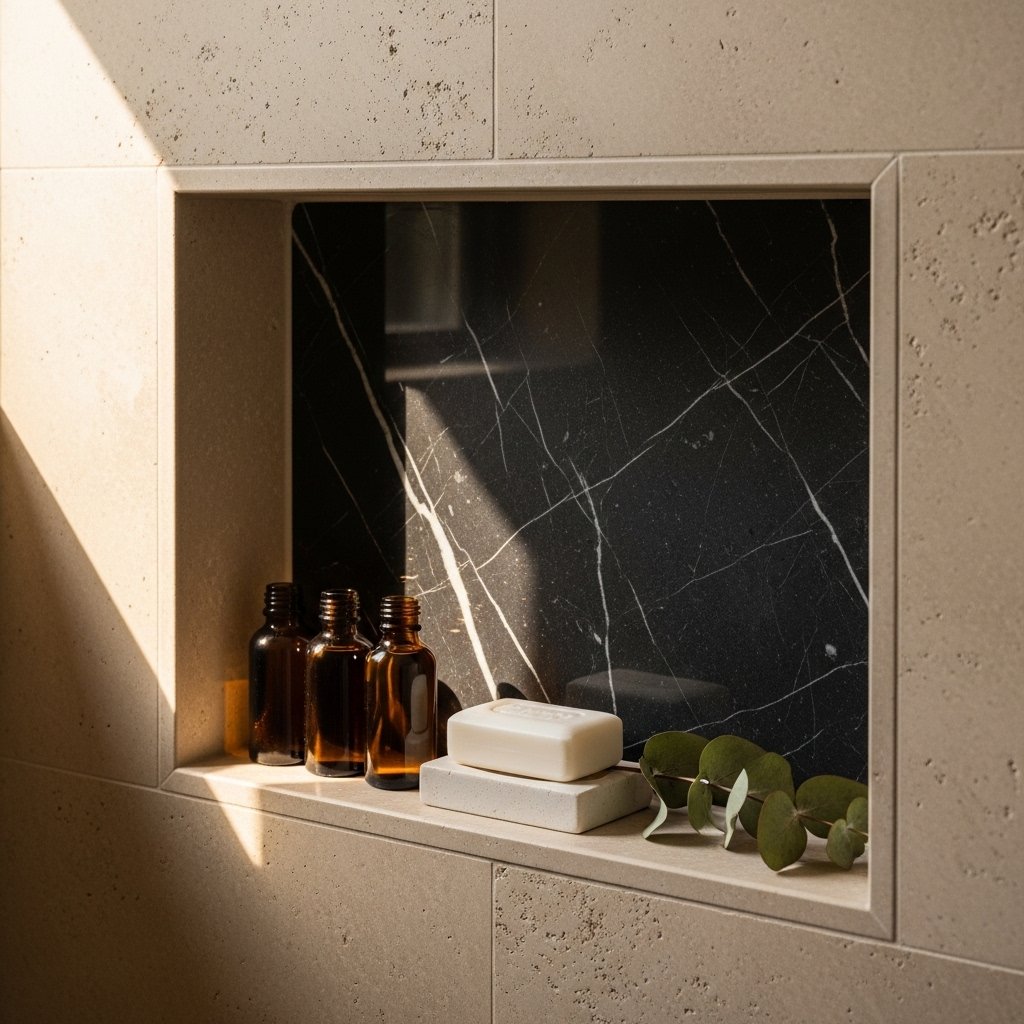
A recessed niche built into the shower wall, tiled to match or contrast with the surrounding tile, holds shampoo, conditioner, body wash, and soap at a functional height without any external hardware.
The niche proportions matter. A niche that is too shallow holds nothing usefully. A standard niche depth of 10–12cm accommodates most full-size bottles comfortably. Height of 30–40cm with one or two horizontal shelves dividing the space allows organization within the niche.
A niche with a contrasting tile interior, a darker stone, a mosaic, or a different format of the same tile, becomes a visual feature rather than just a functional recess. The contrast draws the eye and adds compositional interest to a tiled wall that is otherwise uniform.
13. Treat the Bathroom as a Sensory Environment
The master bathroom that functions as a genuine daily retreat engages all five senses. Most bathrooms engage one: sight. The ones that feel truly luxurious engage all of them.
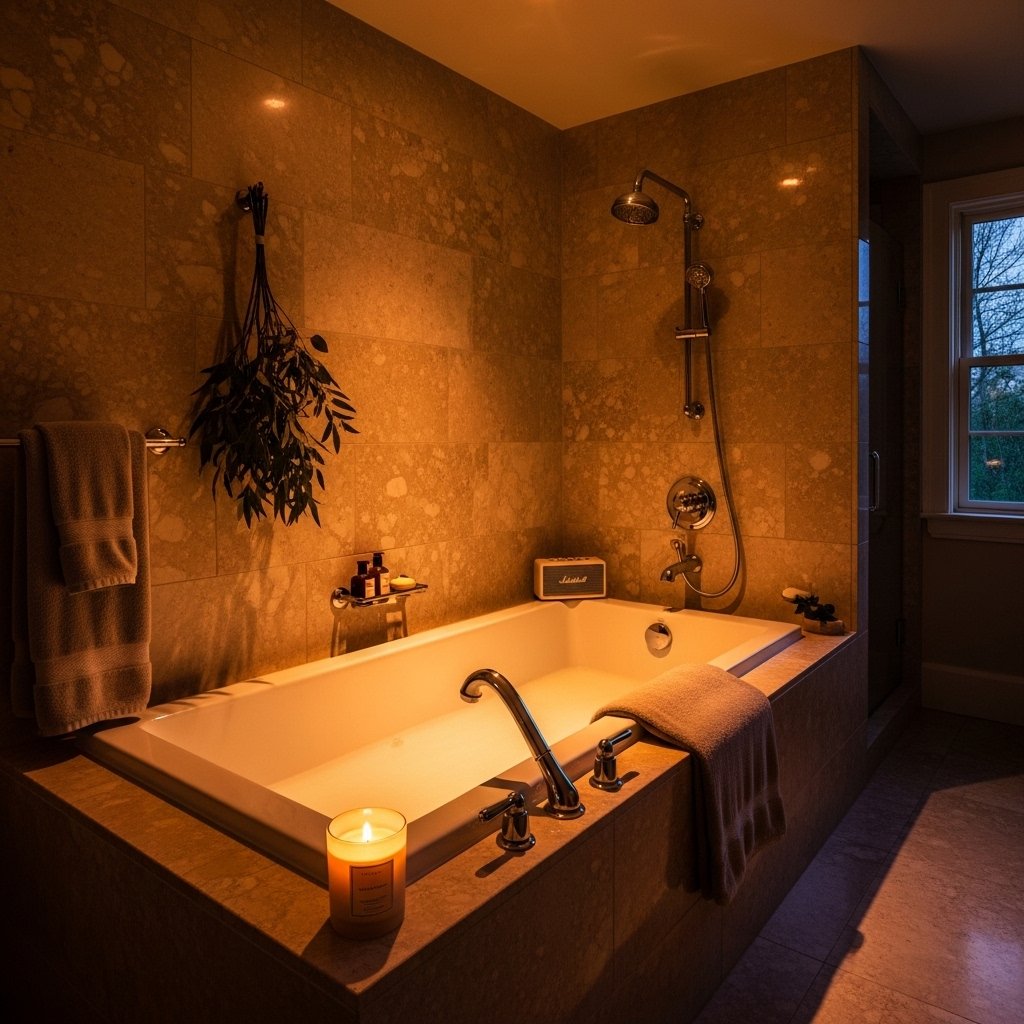
Sound: a small waterproof Bluetooth speaker mounted discreetly or a built-in speaker system. The quality of the audio experience during a bath or a morning routine is not trivial. Music and sound design change the subjective quality of time spent in the room.
Scent: a reed diffuser on the vanity, eucalyptus hung from the shower head releasing oils in the steam, a luxury candle on the bath surround. A bathroom with a consistent signature scent is one that registers as a distinct environment rather than a functional space.
Light control: a dimmer on every circuit. The bathroom used at 6am for a quick morning routine and the bathroom used at 9pm for a long soaking bath are two different environments. A dimmer switch creates both without requiring two different rooms.
Temperature: heated floors, a heated towel rail that warms towels before they are needed, and a room that reaches bathing temperature before you enter it. Comfort is a sensory experience. Design for it deliberately.