16 Spa Bathroom Ideas That Turn Your Bathroom Into a Daily Retreat
The spa bathroom is not a bathroom with a scented candle in it. It is a bathroom designed from the ground up to produce a specific quality of experience every single time it is used.
The difference between a bathroom that functions and a bathroom that restores is not the size of the room or the budget of the renovation. It is the quality of the decisions made about light, material, texture, scent, and the organization of the space.
These 16 ideas build a bathroom that earns the description of spa rather than borrowing it.
1. Remove the Overhead Light as Primary Source
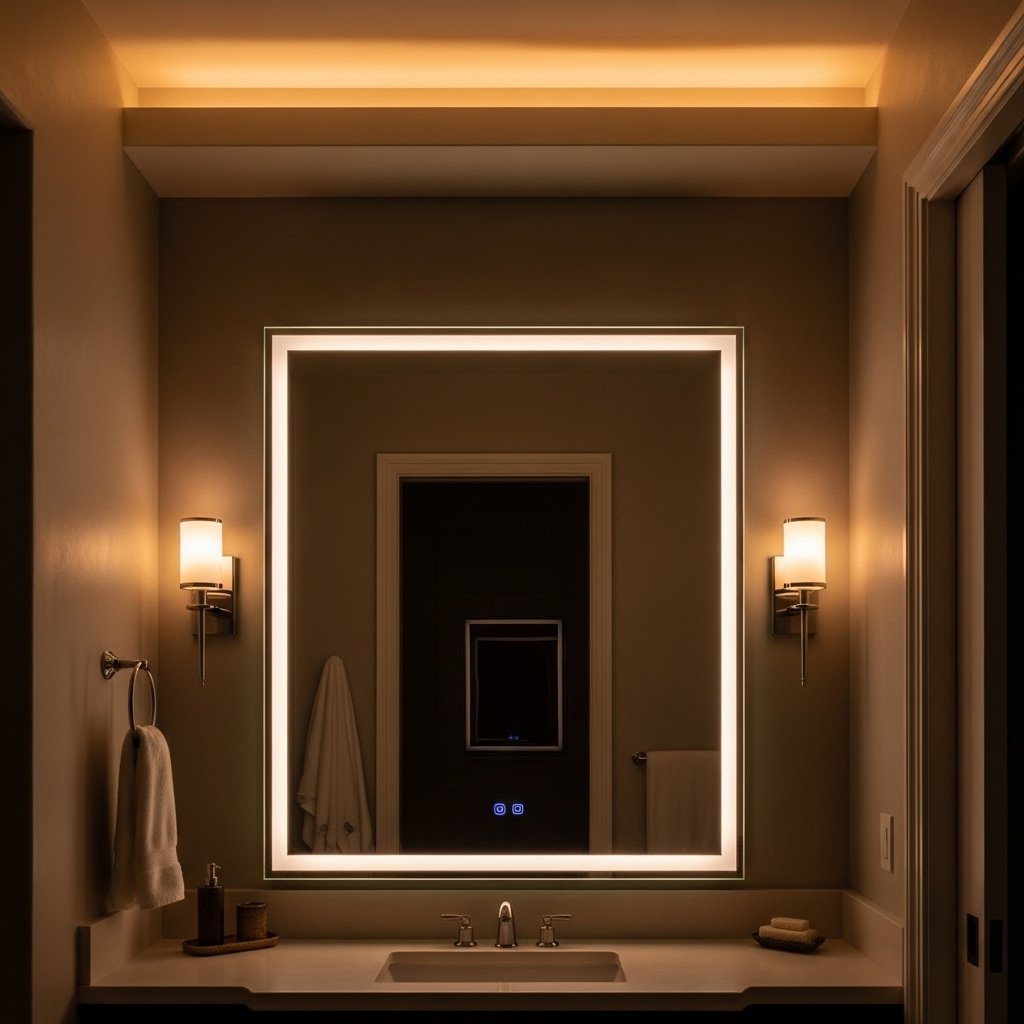
The overhead light in a standard bathroom is the enemy of spa atmosphere. It casts downward shadows that are unflattering, creates a clinical brightness that contradicts relaxation, and makes the bathroom feel like a task environment rather than a restorative one.
Remove the overhead light as the primary source and replace it with wall-mounted sconces at face height on either side of the mirror, a backlit mirror providing diffused illumination, and a dimmer-controlled warm ambient light source positioned away from the direct above-head position.
The sconces at face height provide the most flattering and functional light for grooming. The backlit mirror provides even shadowless illumination. The dimmed ambient source provides atmosphere.
The bathroom lit this way at 6am for a quick routine feels different from the same bathroom used at 9pm for a long bath. The dimmer creates both environments within one room.
2. Install a Rain Shower Head at Maximum Size
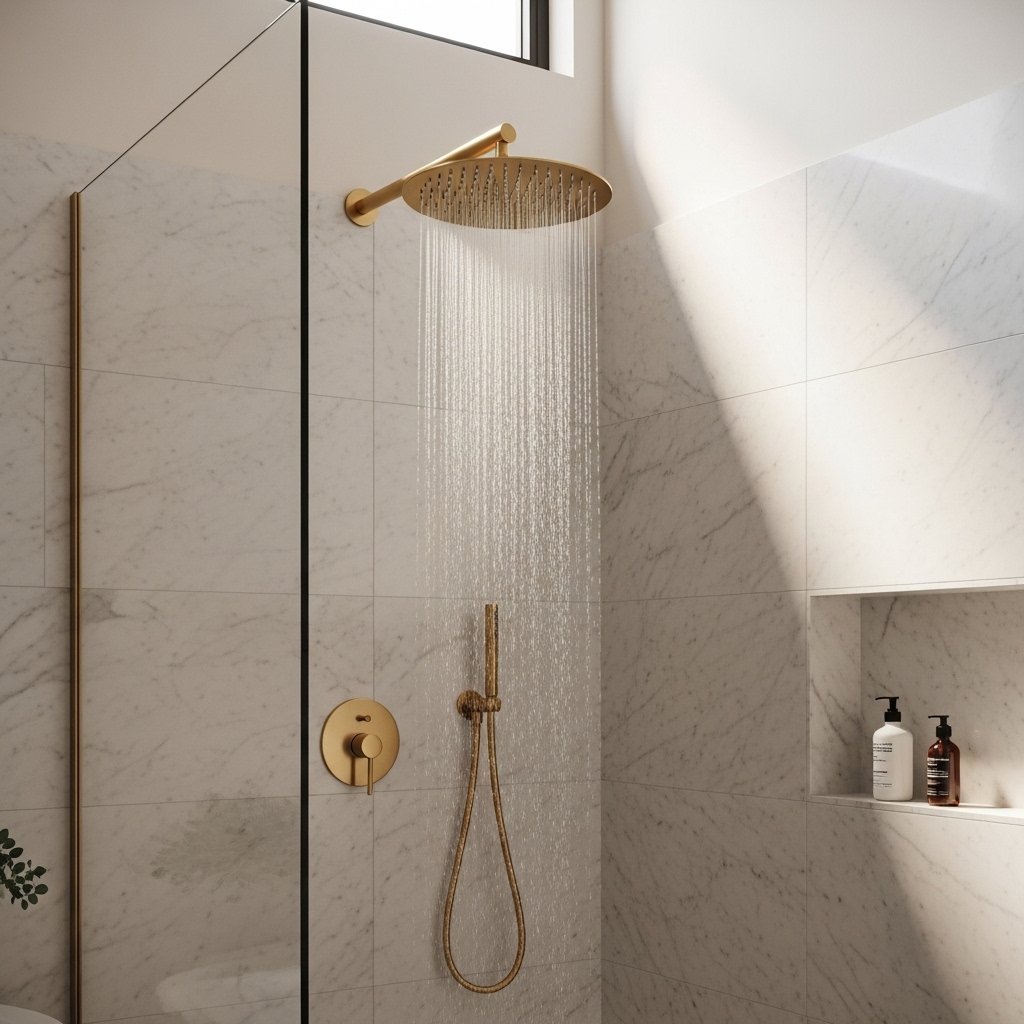
The shower experience in a spa bathroom begins with the shower head. A ceiling-mounted rain shower head positioned over the center of the shower floor, sized at 30cm diameter or larger, produces a bathing experience that a standard wall-mounted shower cannot approach.
Water falling from directly overhead at low pressure across a large surface area creates the sensation of standing in warm rain. This is not a marginal improvement over a standard shower. It is a categorically different experience.
The water pressure and temperature control should be separate. A thermostatic shower valve that maintains a set temperature regardless of water pressure fluctuations delivers consistency that standard valves do not. The shower reaches the correct temperature and holds it for the duration.
Position a separate body jet or hand shower on the wall for rinsing and for those who prefer directional water. The rain head and the body jet serve different moments of the shower routine.
3. Bring in Natural Wood Warmth
Stone, tile, and glass are the primary materials of most bathrooms and they share one quality: hardness. A bathroom made entirely of hard materials feels clinical regardless of their quality.
Natural wood introduced deliberately into a bathroom breaks the hardness and produces warmth that manufactured materials cannot replicate.
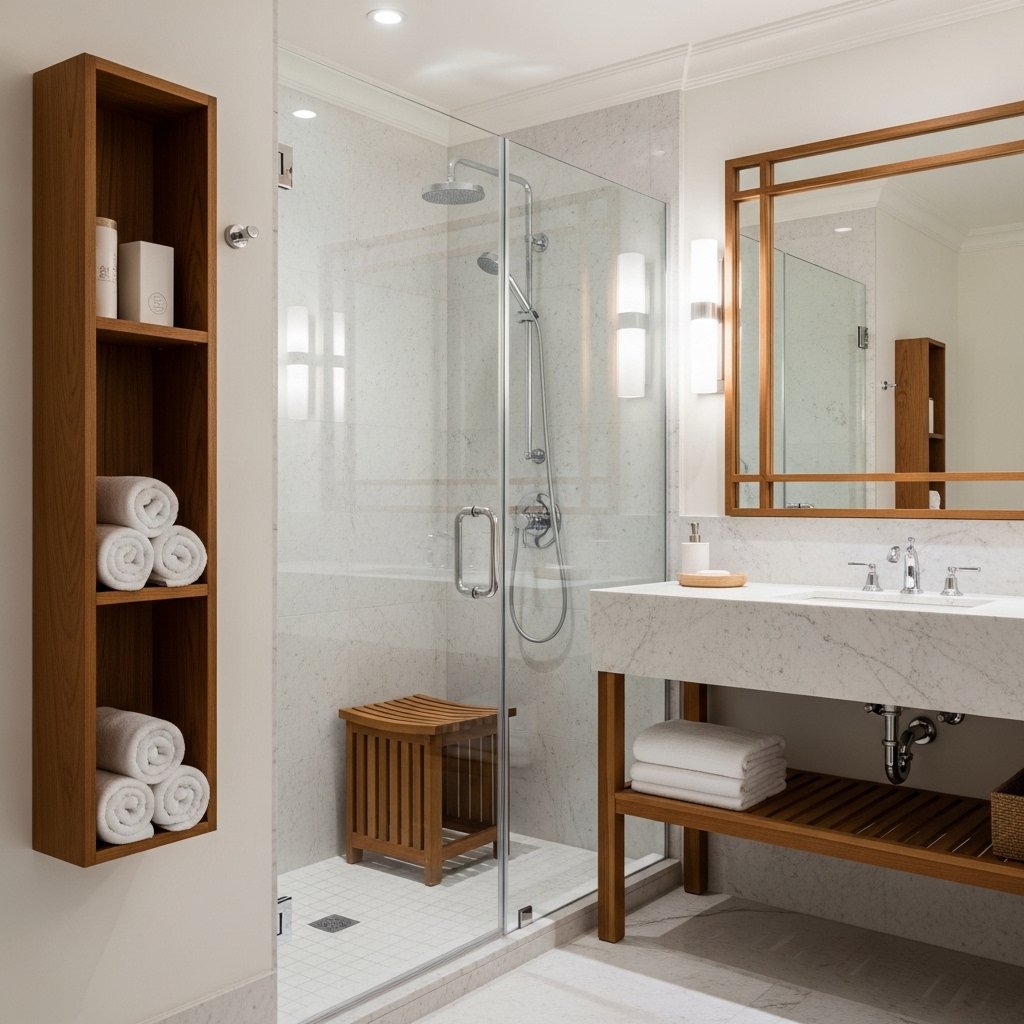
A teak bath tray across the freestanding tub. A wall-mounted teak shelf beside the shower. A timber-framed mirror above the vanity. A small teak stool inside the shower providing a surface for products and a seating option.
Teak is the correct timber for bathroom applications because its natural oil content resists moisture penetration without requiring regular sealing. Untreated teak in a wet environment will silver slightly over time, developing a character that treated timber does not.
4. Heated Towel Rails as Functional Sculpture
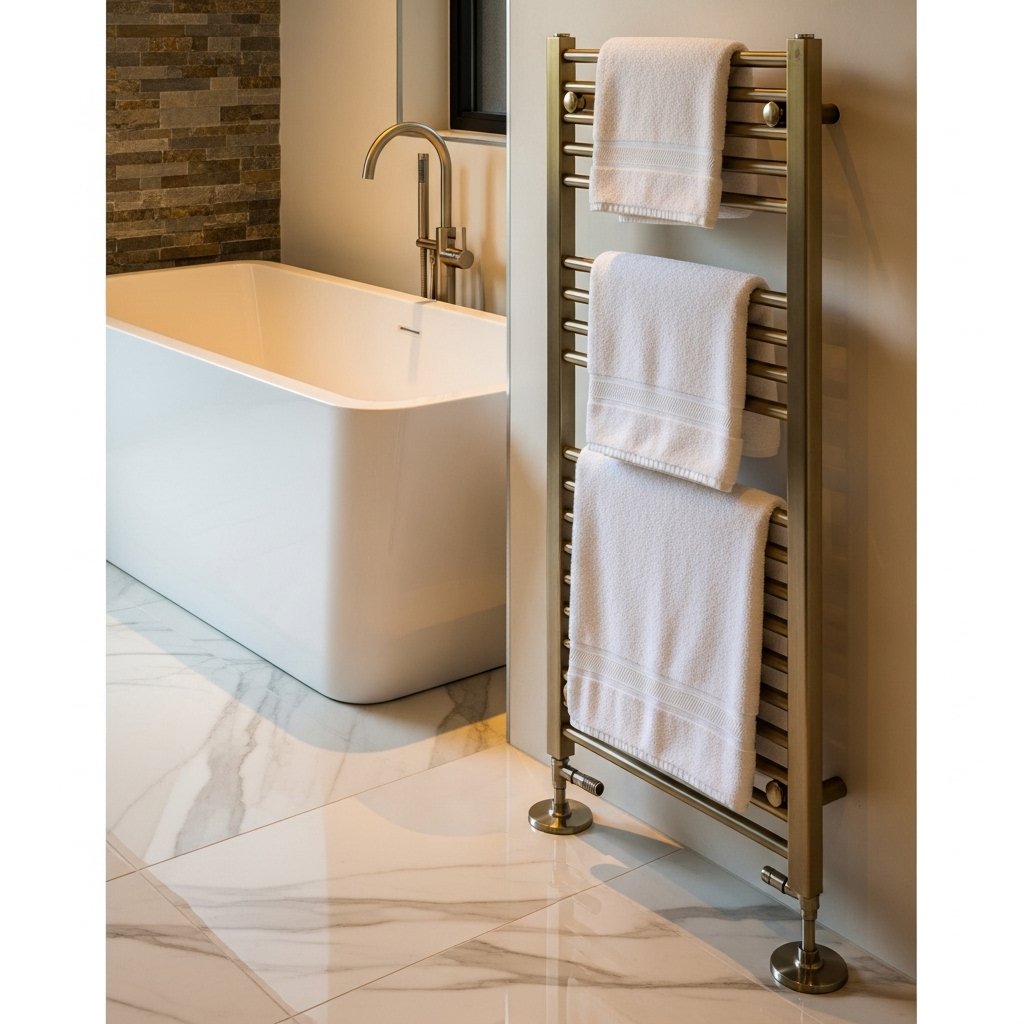
A heated towel rail in a spa bathroom is not a utility fitting attached to a wall. It is a functional sculpture that provides warm towels, contributes to the room’s warmth, and acts as a vertical design element.
Tall, freestanding heated towel rails in brushed brass, matte black, or polished chrome are available in forms that read as furniture rather than plumbing fixtures. A freestanding towel rail beside the bath or in the corner of the bathroom holds multiple towels and operates as a designed object from every angle.
The towels displayed on a heated rail should be quality enough to display. Egyptian cotton or Turkish cotton in warm white or stone, folded with care and draped rather than bundled, transforms the towel rail from a functional object to a display.
A towel that has been warming on a heated rail for twenty minutes before use produces a bathing experience that a room-temperature towel cannot provide.
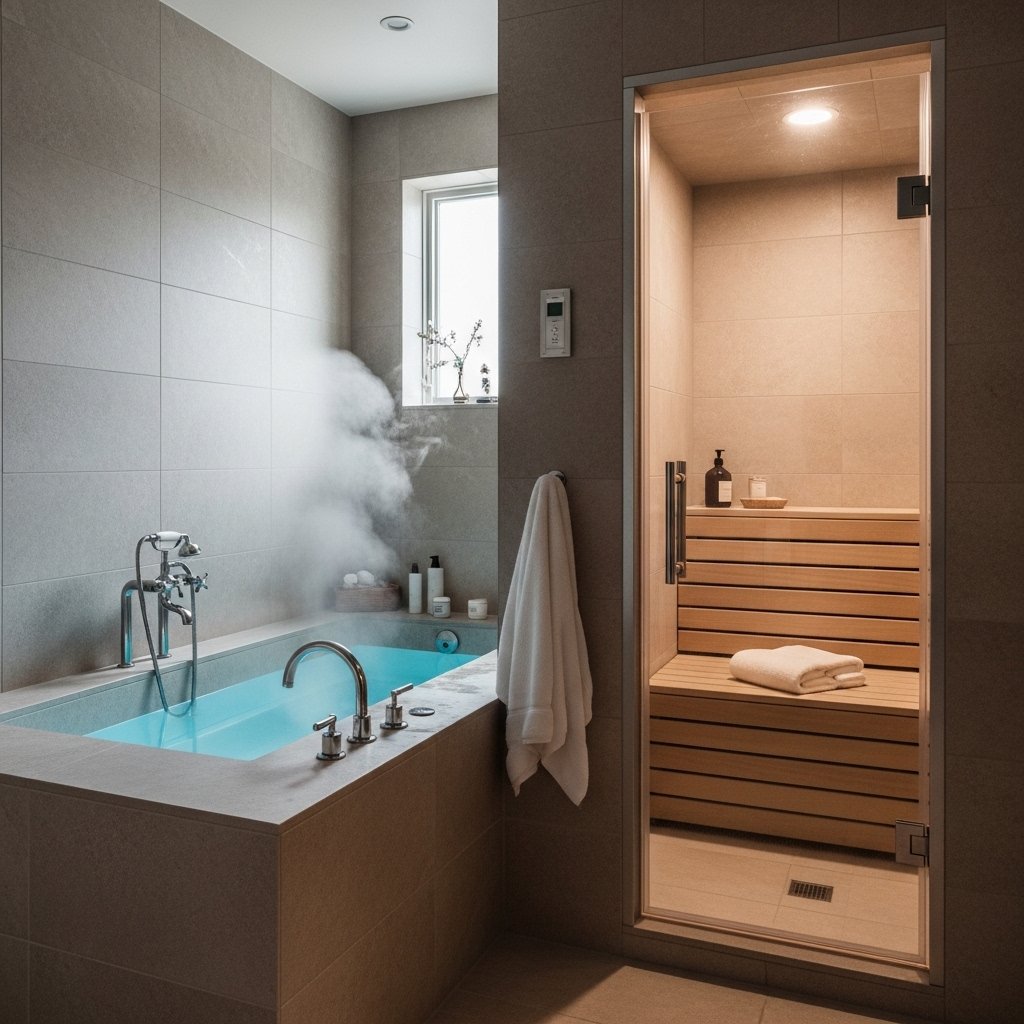
5. A Steam Generator for the Shower Enclosure
A steam shower converts the shower from a daily hygiene function to a daily wellness function. The investment is significant relative to a standard shower installation. The daily return justifies it unconditionally.
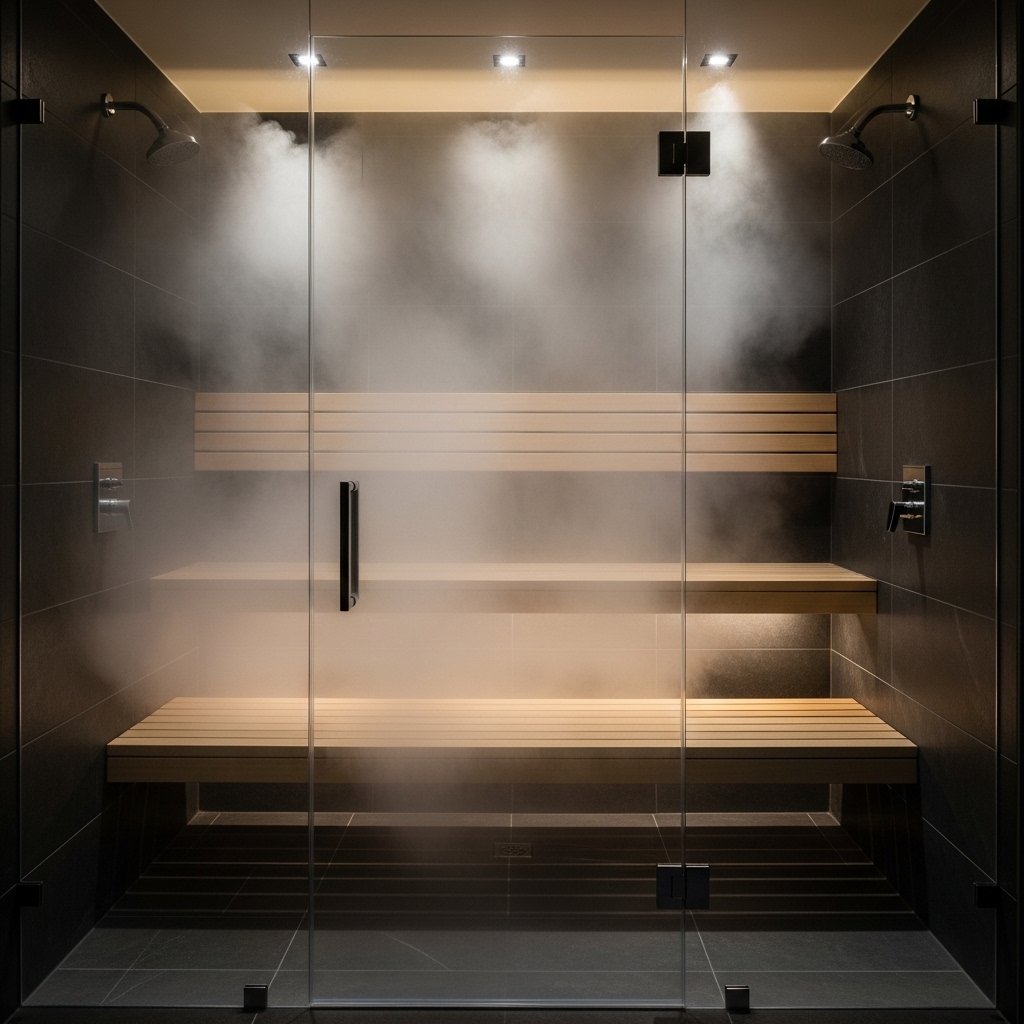
A sealed shower enclosure with a steam generator installed produces a steam environment at the touch of a button. The enclosure fills with hot steam in three to four minutes. A fifteen-minute steam session produces physiological effects, improved circulation, respiratory benefit, and skin hydration, that justify the installation cost over the life of the bathroom.
A bench seat at the correct height inside the steam shower is not optional. Standing in steam is a fraction of the experience of sitting in it. The bench allows the steam to be experienced rather than endured.
An aromatherapy oil inlet on the steam generator allows eucalyptus, lavender, or peppermint oil to be introduced into the steam. The combination of heat, humidity, and essential oil is genuinely therapeutic.
6. A Deep Japanese Soaking Tub
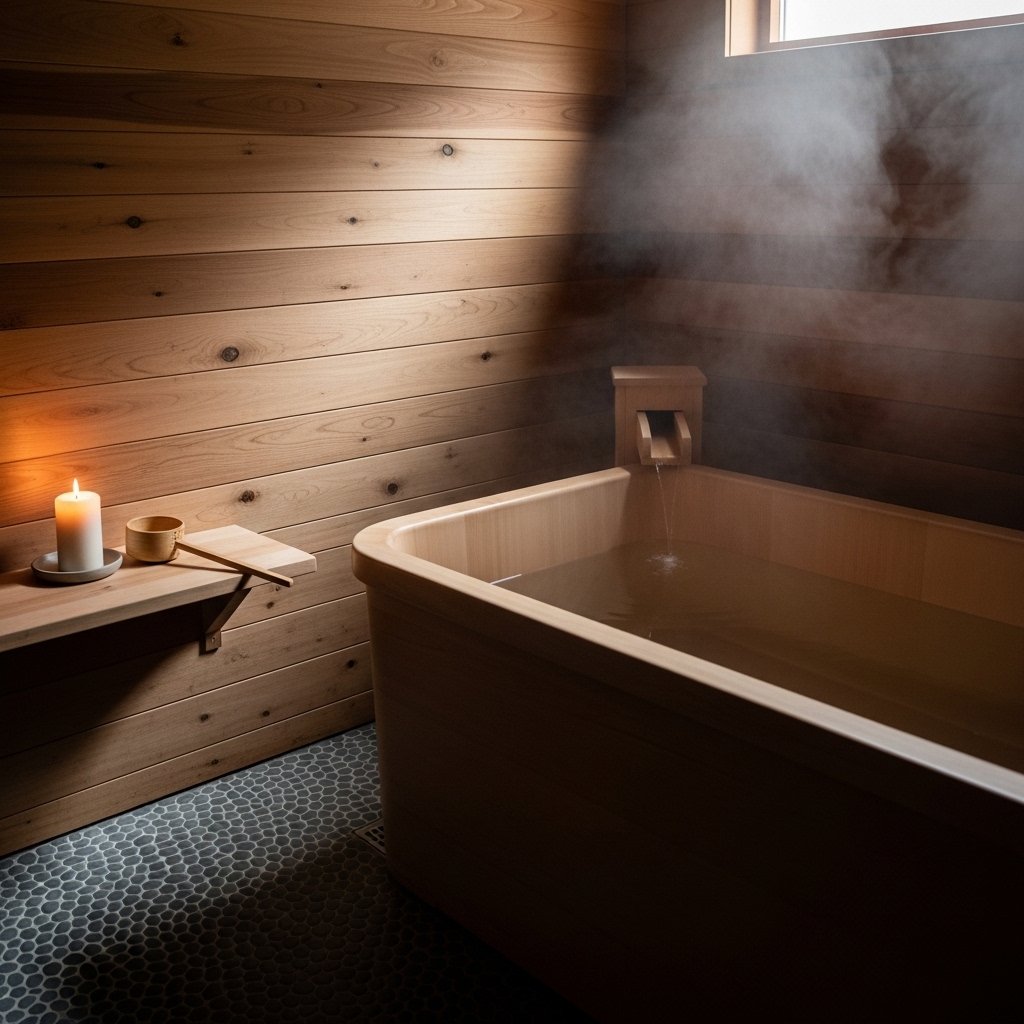
The Japanese soaking tub, the ofuro, is designed for a different kind of bathing than the Western reclined bath. It is deeper, shorter in length, and designed for sitting upright submerged to the chest rather than lying reclined.
The depth of water in a Japanese soaking tub, typically covering the bather to shoulder height when seated, produces a hydrostatic pressure effect on the body that a standard bath cannot. The full immersion creates a specific physical relaxation that partial immersion does not approach.
In matte black, natural cedar, or stone resin, a Japanese soaking tub is a sculptural object as well as a functional one. The form is compact enough to fit in bathrooms too small for a standard freestanding bath.
Cedar Japanese soaking tubs produce a specific aromatic environment when filled with hot water. The steam carries the natural scent of the cedar. The bathing experience engages four senses simultaneously.
7. A Living Wall of Plants
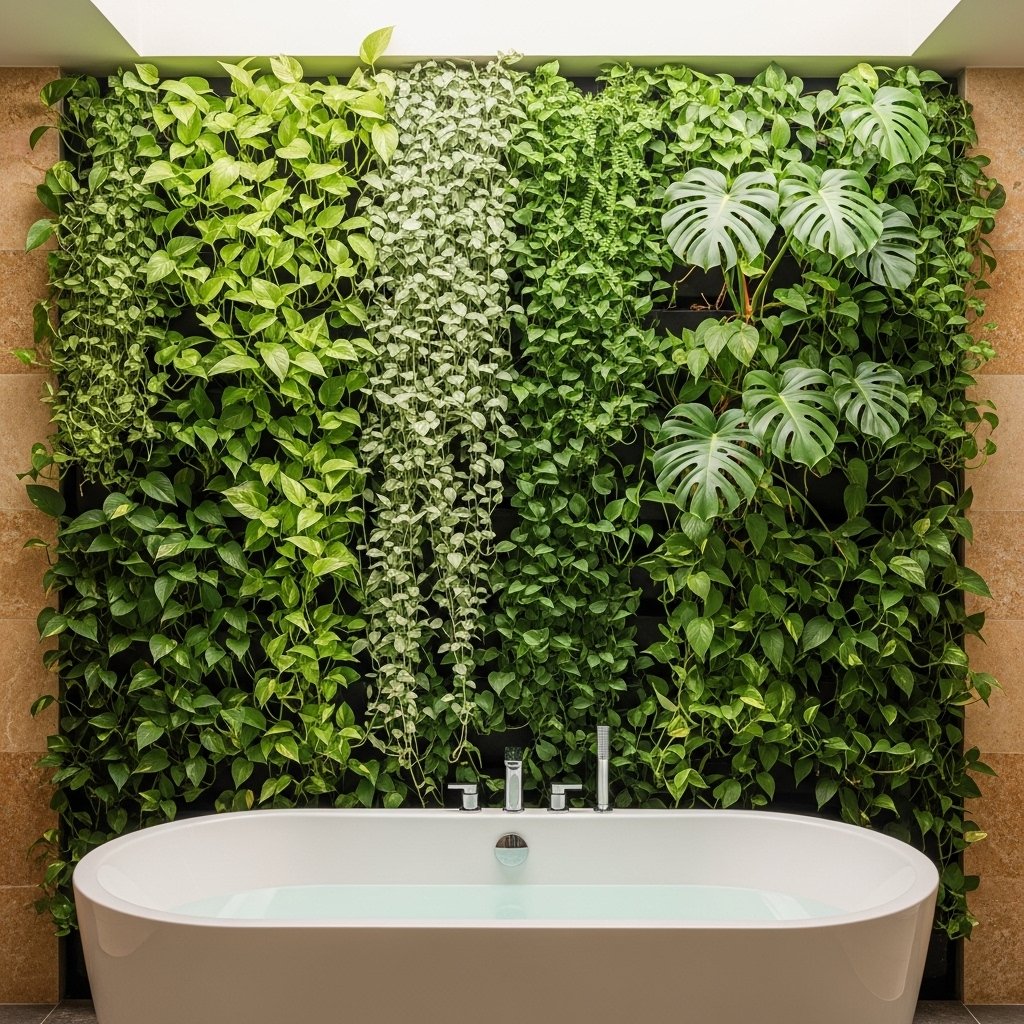
Plants in a bathroom serve a function that plants in no other room serve: they participate in the moisture-rich environment of the room and create a connection between the bathing experience and the natural world that hard materials cannot.
A living plant wall on one bathroom wall, achieved with wall-mounted planter pockets or a modular green wall system, creates a backdrop of living green against which the bath or shower experience takes on a quality that no tiled surface provides.
Plants suited to high humidity bathroom environments: pothos, peace lilies, Boston ferns, tropical spider plants, and philodendrons all thrive in the moisture and warmth of an active bathroom.
Even three or four large hanging plants cascading from wall-mounted hooks create a version of the living wall effect at minimal cost and installation effort.
8. Aromatherapy Integrated Into the Daily Routine
The scent environment of a spa bathroom is not an afterthought. It is one of the primary experiences of the room and requires the same design consideration as the lighting and the materials.
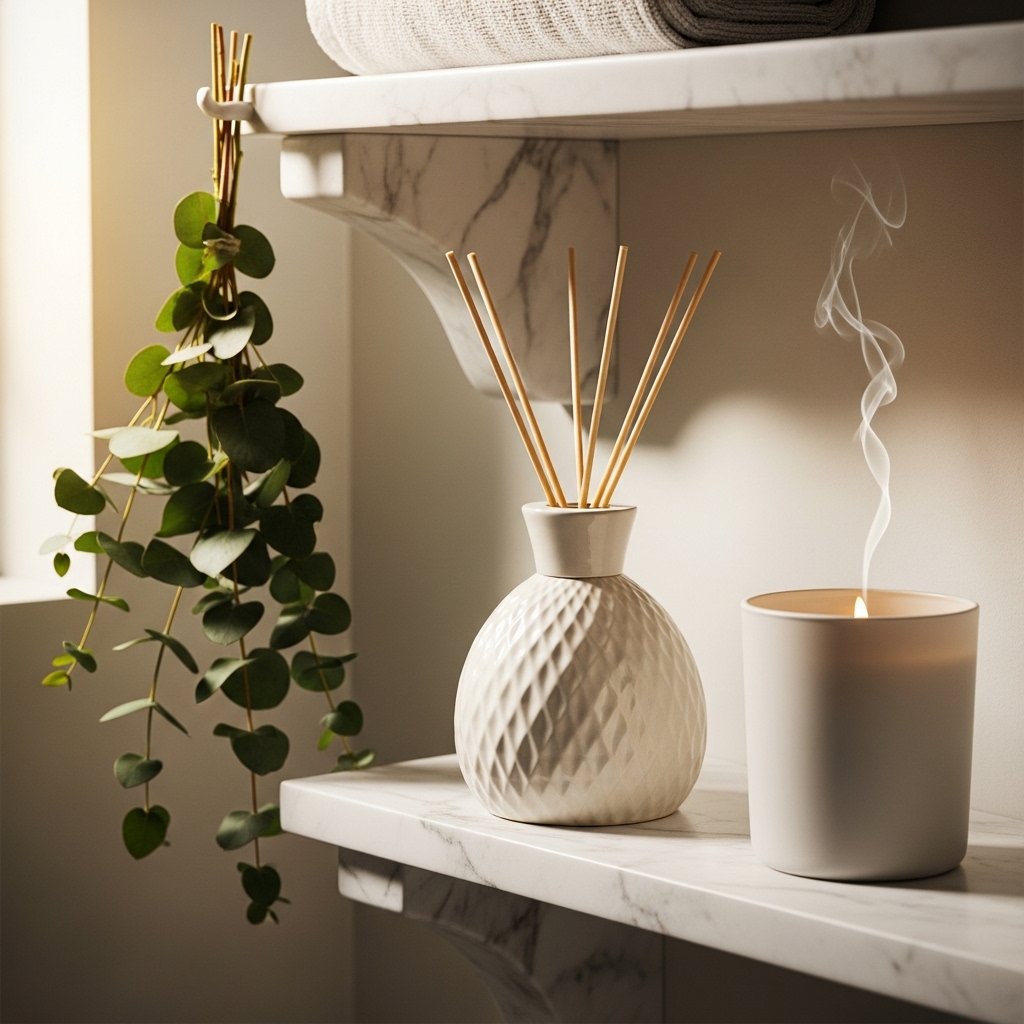
A reed diffuser in a beautiful vessel permanently positioned in the bathroom establishes the room’s baseline scent. Eucalyptus hung in the shower head, releasing its oils in the steam, adds a secondary scent specific to the shower experience. A candle lit during baths adds a third scent layer appropriate to the longer, more restorative experience.
The three scents should work together rather than compete. Eucalyptus, cedar, and a clean white tea note in a candle form a cohesive aromatic environment that builds rather than conflicts.
The vessels matter as much as the scents. A beautiful diffuser vessel, a quality candle in a ceramic jar, and a tied eucalyptus bundle are all design objects as well as functional scent sources.
9. Zero Clutter on Every Surface
The spa experience and visual clutter are fundamentally incompatible. A bathroom surface crowded with products, bottles, and miscellaneous objects cannot produce the mental calm that a spa bathroom is designed to create.
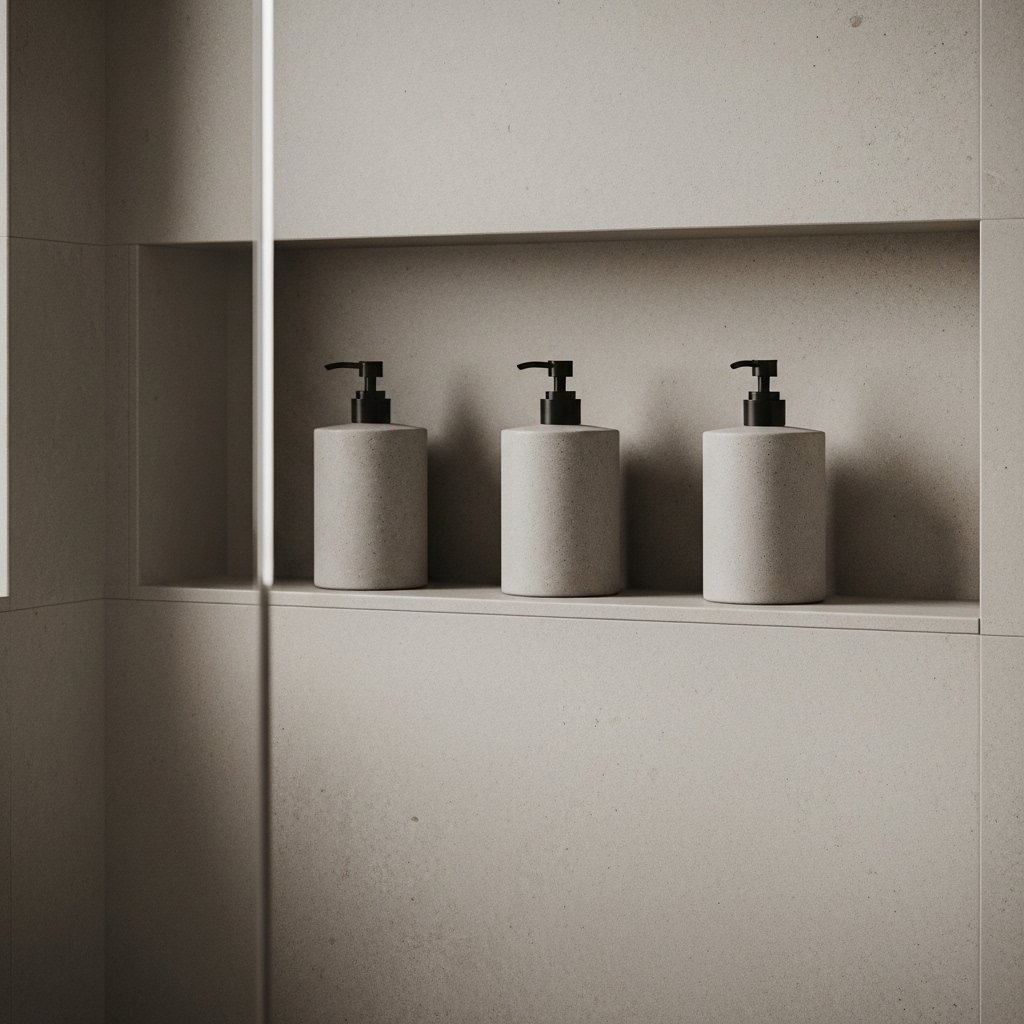
Concealed storage for every product that is not beautiful enough to display. Decanted products in matching vessels for those that are used daily. A maximum of three items on any visible surface.
The decanting discipline is transformative. Shampoo, conditioner, and body wash in three identical stone or ceramic pump vessels instead of three different commercial bottles changes the shower shelf from a retail display to a spa amenity.
The daily discipline of maintaining clear surfaces is not onerous. It requires only the habit of putting things away rather than setting them down. The return, a bathroom that looks and feels like a spa every morning, is immediate and daily.
10. A Sound System Built Into the Space
Sound is the sensory dimension of the spa bathroom that most home bathrooms ignore entirely. A bathroom with music or ambient sound playing at the correct volume transforms the bathing and shower experience in a way that silence does not.
Waterproof in-wall or in-ceiling speakers connected to a smart audio system allow music, podcasts, or ambient soundscapes to be played at the correct volume for the bathroom’s acoustic environment.
The acoustic environment of a bathroom is specific: hard surfaces create reflective sound that makes standard speakers sound harsh. Speakers designed for bathroom acoustics or in-ceiling speakers with downward-facing drivers minimize this reflection.
A shower with rain shower head, steam, and ambient music at low volume simultaneously engages sight, sound, touch, and smell. This multi-sensory engagement is the definition of a spa experience.
11. Underfloor Heating With Smart Controls
Heated floors in a spa bathroom are not a luxury detail. They are a fundamental quality-of-life feature whose daily impact is felt more consistently than almost any other bathroom investment.
Smart underfloor heating controlled by a thermostat with a programmed schedule, warm by the time the first person uses the bathroom each morning, is the invisible upgrade that changes the quality of every single morning for the life of the home.
The floor material choice interacts with the underfloor heating system. Natural stone, porcelain, and large format ceramic tiles all conduct heat effectively. Timber and thick stone have lower thermal conductivity and respond more slowly. Specify the heating system relative to the chosen floor material.
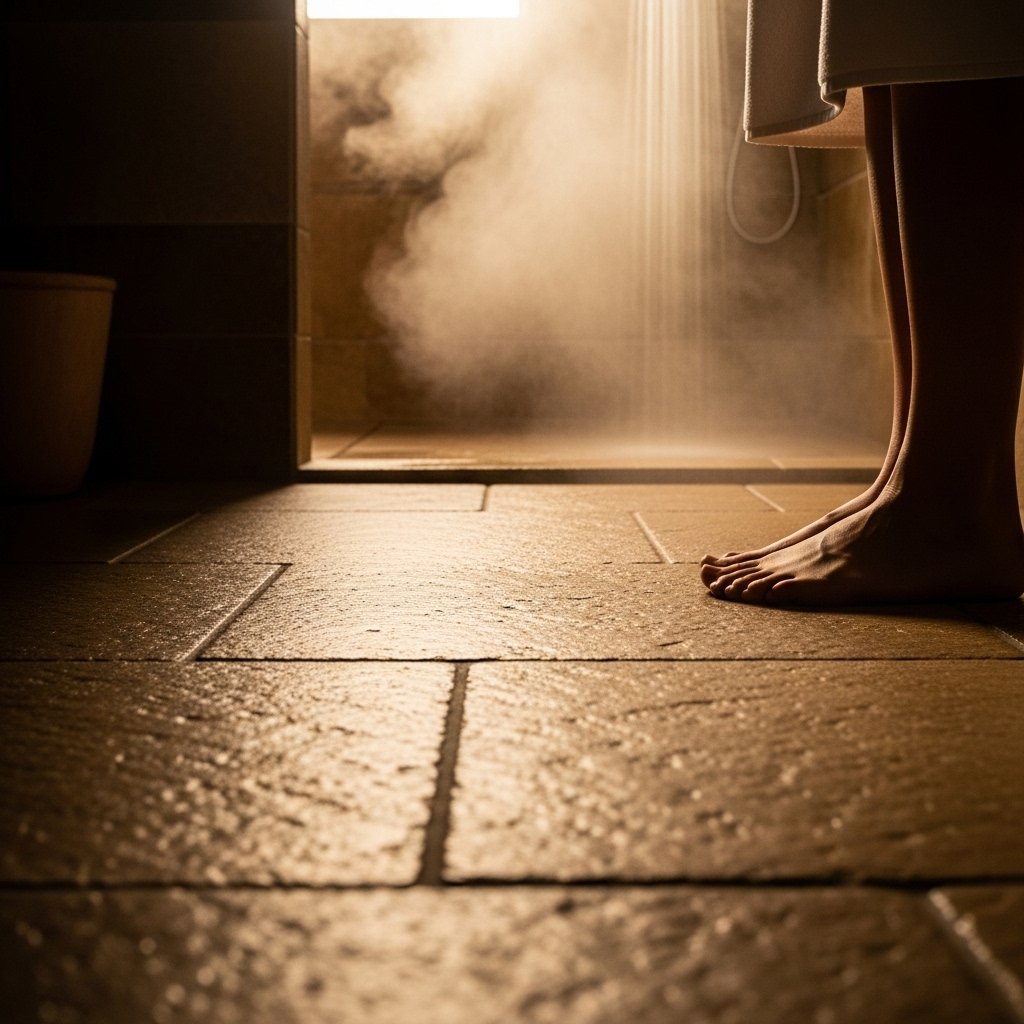
The barefoot experience on a floor that is precisely warm is the most reliably satisfying small luxury in home design.
12. A Dedicated Bathing Ritual Shelf
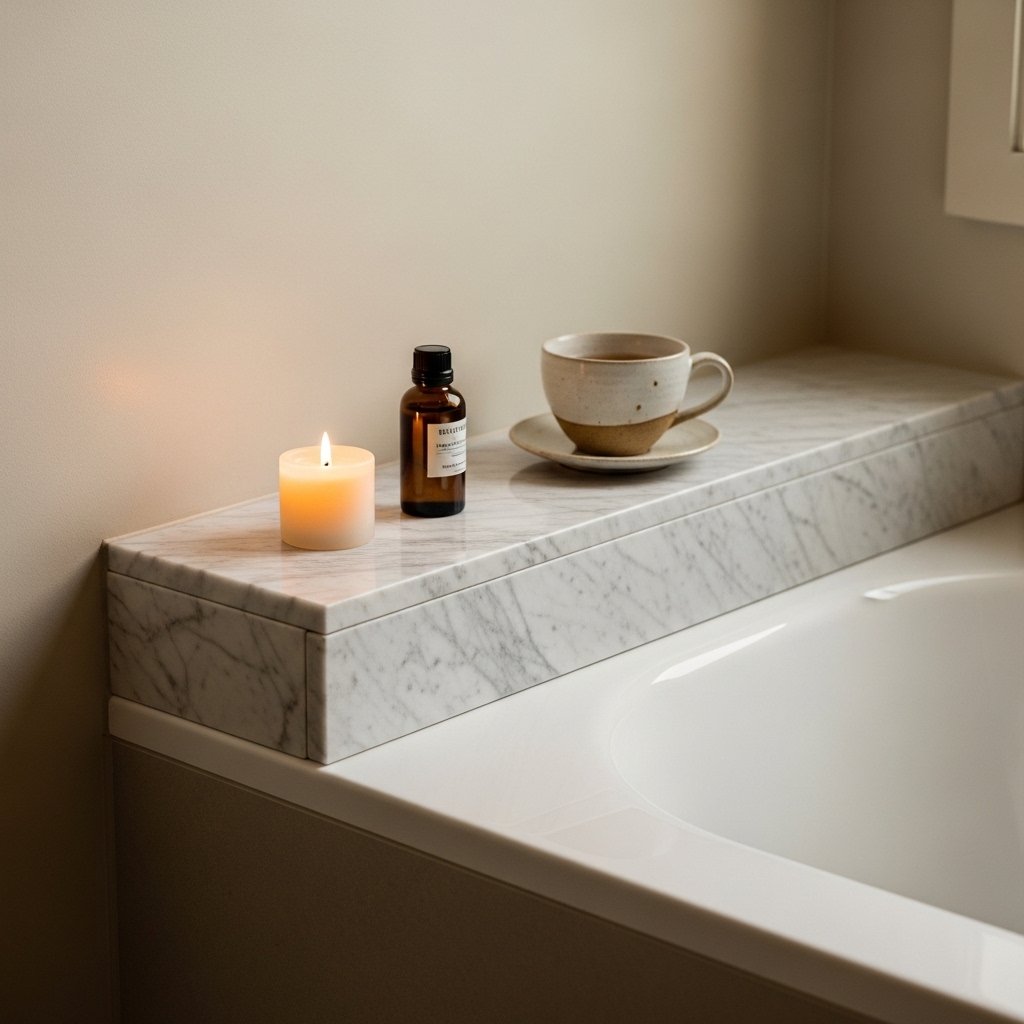
The bathing ritual shelf positions everything needed for a bath within arm’s reach of the tub without requiring a surface beside the bath.
A wall-mounted shelf at bath rim height beside the freestanding tub holds a quality candle, a face mask, a bath oil, a small carafe of water, a reading device or book stand, and whatever else belongs to the individual’s bath ritual.
The shelf is styled as a designed element rather than a storage ledge. Three items, spaced with intention, is a spa display. Seven items crowded together is a bathroom shelf.
The ritual shelf communicates that bathing is treated as a complete experience deserving its own dedicated equipment rather than improvised around whatever is nearest.
13. Monochromatic Material Palette
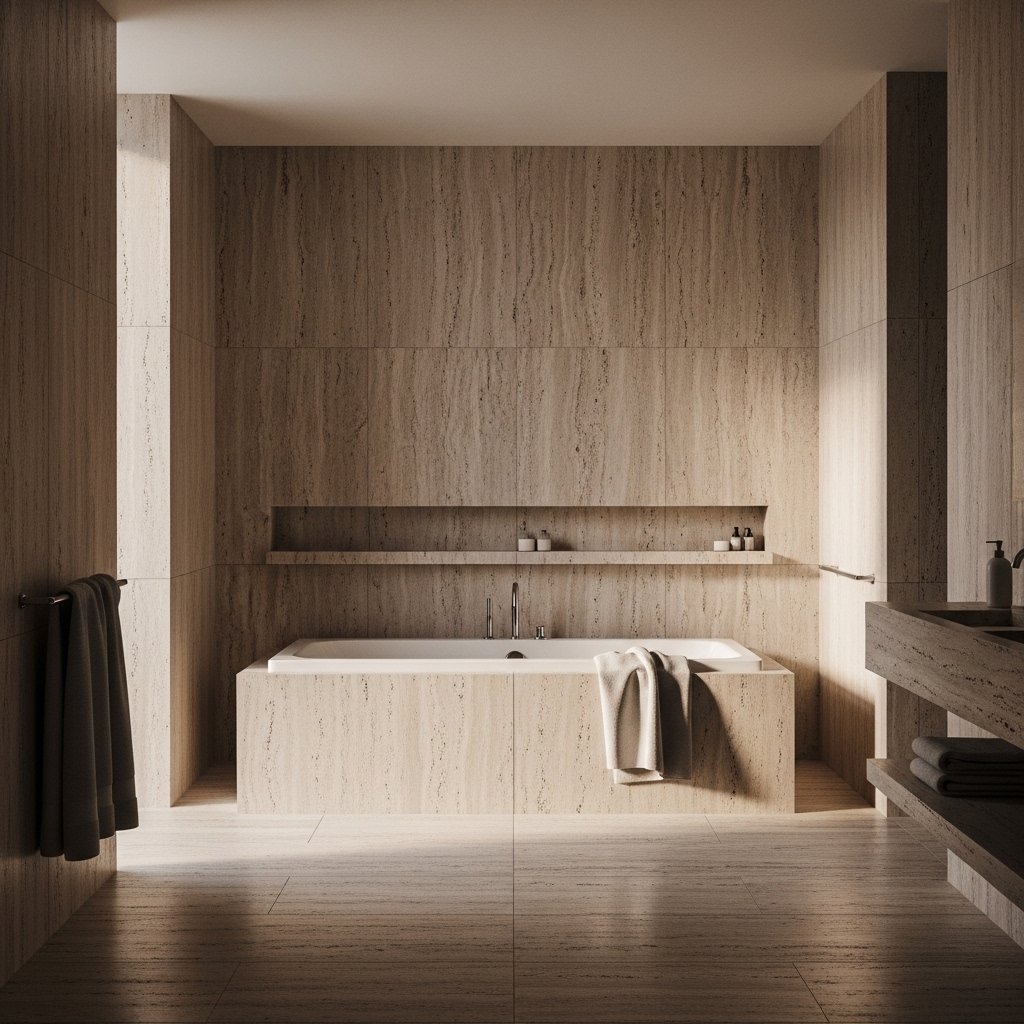
The most serene spa bathrooms in 2026 are built from one material or one color family applied across every surface simultaneously.
All marble: marble floor, marble walls, marble vanity top, marble shelving. The veining creates enough visual variation that the room is interesting without using multiple competing materials.
All travertine: travertine floor, travertine wall panels, travertine bath surround, travertine shelf. The warm, porous surface in all tones simultaneously creates an enveloping warmth.
All white plaster: white plaster walls, white plaster tub surround, white plaster shelf, white plaster lamp base. The texture variation between surfaces creates richness despite the single color.
The monochromatic bathroom produces a visual calm that multi-material bathrooms cannot achieve because there is nothing to resolve between competing materials. The room simply is.
14. A Bathrobe and Towel Warming Drawer
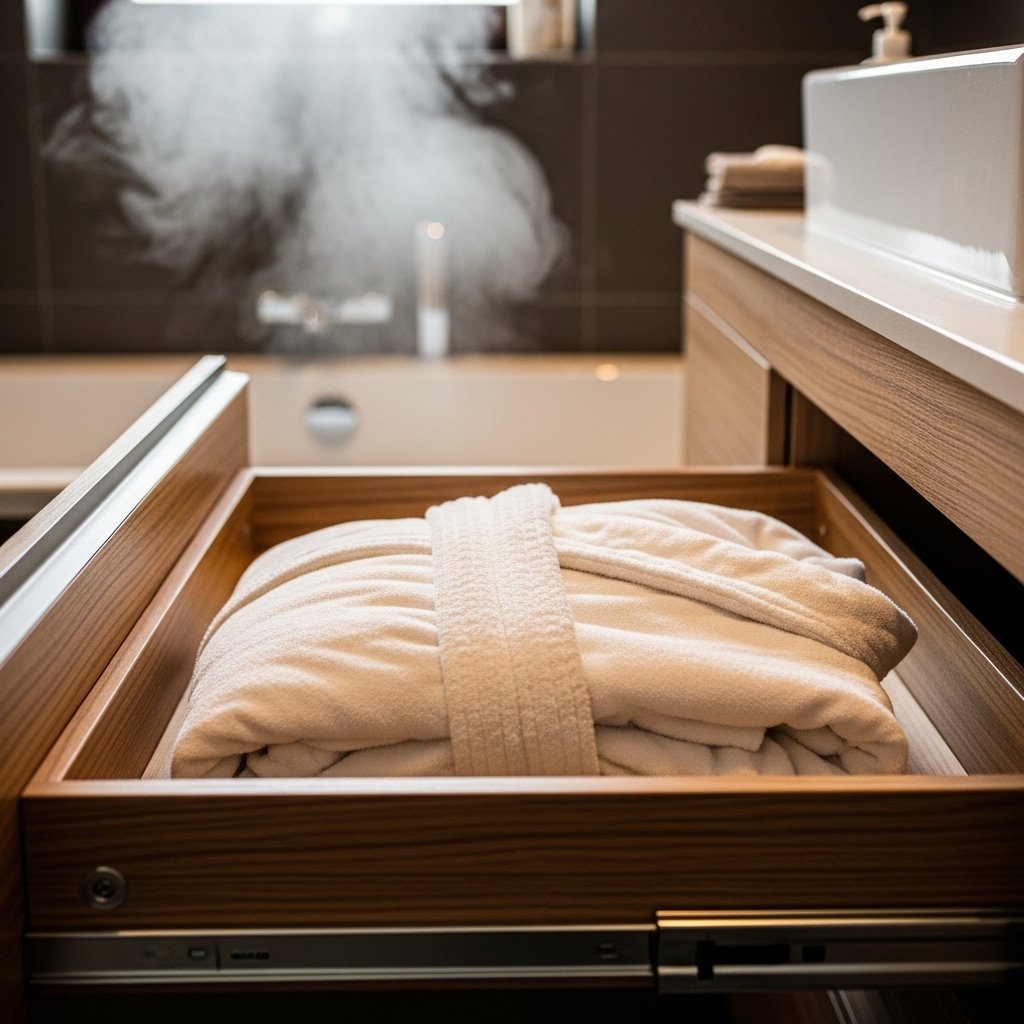
A warming drawer for towels and bathrobes, installed beneath a bathroom vanity or as a freestanding unit, takes the heated towel rail concept and extends it to full robes.
A bathrobe that has been warming in a drawer for twenty minutes before being put on produces a completely different experience from a room-temperature robe. The warmth is full-body rather than just the surface touched by a heated rail.
Commercial spa facilities have used warming drawers for decades because the experience they produce justifies their operational cost. In a home bathroom, the installation cost is modest and the daily return begins immediately.
This is the bathroom feature with the highest luxury-to-cost ratio currently available.
15. A Window That Connects to Nature
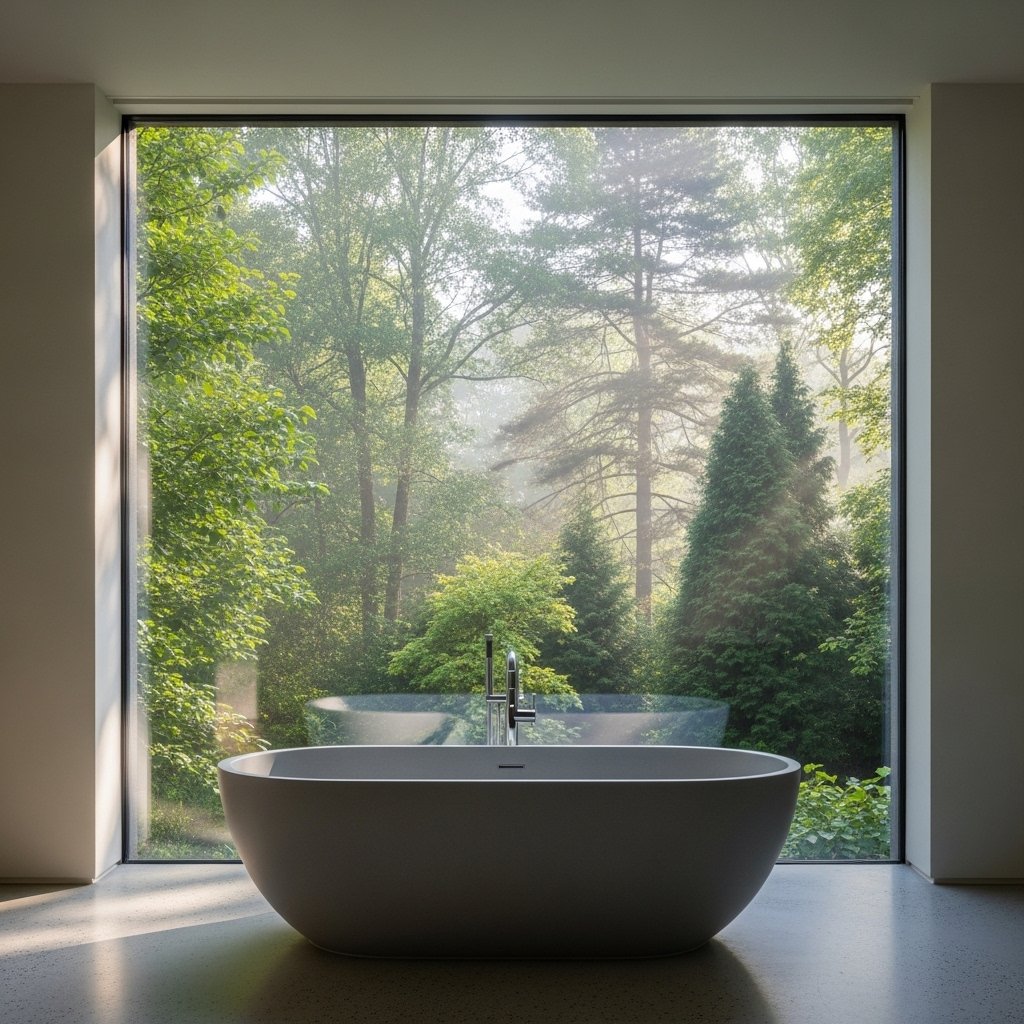
The most restorative spa bathrooms have a direct visual connection to nature from the bathing position. A window positioned so that the view from the freestanding bath is of a garden, a tree canopy, a sky, or water creates a bathing experience that any bathroom without such a view cannot replicate.
Privacy and view are not incompatible. Frosted glass in the lower portion of a window, a planted privacy screen outside, or a high-positioned window that shows sky and treetops rather than neighboring buildings all provide natural light and natural connection without sacrificing privacy.
The positioning of the freestanding bath relative to the window is the critical decision. The bath should face the window directly so that the person bathing looks outward rather than at a wall or at the bathroom’s other fixtures.
16. A Cold Plunge Option
The hot-cold contrast bathing experience, moving from heat to cold and back to heat, is one of the most physiologically beneficial wellness practices available. In 2026 the cold plunge has moved from commercial spa facilities into home bathrooms with sufficient space.
A cold plunge tub, a small but deep vessel chilled to 10–15 degrees Celsius, positioned beside or near the hot bath or steam shower, allows the contrast bathing sequence that dramatically improves circulation, reduces inflammation, and produces the specific mental clarity associated with cold water exposure.
For smaller bathrooms, a cold shower sequence, ending the hot shower with two to three minutes of cold water, achieves a version of the same contrast effect without dedicated cold plunge equipment.
The physical and mental return of contrast bathing used consistently over time is among the most evidence-supported wellness practices available. Building it into a home bathroom is the most convenient way to make it a daily practice.