15 Bathroom Tile Ideas That Define the Entire Room
Tile in a bathroom is not a background material. It is the primary design decision. The tile determines the room’s material register, its color story, its textural quality, and the visual tone of every bath and shower taken in it for the life of the installation.
Most people choose bathroom tile last, after the fixtures, the vanity, and the fittings are decided. The rooms that look most considered choose tile first and let everything else respond to it.
These 15 ideas cover every direction bathroom tile design can go in 2026 at its most beautiful and most current.
1. Large Format Marble in a Continuous Slab Layout
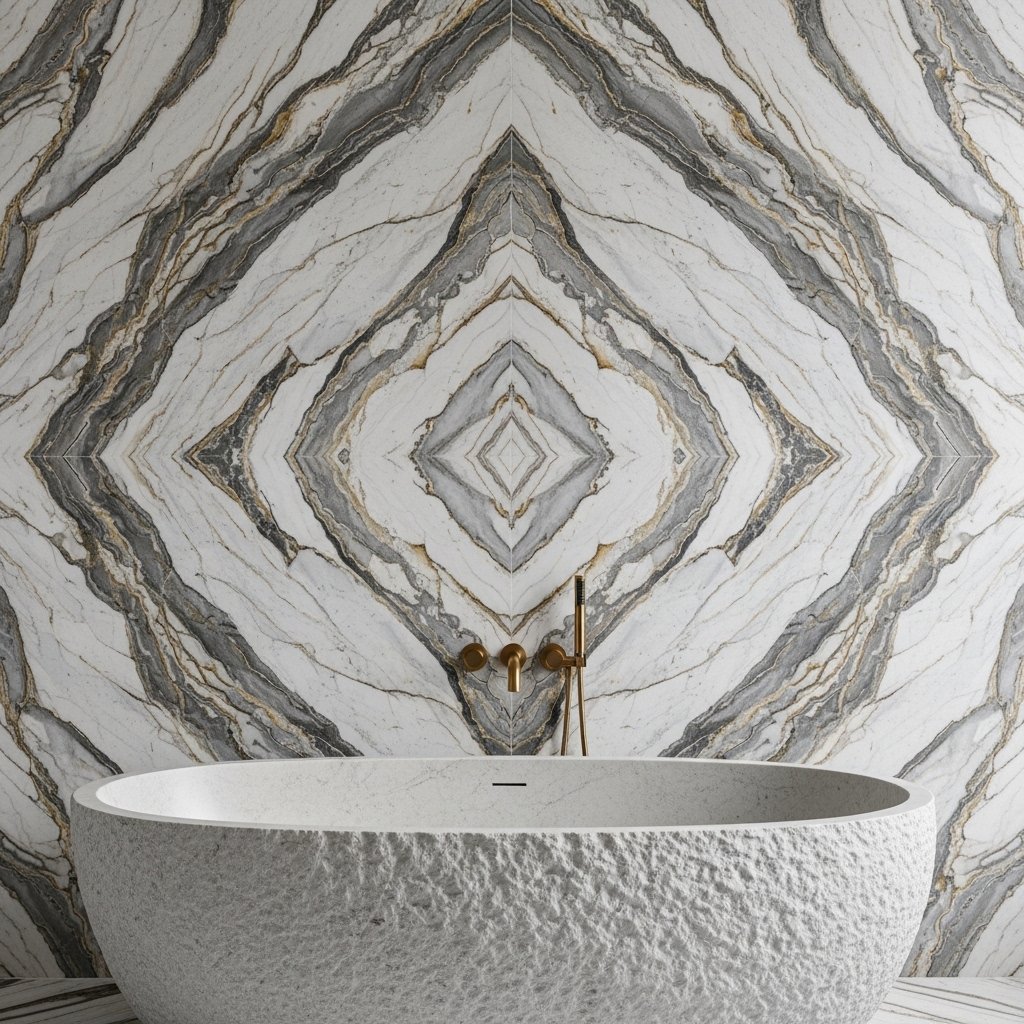
The large format marble tile, 60x120cm or larger, installed with bookmatched veining across wall panels so the pattern mirrors itself from tile to tile, is the single most luxurious tile decision available in a bathroom.
The veining pattern of a bookmatched marble installation reads as one continuous geological event across the entire wall surface. The symmetry is organic rather than mechanical. The result is a bathroom wall that appears to have been carved from a single piece of stone rather than assembled from tiles.
The grout line in this application must be minimal to the point of near-invisibility. A grout color matched to the tile’s lightest tone, applied at 2mm width, creates a joint that the eye reads as part of the stone’s natural variation rather than as a tile seam.
Combine with warm fixtures in brushed gold or unlacquered brass. The warm metal against cool marble is the material pairing that high-end hotel bathrooms have used for decades because it works without exception.
2. Zellige in Warm White or Soft Color
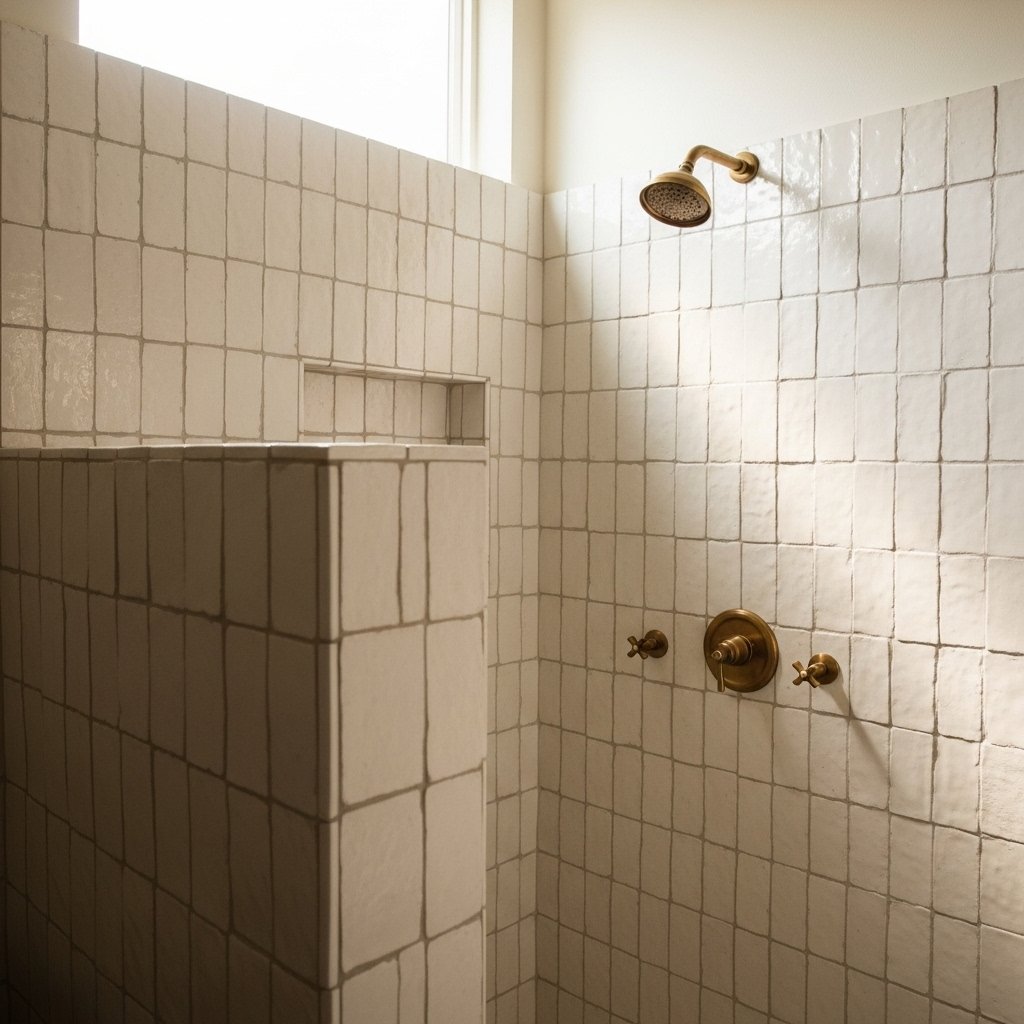
Zellige tile, the hand-cut Moroccan ceramic with characteristic irregular surface, varied glaze depth, and imperfect edge geometry, creates a bathroom surface with more visual interest per square centimeter than any manufactured tile.
The light behavior of a zellige surface is its defining quality. Each tile’s slightly different surface angle catches and reflects light differently from its neighbors. A wall of zellige in warm white in side light appears to shimmer with a continuous, gentle variation that a flat glazed tile surface never produces.
In soft color, dusty sage, pale terracotta, soft blush, or muted cobalt, zellige creates a bathroom wall with the depth of a saturated color and the organic variation of a natural material simultaneously.
Specify unsealed zellige carefully for wet bathroom applications. Zellige is porous and requires appropriate sealing for shower and bath surround applications. The sealed surface retains the visual quality of the unsealed tile while providing the necessary water resistance.
3. Terrazzo Floor With Complementary Wall Tile
A terrazzo floor in a bathroom is the material decision that makes the floor the room’s visual hero rather than its background.
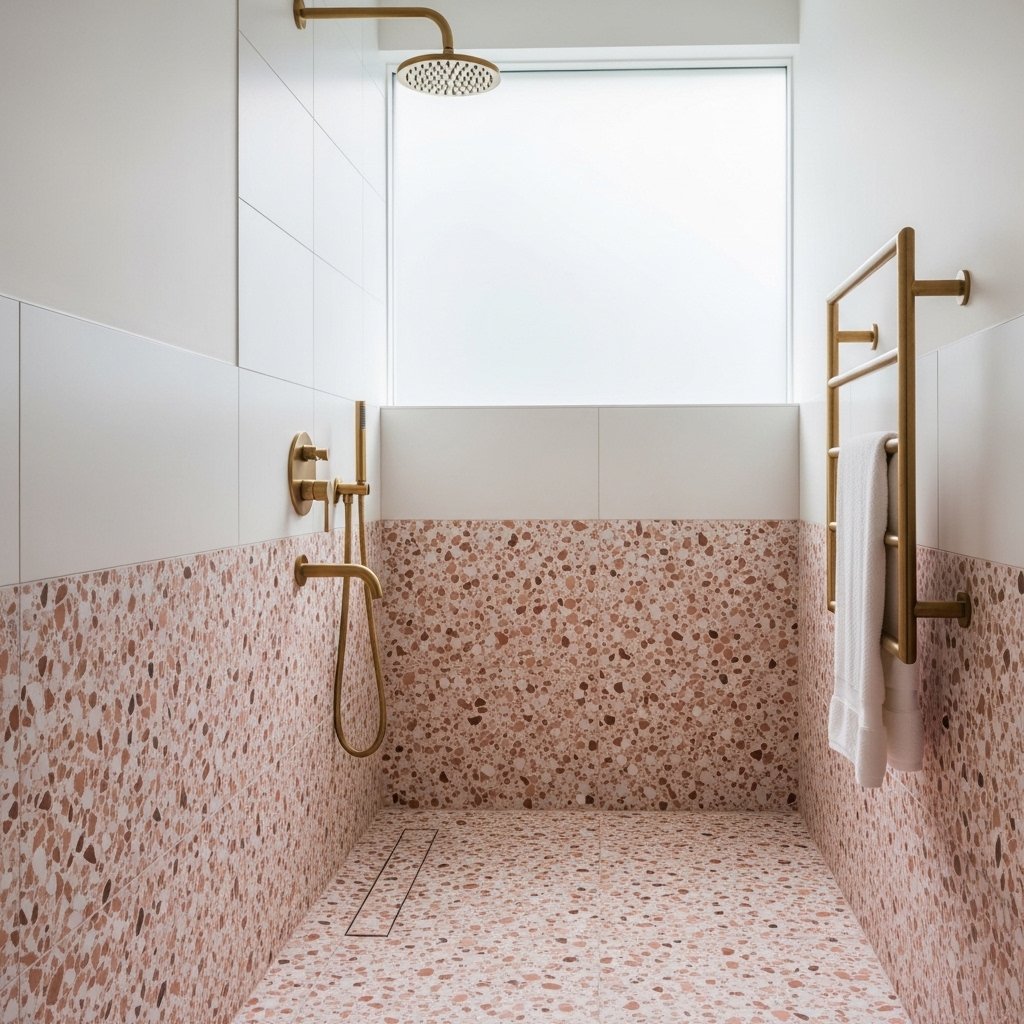
Contemporary terrazzo in pink and white chips on a warm grey matrix, green and cream chips on a white matrix, or black and gold chips on a charcoal matrix creates a floor surface with the visual complexity of a patterned tile and the material authenticity of a genuine composite stone.
The wall tile in a terrazzo-floored bathroom should be quieter than the floor: a simple white or off-white subway tile, a plain large format ceramic, or a lightly textured natural stone. The terrazzo earns the right to be the room’s primary pattern. The wall tile provides the neutral backdrop.
Terrazzo and brass is the correct fixture pairing. The warmth of brass accessories, tap, towel bars, and mirror frame, suits the organic warmth of the terrazzo matrix.
4. Vertical Stack Bond Tile in Dark Tone
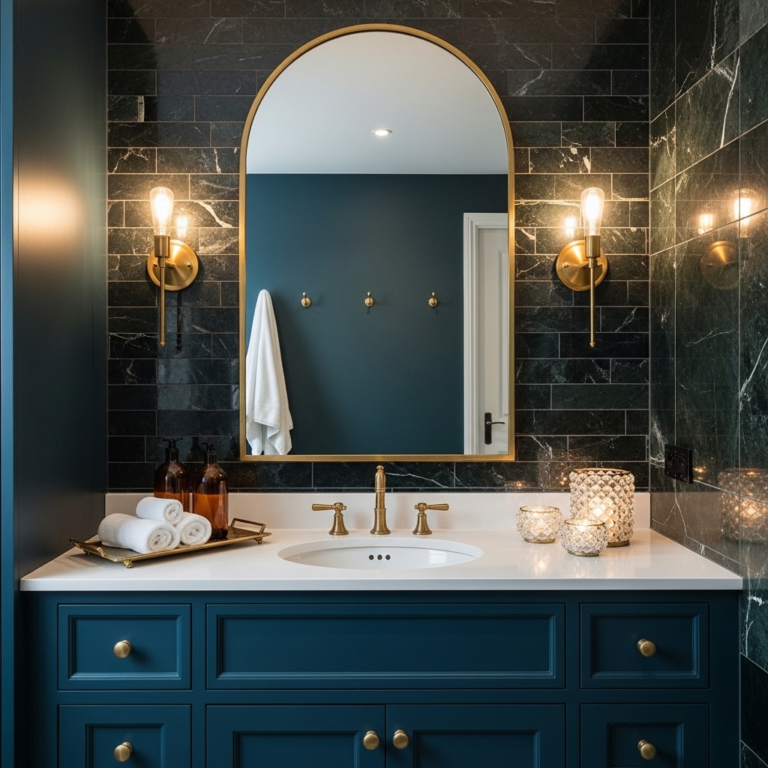
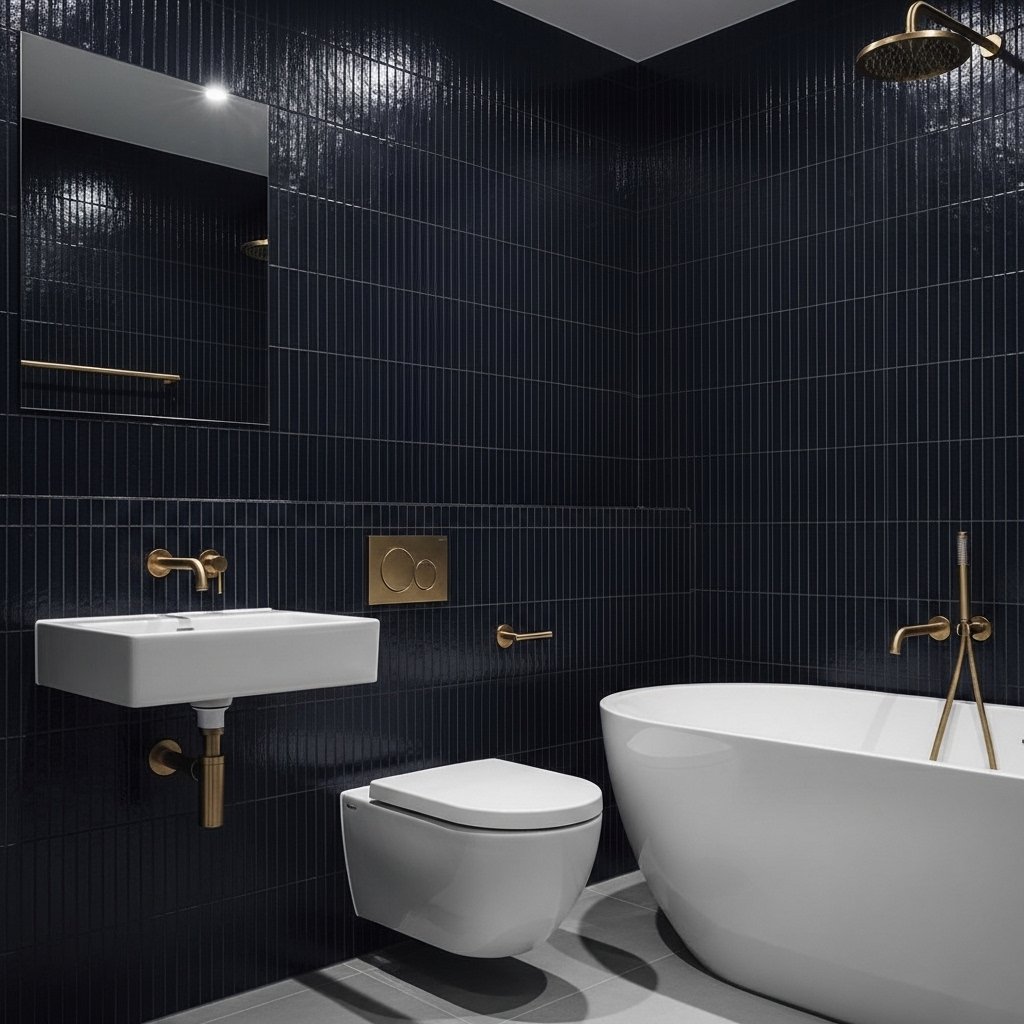
A vertically stacked tile in a deep tone, matte charcoal, forest green, or deep navy, creates a bathroom surface with two simultaneous qualities: the graphic intensity of the dark color and the elongating visual effect of the vertical layout.
Standard horizontal brick bond tile creates a bathroom that reads as wide. Vertical stack bond tile creates a bathroom that reads as tall. The vertical alignment of grout lines draws the eye upward and creates the impression of ceiling height that the room may not structurally possess.
The dark tile in vertical stack bond in a bathroom with white fixtures creates the maximum visual contrast. The white of the basin, the bath, and the toilet appears almost luminous against the dark tiled surround.
A matte finish on the dark tile is mandatory. A glossy dark tile reflects too much ambient light and creates a busy, visually complex surface. Matte absorbs light and reads as deeply unified.
5. Handmade Terracotta Tile
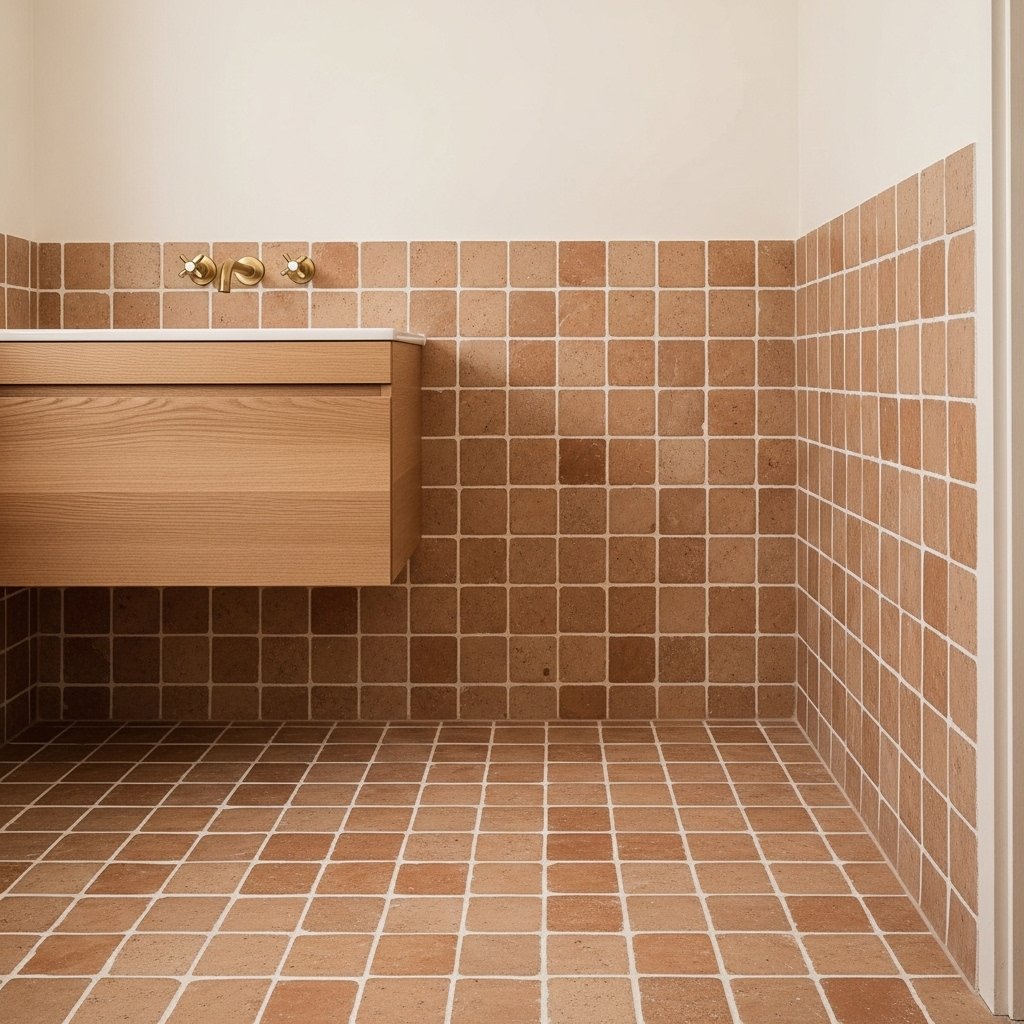
Handmade terracotta tile in a bathroom brings the warmth of fired earth into the most functional room of the house and creates a material atmosphere that no ceramic alternative replicates.
The surface variation of handmade terracotta, each tile slightly different in color depth, surface texture, and edge regularity from its neighbor, creates a floor or wall surface with the organic quality of a material that came from the earth rather than from a factory.
Properly sealed terracotta in a bathroom application is moisture-resistant and easy to maintain. The sealing must be appropriate for the specific terracotta type and the bathroom’s moisture level. A specialist sealer applied in multiple coats before grouting and again after grouting provides the necessary protection without compromising the tile’s visual character.
Warm grout in a tone compatible with the terracotta, rather than white or grey grout that creates contrast, maintains the material’s organic unity.
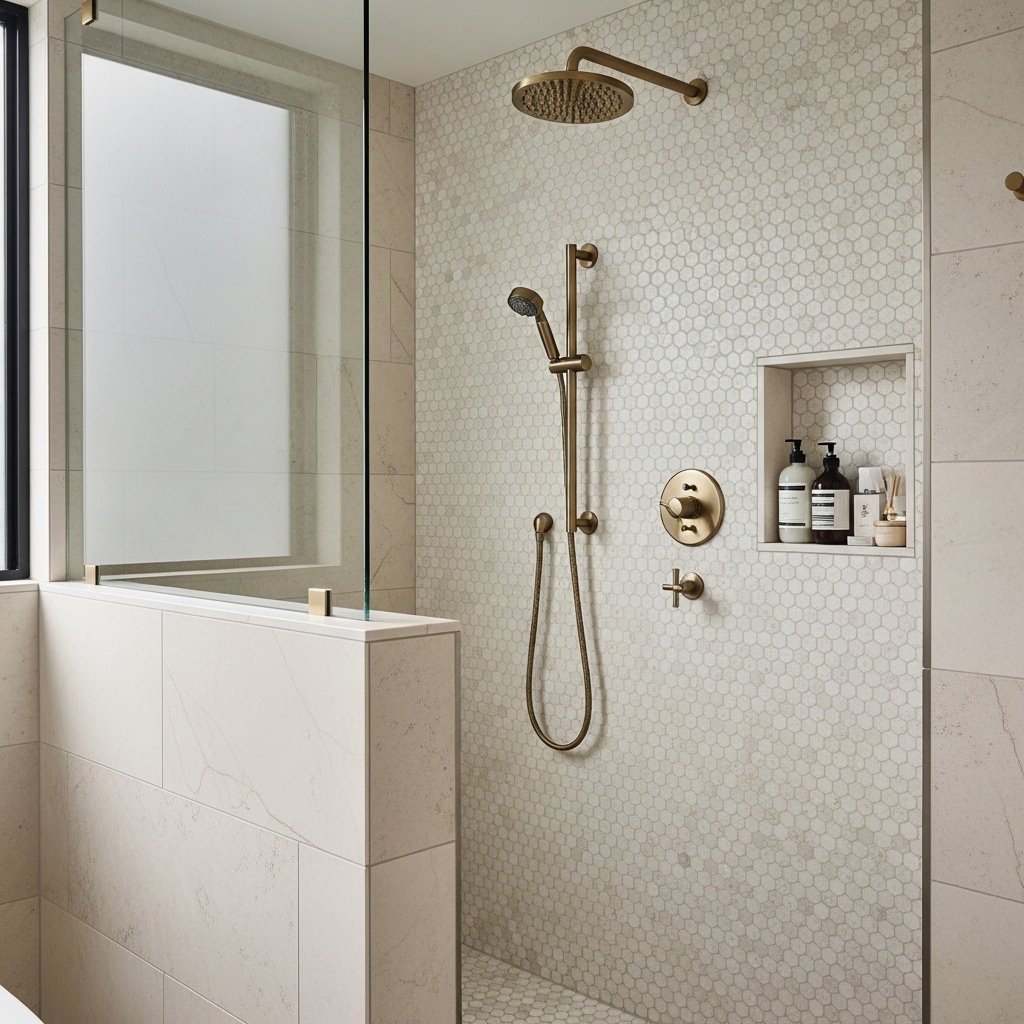
6. Penny Round Mosaic in the Shower Only
Using a contrasting tile format in the shower enclosure only, while maintaining a different primary tile throughout the rest of the bathroom, creates a material moment that defines the shower as a distinct zone within the larger room.
Penny round mosaic in the shower, small circular tiles in a consistent color or a tonal gradient from light to dark, creates a surface with more texture and visual interest than the flat format tile used in the rest of the bathroom. The shower is the most used zone. It deserves a material distinction.
The penny round mosaic applied to the shower floor provides natural slip resistance through the texture of the grout lines between each small tile. Function and aesthetics serving the same purpose.
In warm white or natural stone tones, penny round mosaic in a shower creates a visual softness that contrasts pleasingly with the larger format tile of the surrounding bathroom.
7. Fluted or Ribbed Tile
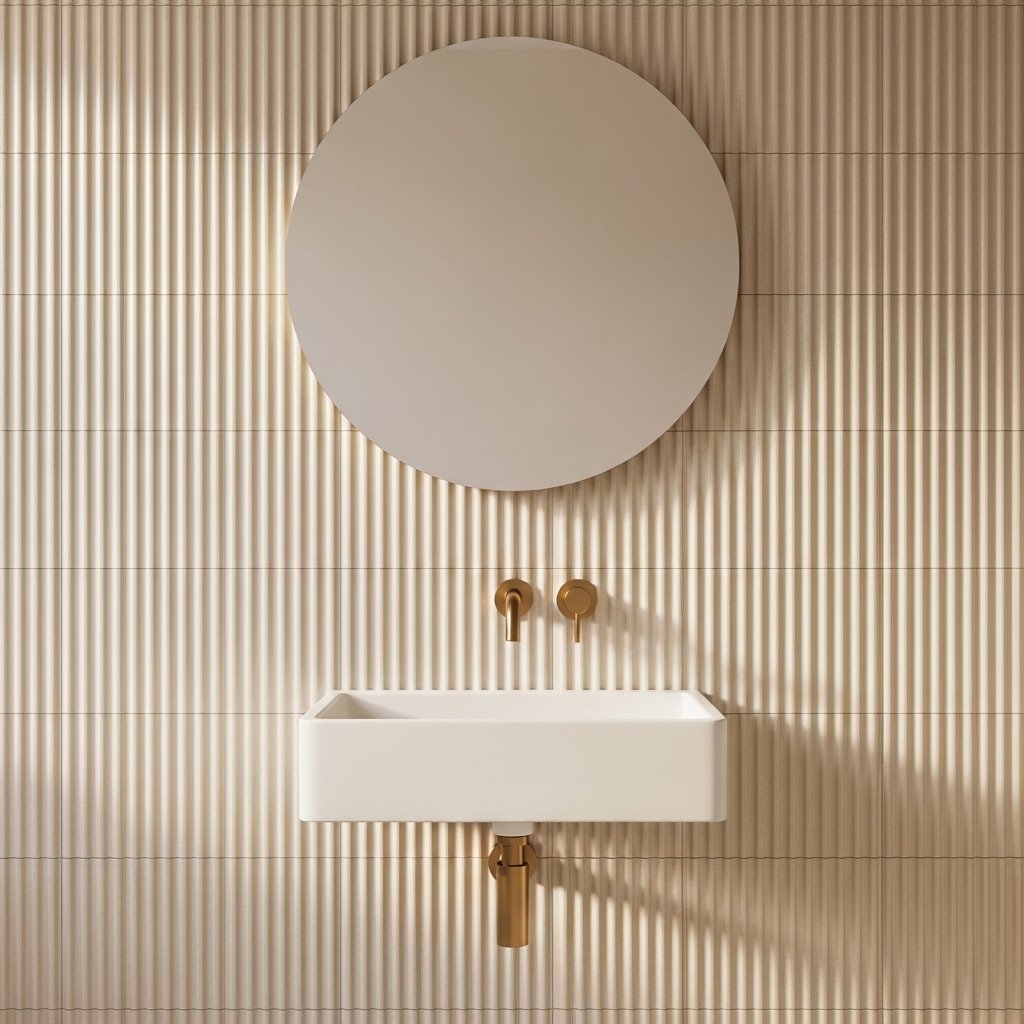
Fluted tile, with its parallel raised ridges creating a corrugated surface, brings dimensional texture to a bathroom wall that flat tiles at any price cannot replicate.
The shadow quality of fluted tile is its defining visual characteristic. The raised ridges create continuous shadow lines that shift in depth and direction as the light source changes. A fluted tile wall in a bathroom with morning light from one window looks entirely different from the same wall in afternoon light from a different direction.
In warm white or soft cream, fluted tile creates a bathroom with a soft, organic texture that reads as natural rather than architectural. In deep charcoal or forest green, the shadow lines of the fluting become more pronounced and dramatic, creating a bathroom with genuine theatrical character.
Vertical fluting on a shower wall draws the eye upward and creates the visual height elongation effect of the vertical stack bond with the addition of physical texture.
8. Black and White Geometric Floor
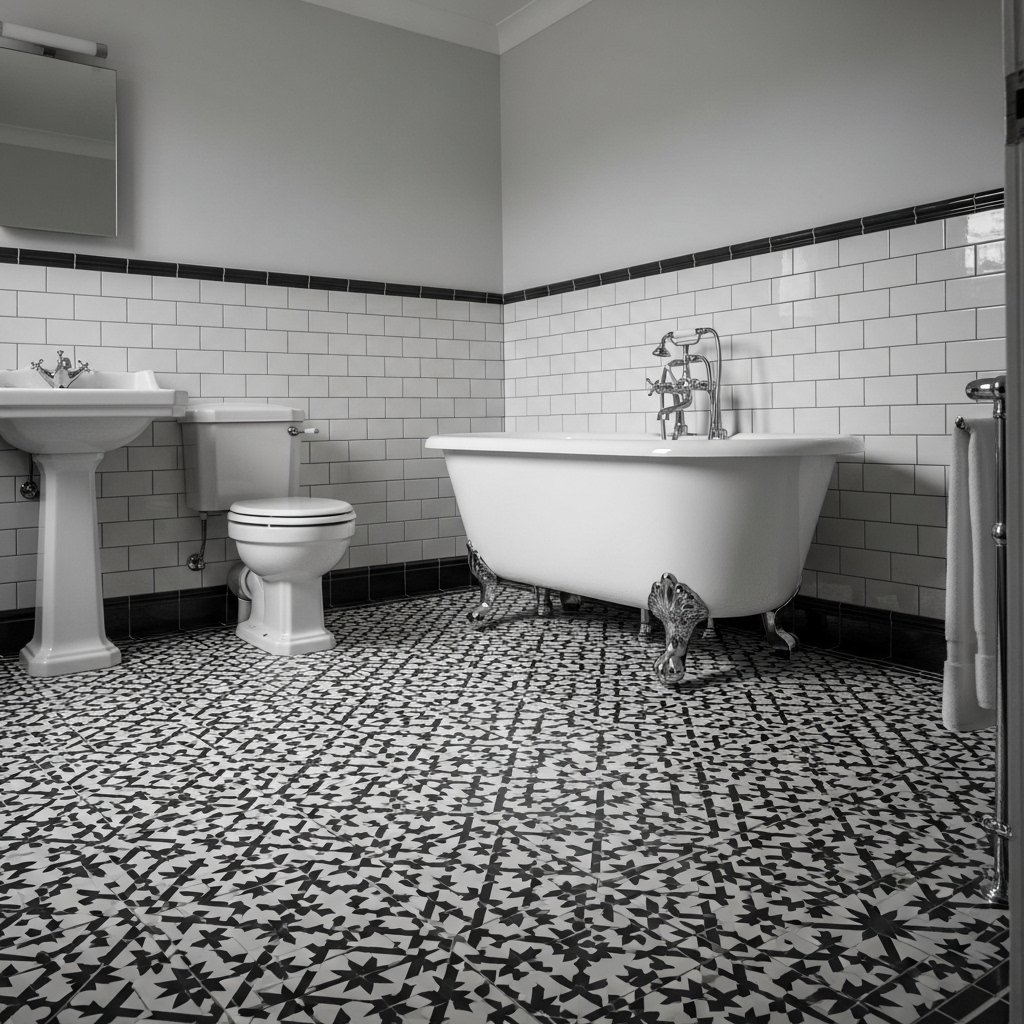
The black and white geometric tile floor is one of the oldest and most enduringly beautiful bathroom floor treatments available. It has been used continuously in Western bathrooms since the 19th century because the visual qualities that made it work in 1880 make it work in 2026.
A classic hexagon, a Moroccan tile pattern, a Victorian geometric encaustic, or a simple checkerboard, each in high-contrast black and white, creates a bathroom floor with the graphic energy of a designed surface that plain tile or stone never achieves.
The pattern must be correctly scaled to the bathroom floor area. A checkerboard tile that is too large in a small bathroom creates only two to three tiles per visual field and looks like a giant game board. The same checkerboard in the correct tile size for the room creates a proper pattern repeat.
White tiles above the tile line. The geometric floor is the star. The wall tile provides the neutral backdrop it needs to perform.
9. Travertine Throughout
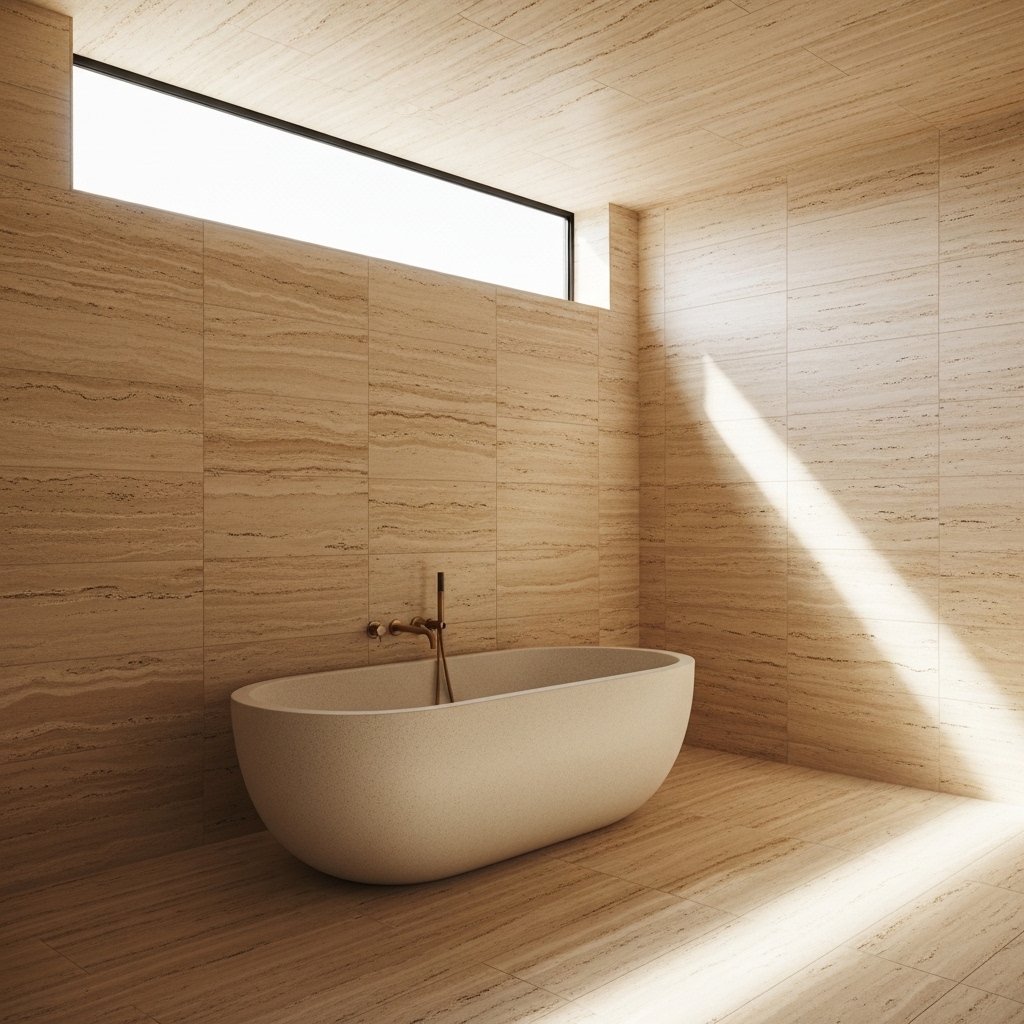
A bathroom tiled entirely in one travertine finish, floor, walls, shower, and vanity top, creates the most cohesive and materially unified bathroom possible.
Travertine in its honed, unfilled form has pores and natural voids in the surface that give it an organic, slightly rough quality distinct from polished stone. The surface absorbs light rather than reflecting it. The room feels warm rather than cold despite being entirely mineral.
Honed and filled travertine has the same warm tone with a smoother surface that suits bathroom applications where the natural voids of unfilled travertine would create maintenance concerns.
The vein-cut or cross-cut orientation of travertine tiles determines their visual quality significantly. Cross-cut travertine shows the characteristic cloud-like swirling patterns of the stone’s cross-section. Vein-cut shows linear, parallel veining. Both are beautiful. Choose based on whether you prefer the cloud or the line.
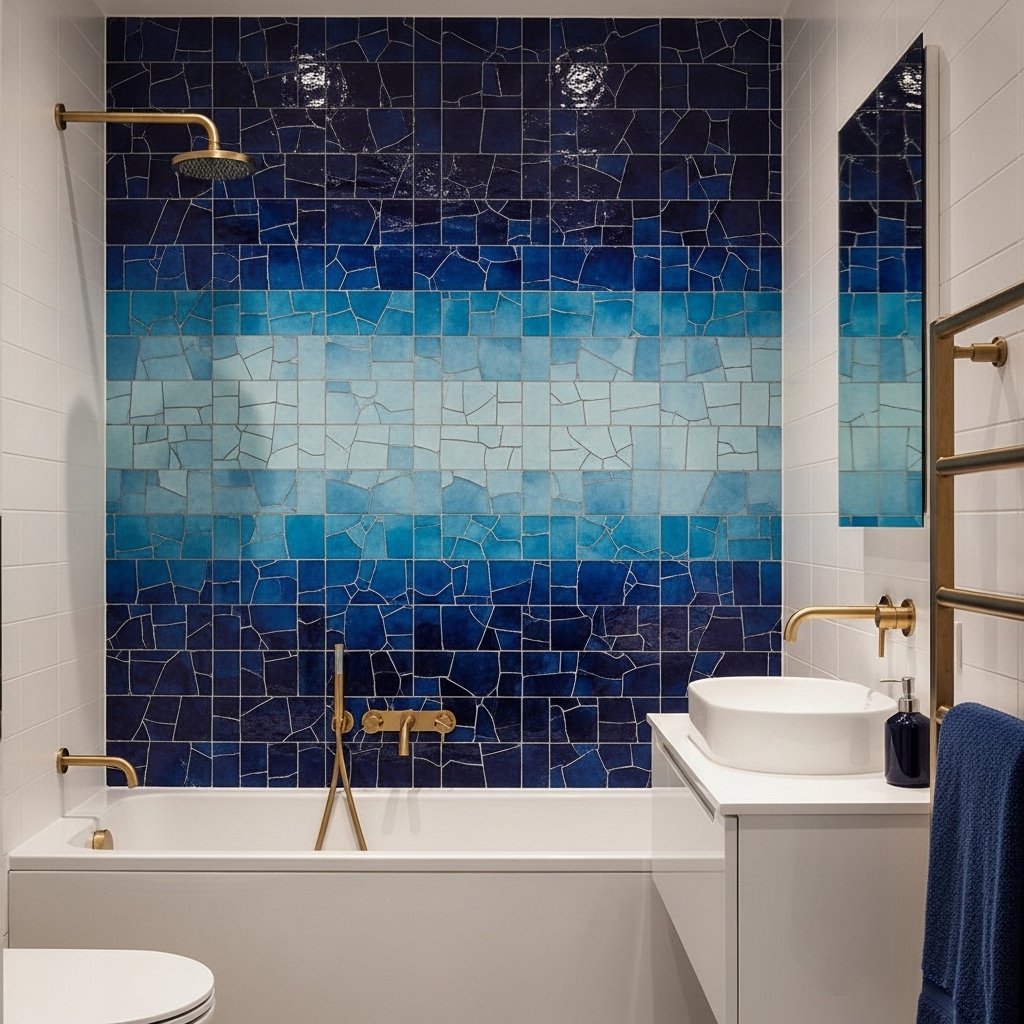
10. Cobalt Blue Zellige Feature Wall
A single wall in cobalt blue zellige tile in an otherwise white or neutral bathroom creates a color and material statement with a power that the same color in a flat ceramic tile cannot approach.
The hand-cut irregular surface of zellige in cobalt blue fractures the color into multiple tones across the wall surface. The richest cobalt sits beside pale sky blue beside near-turquoise beside deep navy, all within the same wall of nominally one color. The color depth is extraordinary.
Position the cobalt zellige feature wall on the wall facing the bathroom entrance so it is the first thing seen when entering. This placement creates a visual impact that defines the entire room’s character from the moment of entry.
White fixtures, white remaining tiles, and brushed brass fittings allow the cobalt zellige wall to be the room’s single color statement rather than one of several competing ones.
11. Limewash or Tadelakt Plaster as Tile Alternative
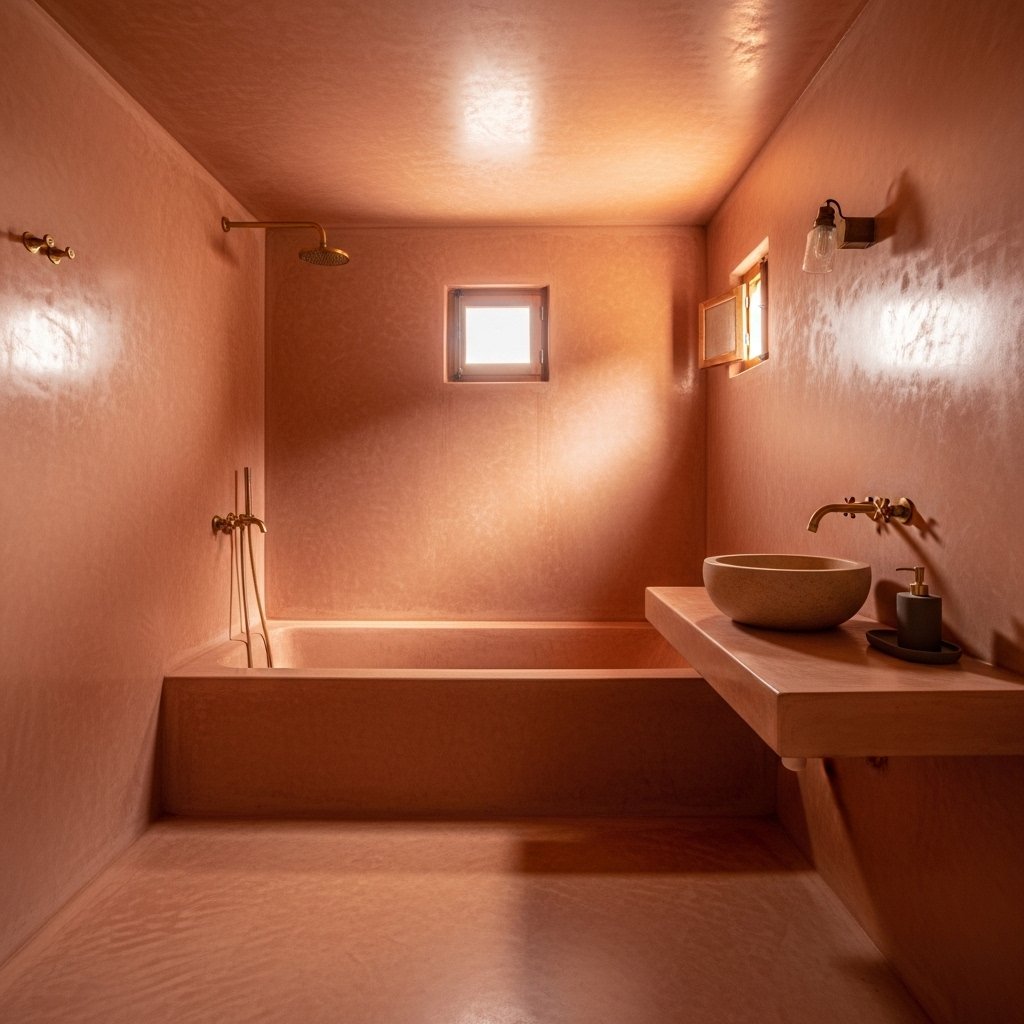
Tadelakt, the traditional Moroccan waterproof lime plaster applied in layers and burnished to a smooth, slightly waxy finish, creates a bathroom surface without tiles, without grout, and without a single interrupting line.
The application technique of tadelakt involves mixing pigment directly into the lime base, applying multiple layers over several days, and burnishing the final surface with a river stone to create a waterproof sheen. The result is a smooth, continuous surface in any color with a slight translucency that changes in different light.
A bathroom in tadelakt plaster in warm terracotta, sage green, or warm ivory creates an environment of extraordinary sensory quality. The surface is smooth under the hand. The color has depth. The absence of grout lines creates a visual calm that tiled surfaces never achieve.
This is a specialist application requiring a craftsperson trained in the technique. The investment is higher than tile. The result is impossible to replicate with tile.
12. Encaustic Cement Tile in Muted Geometric
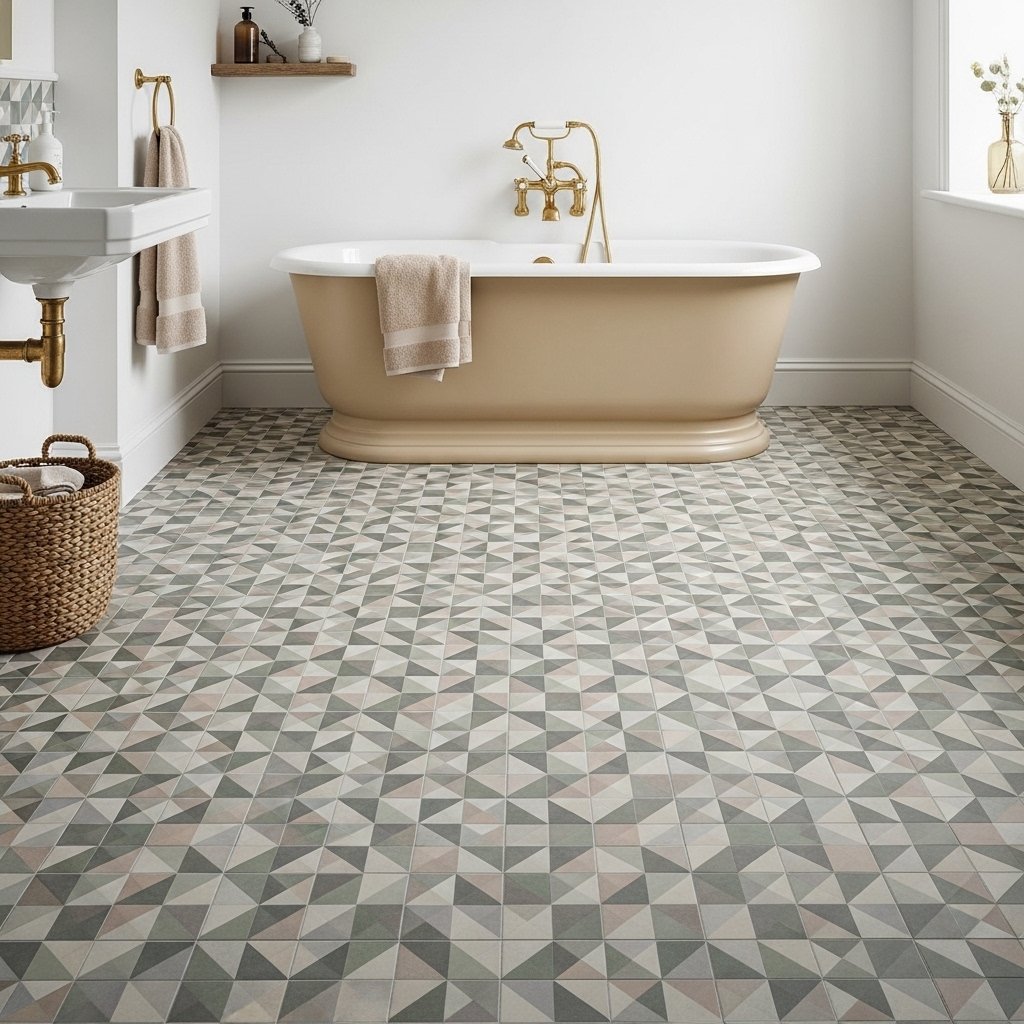
An encaustic cement tile in a muted, complex geometric pattern, the pattern colors within the range of sage, warm grey, cream, and dusty terracotta rather than high-contrast primaries, creates a bathroom floor or feature wall with visual richness that reads as sophisticated rather than decorative.
The muted encaustic tile works in 2026 bathrooms because the pattern is present and interesting without being aggressive. The colors are all related in tone and warmth. The geometric pattern is visible but does not compete with the fixtures and fittings of the room.
A geometric encaustic floor in muted tones under white walls and with warm brass fittings creates a bathroom where the pattern is discovered and appreciated rather than announced. The understatement of the color palette is the sophistication.
13. Mixed Tile Formats in the Same Color Family
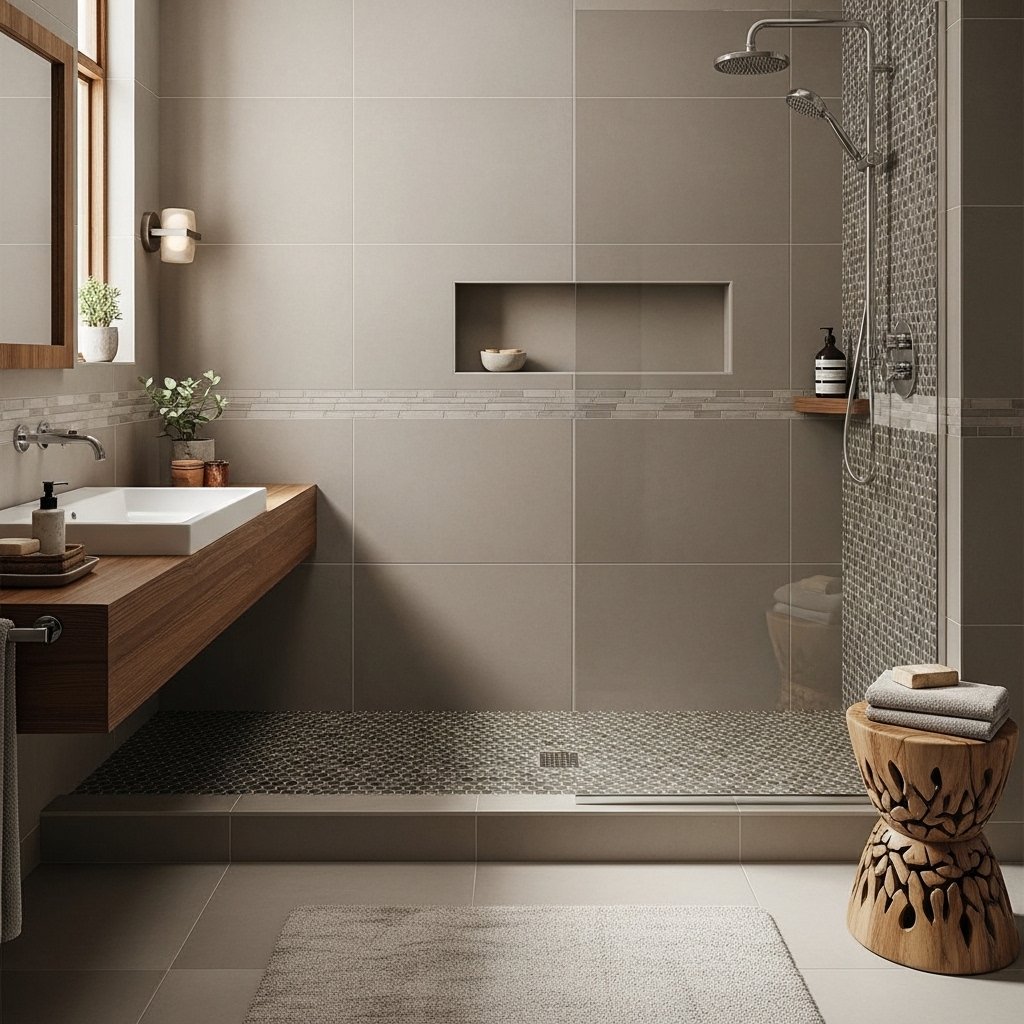
Using two or three tile formats, large format, small mosaic, and a linear strip, all in the same color family, creates a bathroom with textural complexity that single-format tiling cannot achieve.
A large format tile on the main wall surfaces in warm grey. A penny round mosaic in the same grey family on the shower floor. A thin linear strip tile as a border at the transition between wall and floor zones. The same color family in three different formats creates a room that is cohesive but not monotonous.
The discipline: the colors must be from the same family rather than matching exactly. Slight tonal variation between the formats adds visual warmth and prevents the room from reading as overly controlled.
This technique is the bathroom designer’s approach to adding interest without contrast. The interest comes from format and texture rather than from color opposition.
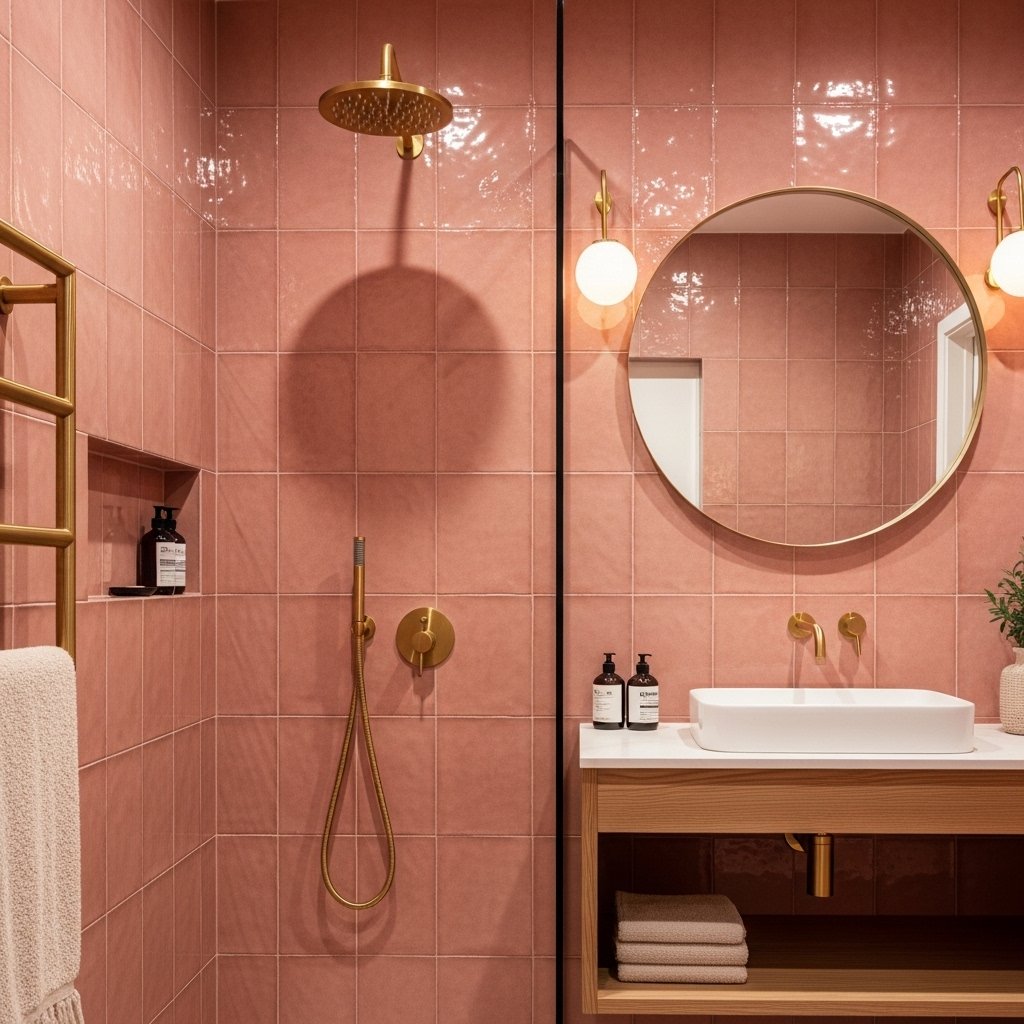
14. Pink Tile Revival
Pink tile in 2026 is not a retro throwback. It is a deliberate choice made by someone who understands that pink is one of the warmest, most flattering, and most light-interactive colors available to bathroom tile design.
Dusty rose large format ceramic. Warm blush subway tile. Deep mauve zellige with surface variation. Each pink tile direction creates a bathroom with a warmth and a quality of light at skin level that neutral grey and white tile bathrooms consistently lack.
The pink bathroom is specifically flattering. The warm reflected light from pink tiled walls bathes the occupant in a tone that is more flattering than the cool, neutral light reflected by white or grey surfaces. This is not an irrelevant consideration in a bathroom used every morning for grooming.
Pair with warm brass fixtures and natural timber accents. The warm material combination of pink, brass, and timber creates a bathroom that reads as genuinely luxurious rather than playful.
15. The Unexpected: Tile on the Ceiling
A tile on the bathroom ceiling is the most unexpected and most impactful single tile decision available to a bathroom with conventional wall and floor tiling.
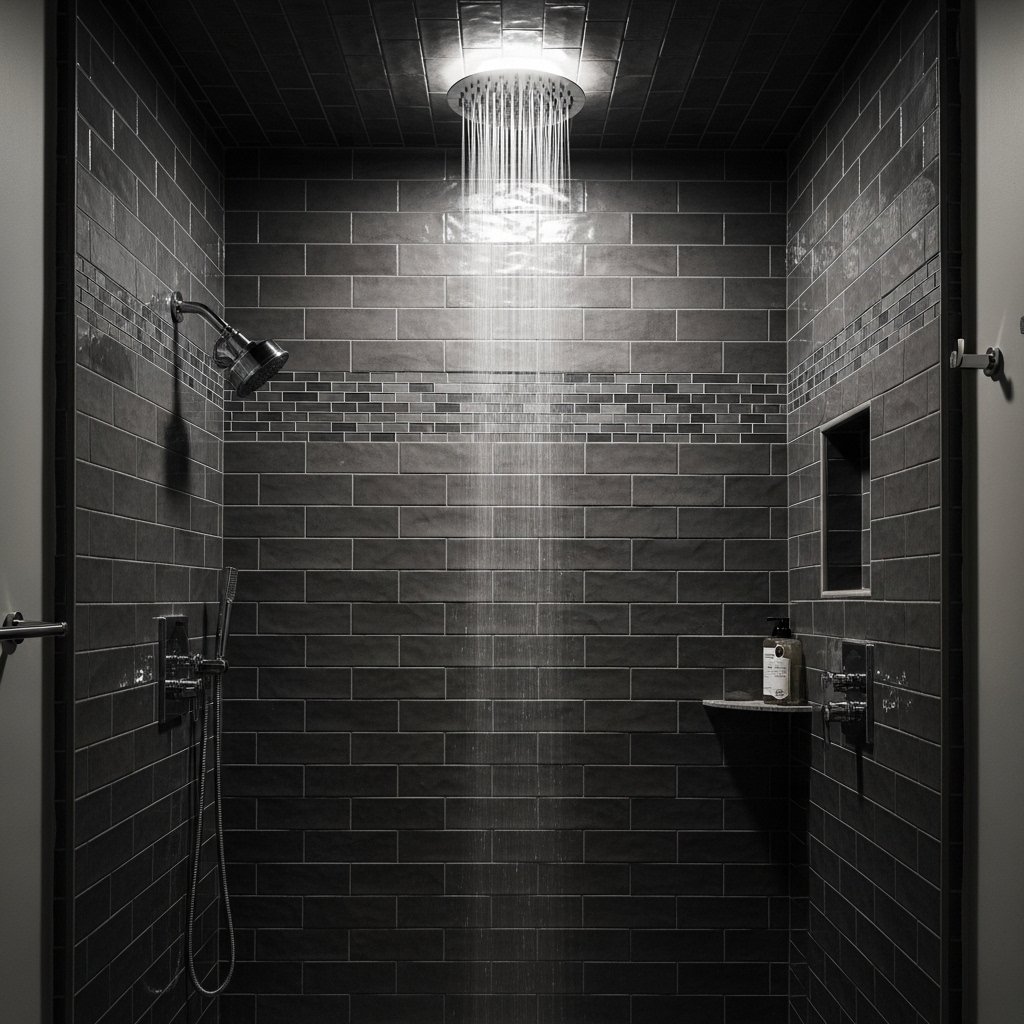
A shower enclosure where the tile continues from the walls up and across the ceiling creates a completely enclosed tiled environment with a cave-like immersiveness that tiling the walls alone never produces. The rain shower head positioned in the center of a fully tiled ceiling creates a showering experience that is genuinely different from any other.
In a small bathroom, a tiled ceiling in a lighter version of the wall tile, or in a mosaic format that creates a different texture overhead, draws the eye upward and creates perceived height rather than the low pressure that a white plaster ceiling at the same height produces.
A patterned tile on the ceiling with plain tiles on the walls places the pattern where it is least expected and most noticed: directly in the sightline of someone lying in the bath.