14 Coastal Bathroom Ideas That Bring the Shore Inside
The coastal bathroom is not a bathroom with a shower curtain printed with fish on it. It is a bathroom designed with the material language, the color palette, and the sensory atmosphere of a coastal environment, executed with the same standard applied to any well-designed bathroom.
The specific qualities of a coastal bathroom: light that references the specific quality of coastal sky, materials that reference the textures of the shore, and an atmosphere that produces the particular ease associated with proximity to water.
These 14 ideas build it correctly.
1. Pale Blue and Warm White as the Foundation
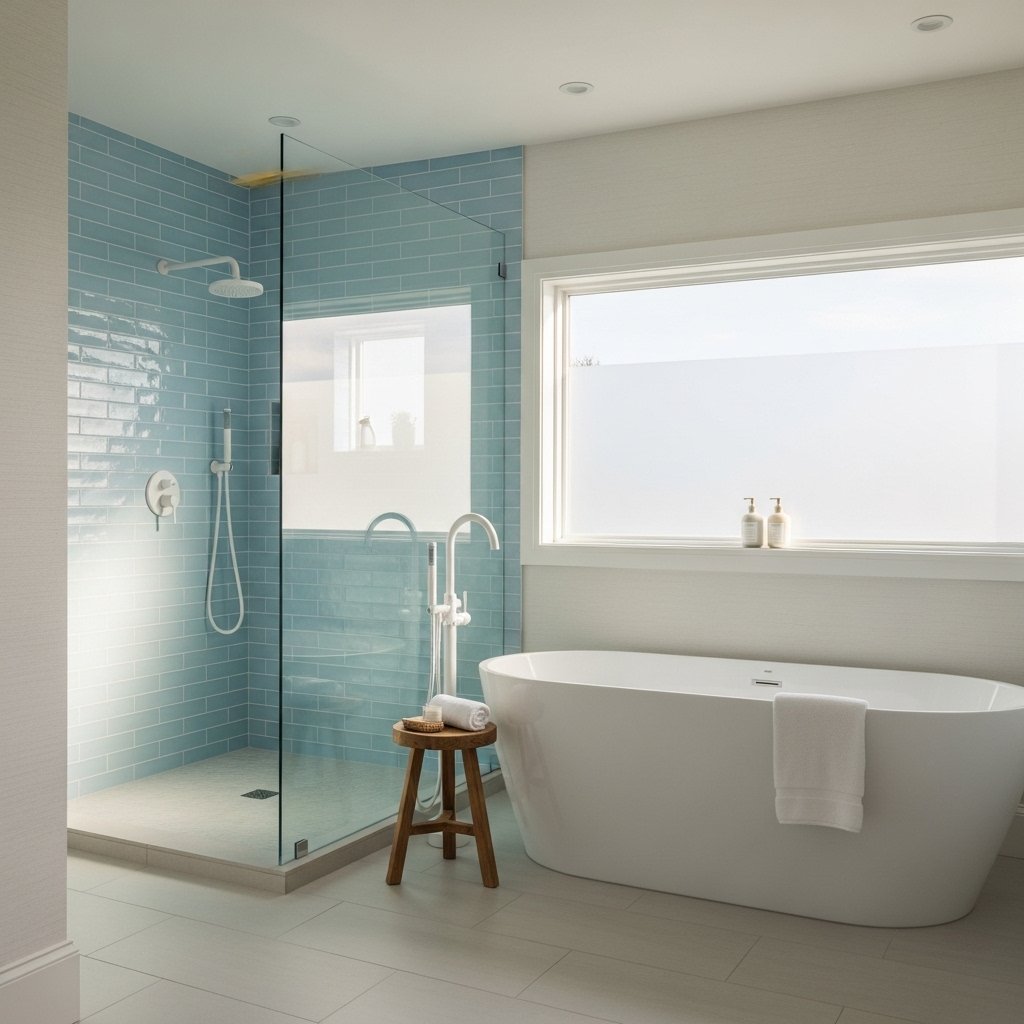
The pale blue and warm white palette is the coastal bathroom’s most authentic color foundation because it references the actual colors of the coastal environment: the blue of the sea and sky, the white of sea foam, bleached sand, and salt-washed surfaces.
The specific pale blue matters. A cool, grey-blue reads as clinical. A warm, sky-toned blue, a blue with sufficient warmth to prevent it reading as cold, creates a bathroom that references the sky rather than the institution.
Warm white on all architectural surfaces: walls, trim, ceiling. Pale blue on the primary feature element: the tile of the shower wall, the painted cabinet of the vanity, or the painted lower wall with white above. The division between the two tones creates a visual horizon that references the sea meeting the sky.
2. A Natural Stone or Pebble Floor
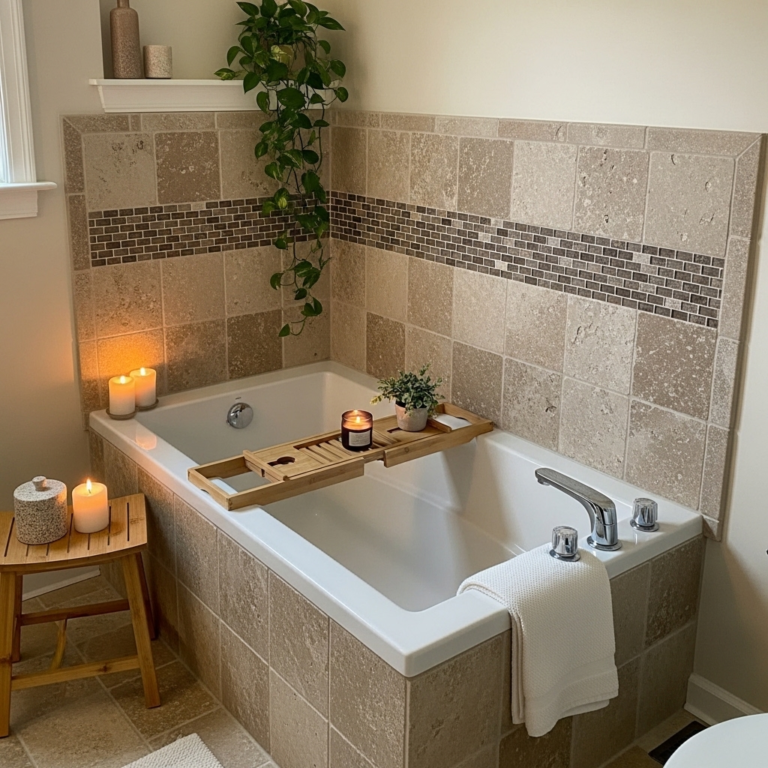
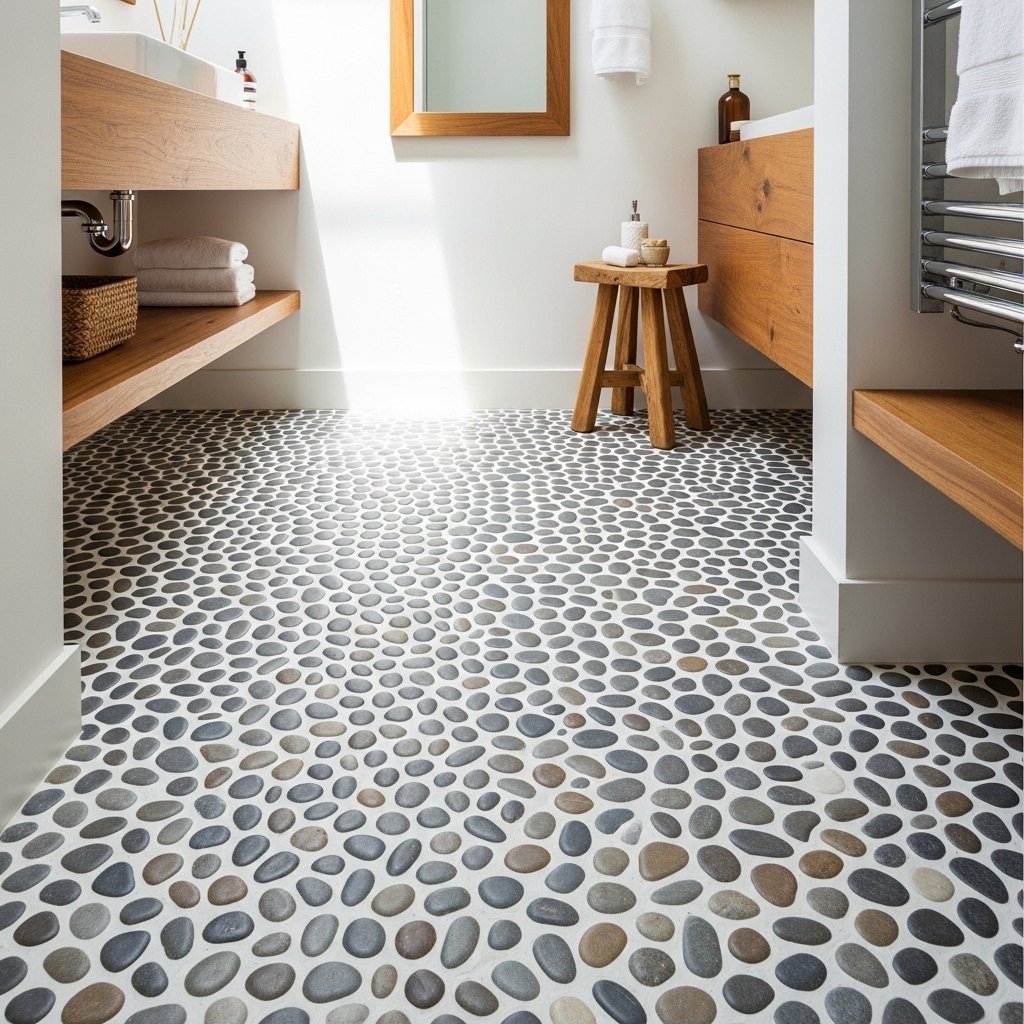
A bathroom floor in natural river pebbles set in mortar, or in a large format natural stone tile with the organic variation of the beach’s material, creates a surface with the specific textural quality of the coastal shore underfoot.
A pebble floor in a shower or wet room, with smooth river pebbles in grey, white, and warm brown tones set tightly in a white mortar, creates a surface that massages the feet while referencing the specific texture of a pebbled beach.
Natural stone tile in travertine, limestone, or pale sandstone in a large format creates a floor surface with the organic color variation of natural coastal rock, each tile slightly different from its neighbors in the way that individual stones on a shore are individually different.
3. Driftwood Accessories and Natural Timber Accents
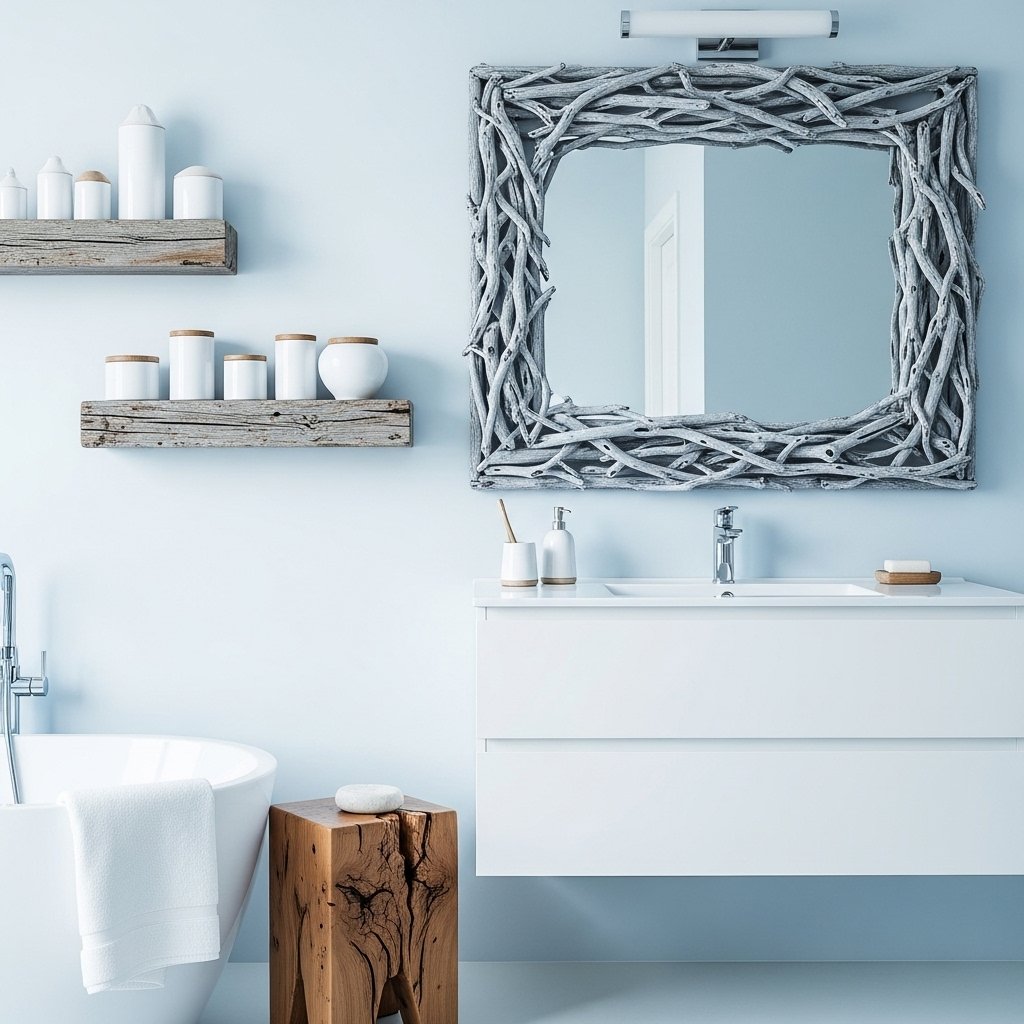
Driftwood accessories in a coastal bathroom carry the specific material quality of coastal wood, weathered by water and sun to a silver-grey tone that no staining or aging process replicates exactly.
A driftwood mirror frame. A small shelf of weathered timber holding toiletries. A timber stool with the grain raised and surface softened by finishing that references the driftwood quality. A simple branch used as a towel rail.
The silver-grey tone of weathered coastal timber is the bathroom’s warm accent when the primary palette is blue and white. The wood brings warmth into the cool palette without disrupting its coastal reference.
Source genuine driftwood pieces for the most authentic material quality. Process them appropriately for bathroom use, sealed against moisture, without removing the weathered surface quality that makes them worth using.
4. Shiplap or Tongue and Groove Wall Panelling
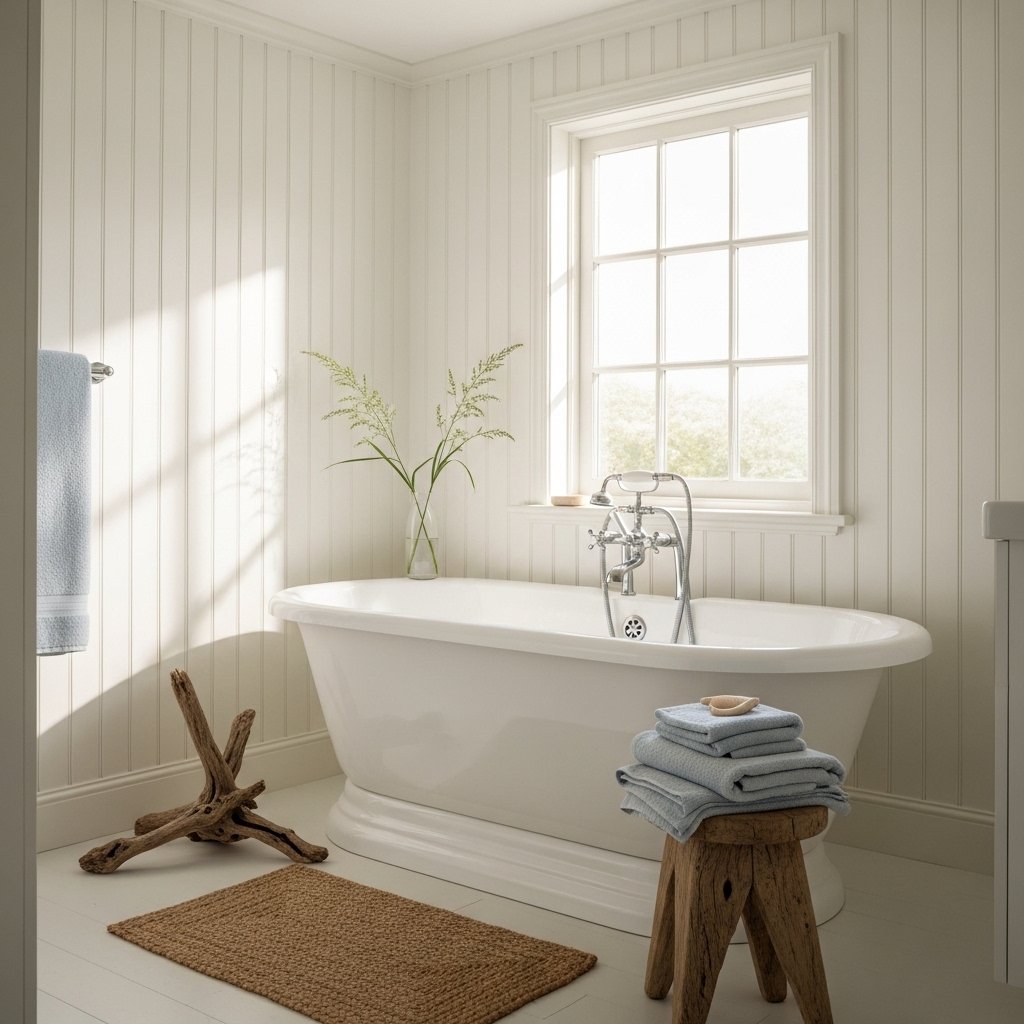
Horizontal timber panelling, shiplap or tongue and groove, on bathroom walls carries the material language of coastal architecture, the weatherboard cladding of beach houses, the painted timber of seaside structures, directly into the interior bathroom environment.
Painted white or in the pale blue of the coastal palette, horizontal timber panelling creates a bathroom wall with the specific quality of a well-loved beach house. The horizontal lines of the boards create a visual reference to the horizon that is the coast’s defining landscape feature.
Wainscoting, panelling to half or two-thirds wall height with white paint above, creates the most classical coastal bathroom version of this treatment. Full height panelling in white creates a more contemporary coastal interpretation.
5. Sea Glass and Coastal Object Display
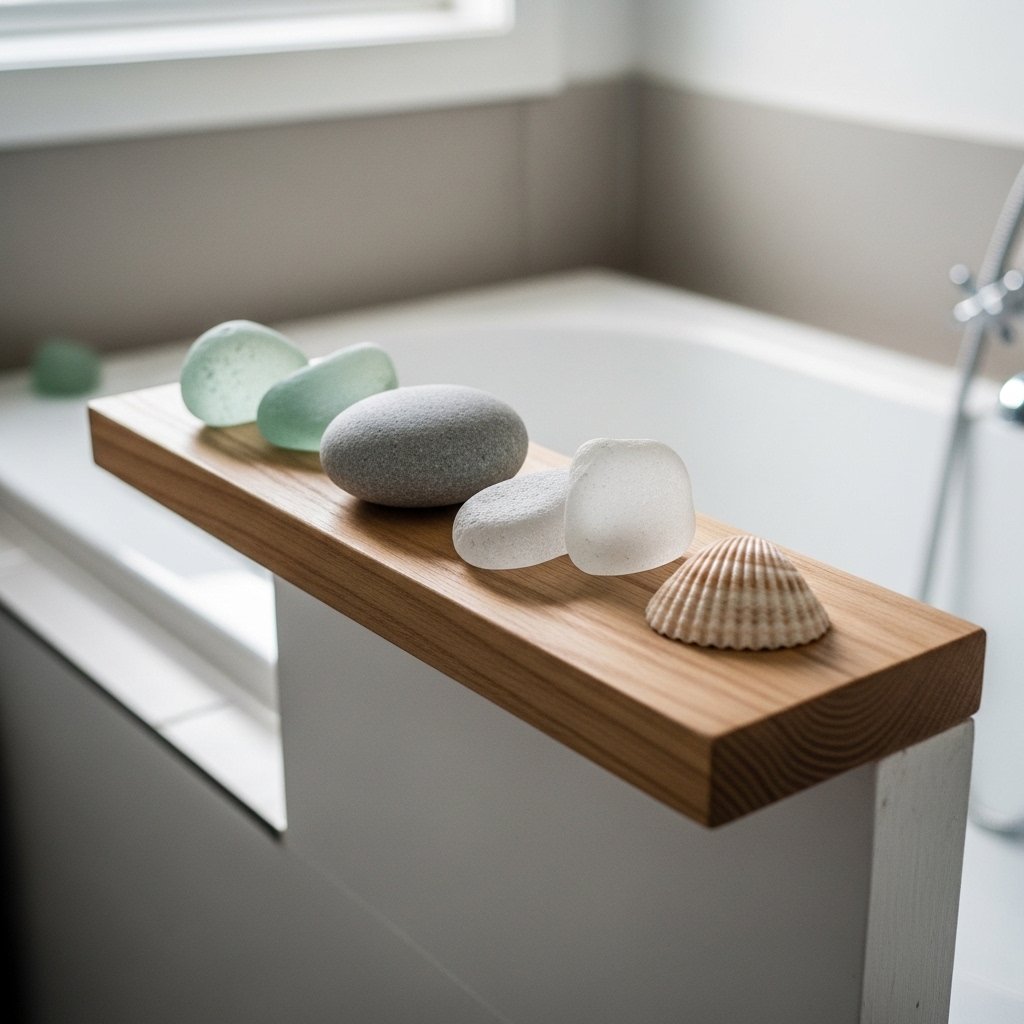
A coastal bathroom with a shelf of genuine sea glass, smooth stones, and one or two shells displayed as a collection communicates a real relationship with the specific coast rather than a purchased aesthetic approximation.
The display discipline: three to five objects maximum. Each object genuinely found at a specific place. One piece of sea glass in an unusual color. One particularly smooth stone with an interesting pattern. One small shell of genuine beauty rather than generic coastal kitsch.
A small timber shelf above the bath or on the wall beside the mirror holds the collection where it is seen during bathing. The objects are seen during the daily ritual rather than decorating a corner of the room that is rarely looked at.
6. Rattan and Woven Accessories
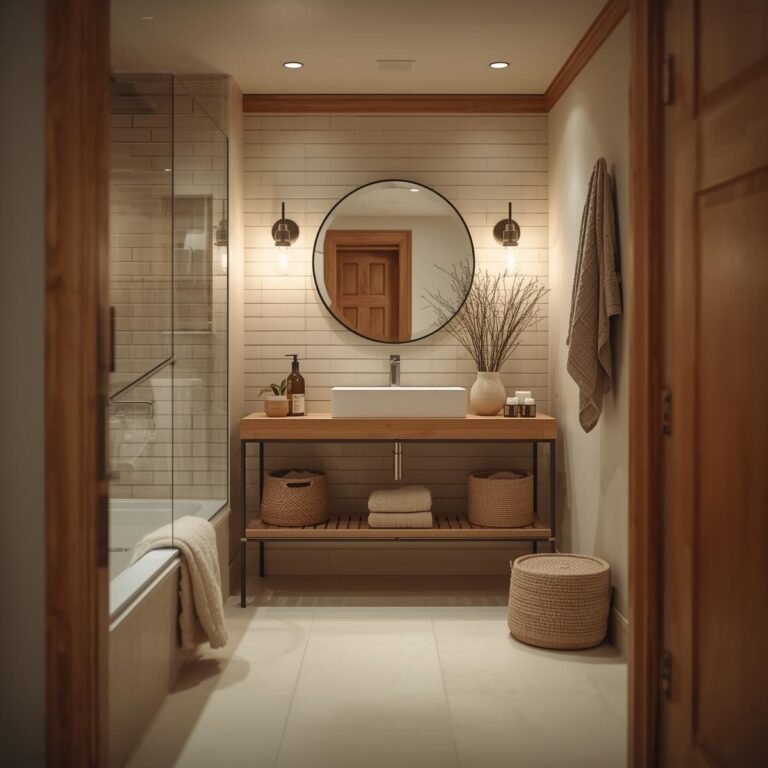
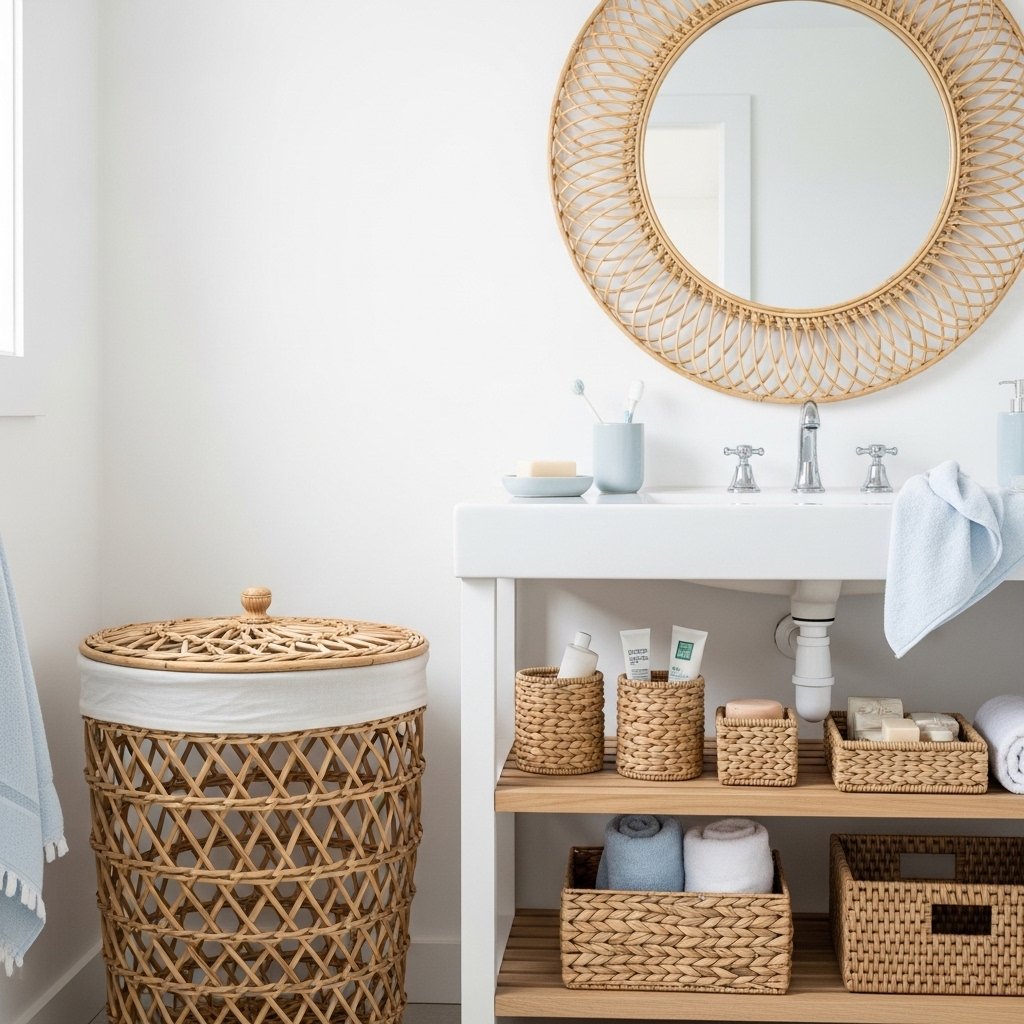
Rattan accessories in a coastal bathroom, a rattan laundry basket, a rattan mirror frame, woven seagrass storage baskets, bring the warm, natural material quality of coastal markets and beach house interiors into the bathroom environment.
The contrast between the cool, wet environment of the bathroom and the warm, dry organic quality of rattan creates a material tension that reads as tropical coastal, the material world of a beach house in a warm climate.
Rattan in a bathroom requires some care in humid environments. Solid rattan handles bathroom humidity well in rooms with adequate ventilation. Poorly ventilated high-humidity bathrooms will damage rattan over time.
7. A Freestanding Bath With Coastal Light
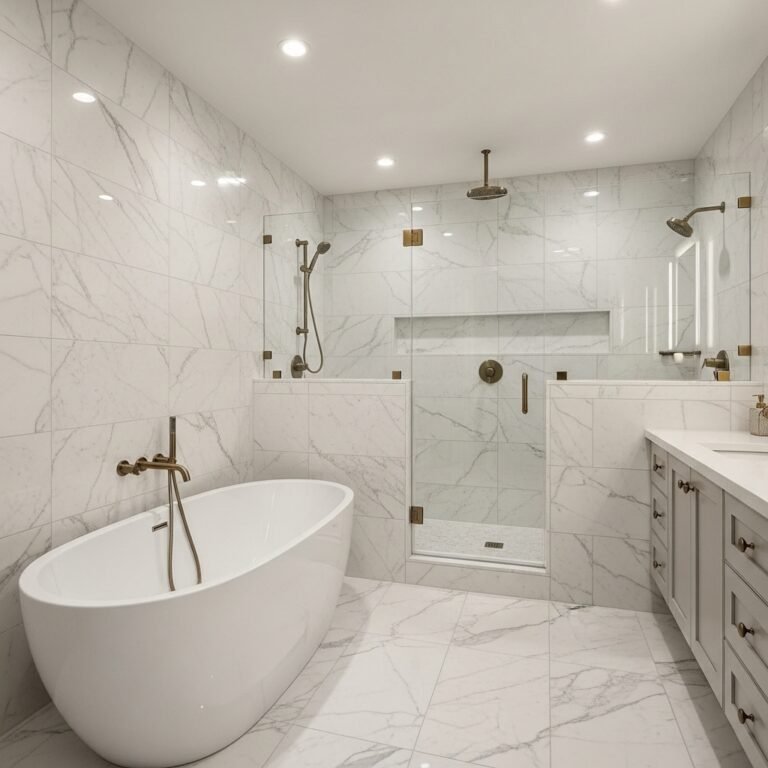
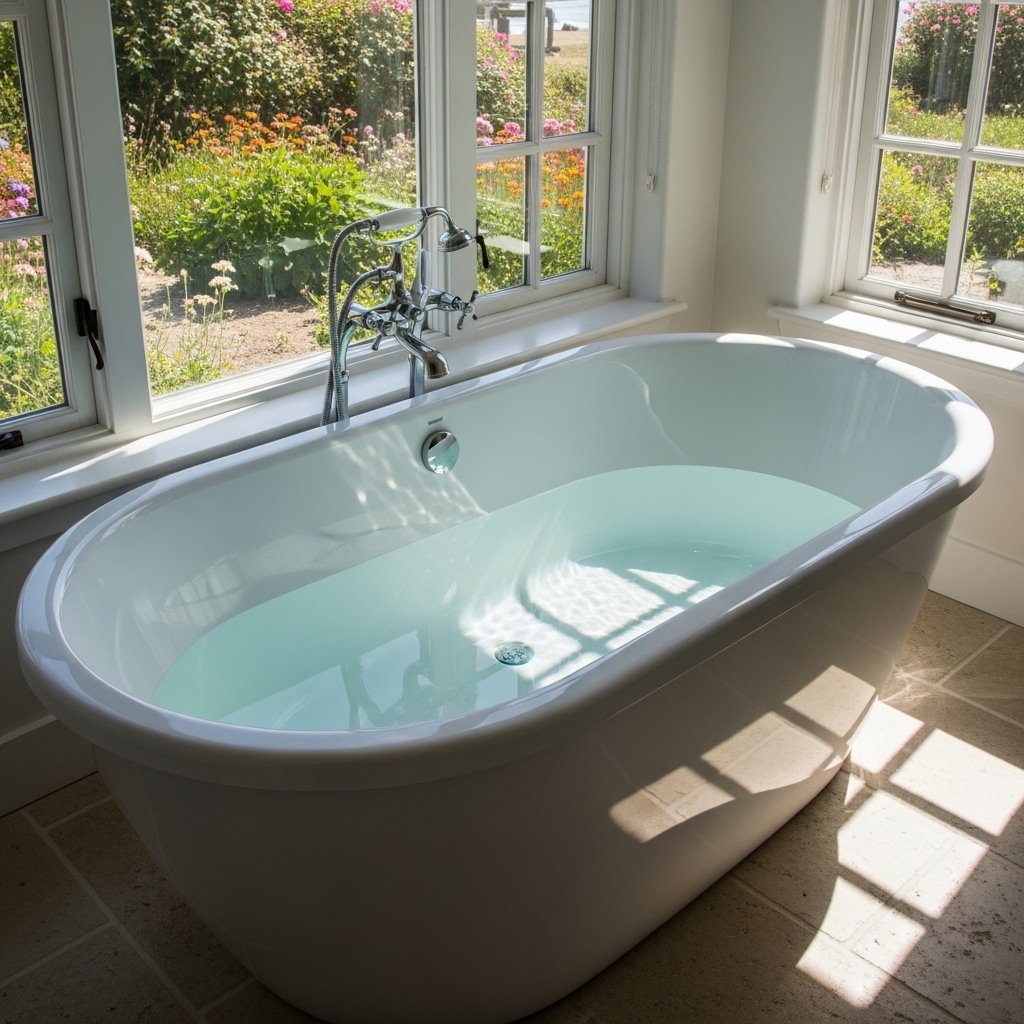
The freestanding bath in a coastal bathroom positioned to receive the specific quality of coastal light, bright, slightly diffused, with the particular warmth of light reflected from water, creates the most genuinely coastal bathing experience available in an interior space.
A window beside the freestanding bath, oriented to a garden of coastal planting or to a direct sea or garden view, brings the coastal environment’s visual quality into the bathing experience. The light on the water in the bath, on the tub’s surface, and on the bathroom’s pale tiles and white walls creates an environment that is genuinely of the coast rather than referencing it.
8. Blue Mosaic Tile in the Shower
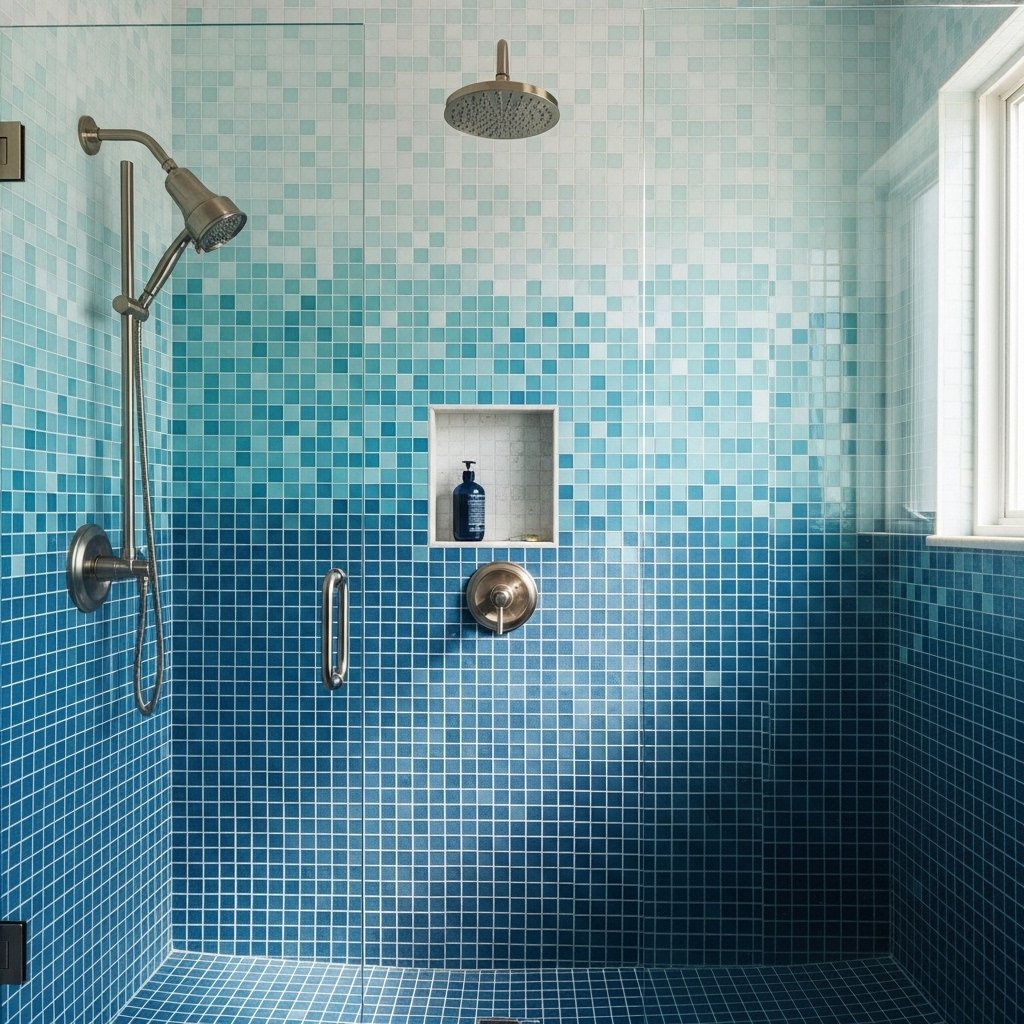
A shower enclosure tiled in small mosaic tiles in the blue tones of the sea, pale aqua through mid-blue through deep ocean blue, creates the most immersive coastal shower experience available.
The mosaic format creates a gradation of color that references the way the sea’s color shifts from pale at the shore to deep blue at depth. A graduated blue mosaic, from palest aqua at the top to deep ocean blue at the floor level, creates this natural gradation.
The thousands of individual tiles and their individual grout lines create a textured surface that reflects shower water in a way that large format flat tiles do not. The shower in a mosaic-tiled coastal enclosure has a specific visual quality when running that flat tile cannot replicate.
9. Striped Towels in Coastal Colors
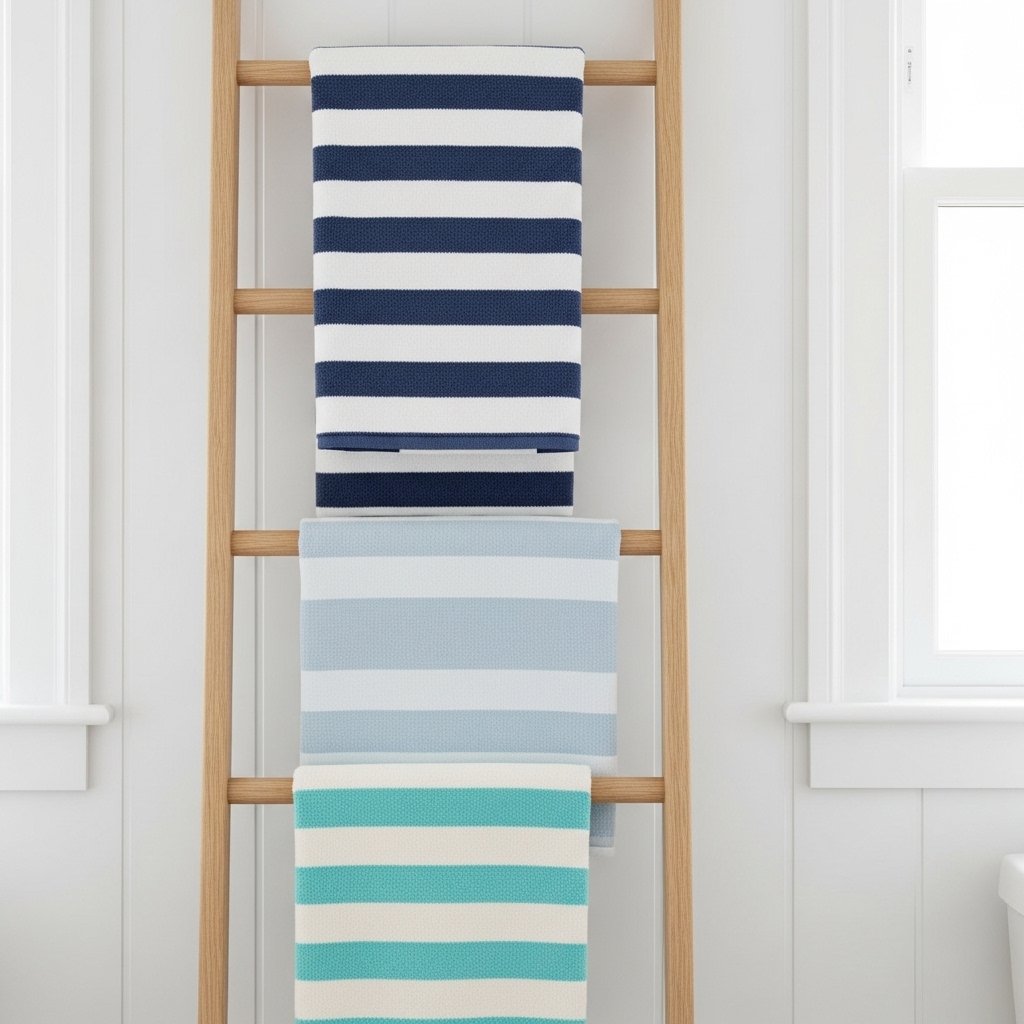
Towels in a coastal bathroom are displayed rather than stored, and they are striped.
The classic coastal stripe, navy and white, or in updated versions, pale blue and natural linen, aqua and cream, or sage and white, displayed on a ladder rail or a wall-mounted towel bar creates the visual language of the coast at the bathroom’s most functional element.
Quality cotton towels in striped coastal colors, thick enough to feel genuinely luxurious but in the classic striped textile language of the beach, create a bathroom that is immediately and correctly coastal without requiring any other specifically coastal decoration.
10. Open Shelving in Bleached or Whitened Timber
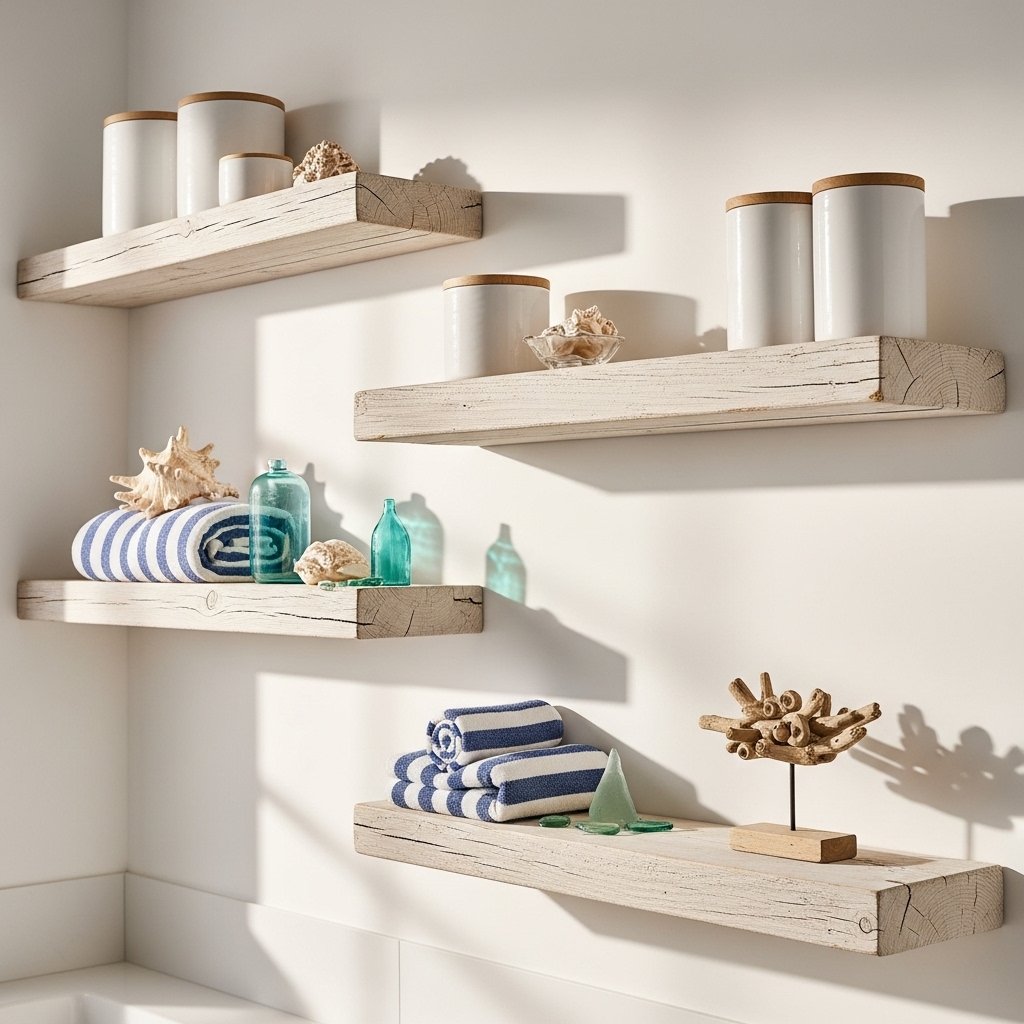
Open shelving in a coastal bathroom in bleached, whitened, or lime-washed timber creates the specific material quality of coastal wood in a functional storage context.
The shelf’s material is the primary coastal reference in this approach. The objects displayed on it, white ceramic containers, rolled towels in coastal colors, a small coastal collection, are secondary to the material quality of the timber they rest on.
Floating shelves in a pale timber tone at multiple heights create a display wall in the coastal bathroom that reads as architectural rather than decorative. The pale timber shelves against white walls, with carefully spaced objects creating composition rather than clutter, produce a coastal bathroom wall of genuine beauty.
11. A Fog-Free Mirror With Warm Surround
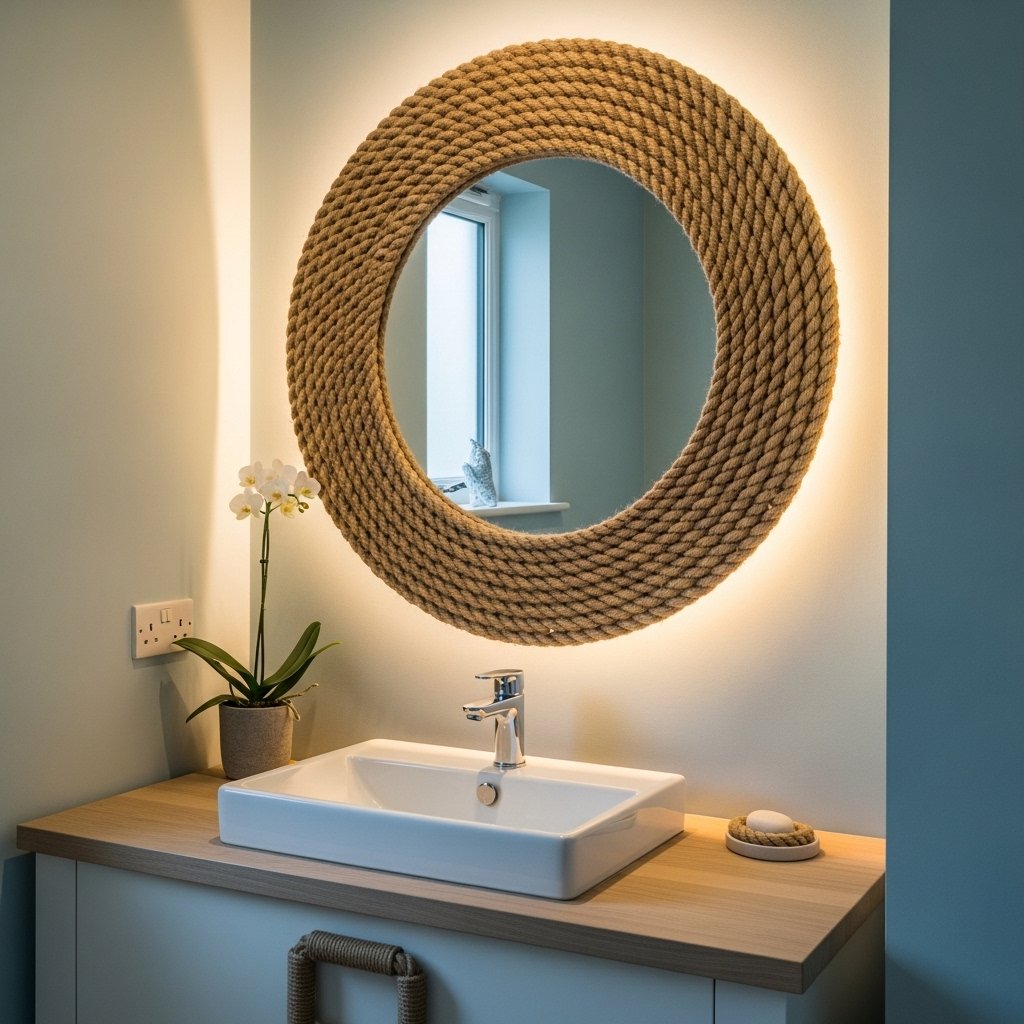
A fog-free mirror in a coastal bathroom, framed in materials that reference the coastal palette, driftwood, rope-wrapped timber, brushed nickel, or bleached timber, provides both a functional and aesthetic contribution to the coastal bathroom’s material story.
The mirror frame material is the coastal bathroom accessory with the most visual impact relative to cost. A simple round or oval mirror in a rope-wrapped frame. A rectangular mirror with a driftwood-effect timber surround. A porthole-style circular mirror with a brushed nickel frame. Each references the coastal environment through its material or form.
Fog-free mirrors, achieved through integrated electric heating elements behind the glass, maintain clarity in the humid bathroom environment. The functionality serves the daily use. The frame serves the aesthetic.
12. An Outdoor Connection: The Window That Opens Wide
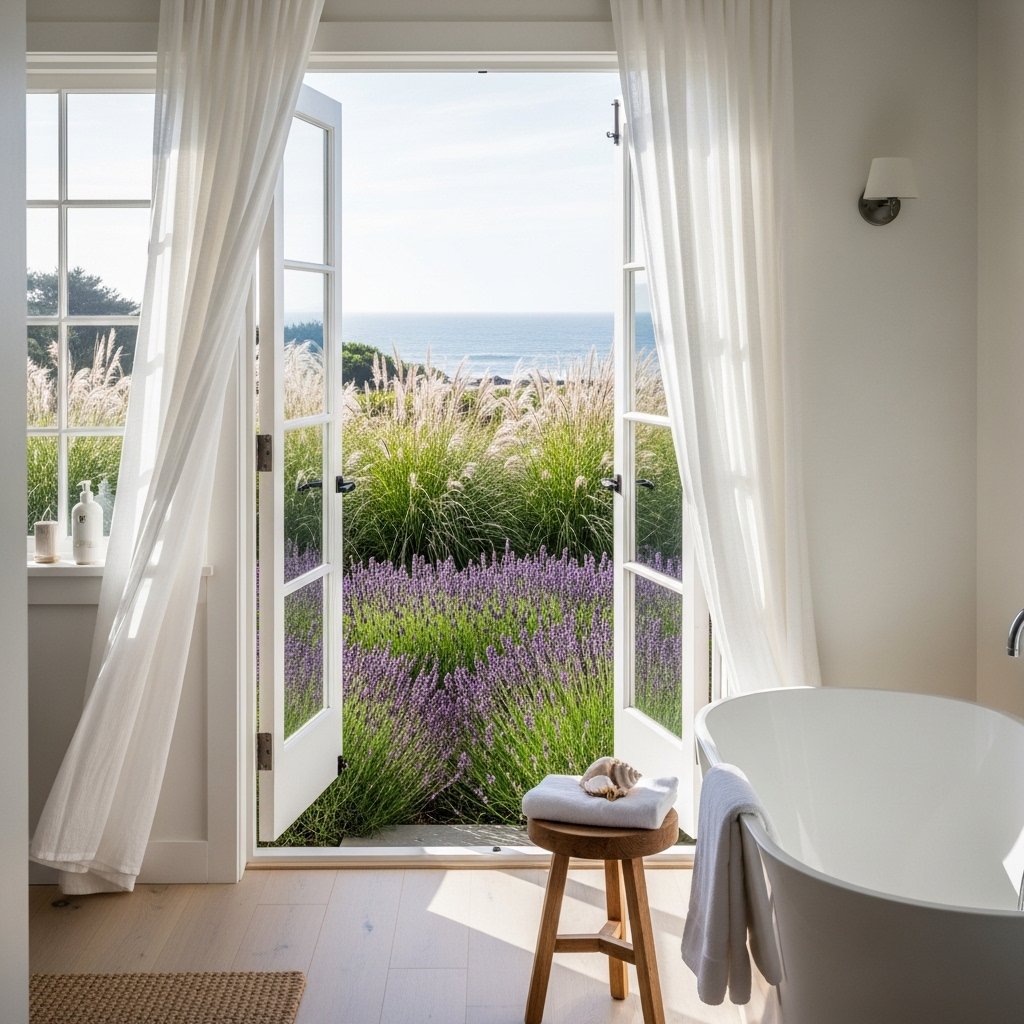
A bathroom window that opens wide to bring coastal air, sound, and smell directly into the bathing experience creates a connection between the interior bathroom and the exterior coastal environment that no amount of decoration can replicate.
A casement window that opens fully to a private garden, a coastal view, or a courtyard planted with fragrant coastal species brings the actual outdoors into the bathroom. The sound of wind in coastal grasses. The smell of salt air. The specific quality of coastal breeze on warm, post-shower skin.
The window treatment in this case is no treatment at all on the opening itself. Privacy, if needed, from a frosted lower sash or from adequate garden planting rather than from a curtain that blocks the air and the connection.
13. Warm Timber Floors in a Coastal Bathroom
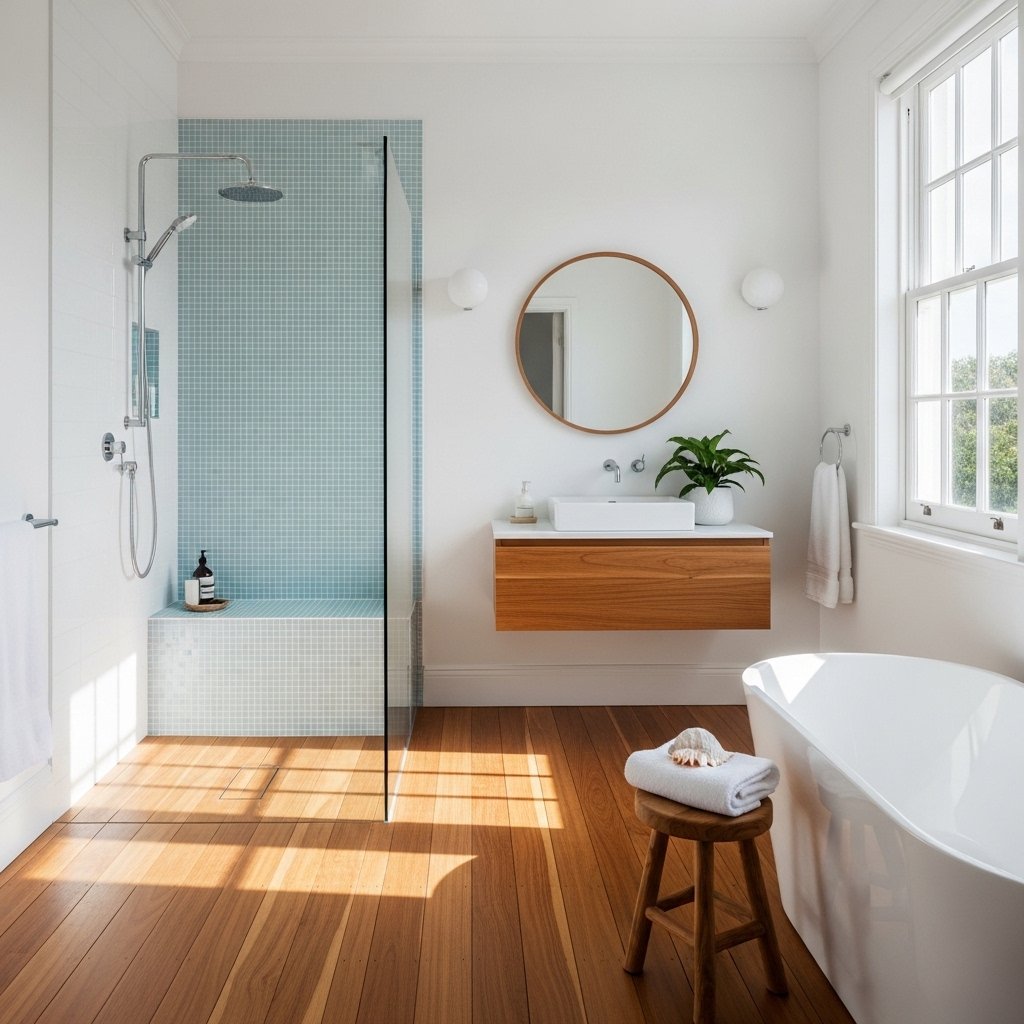
A warm timber floor in a coastal bathroom, teak or properly sealed oak in a pale tone, creates the specific material quality of a beach house bathroom where the floor has been walked on with damp feet for many summers and has developed the character of genuine coastal domestic use.
Teak is the correct timber for a wet bathroom environment. Its natural oil content makes it resistant to moisture damage, warping, and surface deterioration in a way that most other timbers require additional treatment to achieve.
The warm timber floor against the white walls and pale blue accents of a coastal bathroom creates a room that is warm despite its cool-toned palette. The timber brings the warmth of a natural material into the bathroom’s cool mineral and ceramic environment.
14. The Scent of the Sea: Aromatherapy in the Coastal Bathroom
The coastal bathroom without the scent of the coast is a coastal bathroom that has not completed its sensory brief.
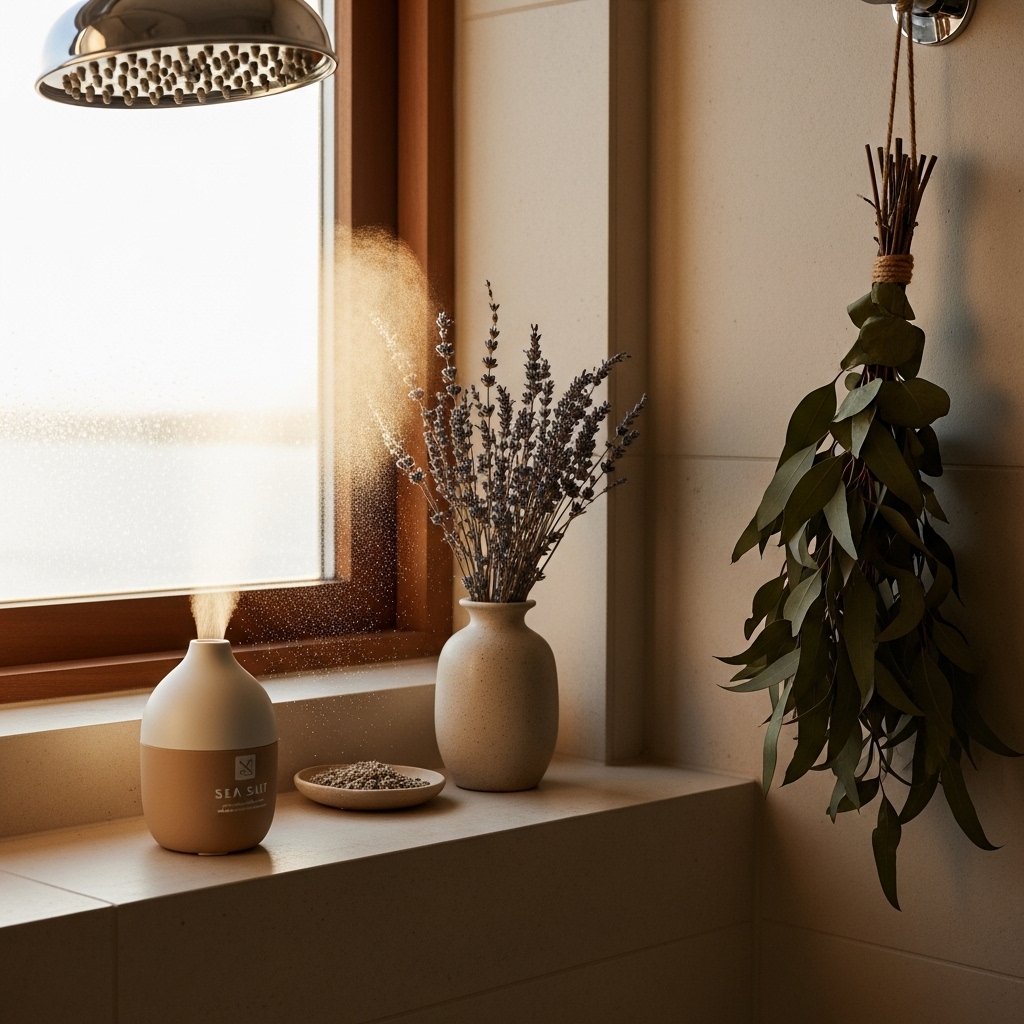
Sea salt, marine accord, driftwood, and coastal botanicals, sea holly, rock samphire, and coastal lavender, are the fragrance references specific to the coastal environment. A diffuser in a ceramic vessel on the bathroom shelf holding a marine accord scent creates the specific olfactory environment of the coast in the bathroom’s morning routine.
A bundle of dried sea lavender or dried coastal grasses in a small ceramic vase on the shelf provides a subtle, continuously present natural fragrance appropriate to the coastal reference.
Eucalyptus hung in the shower, releasing its oil in the steam, approximates the specific quality of the coastal air’s medicinal, mineral freshness in a format that is both functional and beautiful.