12 Chinoiserie Bedroom Ideas That Bring Timeless Elegance
Chinoiserie is one of the longest-lived decorative traditions in Western interior design. For over three centuries the European fascination with Chinese and East Asian decorative arts has produced interiors of extraordinary beauty, technical sophistication, and cultural richness.
In 2026 chinoiserie in the bedroom has moved past the reproduction wallpaper cliché into a more considered, more materially intelligent engagement with the tradition. These 12 ideas execute the aesthetic at its most beautiful and most current.
1. Hand-Painted Chinoiserie Wallpaper on One Wall
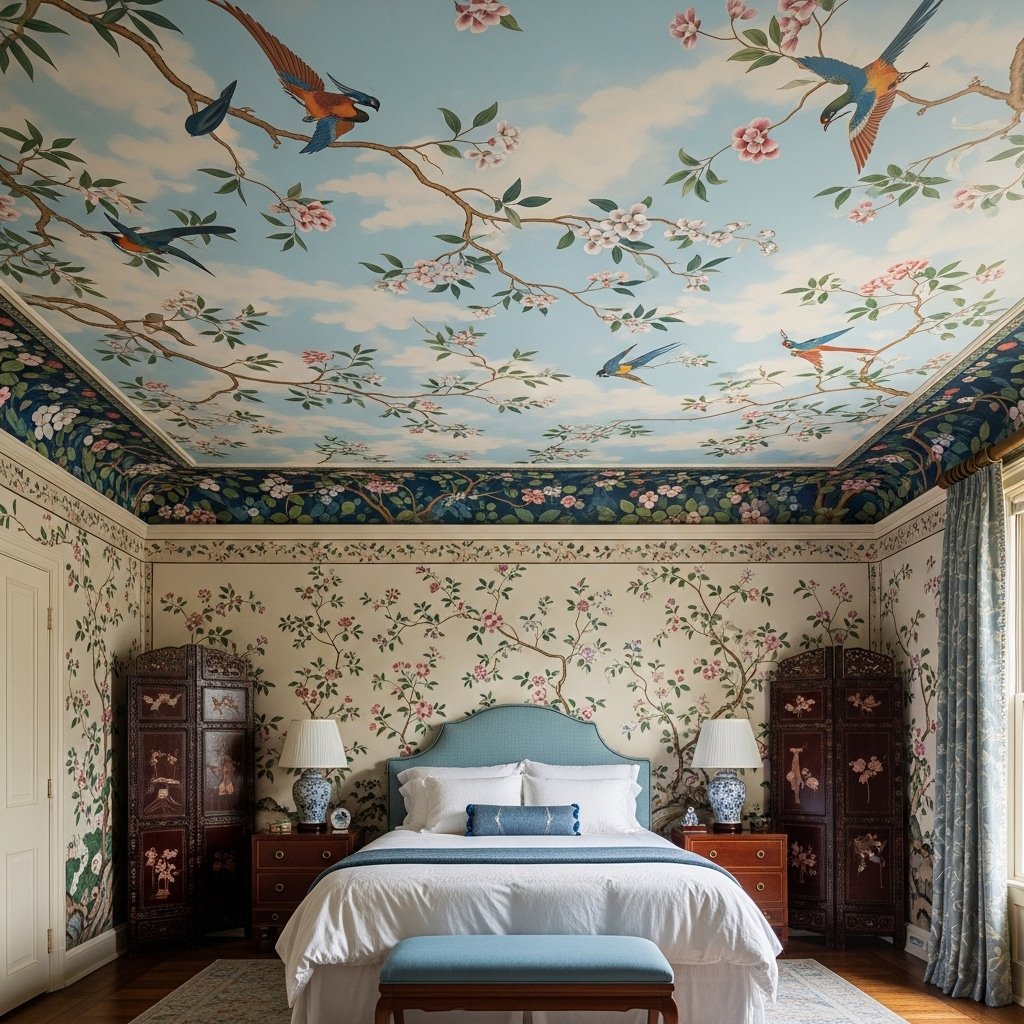
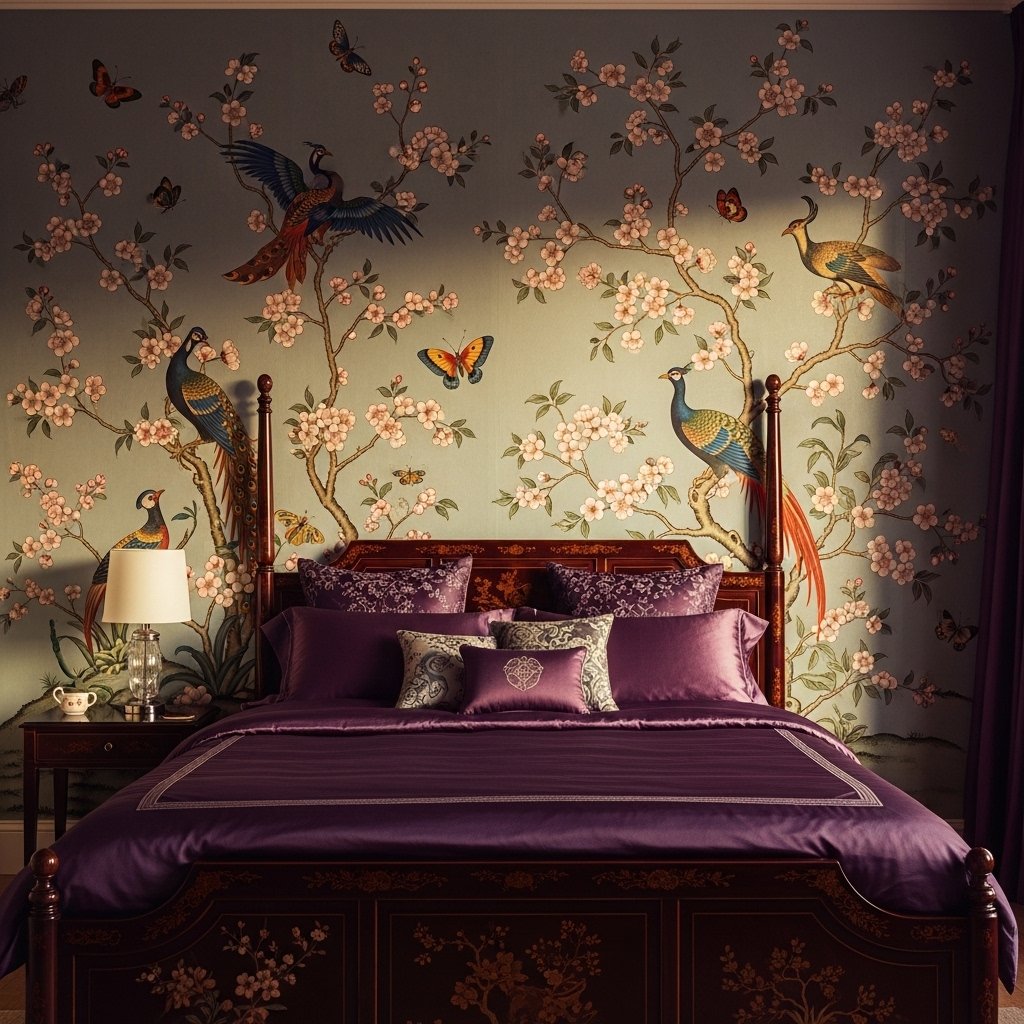
The hand-painted chinoiserie wallpaper panel is the most recognizable and most beautiful single element of the aesthetic. Used on one wall, the wall behind the bed, it creates a backdrop of extraordinary visual richness that transforms the bedroom’s entire character.
Genuine hand-painted chinoiserie wallpaper on silk or paper, produced by specialist manufacturers using techniques unchanged since the 18th century, depicts flowering trees, birds, butterflies, and botanical scenes in colors that respond to the room’s changing light throughout the day.
The scene continues across each panel without repeat: what appears on the far left panel is different from what appears on the far right. The entire wall is one continuous painting.
Position the bed centered on the wallpaper wall so that the most botanically and ornithologically rich section of the scene is directly behind the headboard.
2. Dark Lacquered Furniture
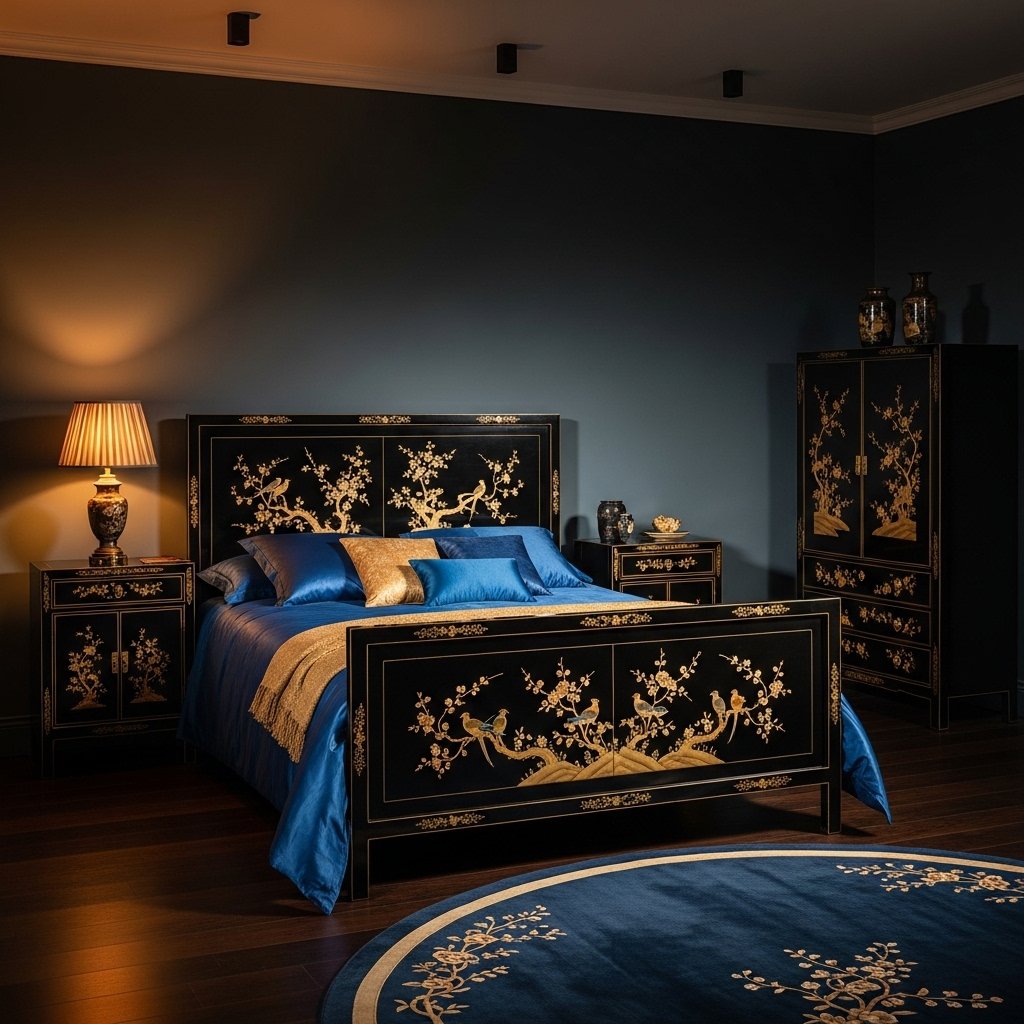
Lacquered furniture is the material expression of chinoiserie’s Chinese source tradition. Deep black lacquer with painted decoration in gold, green, and red. Deep burgundy lacquer with gilded details. Forest green lacquer with black painted landscapes.
A dark lacquered bed frame with gilded detail panels. Lacquered bedside tables with painted floral decoration. A lacquered tall chest of drawers with a landscape scene covering its front face. Each piece communicates the centuries of craft that the lacquer tradition represents.
The contrast between the high gloss of lacquered furniture surfaces and the soft, matte quality of silk bedding and linen curtains creates the material tension that gives chinoiserie bedrooms their specific character: hard and soft, light-reflecting and light-absorbing, Eastern and Western simultaneously.
3. Blue and White Ceramic Collection
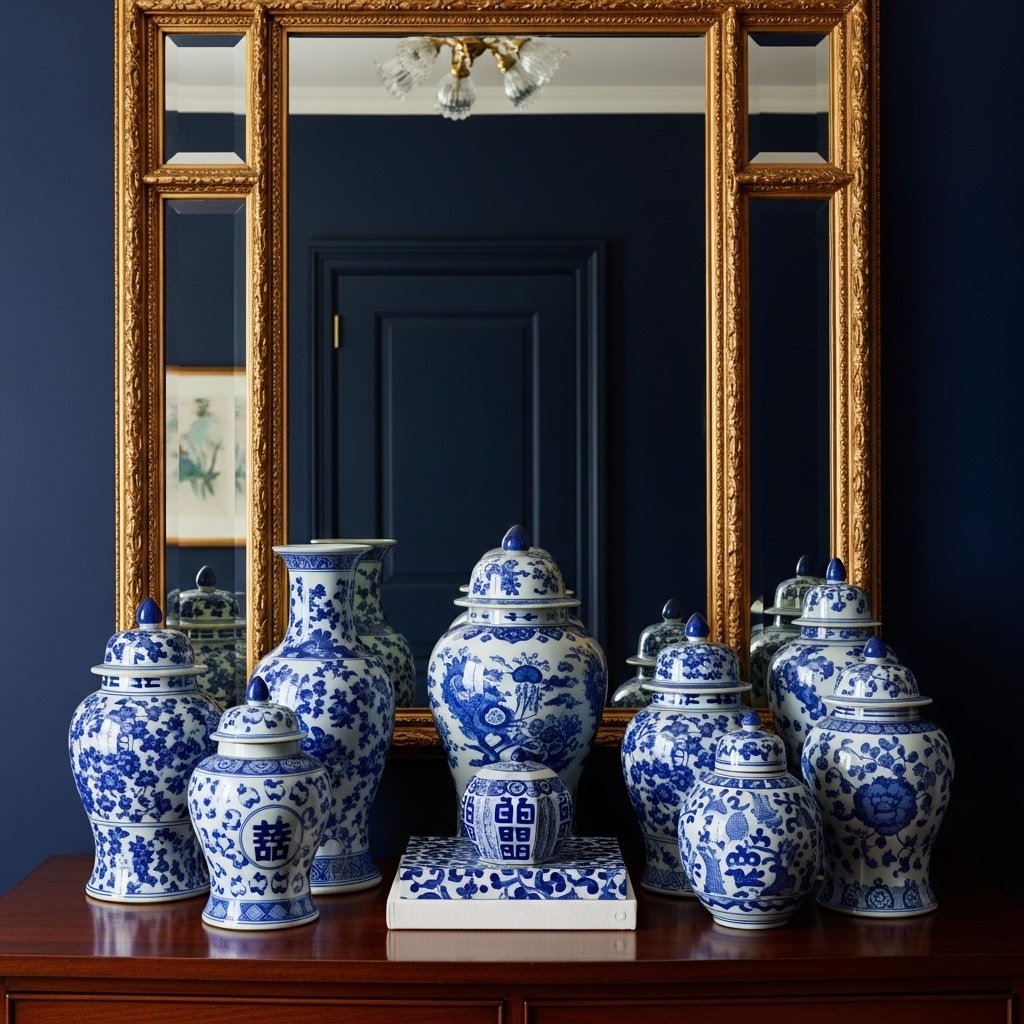
The blue and white ceramic tradition of Chinese porcelain production is the material foundation of the chinoiserie aesthetic in its most widely recognized form. A collected display of blue and white ceramics in a chinoiserie bedroom creates the material and cultural reference of the tradition without requiring a complete room redesign.
Ginger jars in varying heights grouped on a chest of drawers or mantelpiece. A large blue and white vase on a bedside table. A collection of blue and white plates hung on the bedroom wall as decorative art.
The quality of blue and white ceramics varies enormously. Genuine Chinese export porcelain, available through antique dealers at a wide range of price points, has a translucency of body and a clarity of blue that reproduction pieces rarely match.
Source one genuinely exceptional piece and build the collection around it. The best piece anchors the quality of the collection.
4. Silk Bedding and Textiles
Silk as the primary textile of a chinoiserie bedroom honors both the material and the tradition. The Silk Road that connected China to Europe for millennia carried this specific material westward. Its presence in a chinoiserie bedroom is historically accurate as well as aesthetically correct.
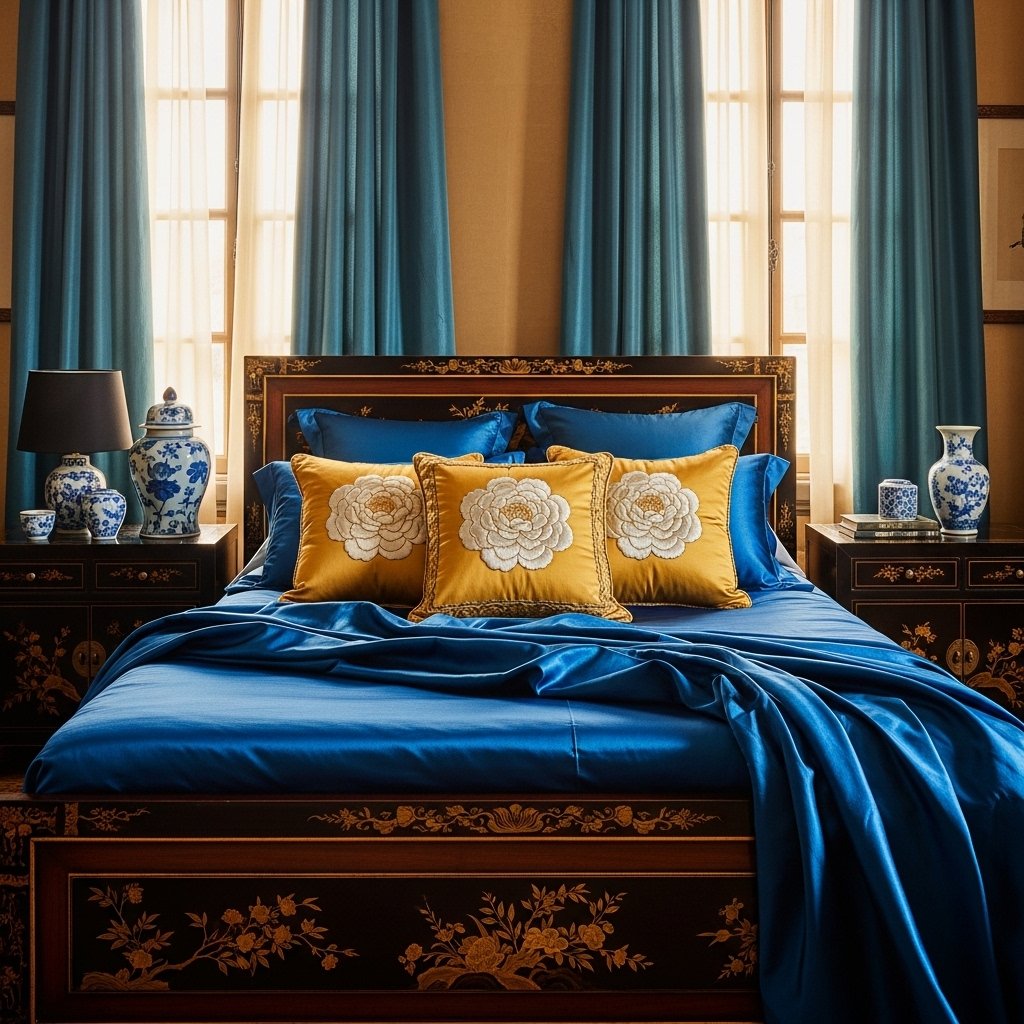
Deep jewel tone silk bedding in sapphire, emerald, burgundy, or imperial yellow catches light in the specific way that silk does: shifting between luminous and matte depending on viewing angle and light source. The silk surface is never static in its appearance.
Silk cushion covers with embroidered chinoiserie motifs, birds, peonies, bamboo, and chrysanthemums, add the decorative language of the tradition in textile form. Silk draperies in a complementary jewel tone frame the room’s windows with the material richness that the aesthetic demands.
5. Bamboo and Rattan Accents
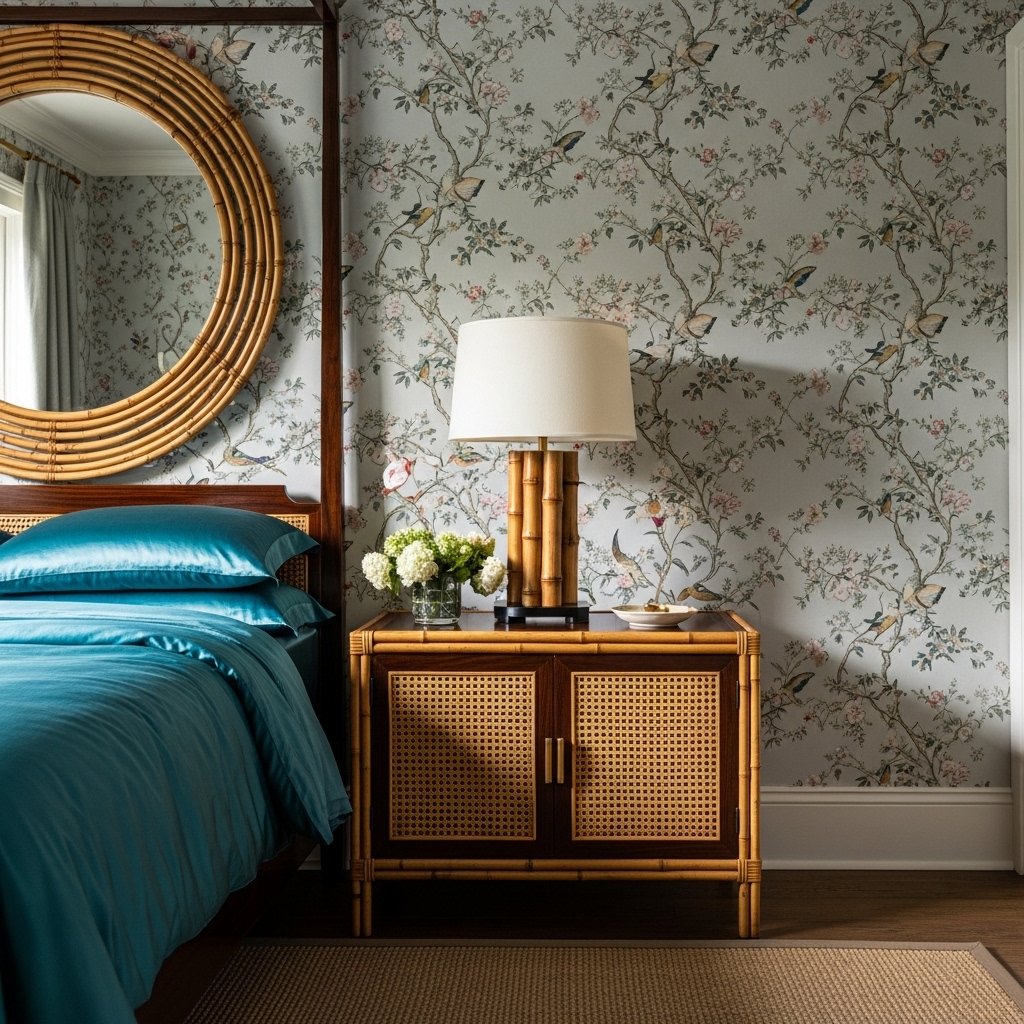
Bamboo and rattan are the natural materials most associated with East Asian design traditions and their introduction into a chinoiserie bedroom grounds the aesthetic in material honesty rather than purely decorative reference.
A bamboo-framed mirror. Rattan-fronted bedside table cabinets. A bamboo lamp base with a cream linen shade. A woven rattan headboard panel. These natural material elements introduce the organic warmth that purely lacquered and silk surfaces lack.
The combination of hard lacquered surfaces, soft silk textiles, and natural bamboo or rattan creates a material story with genuine complexity. Each material type is specific to the East Asian decorative tradition in different ways and their combination within one room creates depth that any single material alone cannot.
6. A Canopy Bed With Pagoda or Temple Detail
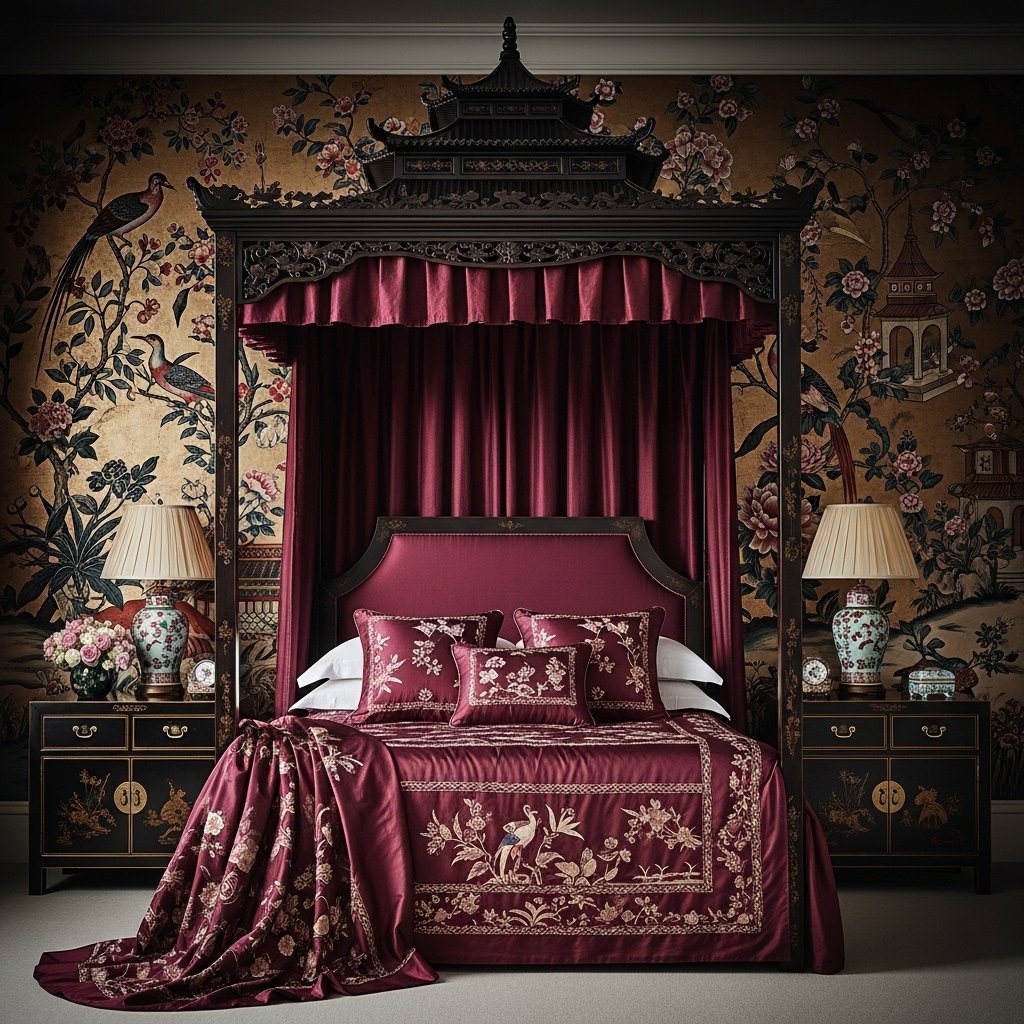
The canopy bed with a pagoda-inspired crown detail or a carved temple-roof form is the most theatrical furniture piece available to a chinoiserie bedroom.
An 18th century Chinese Chippendale bed frame with a pagoda cornice above the headboard, draped in silk or embroidered fabric, creates a sleeping environment with genuine historical character and extraordinary visual drama.
Contemporary interpretations use the pagoda form more abstractly: a headboard panel with upward-curving eave-like profiles, a canopy frame with angled corners that reference the pagoda silhouette without literal reproduction.
The bed is the chinoiserie bedroom’s most powerful design statement. Everything else in the room, the wallpaper, the ceramics, the textiles, should be chosen in service of the bed rather than competing with it.
7. Deep Jewel Wall Colors as Backdrop
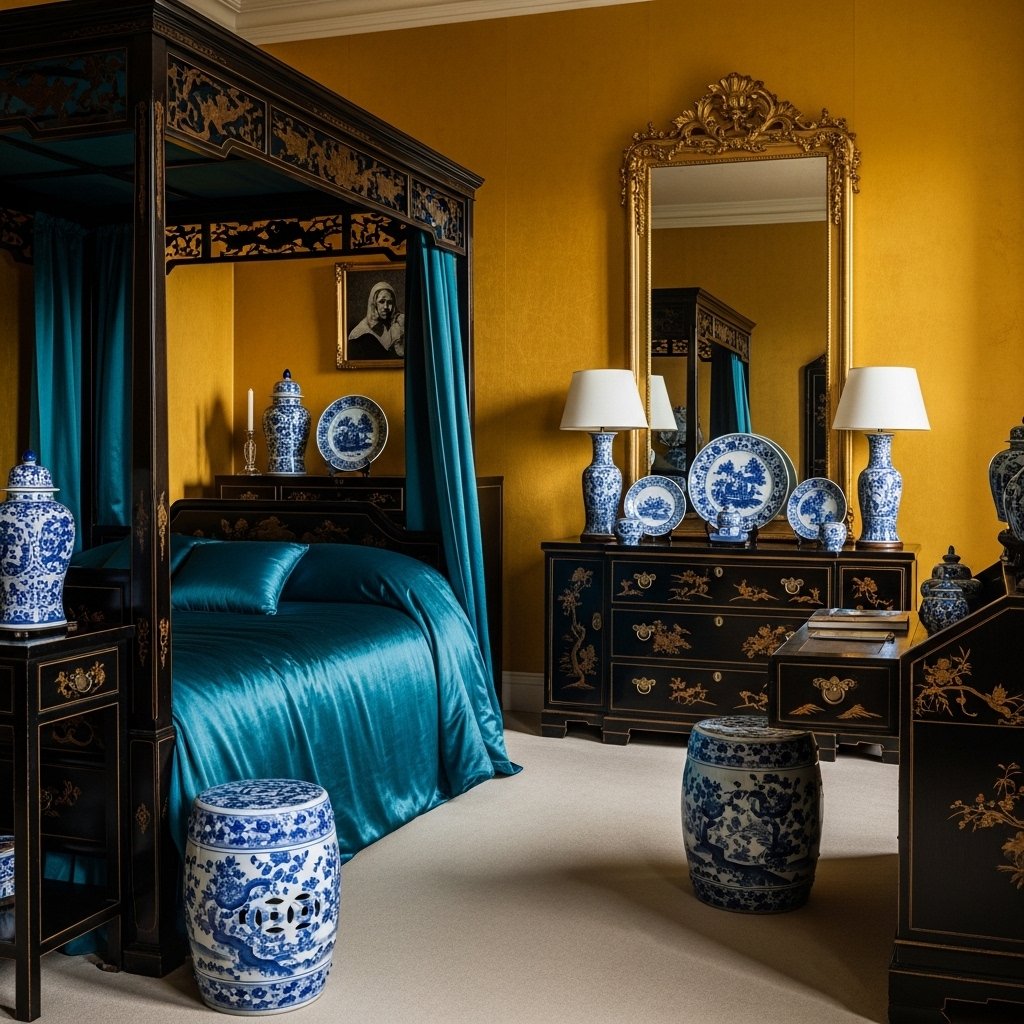
The chinoiserie bedroom wall does not need to carry a hand-painted wallpaper scene to express the aesthetic. A deeply saturated solid wall color in the jewel tones of Chinese imperial interiors creates a backdrop against which every other chinoiserie element performs at its fullest intensity.
Imperial yellow, the color reserved for Chinese imperial use, creates a bedroom of extraordinary warmth and historic resonance. Qing dynasty blue, a deep, slightly grey blue, creates a bedroom with the specific atmosphere of Chinese blue and white porcelain at room scale. Jade green creates a bedroom with the rich, warm quality of the stone itself.
Against these deep wall colors, blue and white ceramics appear more vivid, lacquered furniture more dramatic, and silk textiles more luminous. The wall color is not the statement. It is the condition that makes every other statement possible.
8. Chinoiserie Screen as Headboard
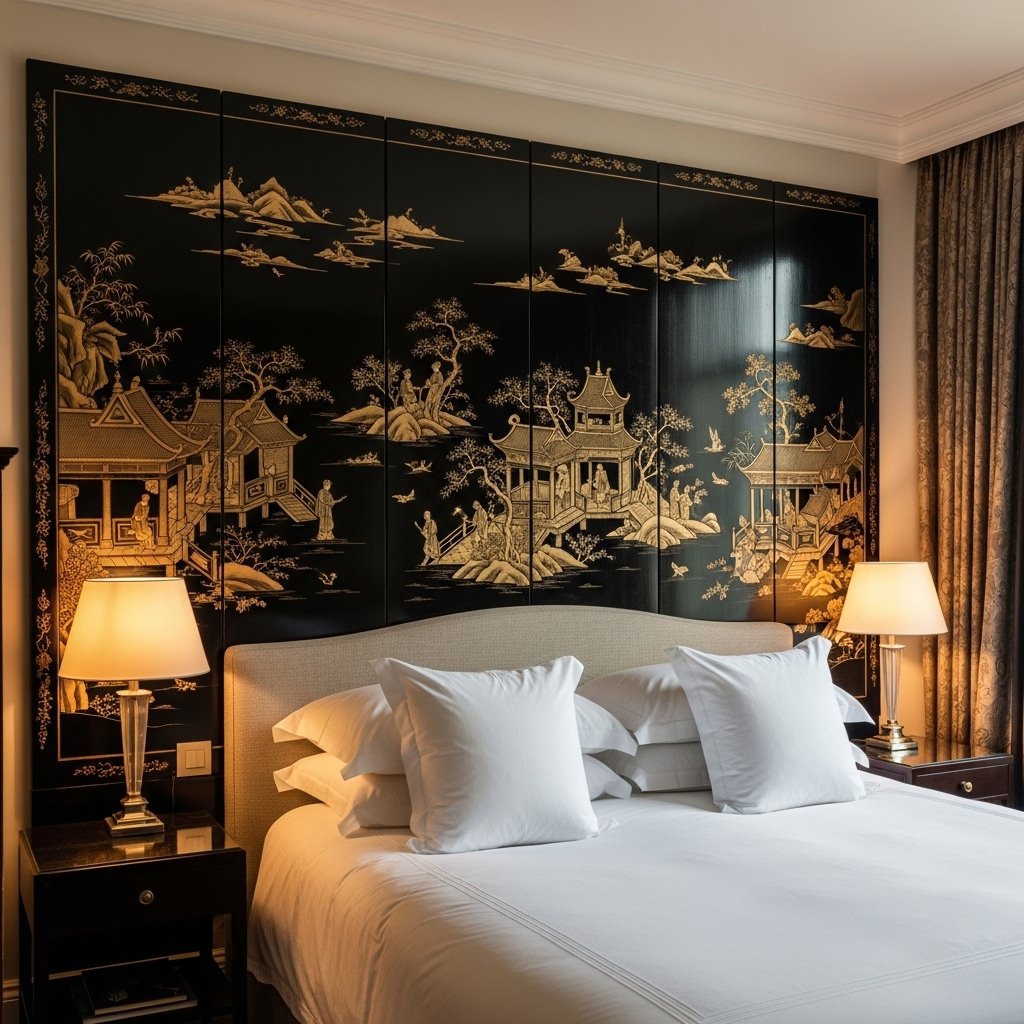
A folding chinoiserie screen, a multiple-panel lacquered and painted screen with landscape, bird, and botanical scenes, used as an oversized headboard behind the bed creates both a functional headboard and a wall-covering design element simultaneously.
An 18th century Chinese Coromandel lacquer screen with incised and painted scenes on black lacquer creates a headboard of genuine historical beauty. Contemporary lacquered screens in the same tradition, produced by craftspeople maintaining the technique, create the same visual quality at more accessible price points.
The screen can extend beyond the bed width to fill the full width of the wall behind. A six to eight panel screen behind a king-size bed reaches from wall to wall in most bedrooms and creates a backdrop of extraordinary material richness.
9. Ginger Jar Lamps
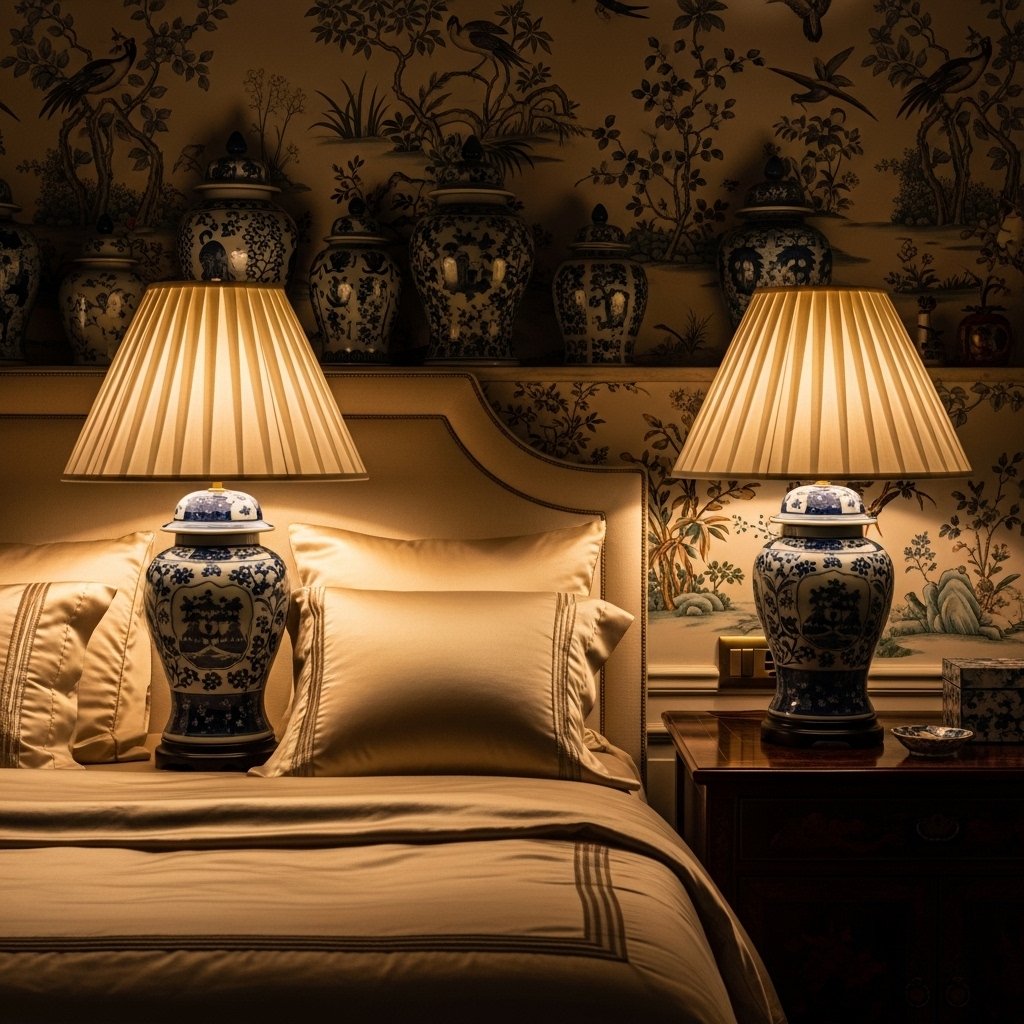
Ginger jar lamps, table lamps made from Chinese blue and white ginger jars with a lampshade above, are the most widely used and most appropriate lighting form in a chinoiserie bedroom.
A genuine antique Chinese ginger jar converted to a lamp base, or a quality reproduction in the same tradition, creates a bedside light source that is simultaneously illumination and collection piece. The lamp is a ginger jar that has been given a further purpose.
The shade should be simple. A white or cream drum shade in a scale proportional to the jar allows the jar to remain the design object. An elaborate shade competes with the jar rather than supporting it.
Two matching or deliberately non-matching ginger jar lamps flanking the bed create a bedside lighting arrangement with the warm, domestic quality appropriate to a bedroom designed for genuine habitation rather than photographic display.
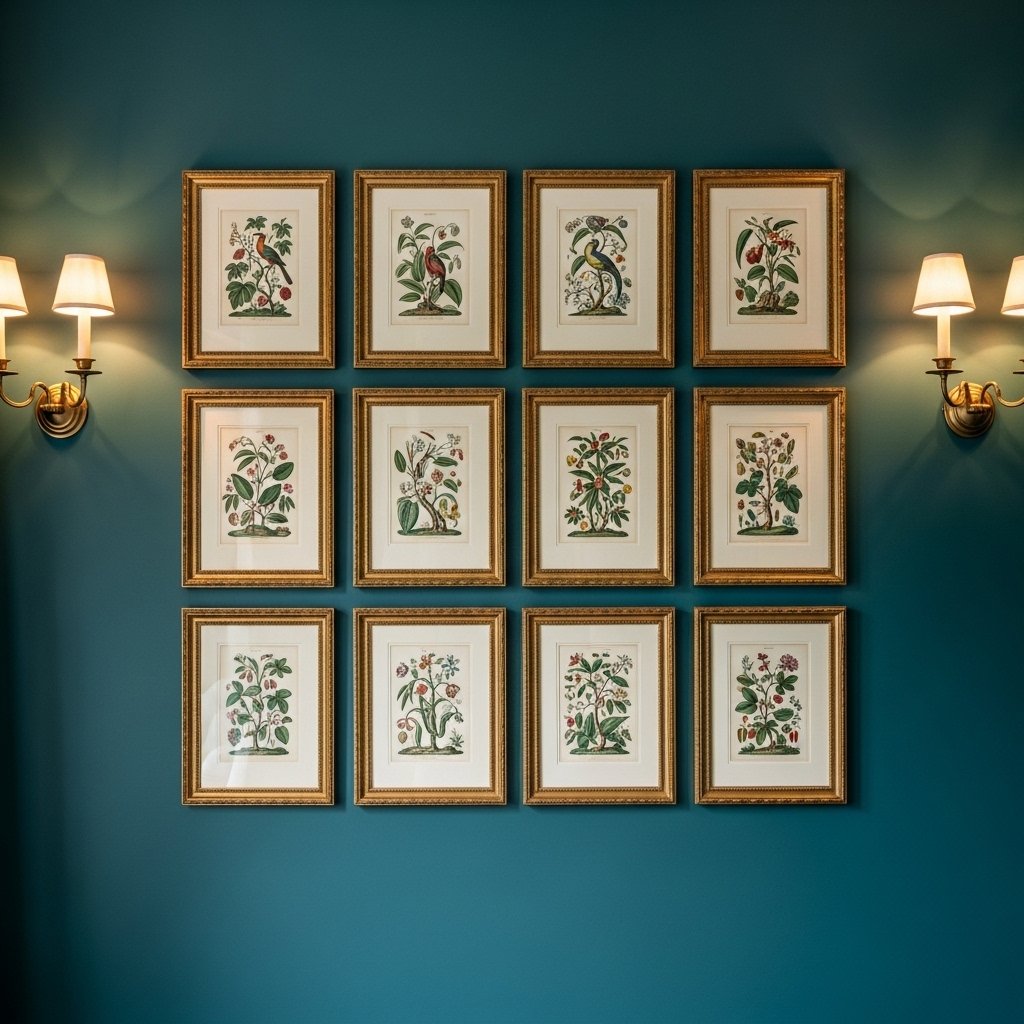
10. Botanical Print Gallery Wall
A gallery wall of 18th century hand-engraved botanical prints in the European tradition of Chinese botanical illustration, the tradition that produced books like the Botanical Magazine and Temple of Flora, creates a chinoiserie bedroom wall treatment that references the tradition through a different but related lens.
European botanical illustrators of the 18th century frequently depicted plants encountered through trade with China and the East Indies. A gallery of these prints creates a wall that is simultaneously about scientific observation and about the cultural exchange between East and West that defines the chinoiserie tradition.
Consistent frames, all thin black or all gilt, create the cohesion that allows the prints’ variety of subject matter to read as a unified collection. Space each frame with enough breathing room for each print to be seen independently.
11. A Lacquered Trunk or Campaign Chest
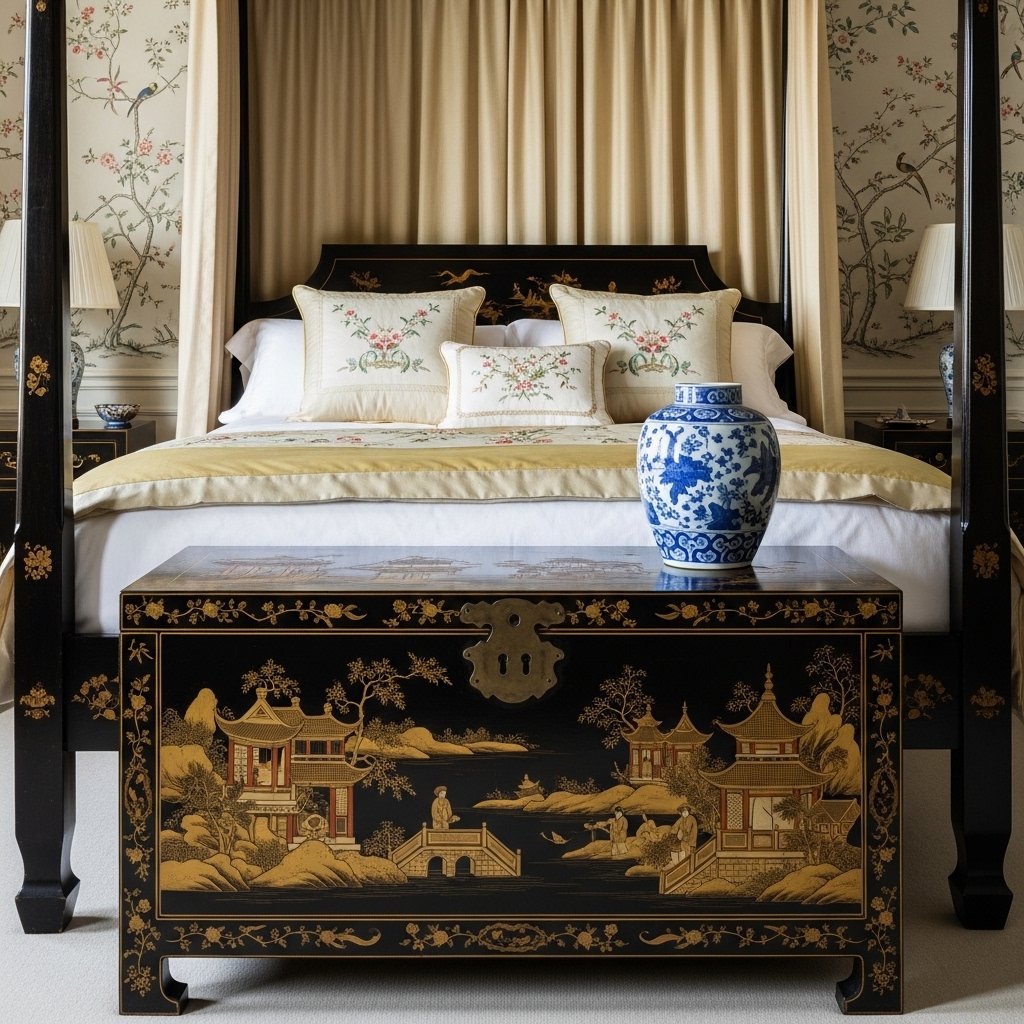
A lacquered campaign chest or export chest, the portable fitted chests produced for European traders in China from the 17th century onward, used as a blanket box at the foot of the bed or as a bedside table creates one of the most historically resonant and most beautiful furniture objects available to a chinoiserie bedroom.
These chests were produced in extraordinary numbers and many survive in genuinely good condition. They are available through antique dealers, auction houses, and specialist Asian art dealers at a range of price points depending on condition, period, and decoration quality.
A black lacquered chest with gilded scenes of landscapes and figures at the foot of the bed, topped with a simple ceramic object or a silk cushion, creates a furniture moment with genuine historical depth.
12. Chinoiserie Ceiling Detail
The ceiling in a chinoiserie bedroom, painted with a sky scene, a bamboo trellis pattern, a cloud pattern in traditional Chinese cloud scroll forms, or a bird and blossom scene extending the wallpaper’s world overhead, creates the most complete and immersive expression of the aesthetic available.
A ceiling painted by a specialist decorator in the chinoiserie tradition, with birds, flowering branches, and exotic clouds against a pale ground, makes the bedroom feel like being inside the world depicted on the wallpaper rather than looking at it from outside.
The cloud scroll pattern, one of the most recognizable motifs in Chinese decorative art, applied as a ceiling border and central medallion in deep blue and gold creates a ceiling with architectural presence and cultural depth.