11 Green Aesthetic Bedroom Ideas That Will Transform Your Space
Green is the one color that brings the outside in without any further effort on your part. It works in every shade from the lightest mint to the deepest forest, in every style from Scandinavian minimal to maximalist botanical, and in every size of bedroom from a small apartment room to a spacious primary suite. These 11 ideas cover the full range of what a green bedroom can be, including one that does not require painting a single wall.
1. Forest green walls that make the bedroom feel like a retreat
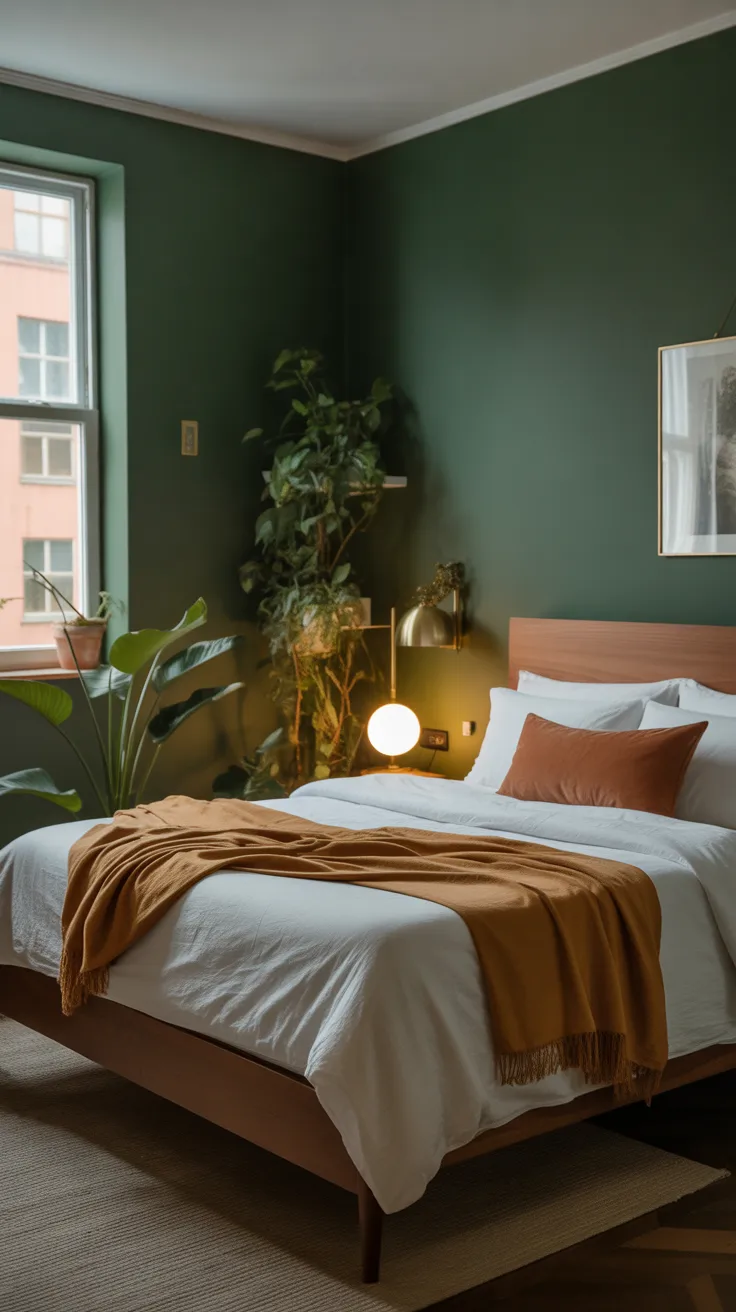
Forest green on bedroom walls does something that almost no other color can do: it makes the room feel genuinely removed from everything outside it. The darkness of the tone creates an enclosure that reads as restful rather than oppressive, and the natural quality of the color does the work of calming the room down before any furniture or textiles are added. It works in rooms with good natural light and in rooms without it, because the warmth in the green keeps it from reading as cold regardless of how much sun comes through. Against forest green walls, white linen bedding looks cleaner than it does against a white wall. Warm wood furniture looks richer. Brass fixtures look warmer. The green makes everything placed in front of it look more intentional, which is a quality worth building a bedroom around. Start with the walls and let everything else respond.
2. Sage green bedroom with natural linen and rattan accents
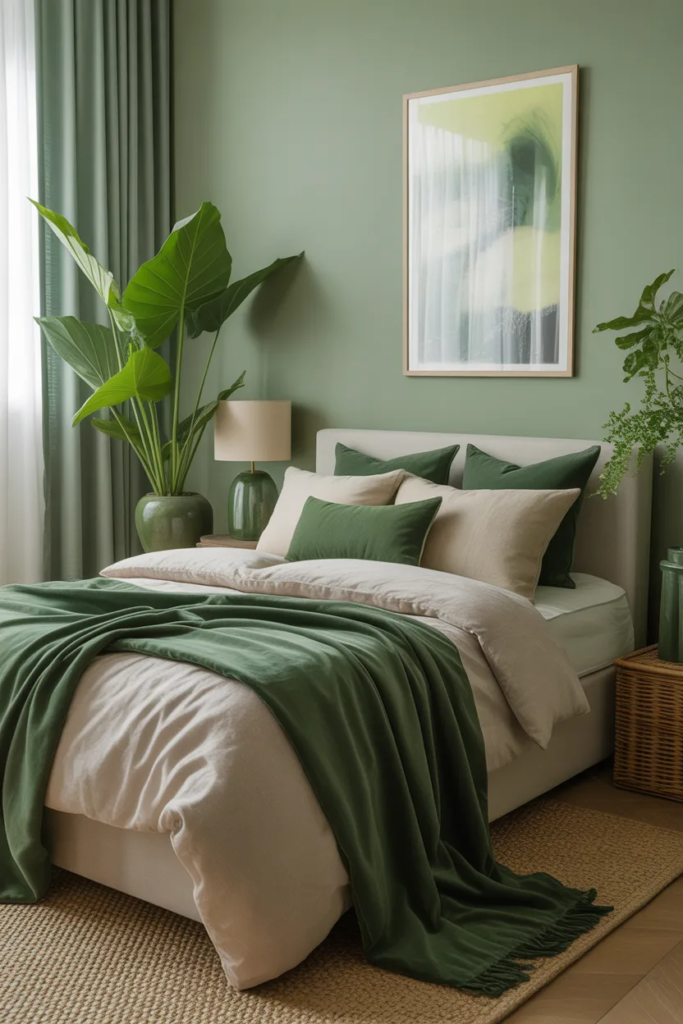
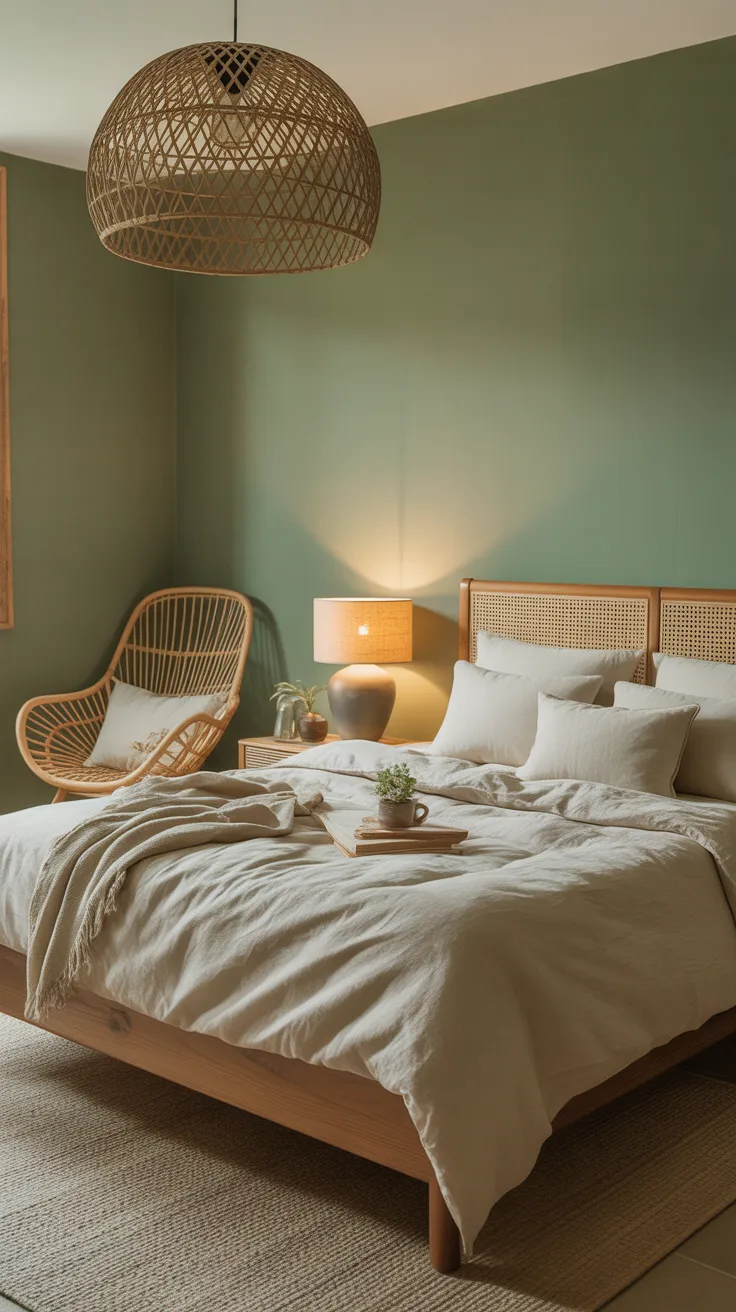
Sage green is the version of green that works for the widest range of people because it sits in the muted, grey-green tonal range that reads as a warm neutral rather than a strong color statement. On walls it produces a bedroom that feels calm without feeling bland, which is harder to achieve than it sounds. The key is pairing it with materials that share its organic quality. Natural linen bedding in cream or oatmeal, a rattan pendant light above or a rattan chair in the corner, wooden furniture with visible grain rather than painted or laminate surfaces, ceramic objects in earthy tones on the nightstand. Each material choice reinforces the natural quality of the sage and prevents the room from tipping into something that reads as grey rather than green. A few plants placed around the room complete the palette by bringing the real version of the color the walls are referencing.
3. Dark green and gold bedroom for a room that feels genuinely luxurious
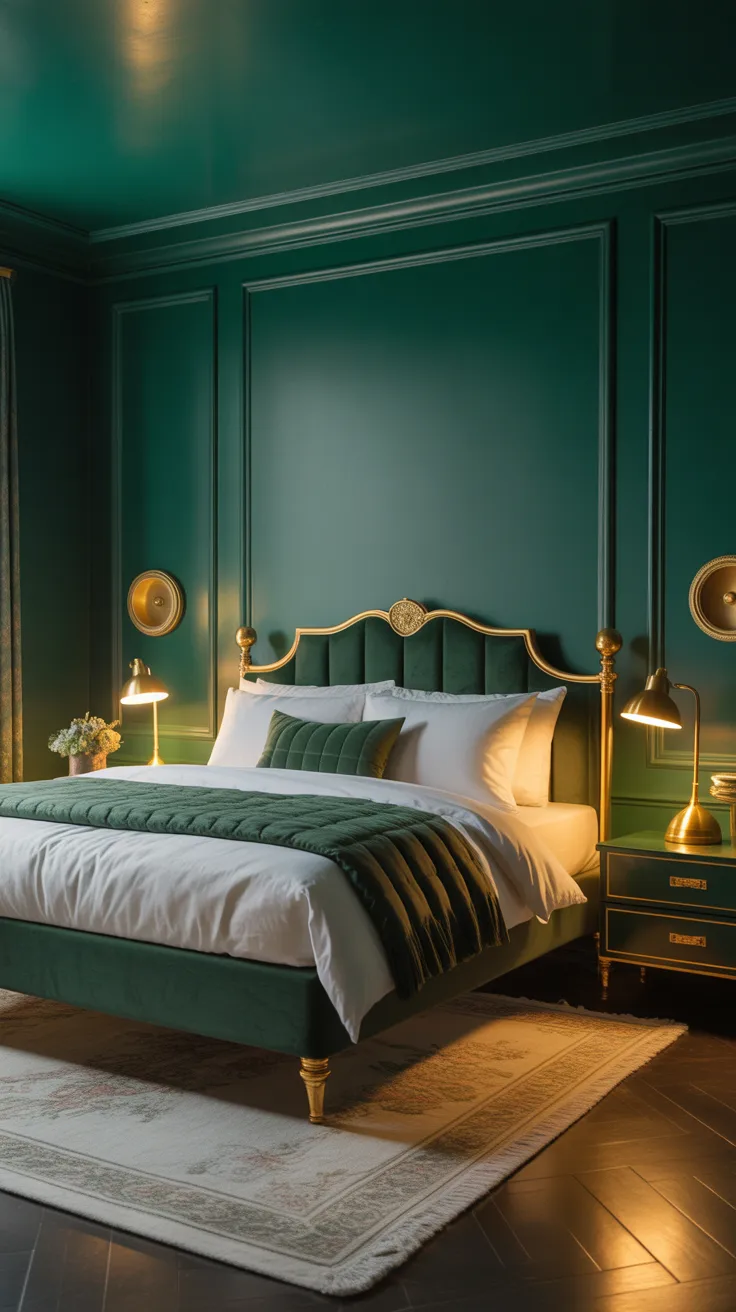
Dark green and gold is a combination that has been used in high-end hotel design and in grand residential interiors for long enough to have moved past trend and into something more reliable. The deep green provides the depth and the enclosure. The gold provides the warmth that stops the darkness from feeling heavy or cold. In a bedroom this translates to deep green walls or wallpaper, gold or brushed brass light fixtures and hardware, a bed frame with gold legs or brass details, and warm amber lamplight that picks up the metallic tones and bounces them through the room. White or cream bedding keeps the palette from becoming too rich to sleep in. The ceiling can stay white to prevent the room from fully closing in, or it can be painted the same deep green as the walls for the full jewel box version of this palette that photographs dramatically and feels even better in person.
4. Olive green bedroom with terracotta and warm earth tones
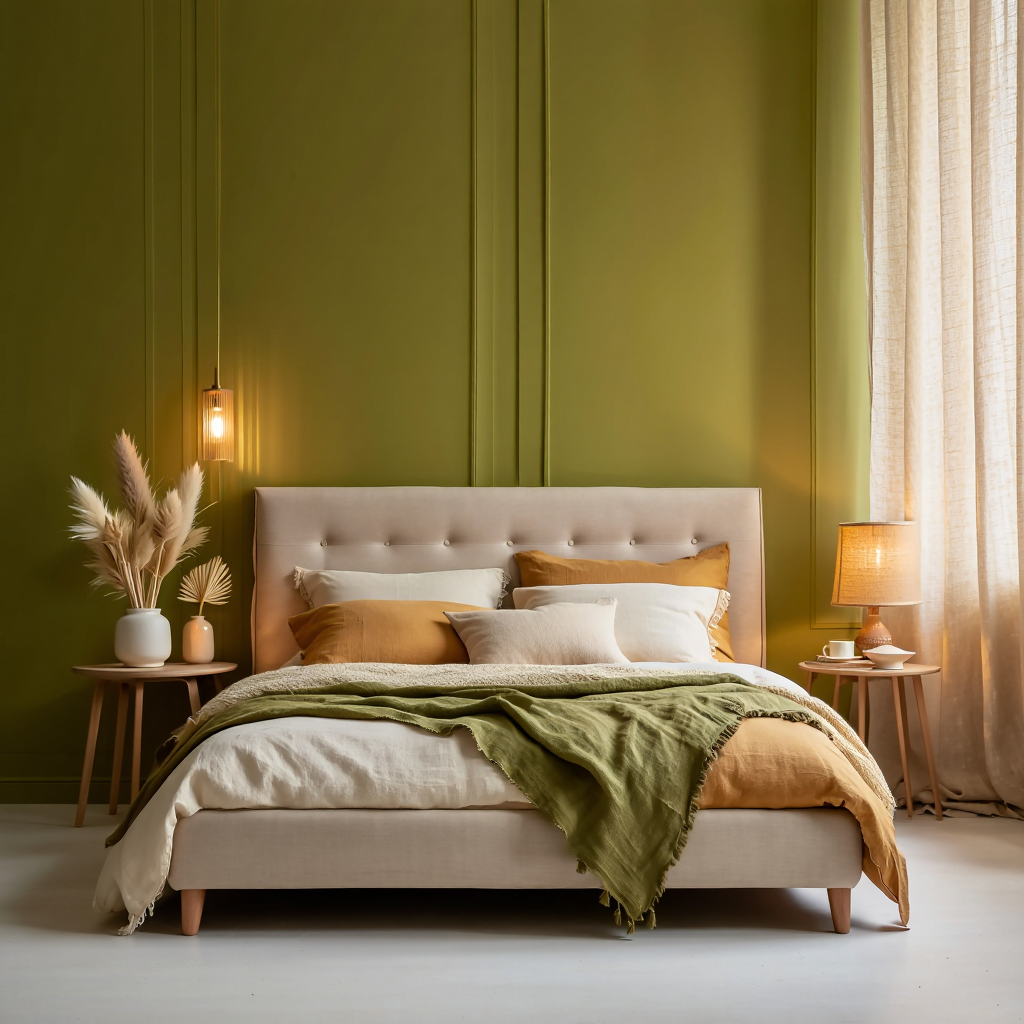
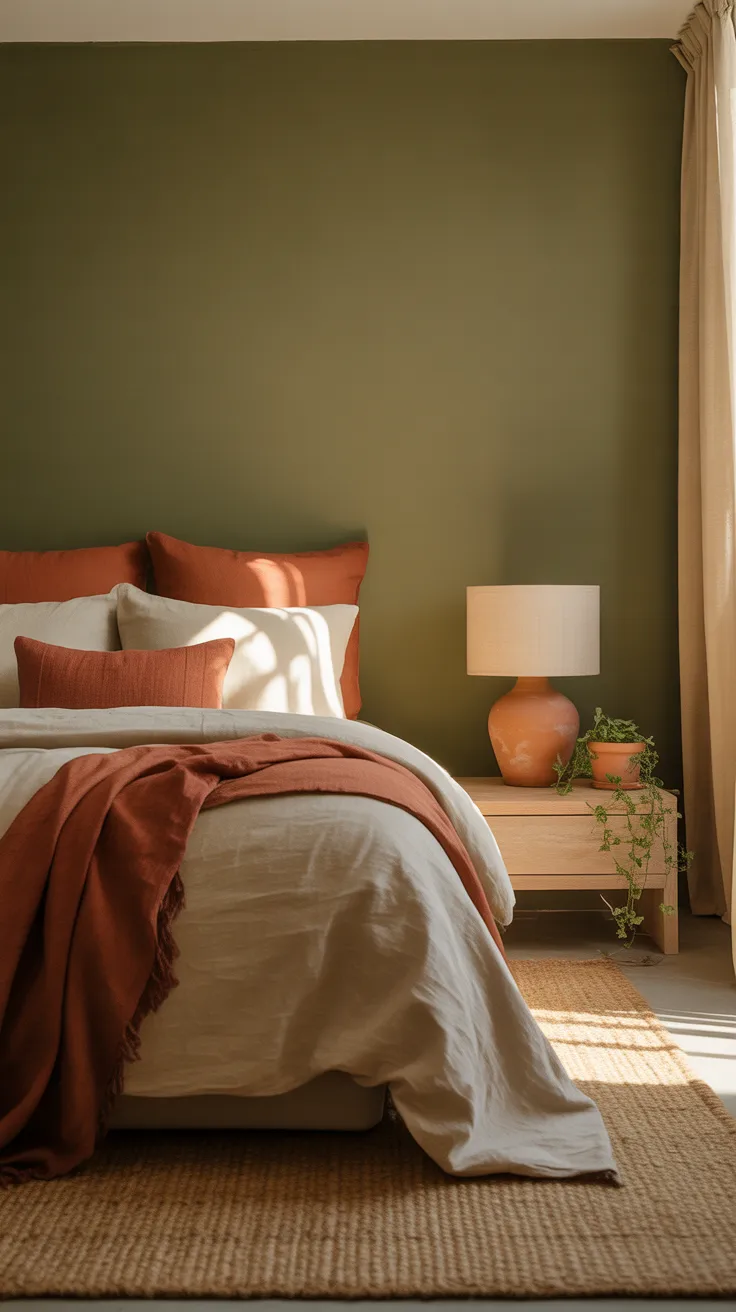
Olive green and terracotta is a combination that borrows from Mediterranean and North African design traditions without committing to either aesthetic directly, and the result is a bedroom that feels warm, grounded, and distinctly personal. Olive green on the walls reads differently at different times of day: warm and golden in afternoon sun, deeper and more complex in the evening with lamps on, and somewhere between the two in the morning. Terracotta arrives through the cushions, a ceramic lamp base, a small pot for a plant, or an accent throw in a rust or burnt orange adjacent tone. The warmth of the two colors together creates a bedroom that feels like it belongs somewhere with good weather and slow mornings, regardless of where it actually is. Natural materials throughout, linen, jute, raw wood, keep the palette grounded rather than decorative.
5. Mint green bedroom that feels fresh without feeling cold
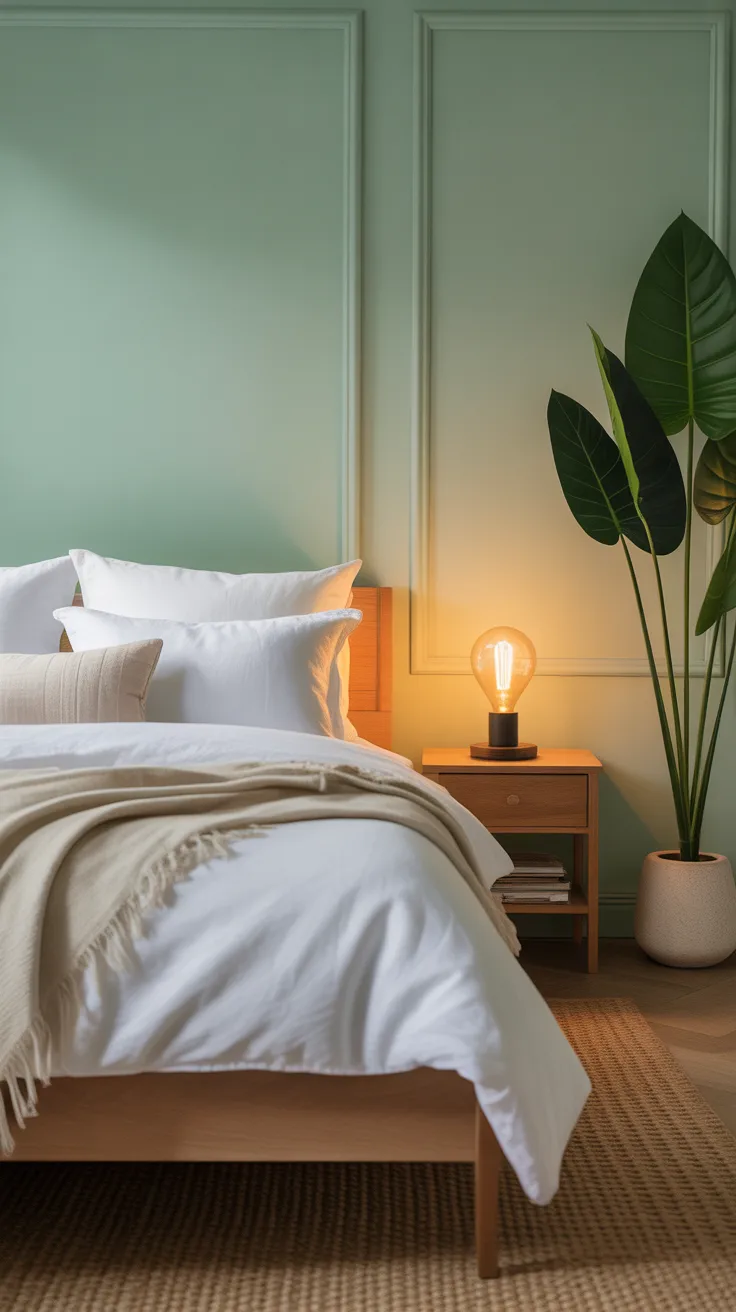
Mint green is the lightest interpretation of the green bedroom aesthetic and the one that requires the most care to get right because it sits close enough to white that the wrong undertone or the wrong pairing materials can make it feel more like a dated pastel than a considered color choice. The version that works is mint with a warm rather than cool undertone, one that reads as a very light sage rather than a blue-influenced mint. Paired with warm wood tones, natural linen, and warm-bulb lighting it stays in the fresh and light family without tipping into cold. White bedding is the right choice here because it lifts the mint rather than competing with it. A single deep green plant in a white or cream ceramic pot provides the contrast that tells the eye this is a green room rather than a nearly-white one.
6. Green wallpaper bedroom with botanical prints and layered plants
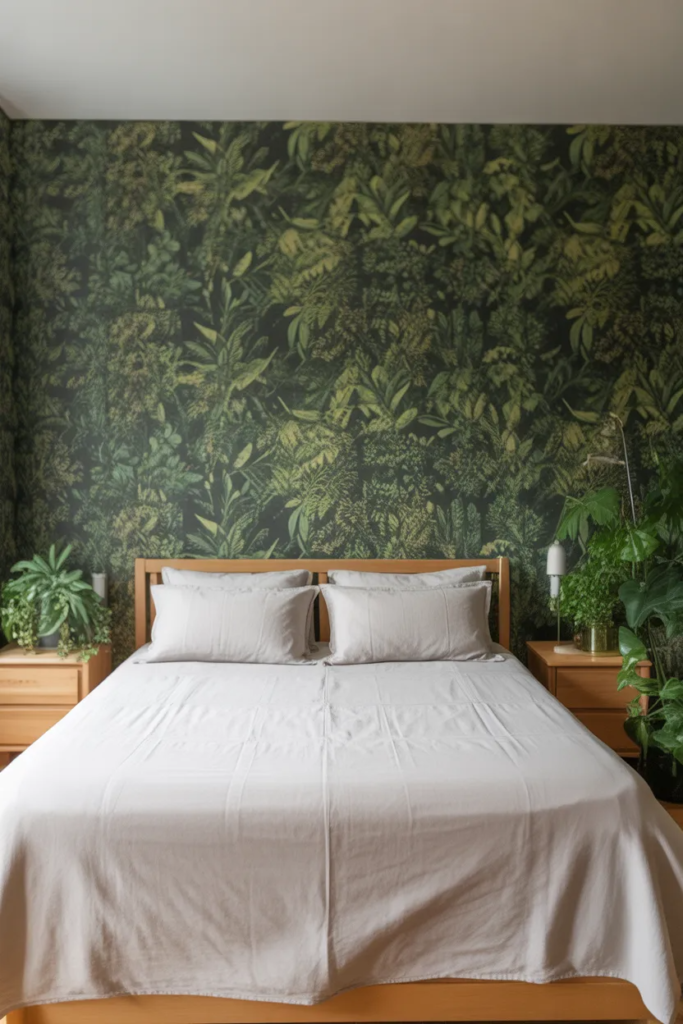
A bedroom with botanical green wallpaper is one of the few rooms in interior design where more is genuinely more. A wallpaper with a leaf pattern, a jungle print, or a maximalist botanical illustration used on all four walls rather than just one creates an immersive effect that a paint color alone cannot replicate. The pattern adds movement and depth to every surface and changes the experience of being in the room in a way that is difficult to describe until you are standing in it. The furniture should step back and let the wallpaper lead: a simple white or natural wood bed frame, plain white bedding, unadorned nightstands. Real plants placed in the room reference the wallpaper pattern in three dimensions and make the whole space feel genuinely alive rather than merely decorated. The layering of real and illustrated green is the quality that stops the room from reading as themed.
7. Emerald green bedroom with velvet and rich jewel tones
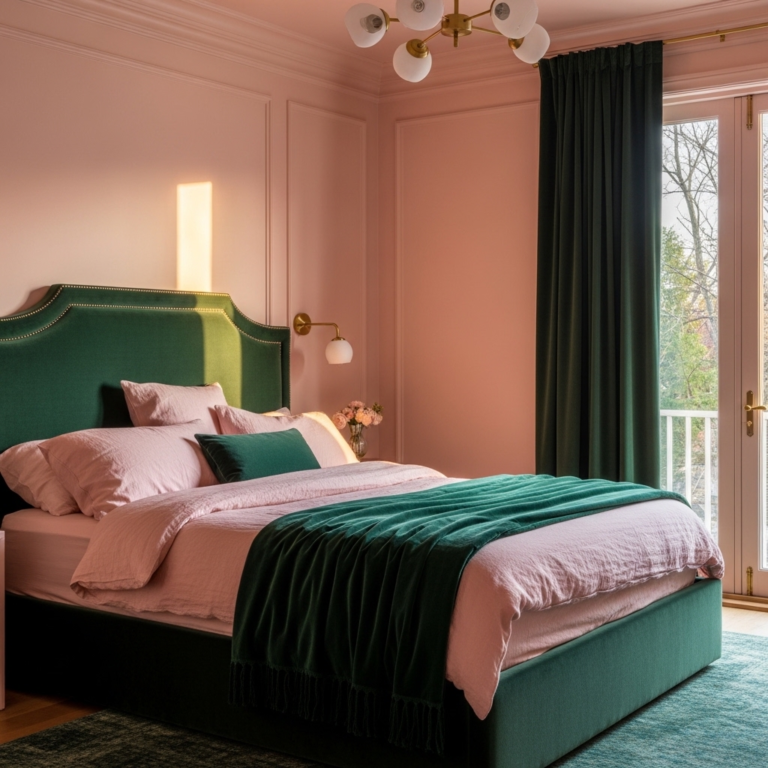
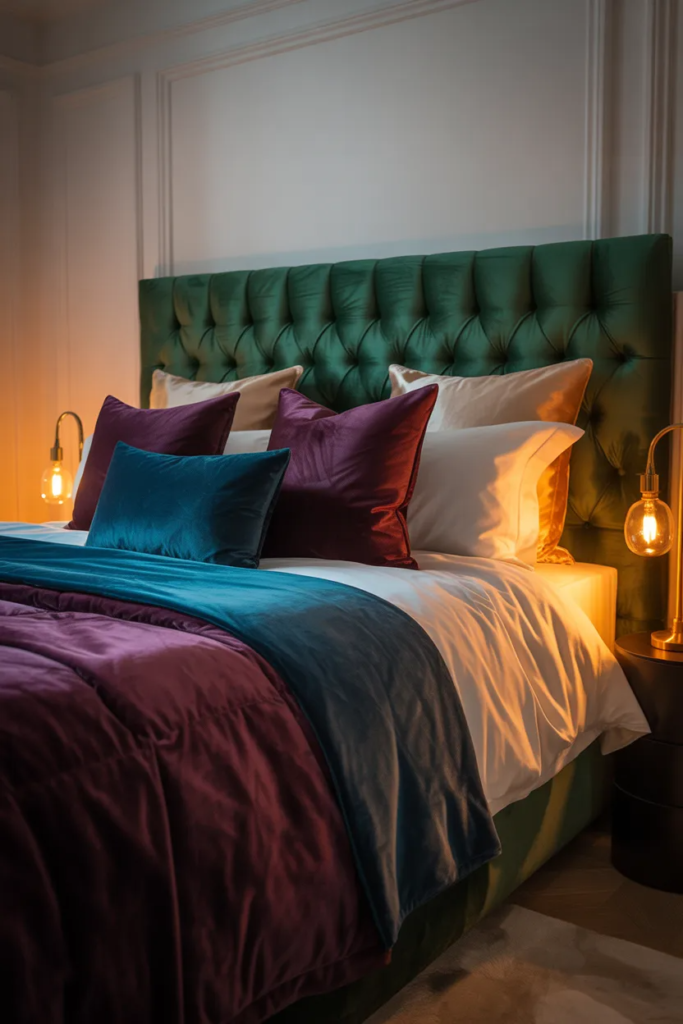
Emerald green in a bedroom is a commitment in the best sense of the word. It is a color with genuine presence and it produces a room that has a character strong enough to be described in a single sentence to someone who has never seen it. An emerald green velvet headboard or an emerald green feature wall behind the bed is the anchor. Everything else builds around that anchor in tones that support it: deep jewel-toned cushions in sapphire, amethyst, or deep plum, warm brass fixtures that pull the gold out of the green, white or very light ceiling and trim to keep the room from closing in completely. The velvet texture is important in this version because emerald green velvet has a depth and a richness that no painted surface or woven fabric can fully replicate. The color shifts as the light changes across it and that movement is part of what makes the room feel alive.
8. Green and white bedroom with clean lines and a Scandinavian feel
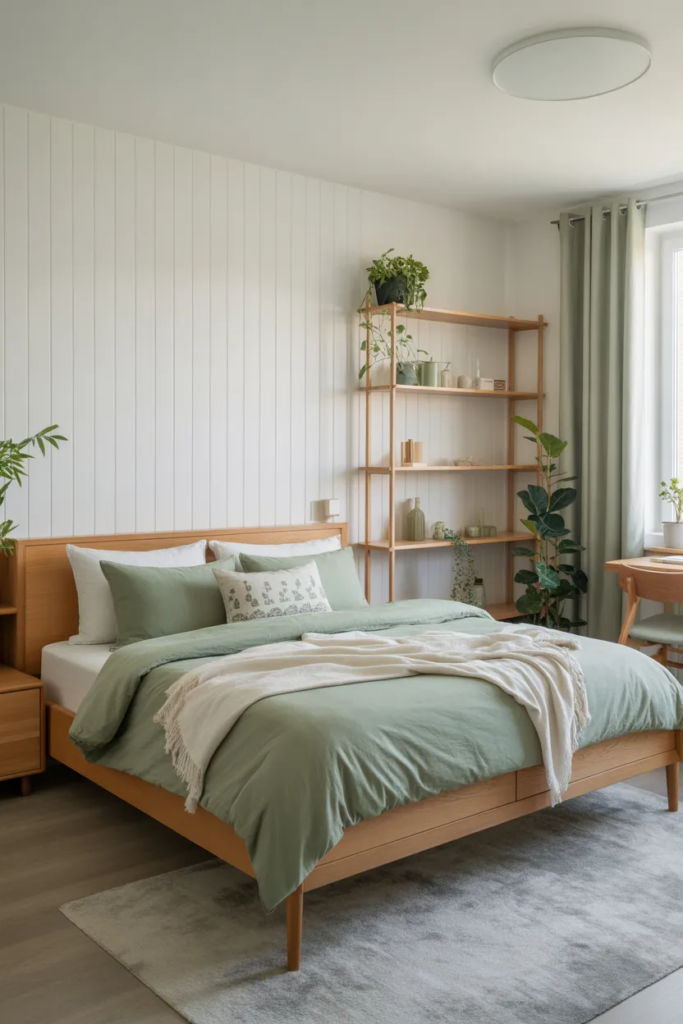
Green and white in a bedroom with Scandinavian-influenced furniture produces a room that is calm, clean, and easier to wake up in than almost any other version of the green bedroom aesthetic. The white does the work of keeping the room light and the green does the work of preventing the white from reading as clinical or empty. The proportion of green to white determines the mood: more white produces something closer to a light-filled neutral room with green accents, more green produces something with more personality and more presence. Either direction works. The furniture stays simple and functional: clean-lined wooden pieces without ornament, a platform bed at low height, open shelving rather than closed storage. Plants are essential in this version of the palette because they bridge the green of the walls or accents and the natural material of the wooden furniture in a way that ties the room together without any additional decorative effort.
9. Dark green bedroom ceiling that changes everything without repainting the walls
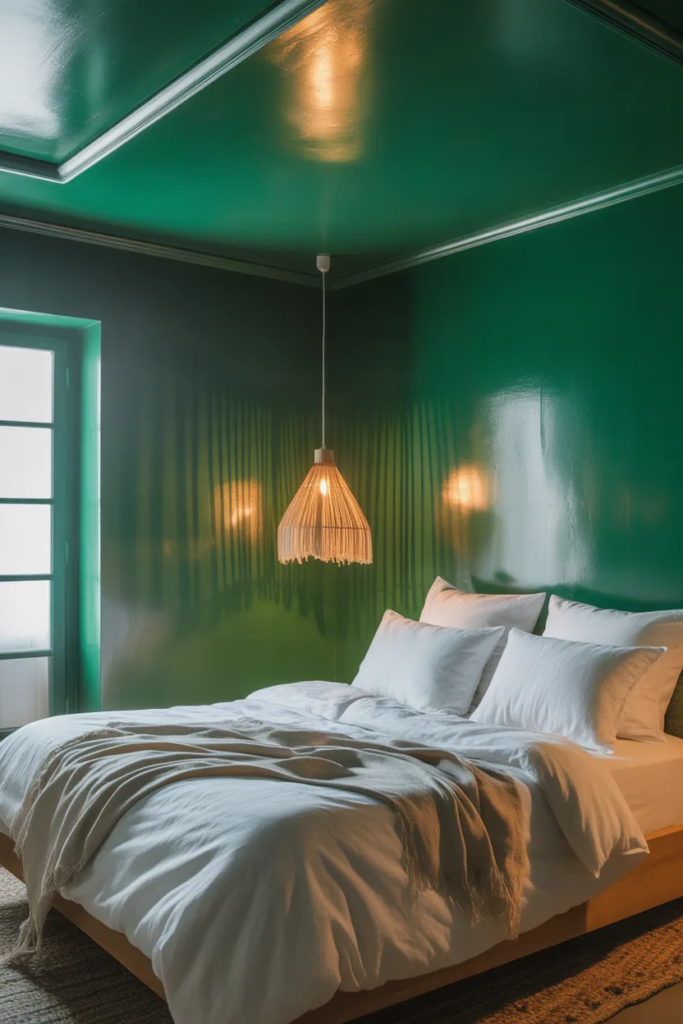
A dark green ceiling in a bedroom with white or light walls is the design move that sounds completely wrong until you see it in a room and immediately understand why it works. The ceiling is usually the most neglected surface in a bedroom and painting it in a deep, rich green while keeping the walls white or very light produces an effect that is part of what makes canopied beds feel so enveloping: the darkness above creates a sense of shelter without any structure. The walls staying light means the room does not lose its openness. The dark ceiling brings the depth and the drama. Warm pendant lights or a simple chandelier hanging from that green ceiling catch the color and deepen it. The bed positioned directly beneath the center of the ceiling benefits most from the effect. It is the kind of detail that costs one tin of paint and changes the entire feeling of the room.
10. Green bedroom with plants as the primary decorating strategy
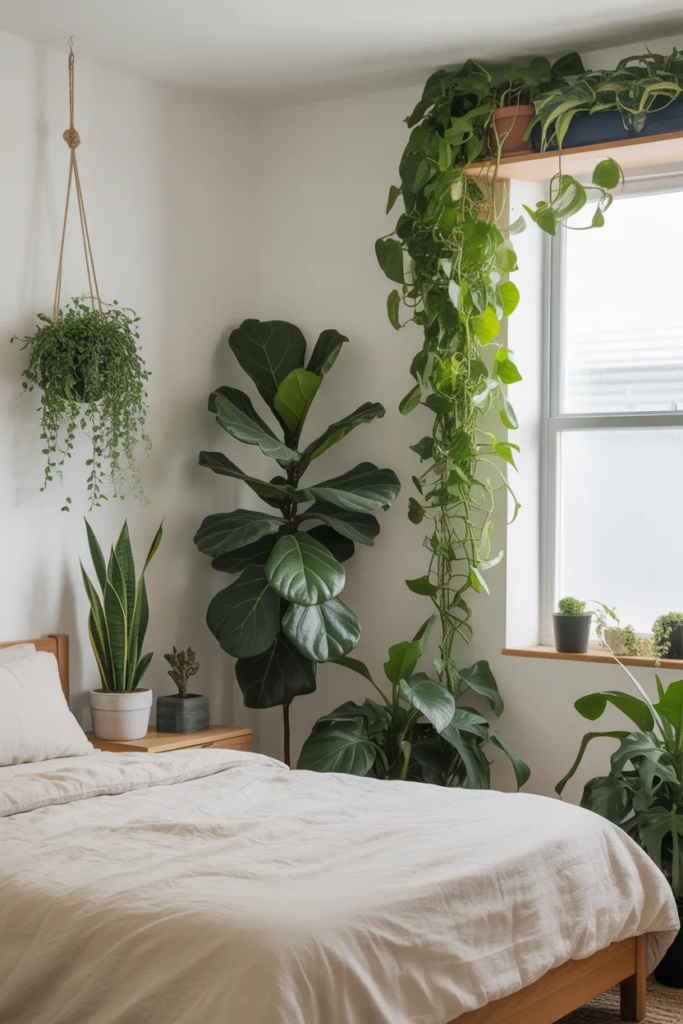
A bedroom where plants are the main decorating decision rather than an afterthought is one of the most genuine expressions of the green aesthetic available, because the green is alive rather than applied. A large fiddle leaf fig in one corner, a trailing pothos on a high shelf, a snake plant on the nightstand, a small succulent on the windowsill, a hanging plant mounted on the wall beside the bed: the variety in height, texture, and plant type creates a collection that looks natural rather than arranged. The surrounding room can be relatively simple because the plants carry the visual interest. White or cream walls, a neutral wooden bed frame, plain linen bedding. The plants are the color, the texture, and the life of the room all at once. The one maintenance requirement this approach demands is actually tending to them, which turns out to add its own quality to the room.
11. How to use green in a bedroom without painting a single wall
Not every green bedroom needs painted walls, and the version that uses green exclusively through textiles, plants, and objects often feels more sophisticated than the fully painted room because the color arrived through choice rather than commitment. A green linen duvet or a deep green velvet throw on a neutral bed. Green cushions in two or three different tones and textures on a cream or grey sofa or bed. A large green plant in a considered pot as the focal point of the room. Green-spined books arranged on a shelf. A ceramic lamp base in a muted green tone. A piece of art with green as the dominant color. Each of these individually is a small gesture. Together they build a room that reads clearly as a green bedroom to anyone who walks in, without a single wall having been touched. It is also the easiest version to undo if your taste changes, which is worth considering before you open a tin of paint.