13 Dining Room Wall Decor Ideas That Make Every Meal Feel Like an Event
The dining room wall is the backdrop against which every meal, every conversation, and every gathering in that room takes place. Most people ignore it or treat it as a leftover surface after the table and chairs have been placed.
The walls of a dining room are its theatre. They are what guests see from their seats. They are what the room’s atmosphere is made of when the light changes and the candles are lit.
These 13 ideas treat dining room walls with the seriousness they deserve.
1. A Large Scale Statement Mirror
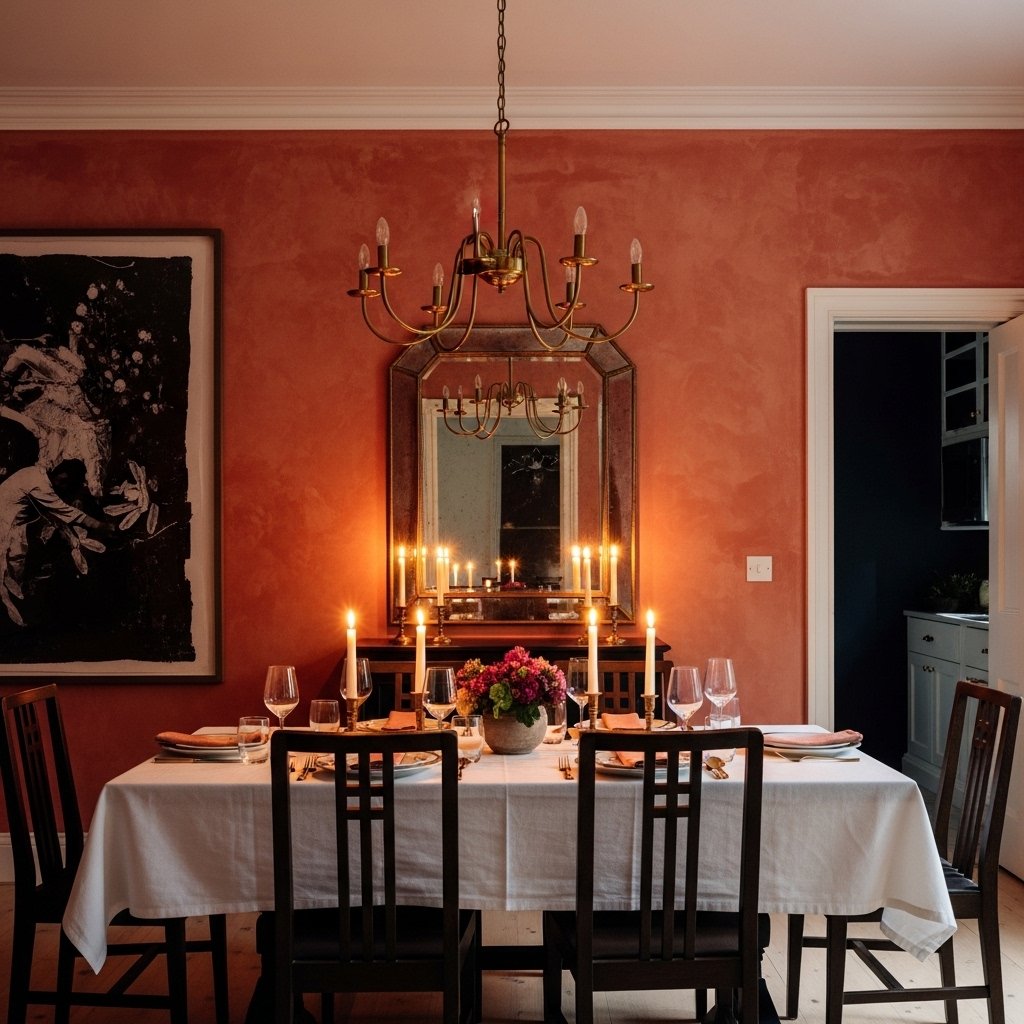
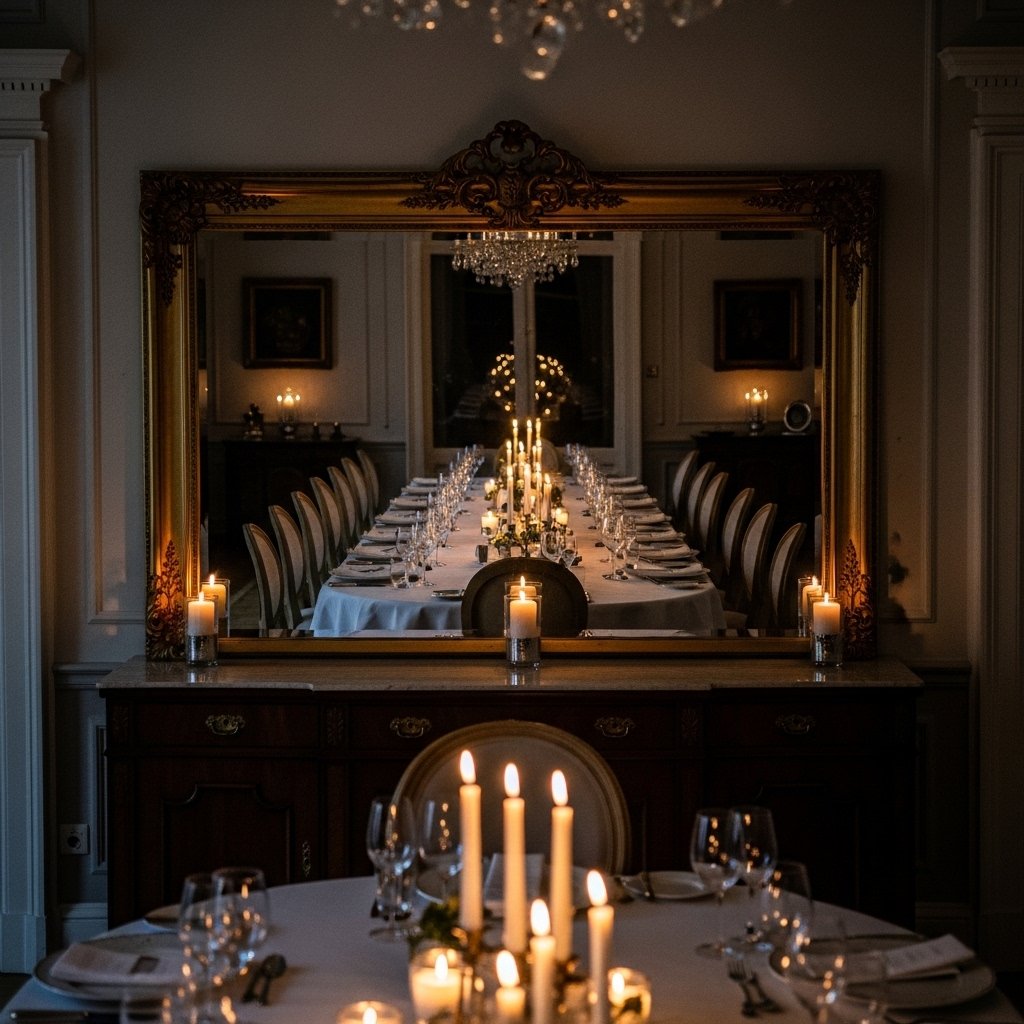
A large mirror on a dining room wall does three things simultaneously: it reflects the table and its setting, doubles the perceived room depth, and brings additional light sources, candles, chandelier, and windows, into the room from their reflection.
A mirror above a dining room sideboard or on the wall opposite a window creates a secondary visual center that gives the room architectural depth it may not have structurally.
The frame is the design decision. An ornate gold or carved timber frame suits a formal dining room. A simple thin black metal frame suits a contemporary one. A frameless mirror in a large format suits a minimal approach.
Scale it generously. A dining room mirror that fills most of a wall, 1.5–2 meters wide, works in a way that a smaller mirror positioned in the same space does not.
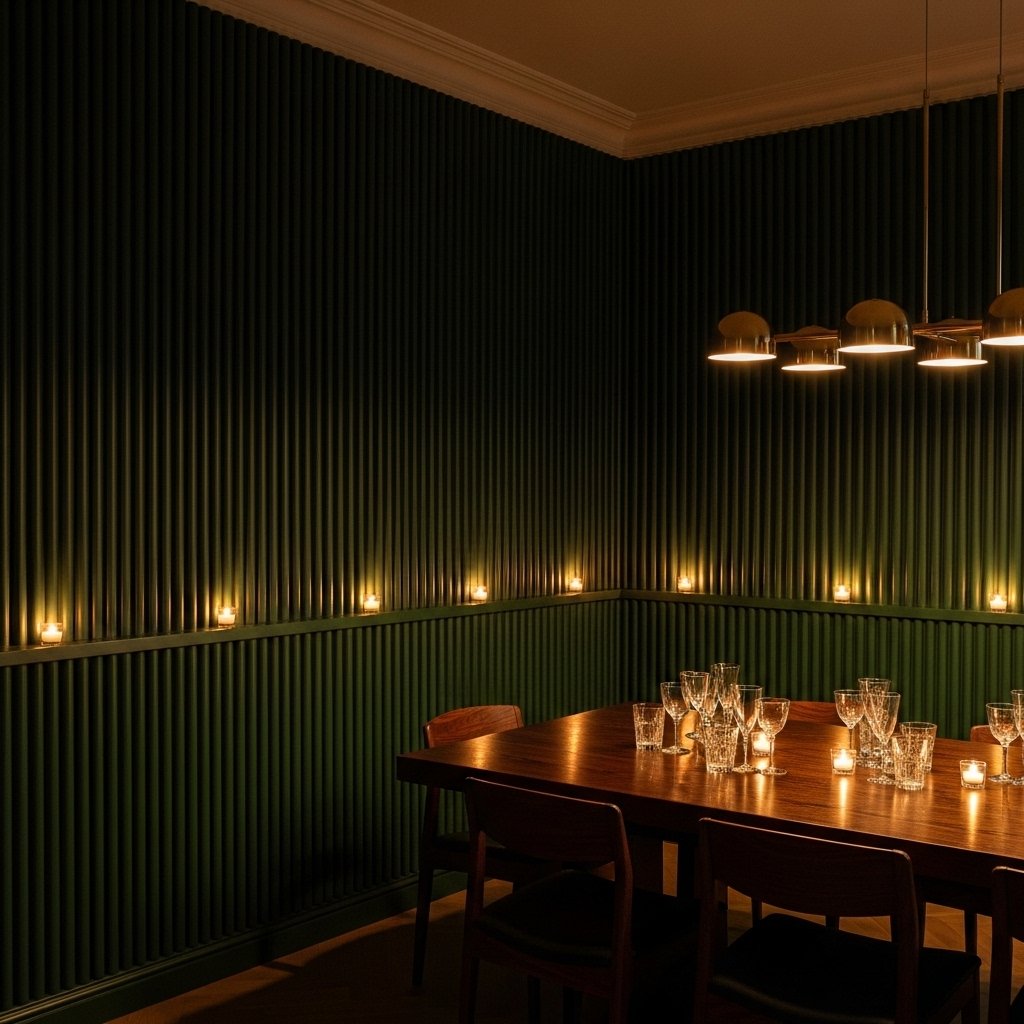
2. Full-Height Textured Wall Panelling
Architectural wall panelling in a dining room adds dimensional character that paint alone, regardless of color, cannot provide.
Full-height fluted panelling, applied moulding panels in a grid pattern, or bespoke joinery panelling create a dining room wall that reads as architecturally designed rather than merely decorated. The shadow lines of the panel profiles create visual interest that responds to changing light throughout a dinner.
Painted in a deep, saturated tone, forest green, inky navy, charcoal, or deep burgundy, with the panel profiles picked out in a slightly lighter tone or in a warm metallic, the panelled dining room wall becomes the most photogenic and atmospheric surface in the home.
3. An Oversized Piece of Art Sized to the Wall
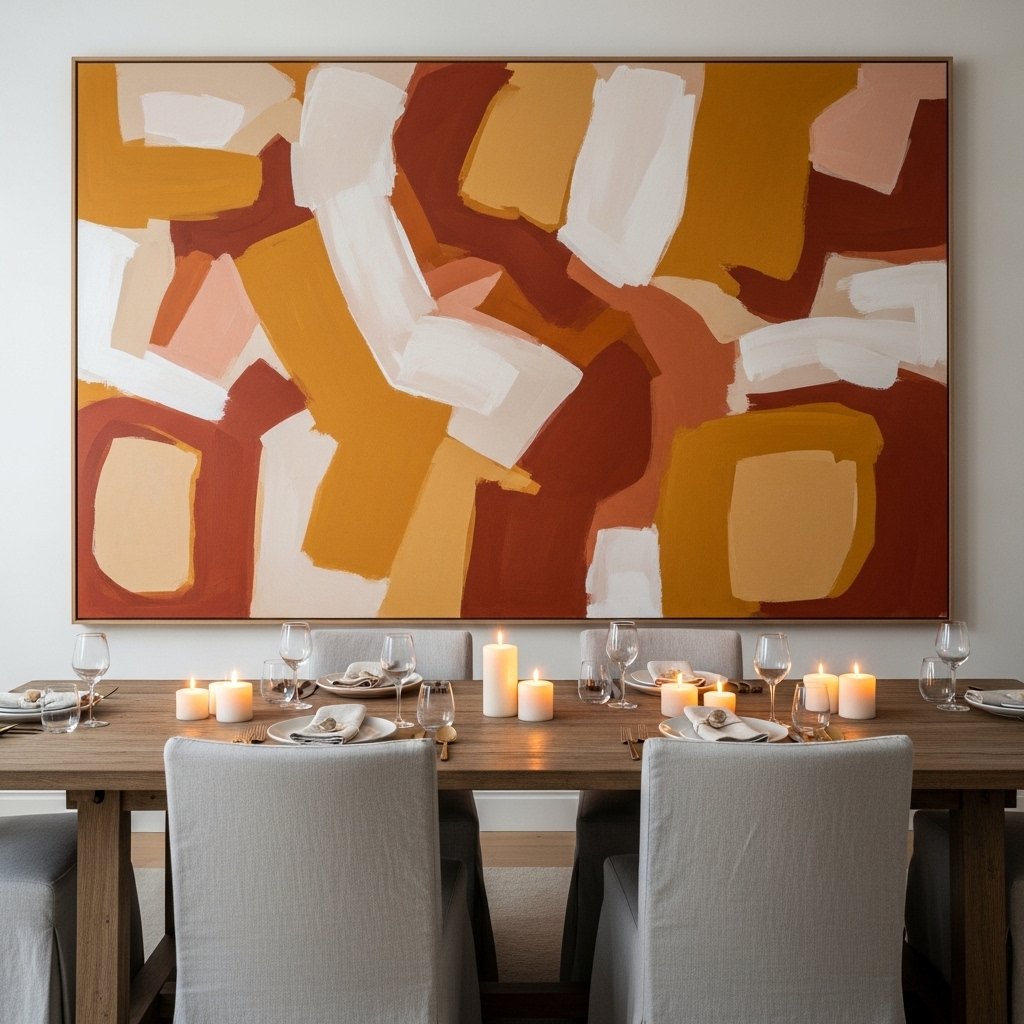
In a dining room, art on the wall must compete with the table, the chairs, the chandelier, and the people seated around it. A small piece of art loses this competition entirely.
An oversized artwork, a canvas or framed piece that fills a significant portion of the wall behind the dining table or sideboard, commands the room with sufficient authority to serve as the visual anchor of the space.
The art should be abstract or landscape rather than portrait photography or figurative work in a dining room context. Figurative work on dining room walls creates the uncomfortable sensation of being watched during a meal. Abstract and landscape work creates atmosphere without audience.
The frame, if present, should be chosen with the dining room’s other finishes in mind. The art is part of the room’s material and color story.
4. A Gallery of Botanical Prints
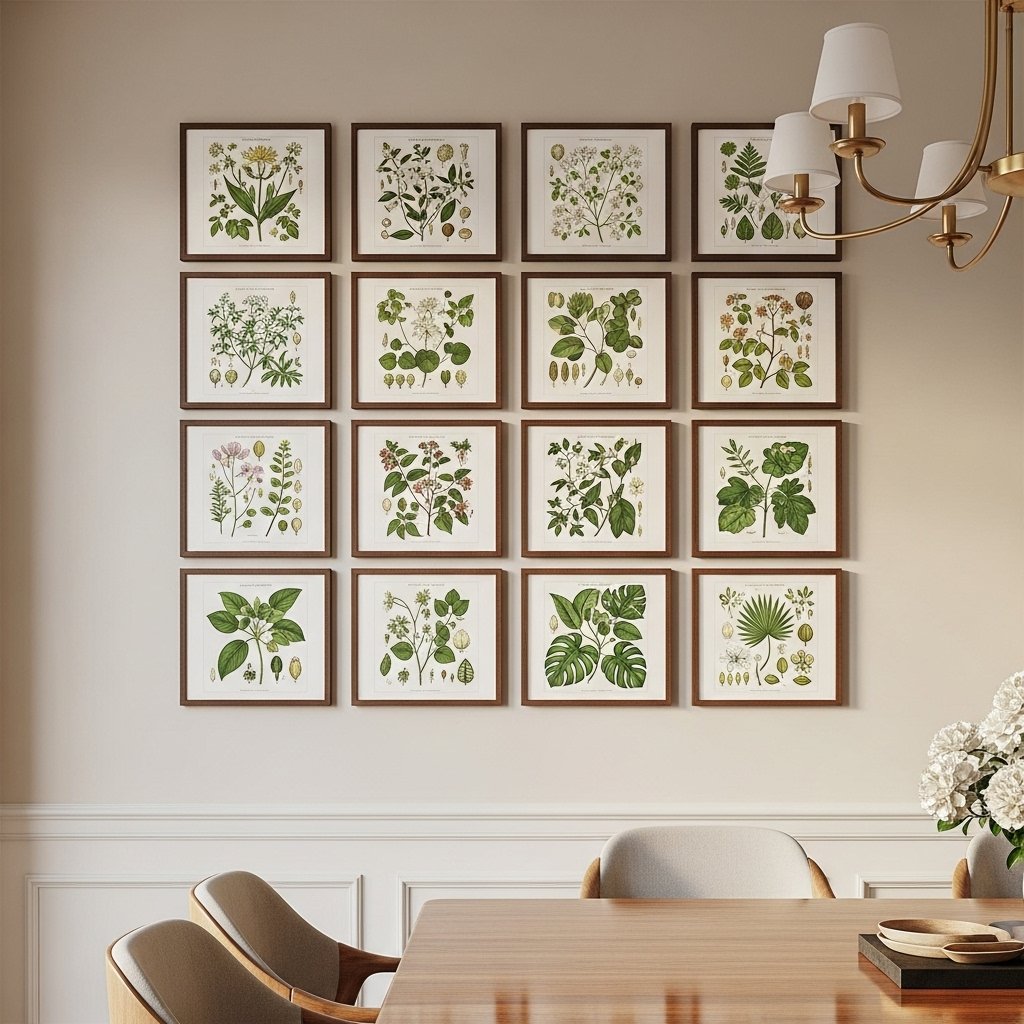
Botanical prints in a dining room are among the most enduringly beautiful and contextually appropriate wall treatments available. The reference to natural growth and the organic world suits a room dedicated to food and nourishment.
A collection of vintage or contemporary botanical prints in consistent frames, all black, all gold, or all natural timber, arranged in a grid or organic grouping creates a display with genuine visual richness and cultural reference.
The print selection can be thematic: all herbs and vegetables for a kitchen-dining room, all tropical plants for a bold contemporary dining room, all wildflowers for a romantic or country-influenced space.
Sourcing vintage botanical prints from antique markets, auction platforms, or online print archives is cost-effective and produces genuinely beautiful, unique pieces rather than reproductions.
5. A Deep, Rich Wall Color
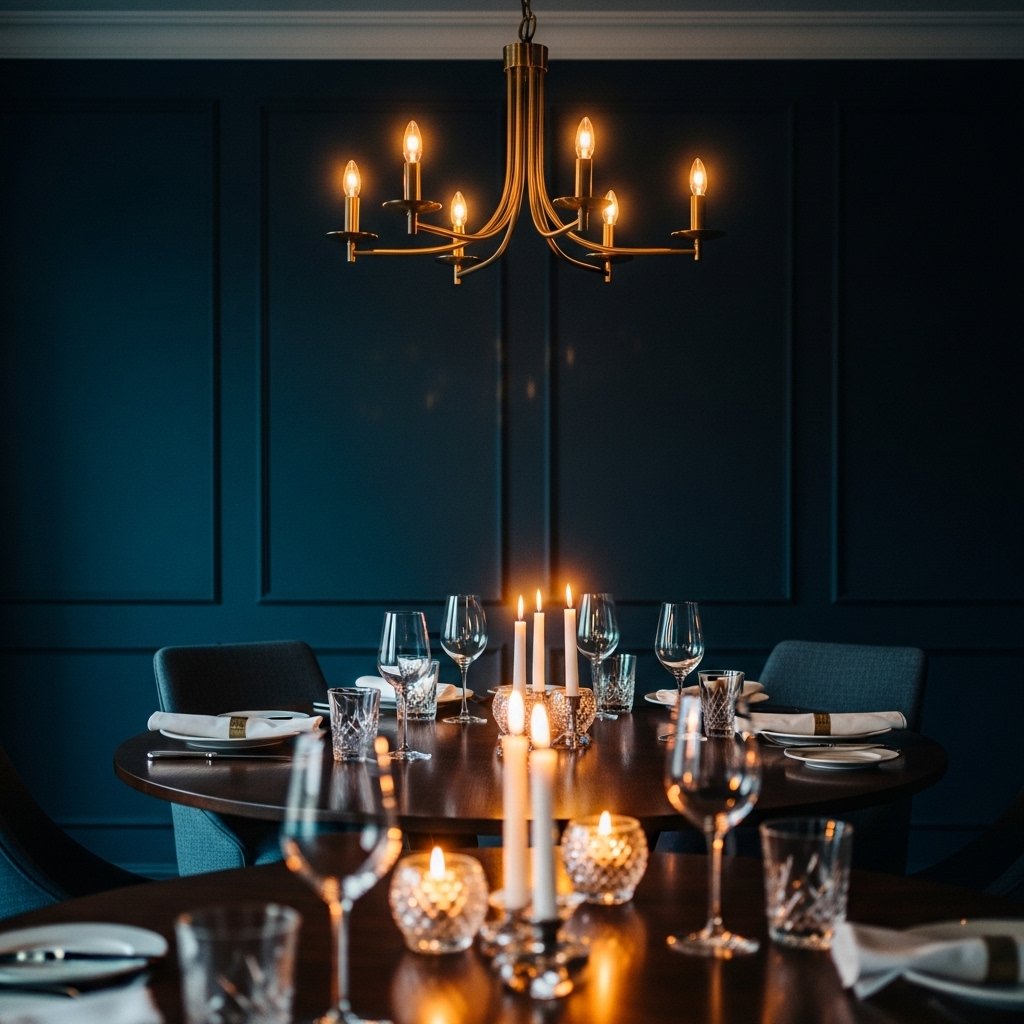
The dining room is the one room in a home where a deeply saturated, potentially dark wall color performs at its absolute best.
Deep forest green, inky navy, rich burgundy, warm charcoal, and deep terracotta all create a dining room atmosphere that envelops rather than simply surrounds. The walls recede and the table, the food, the candles, and the people at the table advance.
Dark dining room walls are unfailingly atmospheric at dinner. The candlelight and chandelier light reflect differently off deep color than off white, creating a warmth and dimension that white walls completely lack in the same lighting conditions.
The darker the wall, the more important the lighting quality. A dark dining room with poor lighting feels oppressive. The same dark room with warm, layered, well-directed light feels like a private club.
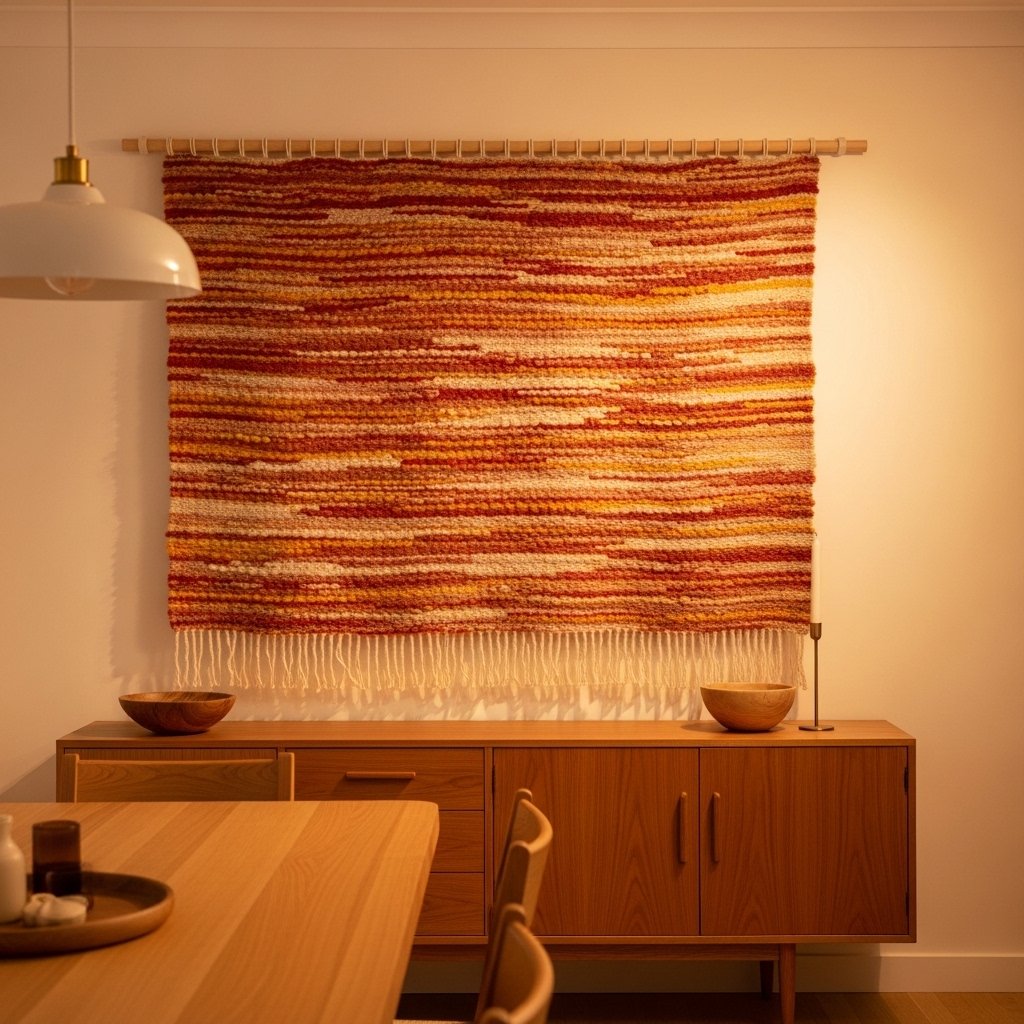
6. Woven Textile Wall Hangings
A large woven textile wall hanging in a dining room adds warmth, texture, and acoustic softness that hard wall treatments cannot provide.
A dining room with hard walls, hard floor, and hard furniture has acoustic problems: conversation is difficult above a certain table size because sound reflects everywhere. A large textile on one wall absorbs sound and makes conversation at the table easier, a functional benefit in addition to an aesthetic one.
A hand-woven textile in natural fibers, wool, cotton, or linen, in the dining room’s color palette, hung from a timber or brass rod, creates a focal wall that is warm, personal, and genuinely beautiful.
Source from independent weavers and textile artists. A large hand-woven piece from a maker whose work is genuinely considered communicates cultural engagement that a mass-produced alternative never does.
7. Sconces That Provide Both Light and Wall Decoration
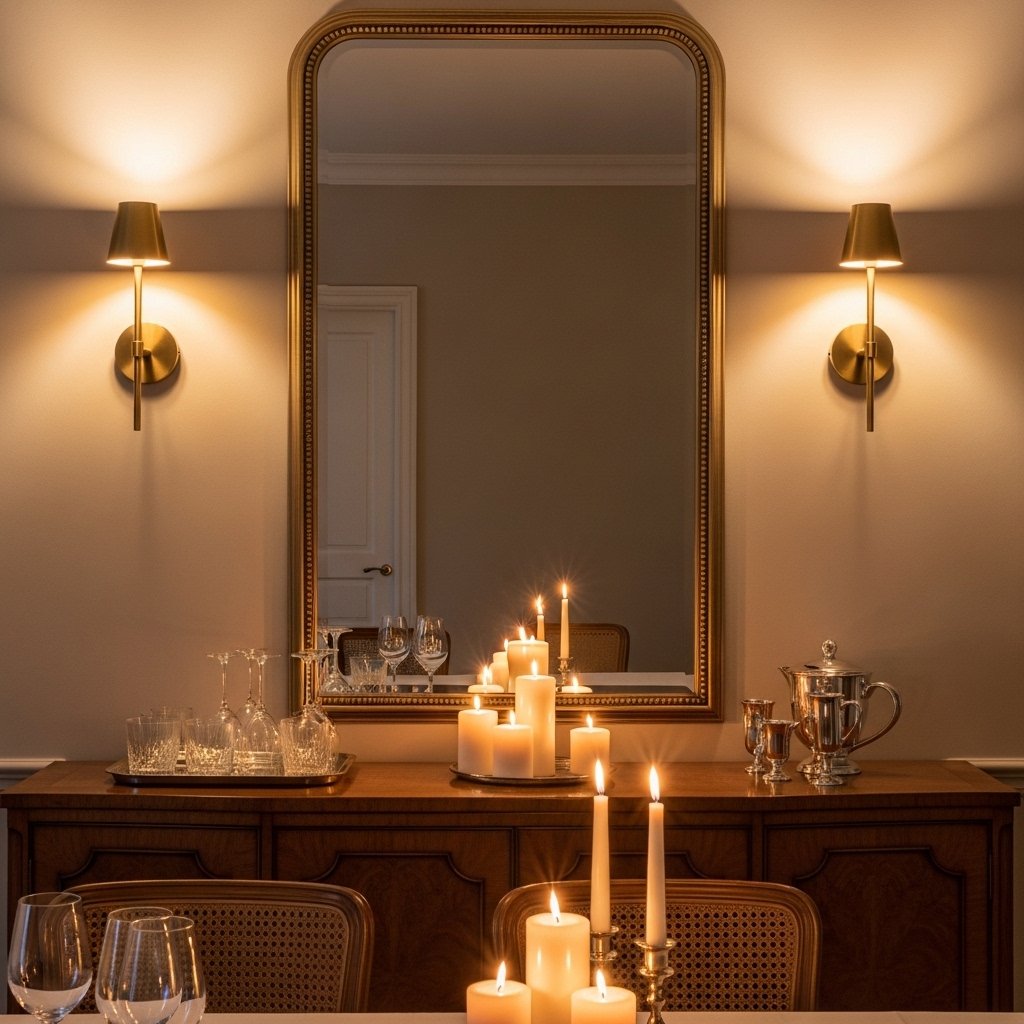
Wall sconces in a dining room serve two purposes simultaneously: they are light fixtures and they are wall decorations. Choosing sconces that earn both roles is more demanding than choosing an object for one purpose.
Sconces positioned on either side of a mirror, flanking a piece of art, or distributed at regular intervals along the dining room wall at approximately seated eye level provide warm, directional light that supplements the chandelier overhead and creates a layered light environment.
The sconce design should coordinate with the chandelier. The same metal finish, a similar design language, or a complementary material creates a cohesive fixture program that reads as designed rather than assembled.
Plug-in sconces with a concealed cord in a painted channel allow wall sconce installation in a dining room without electrical rewiring.
8. A Built-In Display Cabinet Wall
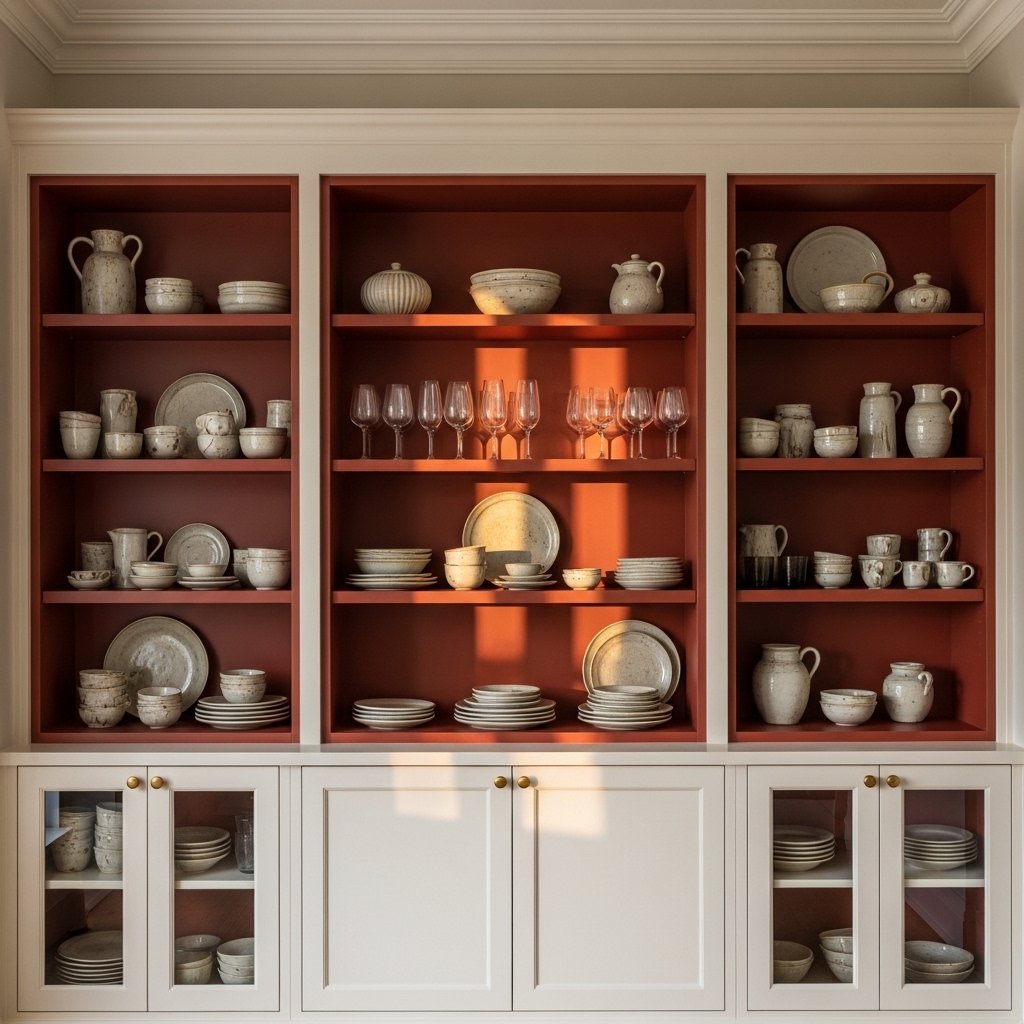
A full wall of built-in display cabinetry in a dining room serves as both furniture and architecture. It provides storage, display space, and a completely designed wall surface simultaneously.
Open shelving sections display ceramics, glassware, and decorative objects. Closed cabinet sections store table linens, serving pieces, and items not beautiful enough to display. Glass-fronted cabinet sections allow display with protection.
The interior of open shelving sections, painted a contrasting deep color or covered in a textured wallpaper, creates depth and makes displayed objects appear more vivid and more intentional.
A built-in display cabinet wall removes the need for separate furniture pieces on the dining room wall, creates a unified architectural treatment, and provides the display opportunity that a dining room’s collection of beautiful objects deserves.
9. Dramatic Wallpaper on One Wall
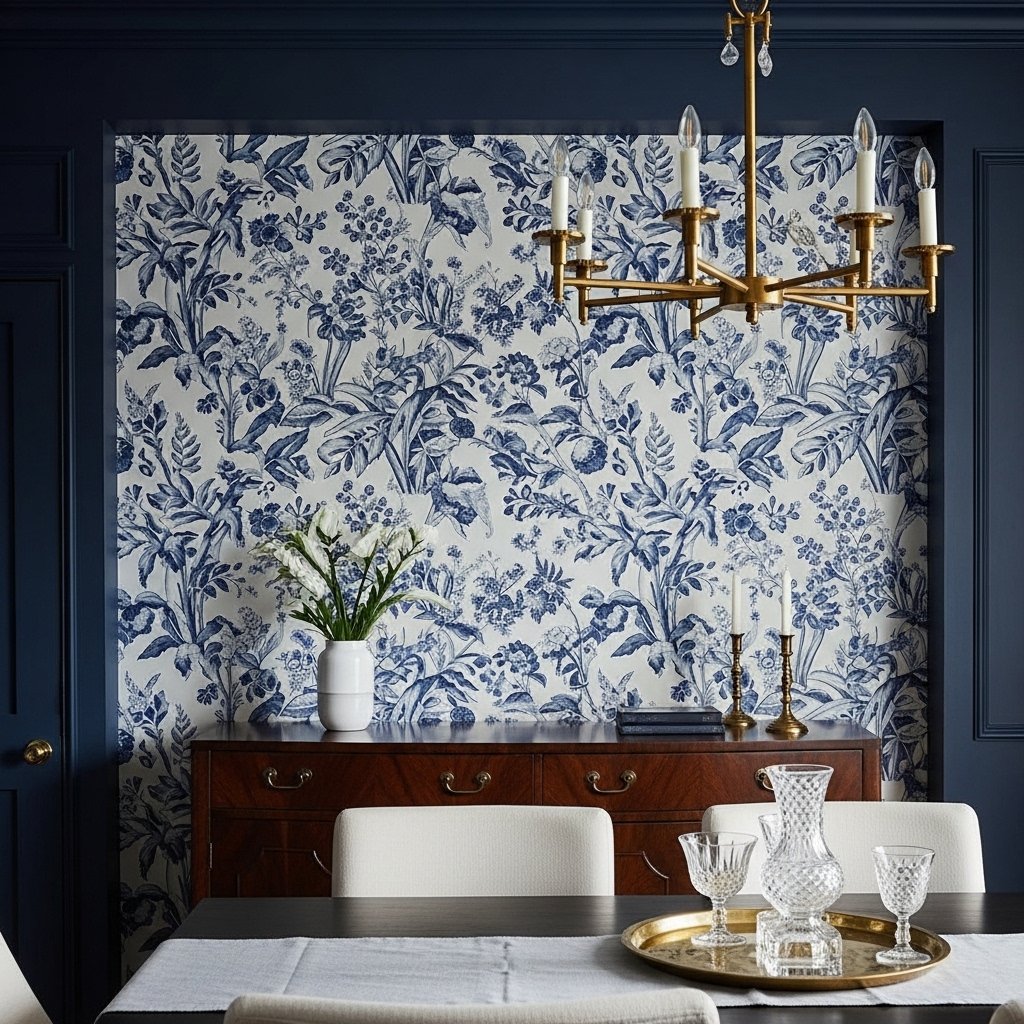
Wallpaper in a dining room has an appropriateness that it lacks in some other contexts. The dining room is used for specific events rather than continuously, which means a bold, dramatic wallpaper is encountered with enough frequency to remain interesting rather than becoming background noise.
A large-scale botanical print, a maximalist chinoiserie pattern, an abstract mural, or a textured grasscloth wallpaper on the wall behind the dining sideboard or behind the head of the table creates a backdrop that makes every meal feel like it is happening somewhere specific and beautiful.
The wallpaper wall should work with the other three walls rather than against them. A dramatic patterned wallpaper on one wall with deep solid-tone walls on the others creates a composed room. The same pattern on all four walls creates a room that cannot be sat in quietly.
10. A Vintage Map or Blueprint Wall
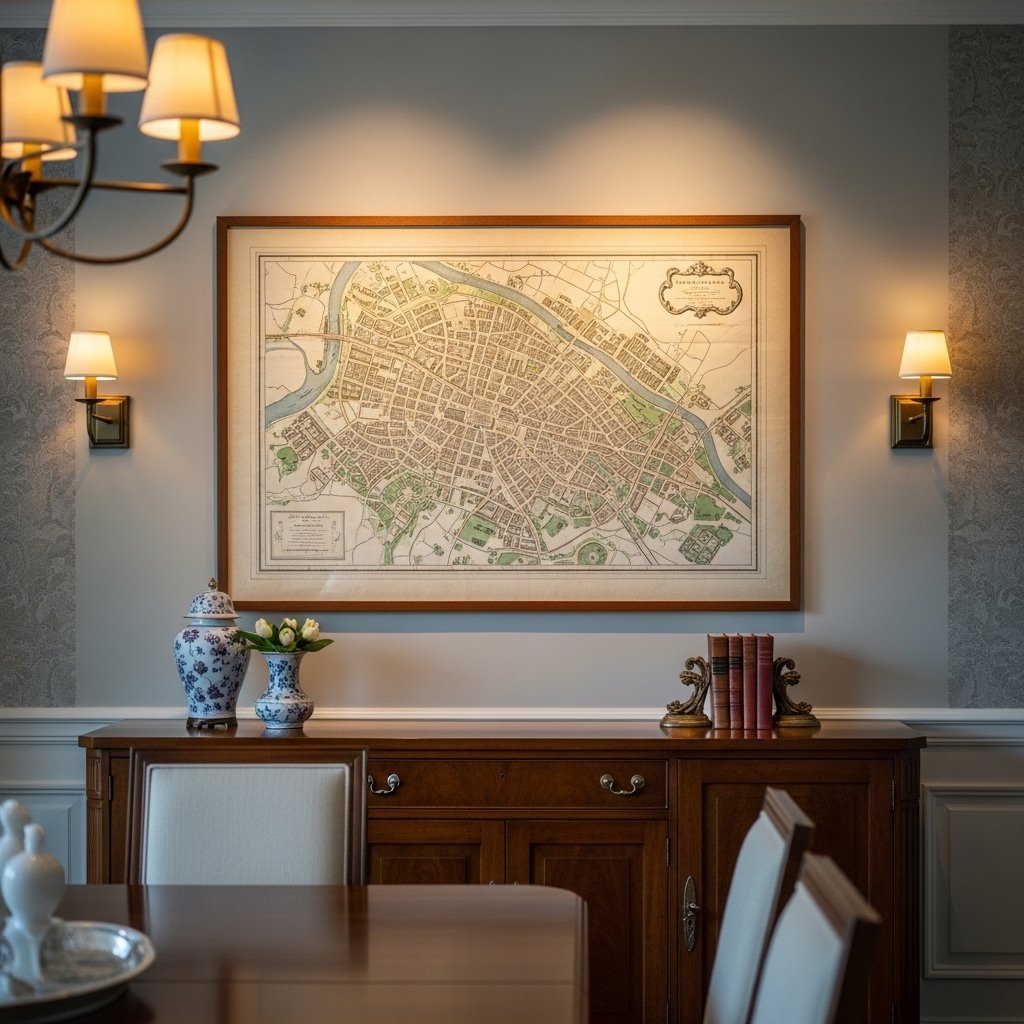
A large vintage map, an architectural blueprint, a historical city plan, or a hand-drawn geographical illustration framed at a generous scale creates a wall piece with cultural depth and visual detail that rewards sustained attention.
A 19th century city map, hand-engraved and printed on aged paper, framed in a thin dark frame and hung at a size appropriate to the dining room wall, brings history, geography, and genuine craft into the room. Guests at a long dinner spend time with it in a way that abstract art does not invite.
Source original vintage maps from specialist map dealers, antique markets, or auction platforms. A genuine vintage map has a quality of line and a patina of age that high-quality reproductions approximate but do not replicate.
Ensure the frame and the map are in correct proportion. A map that is too small for its frame looks apologetic. A map that fills its frame with a modest border looks authoritative.
11. An Indoor Climbing Plant Feature Wall
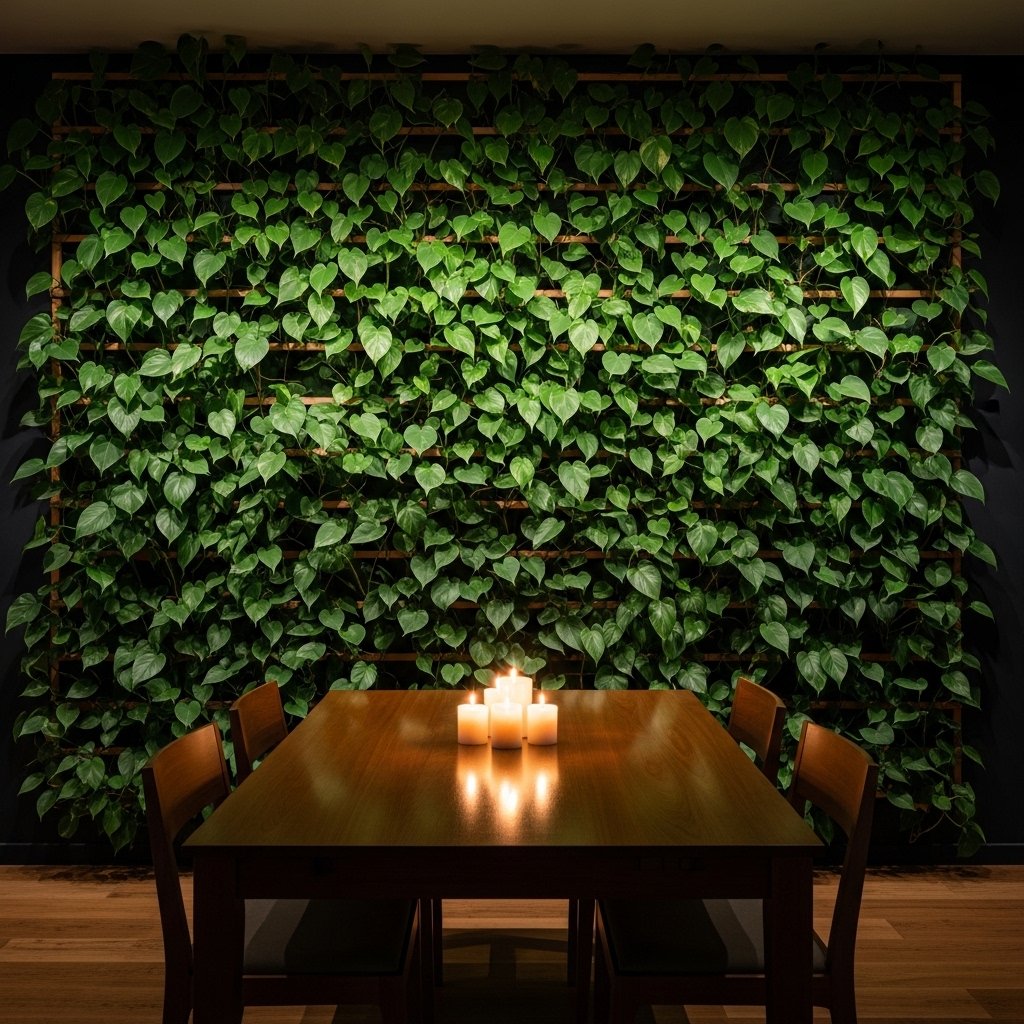
A climbing plant allowed to grow across a dining room wall creates the most dramatic and most alive wall treatment available. It is also the most patient, requiring planning and time rather than an installation team.
A timber trellis or wire grid fixed to the dining room wall provides a structure for a climbing plant to follow. Climbing plants suited to indoor environments in reasonable light: philodendron micans, pothos in climbing rather than trailing form, and climbing ficus all grow steadily and cover a trellis over a period of months.
The dining room wall becomes progressively more beautiful as the plant fills in. The texture, color, and growth of the living wall changes seasonally and responds to the room’s light quality.
This is the longest-term dining room wall treatment idea available. It is also the most unique. No two climbing plant walls are ever identical.
12. A Collection of Mirrors in Mixed Sizes
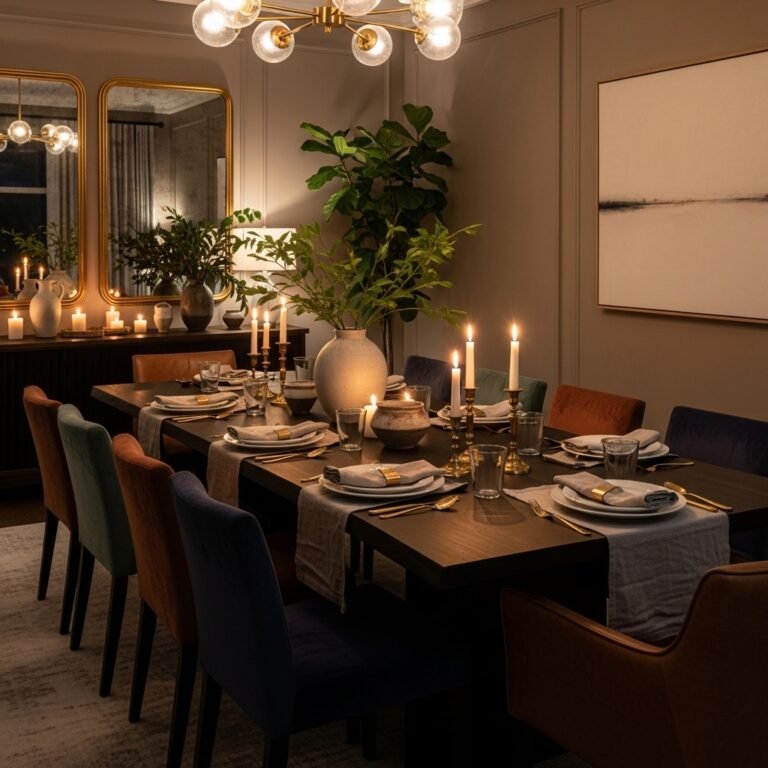
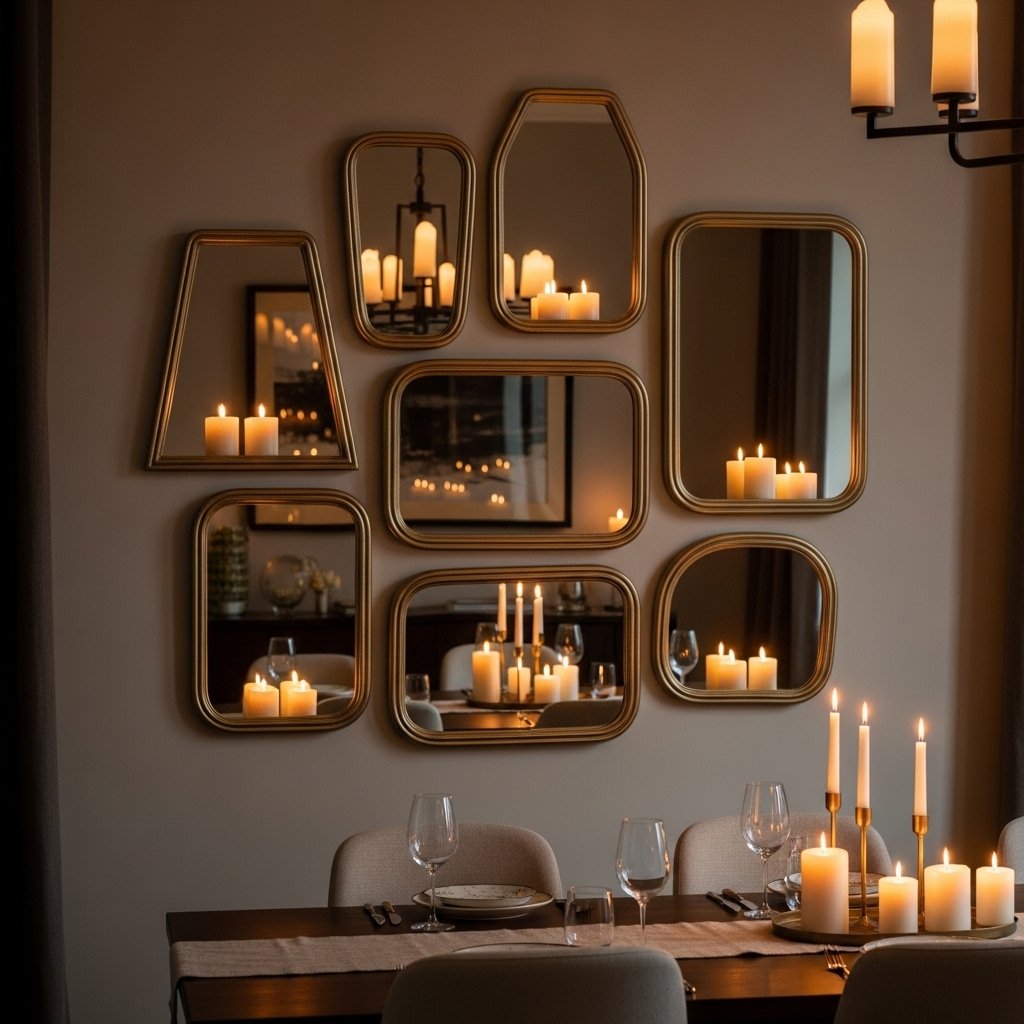
A collection of mirrors in different sizes, shapes, and frames arranged on a dining room wall creates a display with the layered visual richness of a gallery wall while multiplying the room’s light and depth simultaneously.
Round mirrors beside octagonal mirrors beside arched mirrors beside small square mirrors. The variety of shapes creates visual interest. Consistent frame finish, all gold, all black, or all dark timber, provides the organizing principle that prevents the arrangement from becoming chaotic.
The collection of mirrors amplifies the candles and chandelier light across multiple reflective surfaces simultaneously. A dining room with multiple mirrors lit by candles at dinner creates a magical light environment that a single mirror or no mirrors does not approach.
13. Limewash Color Washed to Create Depth
The limewash wall treatment applied to a dining room creates a surface quality that no standard paint achieves: depth, variation, and an organic warmth that changes character as the light moves through the day and evening.
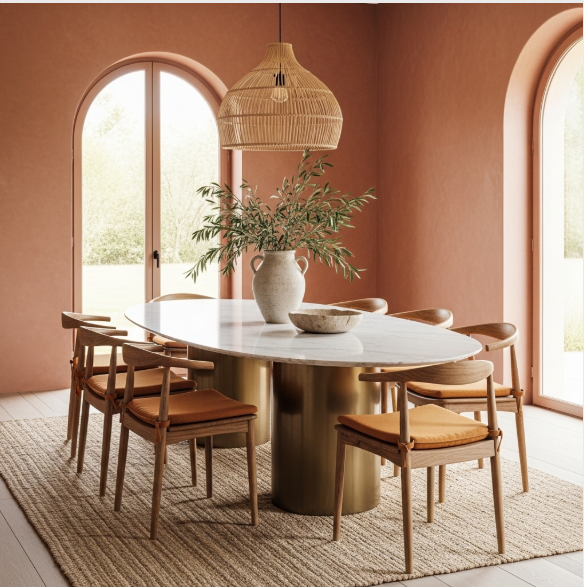
Applied over a colored base, limewash creates a surface that reads as two or three different tones simultaneously depending on viewing angle and light direction. A terracotta limewash in candlelight at a dinner table creates a wall that appears to glow from within.
The application technique that produces the best dining room result: a base coat in a color one or two shades deeper than the desired final tone, followed by two or three thin limewash layers applied with a wide natural bristle brush in overlapping cross-strokes. The cross-stroke application creates the characteristic movement and depth.
This treatment applied to the dining room’s four walls creates a dining environment with the atmosphere of a Tuscan farmhouse or a Moroccan riad depending on the base color chosen.