14 Classy Dining Room Ideas: Timeless Elegance for Every Home
The dining room is more than just a place to eat — it is the heart of the home where memories are made, conversations linger long after the last bite, and the art of gathering is celebrated. A truly classy dining room transcends fleeting trends, drawing instead from enduring principles of design: balance, proportion, quality materials, and a sense of occasion. Whether you live in a grand estate or a modest apartment, timeless elegance is never out of reach. It is found in the careful selection of a chandelier, the weight of a linen napkin, the warmth of candlelight bouncing off polished wood. The following fourteen ideas distill centuries of refined interior design into actionable inspiration, each one rooted in classic aesthetics yet entirely livable for the modern world. From the grandeur of European formality to the quiet sophistication of Japandi minimalism, these concepts will help you create a dining room that feels elevated, intentional, and enduringly beautiful — a space that will never look dated, no matter what decade you find yourself in.
1. The Oval Mahogany Pedestal Table
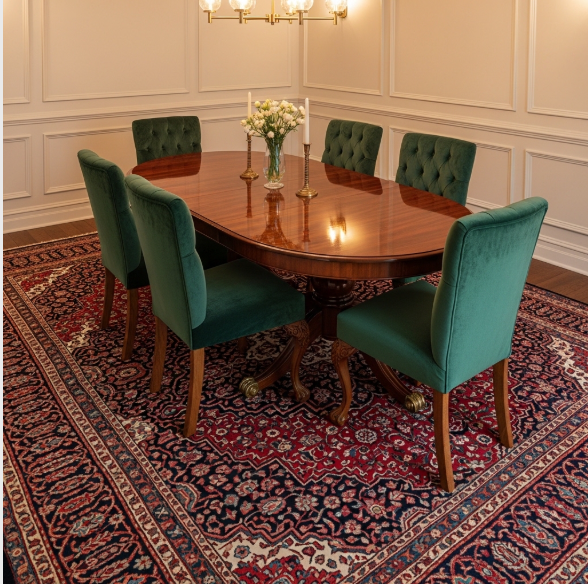
There is something inherently aristocratic about an oval pedestal table in rich mahogany. Without legs cluttering the corners, seating flows naturally around the table, making conversation effortless and the room feel more generous. Pair it with upholstered dining chairs in a deep emerald or burgundy velvet, and you have a centrepiece that anchors the entire room with quiet authority. A large Persian rug beneath grounds the arrangement while adding warmth and pattern. This combination has graced elegant dining rooms for over two centuries and shows no sign of losing its appeal.
2. The Classic White and Gold Palette
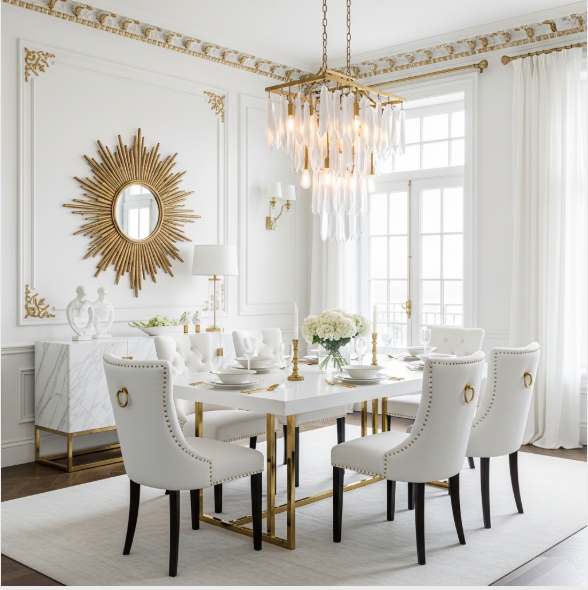
White and gold is one of the most enduringly glamorous colour combinations in interior design. In a dining room, this palette communicates refinement without cold sterility — especially when layered thoughtfully. Think white plaster walls with gold-leaf cornice moulding, a gilded mirror above a marble sideboard, white linen chairs with gold nail-head trim, and bone china on the table. The trick is to let the white breathe and use gold as an accent, not a wallpaper. Natural light amplifies the luminosity of this scheme beautifully during the day, while candlelight makes it positively radiant at night.
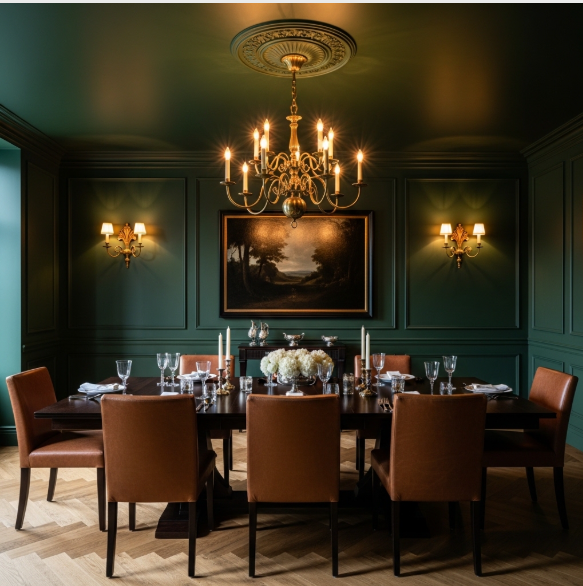
3. Dark and Dramatic — The Jewel-Box Dining Room
One of the most transformative moves in dining room design is committing to a dark, enveloping colour on all four walls and the ceiling. Deep navy, forest green, charcoal, or even black create a jewel-box effect that makes the room feel intimate, sophisticated, and deliberately theatrical — perfect for evening entertaining. Against a dark backdrop, brass hardware gleams, glassware sparkles, and floral centrepieces pop with extraordinary vibrancy. Far from feeling oppressive, a well-lit dark room feels like stepping into a private club: exclusive, warm, and utterly memorable
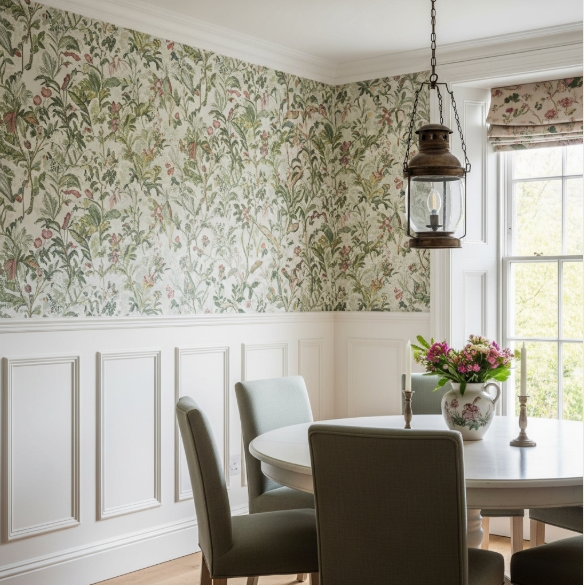
4. The Wainscoting and Wallpaper Wall
Combining wainscoting on the lower half of the wall with elegant wallpaper above is a classic architectural detail that instantly elevates a dining room. The wainscoting — typically in white or soft white — provides a crisp, structural foundation, while the wallpaper above adds personality, pattern, and depth. Chinoiserie, botanical prints, and damask patterns are timeless choices. A chair rail at the transition point finishes the composition neatly. This treatment adds architectural gravitas to even a plain rectangular box of a room and is one of the most cost-effective ways to achieve a truly luxurious interior.
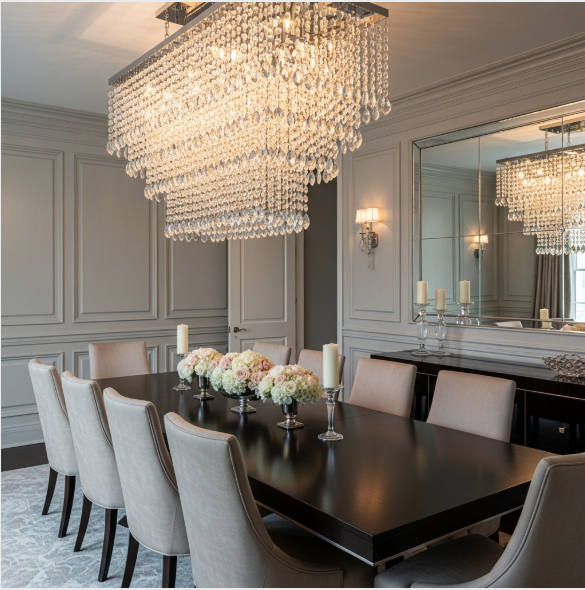
5. The Statement Chandelier as Focal Point
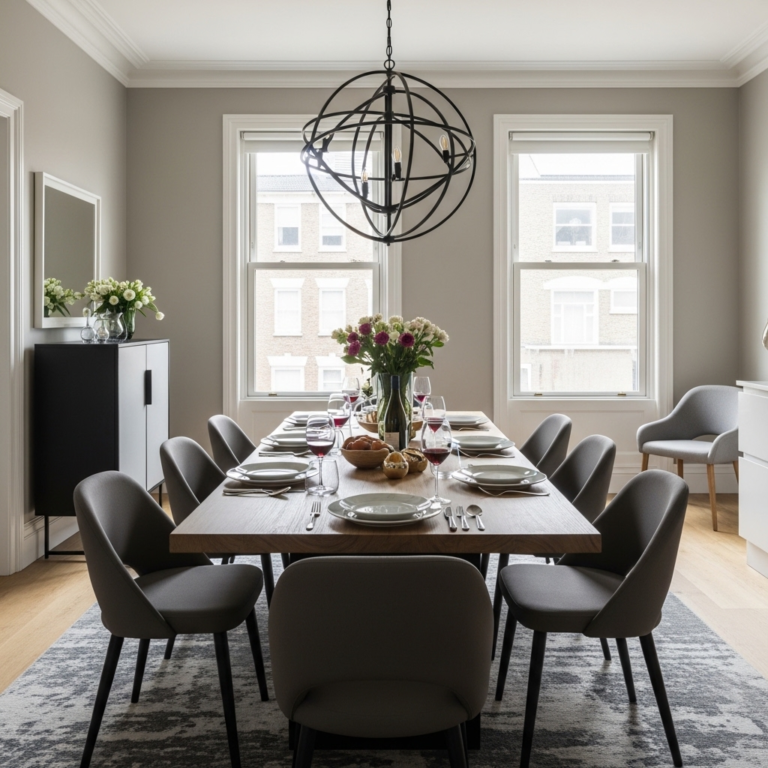
In a classy dining room, the chandelier is not merely a light fixture — it is a declaration of intent. A sculptural, oversized chandelier commands the room and sets the entire tone of the design. Whether it is a cascading crystal fixture dripping with Swarovski-style drops, a wrought-iron candelabra style, a modern branching form in blackened steel, or a drum shade in pleated linen, the chandelier should always feel slightly more generous than you think necessary. Hung at the right height — approximately 30 to 36 inches above the tabletop — it creates an intimate canopy of light that defines the dining experience.
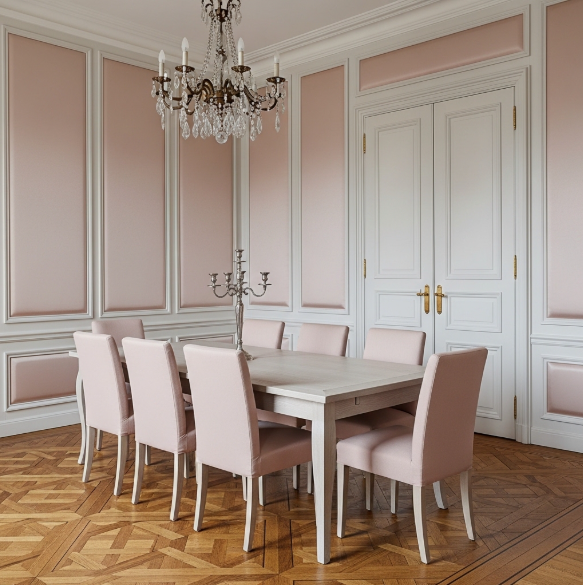
6. Upholstered Walls for Acoustic Elegance
Fabric-panelled or upholstered walls are one of the most underused yet supremely sophisticated treatments in classical interior design. Used extensively in European palace dining rooms and private members’ clubs, upholstered walls do two remarkable things: they add extraordinary textural richness, and they absorb sound, making dinner conversation feel more intimate and refined. Silk moiré, velvet, or fine wool in neutral tones work beautifully. Frame each panel with slim painted wooden moulding for a structured, tailored look. Combined with a parquet floor, antique furniture, and soft lighting, the effect is quietly breathtaking.
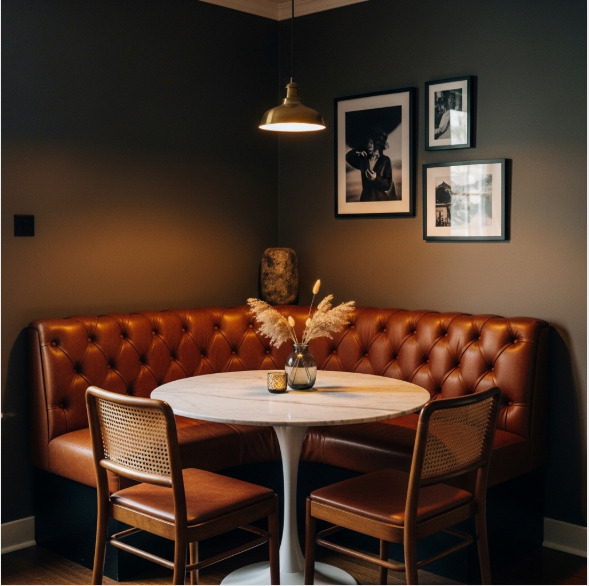
7. The Banquette Corner with Built-In Drama
A built-in banquette transforms a dining room from functional to truly special. Modelled after the intimate booth seating of classic Parisian brasseries and grand hotel restaurants, a corner or full-wall banquette in a rich upholstered fabric creates a sense of enclosure and comfort that freestanding chairs simply cannot replicate. Pair it with a round pedestal table and two or three elegant occasional chairs opposite for balance. The banquette can be upholstered in buttoned leather, velvet, or a durable woven fabric, and its back cushions can introduce pattern and colour into an otherwise restrained scheme.
8. The Symmetrical Sideboard Vignette
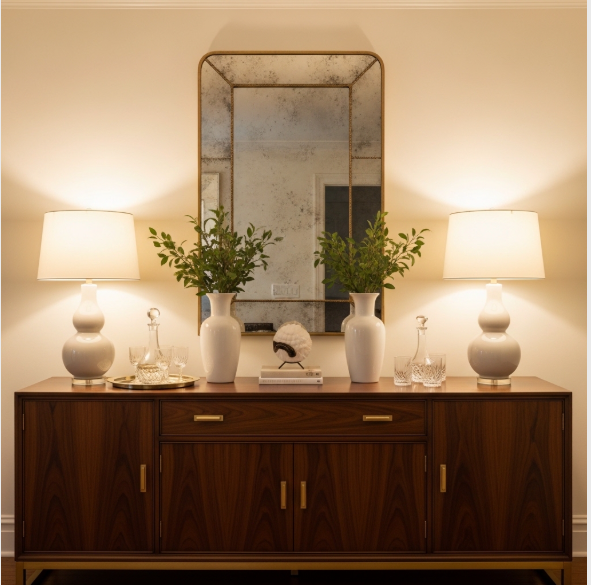
Symmetry is a fundamental principle of classical design and nowhere does it read more elegantly than in the dining room. A substantial sideboard — in dark wood, lacquer, or marble — flanked by two identical table lamps, two matching framed artworks or sconces, and styled with balanced decorative objects creates a vignette of composed beauty that anchors the room. The sideboard serves both practical and aesthetic purposes: it houses tableware and linens while providing a surface for considered styling. A large mirror or a statement piece of art hung centrally above completes the composition.
9. Natural Stone and Earthy Luxury
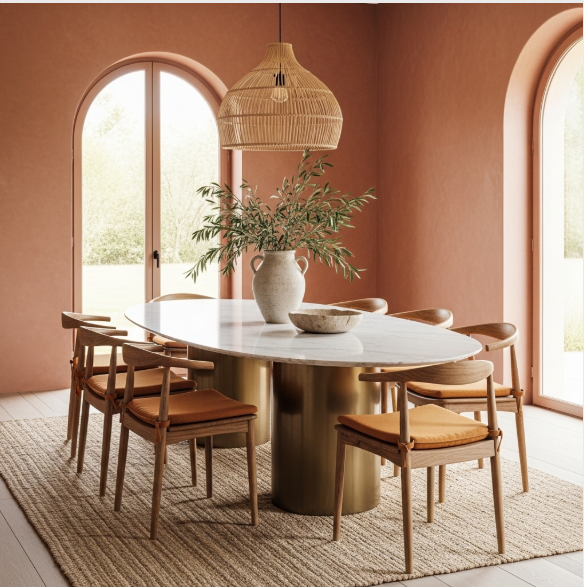
The use of natural stone brings a timeless, geological permanence to a dining room that no manufactured material can quite replicate. A marble or travertine dining table top — whether in classic Calacatta white, warm Emperador brown, or graphic Nero Marquina black — immediately conveys substance and quality. Complement the stone with other natural materials: linen upholstery, aged oak chairs, a jute rug, terracotta plaster walls. This earthy, organic approach to luxury is rooted in Mediterranean and Italian design traditions and has the rare quality of looking more beautiful, not less, as it ages.
10. Floor-to-Ceiling Curtains and Drapery
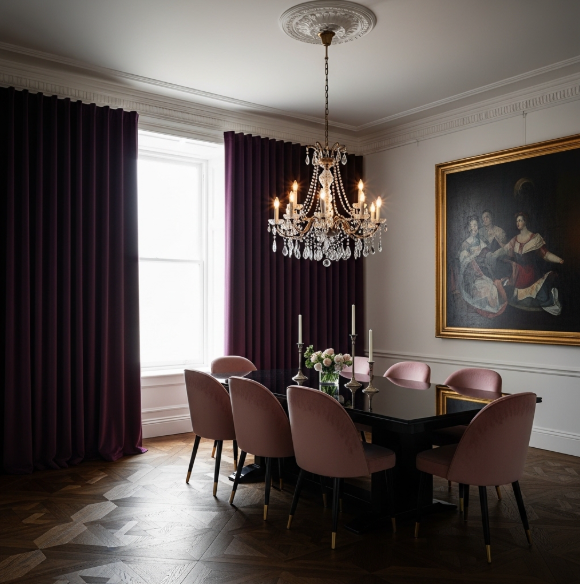
Nothing elongates and dramatises a dining room quite like floor-to-ceiling curtains hung from rods mounted close to the ceiling cornice. This treatment makes ceilings feel higher, windows feel grander, and the entire room feel more luxurious — even if the windows themselves are modest in size. For a timeless result, choose heavy fabrics: velvet, silk dupioni, thick linen, or interlined cotton. Classic colours such as deep plum, forest green, teal, or warm champagne never date. Puddle them slightly on the floor for maximum drama, or have them hang cleanly just kissing the floor for a more tailored, contemporary formality.
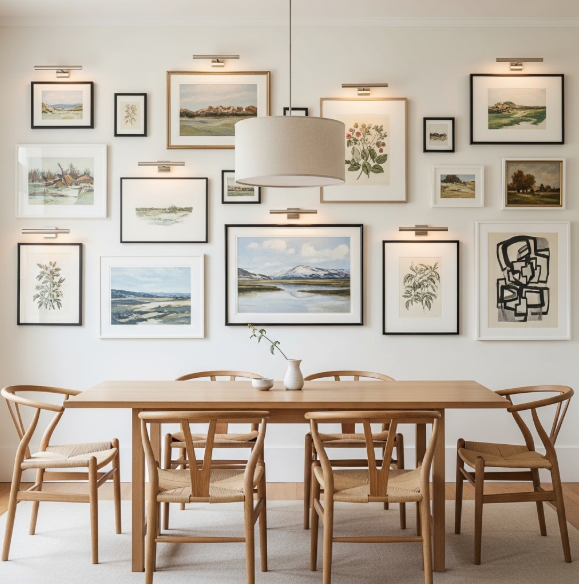
11. The Art-Filled Gallery Dining Room
Treating the dining room as a gallery space — where art is the primary design element — is a mark of true sophistication. Lining the walls with a considered collection of artworks in varying sizes and frames creates a room that tells a story and rewards close attention. The trick is to choose frames in a consistent finish (all gilt, all black, all natural wood) to create cohesion among diverse artworks. Keep everything else in the room relatively restrained — a simple table, clean-lined chairs, neutral walls — so the art can speak. Picture lights mounted above each piece add a museum-like gravitas.
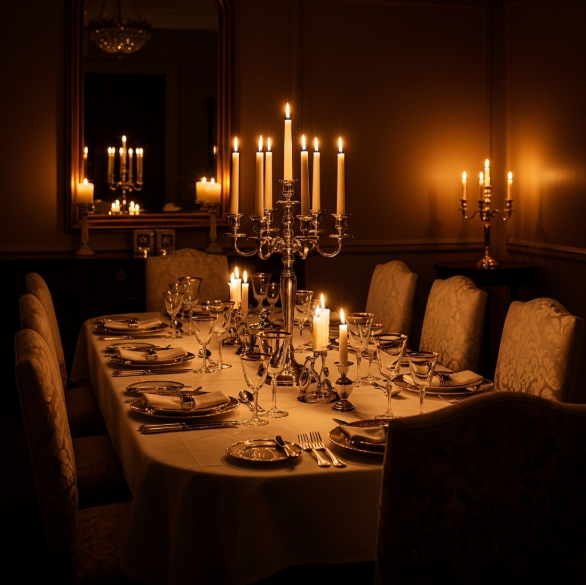
12. Candlelight and the Art of the Table
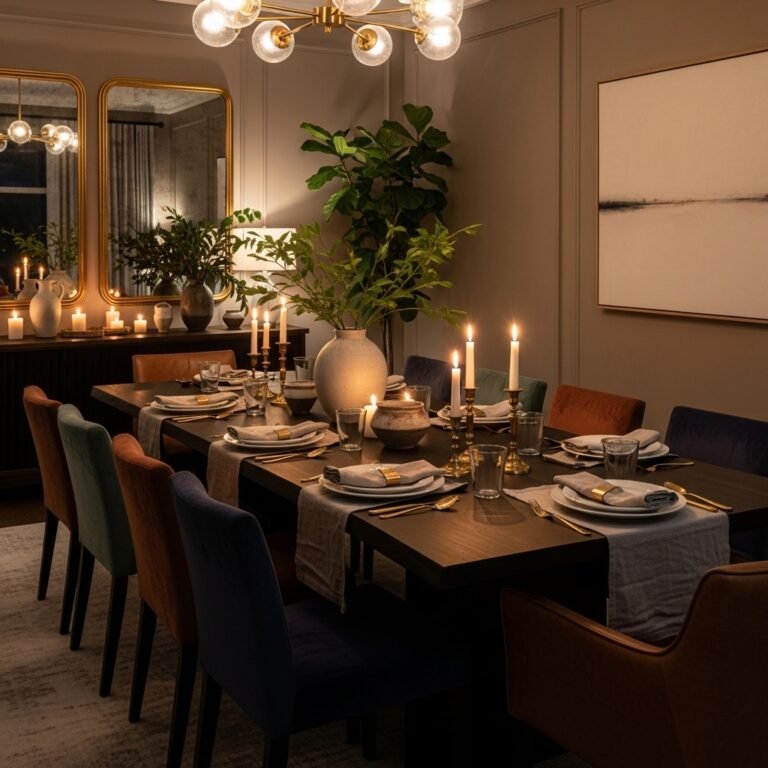
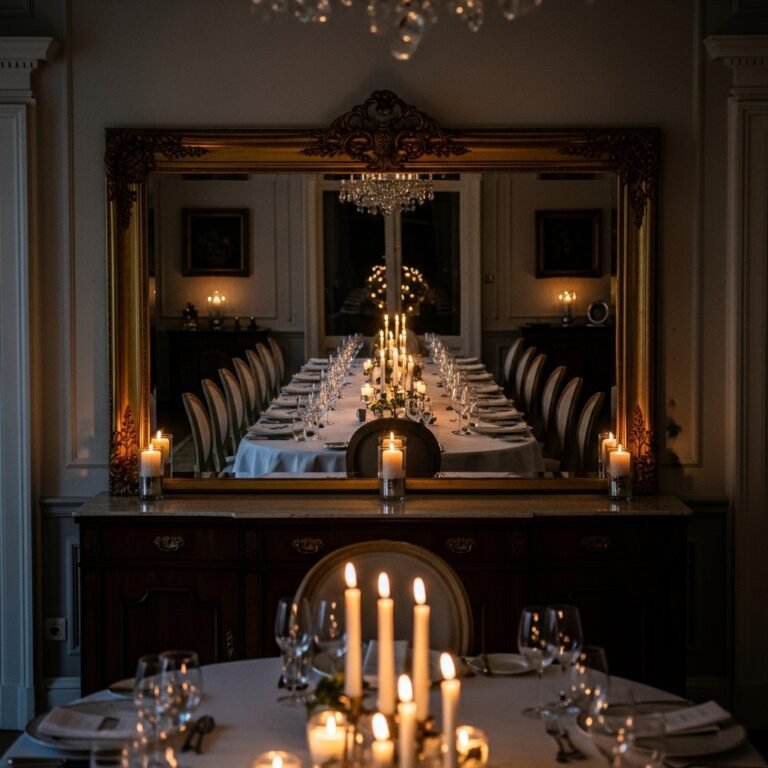
A timeless dining room is not just about architecture and furniture — it is about atmosphere, and nothing creates atmosphere more reliably than candlelight. Designing a dining room around the ritual of candlelight means thinking carefully about candelabras, taper holders, pillar candles, and the reflective surfaces that multiply their glow: mirrors, crystal glassware, polished silver, lacquered surfaces. The table itself becomes a composition — layered with linen, silver, crystal, and porcelain — that glows under warm, flickering light. This approach to dining room design is perhaps the most timeless of all, rooted in centuries of European entertaining culture.
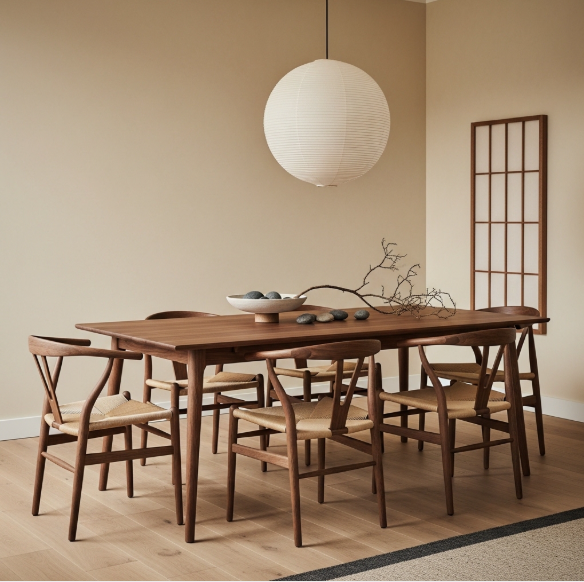
13. The Japandi Dining Room — Restrained and Refined
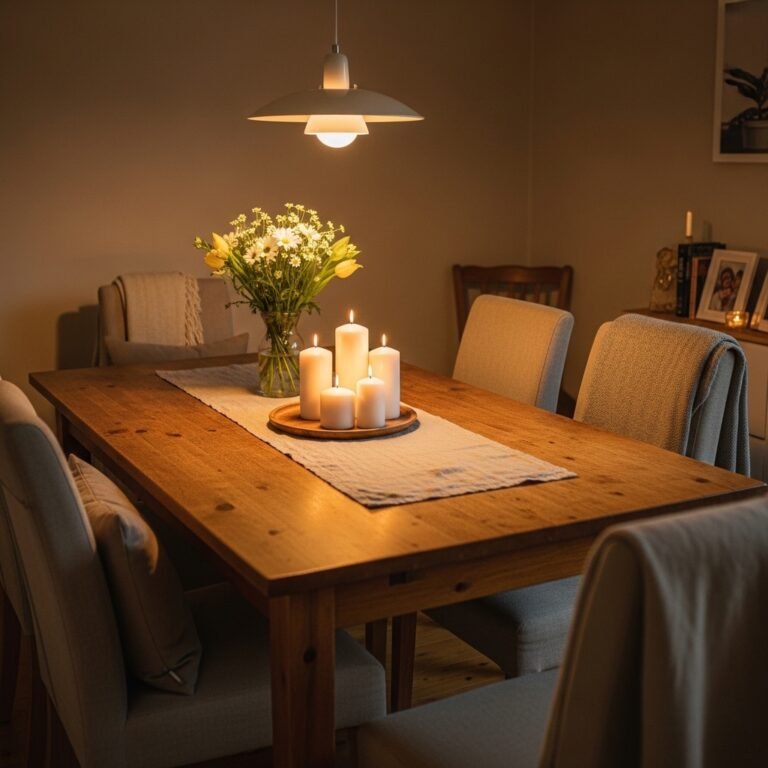
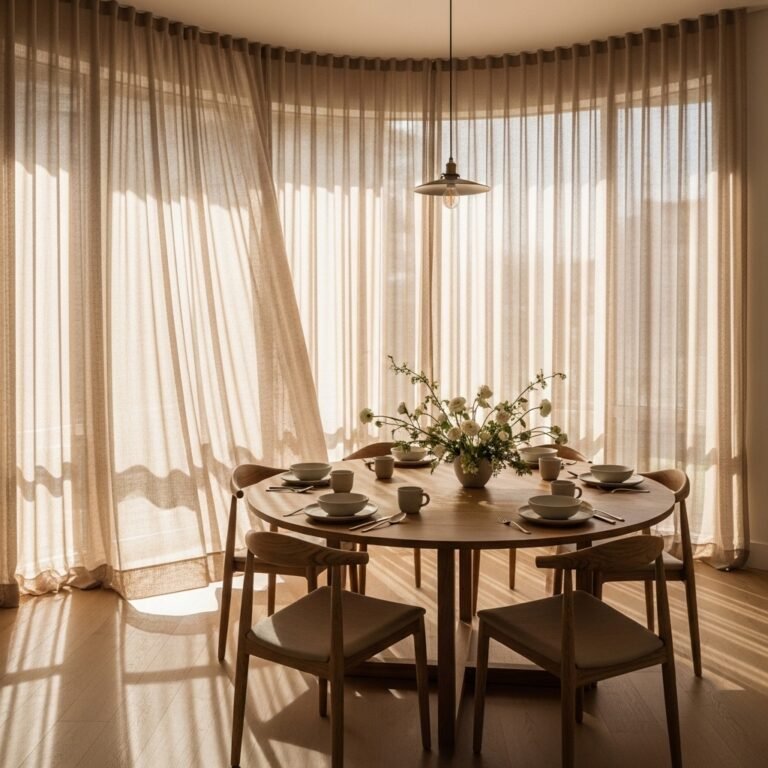
Japandi — the marriage of Japanese minimalism and Scandinavian functionalism — has emerged as one of the most genuinely timeless design philosophies of the contemporary era. In the dining room, it translates to a carefully edited space: a low-profile solid wood dining table with a live edge or clean square form, paired with handcrafted wooden or woven chairs, a single sculptural pendant light in washi paper or handblown glass, a neutral palette of warm greys, warm whites, and charcoal, and a small, considered arrangement of natural objects at the table’s centre. Nothing is superfluous. Every element earns its place. The result is a room of absolute calm and enduring beauty
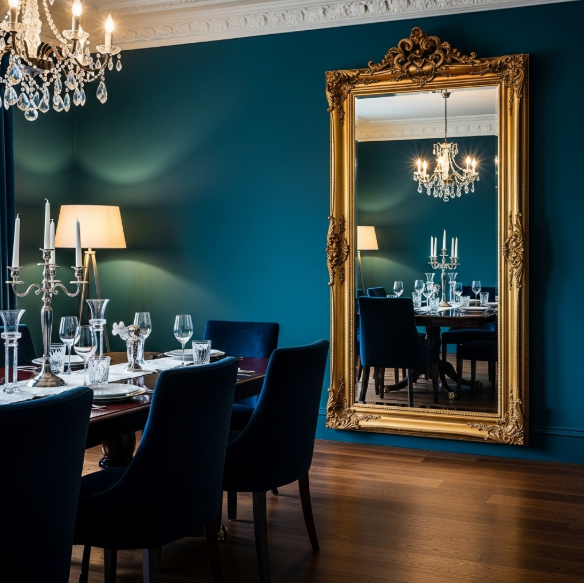
14. The Grand Mirror — Doubling Space and Light
The strategic placement of a large, ornate or architectural mirror in a dining room is one of the oldest and most effective tricks in classical interior design. Used famously in the Hall of Mirrors at Versailles and in countless great English country house dining rooms, a large mirror on one wall performs multiple functions: it visually doubles the apparent size of the room, reflects light sources to increase luminosity, creates the impression of depth, and adds a decorative focal point of considerable grandeur. For maximum impact, choose a mirror with an elaborate gilded frame, lean it against the wall at full height, or mount it in a fixed panel above the sideboard or fireplace.
Conclusion
A classy, timeless dining room is never the result of a single inspired purchase — it is the outcome of thoughtful decisions layered together with patience and intention. The fourteen ideas explored here share a common thread: each one honours proportion, embraces quality materials, and respects the primary purpose of the room, which is to bring people together in comfort and beauty. Whether you are drawn to the jewel-box drama of dark painted walls, the serenity of Japandi minimalism, or the grand formality of crystal chandeliers and mahogany tables, the principles remain the same — invest in what endures, edit out what is merely fashionable, and design for the pleasure of the people who will gather in the space. A dining room built on these foundations will not simply survive the passage of time; it will grow more beautiful and more meaningful with every meal shared within it.