15 Dorm Bedroom Ideas That Actually Make It Feel Like Home
A dorm room is not a home. But it does not have to feel like a waiting room either.
The challenge of a dorm room is specific: no paint on the walls, no permanent fixtures, furniture you did not choose, a roommate you may not have met, and a space roughly the size of a generous walk-in closet that needs to function as a bedroom, a study, a living room, and a place to decompress from everything happening outside it.
These 15 ideas work within those constraints without pretending they do not exist. Every idea here is removable, renter-friendly, and genuinely effective.
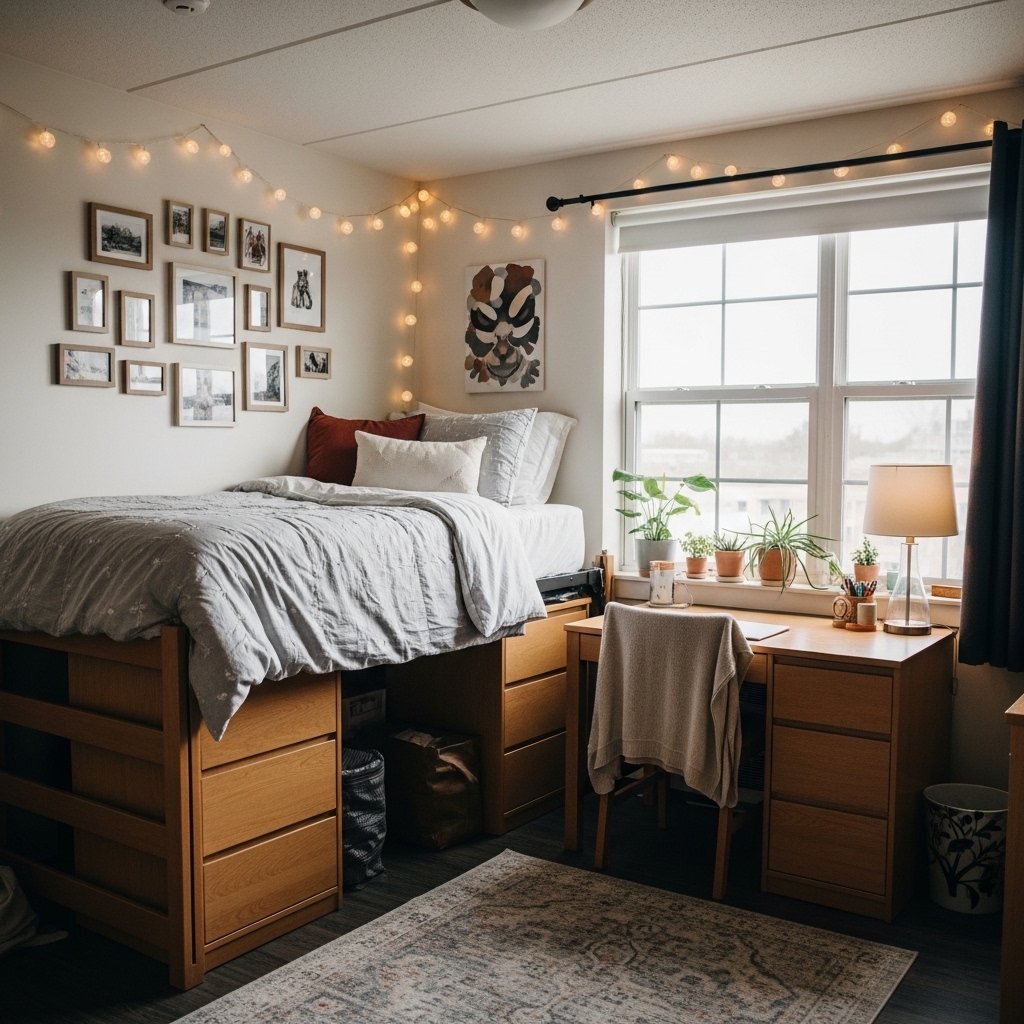
Image Prompt: A beautifully decorated college dorm room that feels warm, personal, and stylish. String lights, a gallery wall of prints, a cozy bed with layered bedding, a neat desk setup. Small but thoughtfully designed. Wide-angle editorial lifestyle photography.
1. Make the Bed the Room’s Design Statement
In a dorm room the bed occupies roughly a third of the total floor space. It is the largest single element in the room and the one with the most design potential.
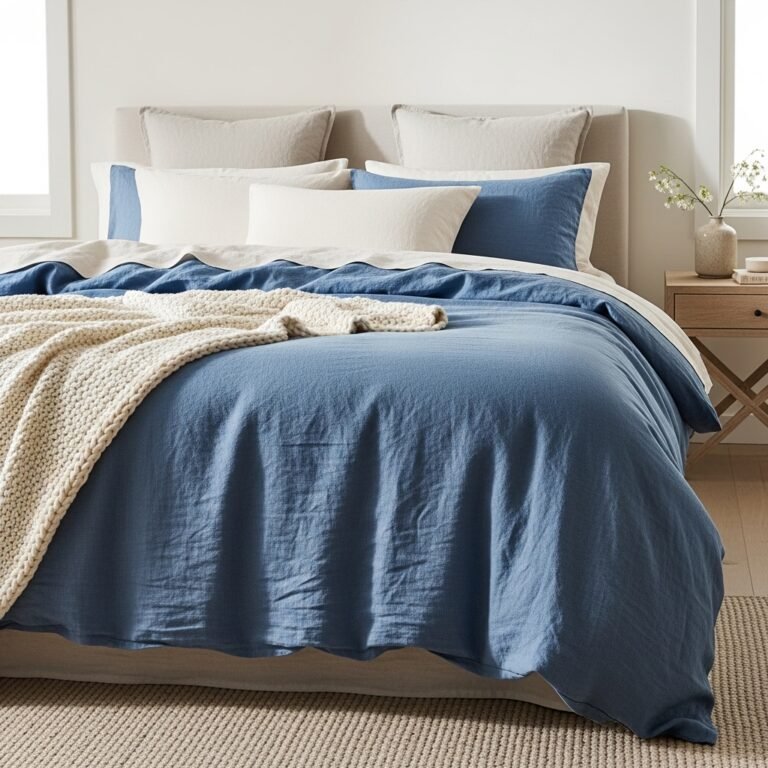
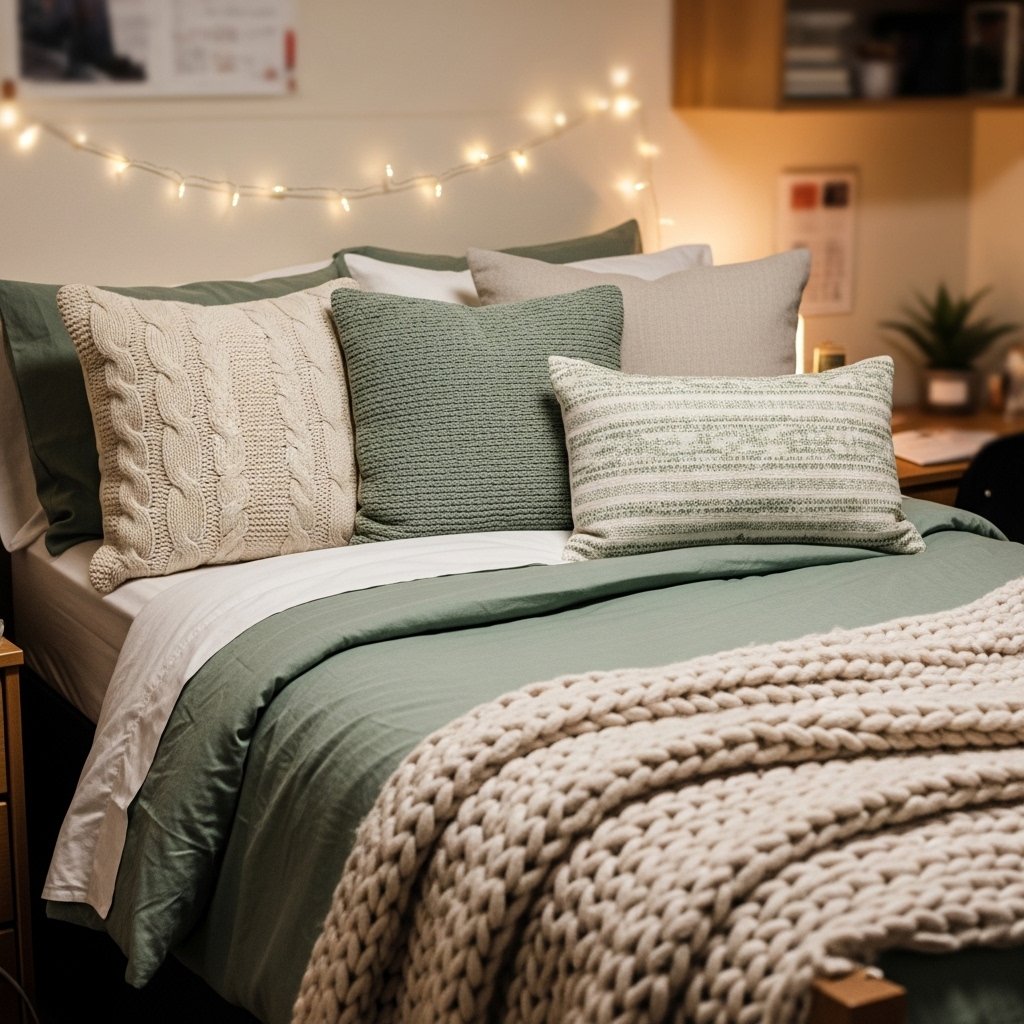
Investing in quality bedding for a dorm bed is not an indulgence. It is the single most impactful visual decision in the entire space. A beautifully made bed with layered bedding in a cohesive color scheme transforms a standard institutional bed frame into the room’s focal point.
Layer a fitted sheet, a flat sheet, a duvet in a quality cover, and a throw blanket folded at the foot. Add three or four cushions in different sizes and textures. The bed goes from a place to sleep to a place to live.
Choose a color palette for the bedding and repeat those colors in every other textile decision in the room. This single discipline creates cohesion in a space where cohesion is otherwise difficult to achieve.
2. Cover Every Inch of Vertical Space
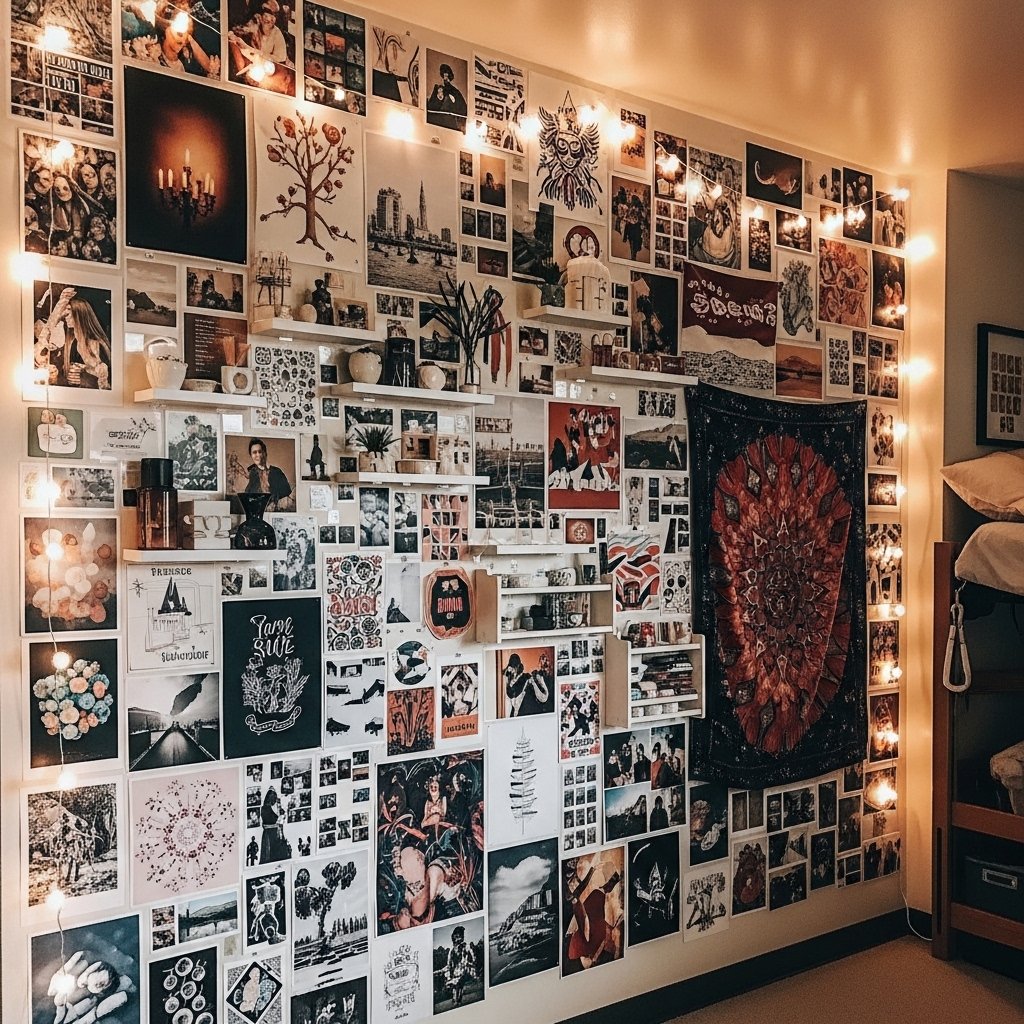
A dorm room has very little floor space. It has considerable wall space that most students use for nothing or for a few scattered items that make the room feel more sparse rather than more personal.
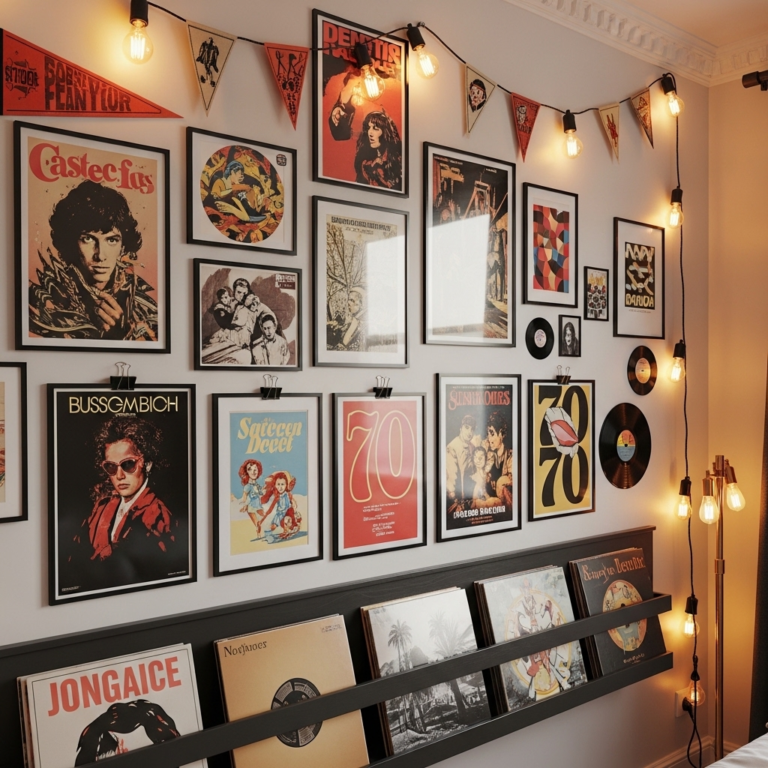
Vertical space is the most underused resource in dorm room design. Removable adhesive hooks, command strips rated for the appropriate weight, and peel-and-stick wall systems allow full wall coverage without a single nail hole or paint mark.
A full gallery wall using removable adhesive strips covers a large portion of a wall in personal and aspirational imagery, bringing color, pattern, and identity to a space that has none by default.
Vertical shelving units on the floor leaning against the wall add storage height without requiring wall mounting. A leaning ladder shelf uses floor space efficiently while providing multiple display and storage levels.
3. Bring in a Rug That Anchors the Whole Room
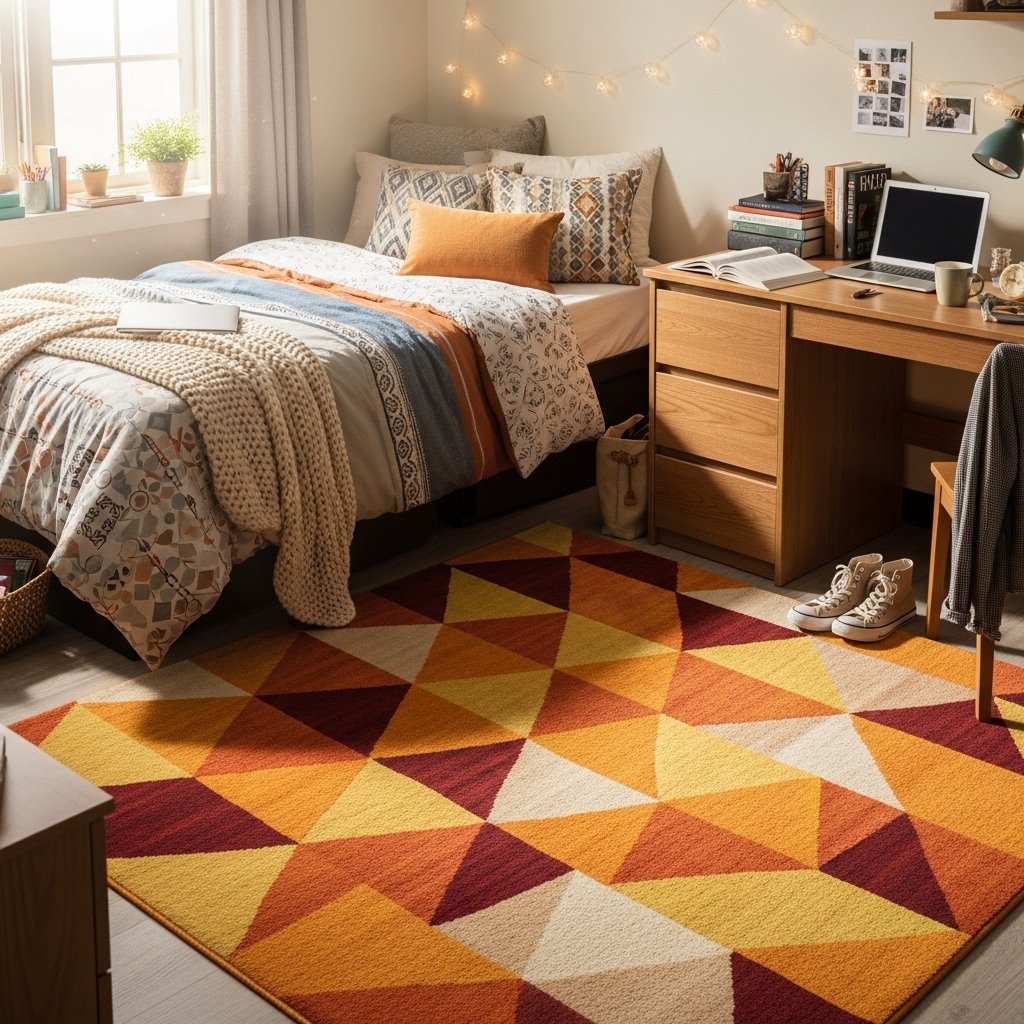
Dorm floors are institutional. Vinyl tile, thin carpet in a color chosen to hide dirt, or polished concrete. None of these are the floor you would choose for yourself.
A large area rug placed over the dorm floor immediately changes the room’s atmosphere. It adds warmth, reduces noise, creates the feeling of a defined living zone, and covers the floor you did not choose with a surface you did.
Size the rug to cover as much of the main living area as possible. In a dorm room this usually means the floor space between the bed and the desk. A rug that reaches under the front legs of both pieces of furniture unifies the space into one zone.
Choose a rug with enough visual interest to anchor the room’s color scheme. A geometric pattern, a natural fiber texture, or a solid color in the room’s dominant accent tone all work well as dorm room anchors.
4. String Lights Are Still the Most Effective Dorm Lighting Tool
The string light has been a dorm room staple long enough that recommending it requires justification. Here it is: dorm room overhead lighting is almost universally harsh, institutional, and unflattering. String lights replace it at essentially zero cost.
Warm micro string lights draped across the ceiling above the bed, arranged around a gallery wall, draped along a window ledge, or wound through a shelf arrangement produce ambient light that makes the room feel habitable in a way the overhead fixture never will.
A string light canopy above the bed, achieved by mounting two rows of lights from the headboard end to the foot end in parallel lines, creates a bedroom atmosphere that transcends every dorm room limitation below it.
Plug-in. Removable. Zero damage. Maximum return.

5. Claim Your Desk as a Designed Space
The dorm desk is designed to be functional and only functional. A flat surface, a basic chair, and a fluorescent overhead light. This is the environment in which most students spend a significant portion of their academic lives.
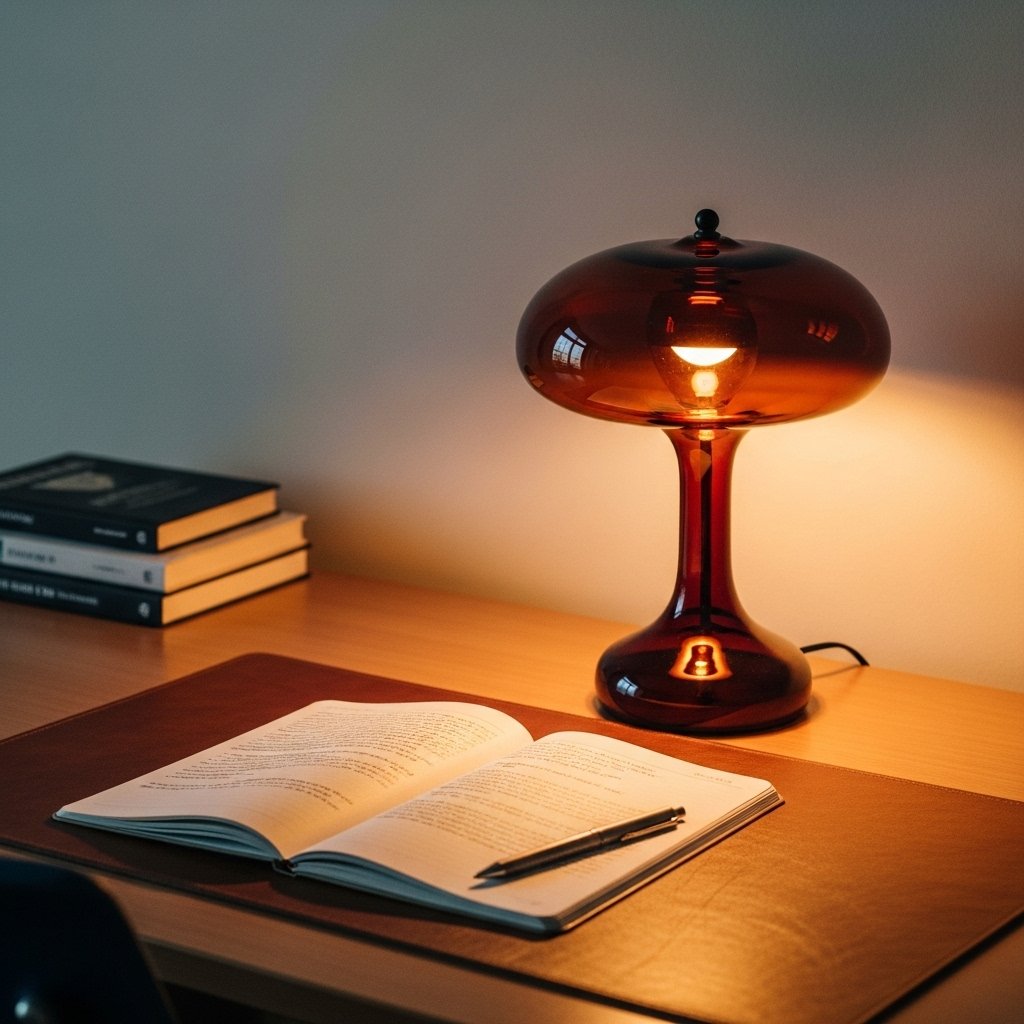
A desk lamp in a warm light temperature replaces the overhead light as the primary illumination source for study. The difference in light quality between a warm task lamp at desk level and a fluorescent ceiling light is not subtle. Work done in good light feels different from work done in bad light.
A desk mat in leather, cork, or printed fabric covers the institutional desk surface and creates a defined working zone. A small plant, a quality pen holder, and one or two meaningful objects on the desk surface personalize the space without cluttering the working area.
The desk chair provided by the institution should be supplemented with a seat cushion if it is not comfortable. A student who sits comfortably studies longer than one who does not.

6. Use a Tapestry as a Full-Wall Statement
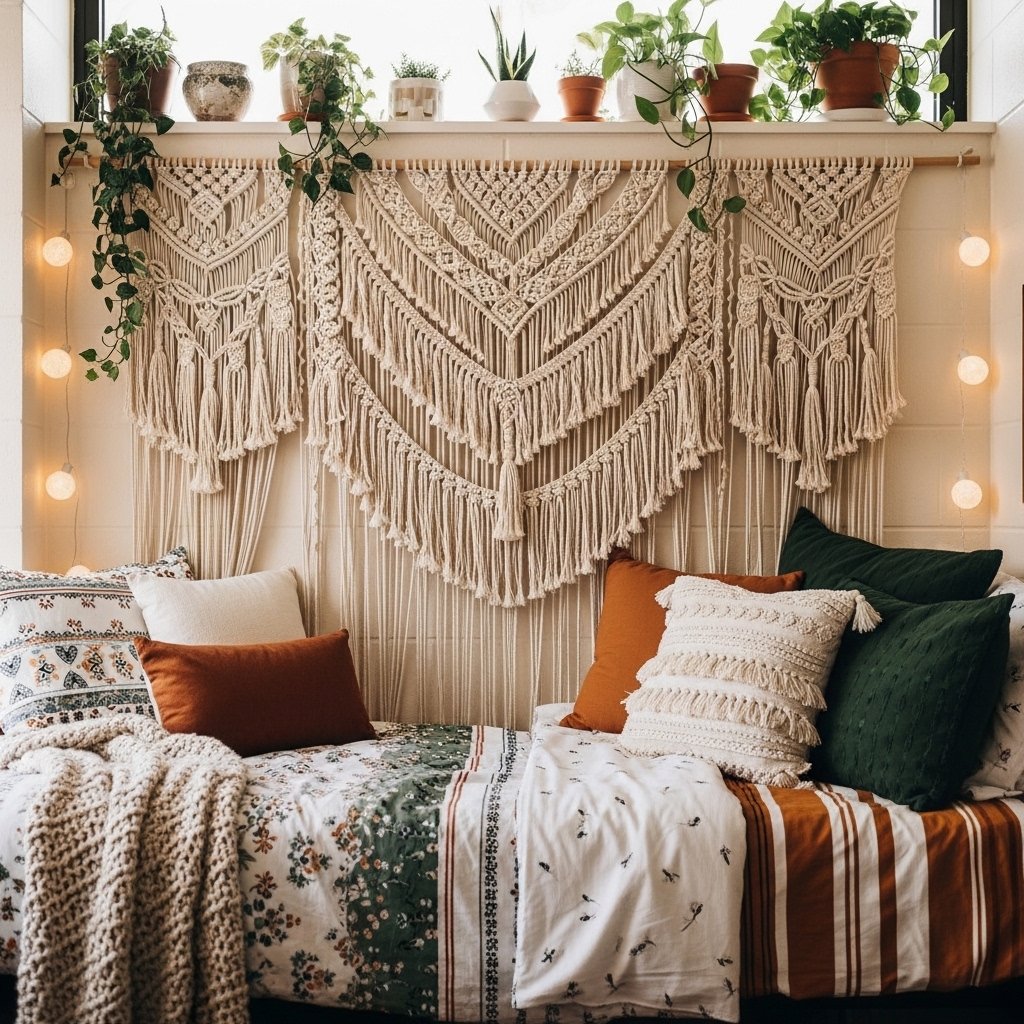
A textile tapestry hung on the wall behind the bed does what paint cannot do in a renter environment: it changes the wall completely, requires no permanent installation, and can be taken down and moved to the next room.
A large tapestry in a macramé texture, a printed boho pattern, a solid deep color, or a scenic landscape design covers a full wall behind the bed and gives the room a visual anchor that a gallery wall of small prints cannot.
The scale of a full-wall tapestry is its power. A tapestry that covers most of the wall behind the bed makes the bed area feel like a designed zone within the larger room rather than a bed placed against a wall.
Hang with a tension rod slipped through a sewn hem at the top, with removable hooks, or with a clip system. All remove cleanly without damage.
7. Add Real Plants
A dorm room with living plants in it is a fundamentally different environment from one without them. Plants introduce organic color, natural texture, and biological presence that manufactured objects cannot replicate.
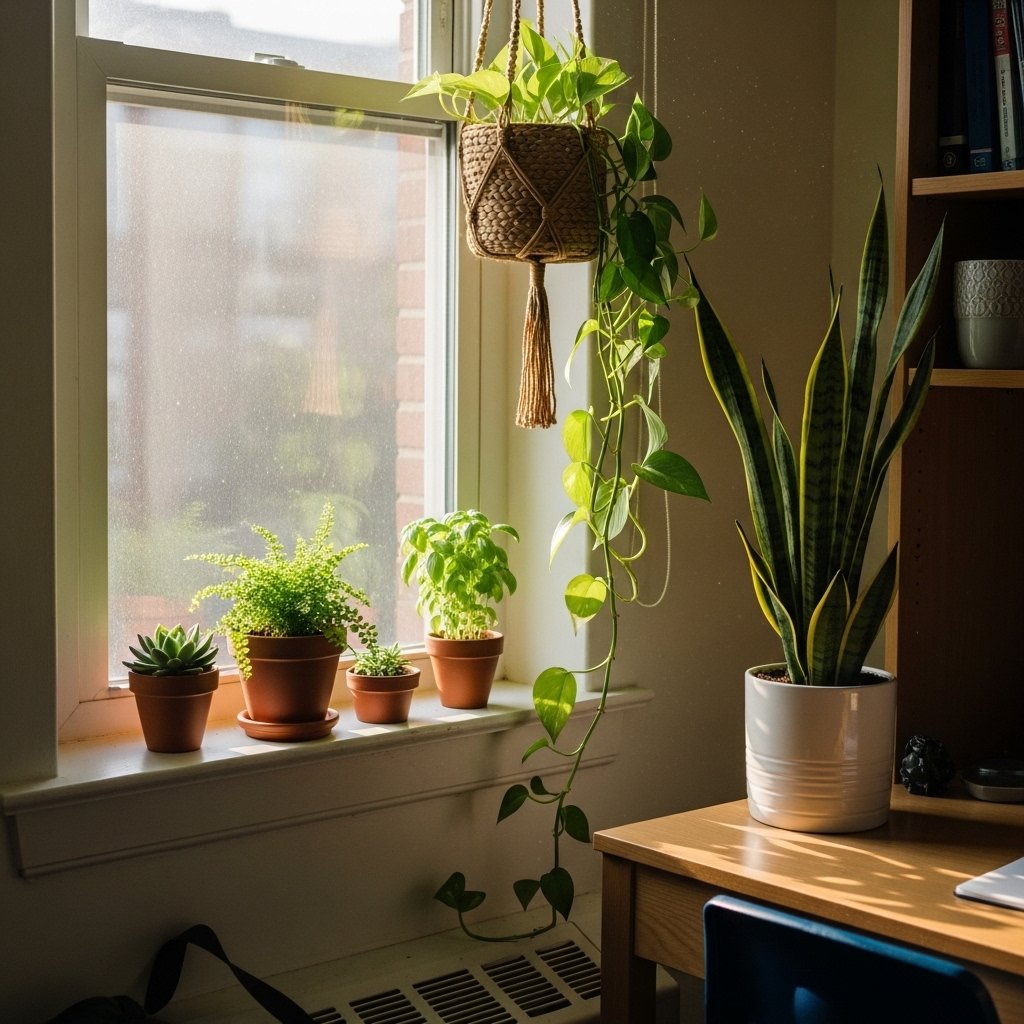
Hardy, low-maintenance plants that survive the neglect that a busy student’s schedule inevitably produces: pothos, snake plants, ZZ plants, and succulents. These four plant types survive low light, irregular watering, and variable temperature without protest.
A pothos in a hanging planter suspended from a removable ceiling hook trailing down a wall adds vertical greenery that takes up no floor or shelf space. A snake plant on a windowsill adds architectural structure. A small succulent arrangement on a desk adds living color to a work surface.
Three plants in a dorm room is enough. More than three starts to require maintenance time that competes with study time.
8. Coordinate Your Storage Visually
Dorm rooms require significant storage for clothes, textbooks, toiletries, bedding, and equipment. The storage containers available to most students are whatever boxes, bags, and baskets they arrived with. These are rarely coordinated and their visual chaos is one of the primary reasons dorm rooms feel disordered.
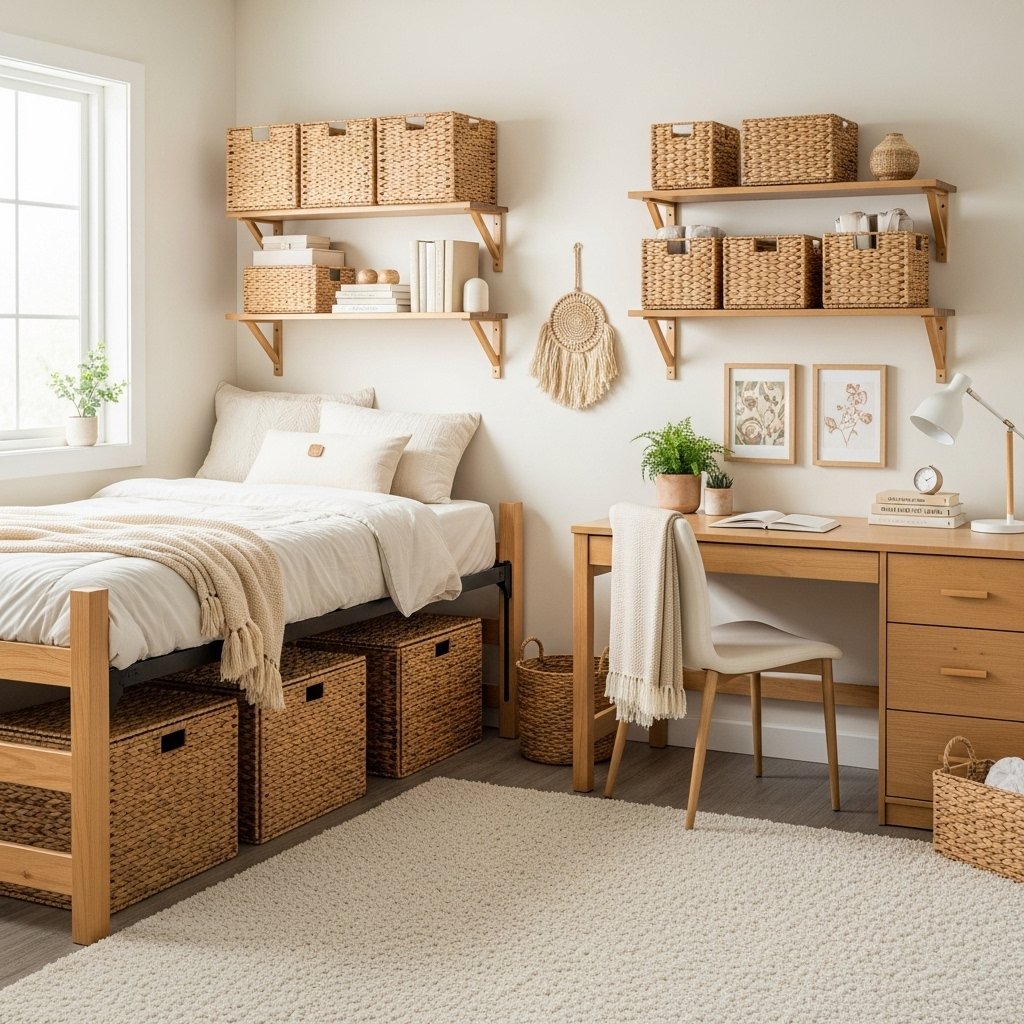
Matching storage baskets in the same material, woven seagrass, wicker, or fabric bins, used consistently throughout the room, replace the visual chaos of mismatched containers with a coordinated storage system that reads as intentional.
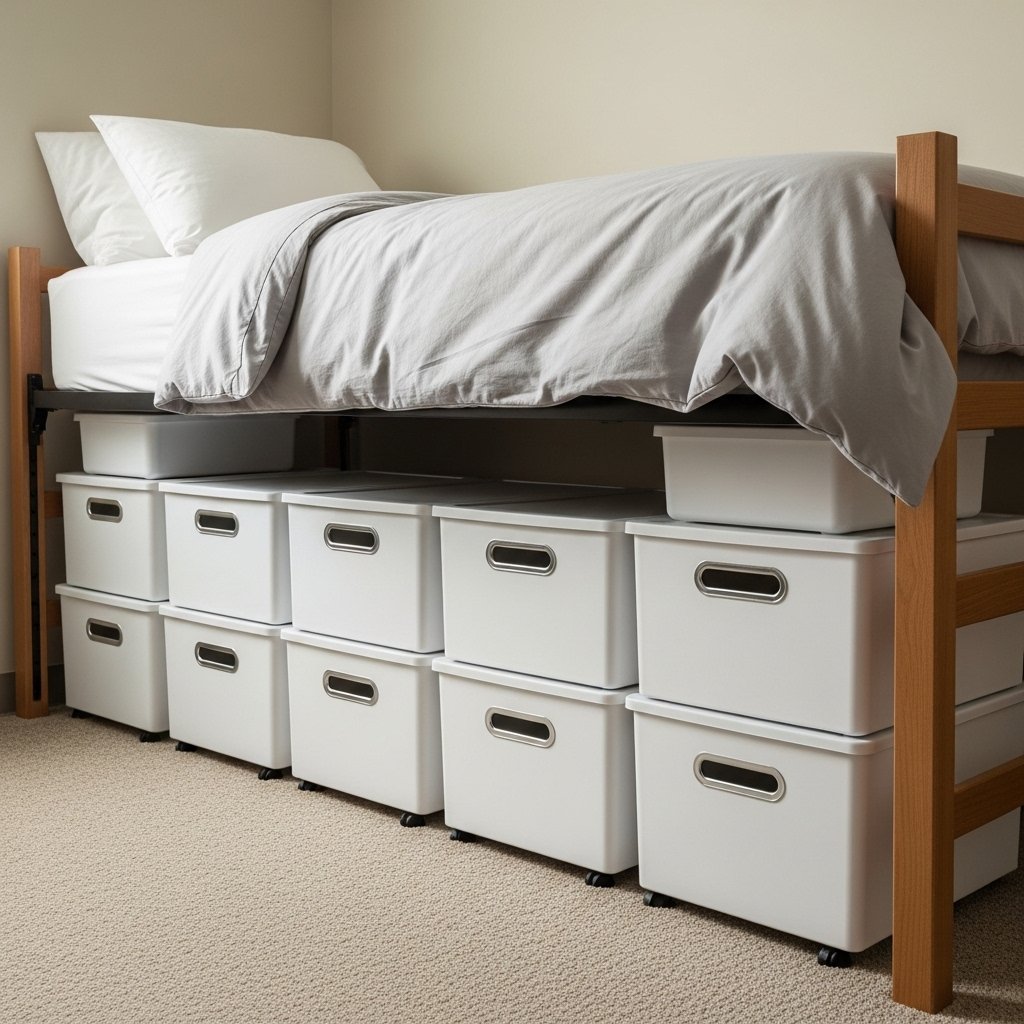
Under-bed storage boxes on wheels in a consistent color hold the largest volume of items in the room’s least visible location. The visual benefit of moving clutter below the bed is immediate.
One trip to replace all storage containers with matched alternatives transforms a room’s visual order more efficiently than any rearranging of existing items.
9. Create a Reading and Relaxation Corner
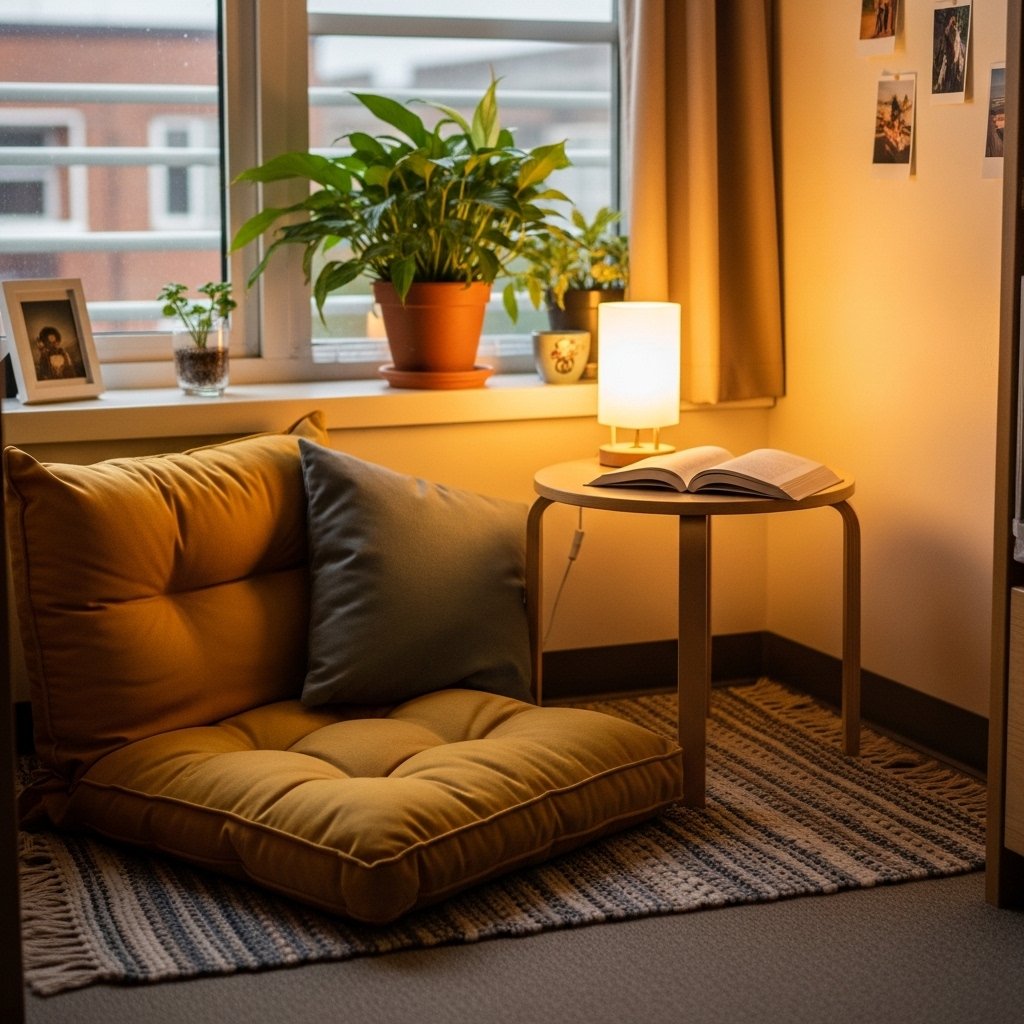
A dorm room that serves only as a sleeping and studying environment does not serve the full range of what a student needs. A small relaxation corner, differentiated from the sleep zone and the study zone, creates a place to decompress that is neither the desk nor the bed.
A floor cushion or a compact upholstered floor chair in a corner beside the window, a small side table holding a lamp and a book, and a throw blanket creates a reading corner in approximately one square meter of floor space.
Differentiate the corner with a small rug beneath the floor cushion, a plant beside it, or a specific section of the gallery wall that is denser or more personal than the rest.
A student with a dedicated relaxation space uses the desk for work and the relaxation corner for rest more effectively than a student whose bed is the only alternative to the desk.
10. Use the Back of the Door
The back of the dorm room door is storage and display space that is almost universally ignored.
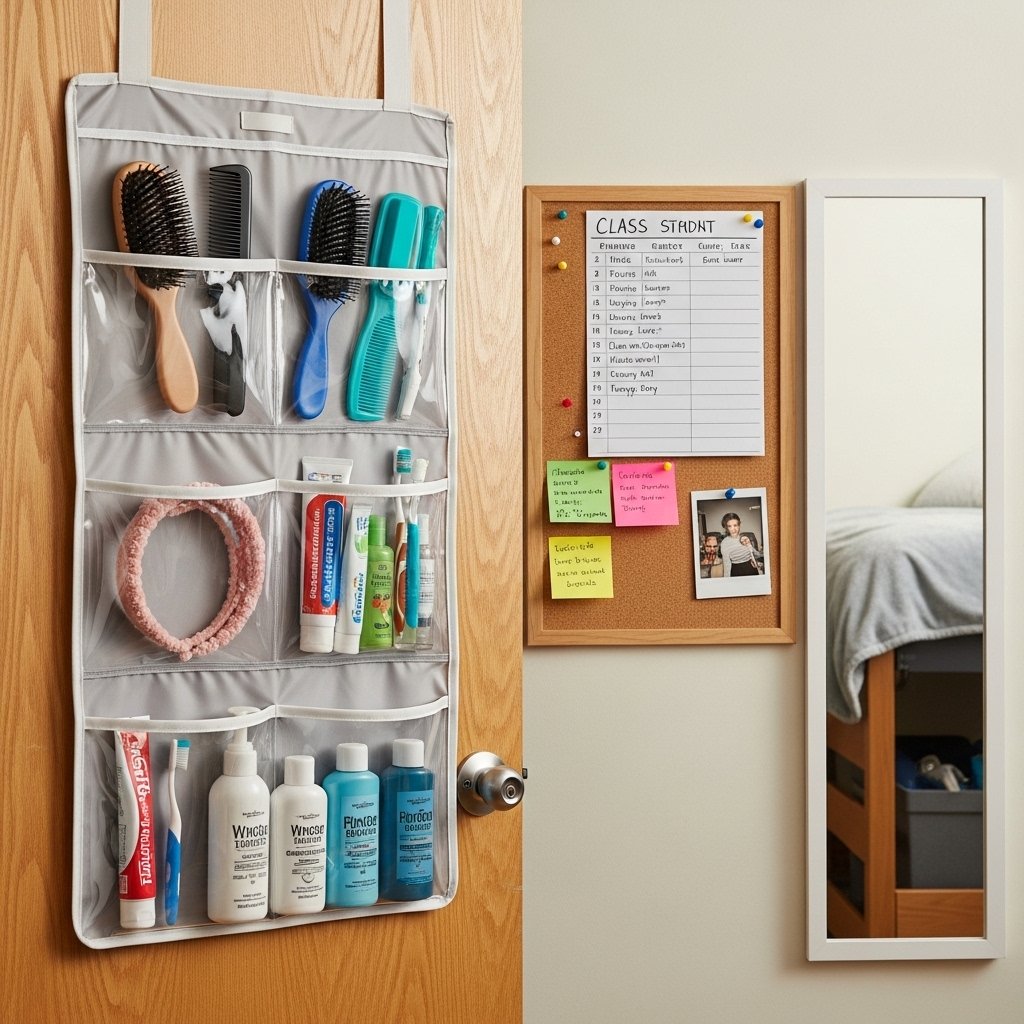
An over-door organizer with clear pockets holds shoes, accessories, toiletries, and small items that would otherwise occupy shelf or floor space. A full-length mirror mounted on the back of the door serves both function and makes the room appear larger.
A small corkboard or magnetic board on the back of the door holds a schedule, to-do lists, important papers, and reminders in a location that is seen every time the door is closed.
The back of the door is private space. Visible when the door is closed but hidden from the room when the door is open. It is the right location for functional rather than decorative storage.
11. Add a Scent Layer to the Room
Dorm rooms have a specific ambient smell that belongs to the building rather than to you. Overriding this with a scent you have chosen is one of the most effective ways to make a space feel like yours rather than like an institution.
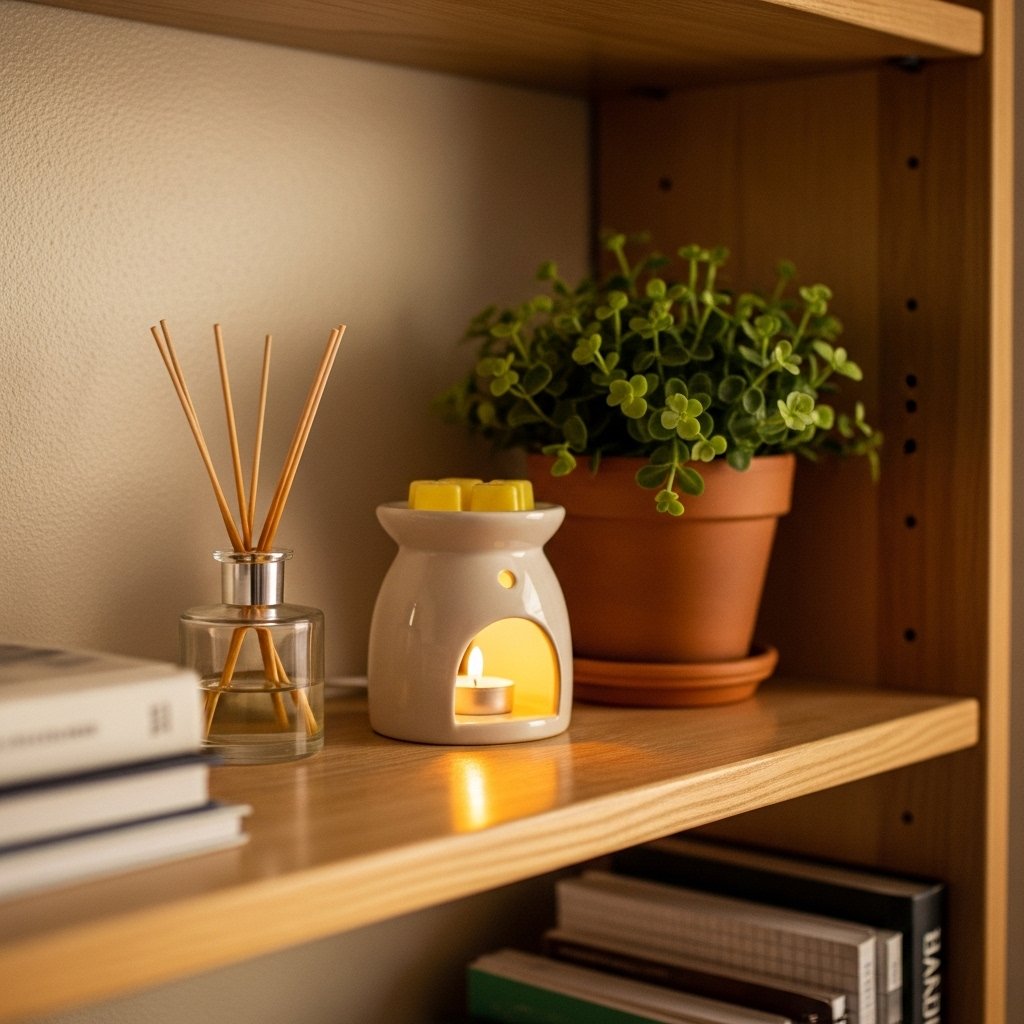
A plug-in diffuser, a wax melt warmer, or a reed diffuser on a shelf introduces a consistent room scent that operates continuously. A favorite candle lit during study sessions or relaxation time creates a scent associated with specific activities and moods.
Choose a single scent and use only that one. The scent becomes associated with the room over time. Returning to it after time away triggers an immediate sense of homecoming.
Most institutions prohibit open flames in dorm rooms. A wax melt warmer using a small bulb rather than a flame is the appropriate alternative that produces identical results within the rules.
12. Personalize With a Photo Display That Actually Looks Good
Every student wants photographs of home, friends, and meaningful memories in their dorm room. Most achieve this by taping photographs directly to the wall in an arrangement that looks like a crime scene evidence board.
A curated photo display using string lights with small clip attachments, a dedicated cork board in a frame, or a consistent grid of identically sized prints in matching small frames transforms personal photographs from visual chaos into an intentional display.
The string light photo display, photographs clipped to fairy lights strung across the wall, is the most forgiving format for dorm rooms because the lights themselves add warmth and the informal clip arrangement suits different photograph sizes without requiring precise alignment.
Print photographs at a consistent size and in a consistent filter or color treatment for a grid display. Inconsistent print sizes and inconsistent color treatments are what make personal photo displays look amateur rather than curated.

13. Maximize Vertical Storage With Bed Risers
Dorm beds are not tall enough. The space beneath a standard dorm bed is too low to accept most storage containers and too visible to ignore.
Bed risers placed under each bed leg raise the bed height by 15–20cm and create a storage zone beneath the bed that accepts standard under-bed storage boxes on wheels, larger bins, and even small suitcases.
The additional under-bed storage created by bed risers frequently eliminates the need for additional freestanding storage furniture that would otherwise occupy the small amount of available floor space.
Bed risers also make getting in and out of bed slightly easier for taller students, which is a small but daily quality-of-life improvement in a room where quality-of-life improvements are worth taking wherever they are available.
14. Invest in One Quality Piece That Is Entirely Yours
Every item in a dorm room is either institutional furniture you did not choose or personal belongings you brought with you. One quality piece that you chose specifically for this space, and that goes with you when you leave, anchors the room in a way that no collection of accessories achieves.
A beautiful desk lamp. A quality throw blanket in a fabric and color you love. A distinctive rug. A real piece of art, even a small one, framed properly. These are not luxuries. They are the objects that differentiate a room you inhabit from a room you merely occupy.
This object does not need to be expensive. It needs to be chosen with genuine care rather than purchased as an afterthought. The deliberateness of the choice is what gives the object its weight in the room.
It also gives you something to look forward to taking with you when you leave. The dorm room is temporary. The objects you choose well are not.
15. Make Peace With the Constraints and Design Within Them
The most important dorm room design principle has nothing to do with a specific product or arrangement. It is an attitude.
A dorm room with constraints accepted and designed within intelligently looks better than a dorm room where the constraints are resented and half-addressed. The students whose rooms feel most like homes are not the ones who spent the most. They are the ones who made deliberate decisions within what was available.
Work with the furniture you have rather than around it. A desk pushed against a window instead of a wall gets natural light. A bed positioned on a different wall might open up floor space you did not realize existed. Rearranging what is there costs nothing and sometimes changes everything.
The dorm room is a design problem with specific constraints. Treat it like one. The constraints are not obstacles to good design. They are the conditions within which good design happens.