16 Kitchen Pantry Organization Ideas That Make Cooking Effortless
A disorganized pantry doesn’t just look bad. It costs money, wastes food, and adds friction to every single meal you make.
When you can’t see what you have, you buy duplicates. When items aren’t grouped logically, you waste time hunting. When the system is too complicated to maintain, it collapses within a week.
These 16 ideas build a pantry system that is intuitive, maintainable, and genuinely beautiful to open every morning.
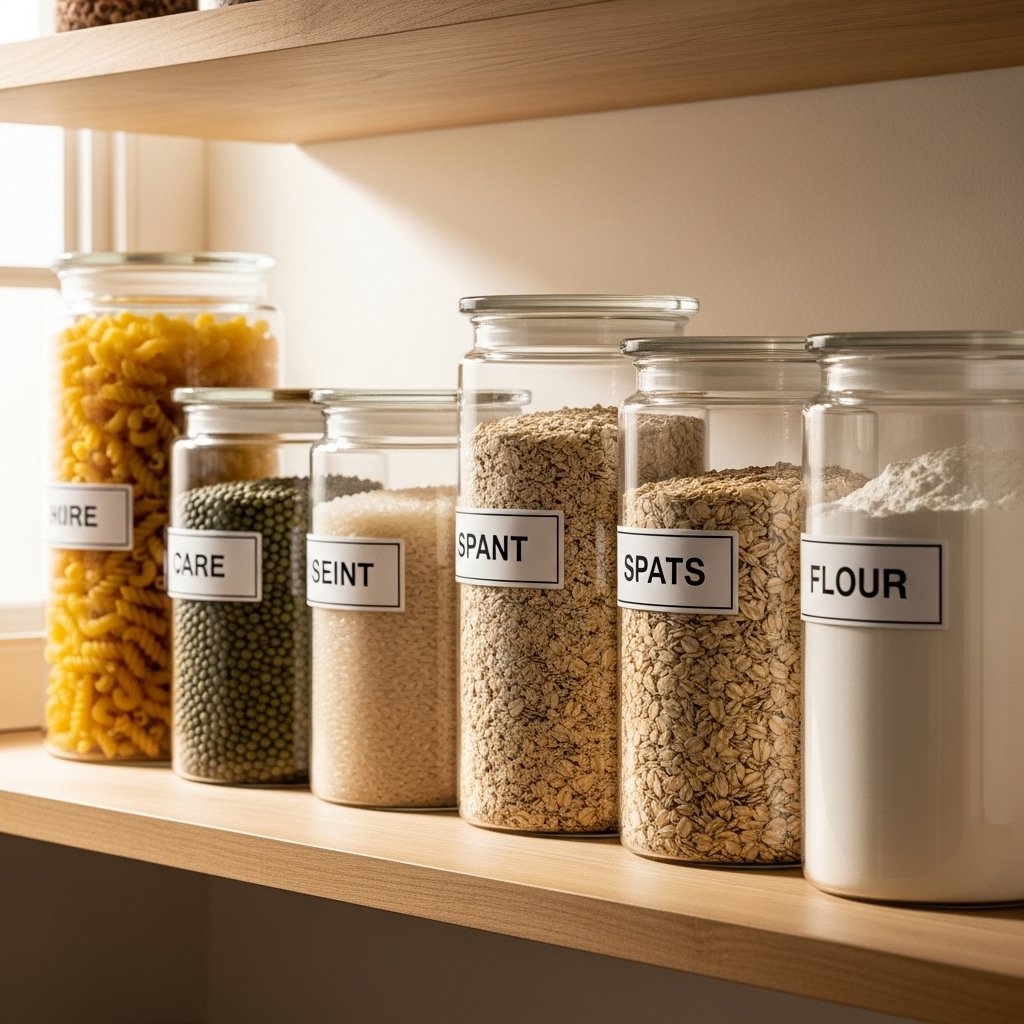
1. Decant Everything Into Uniform Canisters
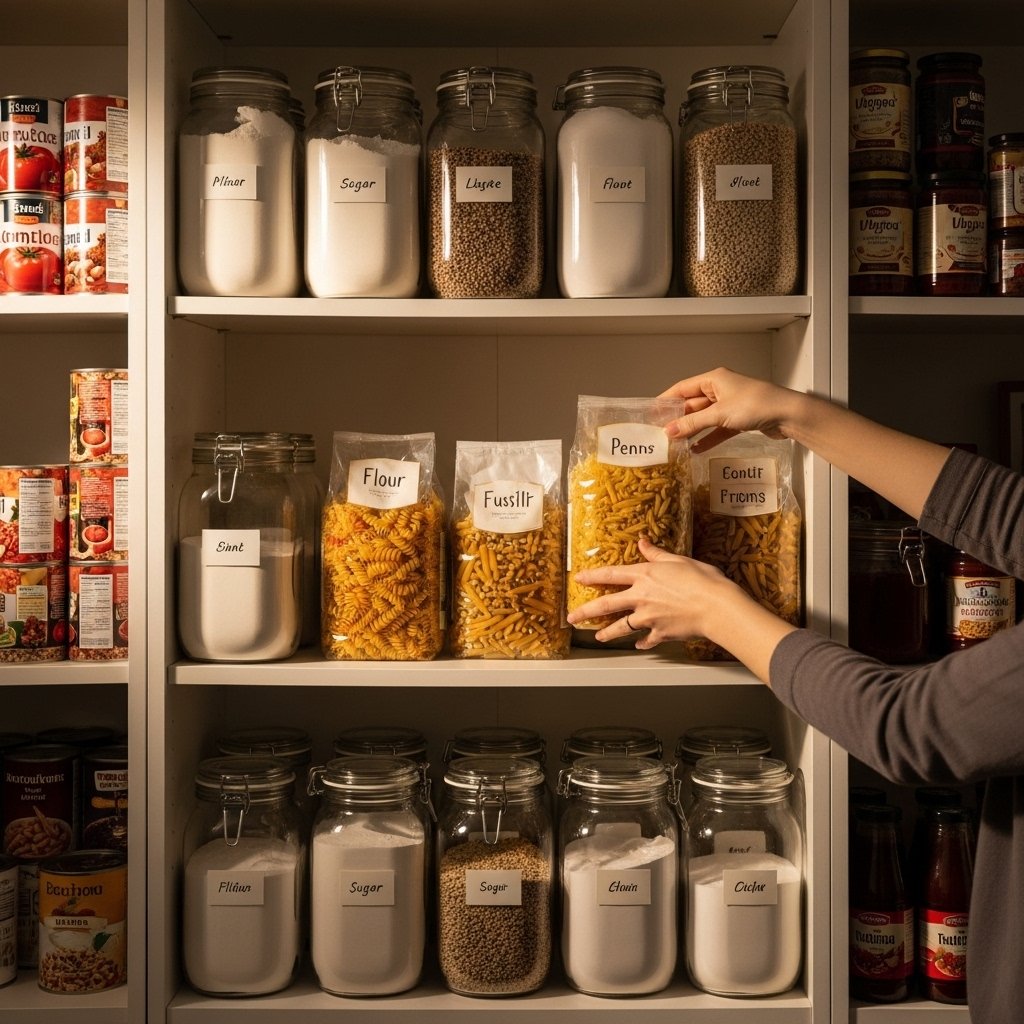
Mismatched packaging is the primary source of pantry visual chaos. Boxes of different heights, bags of different widths, and labels facing different directions create disorder that no amount of organizing fixes.
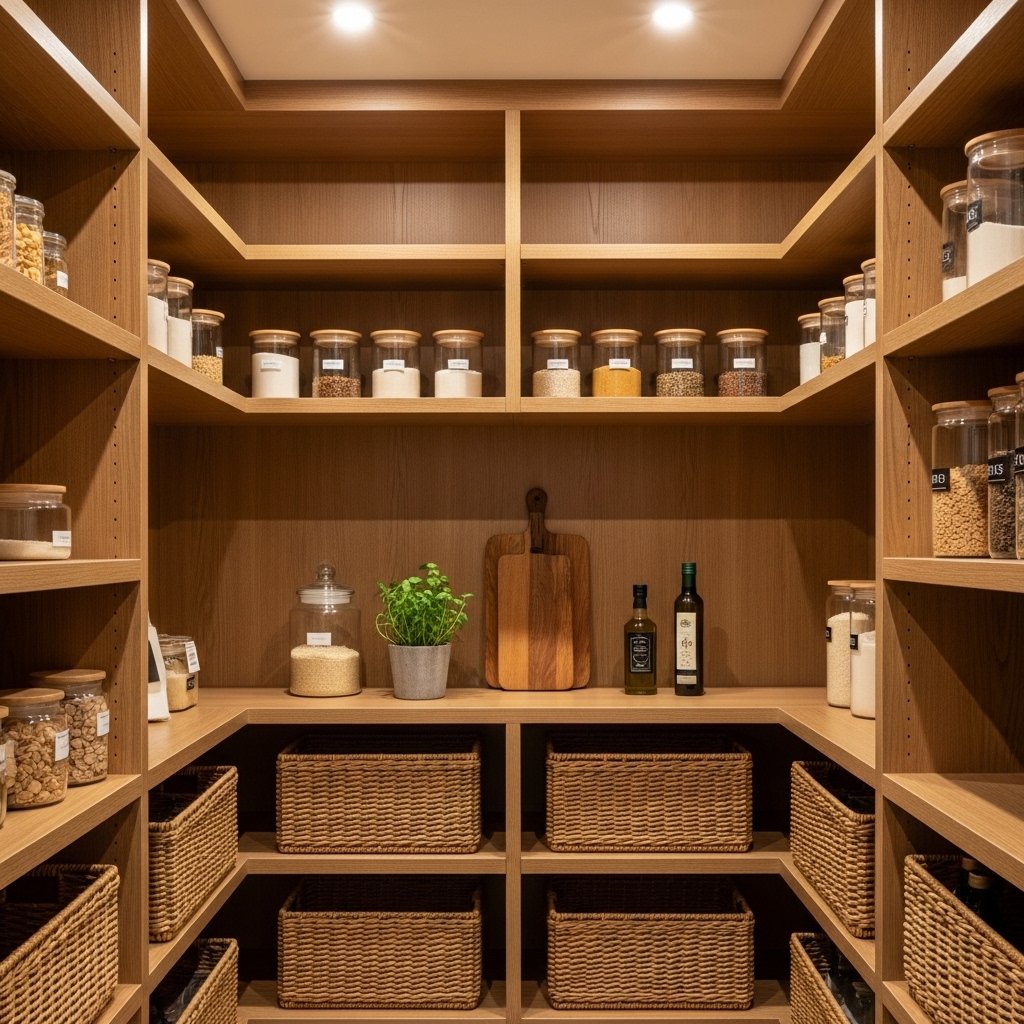
Decanting dry goods, pasta, rice, flour, sugar, oats, lentils, cereals into uniform glass or ceramic canisters removes the packaging chaos entirely. What remains is consistent, beautiful, and immediately legible.
Label every canister. A canister of white powder with no label is a problem waiting to happen. A simple label maker or hand-lettered tag solves this permanently.
The cost of a good canister set is recovered quickly in reduced food waste. When you can see exactly how much of something you have, you use it up before it expires.
2. Organize by Cooking Category, Not Food Type
Most people organize pantries alphabetically or by food type. This is logical in theory and inefficient in practice.
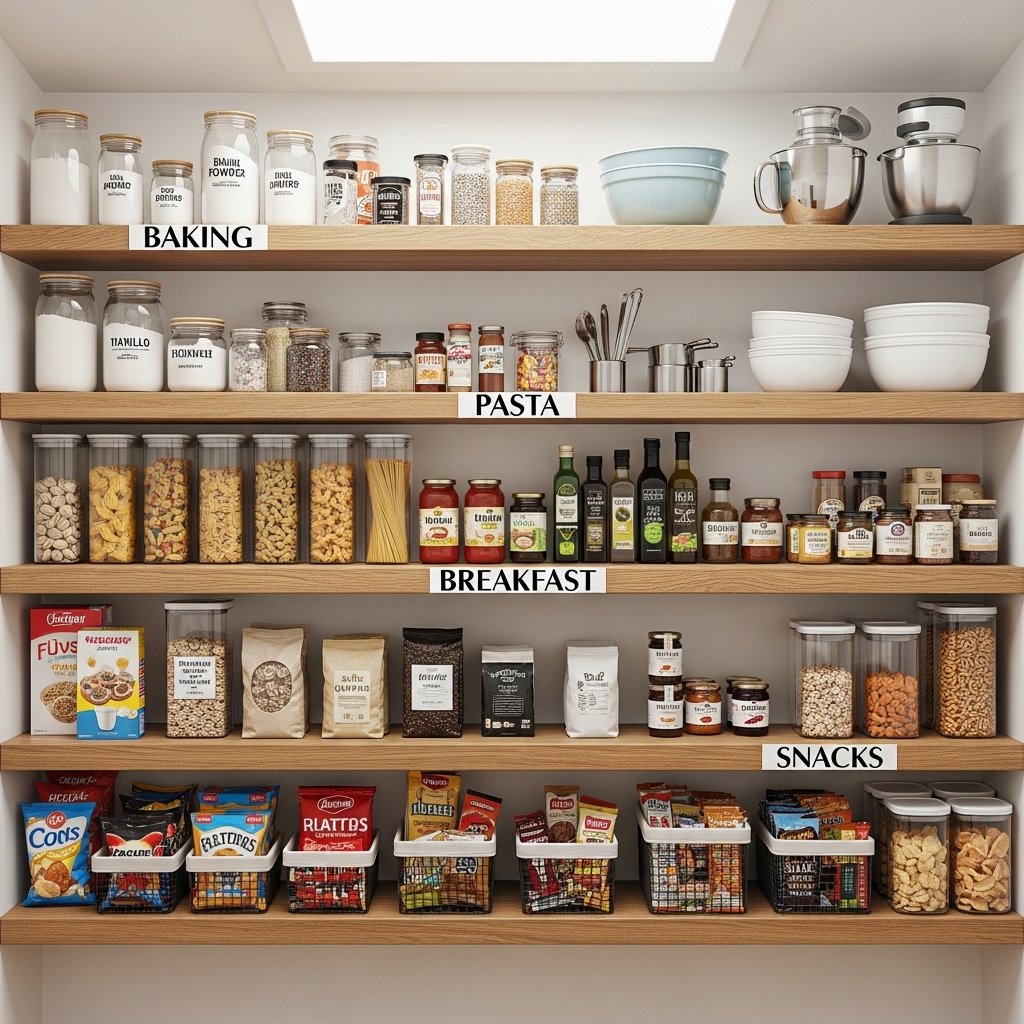
Organize by how you cook. A baking zone holds flour, sugar, baking powder, cocoa, vanilla, and chocolate chips together. A pasta zone holds dry pasta, canned tomatoes, olive oil, and dried herbs together. A breakfast zone holds cereals, oats, honey, and nut butters together.
When you cook pasta, you go to one zone and everything you need is there. You don’t cross the pantry four times for ingredients that belong together functionally.
This system requires thinking about your actual cooking habits before organizing. The result is a pantry that supports your specific kitchen routine rather than a generic organizational logic.
3. Use the Door for Small Items
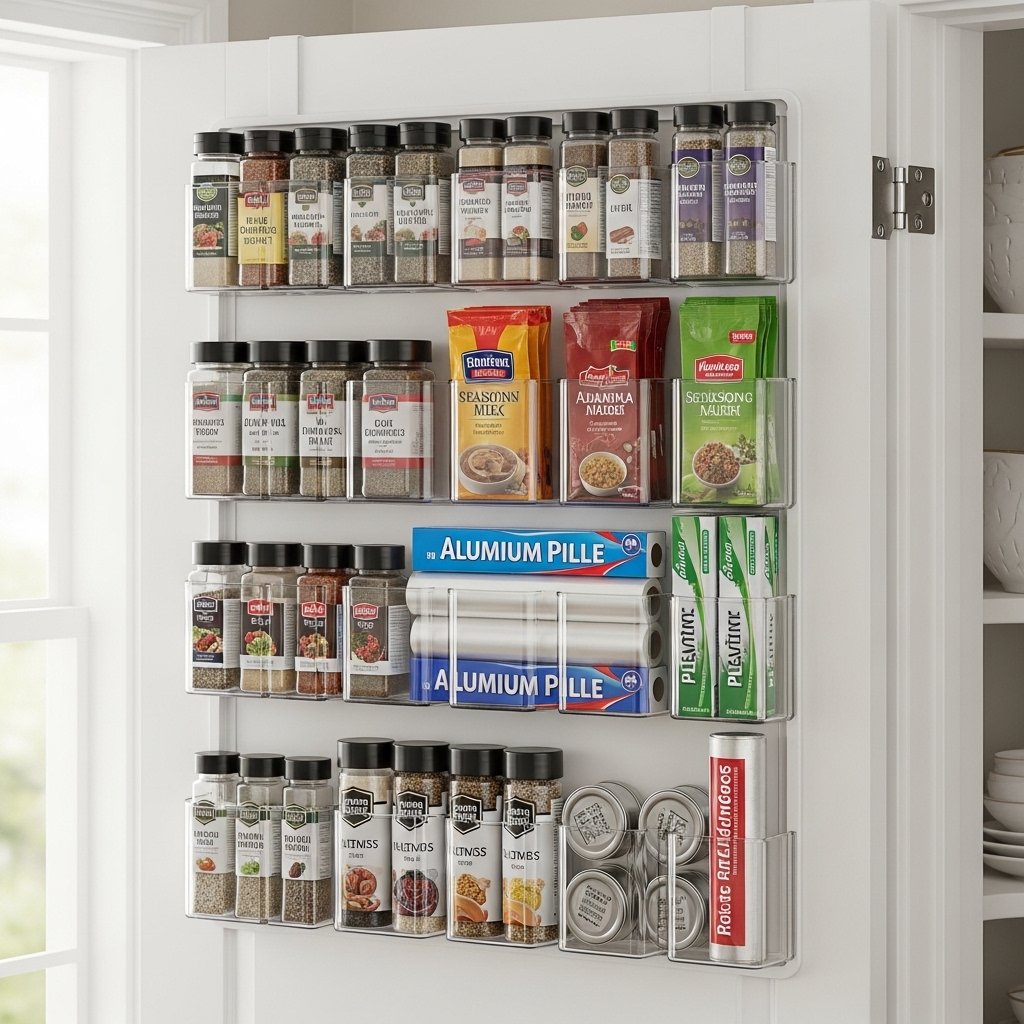
The back of a pantry door is storage space that most people ignore entirely.
Over-door organizers with clear pockets hold spice packets, seasoning sachets, small tins, and foil rolls. A mounted magnetic strip holds small metal tins. A pegboard panel on the door holds bags, tools, and lightweight items.
The door surface area in a standard pantry is enough to hold thirty to forty small items that would otherwise crowd shelves.
The door items should be the most frequently accessed: the items you reach for multiple times per week. Proximity serves frequency.
4. Install Pull-Out Drawers on Lower Shelves
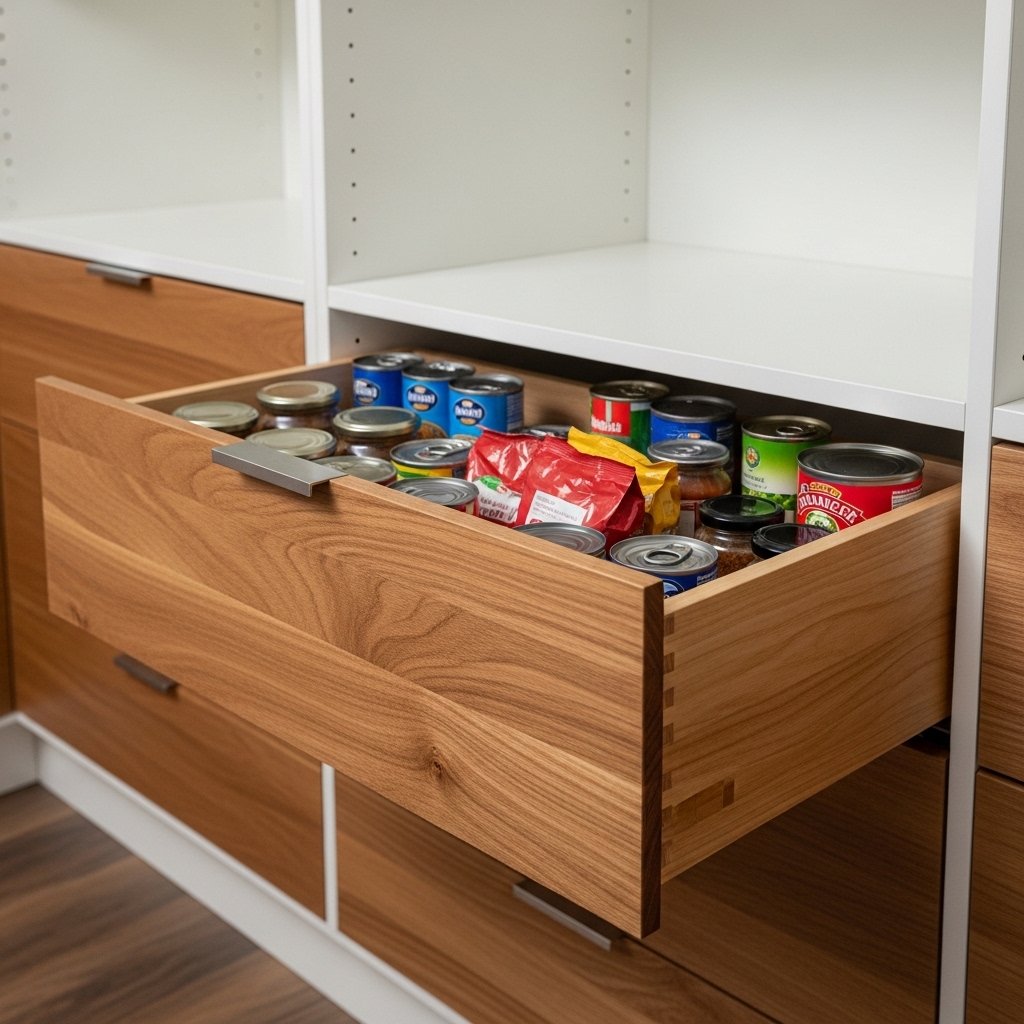
The deepest problem with pantry lower shelves is that items at the back become invisible and forgotten. Pull-out drawers solve this entirely.
A pull-out drawer on a lower shelf brings the entire shelf contents forward in one motion. Nothing hides. Nothing gets forgotten. The oldest item is used first because you can actually see it.
Pull-out timber or wire drawers can be retrofitted into most existing pantry shelves without structural work. The hardware is widely available and the installation is straightforward.
This is the single most functional upgrade available to an existing pantry. The visual improvement is secondary to the functional one, which is significant on its own.
5. Group Snacks in One Dedicated Basket
Snacks are accessed differently from cooking ingredients. They are grabbed quickly, often by children, often multiple times a day, and often in combination with each other.
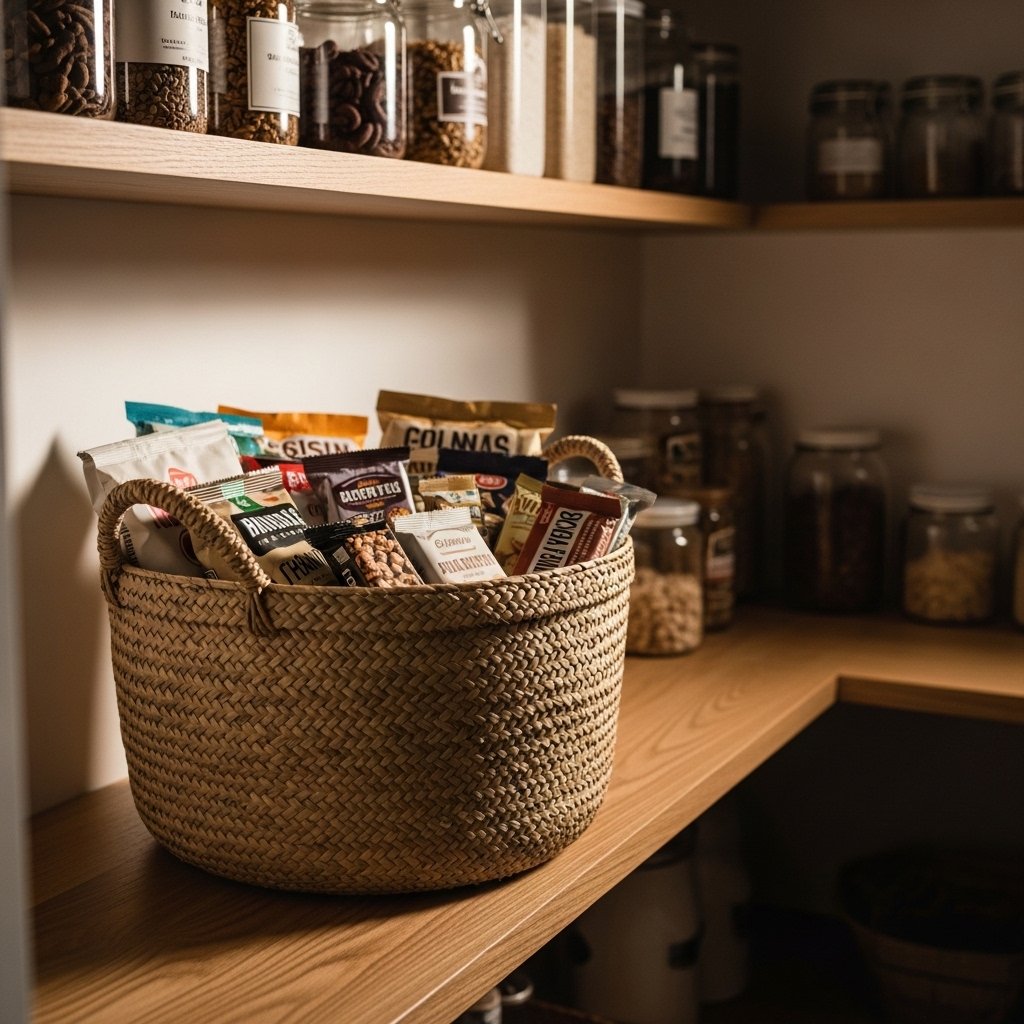
A dedicated snack basket or snack shelf zone holds everything snack-related in one place. When someone opens the pantry looking for a snack, they go to one location and choose from what’s there.
A large woven basket, a wire bin, or a fabric-lined tray works well for this. The container corrals the category visually and makes restocking simple.
Refill the snack basket from bulk storage when it runs low. The basket is the display layer. The bulk storage is behind it.
6. Use Tiered Shelf Inserts for Visibility
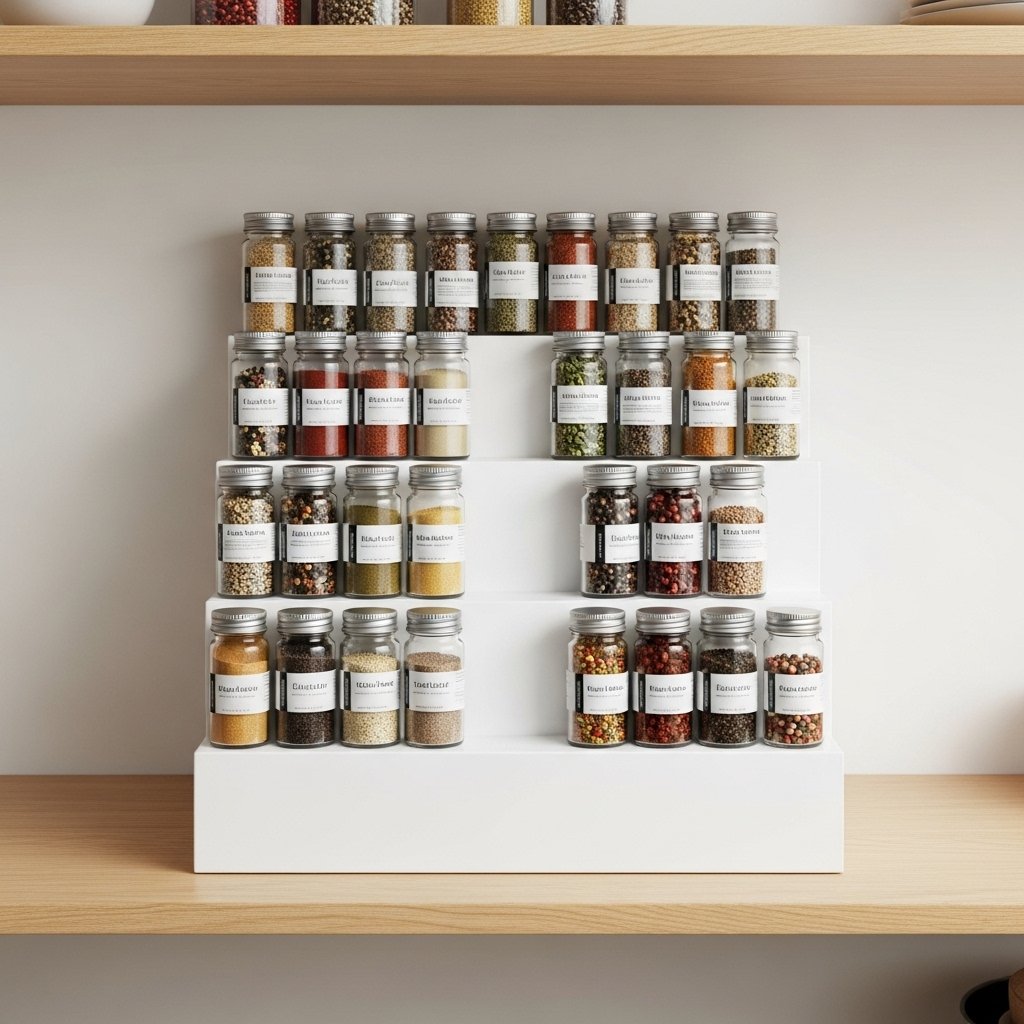
A flat shelf full of jars and cans at the same height means everything behind the front row is invisible. Tiered shelf inserts raise the back rows so every item is visible from the front.
A two or three tier step insert on a pantry shelf gives every item in that row a clear sightline. You see everything at once without moving anything.
This is particularly effective for spice jars, which are often small and identical from above. A tiered spice arrangement means you read the label from the front rather than picking up every jar to find the one you want.
The inserts are inexpensive. The time saved finding ingredients every time you cook compounds into significant daily efficiency.
7. Label Everything, Including the Shelves
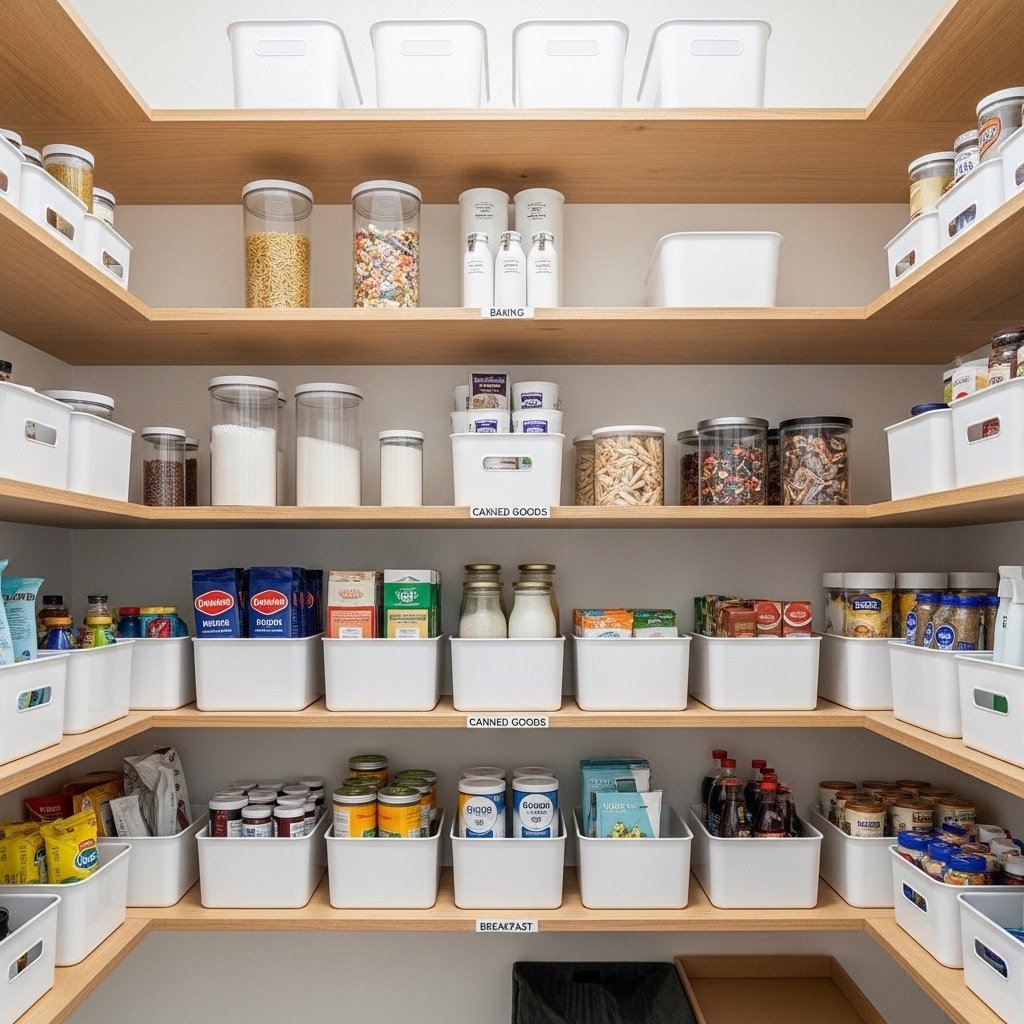
Labels on containers are obvious. Labels on the shelves themselves are the feature that makes a system maintainable.
When a shelf is labeled “PASTA” and someone unpacks groceries, the pasta goes to the labeled shelf automatically. No decision required. No drift into disorganization.
Shelf labels hold the system in place when the person who organized it isn’t the person restocking it. Every household member, every partner, every child old enough to help with groceries, follows the system without being instructed.
Use a consistent label format throughout. A label maker with one font and one tape color is better than a collection of handwritten labels in different pens on different papers.
8. Store Oils and Vinegars on a Dedicated Tray
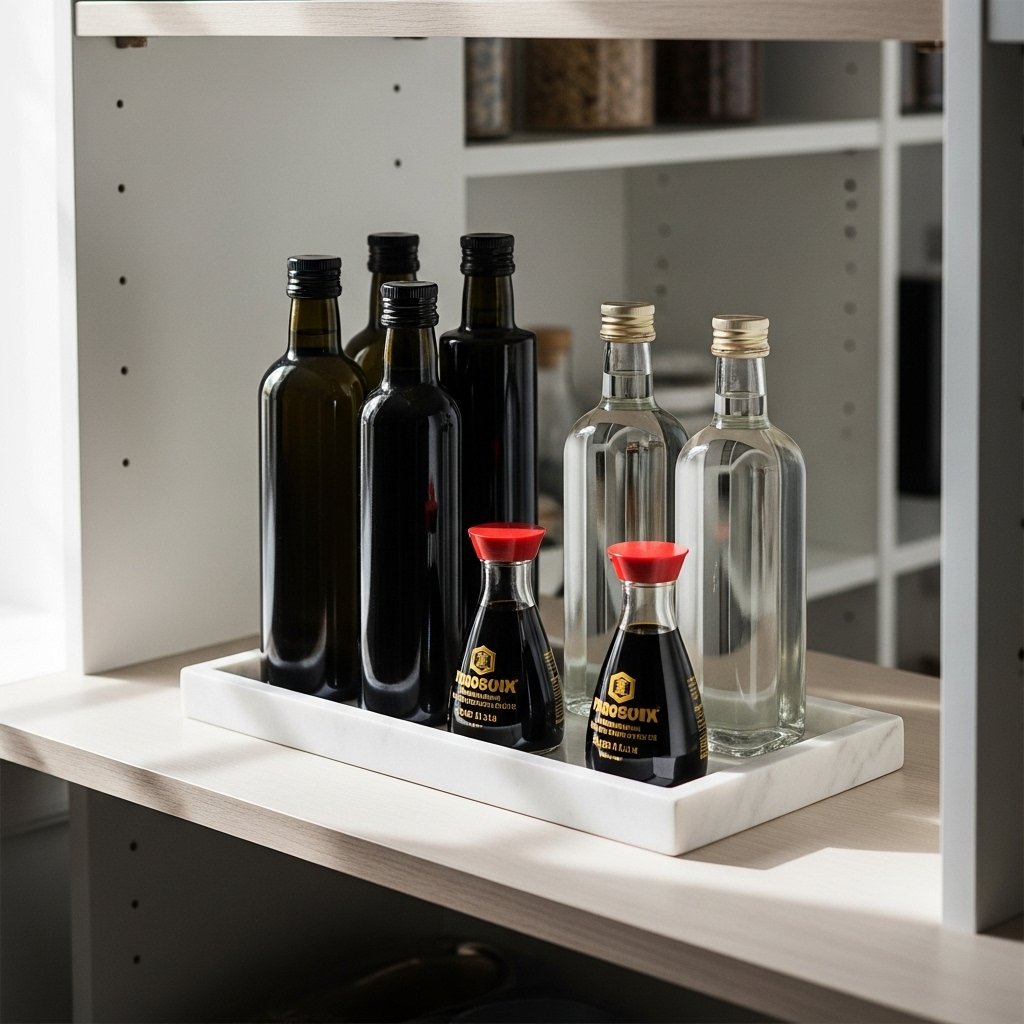
Oils and vinegars leak. They drip. They leave sticky rings on shelves that attract dust and create a persistent cleaning problem.
A dedicated tray or lazy Susan for oils, vinegars, soy sauce, and liquid condiments contains the leakage to one surface that can be lifted out and wiped clean in thirty seconds.
A marble tray, a wooden board, or a simple rimmed metal tray works for this. The container groups the category visually and functionally.
Position the tray at the most accessible height in the pantry, eye level or slightly below, since these are among the most frequently used pantry items.
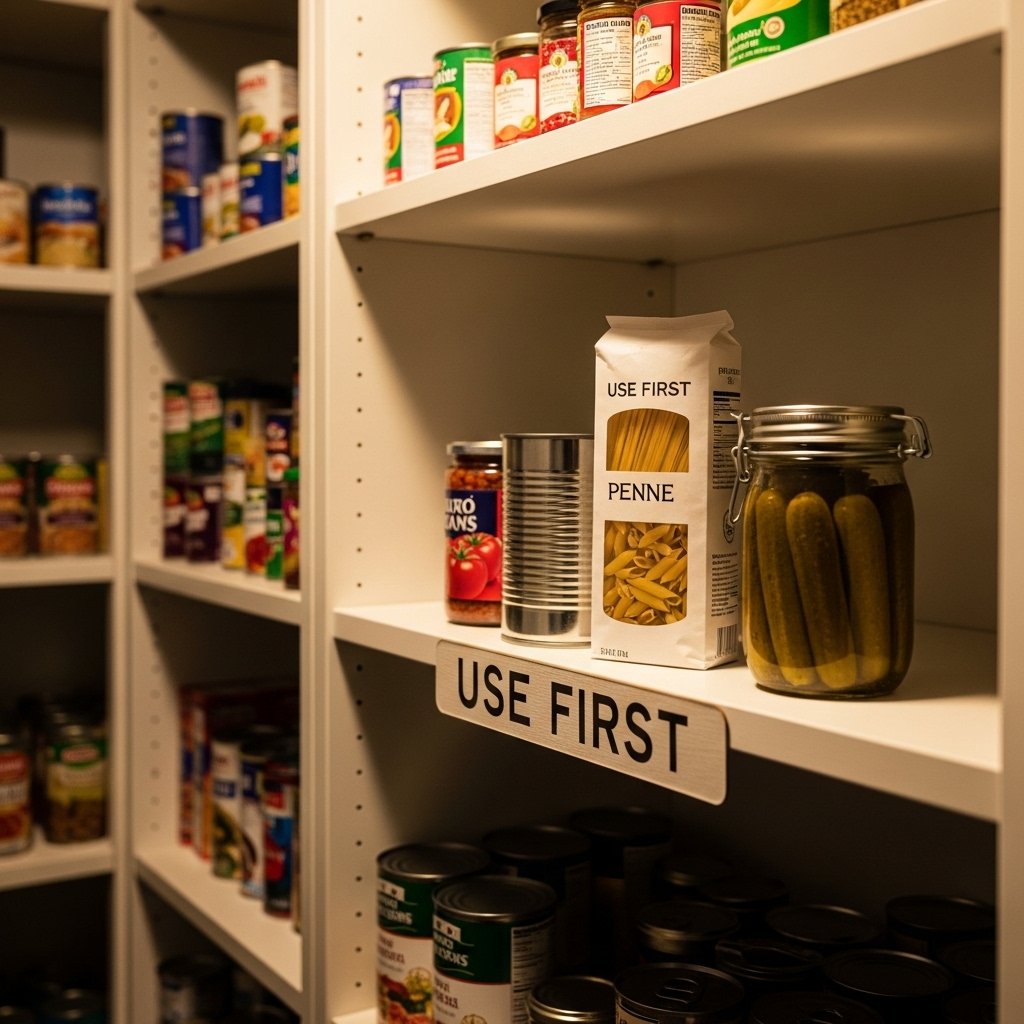
9. Rotate Stock Using First In, First Out
A beautiful pantry that wastes food is not an organized pantry. It is a well-photographed one.
The first-in, first-out principle places new purchases behind existing stock so the older items are always at the front and used first. No item expires at the back of a shelf while a newer version of itself sits in front of it.
This requires a brief restocking discipline: when new pasta arrives, it goes behind the existing pasta. This takes ten seconds. The alternative is throwing away expired food, which is expensive and wasteful.
Decanted canisters make this easier. Fill from the top and use from the bottom or front. The system works automatically.
10. Dedicate a Shelf to Baking Equipment
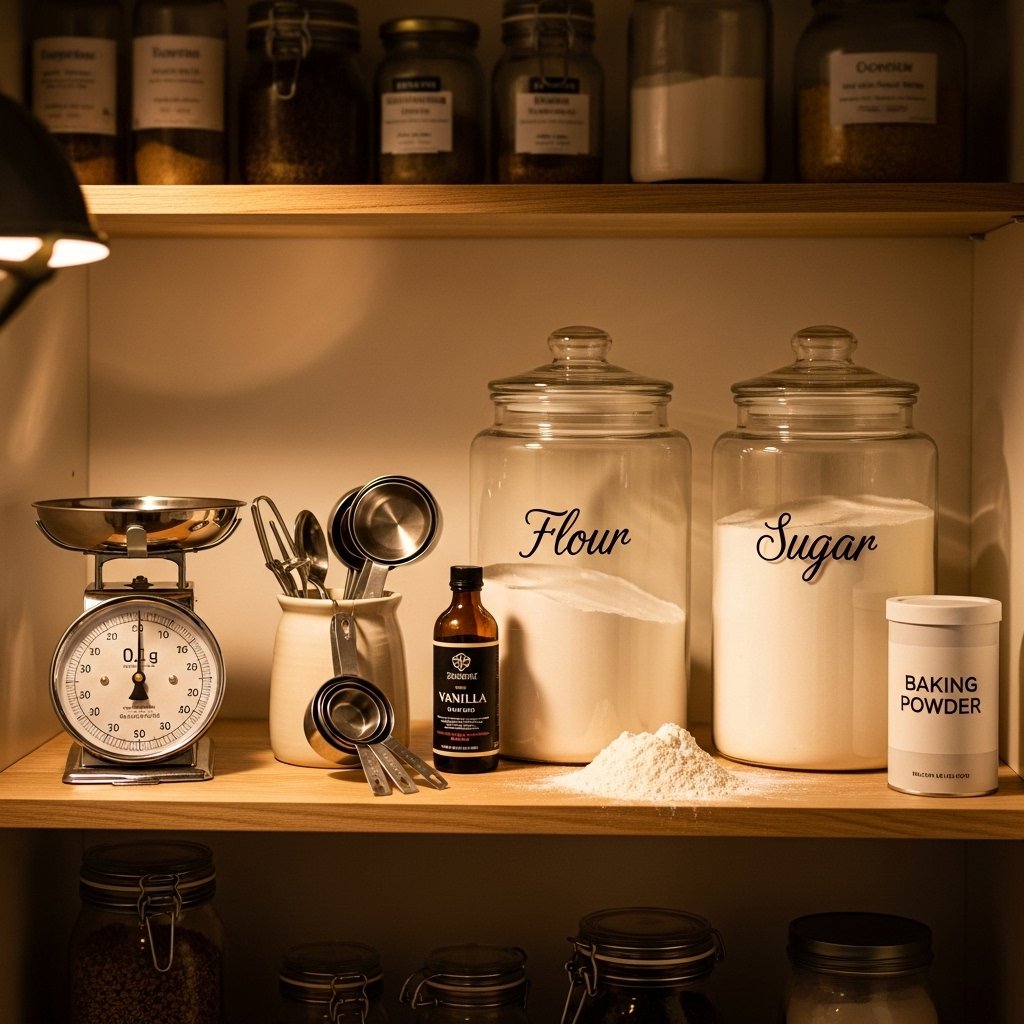
Baking ingredients and baking equipment belong together. Separating the flour from the mixing bowls forces two trips to two locations every time you bake.
A baking shelf holds dry ingredients in canisters, measuring cups and spoons in a small container, vanilla extract, baking powder, cocoa, chocolate chips, and a small kitchen scale together.
When you bake, you go to one shelf and everything is there. The efficiency of this arrangement is not subtle. It is felt every single time you bake.
Position the baking shelf lower if children participate in baking. Accessibility encourages participation and independence.
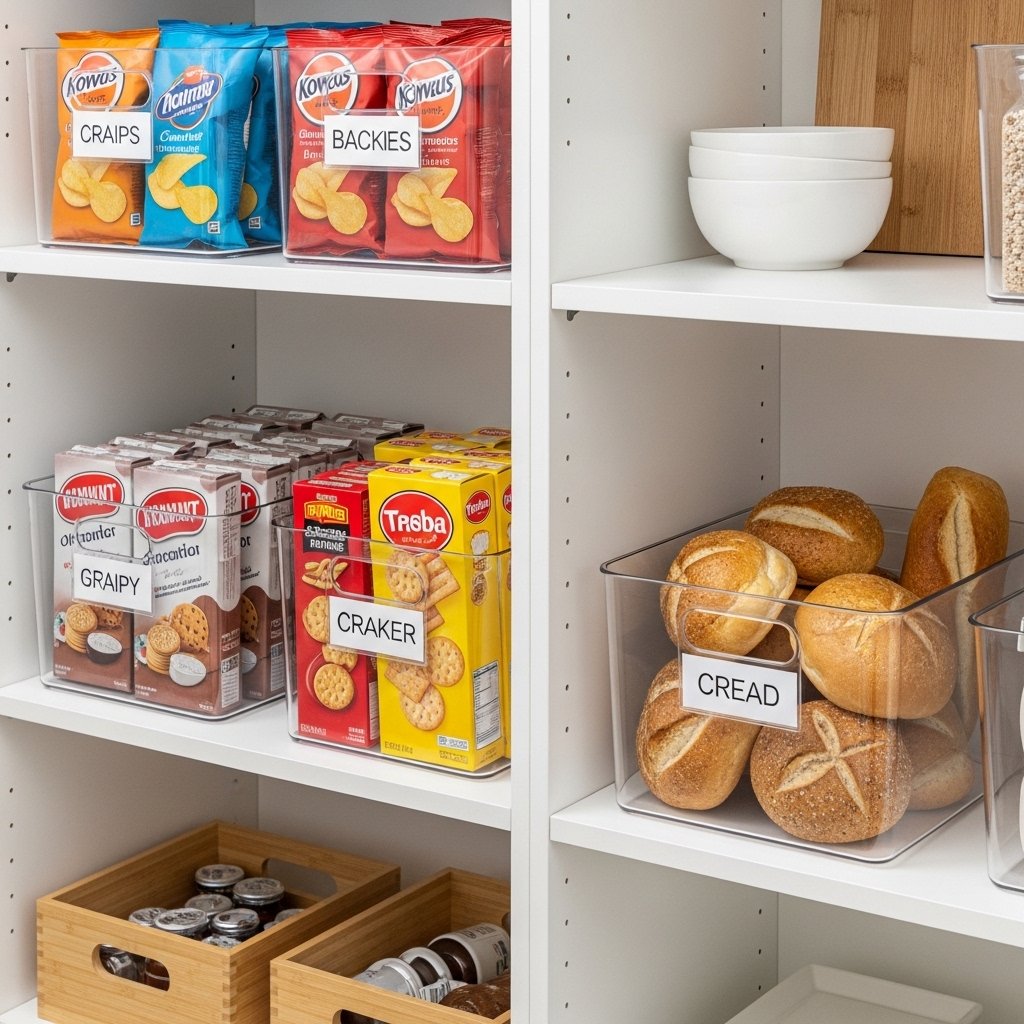
11. Use Clear Bins for Awkward Packaging
Some pantry items resist decanting: chip bags, bread rolls, odd-shaped boxes, and packets that are opened and resealed repeatedly. Clear bins contain these without requiring decanting.
A clear rectangular bin on a shelf holds loose, awkwardly shaped packaging in a contained, visible group. You see everything in the bin without removing it. The shelf stays tidy even when the contents are not.
Measure your shelves before buying bins. A bin that doesn’t fit the shelf depth wastes the back portion of the shelf or overhangs and creates instability.
Stackable clear bins double the vertical storage on any shelf they occupy.
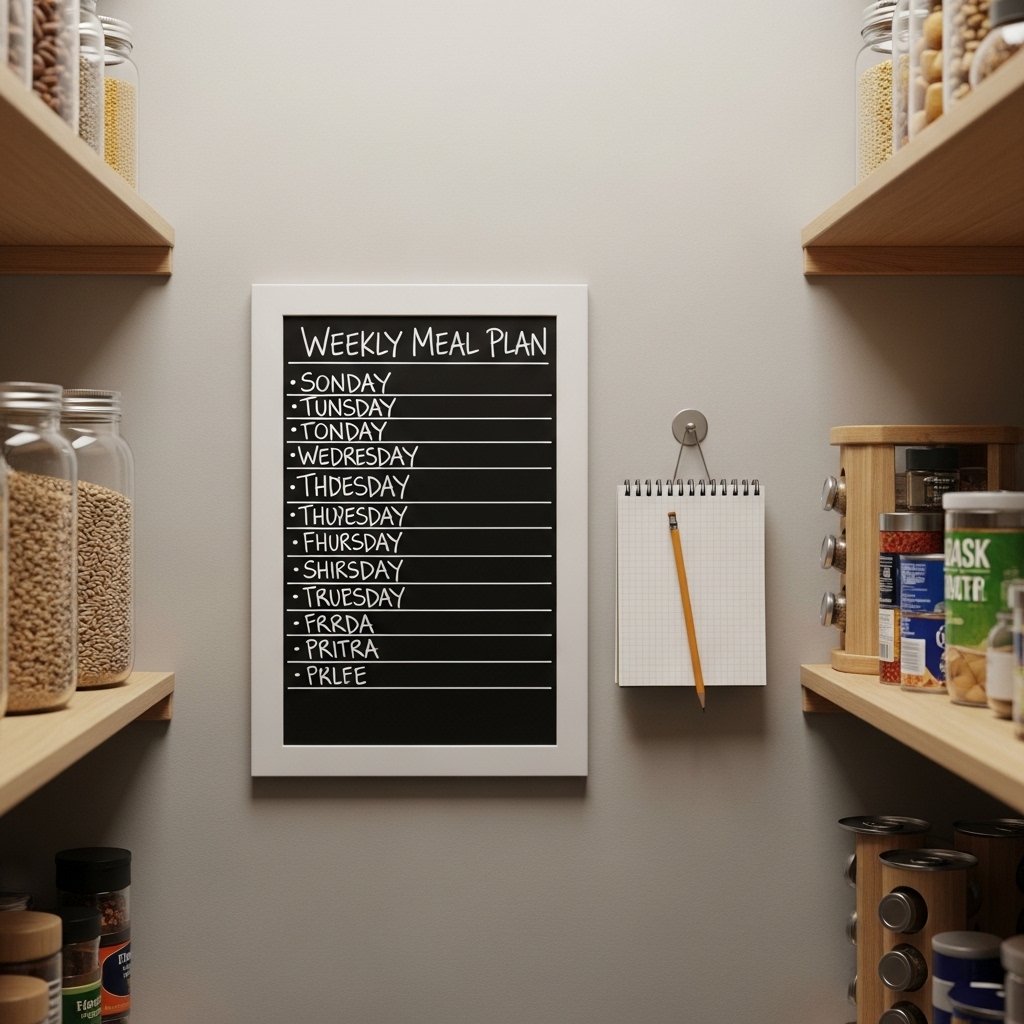
12. Create a Meal Planning Station Within the Pantry
A pantry used for meal planning is more than a storage space. It becomes a decision-making environment.
A small whiteboard or chalkboard panel on the pantry wall or inside the door holds the week’s meal plan, the shopping list in progress, and notes about what’s running low.
A small notepad and pen on a hook beside it means the shopping list is always where the pantry is. When you notice you’re low on something, you write it down immediately, in the location where you discovered the shortage.
This closes the gap between noticing a need and recording it that most households never fully solve.
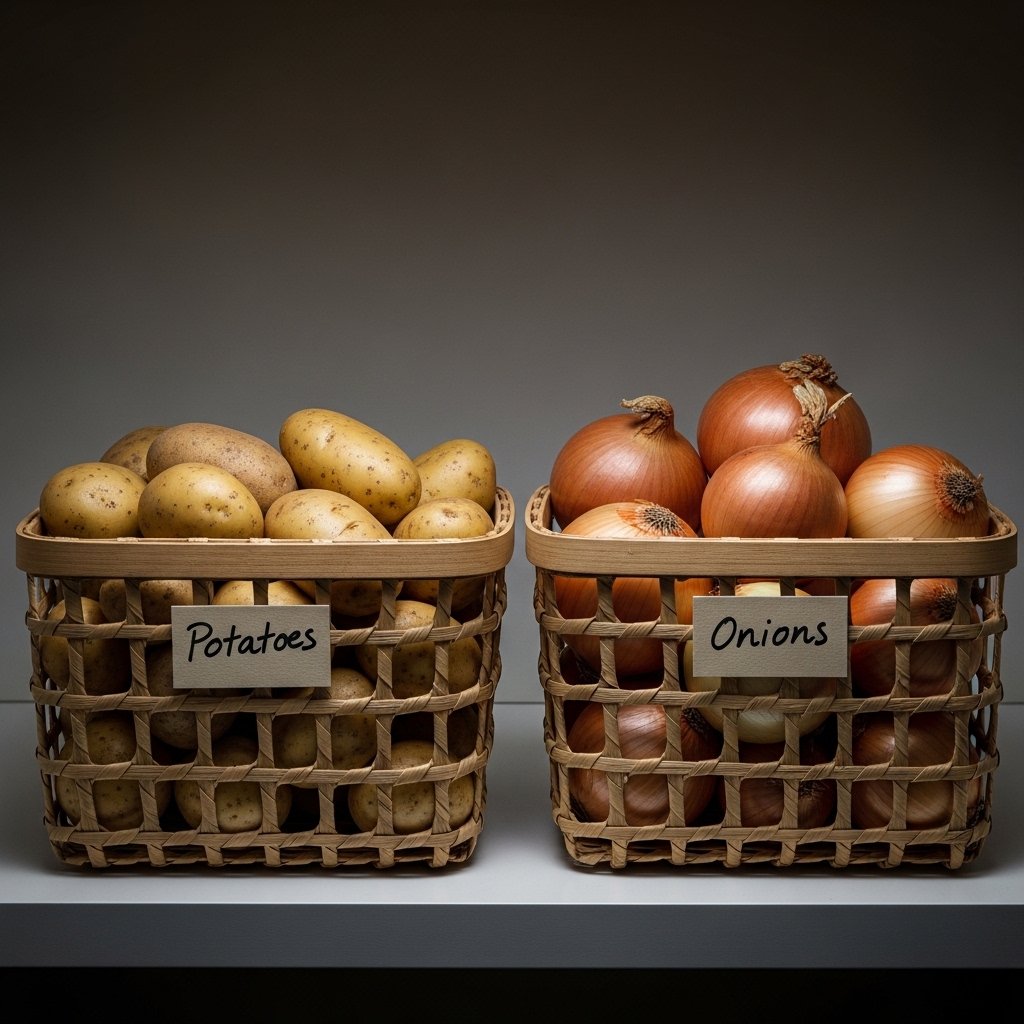
13. Store Root Vegetables in a Ventilated Basket
Potatoes, onions, and garlic do not belong in the refrigerator. They belong in a cool, dark, ventilated space, which a pantry provides naturally.
A ventilated woven basket or wire bin on a low pantry shelf holds root vegetables in the conditions they need. The ventilation prevents moisture buildup. The low shelf position keeps them in the cool zone of the pantry.
Store onions and potatoes separately. Onions emit gases that accelerate potato spoilage. Two baskets side by side, visually similar, functionally separate.
Label the baskets. It seems obvious but the label makes the system maintainable when someone else restocks.
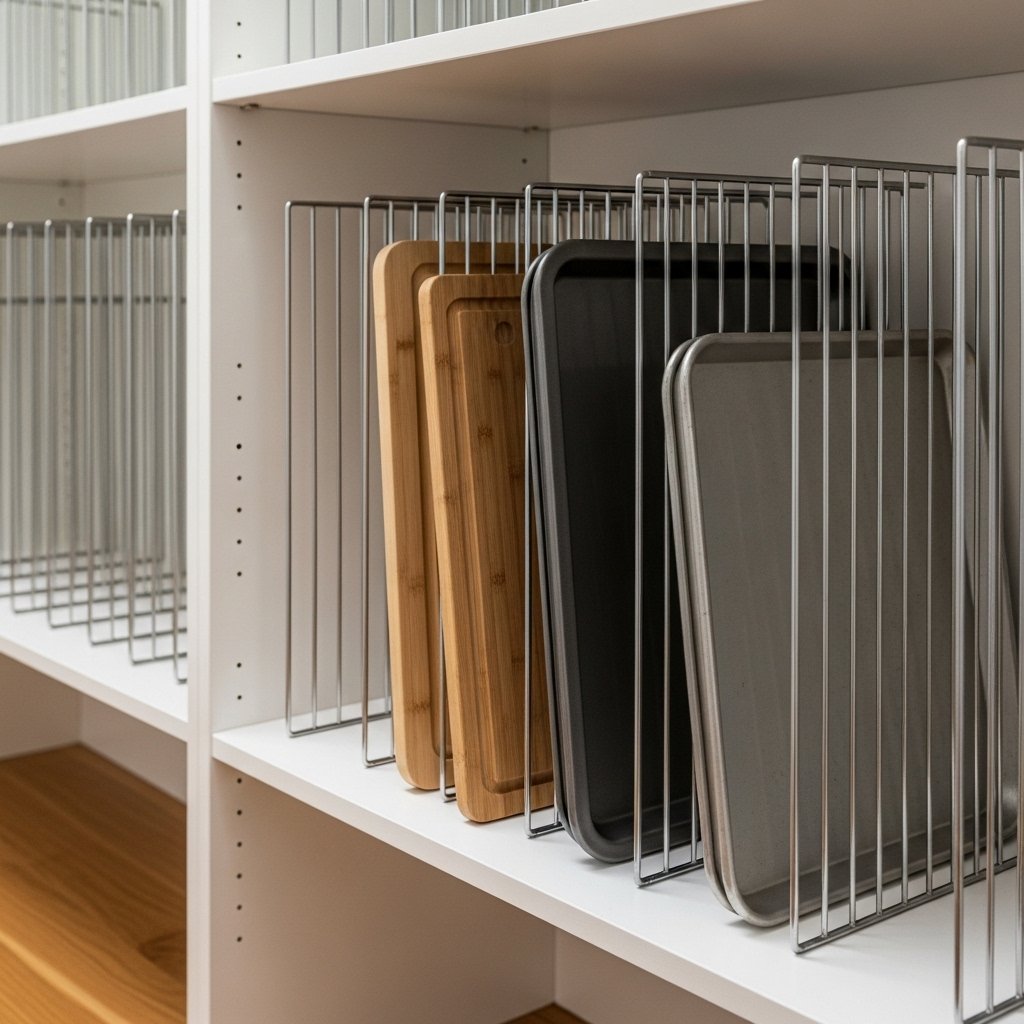
14. Use Vertical Dividers for Baking Trays and Boards
Baking trays, cutting boards, and sheet pans stored in a horizontal stack are a daily frustration. The one you need is always at the bottom.
Vertical dividers on a pantry shelf allow trays and boards to stand upright, individually accessible, like books on a shelf. Pulling out one tray requires no shuffling of others.
Wire dividers, wooden dowel separators, and purpose-made tray organizers all work for this. The choice depends on the shelf material and the weight of what’s being stored.
This is a ten-minute installation that eliminates a frustration that occurs daily in most kitchens.
15. Designate an Expiry Audit Shelf
Every pantry accumulates items that are approaching or past their expiry date. A designated audit shelf makes dealing with this systematic rather than occasional.
When an item is nearing its expiry date, it moves to the audit shelf. Items on the audit shelf get priority in meal planning. They are the first things used when planning that week’s meals.
This shelf prevents the back-of-pantry graveyard where items expire quietly and are discovered months later. It makes expiry management proactive rather than reactive.
A small, visible shelf near the pantry entrance or at eye level works best. Out of sight means out of mind.
16. Make the Pantry Beautiful Enough to Maintain
An organized pantry that isn’t pleasing to look at doesn’t stay organized. Beauty and function are not competing values in a pantry. They are the same value.
Warm timber shelves instead of wire ones. Consistent canister sets instead of mismatched containers. A small plant on a shelf, a candle, or a beautiful oil bottle that earns its place visually.
When opening the pantry feels good, you close it the same way you found it. When it feels purely functional, the discipline required to maintain it erodes quickly.
The pantry is opened multiple times every day. It is one of the most frequently interacted-with spaces in any home. It deserves design consideration proportional to how often it’s used.