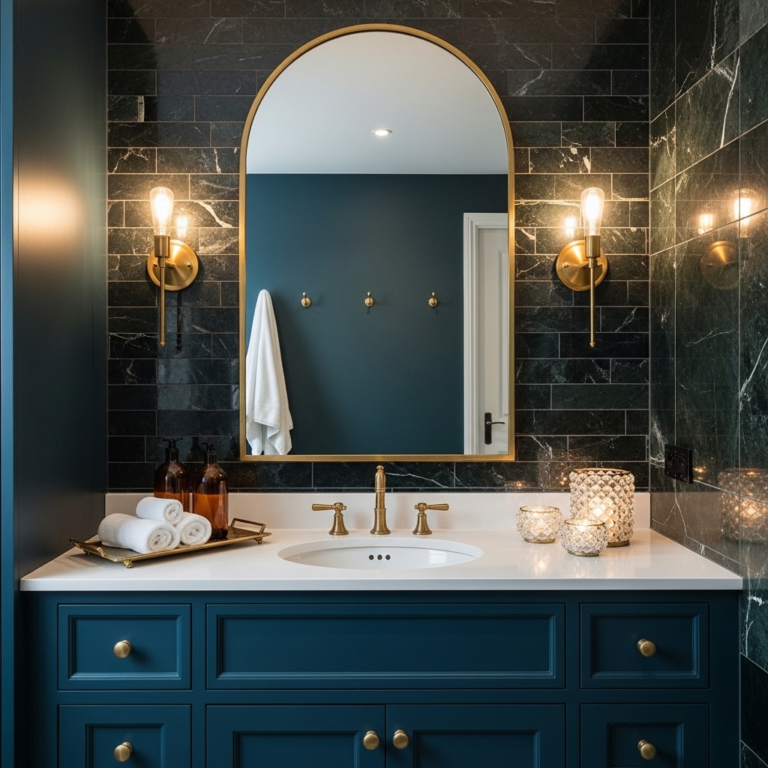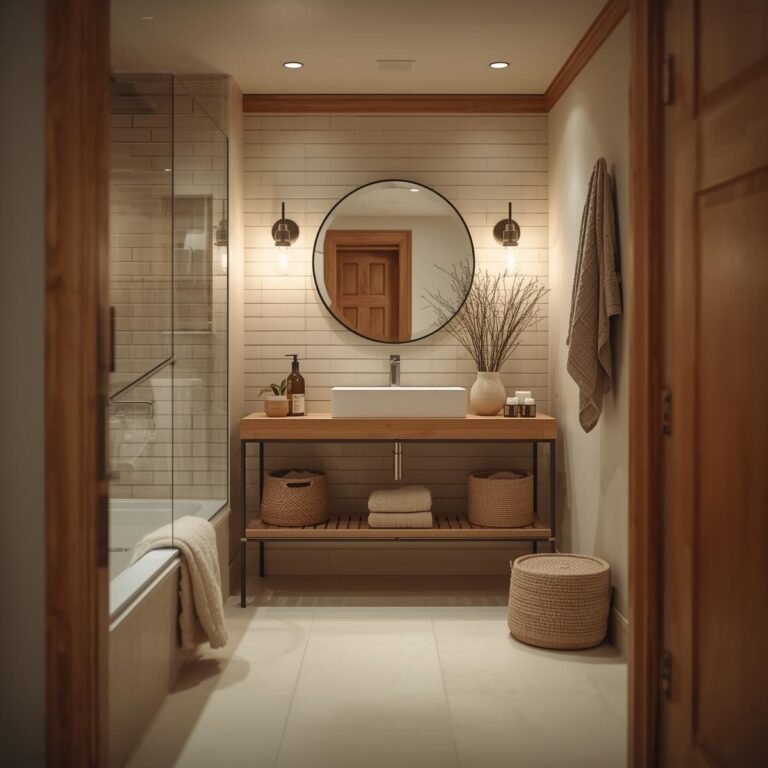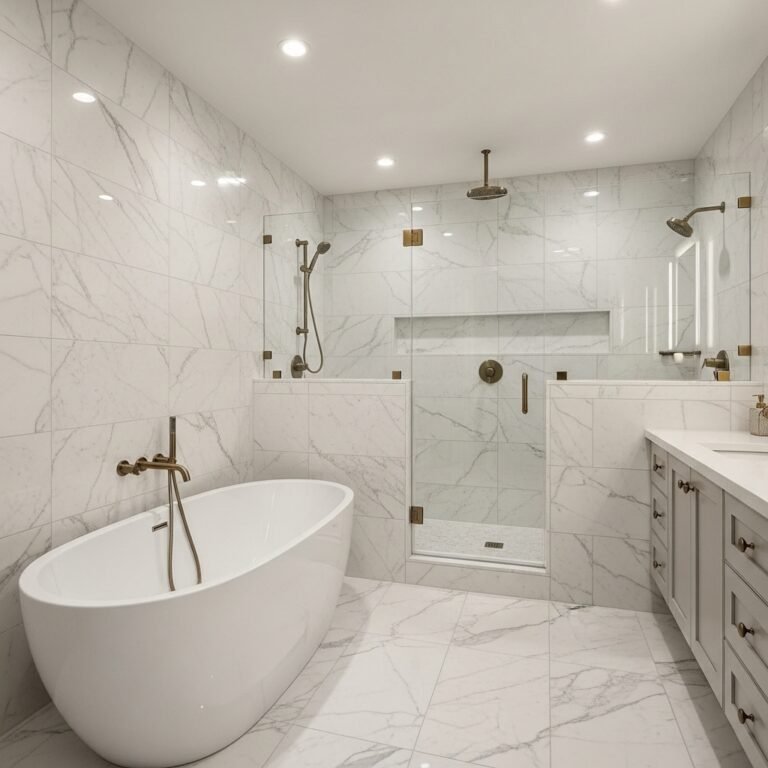
13 Bathroom Ideas for Small Spaces That Prove Tiny Can Be Truly Spectacular
A small bathroom is one of the most creatively rich design challenges in any home. The constraints are real — the square footage is limited, the fixtures are non-negotiable, and every decision must serve both beauty and function simultaneously. But the greatest bathroom designs in the world are not necessarily the largest ones. They are the ones that have been thought through most completely, designed most honestly, and executed most beautifully — and those qualities are entirely independent of size. In 2026, small bathroom design has become a genuine art form, one where the best practitioners use every centimeter of wall, floor, and ceiling to create spaces of extraordinary beauty, comfort, and personality. Here are 13 fresh, unique, and genuinely stunning small space bathroom ideas that go beyond the obvious and deliver real design inspiration.
1. 🪟 The Porthole Mirror — Nautical Precision in a Tiny Space
Replace the standard bathroom mirror with a large circular porthole-style mirror — a thick, beveled round mirror in a slim brass, black, or raw steel frame that references the precision engineering of nautical design. The circular mirror has a spatial magic that rectangular mirrors lack — because it has no corners, the eye travels around its circumference rather than stopping at its edges, and the room feels less bounded and more continuous as a result. A large porthole mirror — 80 to 100 centimeters in diameter — above a simple wall-mounted sink on a tiny sliver of wall makes even the most compact bathroom feel considered, complete, and deeply characterful. Pair with a single wall sconce on each side for flattering symmetrical lighting.

2. 🌿 The Micro Herb Wall — Fresh Living Above the Sink
Use the wall space directly above the bathroom sink — space that is typically occupied by a single mirror and nothing else — as a vertical micro garden of fresh living herbs in wall-mounted ceramic pocket planters. Three to five small ceramic wall-mount planters arranged in a pattern above or beside the mirror, each containing a small herb — mint, rosemary, lavender, small-leafed basil — that thrives in the humid bathroom environment and fills the room with fragrance every time hot water runs. The living herbs above the sink make even the most functional bathroom moment — the morning face wash, the evening teeth brushing — feel connected to something natural and alive. The herbs also clean the air and replace the need for artificial fragrance in the bathroom entirely.

3. 🎭 The Dramatic Doorless Shower Nook
In a small bathroom, the shower enclosure is typically the most space-consuming element — its doors, its frame, its tray, and its visual bulk all contribute to making the room feel smaller than it is. Remove all of it. Carve a dedicated shower nook into a natural wall recess or simply define a corner with two tiled walls and no enclosure at all — no door, no screen, no tray. The floor simply slopes to a drain. The tile runs continuously from the shower zone across the rest of the bathroom floor. The absence of any enclosure element makes the bathroom feel immediately and dramatically more spacious. A curved or angled partial wall instead of a door provides practical splash protection while taking up a fraction of the visual space of a glass enclosure.

4. 💡 Cove Lighting Beneath the Vanity — The Floating Glow
Install LED cove lighting along the underside of a floating vanity unit so that the vanity appears to hover above the floor on a cushion of warm light. This technique — borrowed from high-end hotel bathroom design — does two extraordinary things simultaneously: it makes the vanity appear lighter, less visually heavy, and more elegant, and it creates an indirect ambient floor-level glow that makes the bathroom feel larger, warmer, and more atmospheric at any hour. The warm light washing across the floor from beneath the vanity is one of the most flattering, most spa-like lighting effects available in bathroom design, and it costs only the price of a length of LED strip and a Sunday afternoon to install.

5. 🏺 The Concrete Feature Wall — Raw Texture in Small Doses
Apply a concrete microcement or polished plaster finish to a single wall of the small bathroom — typically the shower wall or the wall behind the vanity — creating a raw, textural surface that brings enormous architectural depth and tactile richness to a small space without overwhelming it. Concrete microcement applied to a single wall costs significantly less than tiling the same surface, can be applied directly over existing tiles in many cases, and creates a surface of extraordinary beauty — its subtle natural variation in tone and texture making it look handmade and architectural simultaneously. The raw concrete wall reads as modern and sophisticated while making the white fixtures and fittings around it appear crisper and more deliberate than they would against a tiled or painted background.

6. 🌊 The Penny Round Floor — Small Tiles for Small Spaces
The floor of a small bathroom is a relatively modest surface area — which makes it the perfect place to use a tile that would be too precious, too intricate, or too expensive to commit to in a larger space. Penny round tiles — small, circular mosaic tiles approximately 25mm in diameter — laid in a continuous pattern across the entire bathroom floor create a surface of extraordinary visual richness and handmade quality. In a small bathroom the entire floor can be tiled in penny rounds for the cost of a single box or two, yet the effect is completely spectacular. Choose a color gradient — from deep navy at the edges fading to pale pearl at the center — or a single rich tone in deep teal, warm terracotta, or classic white with dark grout. The penny round floor transforms the most ordinary bathroom moment into something worth looking down at.

7. 🎪 The Curved Shower Wall — Soft Architecture in Tight Quarters
Replace the standard right-angled corner shower with a curved shower wall — a gentle curve rather than a sharp corner that makes the transition from shower zone to bathroom feel soft, architectural, and intentional rather than merely functional. A curved shower wall tiled in the same tile as the floor and remaining walls creates a completely seamless, organic form that makes the small bathroom feel like it was carved from a single material. The curve also has a practical benefit: it eliminates the difficult-to-clean right-angle corner where mold typically accumulates. A curved half-wall with no door above it — just open space — further enhances the spaciousness and makes the shower zone feel genuinely architectural rather than merely utilitarian.

8. 🌙 The Starlight Ceiling — Tiny LEDs, Enormous Magic
Install a fiber optic starlight ceiling panel above the bath or shower zone of a small bathroom — a dark painted or dark tiled ceiling panel into which dozens of tiny fiber optic light points have been inserted, creating a miniature constellation of warm amber or cool white light overhead. The starlight ceiling transforms the act of bathing — particularly an evening bath — into something genuinely magical and transportive. Looking up at a sky of stars while lying in a warm bath in a room that smells of bath salts is a sensory experience of extraordinary quality. The dark starlight ceiling panel also has the visual effect of apparently raising the ceiling — the eye travels toward the light points at the furthest extent of its vision and the ceiling appears higher and more distant than it is.

9. 🎨 The Bold Painted Ceiling & Plain Walls Reversal
In a small bathroom, the standard approach is to keep everything light and add color sparingly. This idea reverses the formula completely — keeping the walls in the simplest possible plain white or stone, and painting the ceiling in the most beautiful, most unexpected, deeply saturated color available. Deep coral, rich forest green, warm amber, inky navy — applied only to the ceiling while the walls remain completely neutral. The effect is immediately and surprisingly spatial — the bold colored ceiling draws the eye upward rather than allowing it to settle on the walls and measure the room’s width. The plain white walls reflect light while the colored ceiling absorbs and enriches it. The result is a small bathroom of extraordinary personality that feels taller rather than smaller for its bold ceiling color.

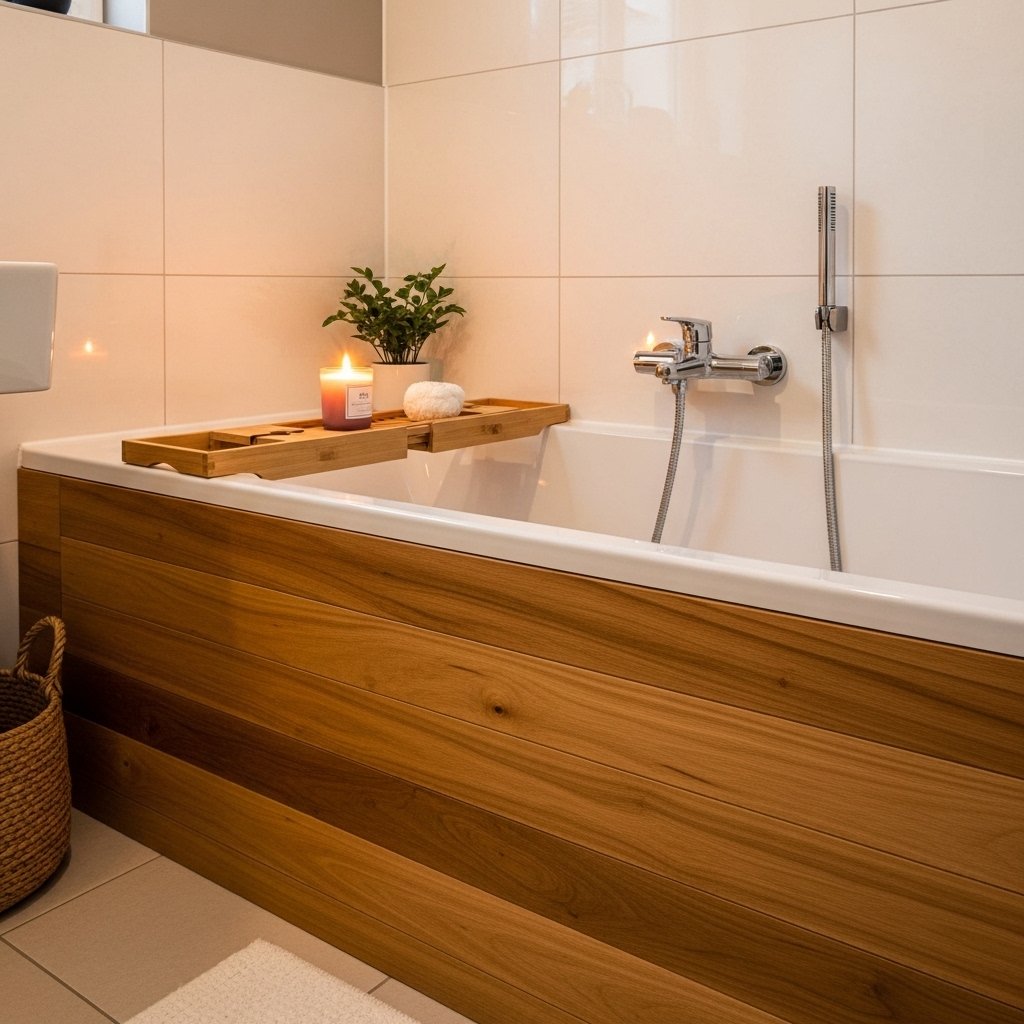
10. 🪵 The Wooden Bath Panel — Warm Timber in a Cold Room
Most baths sit on a cold, tiled panel — a functional solution that contributes nothing aesthetically and makes the bath feel like a piece of sanitary ware rather than a piece of furniture. Replace the tiled bath panel with a tongue-and-groove timber panel in natural teak, oiled oak, or painted wood — the same material approach used in traditional Japanese onsens and Scandinavian saunas — and the bath is immediately transformed from a fixture into a piece of warm, beautiful furniture that belongs in the room rather than sitting in it. The wooden bath panel introduces natural warmth into a room that is otherwise dominated by cold, hard, reflective materials — tile, chrome, porcelain — and the contrast of warm wood against those cool materials is one of the most beautiful material stories available in bathroom design.
11. 🌸 The Recessed Toilet Nook — Hidden Behind a Half Wall
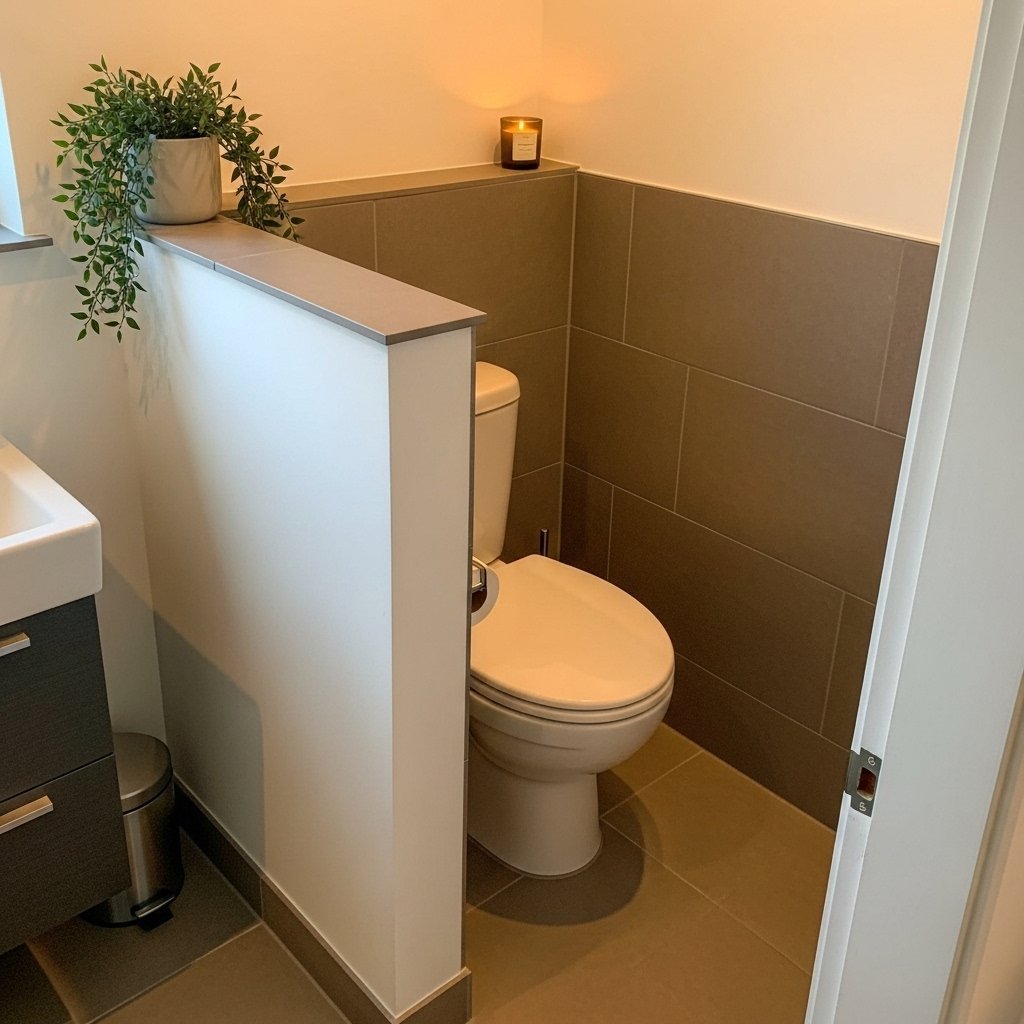
Create a dedicated toilet nook in the small bathroom by building a simple half-wall or full partition that encloses the toilet in its own alcove, separating it visually from the rest of the bathroom. The toilet nook — even when only partially screened by a half-wall — creates an immediate sense of order and purpose in the bathroom layout, making the space feel larger by organizing it into distinct zones. The half-wall that creates the nook can be used productively on its bathroom-facing side: a flat surface at the right height for a potted plant, candles, or a small art piece. Tile the inside of the nook in a different, slightly richer tile than the rest of the bathroom to define it as its own architectural moment.
12. 💎 The Jewel Box Powder Room — All-In Maximalism
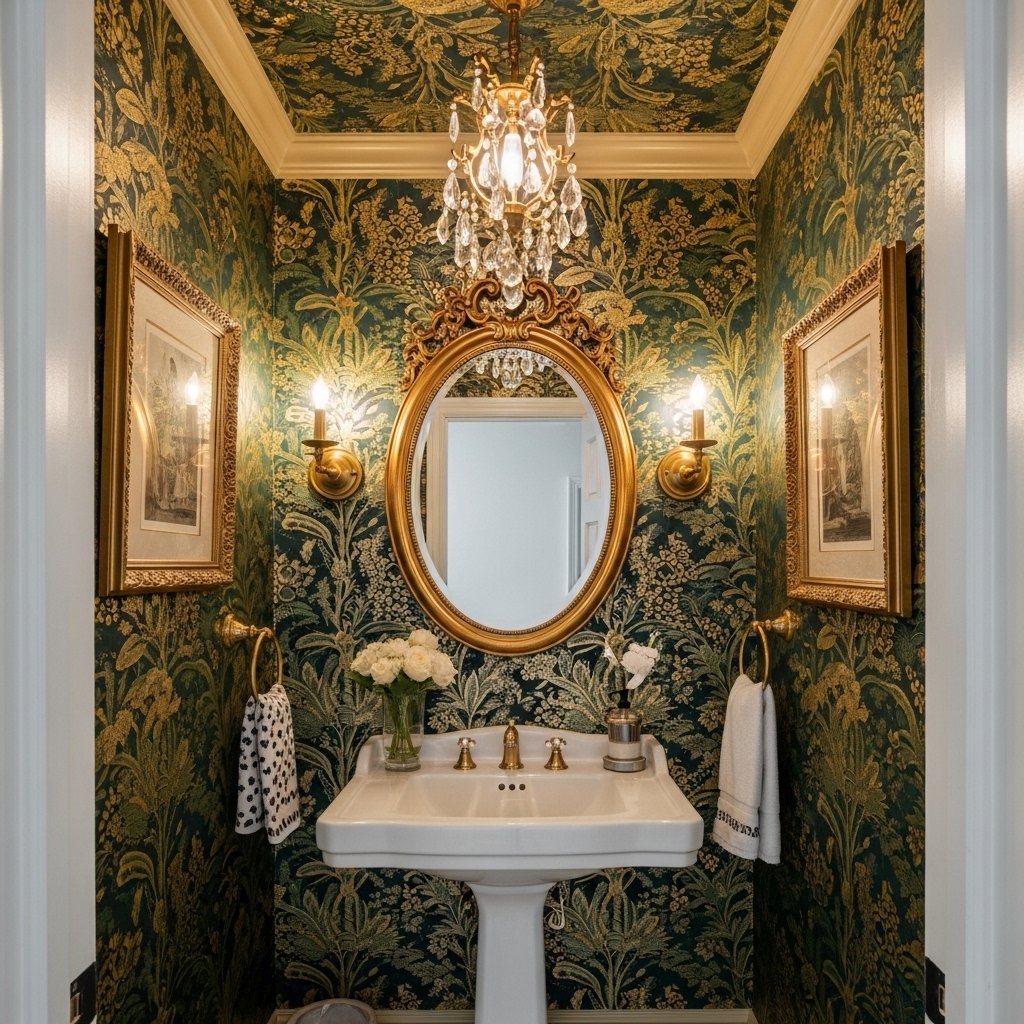
The small powder room or guest bathroom — typically half a room in size and visited only briefly by guests — is the perfect place to deploy the most extraordinary, most maximalist, most over-the-top design ideas that would be too intense for a full bathroom. Cover every wall and the ceiling in the most spectacular wallpaper you can find — a dramatic botanical, a vintage toile, a bold geometric in jewel tones. Add a pedestal sink in a classical form, an ornate gilded mirror, a small crystal chandelier from the ceiling, brass wall sconces, and a collection of beautiful objects on every available surface. The small powder room as jewel box is one of the great design opportunities in any home — it is small enough that even the most expensive materials and most intense patterns are affordable in the quantities required, and brief enough in its use that the intensity of the decoration never becomes overwhelming.
13. 🏡 The Integrated Vanity & Storage Tower
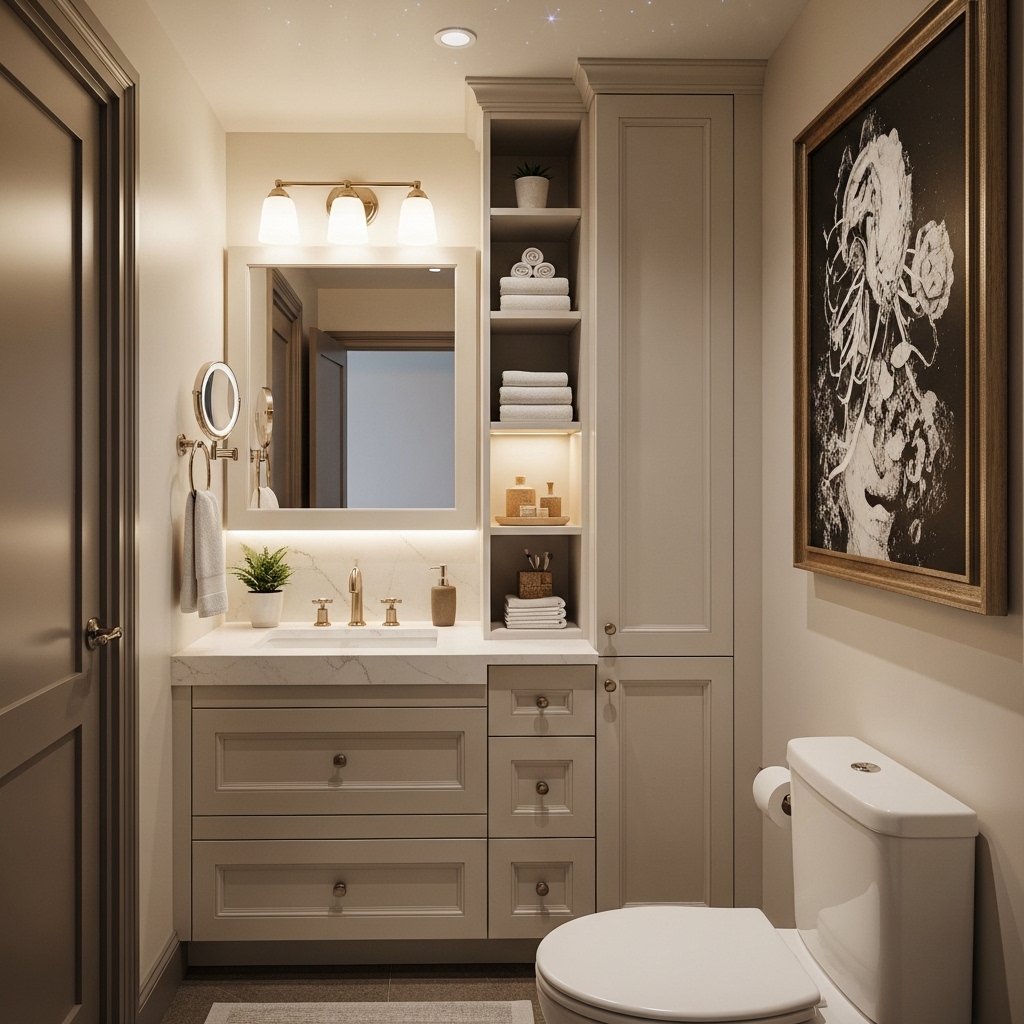
The most space-efficient and most design-intelligent storage solution for a small bathroom — building a floor-to-ceiling storage tower directly beside or above the vanity that provides an entire bathroom’s worth of storage in a footprint of less than half a square meter. The tower contains: a mirrored cabinet at face height for daily-use items, open shelving above for decorative objects and towels, deep closed drawers below the vanity surface for cleaning products and spare supplies, and a pull-out section for a laundry bag. The entire unit is built in the same cabinetry material and finish as the vanity, so it reads as a single, unified piece of bathroom furniture rather than a collection of separate storage items. The integrated tower makes the small bathroom feel both more spacious — because all storage is contained and ordered — and more luxurious — because everything has a place.