19 Dining Room Inspirations for Every Home Style
The dining room is the one space in a home that has to work for a quiet breakfast alone and a table full of people on a Friday night. Most dining room advice treats these as two different problems. They are not. Get the base right and the room handles both without any rearranging. Here are 19 directions you can take it, from calm and minimal to layered and dramatic.
1. The warm wood dining room that never goes out of style
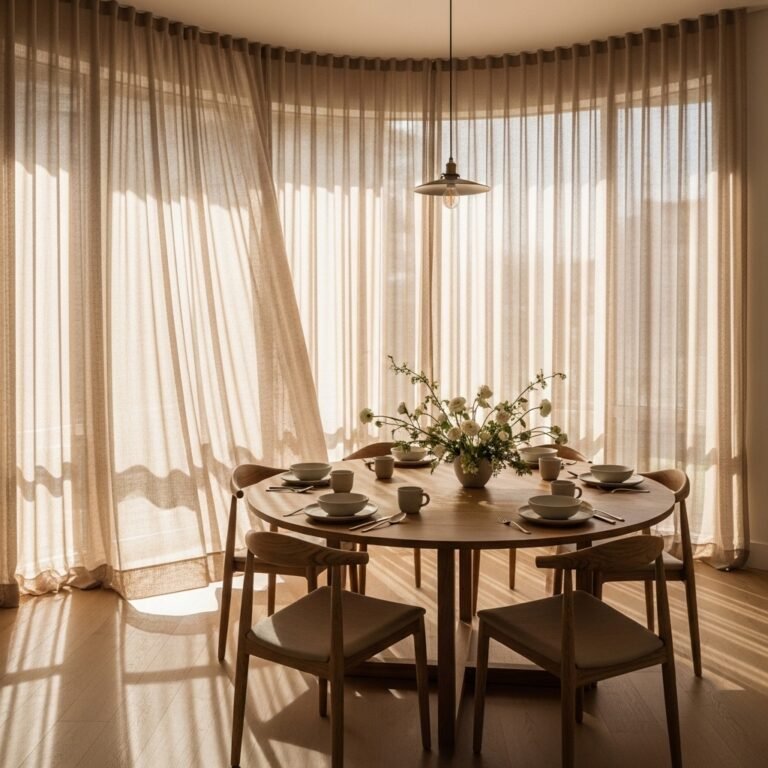
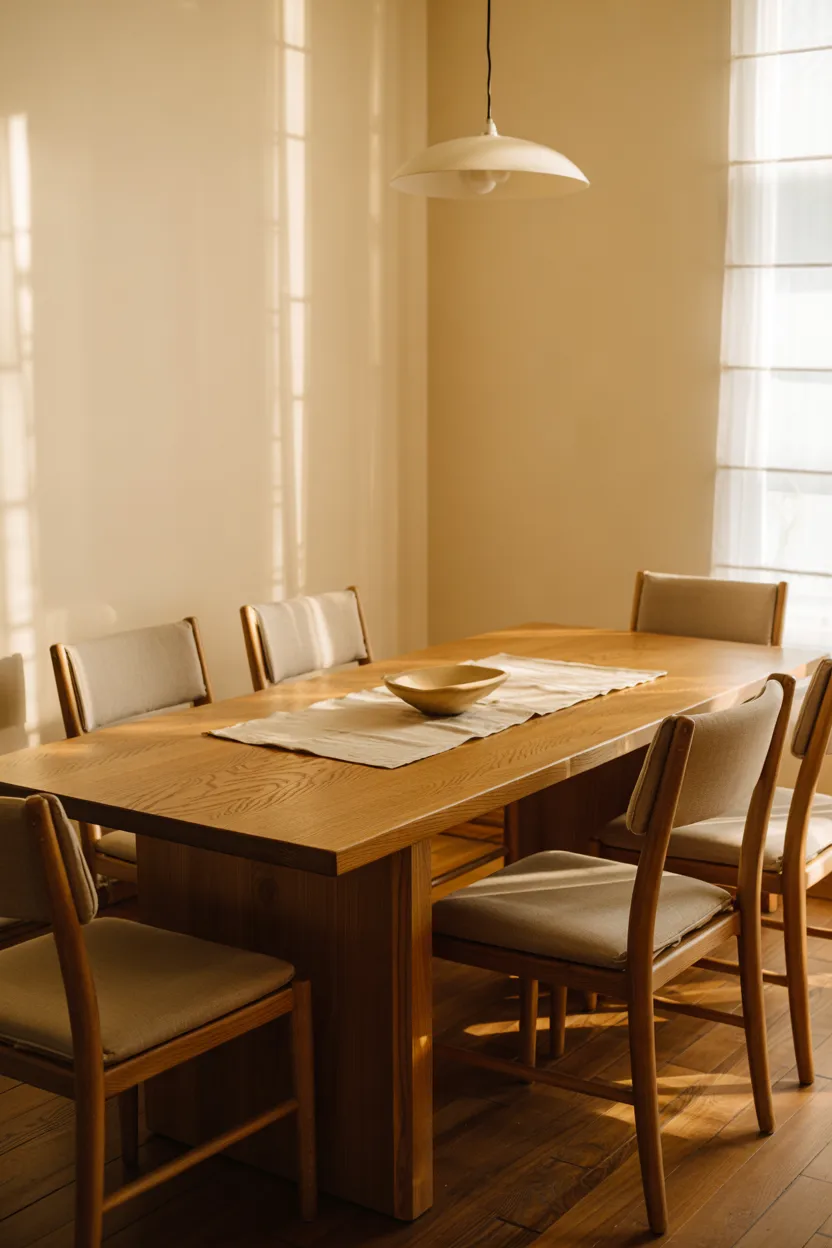
There is a reason warm wood dining rooms keep showing up decade after decade. A solid oak or walnut table with natural grain visible through a matte finish, surrounded by chairs in linen or leather, is one of those combinations that works in a small apartment and a large house equally well. The warmth of the wood does most of the heavy lifting. You do not need much else on the walls or the table to make the room feel complete. Add a pendant light with a warm bulb directly above the table and the whole setup reads as intentional without requiring any further effort. This is the dining room that photographs well at every meal, not just the styled ones.
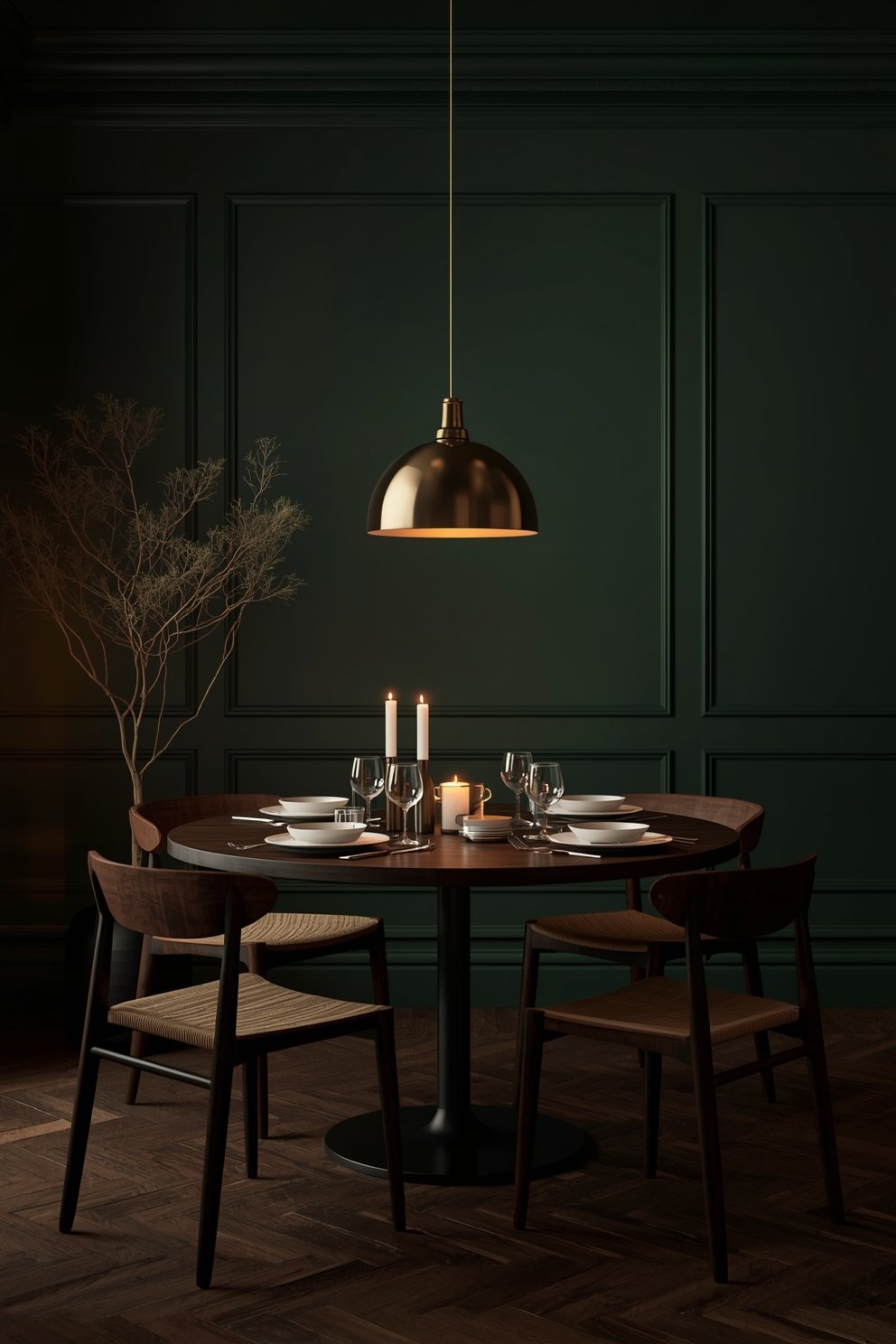
2. Moody dark walls that make dinner feel like an event
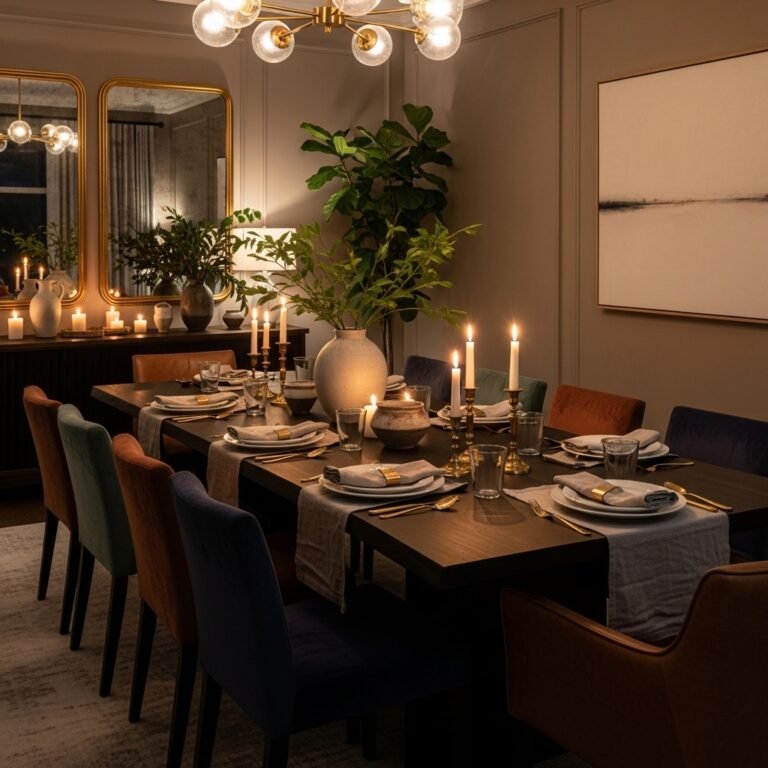
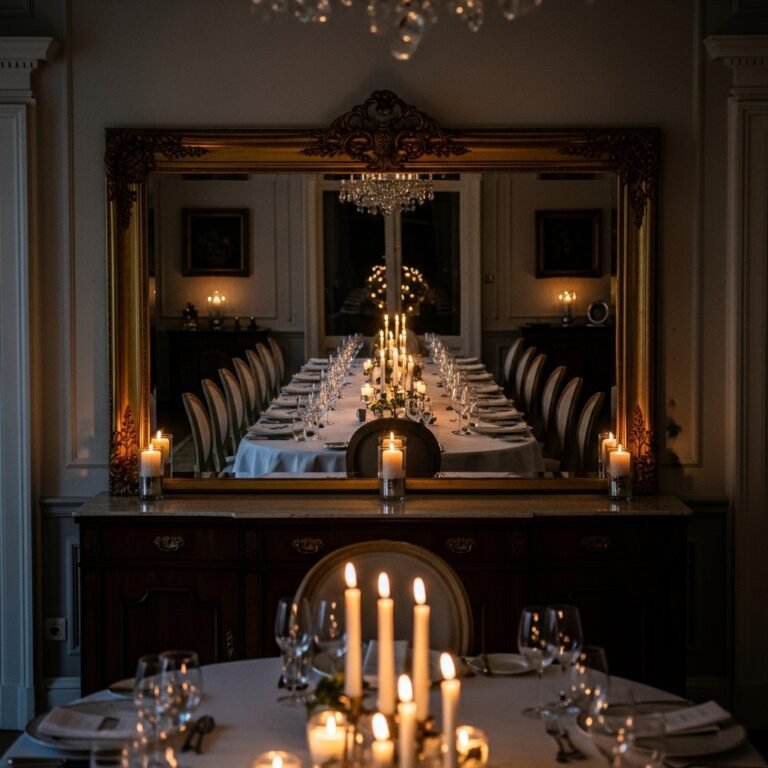
Most people are afraid of dark walls in a dining room and most people are wrong to be afraid. A deep forest green, charcoal, or navy wall behind a dining table does something that no light wall can replicate. It makes the room feel contained and deliberate, like the space was designed specifically for sitting down and staying a while. The darkness also makes candlelight and warm pendant lighting look dramatically better. Brass or gold fixtures against a dark wall is one of those combinations that looks expensive regardless of what either piece actually cost. If you are only going to paint one room in your home a bold color, the dining room is the right choice.
3. The all-white dining room done right
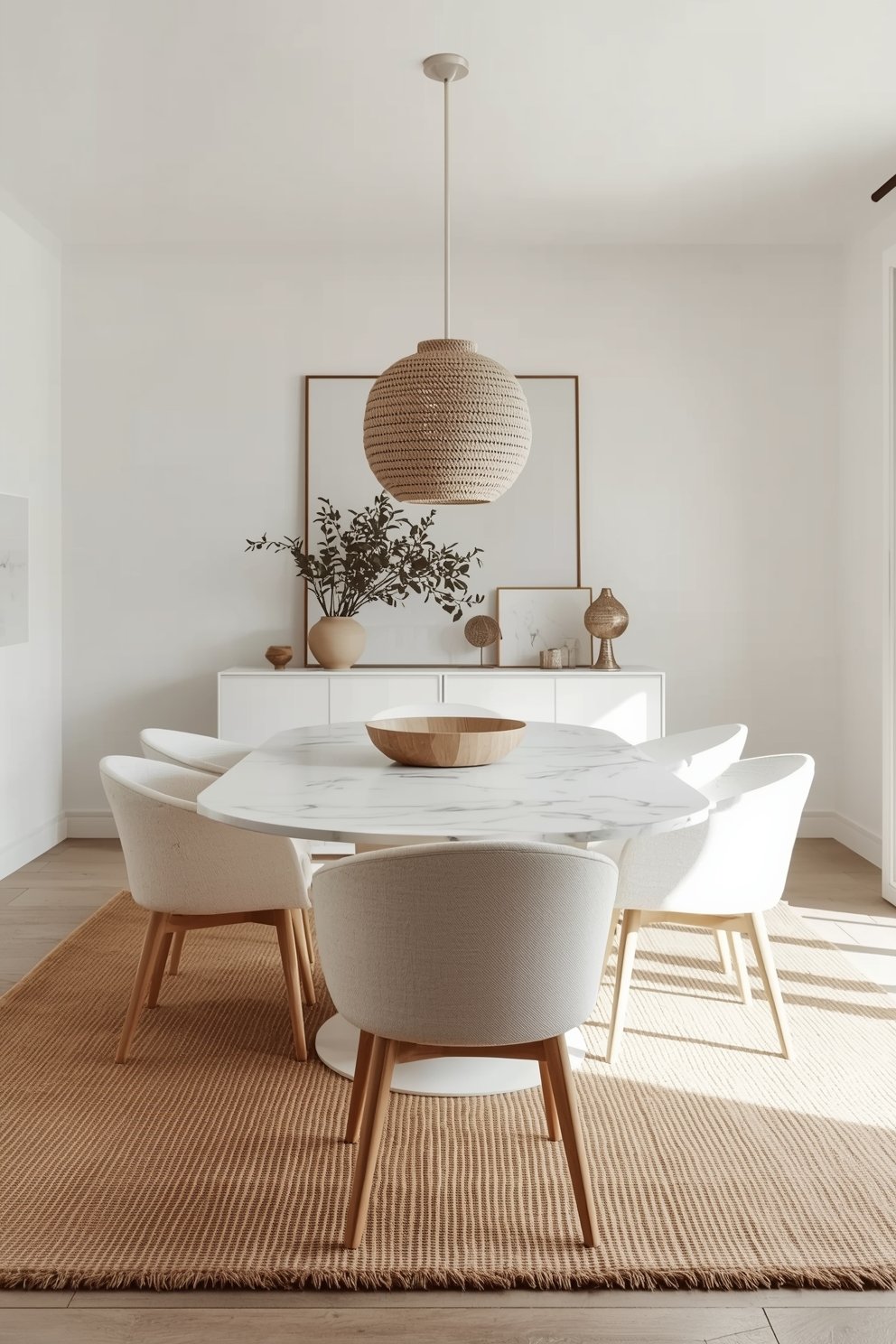
All-white dining rooms fail when everything is the same flat white with no variation in texture or tone. They work when you layer different whites against each other: a slightly warm white wall behind a cool white table, linen chairs that read as off-white in certain light, a ceramic pendant that has a handmade quality rather than a factory finish. The variation between surfaces is what stops it from looking sterile. Add one natural element, a wooden bowl on the table, a single branch in a tall vase, a jute rug underfoot, and the room stops reading as a showroom and starts reading as somewhere a real person eats breakfast.
4. Japandi dining for people who want calm at every meal
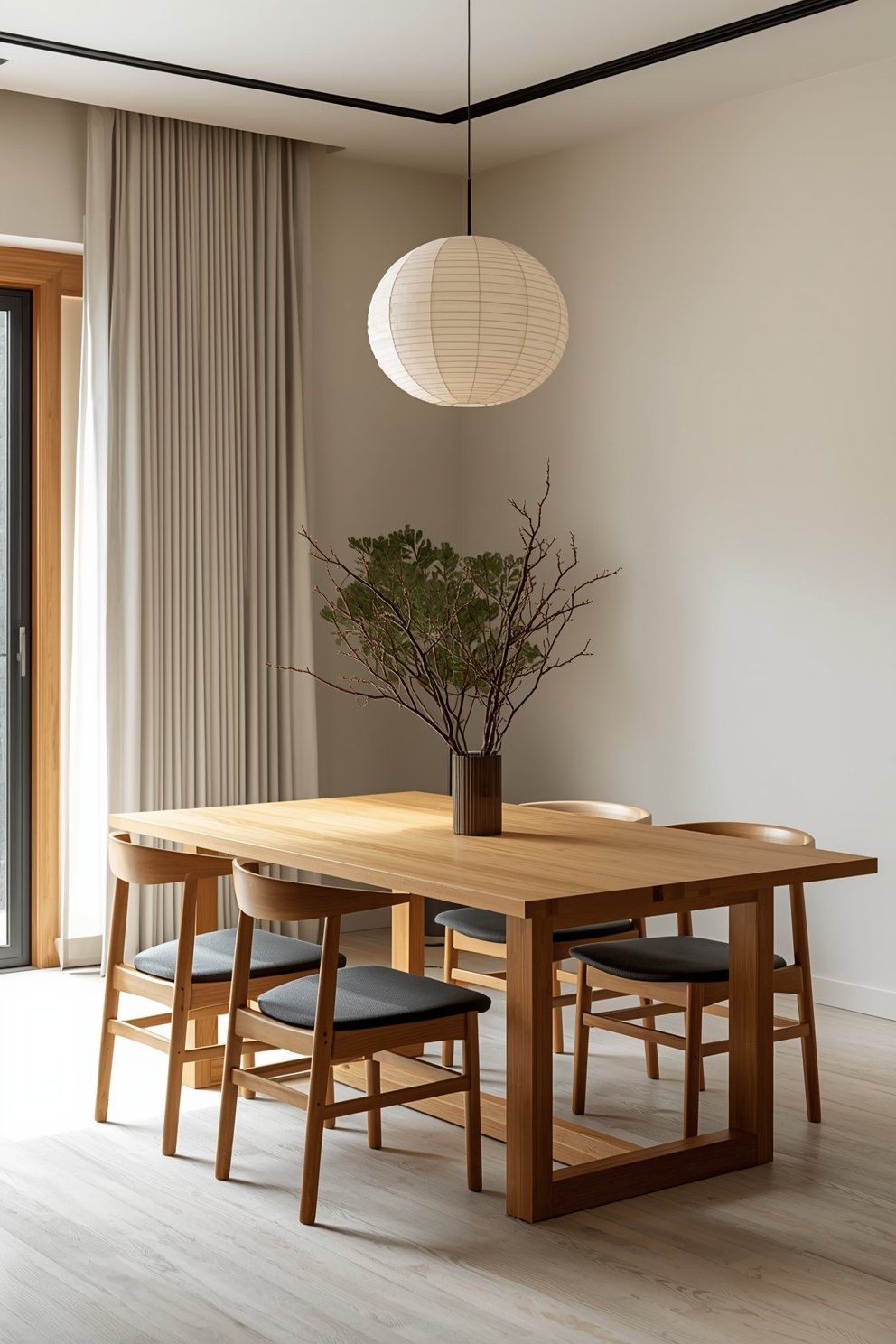
Japandi is the combination of Japanese minimalism and Scandinavian warmth and it works particularly well in dining rooms because eating is already a ritual and the space should feel like one too. A low-profile wooden table with clean lines, chairs with simple joinery you can actually see, a single branch or dried stem arrangement as a centerpiece, and nothing on the walls except maybe one piece of art that you would describe as quiet. The palette stays in the range of warm white, natural wood, soft black, and muted sage. Nothing competes. Everything earns its place. It is the kind of room where you sit down and immediately feel less rushed than you did five minutes ago.
5. Rustic farmhouse dining with mismatched chairs
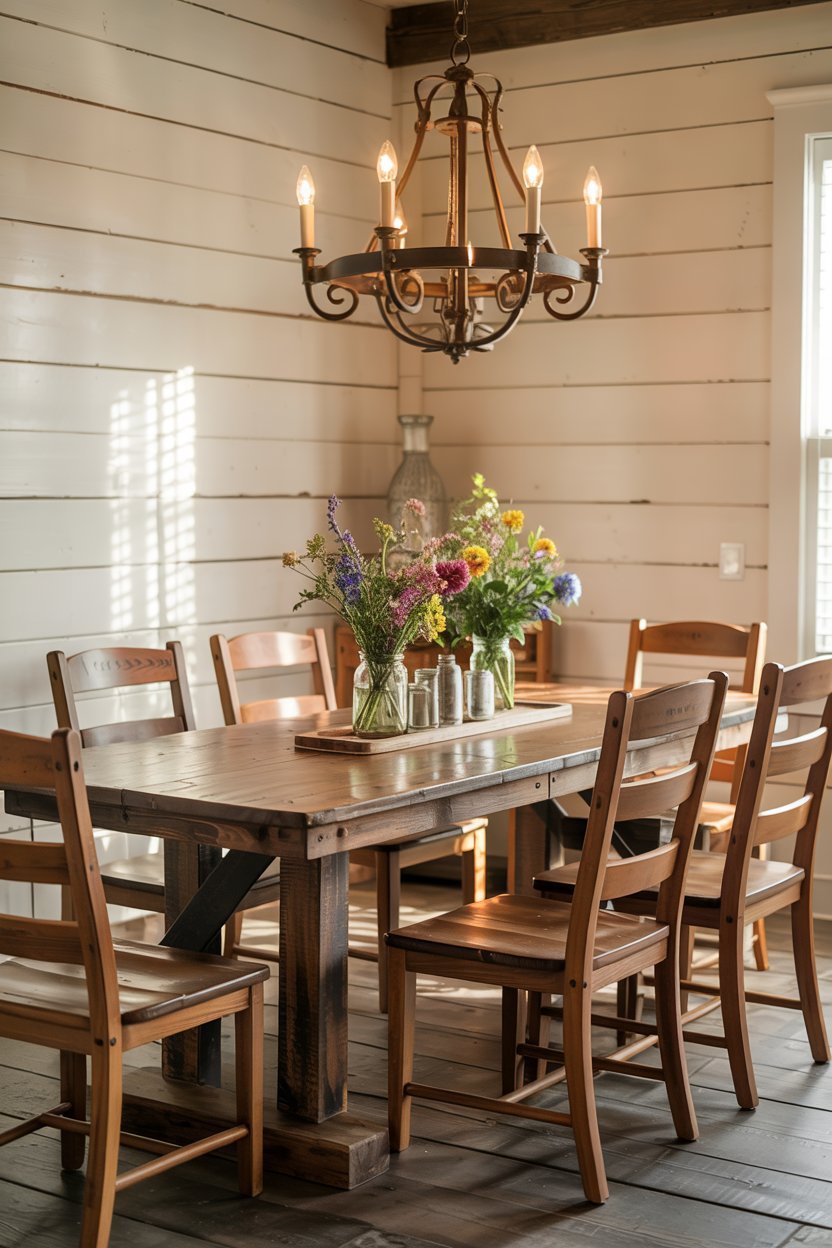
The mismatched chair dining room looks effortless because it genuinely is, once you understand the one rule that makes it work. Every chair needs to share at least one quality with the others, whether that is material, finish, or general silhouette. A mix of wooden chairs in different styles but the same stain reads as collected rather than chaotic. A farmhouse table with visible knots and grain irregularities is a better starting point than a perfect factory finish because it already has the lived-in quality you are building toward. Hang something simple above the table, a wooden beam with pendant lights, an iron chandelier, and the whole room settles into itself.
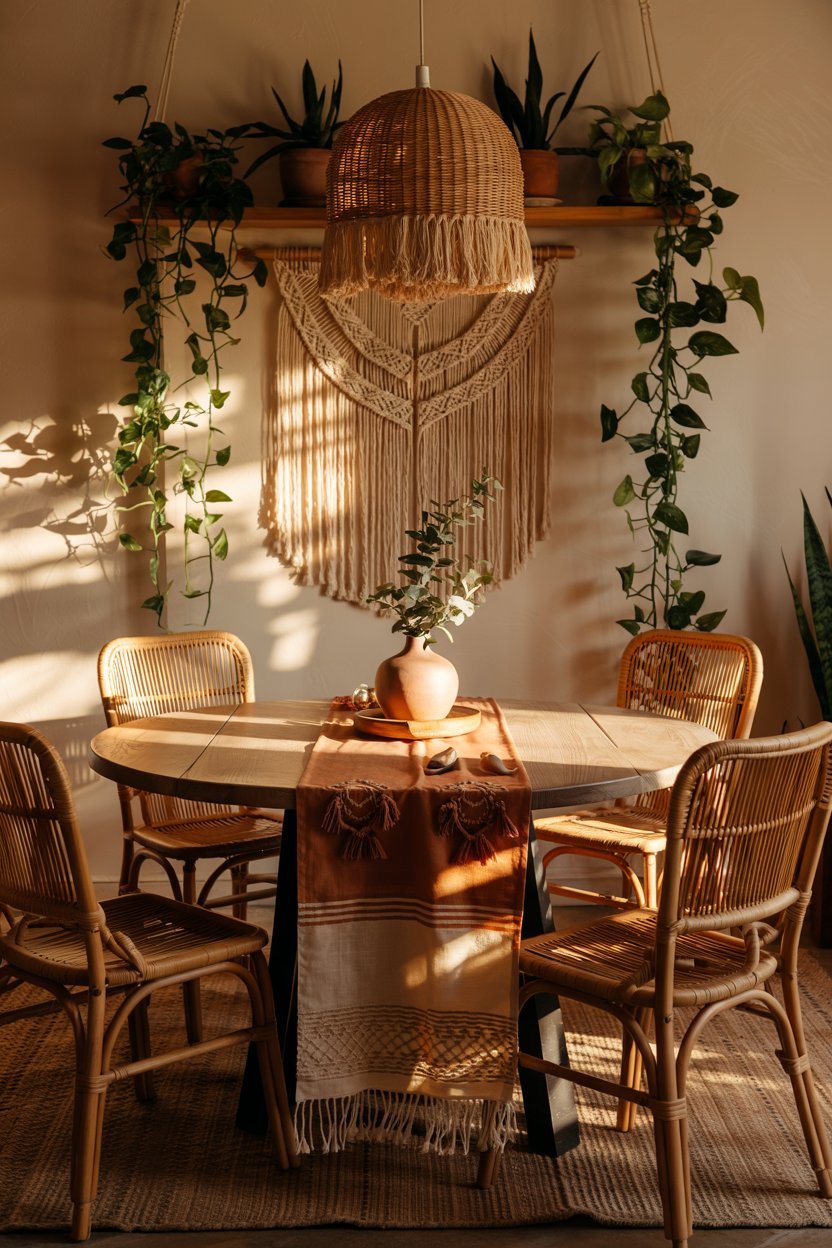
6. The boho dining room with rattan and plants everywhere
A boho dining room is less about following rules and more about accumulating the right things over time. Rattan chairs around a wooden table, a macrame wall hanging on one side, trailing plants on a shelf nearby, a pendant light made from natural fibers, and a table runner in a worn textile print. None of it needs to match perfectly. In fact the rooms that look most genuinely boho are the ones where you can tell things came from different places and different times. The only thing to avoid is buying everything new from the same store at the same time, which always produces a result that looks more like a catalog shoot than a real home.
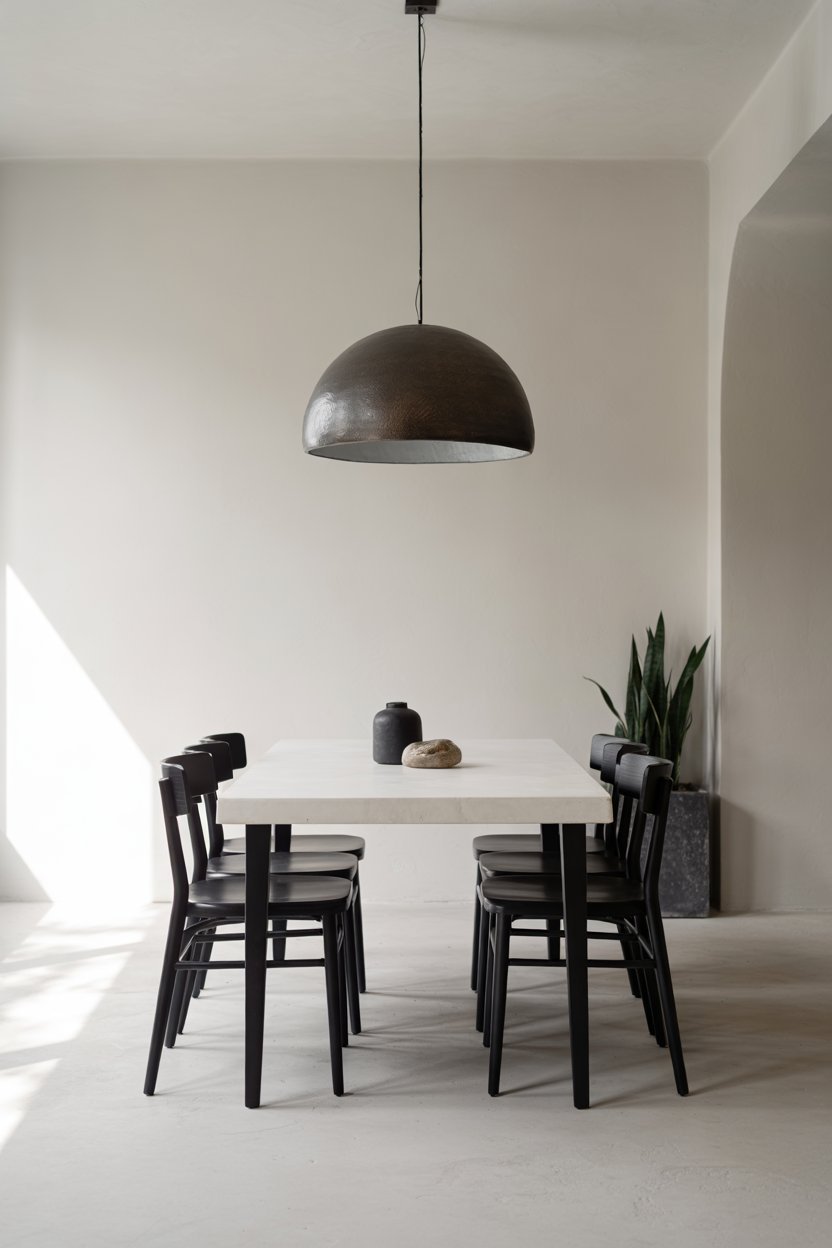
7. Modern minimalist dining with a single statement light
A modern minimalist dining room lives or dies by its light fixture. Everything else in the room can be simple to the point of plain: a white or concrete table, chairs with thin metal legs, bare walls, no rug. But put the right pendant above that table and the whole room has a reason to exist. A sculptural fixture in matte black, brushed brass, or smoked glass does the work of every decorative object you chose not to include. It is the one place in a minimalist room where showing off is not only acceptable but necessary. Size matters here. Most people choose a pendant that is too small. Go bigger than feels comfortable and it will almost certainly be right.
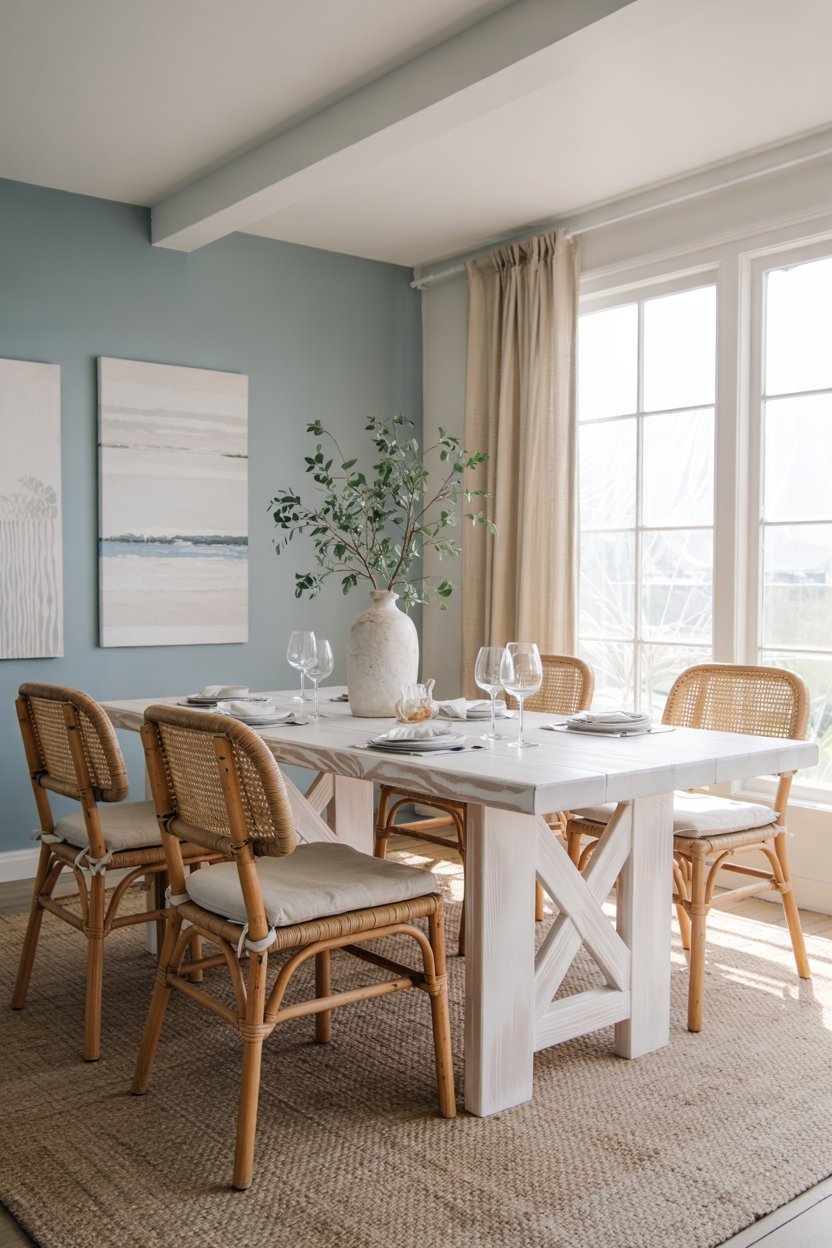
8. Coastal dining room with blue, white and natural textures
A coastal dining room does not need to be covered in anchors and rope to feel like it belongs near water. The better version of this style is quieter than that. White walls, a bleached or whitewashed wood table, chairs in natural linen or woven rattan, and one accent color pulled from the ocean rather than a paint chip. A particular shade of dusty blue on a single wall, or in the chair cushions, or in a ceramic vase on the table is enough. Layered natural textures, a sisal rug, linen curtains moving in a breeze, a driftwood centerpiece, create the feeling more effectively than any themed decoration ever could.
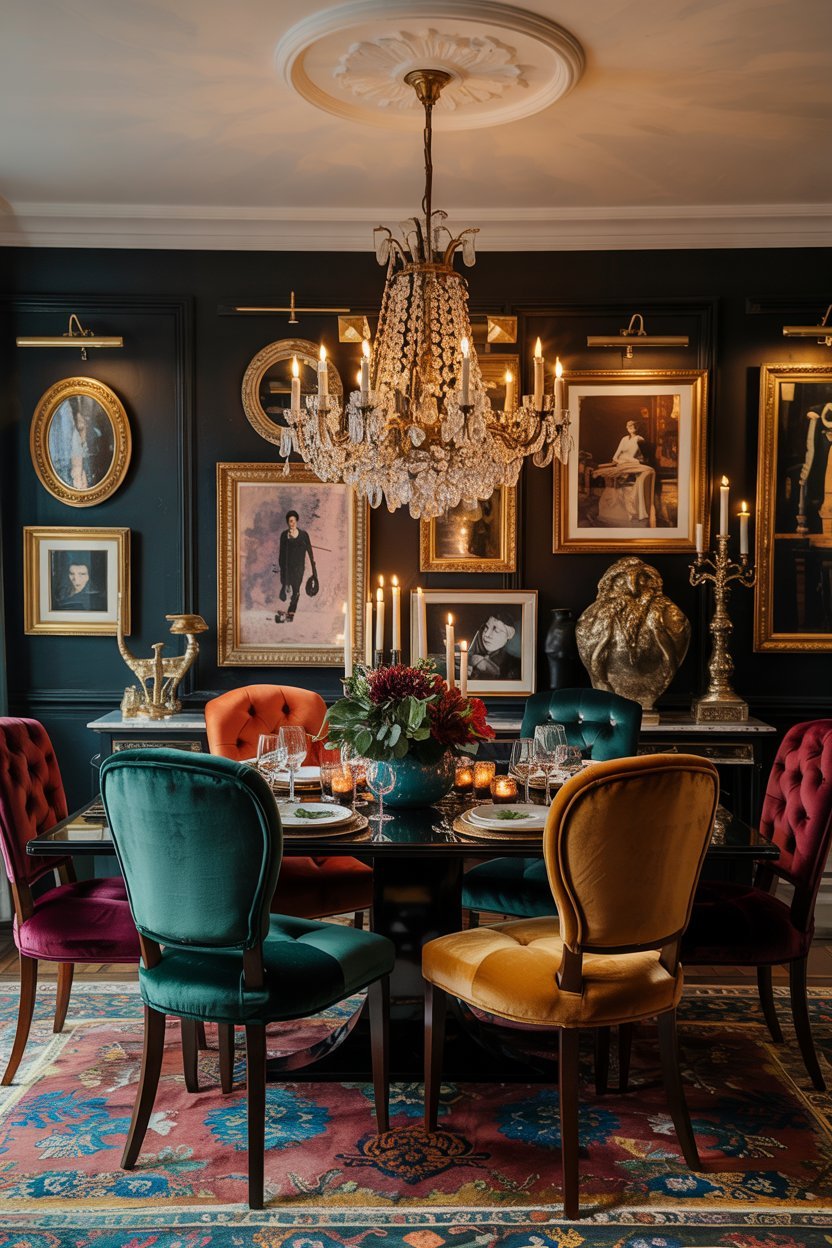
9. Maximalist dining for people who refuse to hold back
Maximalism in a dining room works when there is a clear organizing logic underneath all the abundance. Every surface busy, every wall filled, every chair a different color, but all of it pulling from the same palette or the same era or the same general sensibility. An emerald green velvet chair next to a mustard yellow one next to a deep burgundy one sounds like a disaster until you see it against dark walls with gold accents throughout and suddenly it looks like the most deliberate room in the house. The key is commitment. A maximalist room that apologizes for itself halfway through looks cluttered. One that commits completely looks curated.
10. The breakfast nook that makes you want to stay all morning
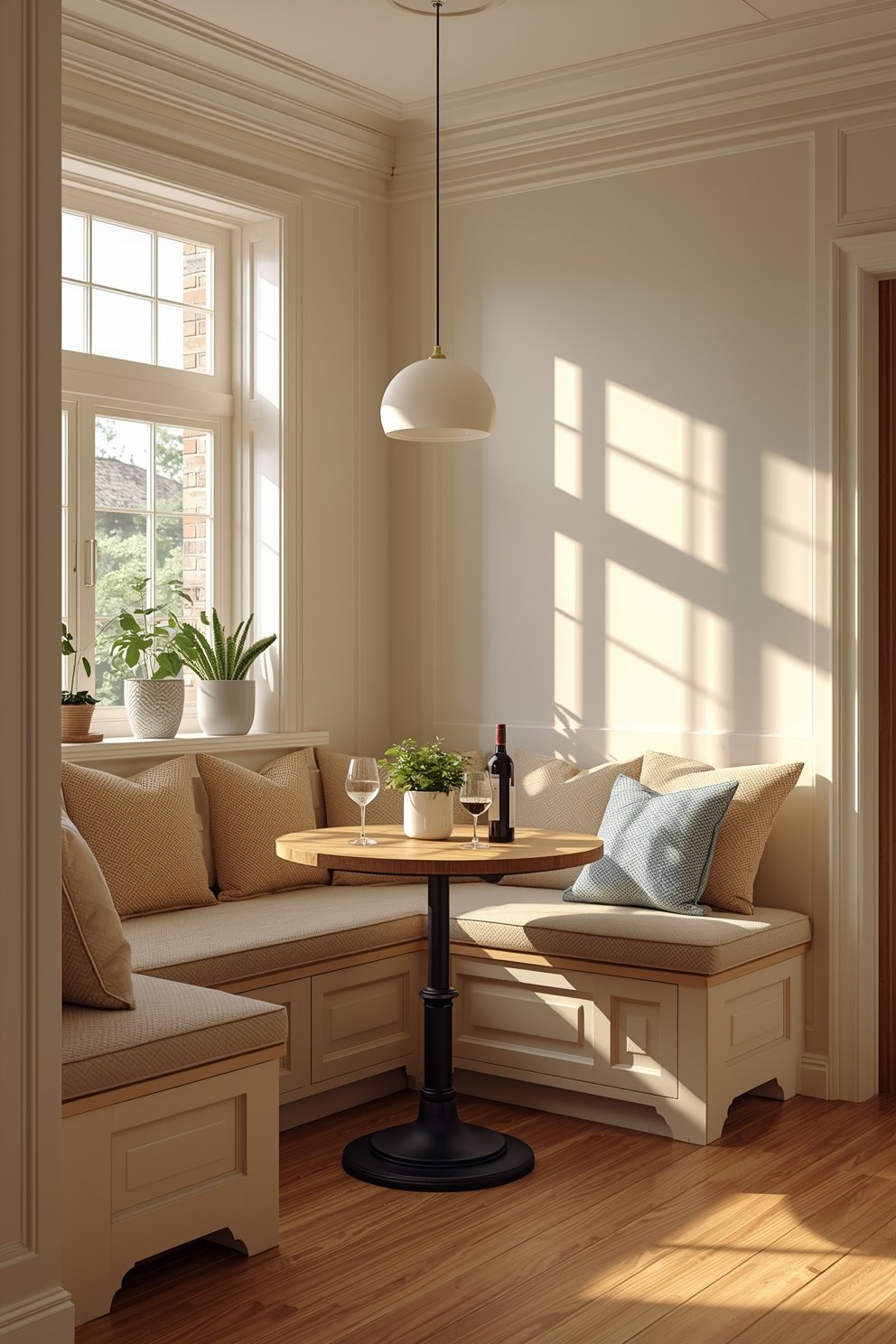
A breakfast nook built into a corner with bench seating on two sides and a small table in the middle is one of the most practical things you can add to a dining area, and also one of the most photographed. The built-in quality makes it feel intentional even when it is assembled from modular furniture rather than custom carpentry. Add cushions in a durable fabric, a small pendant or wall sconce above, and a window nearby if possible. The window is not strictly necessary but it is the detail that makes people linger. Morning light coming through a window directly beside where you eat your breakfast is a genuinely good quality of life upgrade that costs less than most people expect.
11. Industrial dining with exposed brick and metal
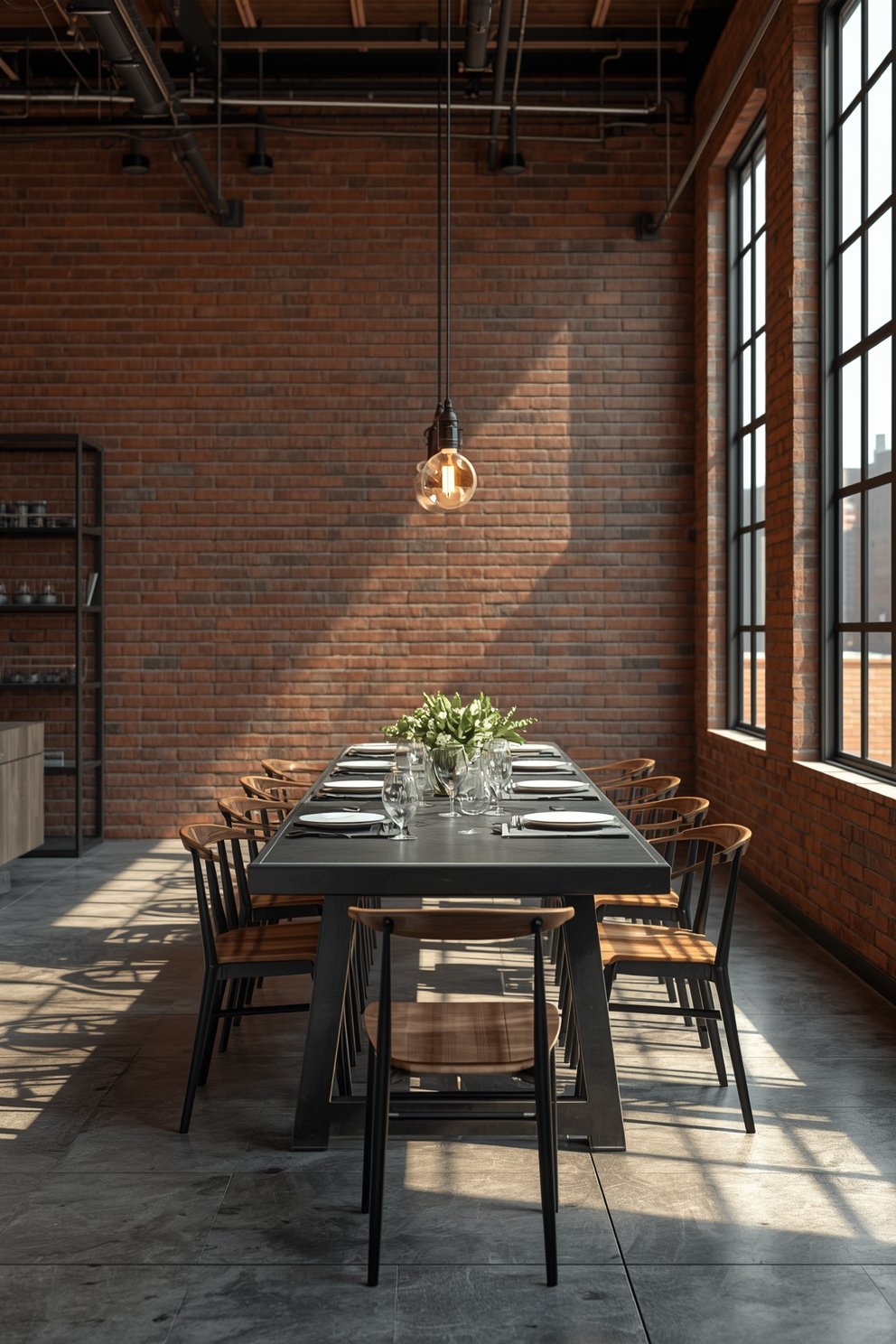
Industrial style in a dining room works best when it is softened just enough to feel warm rather than cold. Exposed brick on one wall is a good starting point. A raw steel or dark iron dining table paired with wooden chairs rather than all-metal ones keeps the room from feeling like a restaurant that has not opened yet. A vintage Edison bulb chandelier above the table ties the whole look together without trying too hard. The floor matters here more than in most styles. Concrete, dark hardwood, or even large format dark tile all work. Wall-to-wall carpet in an industrial dining room is the one combination to genuinely avoid.
12. Scandinavian dining that feels like a hygge moment
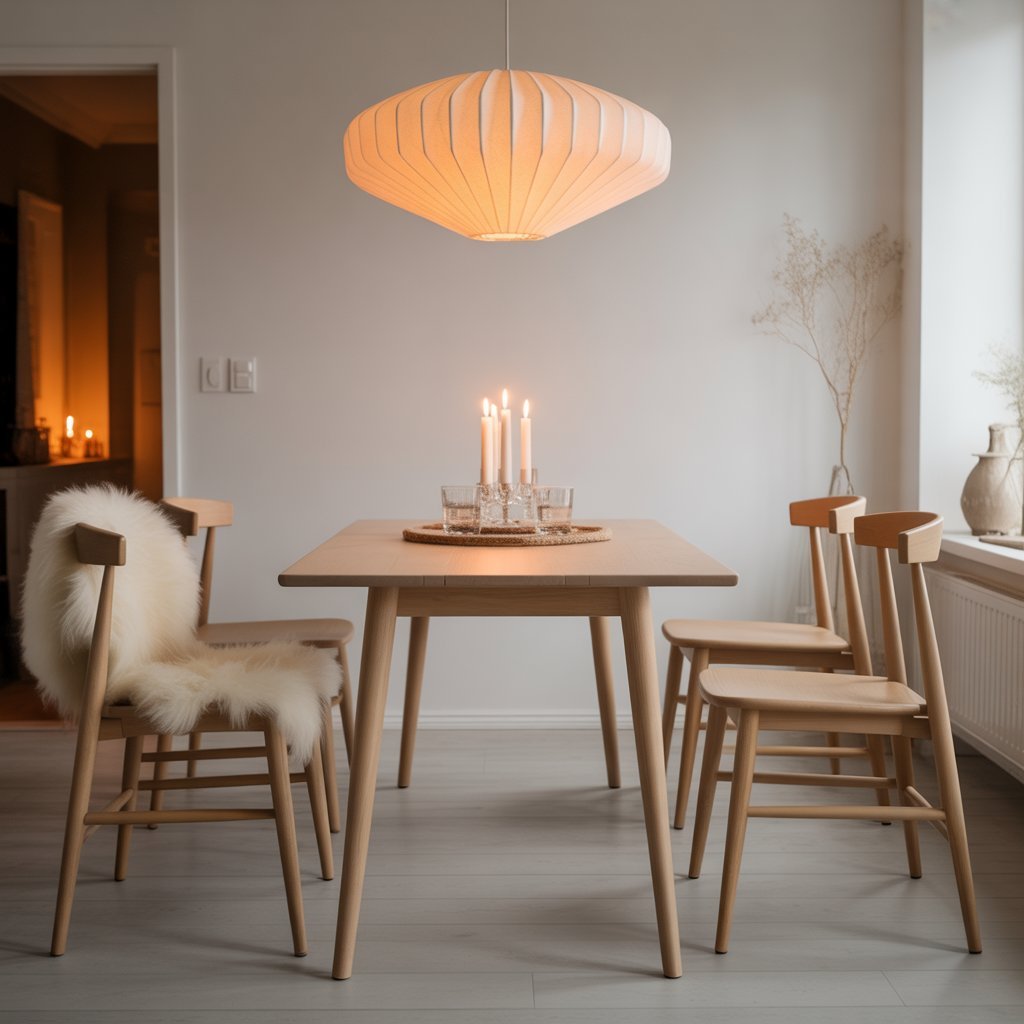
Scandinavian dining rooms have a quality that is hard to name but immediately recognizable. Everything is functional and nothing is fussy. A light birch or ash wood table, chairs with slightly tapered legs and a clean profile, a simple white or paper pendant light above, and a candle or two on the table as the main decorative gesture. The palette stays in the range of white, warm grey, light wood, and black used sparingly as an accent. What makes it feel genuinely hygge rather than just minimal is the softness: a sheepskin draped over one chair, a small plant on the table, linen napkins that are folded loosely rather than precisely. The deliberate imprecision is what makes it feel lived in.
13. Luxury dining room with marble and velvet
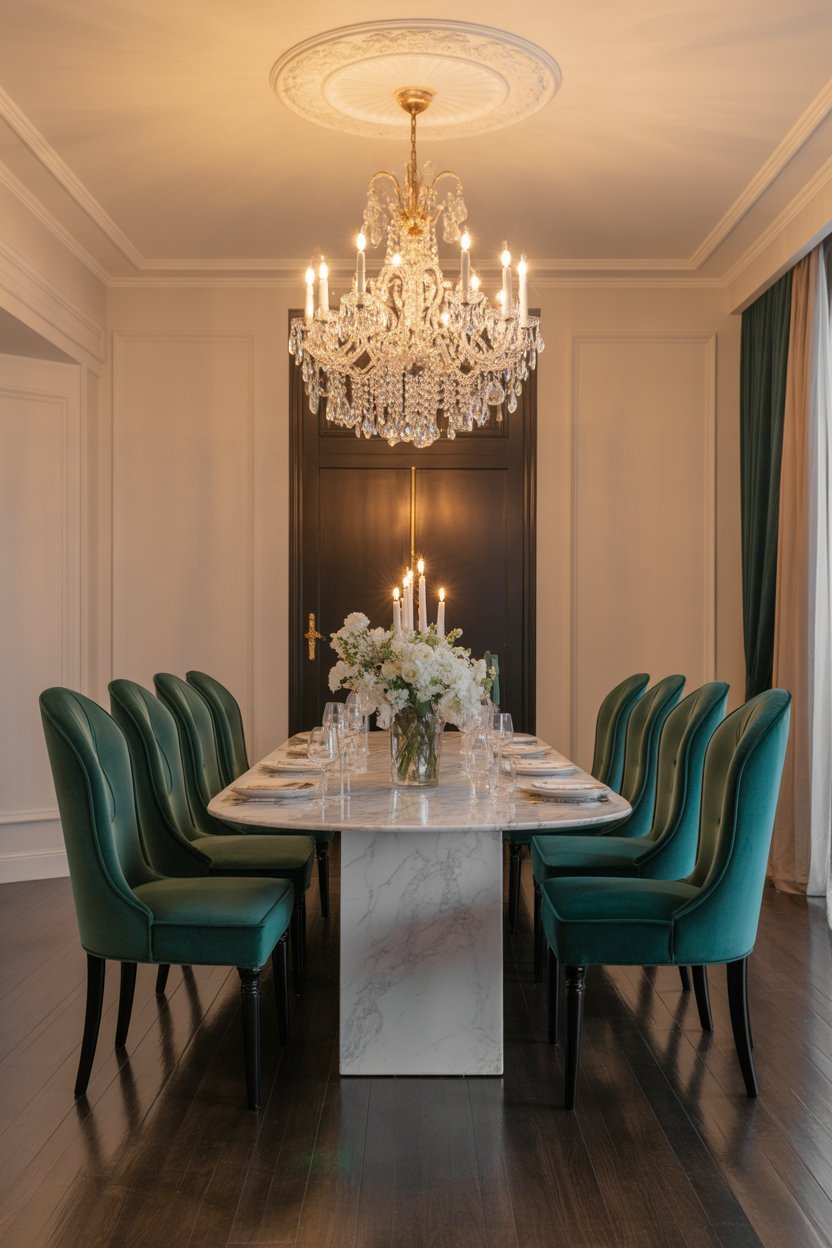
A luxury dining room does not require a large budget as much as it requires restraint and the right two or three materials. Marble is the most reliable shortcut to a high-end feeling in a dining room, whether it is on the table surface, in a small side console, or just in a few accessories. Velvet dining chairs in a deep jewel tone add the second layer of richness. The third is lighting: a chandelier with real visual weight, not necessarily crystal but something that takes up space and commands the room. Keep everything else simple. The rooms that look genuinely luxurious are not the ones with the most things. They are the ones where every thing that is there earns its presence.
14. Earthy terracotta dining room with Mediterranean warmth
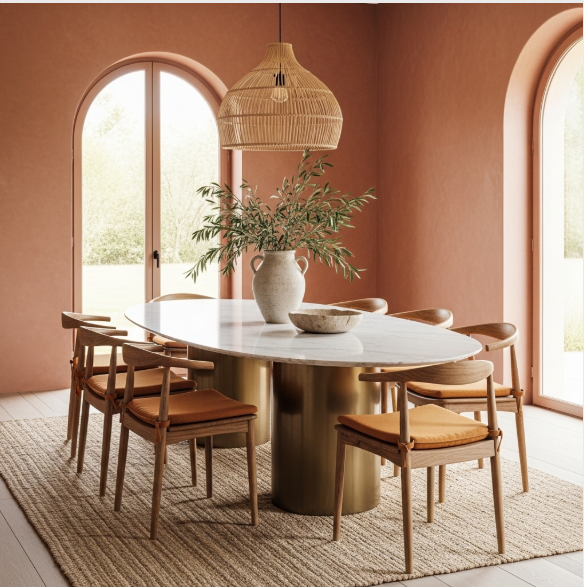
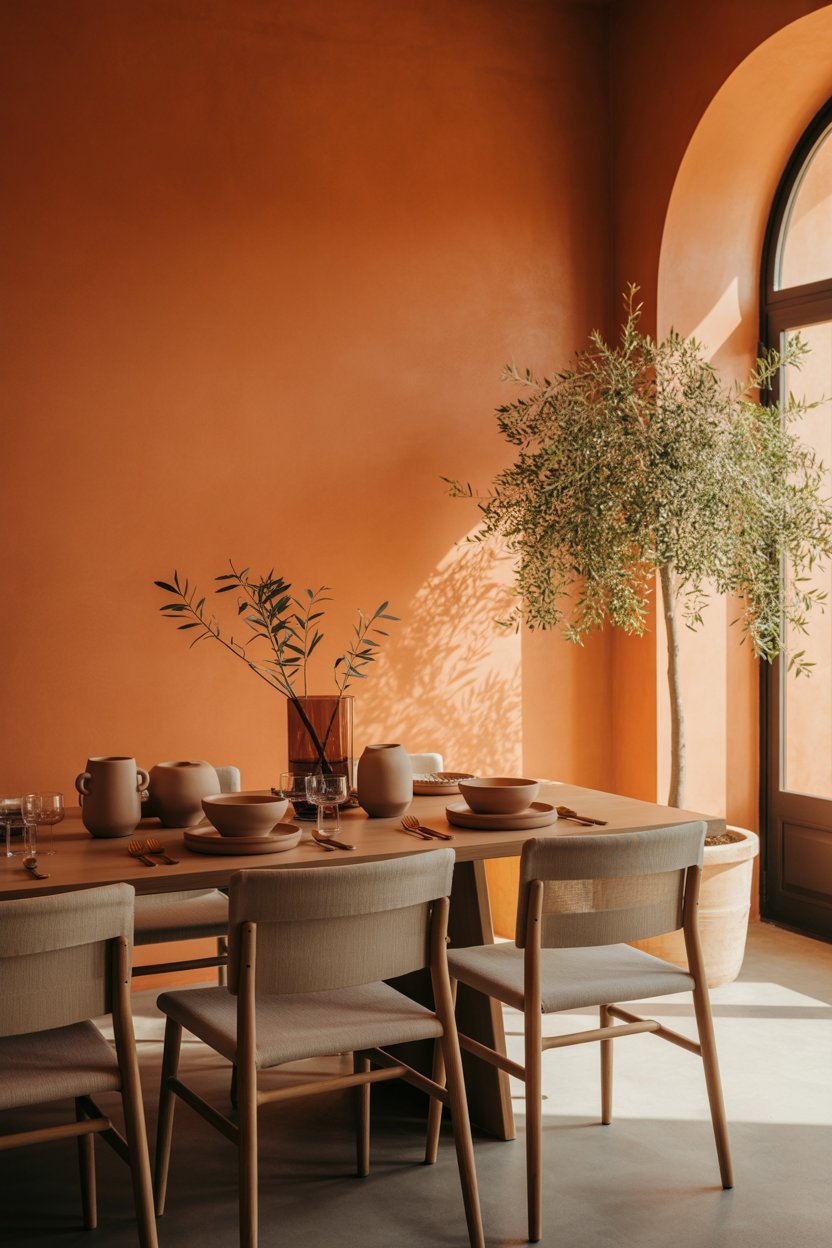
Terracotta as a wall color in a dining room is one of those choices that looks intimidating in a paint swatch and transforms a room in practice. It is warm without being overwhelming, earthy without being dull, and it makes food look genuinely better on the table, which is not a small consideration in a room designed specifically for eating. Pair it with natural linen chairs, a simple wooden table, ceramic tableware in warm tones, and a few potted plants. The Mediterranean quality comes from the combination of warm color, natural materials, and the general sense that the room is designed for long meals rather than quick ones. It is a room that invites people to stay at the table.
15. Small dining room ideas that make every inch count
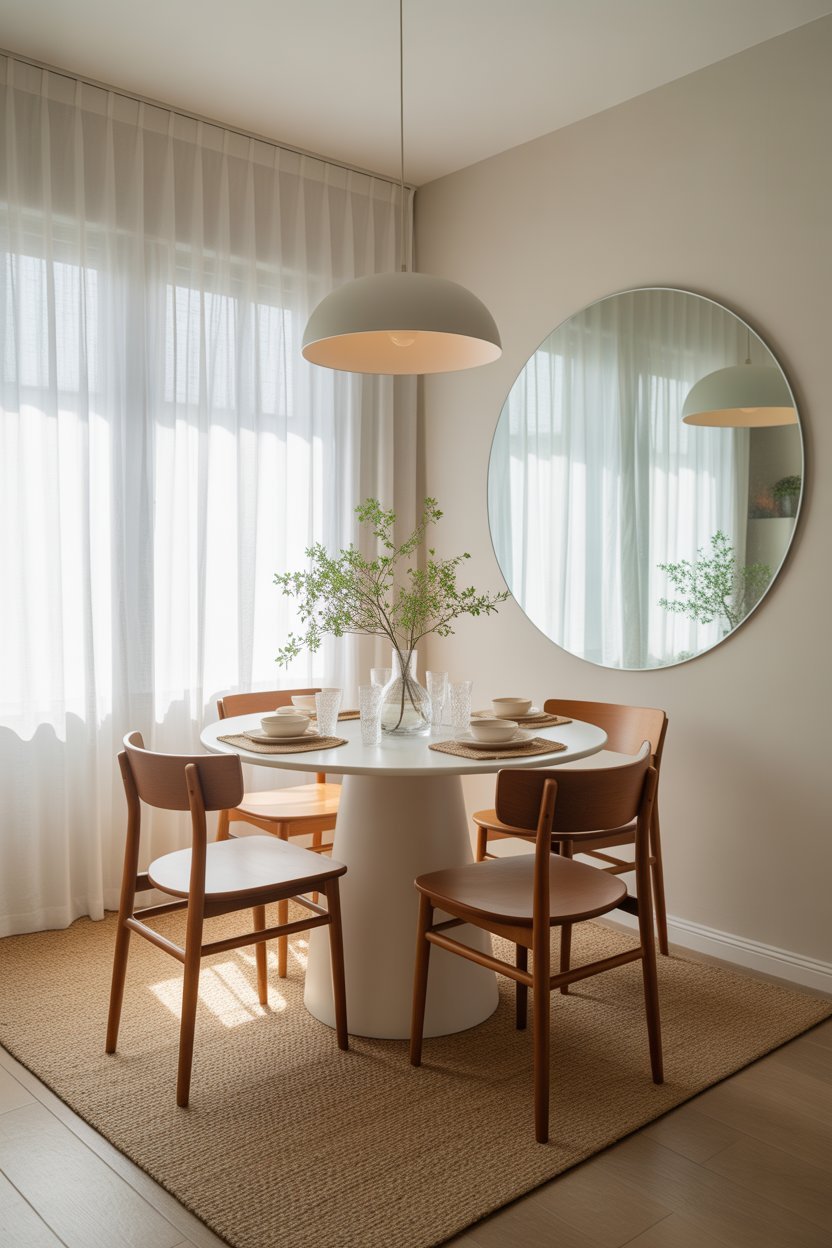
A small dining room is not a problem to solve. It is a constraint that, handled well, produces rooms that feel more intimate and more intentional than larger ones. A round table is almost always the right choice for a small space because it removes the corners that make rectangular tables feel like they are taking up more room than they are. Chairs that can slide fully under the table when not in use keep the floor clear and the room feeling open. A large mirror on one wall doubles the perceived depth of the space and bounces light from a single window across the entire room. Keep the color palette light and limit decorative objects to a few deliberate ones rather than many small ones that collectively read as clutter.
16. Open plan dining that flows into the living room
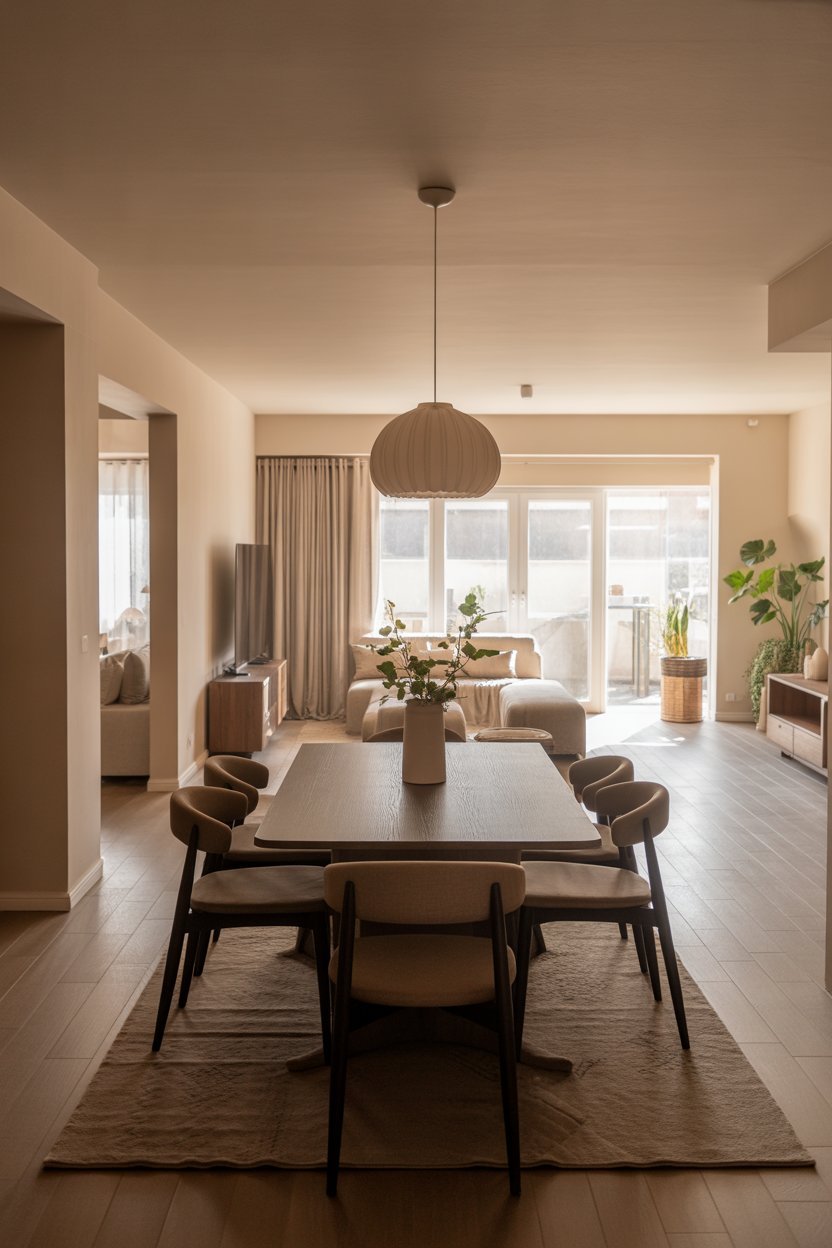
An open plan dining area that flows into a living room needs one thing above anything else: a clear visual anchor that tells you where the dining zone ends and the living zone begins. A pendant light above the dining table is the most reliable way to define the space without building any walls. A rug under the dining table that is a different material or tone from the living room rug does the same thing on the floor plane. The furniture in both zones should share a palette so the overall space reads as one cohesive home rather than two rooms that happen to be next to each other. Matching every piece is less important than maintaining a consistent material and color story across both areas.
17. The gallery wall dining room with art at every turn
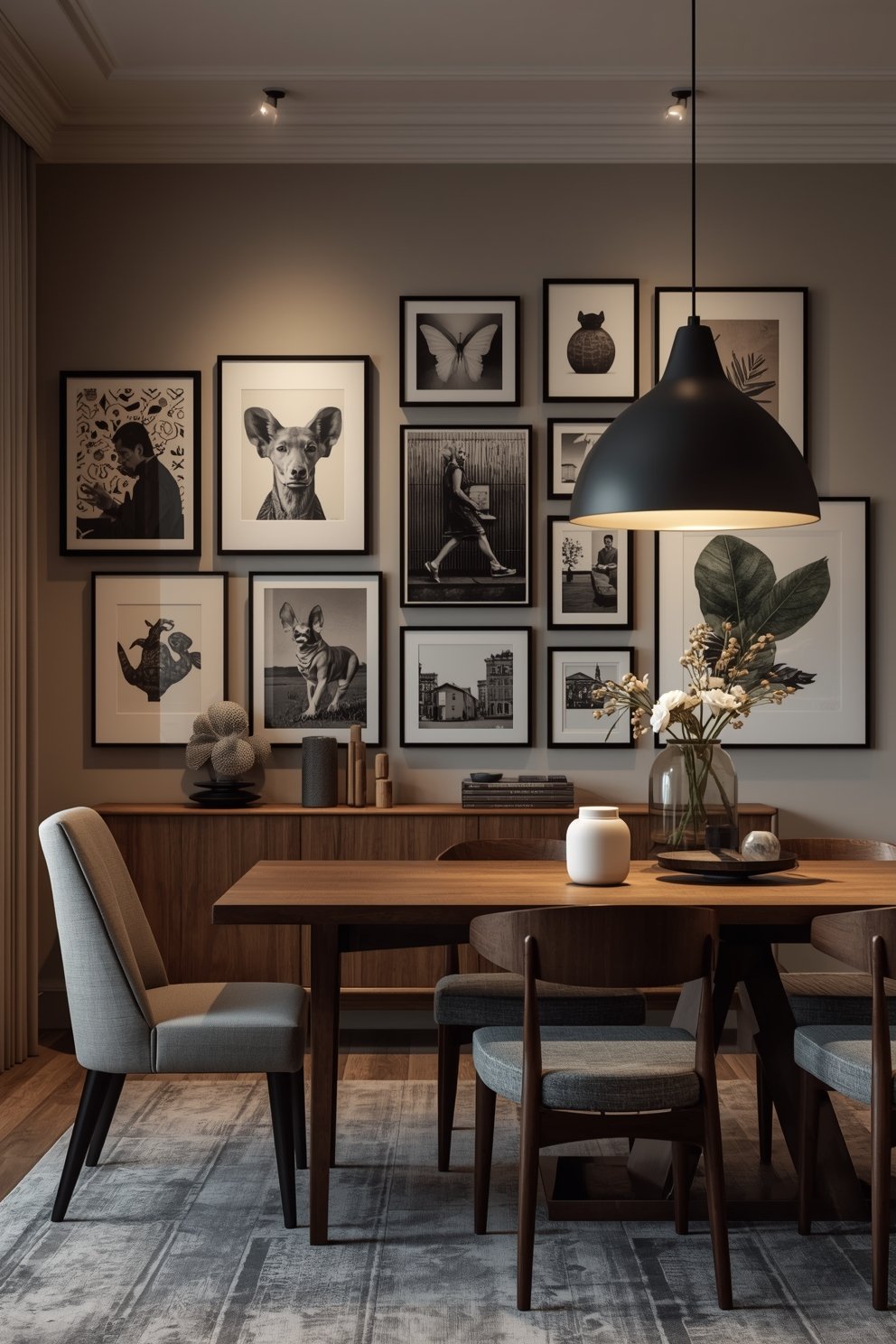
A gallery wall behind a dining table is one of the more forgiving decorating projects in a home because the dining room is a space people look at from a fixed position while sitting. That means you can plan the arrangement knowing exactly where the eye will land and how far away the viewer will be. Frames do not need to match but they benefit from sharing a finish, all black, all natural wood, all brass, rather than a complete mix. The art itself matters less than people think. Prints, photographs, illustrations, and even interesting pages torn from old books all work when they are framed and arranged with some care for spacing and proportion.
18. The outdoor dining room that works year round
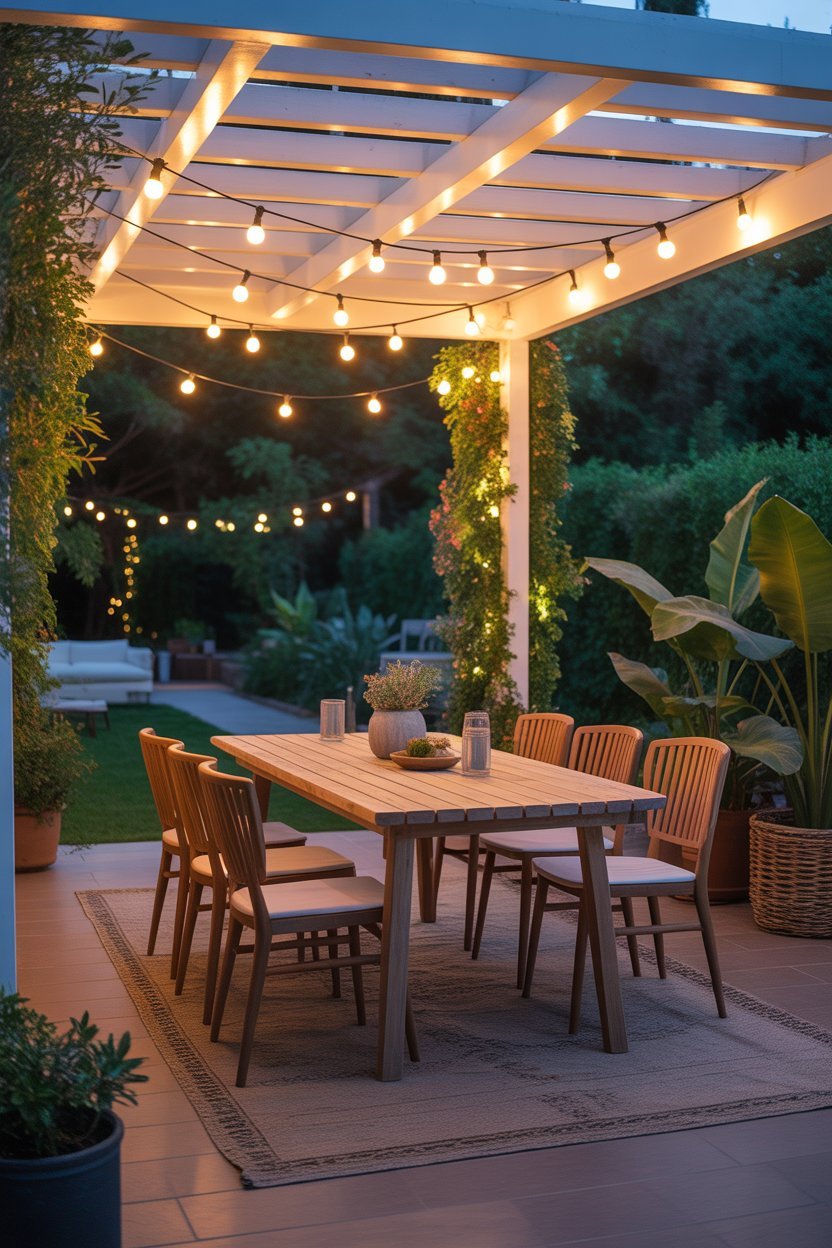
An outdoor dining area that actually gets used year round rather than just in perfect weather requires a few specific things. Overhead coverage of some kind, whether a pergola, a large market umbrella, or a roof extension, is the first requirement. A weatherproof rug under the table changes the feel of the space from a patio to a room in a way that is surprisingly significant. String lights or a proper outdoor pendant light make the space usable in the evening and create the kind of atmosphere that makes people reluctant to go back inside. Furniture that does not need to be covered or stored between uses removes the friction that stops most outdoor dining areas from being used as often as they should be.
19. The dining room that works for everyday meals and special occasions
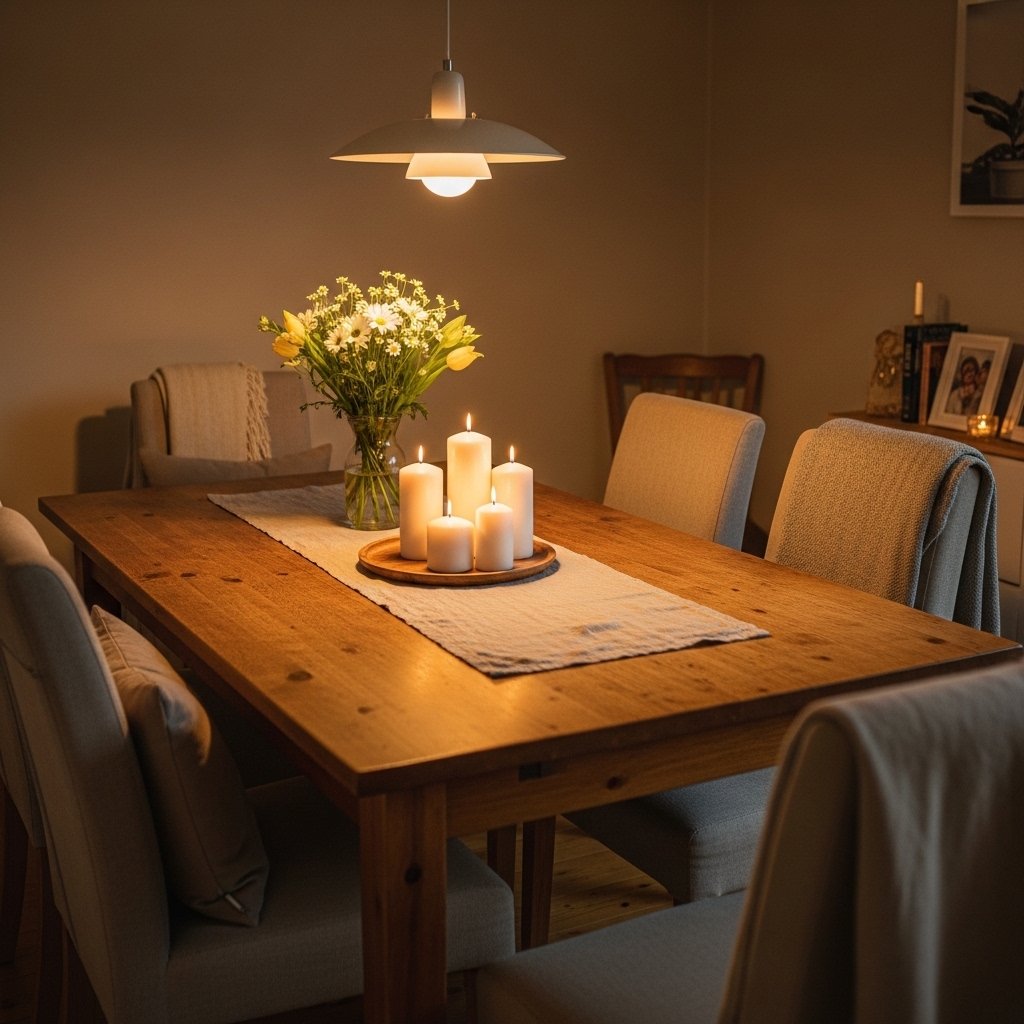
The best dining rooms are the ones that do not need to be reset for a dinner party because they already look good on a regular Tuesday. This comes down to building the room around a base that is already warm and inviting rather than neutral and waiting. A tablecloth or table runner that stays out between meals, candles that are there to be lit rather than stored, chairs that are comfortable enough to sit in for two hours rather than twenty minutes. The dining room should not feel like a room you unlock for guests. It should feel like the room where the best conversations in your home happen on an ordinary evening, with good light and no particular occasion required.
Your dining room does not need to look like any of these exactly. It needs to look like yours. Pick the one direction that made you stop scrolling, pull two or three specific details from it, and start there. The rest fills in over time.