14 Rustic Farmhouse Living Room Ideas That Feel Warm and Genuinely Lived In
The farmhouse living room in 2026 has moved past shiplap and “gather” signs toward something more authentic, more materially sophisticated, and more genuinely connected to the agricultural and craft traditions that the aesthetic claims to reference.
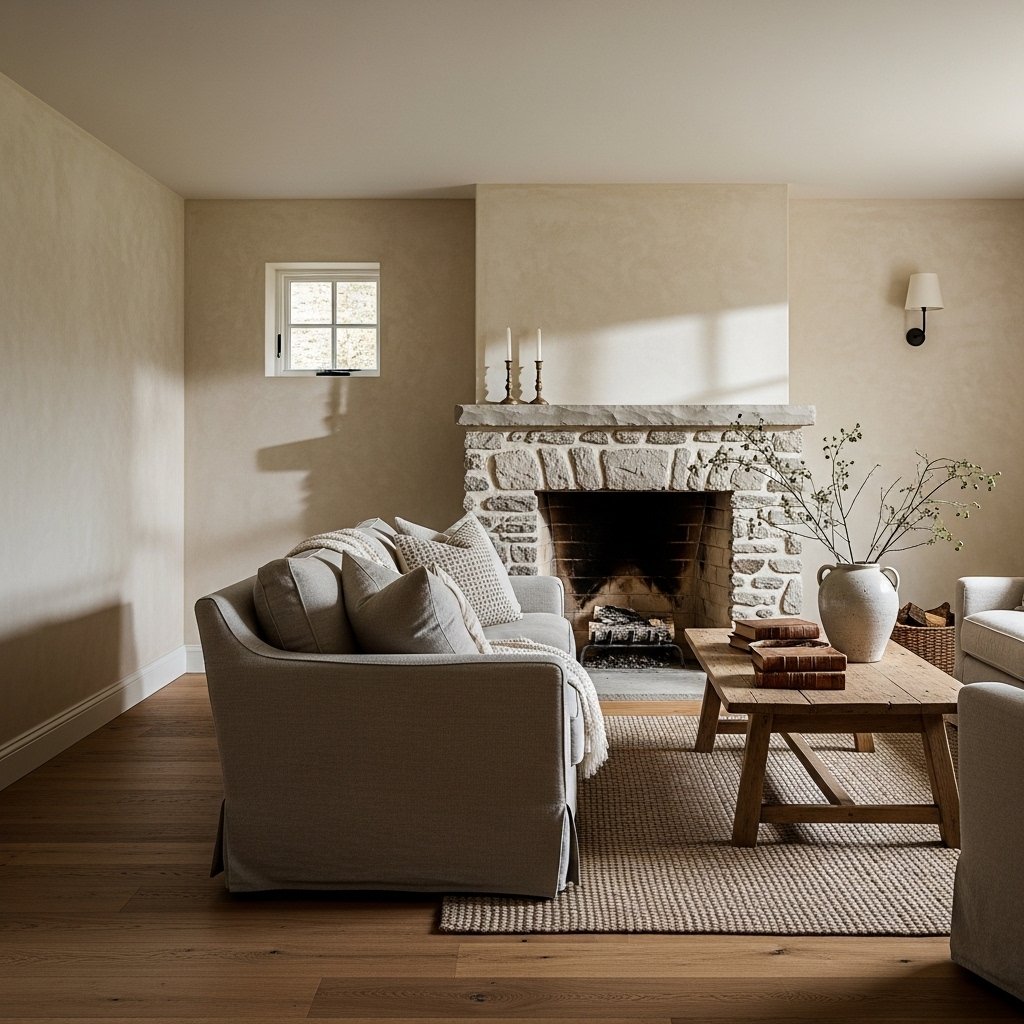
The best farmhouse living rooms feel like they were built over decades rather than decorated on a weekend. They have the quality of accumulation, of materials that have aged, furniture that has been used, and objects that mean something.
These 14 ideas build the authentic farmhouse living room that the aesthetic promises but rarely delivers.
1. Expose and Celebrate the Architecture
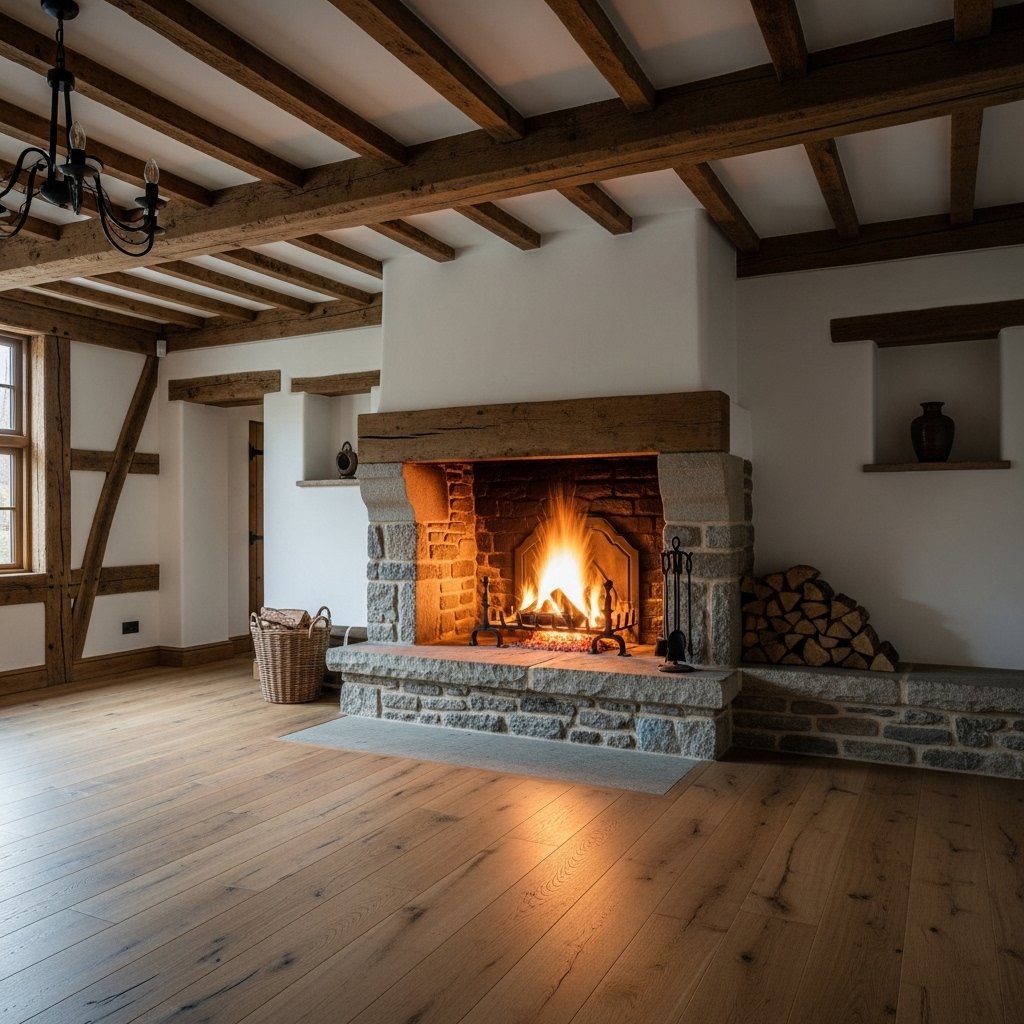
The farmhouse living room starts with the building. Exposed timber beams, stone walls, brick fireplace surrounds, and wide plank floors are not decorative choices in a genuine farmhouse. They are structural realities. In a modern farmhouse living room they are the design foundation.
If original architecture exists, expose it rather than covering it. A plastered ceiling hiding timber beams should have the plaster removed. A tiled fireplace surround hiding original brick should be stripped. A carpeted floor hiding wide plank timber should be uncovered.
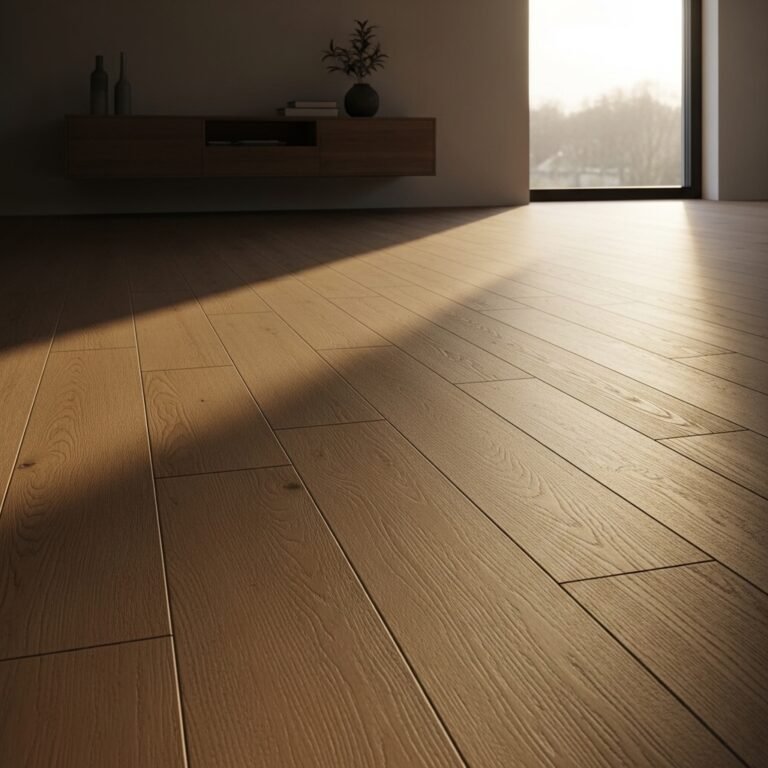
If the architecture was not original, add quality versions of these elements: exposed timber beams added structurally or decoratively, a brick fireplace surround built with reclaimed brick, wide plank hardwood installed with the grain and character of aged timber.
The architecture is the decoration in a genuine farmhouse room.
2. A Stone or Brick Fireplace as the Room’s Heart
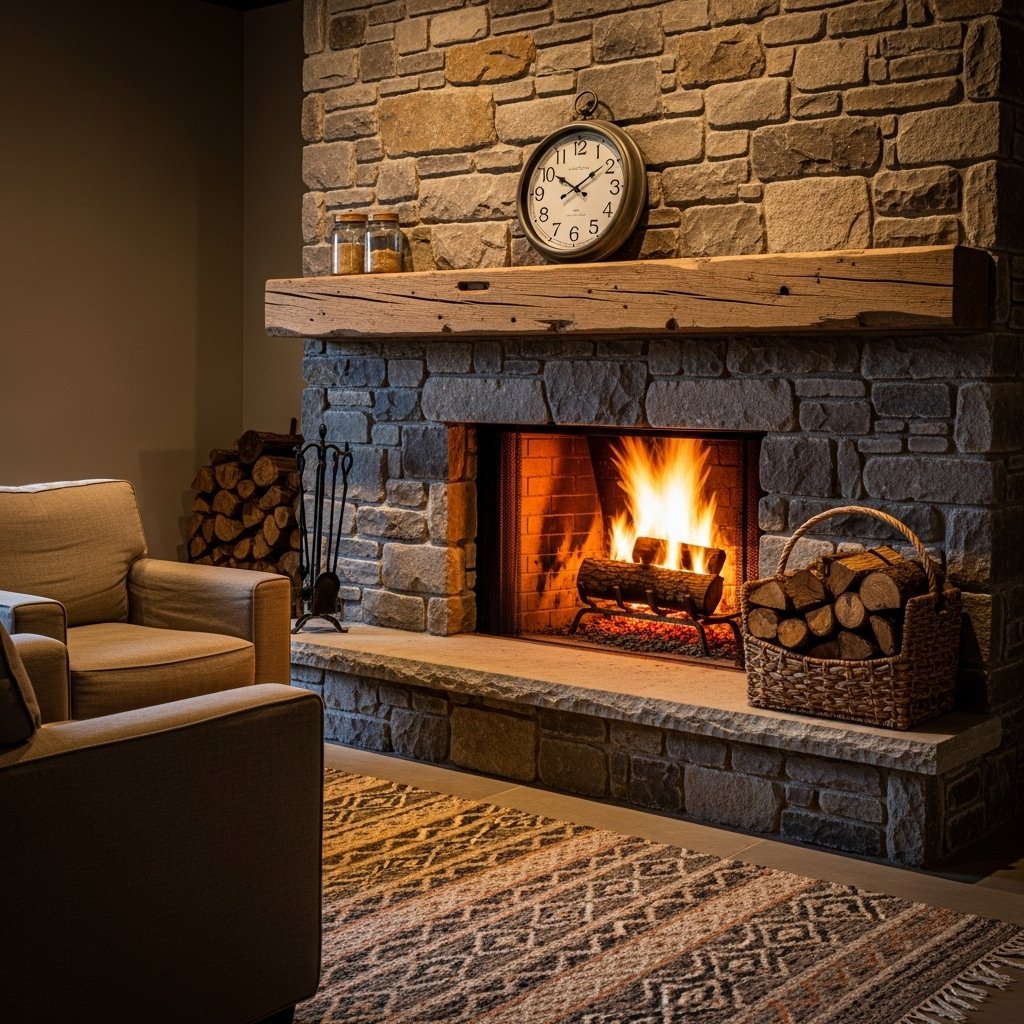
The farmhouse living room is organized around the fireplace in a way that no other living room typology is. The fireplace is not a decorative feature. It is the room’s original purpose and its current center.
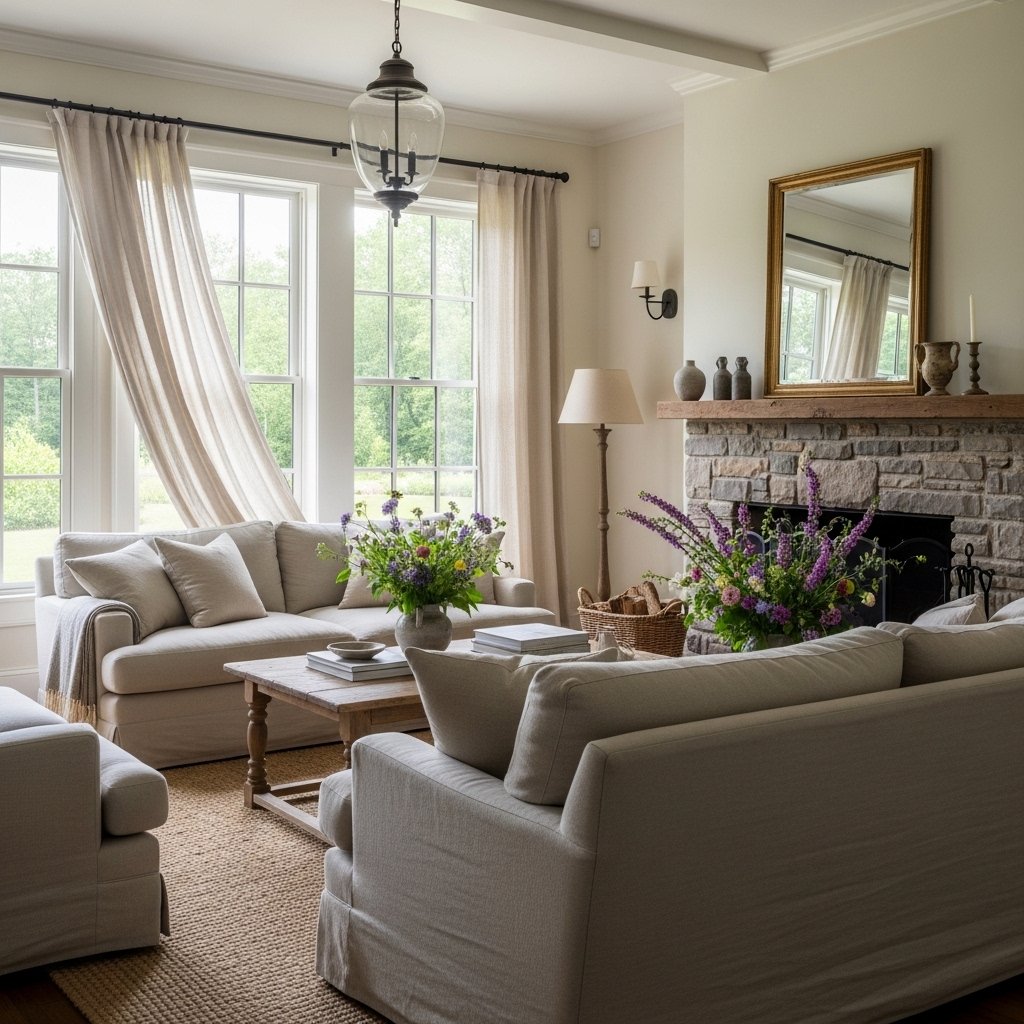
A stone fireplace surround with a thick timber mantel shelf. A brick surround with a wide hearth. A plaster surround in a farmhouse white with reclaimed timber above. Each version communicates a specific regional farmhouse tradition while serving the same organizing function.
The mantel shelf is a display surface with specific farmhouse conventions: a large clock or a framed piece above it. A pair of objects flanking it. Simple, substantial, without ornament.
The hearth area should be generous. A fireside rug, two armchairs pulled close, and a basket of firewood beside the grate creates the gathering space that the farmhouse living room is designed to be.
3. Reclaimed Timber Everywhere
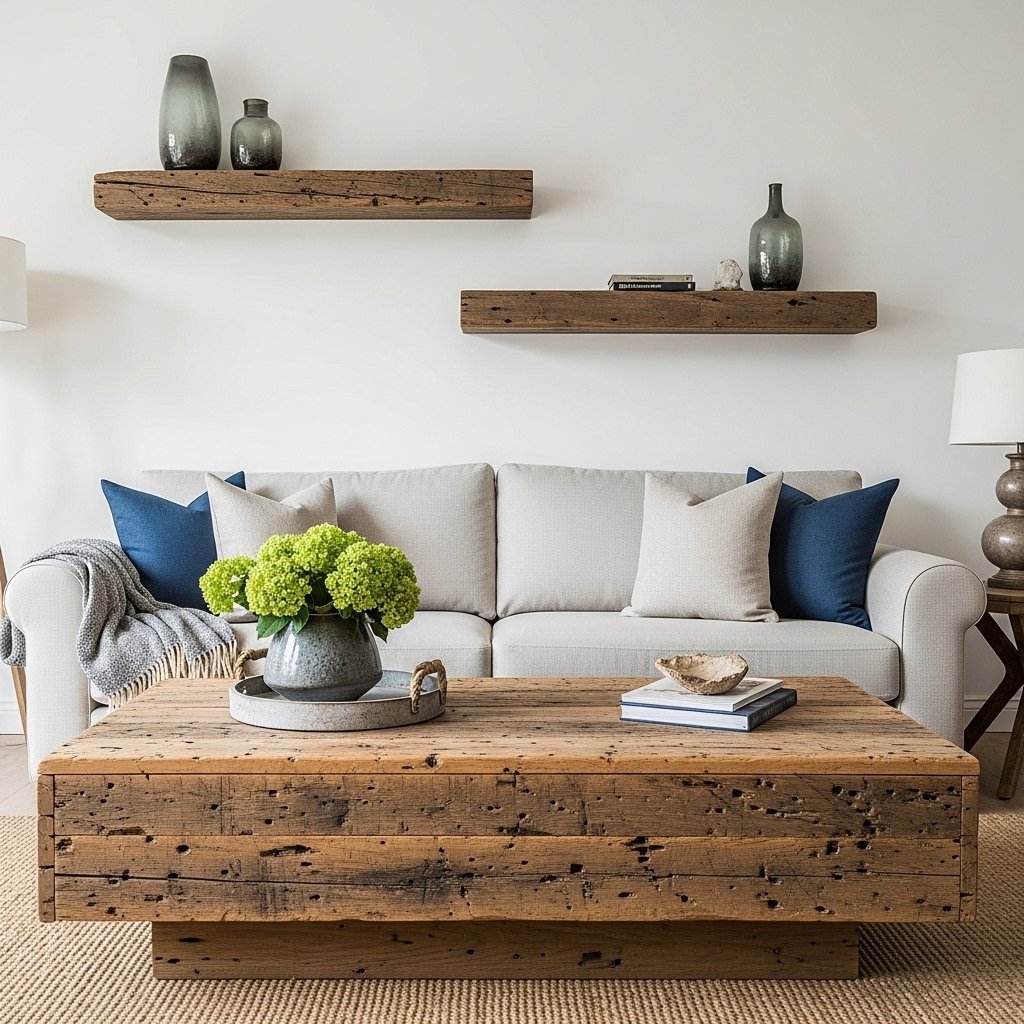
Reclaimed timber in a farmhouse living room communicates a specific and important quality: this material existed before this room. It has a history that precedes its current use. The nail holes, the weathering marks, the grain patterns developed over decades of use in a previous context are part of the material’s value rather than flaws to be corrected.
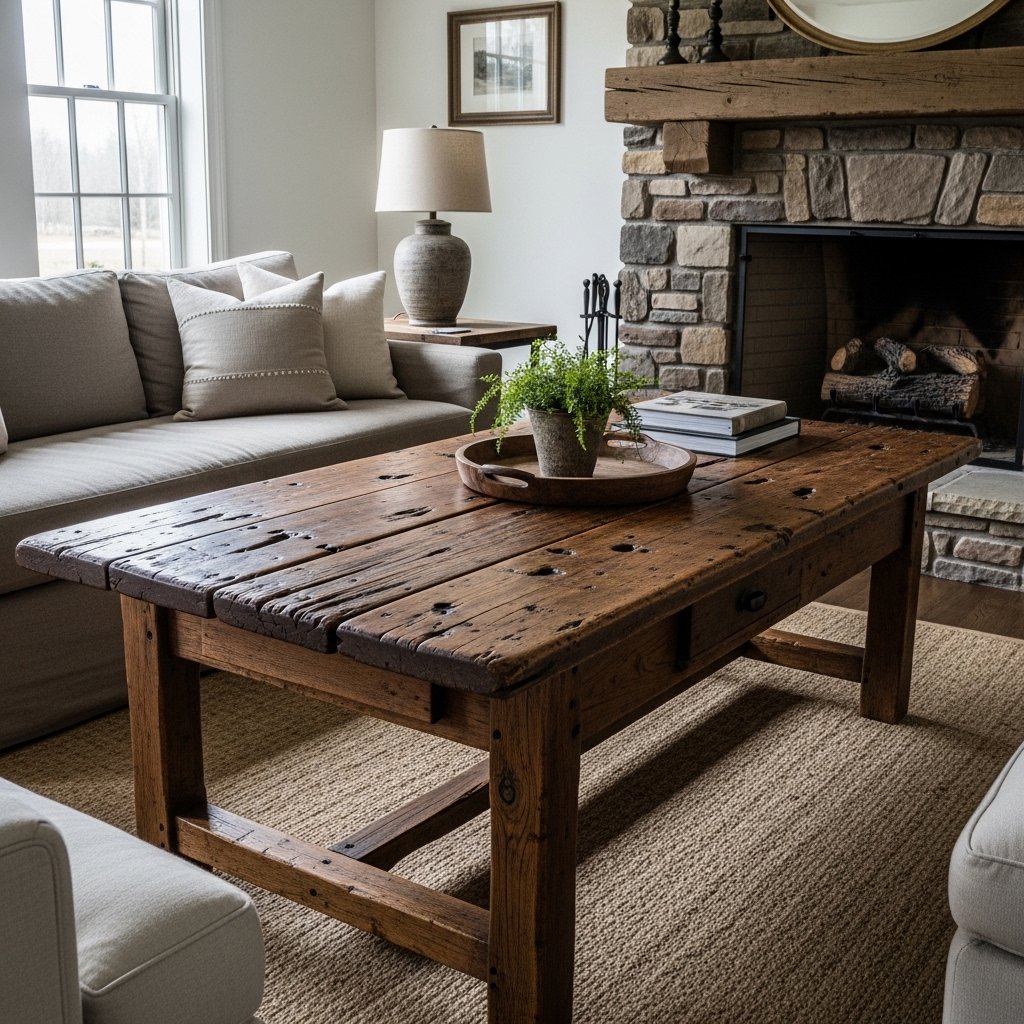
A reclaimed timber coffee table with visible age marks. Reclaimed timber floating shelves with the original saw marks still visible. A reclaimed timber console table with irregular legs and a surface that has been used and worn. A reclaimed plank feature wall.
The material honesty of reclaimed timber is the farmhouse aesthetic’s most authentic expression. It is the opposite of the clean, uniform timber of new furniture. It has lived. That living is visible.
4. Linen and Cotton in Natural, Undyed Tones
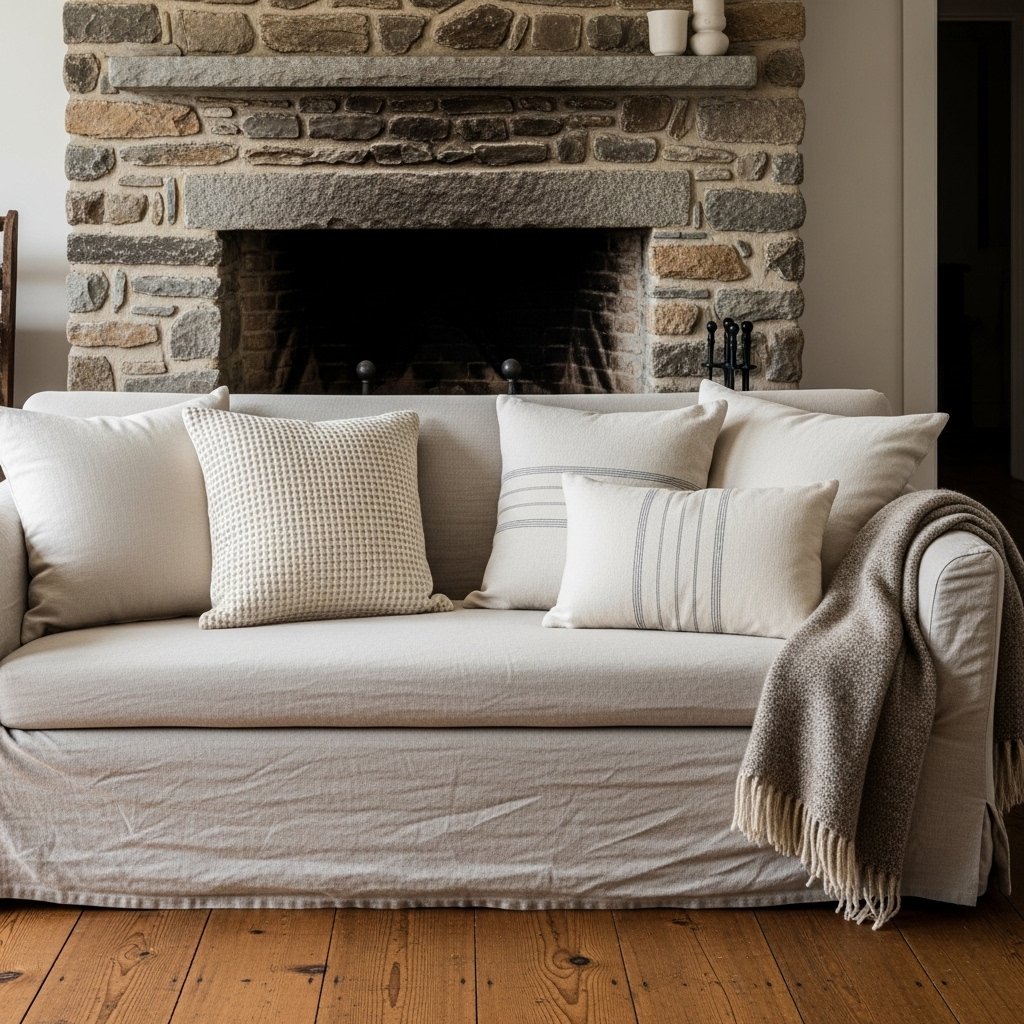
The farmhouse textile palette is the natural palette of unprocessed fibers: the cream of undyed cotton, the warm grey of natural linen, the warm brown of raw wool, the rust of naturally dyed wool.
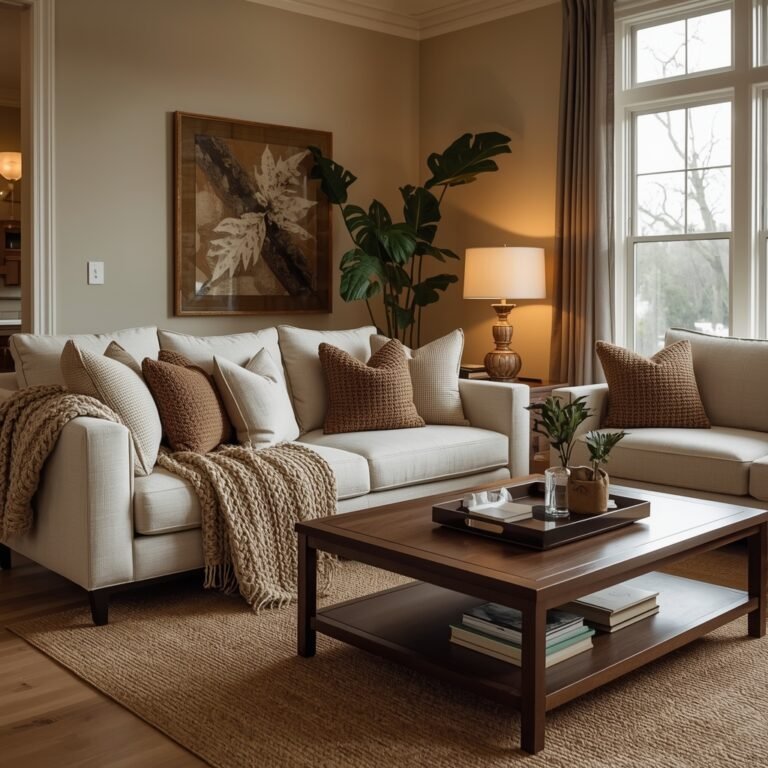
Linen sofa slipcovers in natural undyed tones. Cotton cushions in cream, warm white, and soft grey. A wool throw in a natural heathered tone draped over an armchair. A linen curtain that has been washed enough to develop its characteristic relaxed texture.
These textiles communicate a specific domestic economy: the making and using of fabric from available natural materials without elaborate processing. The farmhouse aesthetic’s textile language is one of honest, beautiful simplicity.
Avoid the synthetic versions of these materials. Polyester linen-look fabric does not develop character. Real linen develops it endlessly and becomes more beautiful with every wash and every year of use.
5. A Worn Persian or Kilim Rug
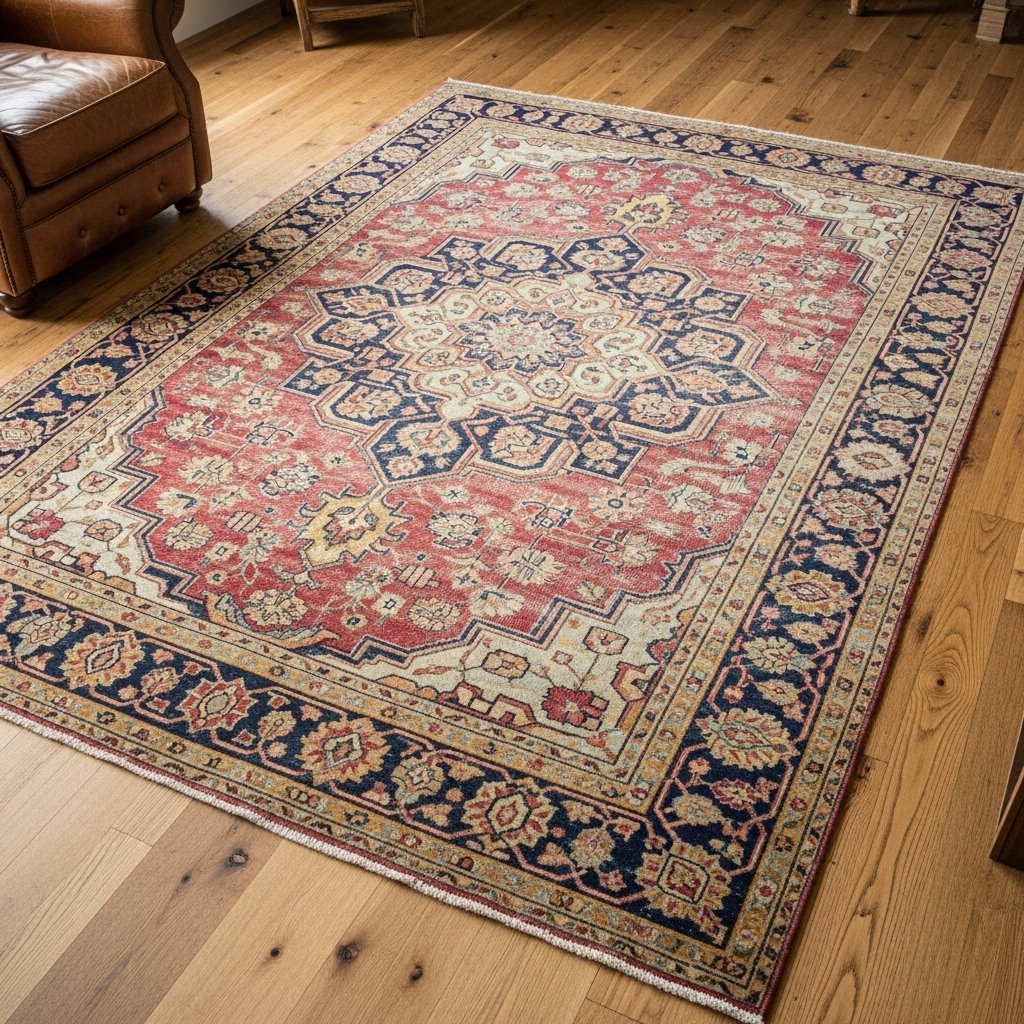
The farmhouse living room rug is not a new purchase. It is an old one. A Persian rug worn to the point where the pile is thin in the most-used areas. A kilim with a few small repairs visible to close inspection. A flat-weave rug whose colors have faded in the light it has been exposed to for years.
The beauty of an aged rug in a farmhouse living room is the same quality as the reclaimed timber: it has lived. The wear patterns are a record of use. The fading is a record of light and time. The repairs are a record of value, something worth repairing rather than discarding.
Source aged rugs rather than artificially distressed new ones. The real thing is available at comparable or lower price points through auction, estate sales, and vintage dealers. The artificial version is always recognizable as such.
6. Pottery, Ceramics, and Handmade Objects
The farmhouse home in its authentic tradition is full of objects made by hand in the region where the farm exists. Pottery thrown locally. Baskets woven from local materials. Wooden implements carved from nearby timber.
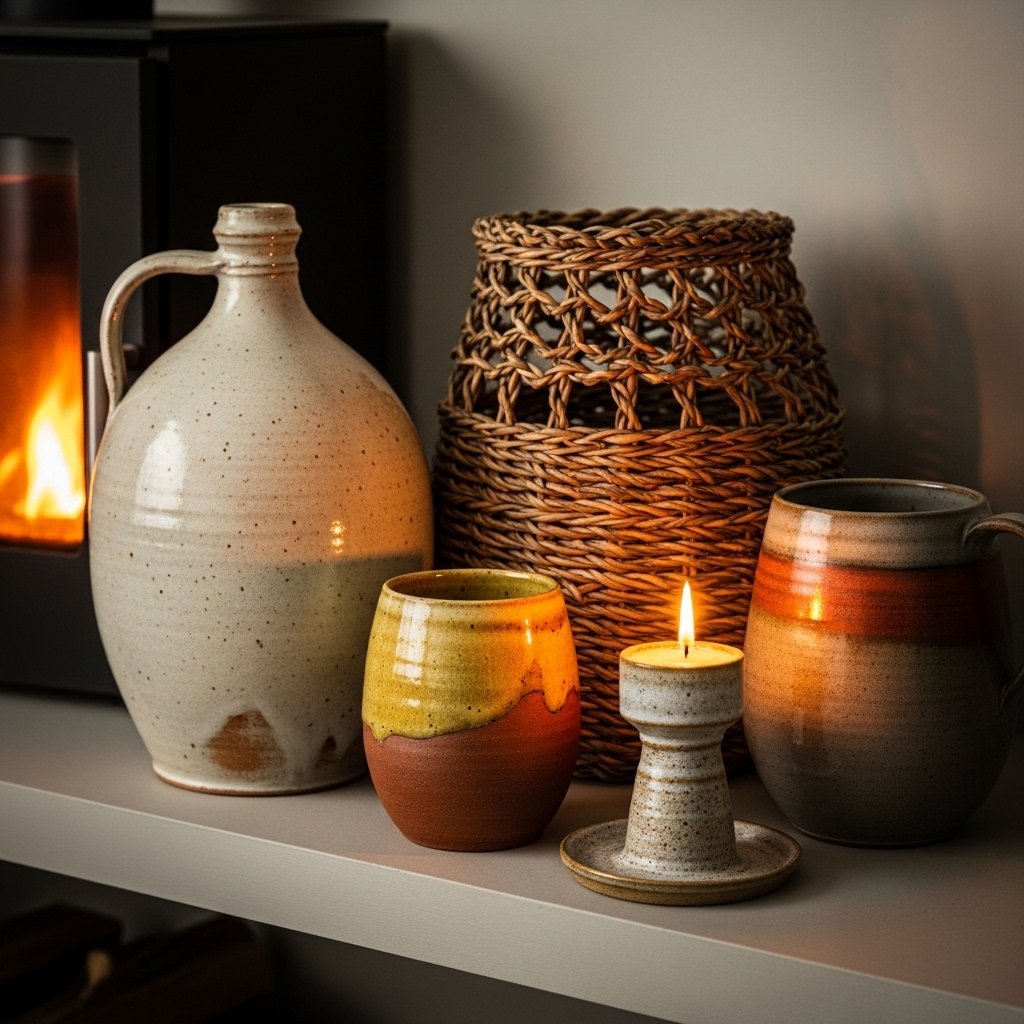
In a contemporary farmhouse living room this tradition translates to a preference for handmade ceramic and pottery objects over manufactured decorative pieces. A large earthenware jug on the mantelpiece. A collection of stoneware bowls on a shelf. A hand-thrown ceramic lamp base. A woven basket holding firewood or magazines.
The marks of making, the fingerprints in clay, the irregular profile of a hand-thrown pot, the slight unevenness of a woven basket, are not defects. They are the evidence that a person made the object and the source of its beauty.
7. Vintage and Antique Furniture Mix
The farmhouse living room has never contained furniture all purchased at the same time from the same source. It has always contained furniture accumulated over generations, bought at different times, from different places, for different practical reasons.
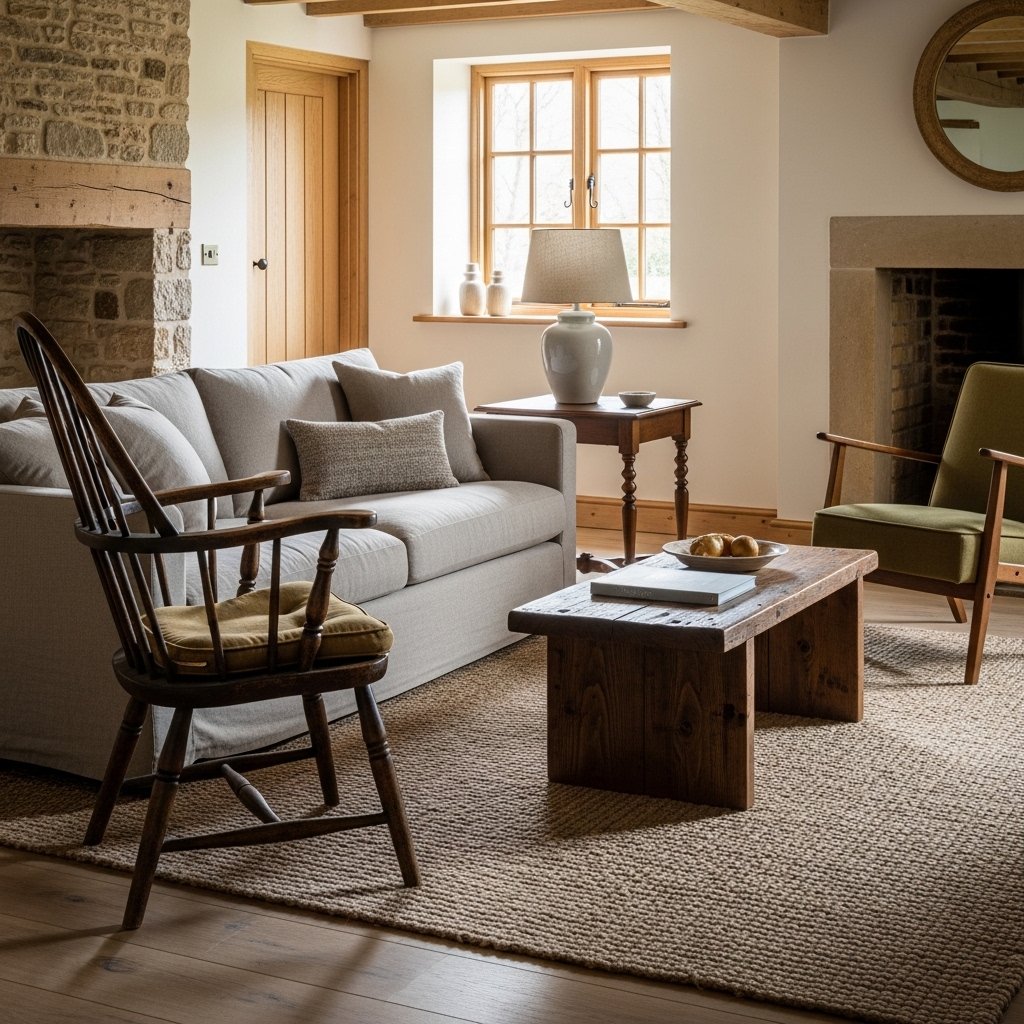
An old Windsor chair beside a contemporary linen sofa. A Victorian side table beside a modern floor lamp. A mid-century armchair with the original worn fabric preserved rather than reupholstered. An antique chest used as a side table.
The authenticity of the mixed-age furniture arrangement in a farmhouse living room is felt rather than analyzed. It looks like the furniture belongs there because it has always been there. This quality cannot be achieved by purchasing everything at once from a curated vintage retailer, however good.
Build the room over time. Buy pieces when they are found rather than when the room needs them. The farmhouse living room is a patient design project.
8. A Collection of Books as Interior Architecture
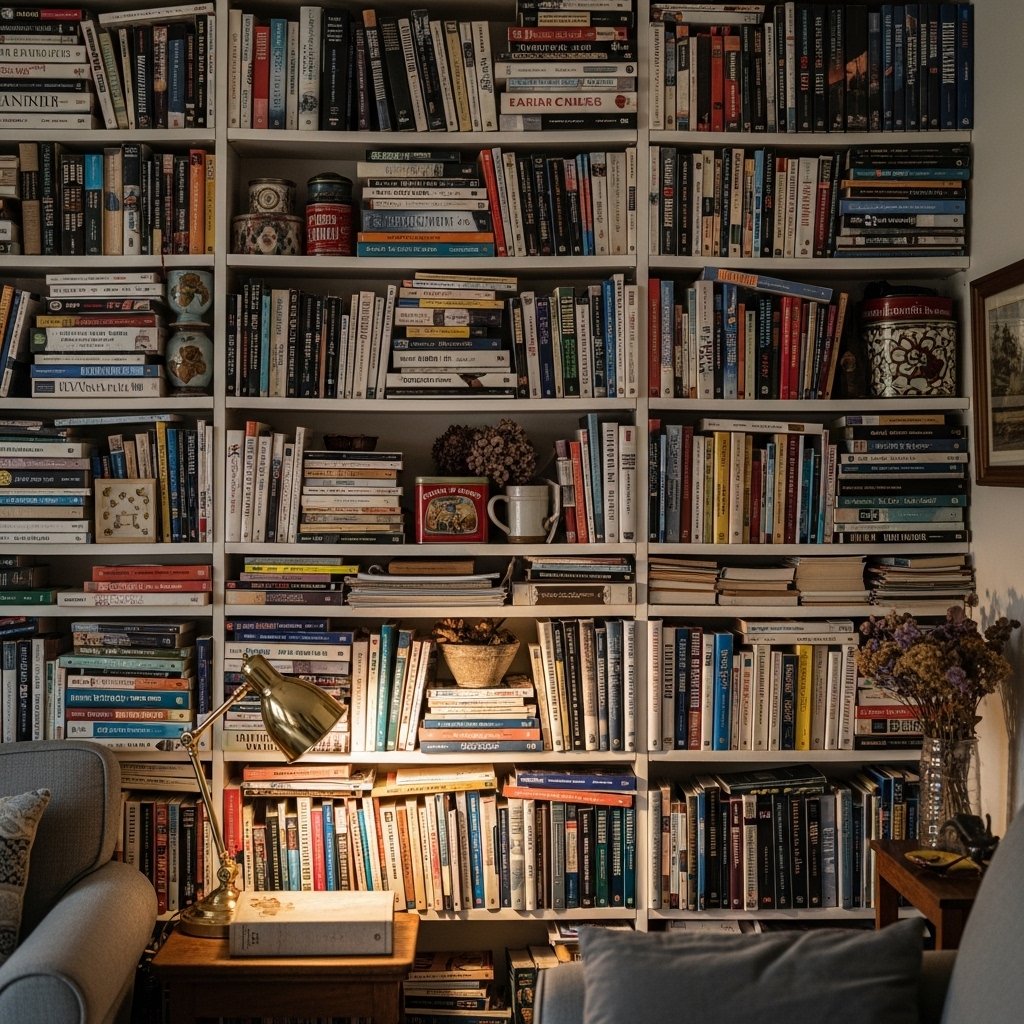
Books in a farmhouse living room are not decoration. They are evidence of a reading life conducted in this room over many years. The distinction matters aesthetically because a collection of books assembled for decoration reads as assembled for decoration. A collection built by reading reads as exactly what it is.
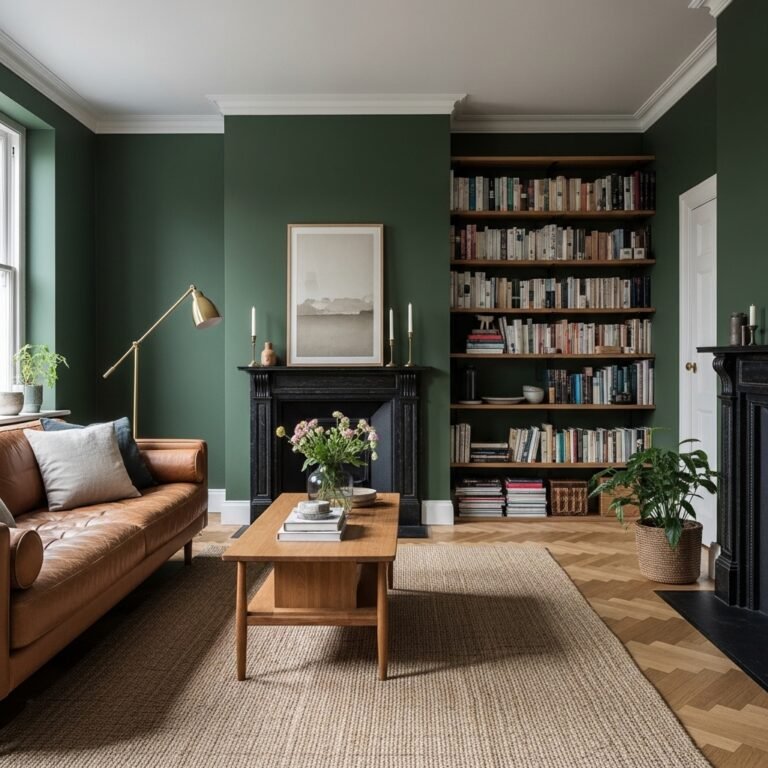
Floor-to-ceiling bookshelves on one wall, not styled, not color-coordinated, not alternating books and objects with careful spacing, but full to the edges with the actual books that have been read, creates a wall with the warmth, intellectual presence, and domestic authenticity that no other treatment provides.
A farmhouse living room built around a large, densely filled bookshelf has one of the most genuinely inviting atmospheres in interior design. The books are an invitation to stay, to sit, to read. That invitation is the farmhouse living room’s most hospitable quality.
9. Practical Objects as Display Objects
The farmhouse tradition of displaying functional objects, the tools, vessels, and equipment of daily domestic life, as decoration is one of the most honest and most beautiful principles in the entire aesthetic.
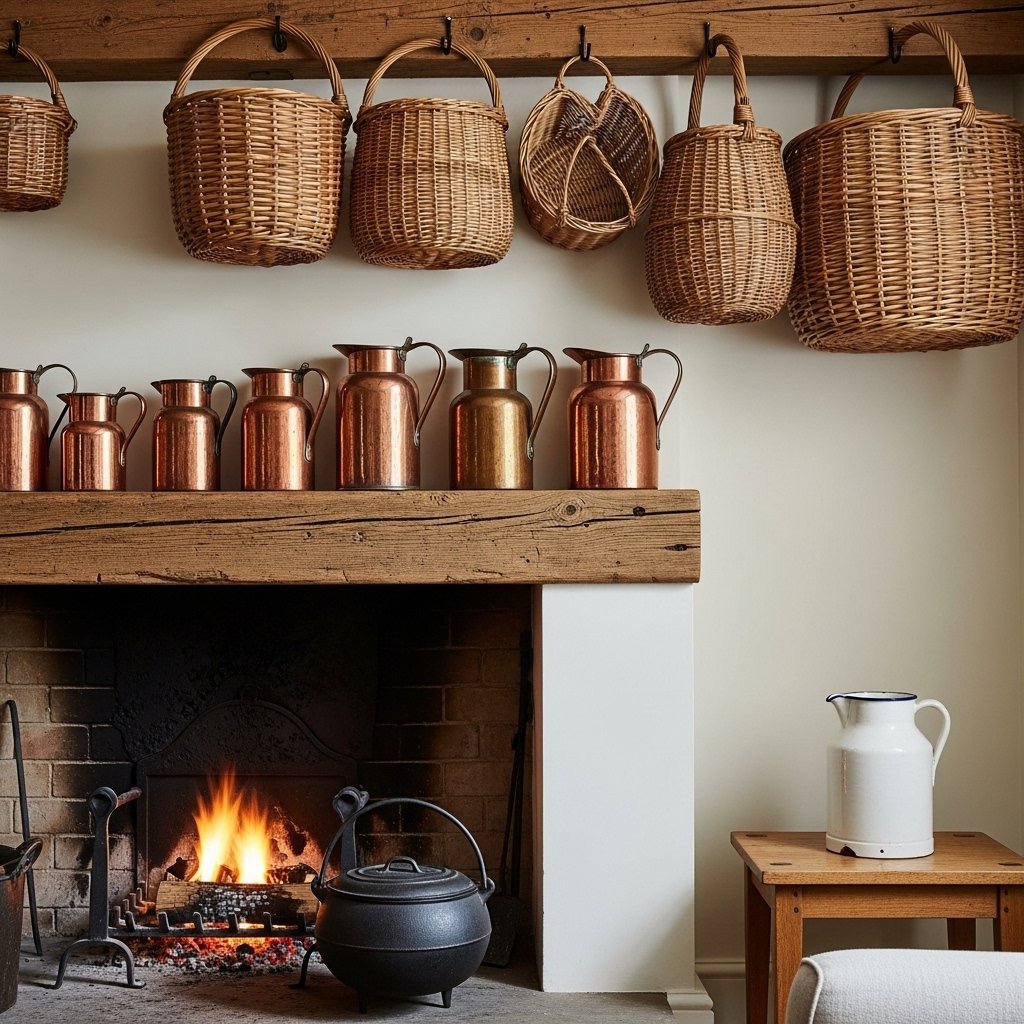
A collection of copper pots on a shelf or hanging from a ceiling beam. A cast iron Dutch oven on the hearth. Wicker baskets hung from a beam. A milk jug on a side table. A basket of vegetables beside the fireplace. Objects that serve purposes displayed because their form is beautiful.
This is the opposite of the decorative object industry’s product logic, which creates objects with no purpose specifically to be displayed. The farmhouse alternative is to display objects that have purposes and find the beauty in their functional forms.
Every object displayed in a farmhouse living room should be usable. If it is not, reconsider whether it belongs.
10. Whitewashed or Lime-Painted Walls
The farmhouse wall color is not Farrow and Ball. It is limewash. It is the traditional wall treatment of agricultural buildings across every European and American farming tradition: a mineral-based wash applied to stone, brick, or plaster that protects the surface while creating a breathing, textured finish.
Limewash applied to farmhouse living room walls in a warm white, cream, or the palest blue creates a surface with an organic warmth that modern paints consistently fail to approximate. The material is mineral rather than plastic-based. It breathes rather than sealing. It ages toward beauty rather than toward deterioration.
Applied over original stone or brick it maintains the material’s texture while unifying the color. Applied over plaster it creates the slightly irregular, slightly textured surface that no synthetic paint achieves.
11. Small-Paned Windows With Thick Timber Frames
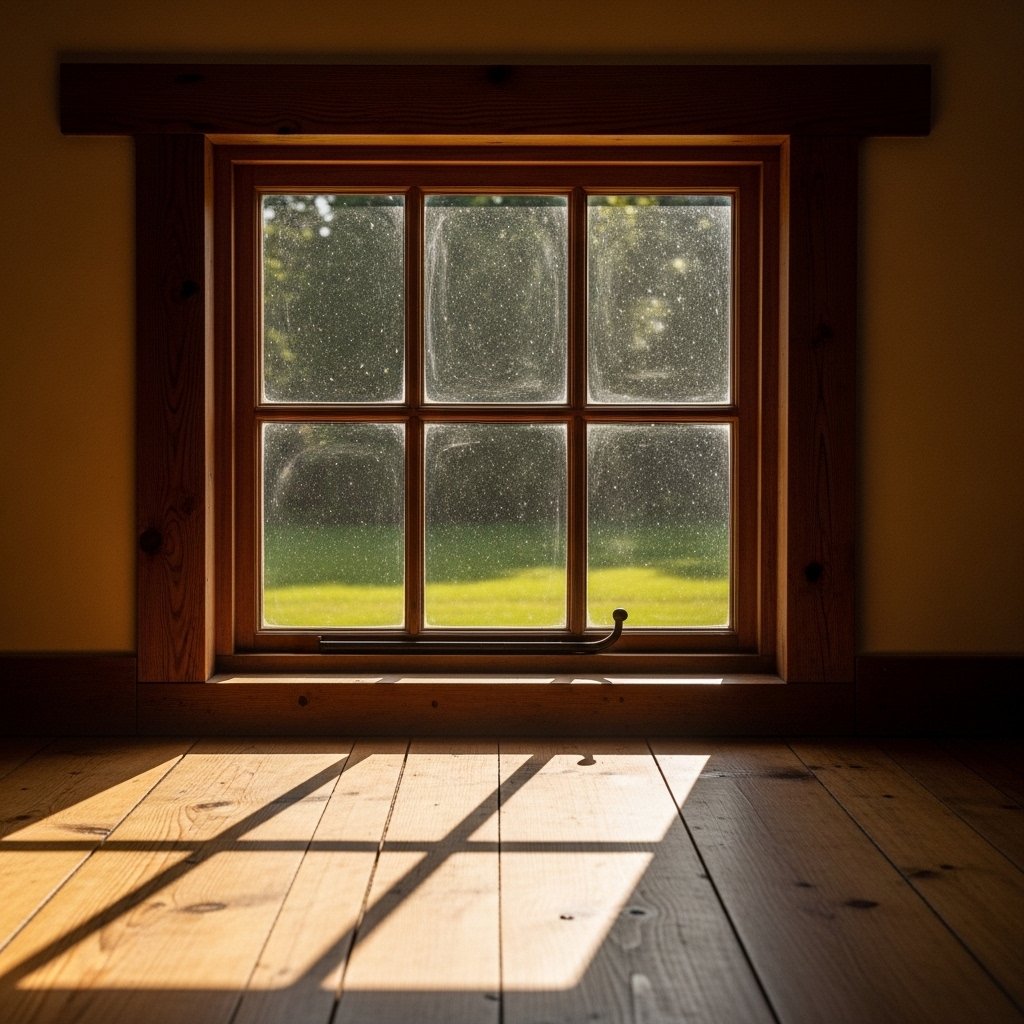
The windows of a farmhouse living room are an architectural feature that the room’s entire atmosphere depends on. Small-paned windows with thick timber frames, whether original single-pane glass or contemporary double glazing in period-appropriate frames, create a quality of filtered natural light that large modern windows do not.
The light entering through multiple small panes is divided and softened. The thick timber frames create visual depth in the wall opening. The original glass, with its slight irregularities and ripple effects, adds a warmth to the light that flat modern glass lacks.
Where original windows exist, preserve and restore rather than replace with modern alternatives. Where new windows are required, specify timber frames with glazing bars that maintain the small-pane character appropriate to the farmhouse context.
12. A Working Farm Table as Coffee Table
The farmhouse aesthetic borrows from the agricultural tradition the farm table: a table made to work, not to look beautiful, which has become beautiful through decades of use.
A large, thick-topped farm table lowered to coffee table height or a vintage farm table used at its original height with lower surrounding seating creates a central furniture piece that carries the farmhouse living room’s material and historical weight.
The surface of a worked farm table, with its knife marks, stain rings, worn edges, and general evidence of use, is the most authentic material surface available in farmhouse interior design. It cannot be faked convincingly. It can only be found.
Source at estate sales, farm dispersals, and rural auction houses. The real tables exist and are consistently undervalued relative to their design quality because they are not recognized as design objects by the people selling them.
13. Candlelight and Firelight as Primary Evening Light Sources
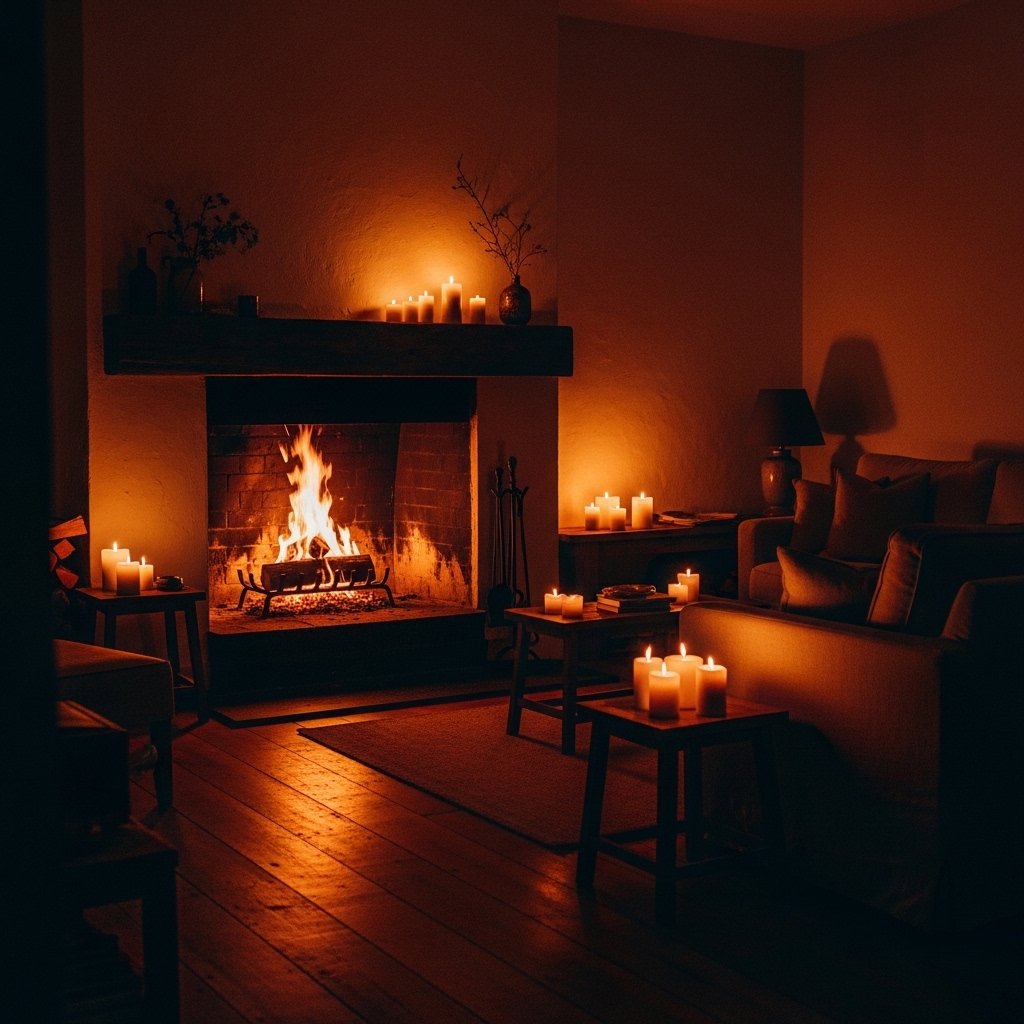
The farmhouse living room at evening is not primarily lit by electricity. It is lit by fire.
A wood fire burning in the stone fireplace. A collection of candles on the mantel shelf and on side tables. Oil lanterns on shelves and surfaces. These light sources produce a quality of warm, moving, amber light that no electric fitting replicates.
The electric light sources in a farmhouse living room at evening should be warm, dimmed, and supplementary. The principal light is the fire. The candles fill in where the firelight does not reach. The electric lamp is used for reading rather than for general illumination.
This light philosophy requires a fire to be lit in the cooler months and candles to be used routinely rather than only on occasions. These are small habits that produce a large and daily improvement in the quality of the room’s evening atmosphere.
14. The Farmhouse Living Room in Summer: Light and Open
The farmhouse living room aesthetic is most associated with winter: fires, heavy textiles, and warm amber light. The summer version is its equal and complementary expression.
In summer the farmhouse living room opens. The windows are open to the garden. The fire is replaced by a large arrangement of garden flowers in the empty grate. The heavy wool throws are stored and replaced with linen. The dark winter cushions are replaced with natural undyed ones. The curtains, if any, are sheer enough to move in the breeze.
The farmhouse living room in summer smells of the garden. It is lit by natural light until late evening. It connects to the outdoor spaces surrounding it through open doors and windows rather than separating from them.
The same room, the same architecture, the same furniture, transformed by the season’s specific requirements into an entirely different atmospheric experience.