9 Black and White Bathroom Designs
Black and white is the one bathroom palette that works in every home, every size, and every era. It is not a trend. It is a starting point that has been producing good bathrooms for over a century. What changes is how you use it: the tile scale, the fixture finish, the proportion of black to white, and whether you lean classic or contemporary. These nine designs cover the full range.
1. The classic black and white hex tile floor that never gets old
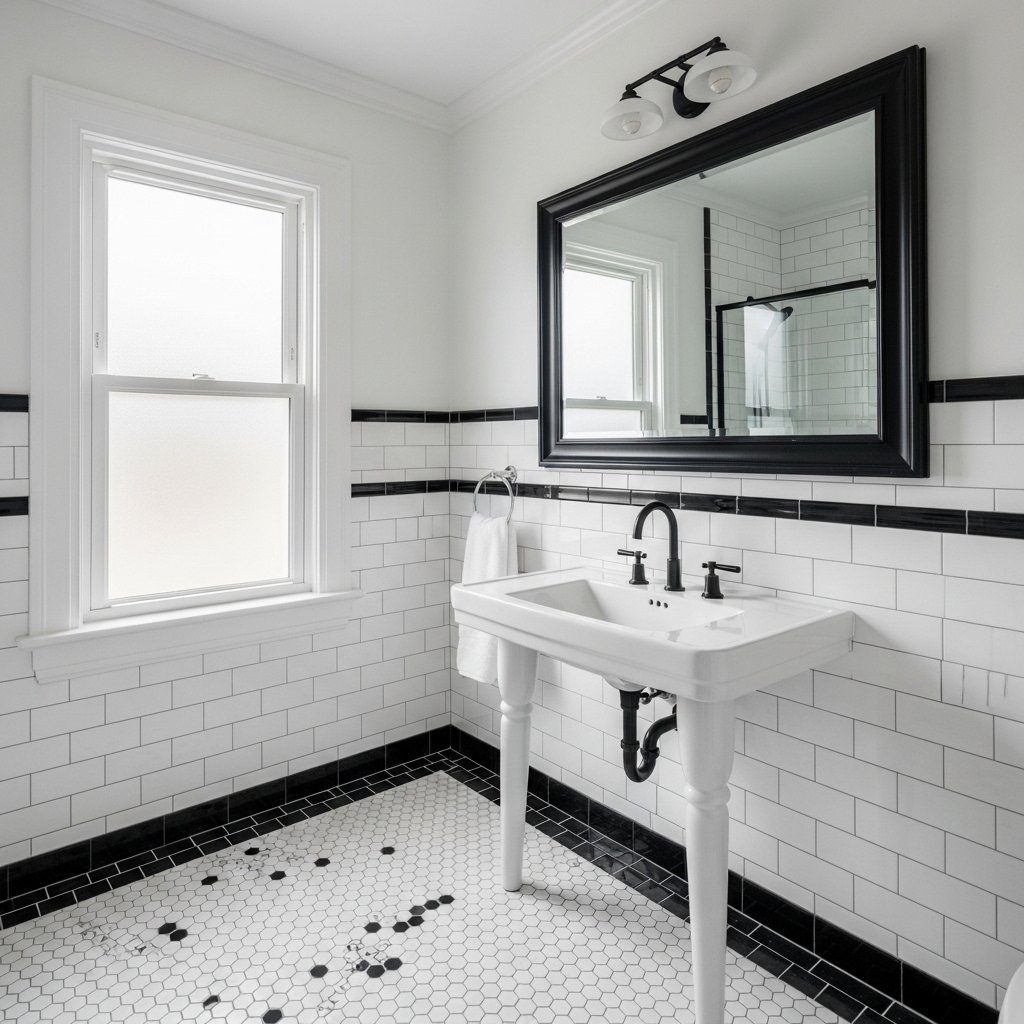
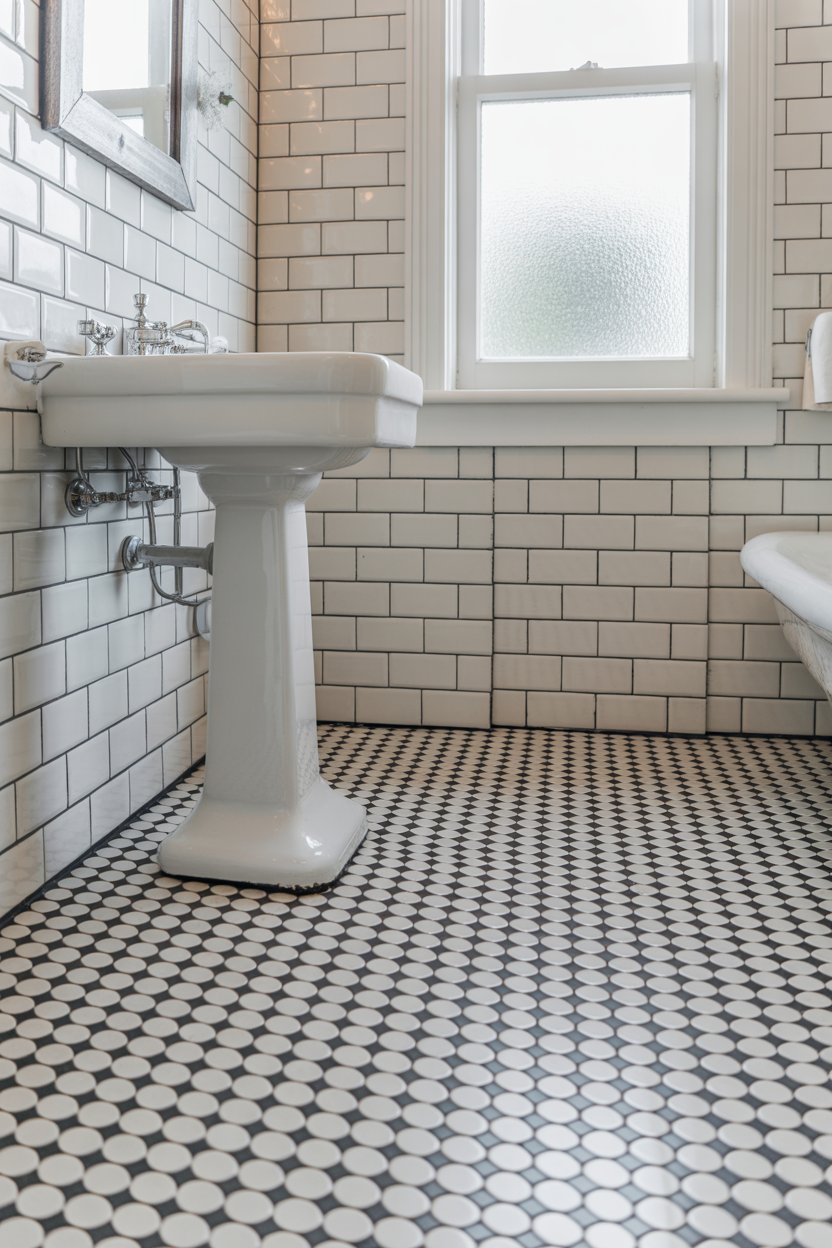
If there is one thing in interior design that has genuinely stood the test of time, it is the black and white hexagonal tile floor. It appeared in Victorian bathrooms over a hundred years ago and it is still being installed in new builds today, which tells you something about how certain combinations transcend trend cycles entirely. The reason it works is that the small scale of the pattern adds visual texture to the floor without competing with anything else in the room. Pair it with white subway tile walls, a simple white pedestal sink, and brushed nickel or chrome fixtures and you have a bathroom that will look right in twenty years the same way it looks right today. The grout color is the one decision that changes the whole outcome. White grout keeps it soft and classic. Dark grout makes the pattern more graphic and contemporary. Neither is wrong but they produce genuinely different rooms.
2. Matte black fixtures against crisp white walls
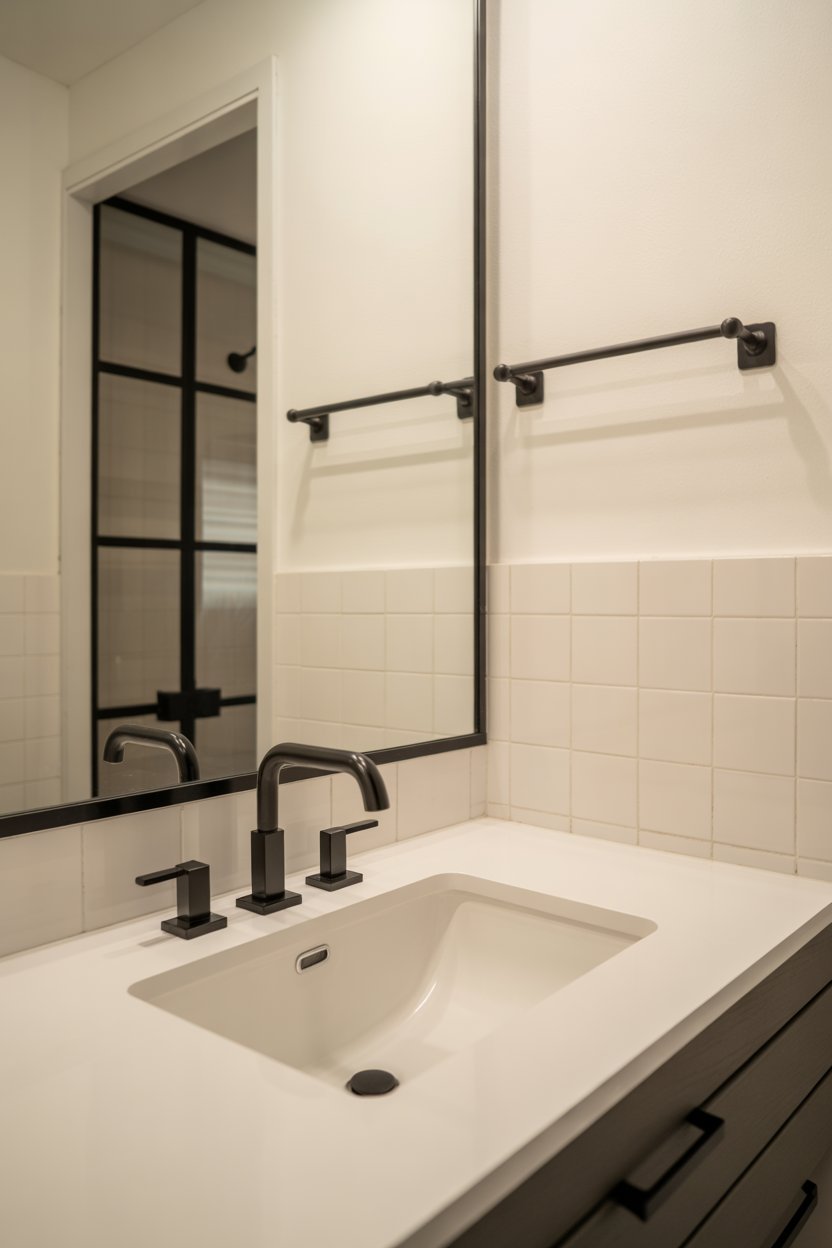
Matte black fixtures became popular a few years ago and unlike most trends they have held up because they solve a real problem. Chrome and nickel fixtures look dated the moment they get water spots on them, which in a bathroom is approximately every twelve hours. Matte black hides water marks, fingerprints, and everyday use in a way that polished finishes never do. Against white walls and white tile they also provide a level of contrast that gives the bathroom a finished, considered quality without requiring any additional decorative effort. A matte black faucet, towel bar, mirror frame, and light fixture above the vanity is enough to make a completely white bathroom feel designed rather than just clean. The consistency across all the metal finishes is what makes it work. Mixing matte black with chrome or brass in the same bathroom is where most people go slightly wrong.
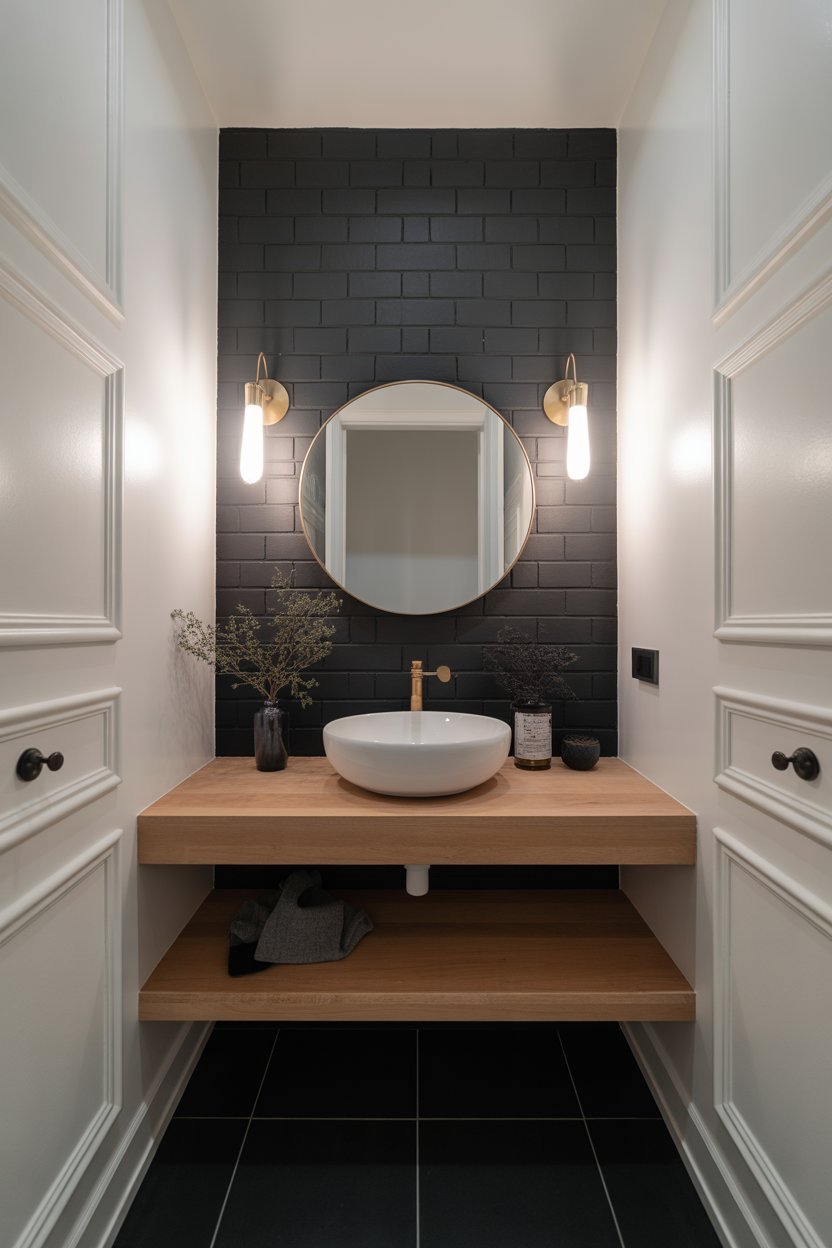
3. Bold black accent wall in an otherwise white bathroom
A single black wall in a white bathroom is one of the more confident design moves you can make, and it pays off consistently when it is done with commitment rather than hesitation. The wall behind the vanity or behind a freestanding tub is the right location because it frames the most important element in the room rather than just sitting behind a door or beside a window. The black does not need to be paint. Matte black tile, zellige in a very dark glaze, or even large format black slate all produce different results with the same underlying logic. What you put against that wall matters. A white vessel sink on a floating vanity, a round brass mirror, a single wall sconce on each side. The drama of the dark wall makes everything in front of it look more deliberate than it would against a neutral background.
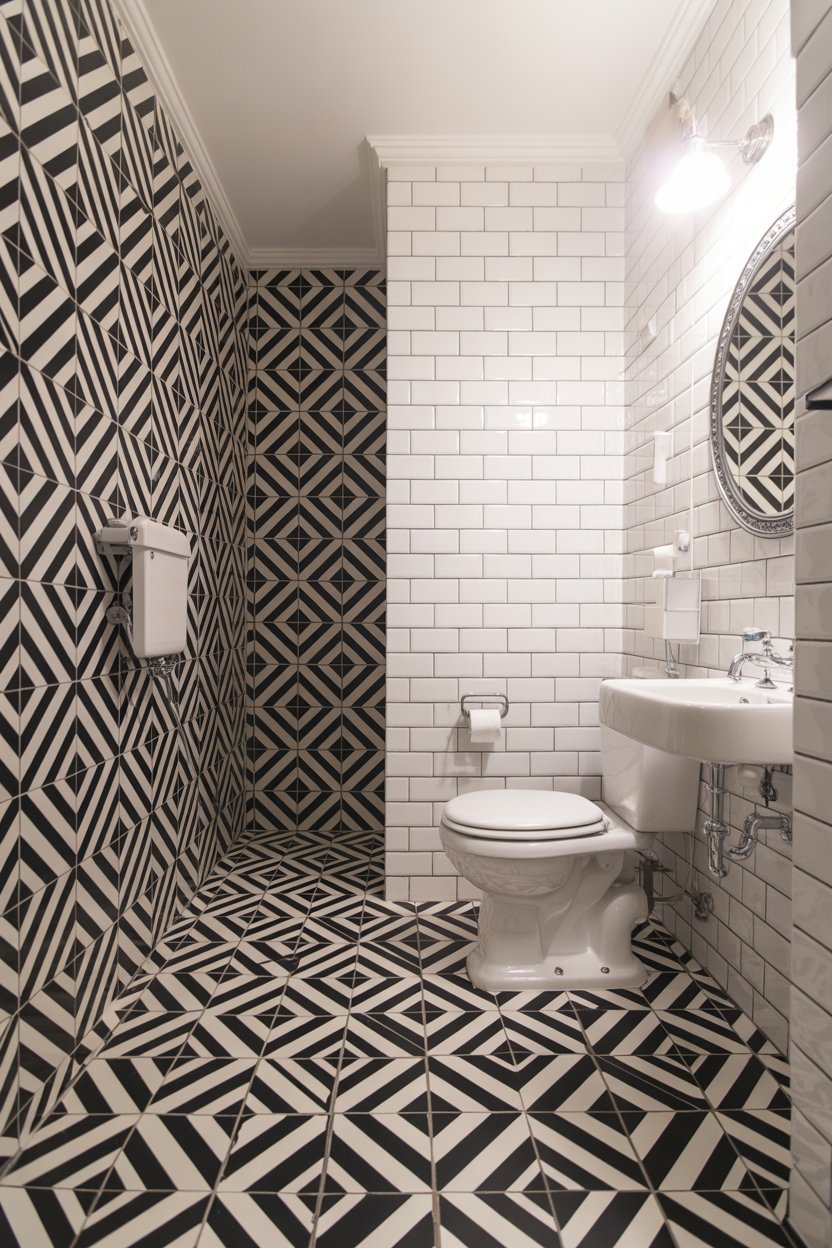
4. The graphic black and white pattern tile that becomes the whole room
Some tile patterns are decorative details. Others are the room. A high-contrast black and white geometric or encaustic pattern tile used floor to ceiling, or even just on one full wall, crosses the line from accent into statement in a way that means almost everything else in the bathroom needs to step back and let it be the main thing. White fixtures, white ceiling, chrome or white fittings, nothing that competes. The pattern does all the work. This approach is particularly effective in small bathrooms where a single strong visual element reads better than multiple competing ones. A small bathroom with a bold patterned tile and simple white everything else feels more intentional and more interesting than a larger bathroom with moderate choices throughout. The tile is the investment. Everything else can be basic.
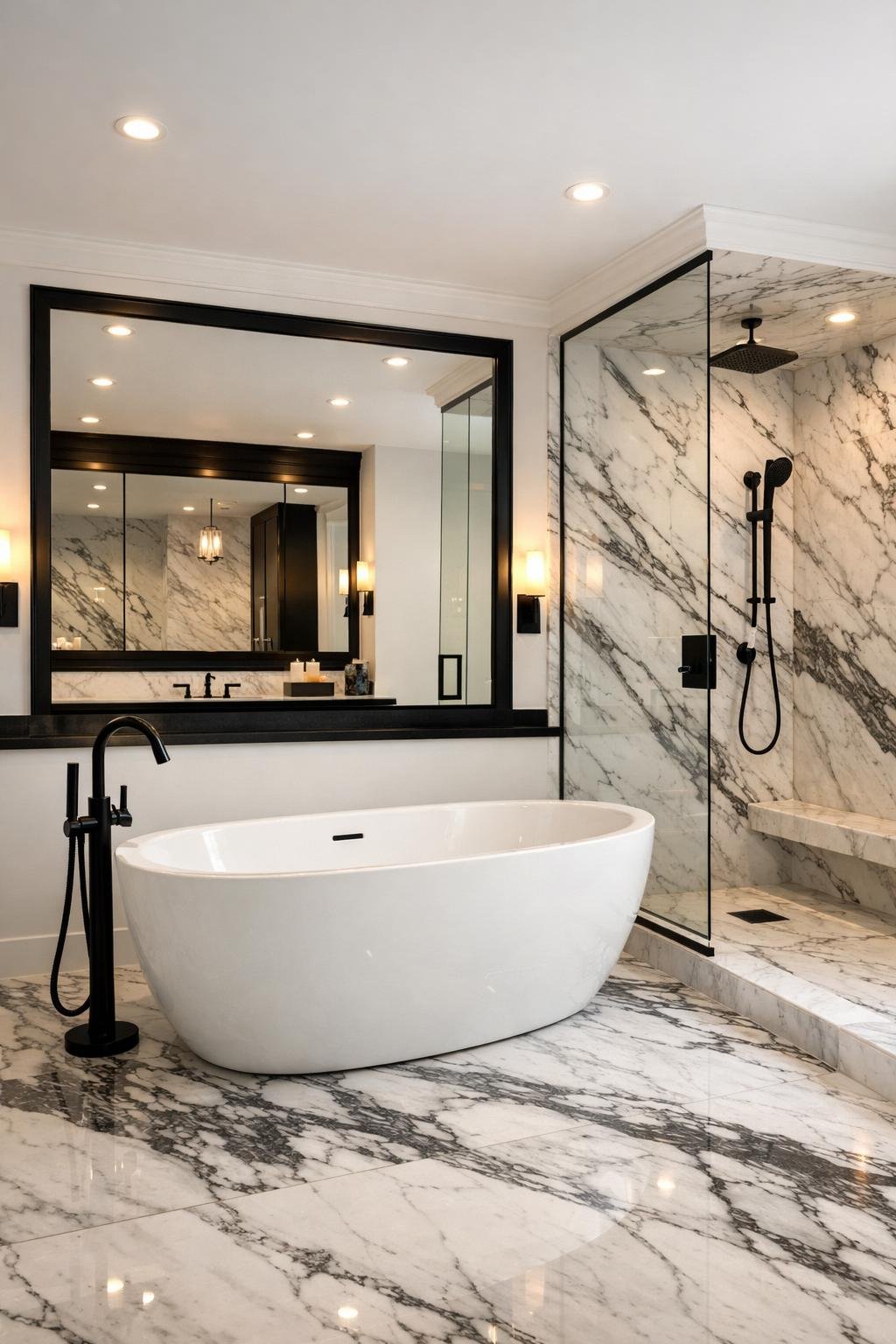
5. Marble and black for a bathroom that feels expensive without trying
White marble with grey or black veining is the material that makes a bathroom feel more expensive than almost anything else you could put in it, and when you pair it with black fixtures and black accents the contrast between the white stone and the dark elements makes both look more considered. The marble does not need to be real to work. Porcelain tile that replicates marble veining closely enough is a fraction of the cost and performs better in a wet environment anyway. Use it on the floor and on one wall, ideally the shower wall or the wall behind the vanity. Keep the remaining walls white and simple. A black framed mirror, matte black taps, and black grout in the tile joints ties the whole room together without requiring anything else. It is the kind of bathroom that looks like it cost twice what it actually did.
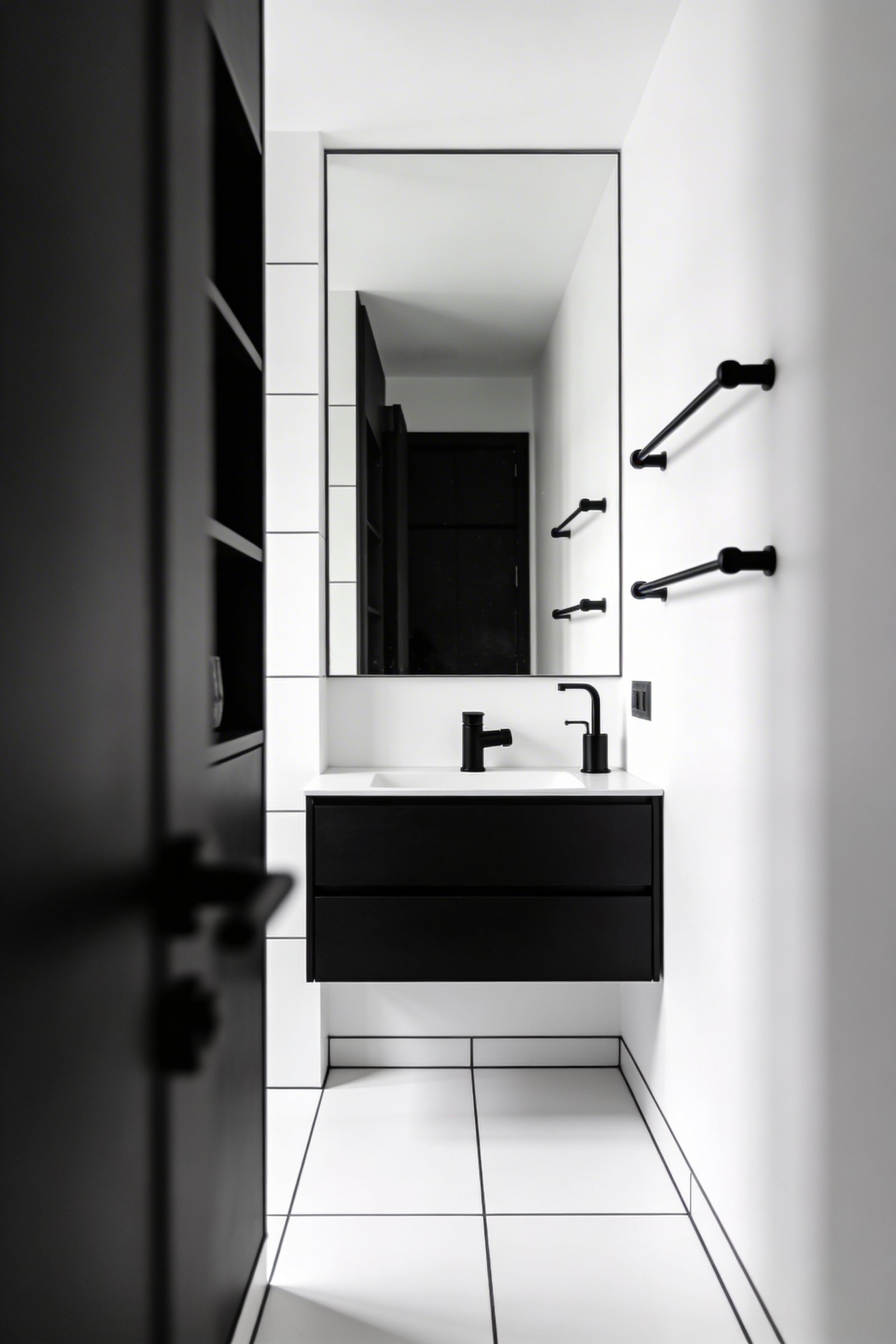
6. Tiny bathroom, big contrast: making small spaces work
Small bathrooms are not a design problem that needs to be solved by making everything light and recessive. That conventional advice produces bathrooms that are inoffensive and forgettable in equal measure. A small bathroom with high contrast black and white design, used with confidence rather than apology, often looks more interesting and more intentional than a larger bathroom where similar choices were made timidly. The key is scale. In a small bathroom, large format tile makes the floor look bigger because there are fewer grout lines interrupting the surface. A full-length mirror makes the room feel deeper. A wall-hung vanity with space visible beneath it makes the floor look longer. None of these require the room to be large. They just require the choices to be made deliberately rather than defensively.
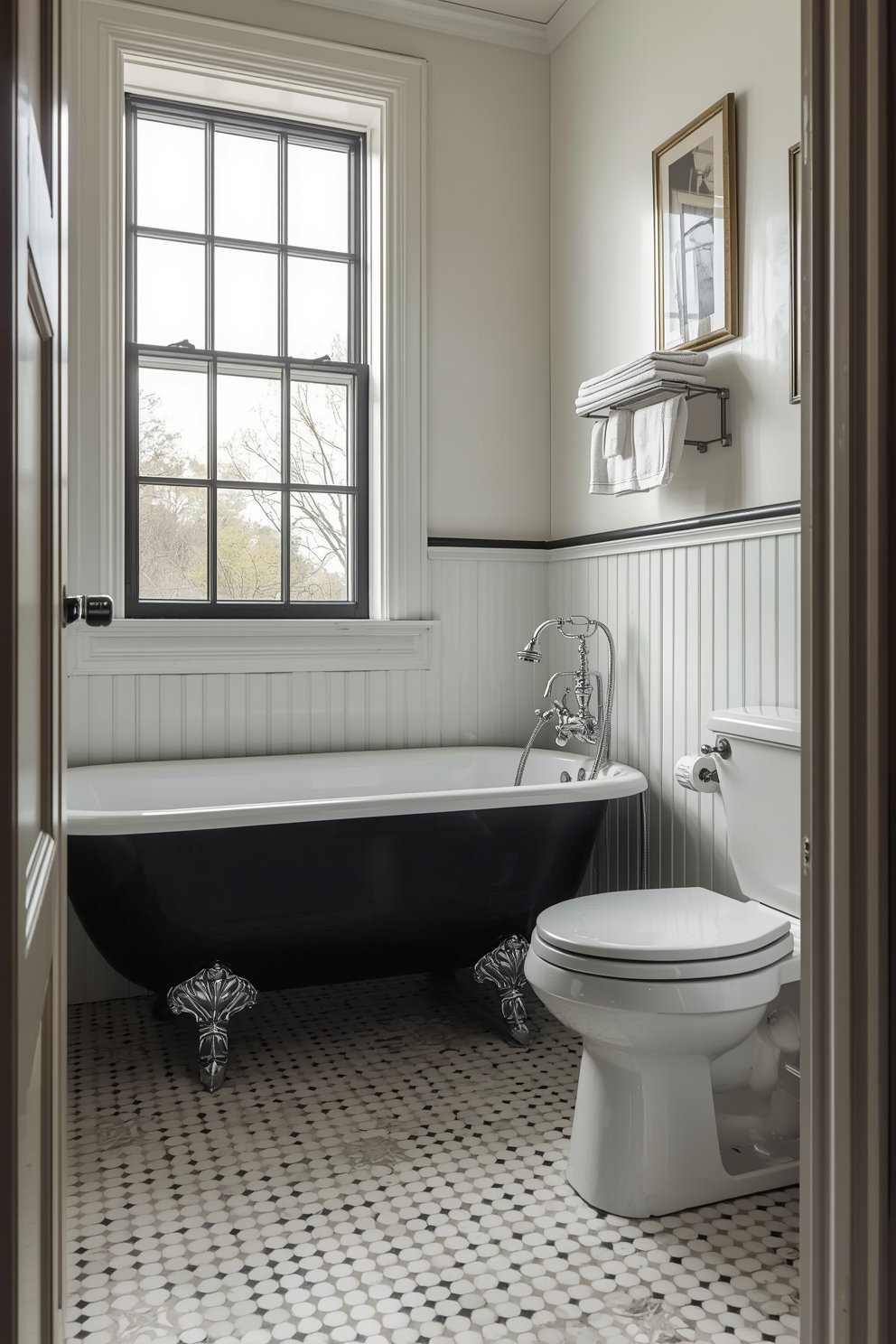
7. Vintage black and white bathroom with clawfoot tub
A clawfoot tub in a black and white bathroom is one of those combinations that photographs so well it almost feels unfair to rooms without one. The tub itself does not need to be an antique find. Reproduction clawfoot tubs are widely available and come already finished in white with chrome or black feet as options. The surrounding bathroom should lean into the vintage direction rather than fighting it. Black and white penny tile on the floor, white beadboard on the lower half of the walls, a high tank toilet if you can find one, wall-mounted faucets on the tub rather than deck-mounted ones. The fixtures and fittings are where the vintage quality lives or dies. Mixing genuinely period-appropriate hardware with the reproduction tub is the detail that makes the room look considered rather than costumed.
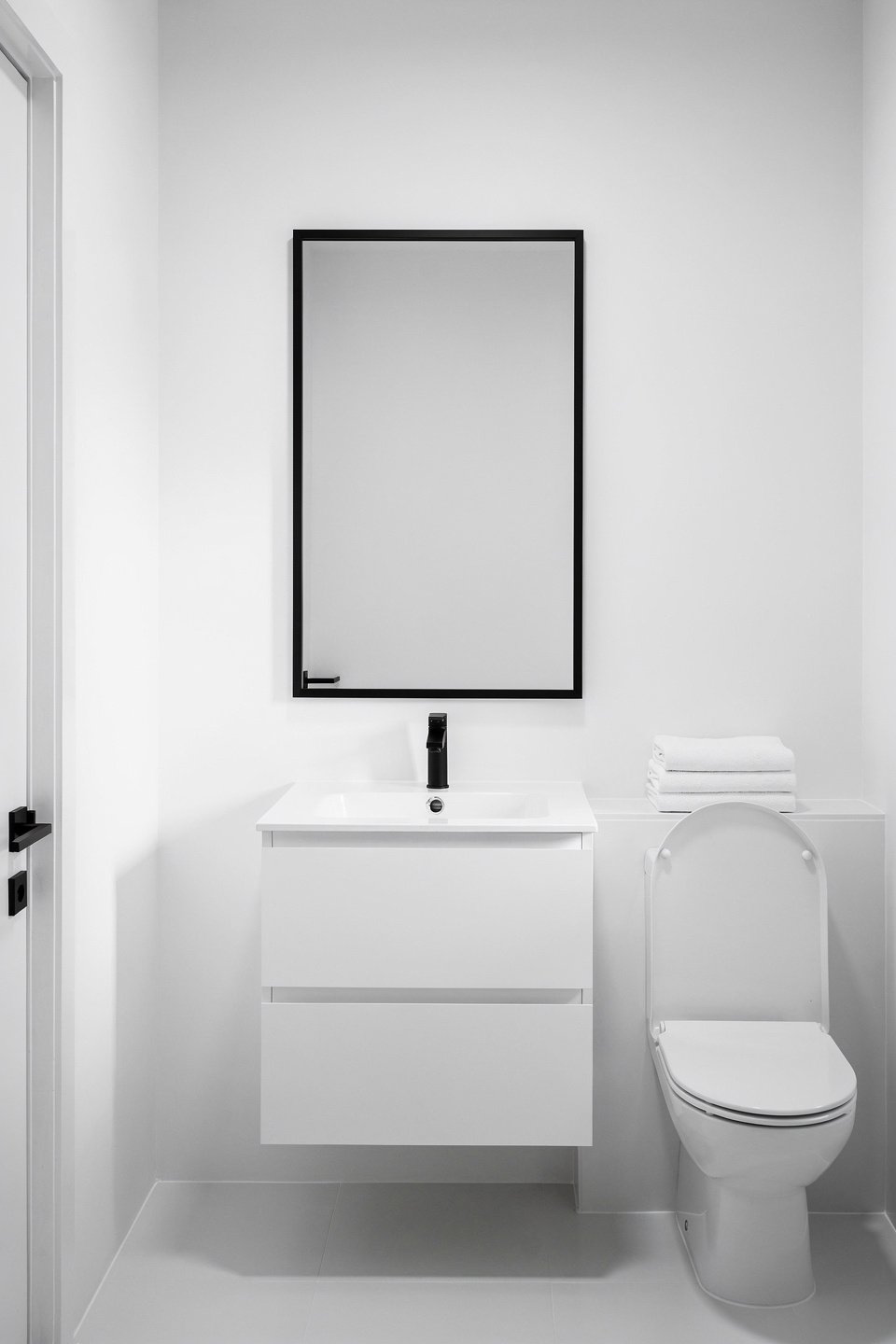
8. Minimalist black and white bathroom with nothing extra
A minimalist black and white bathroom is not just a bathroom with fewer things in it. It is a bathroom where every single decision has been made intentionally and where nothing exists without a reason. The toilet, the sink, the shower: all white, all simple in profile, all positioned with space around them rather than crowded together. One mirror, correctly sized for the vanity below it. One set of towels, folded or hung with the same care you would give a hotel room. No extra bottles on the counter, no decorative objects competing for attention, no art on the walls. The restraint is the design. In a minimalist bathroom the grout lines, the fixture silhouettes, and the proportions of the room itself become the things you notice, which means they need to be right rather than just acceptable.
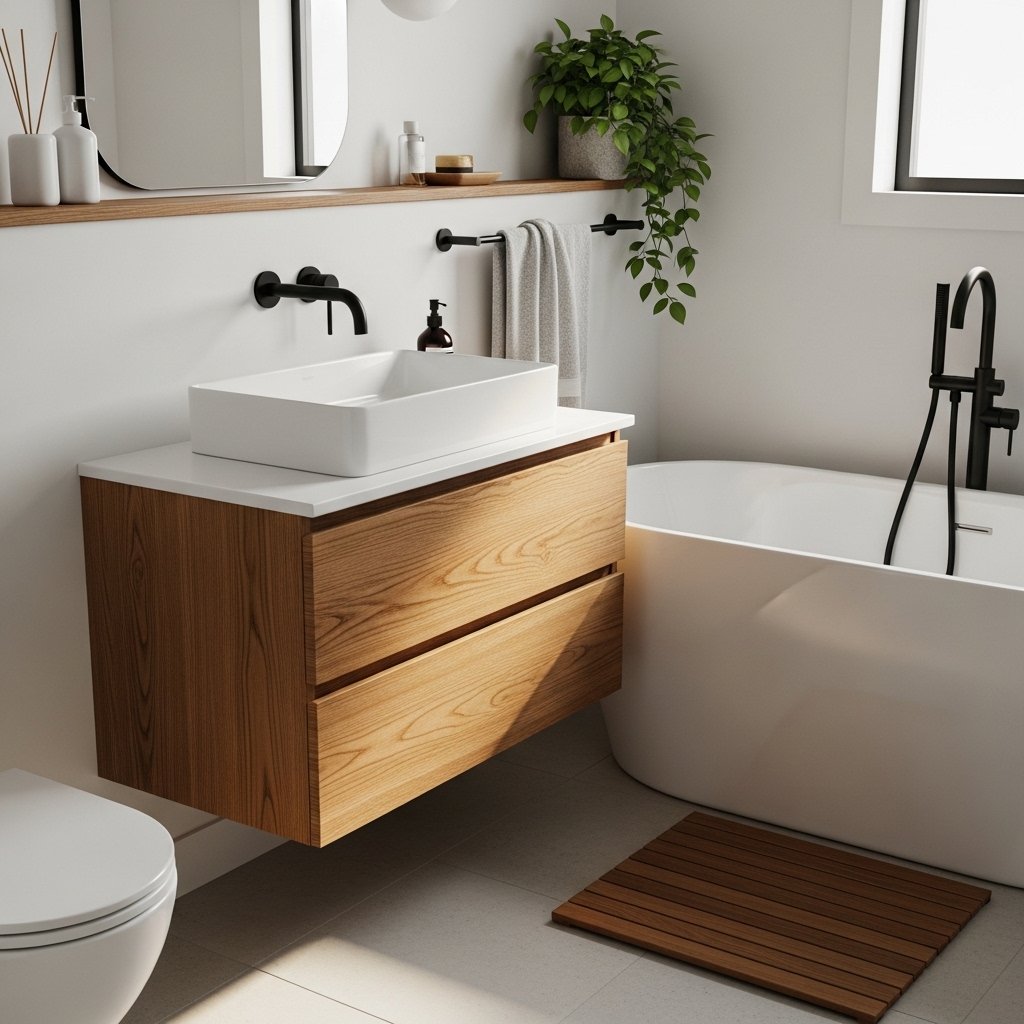
9. The black and white bathroom with one warm material that changes everything
A bathroom that is entirely black and white with no other material in it can feel slightly cold, like a room that has been styled rather than lived in. The fix is simple and it does not require abandoning the palette. One warm material introduced in the right place shifts the entire feeling of the room without disrupting the visual logic. A wooden vanity cabinet under a white sink. A teak bath mat on the floor beside the tub. Open wooden shelving on one wall holding white towels and a plant. The wood does not need to be prominent. It just needs to be present, and it works precisely because it contrasts with the hardness and graphic quality of the black and white around it. It is the detail that stops the bathroom from feeling like a design exercise and starts it feeling like somewhere a real person gets ready in the morning.
Black and white does not ask much of you. Pick the version that suits your space, commit to it, and get the fixture finishes consistent. The rest takes care of itself.