A small living room is not a design problem that needs to be solved by making everything smaller. Most of the advice about small spaces focuses on downsizing everything, which tends to produce rooms that look like they are trying to disappear rather than rooms that feel genuinely good to be in. These 9 ideas take a different approach: working with the space you have rather than apologizing for it.
1. The sofa that does not touch the walls
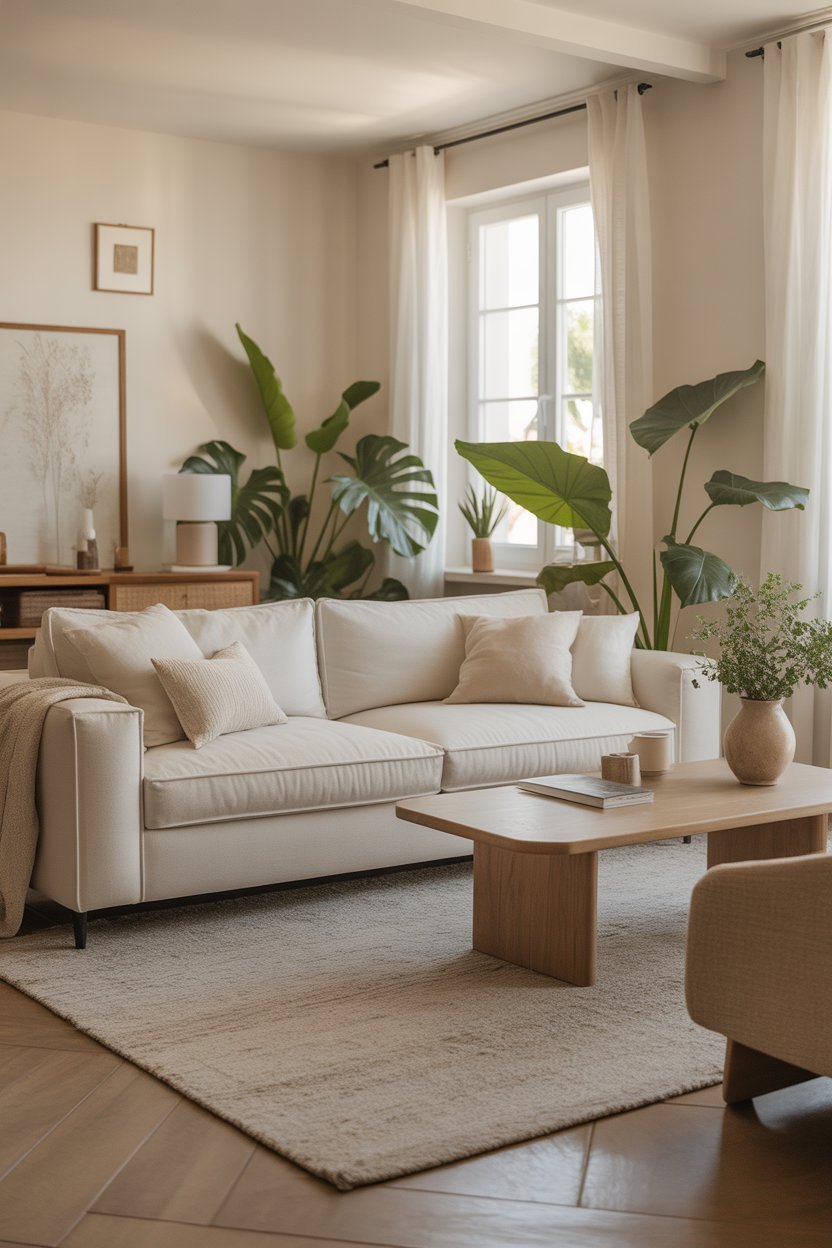
The single most counterintuitive thing you can do in a small living room is pull the sofa away from the wall. Every instinct says push it back to create more floor space in the center, but that instinct is wrong. A sofa floating a few inches or even a foot away from the wall creates a visual gap that makes the room feel larger because the eye reads the space as continuous rather than blocked. It also makes the sofa feel like a piece of furniture that was placed with thought rather than pushed to the perimeter to get it out of the way. The floor space you gain in front of the sofa by pushing it back is not usable floor space. It is just emptiness that makes the seating area feel stranded in the middle of the room. Float the sofa, put a narrow console table behind it if there is enough room, and the whole layout immediately feels more intentional.
2. One large rug instead of no rug or a small one
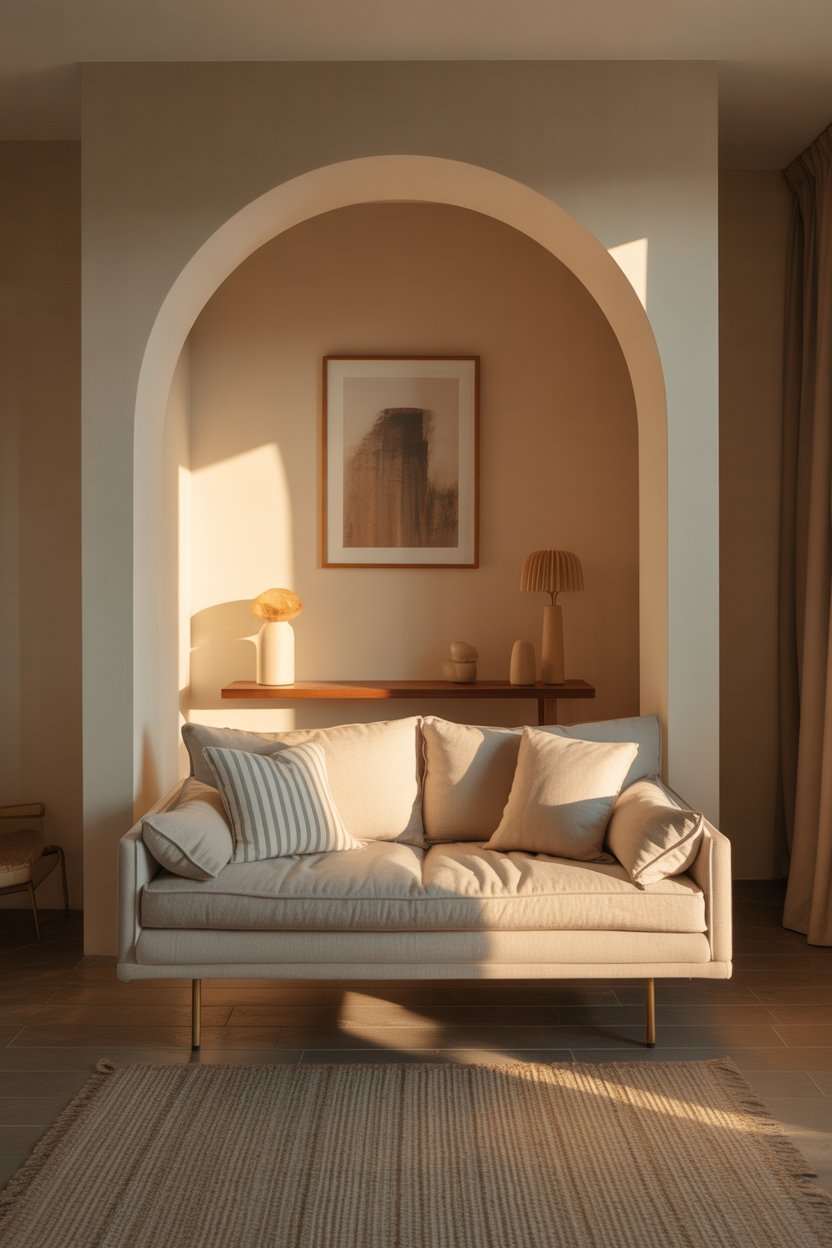
A rug that is too small for the room is one of the most common mistakes in small living rooms and it makes a small space feel even smaller rather than helping it. The rug needs to be large enough that at least the front legs of every piece of seating in the arrangement sit on it. If that is not possible given the room dimensions, the rug should be large enough that the front legs of the sofa sit on it at minimum. A rug that floats in the middle of the seating area with furniture surrounding it but not touching it looks like it was purchased for a different room and placed here temporarily. A properly sized rug unifies the seating arrangement into a single cohesive zone which is exactly the visual effect that makes a small room feel organized and complete rather than crowded.
3. Vertical storage that draws the eye upward
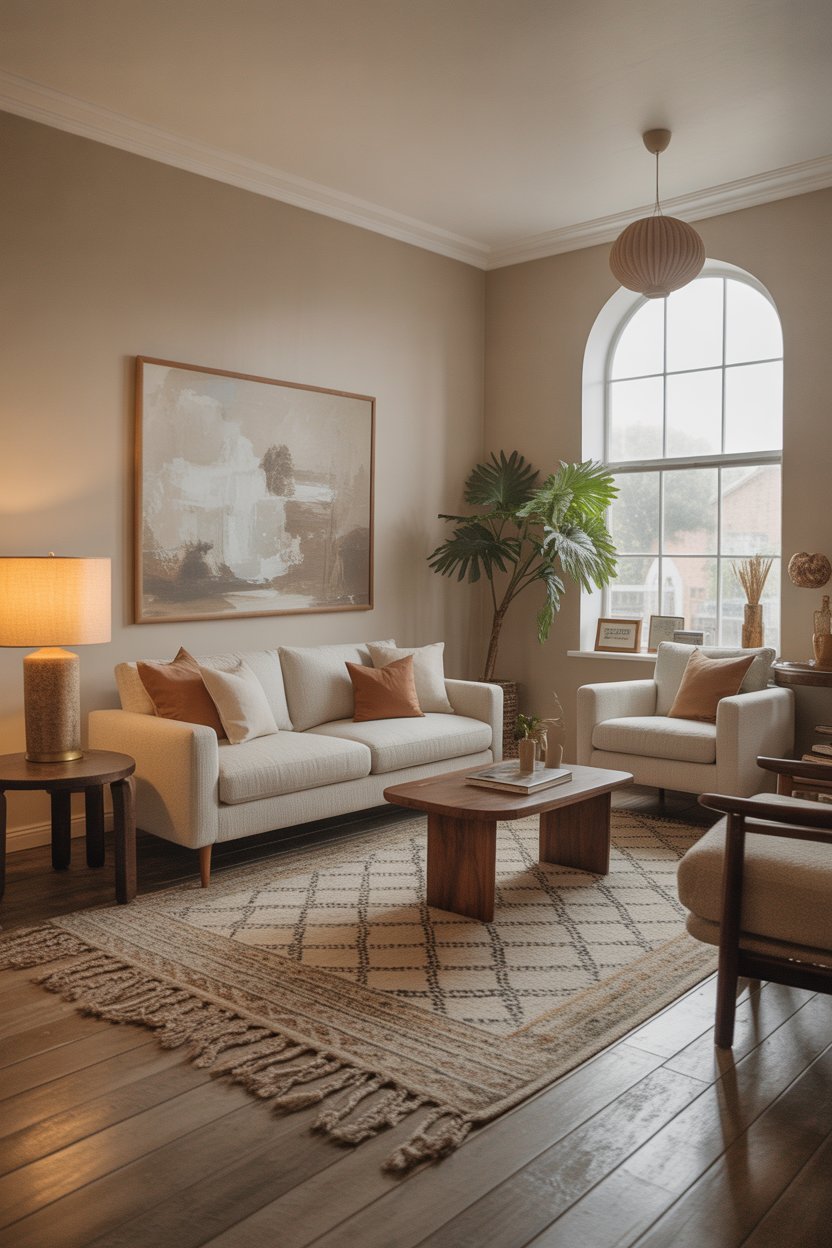
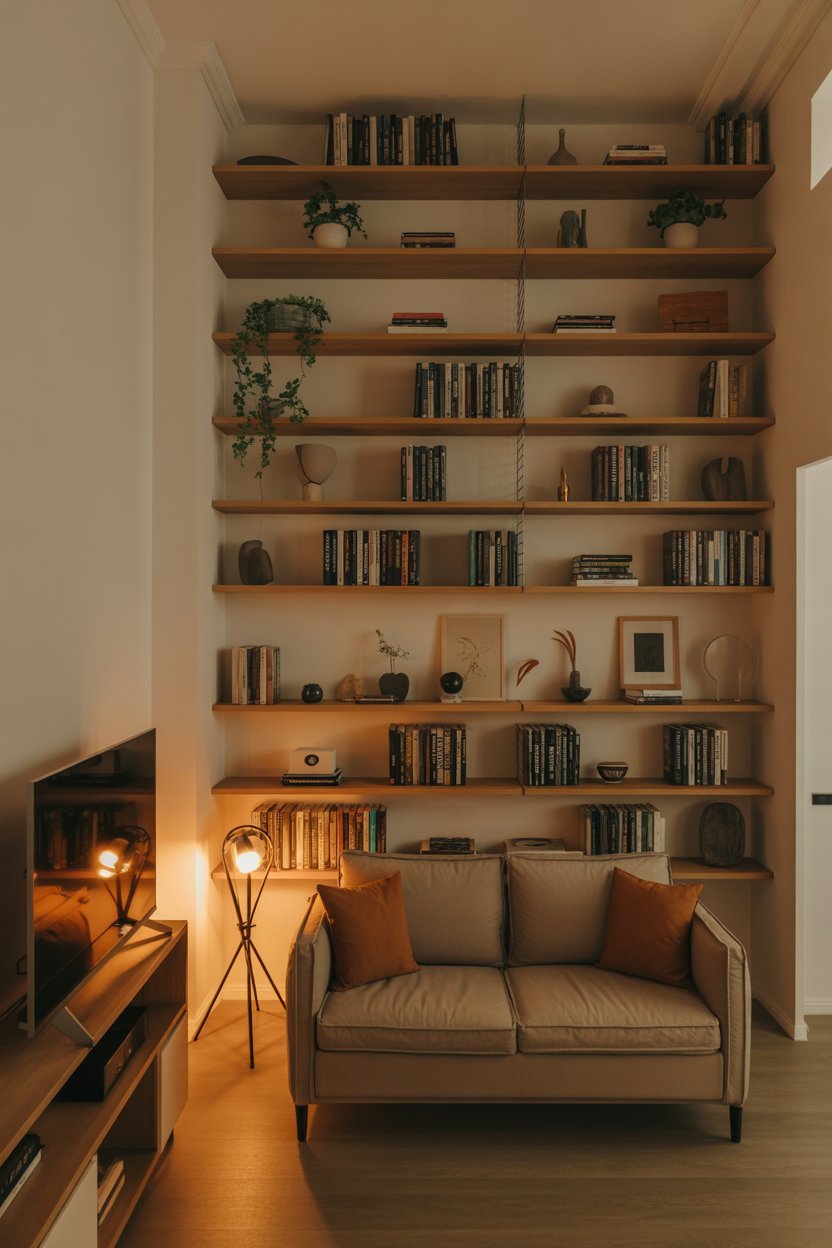
In a small living room the floor space is limited but the wall space above eye level is almost always underused. Tall bookshelves that reach close to the ceiling do two things simultaneously: they provide substantial storage without consuming any floor area beyond their footprint, and they draw the eye upward which makes the ceiling feel higher and the room feel taller than it actually is. The shelves do not need to be floor to ceiling custom built-ins, though those are the most effective version. A tall freestanding bookshelf pushed against a wall and styled with books, plants, and a few objects rather than packed uniformly with books produces a similar effect at a fraction of the cost. The styling matters because a shelf packed tightly with uniform books reads as storage. A shelf with variation in height, depth, and object type reads as a design element.
4. A round coffee table that gives everyone more room
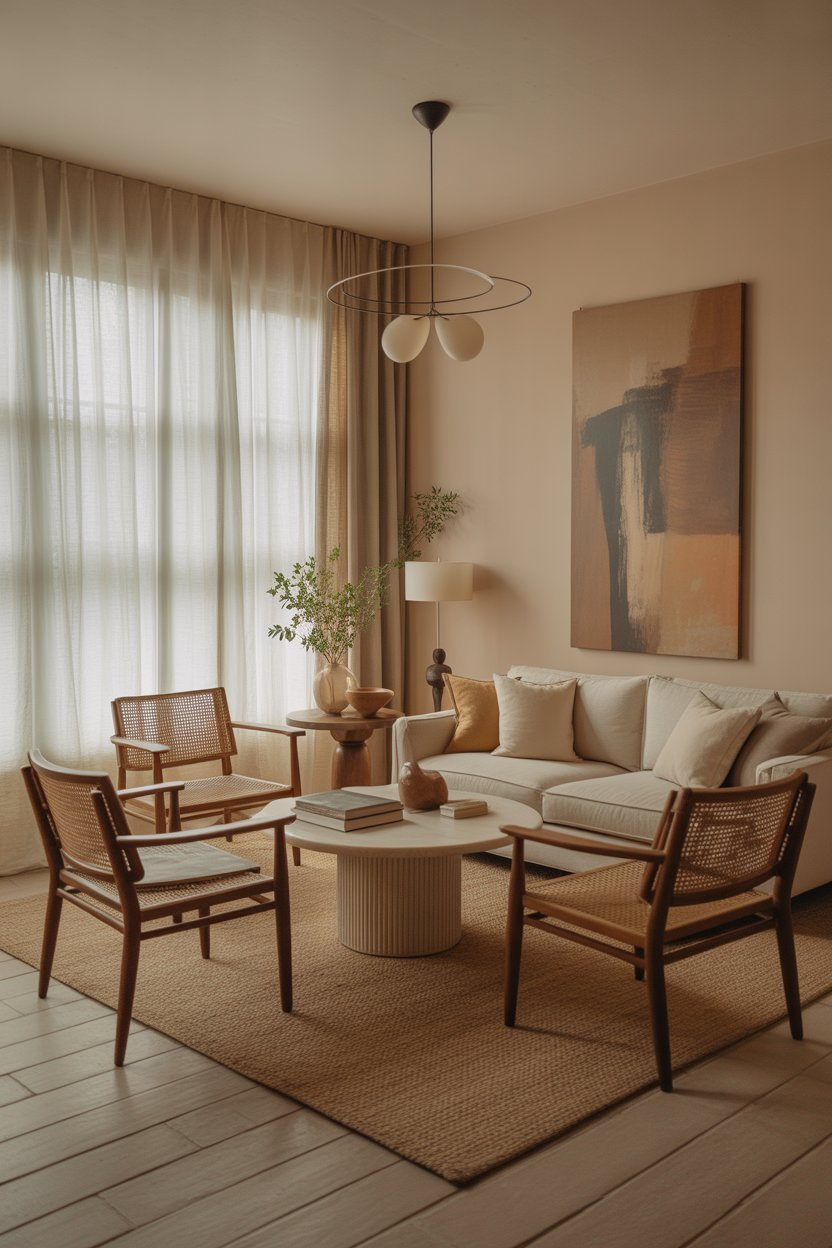
Rectangular coffee tables in small living rooms create traffic problems that most people attribute to the room being too small rather than to the table shape being wrong. The corners of a rectangular table cut into the walking paths around the seating area and make the space feel more cramped than the square footage actually warrants. A round or oval coffee table removes the corners and opens the flow around the seating arrangement in a way that is immediately noticeable. It also softens the overall look of the room, which tends to make small spaces feel more relaxed and less crowded. Size still matters with a round table: it should be roughly two thirds the length of the sofa it sits in front of, and the surface should be low enough that it does not visually interrupt the sight line across the room.
5. Mirrors positioned to borrow light and space from elsewhere
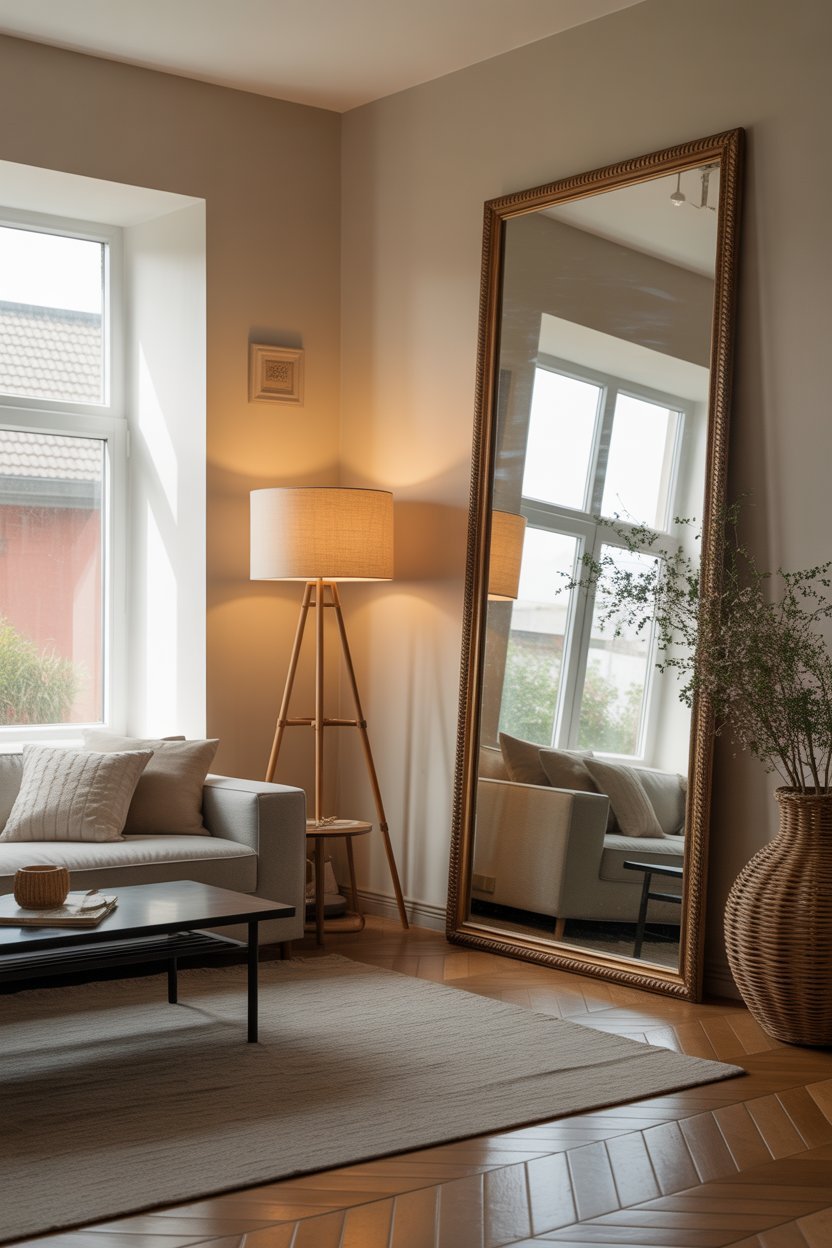
A large mirror in a small living room is not a decorating trick. It is a spatial tool that genuinely changes the experience of being in the room when it is positioned correctly. Placed on the wall opposite or adjacent to the main window it reflects natural light back across the room and creates the visual impression of a second light source. This makes the room brighter throughout the day without any additional lighting. It also creates depth by reflecting the room back at itself, which the eye reads as additional space beyond the mirror surface. The size of the mirror matters more than almost any other factor: a small decorative mirror does almost nothing for the spatial quality of the room. A mirror that takes up a significant portion of one wall, leaning or hung, produces a result that a small mirror simply cannot.
6. Furniture with legs that show the floor underneath
Furniture that sits directly on the floor with no visible gap underneath creates a visual weight in a small room that furniture on legs does not. A sofa on short legs, chairs with tapered wooden legs, a coffee table on slender metal or wood legs, all allow the eye to see the floor continuing underneath the furniture rather than stopping at the front edge of each piece. This continuity of the floor surface is one of the things that makes a small room feel less interrupted and more spacious. It is also why certain rooms feel lighter than their square footage suggests and others feel heavier despite being larger. The floor is one of the biggest surfaces in any room. Keeping as much of it visible as possible, including the portions under furniture, is one of the most effective spatial strategies available in a small living room.
7. A light and cohesive color palette that works as one envelope
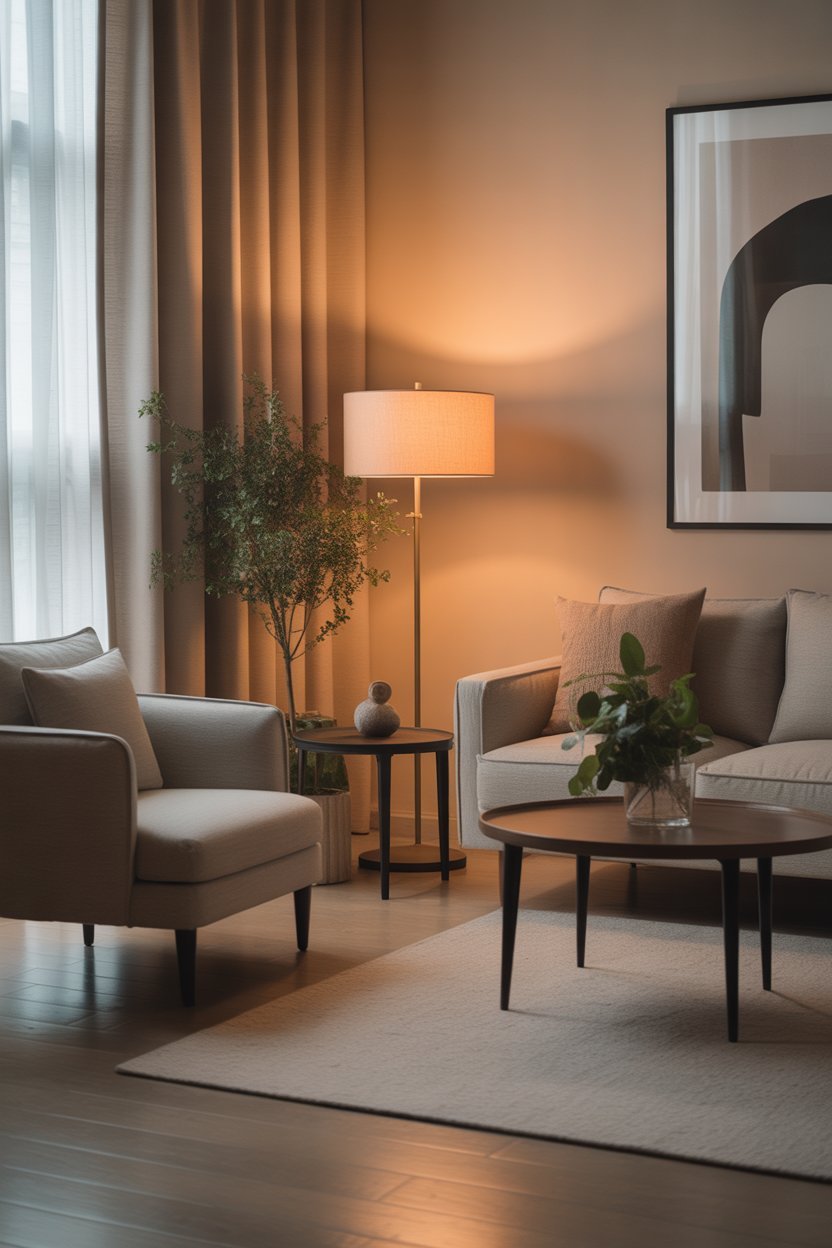
Small rooms that use too many different colors tend to feel more cluttered than small rooms with few colors, even when the actual number of objects in both rooms is identical. The visual interruption of each color change as the eye moves around the room reads as complexity that the brain processes as busyness. A small living room with walls, ceiling, and large furniture all staying within the same tonal range, warm white to soft greige to light taupe, feels more spacious because the eye moves through the room without stopping. This does not mean the room needs to be boring or monochromatic. Texture variation within the same palette, a linen sofa against a limewash wall in a similar tone, creates visual interest without the spatial cost of color contrast. Accent colors can exist but they work best introduced in small quantities through cushions, books, and plants rather than in large furniture or wall paint.
8. Multifunctional furniture that earns every inch of floor space
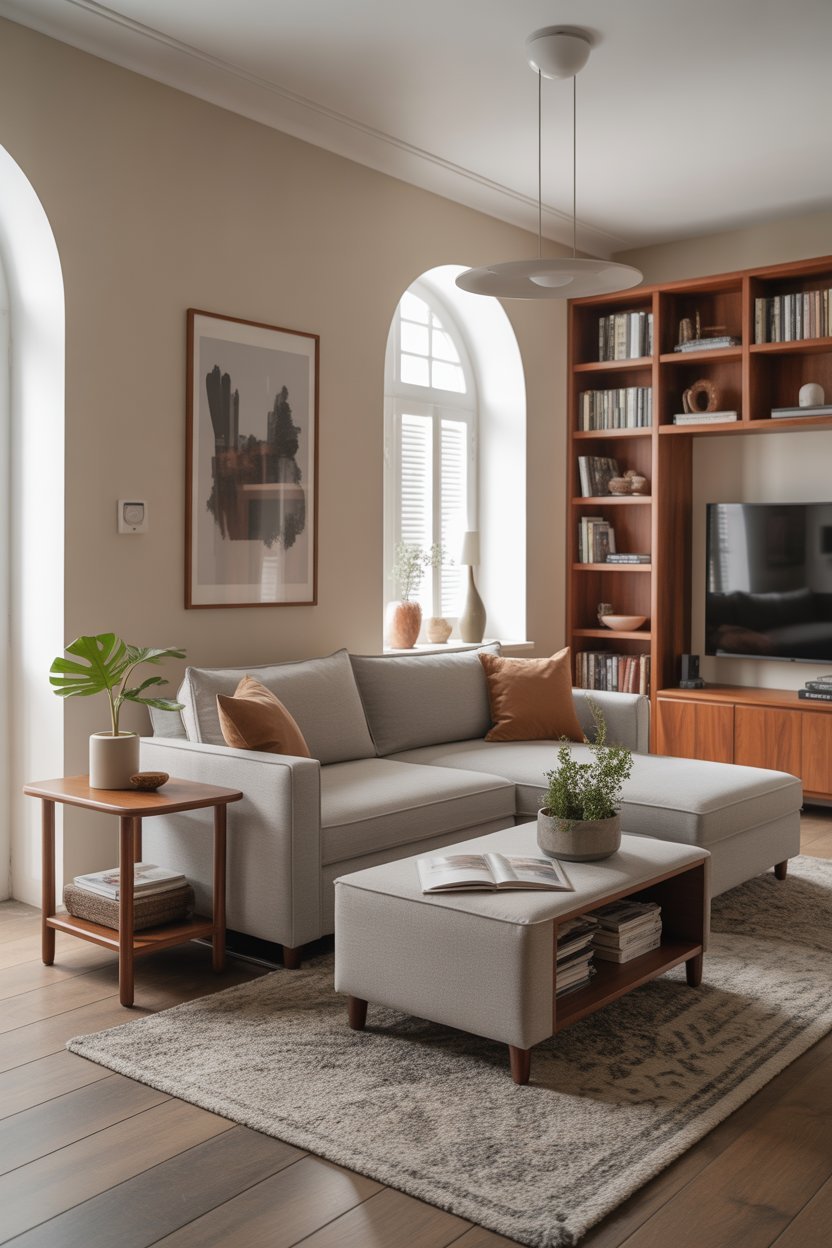
In a small living room every piece of furniture should justify its presence by doing more than one thing. An ottoman that serves as a coffee table, extra seating, and storage inside it is three pieces of furniture in the footprint of one. A sofa with a chaise that also functions as a daybed removes the need for a separate reading chair. A side table with a shelf below it holds a lamp on top and books or a plant underneath. A media unit with deep shelving stores the television, holds books, and conceals cables and equipment that would otherwise clutter the room. None of these multifunctional choices require compromising on how the room looks. The best versions of these pieces look like regular furniture with the added functionality built in unobtrusively. The goal is a room that looks like a living room and functions like a room twice its size.
9. Less furniture, better furniture: the edit that changes everything
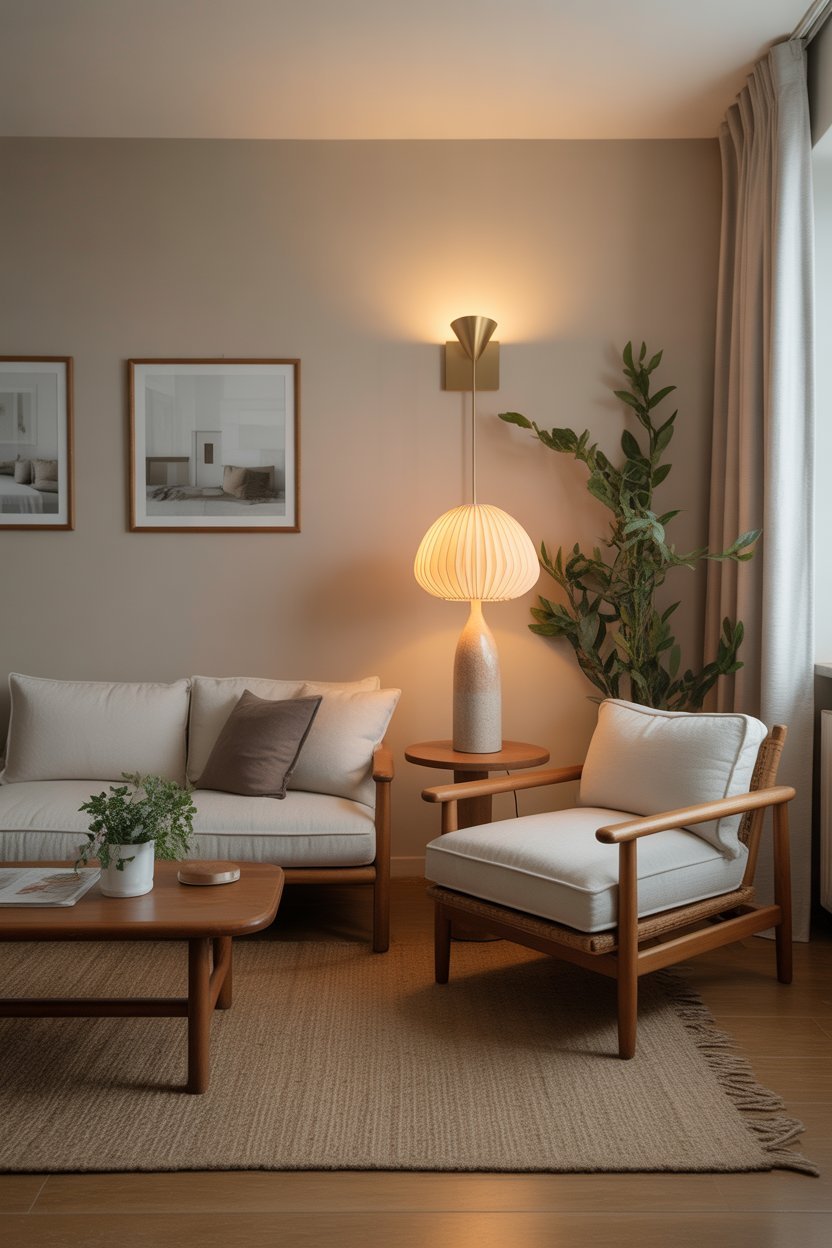
The most transformative thing most small living rooms need is not a new piece of furniture. It is the removal of one or two existing pieces that are consuming space without contributing enough to justify it. The armchair that nobody sits in because it is in an awkward position. The side table that holds nothing useful. The floor lamp that could be replaced by a wall sconce that takes up no floor space at all. A small living room with four pieces of furniture that all work is a better room than a small living room with eight pieces where only four are actually used. The editing process is harder than adding because it requires deciding that something you own is not earning its place. But the rooms that feel genuinely spacious and calm despite being small are almost always the result of someone having made those decisions rather than avoided them.
You do not need more space. You need better decisions in the space you already have. Pick one idea from this list, apply it this week, and see what it does to the room before adding anything else. Small spaces reward patience and editing more than any other kind of room.