Most bedroom makeovers fail at the same thing: they look styled for a photo, not lived in. Boho gets this right when it is done well. The light is warm, the textures are real, and the room feels like someone actually sleeps there. Here are 19 ideas that get you there, no mood board required.
1. Let the light do the heavy lifting
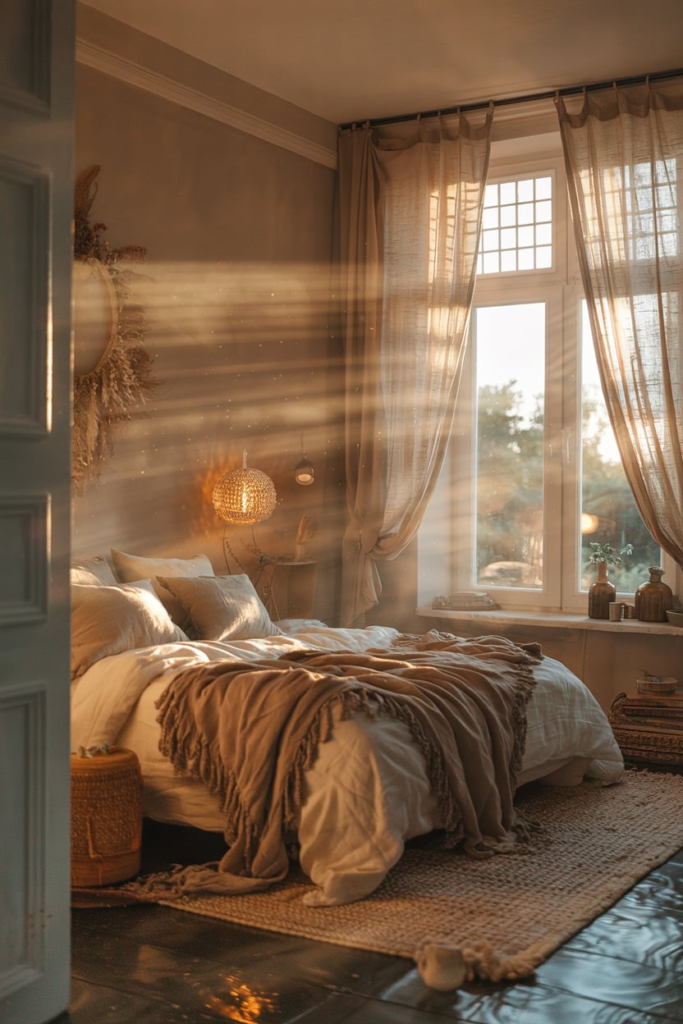
Golden hour is not a time of day in a boho bedroom. It is a permanent setting you build deliberately. Swap out any blackout panels or heavy drapes for sheer linen curtains and watch what happens. The light goes warm and hazy, the shadows soften, and suddenly everything in the room looks like it was shot for a slow-living magazine. You are not decorating around the light at that point. You are decorating with it. The difference shows up in every photo you take and in how the room actually feels at seven in the morning when the sun comes through.
2. Pile on the textures, then add one more
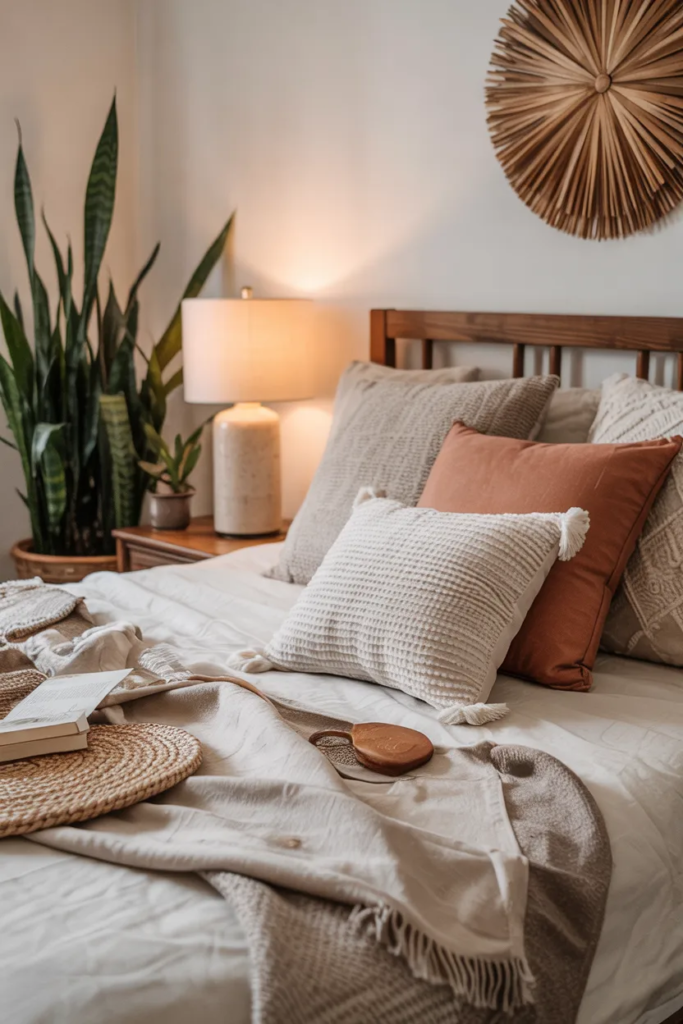
Boho bedding works because nothing matches perfectly, and that is entirely the point. Start with cream linen as your base layer, something slightly rumpled rather than crisply pressed. Throw a chunky knit blanket across the foot of the bed. Add a rust linen pillow on one side and a woven throw on the other, the kind you probably bought at a market somewhere and forgot about until now. The goal is not coordination. It is that lived-in feeling that takes some people years to accidentally achieve. When you layer textures with enough variation in weight and weave, the bed starts to look like it belongs to a real person rather than a showroom.
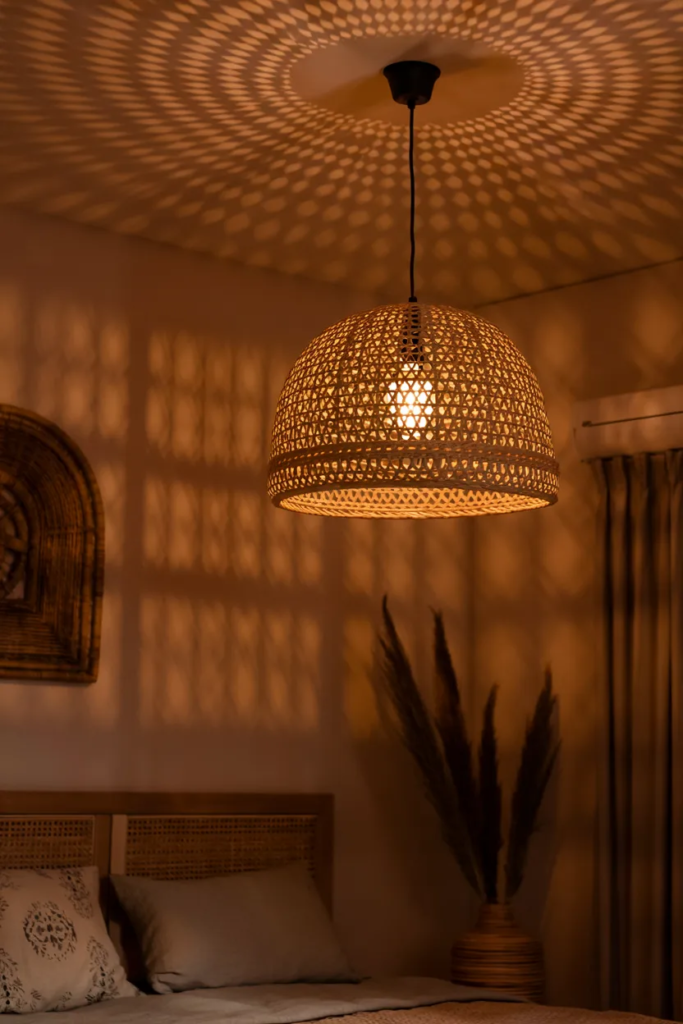
3. One rattan pendant light changes everything
Overhead lighting is usually where bedrooms go wrong, and most people never think to fix it. A flat white ceiling light makes even a nicely decorated room feel like a waiting room or a corridor. Swap it for a rattan dome pendant, something with open weave gaps that throw patterned shadows across the ceiling when the bulb is on, and the whole energy of the space shifts. The warm light filters through the natural fibers unevenly, which is exactly what you want. It is one of those changes that costs less than a hundred dollars and looks like you hired a designer. The ceiling becomes part of the decor instead of just the thing above the decor.
4. Put plants where you would not expect them
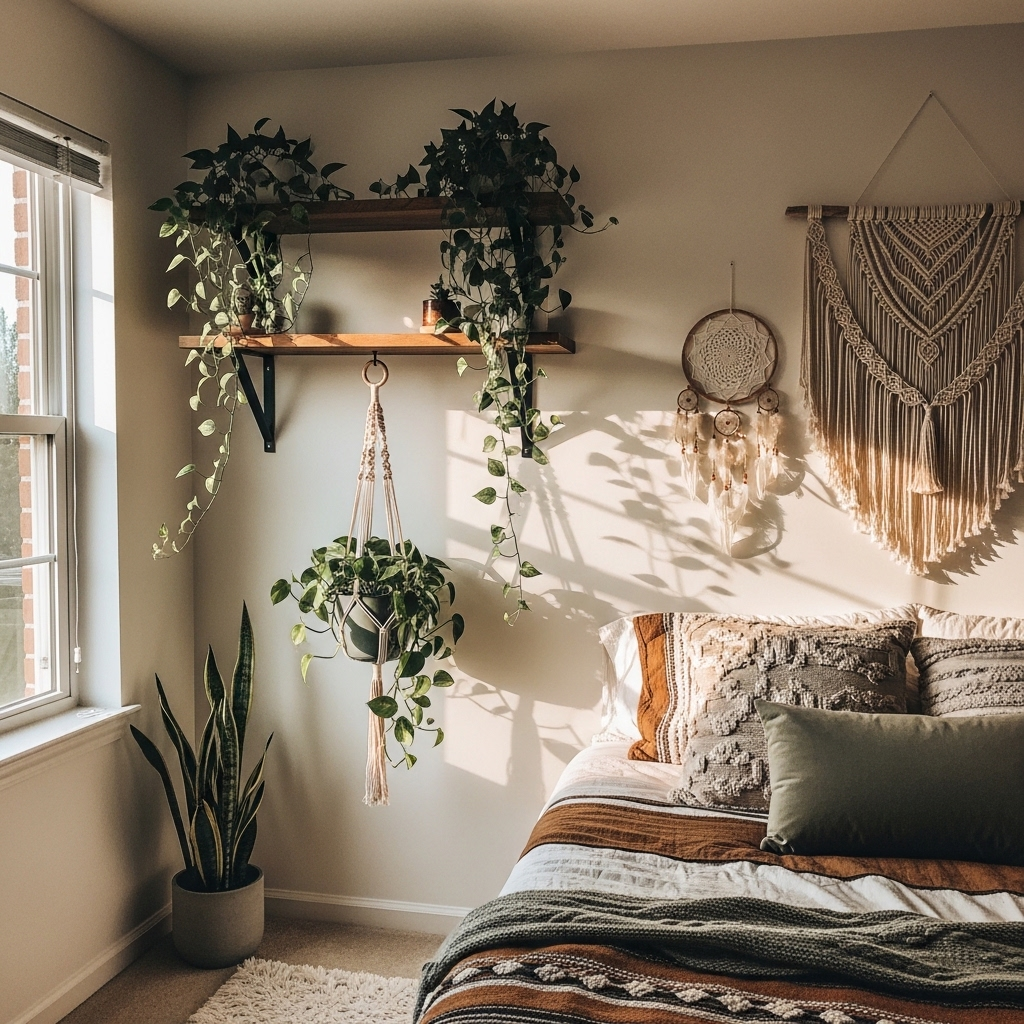
Trailing ivy on a floating shelf is a solid starting point. But the rooms that actually stop people mid-scroll have plants in genuinely unexpected places. A hanging potted plant mounted on the wall beside the bed, at eye level when you are lying down. Something small competing with the light on a windowsill. A snake plant in the corner where most people would put nothing at all, or maybe a floor lamp they never use. The plants do not need to be rare or expensive. The most common varieties work perfectly well when they are placed with some thought. What matters is that they feel like they grew there rather than like someone went to a garden center and bought five of the same thing.
5. Floating shelves beat a headboard
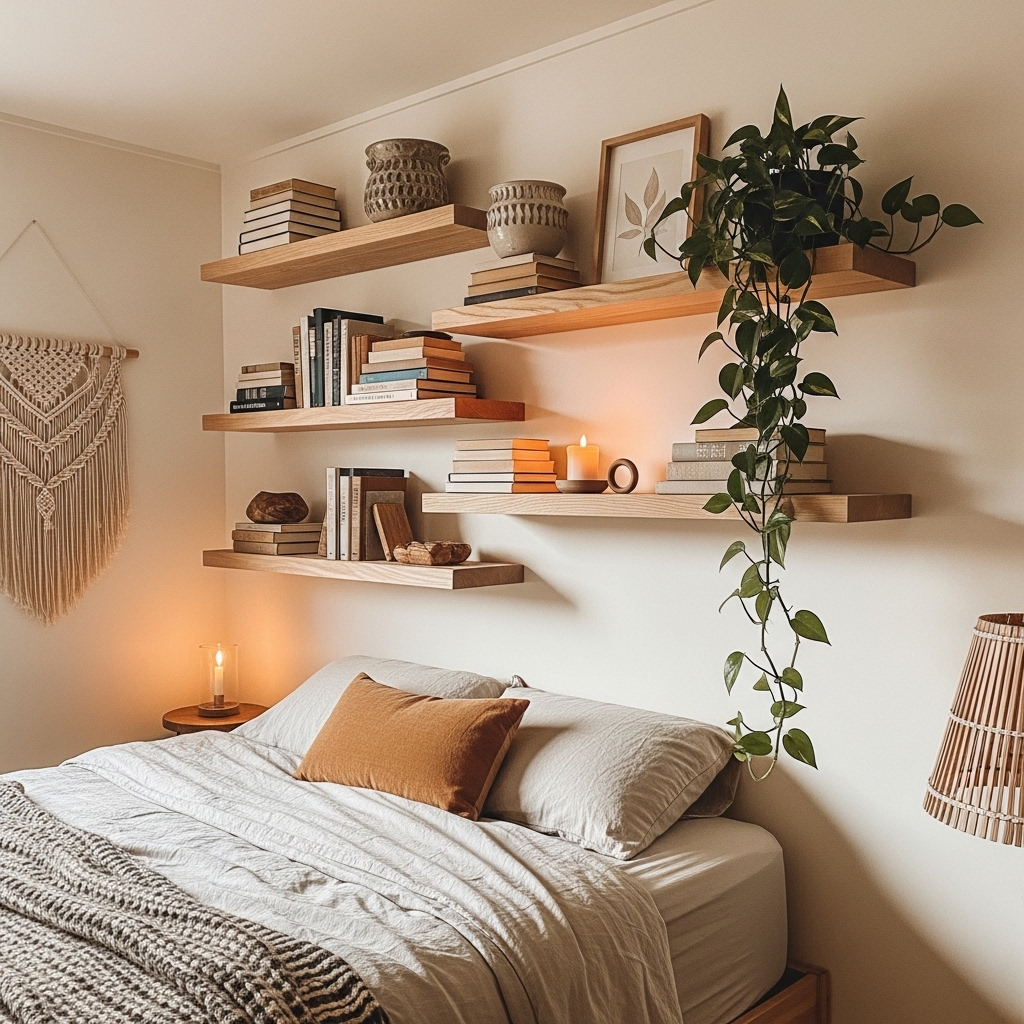
Skip the headboard and put two floating wooden shelves on the wall above the bed instead, staggered at slightly different heights so it does not look like a store display. Fill them the way you would fill a bookshelf you actually use every day. Books arranged spine-out in small stacks, a ceramic pot with something trailing out of it, a candle you burn regularly, a small framed photo from somewhere you have been. The whole setup looks personal because it is personal. That is the quality most decorated bedrooms are missing. The headboard tells you what kind of room it is. The shelf arrangement tells you who lives there.
6. Keep the walls almost bare
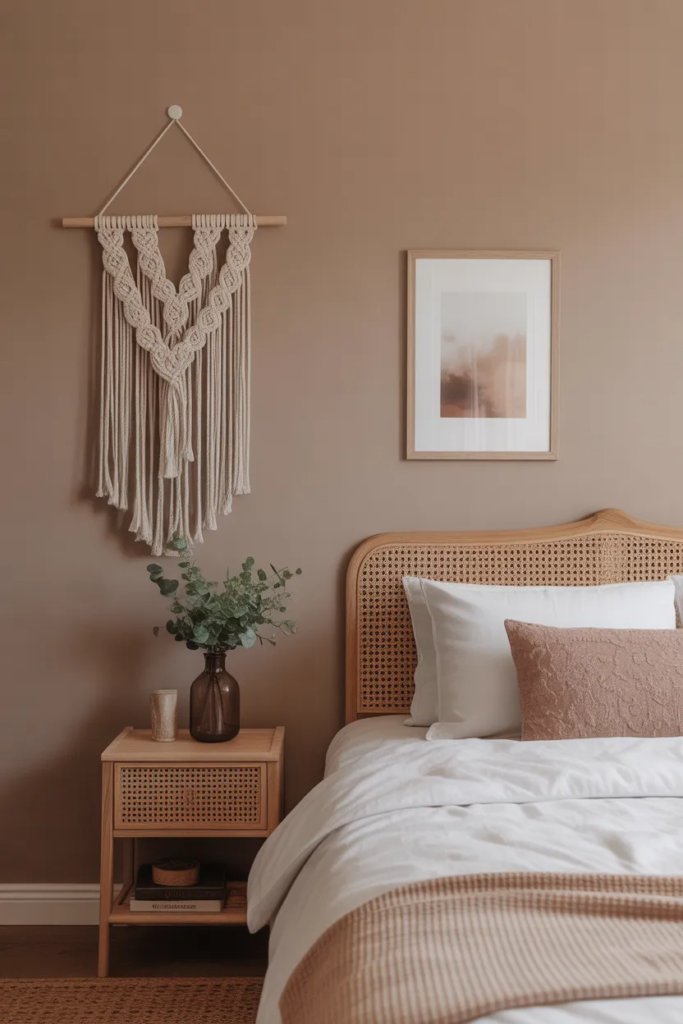
Boho does not mean covered in stuff. The rooms that look genuinely calm and intentional usually have one or two things on the walls and then nothing else. A single piece of macrame on one side, a framed print you actually like rather than one you bought because it seemed right, maybe a small mirror that catches morning light and bounces it somewhere useful. The empty wall space around those pieces is doing as much work as the pieces themselves. It gives the eye somewhere to rest and makes the things you did choose feel considered rather than collected. Resist the urge to fill every gap. The gaps are part of it.
7. Go warm and earthy with your color palette
Taupe, greige, warm white, rust, terracotta, dusty sage. These colors work together because they all feel like they came from the same landscape, as if the room was put together somewhere near the coast or in the desert rather than assembled from a color chart. You do not need a formal color plan to make this work. Just avoid anything cool-toned or bright white and you are most of the way there. Cooler tones fight with warm light and make the room feel slightly off in a way that is hard to name but easy to feel. The warmth in the palette is also what makes golden light look even warmer when it comes through the curtains in the morning.
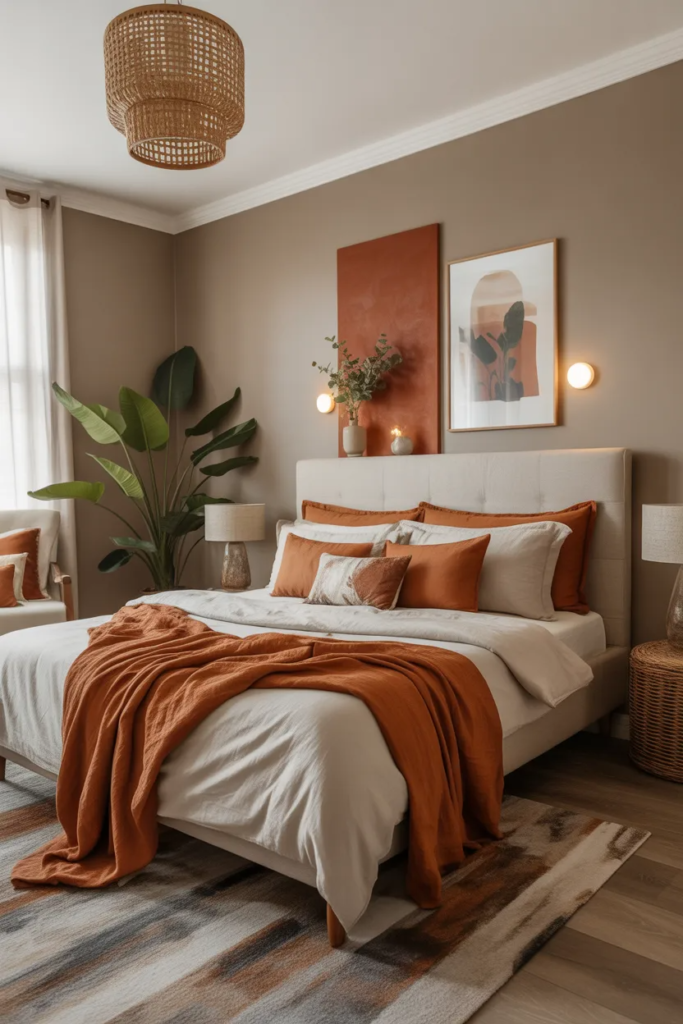
8. A jute rug grounds the whole room
Dark hardwood floors and a jute rug is one of those combinations that works reliably and does not ask much of you. The texture contrast between the smooth floor and the rough natural fiber is satisfying without being dramatic. It also layers well with something softer on top if you want more comfort underfoot. A smaller Moroccan-style rug placed over the jute near the bed gives the floor the same layered and accumulated feeling the bed has, like things were added over time rather than purchased all at once. Both rugs together still cost less than most area rugs sold as a single piece, which is a reasonable bonus.

9. A ceramic table lamp over a standard one
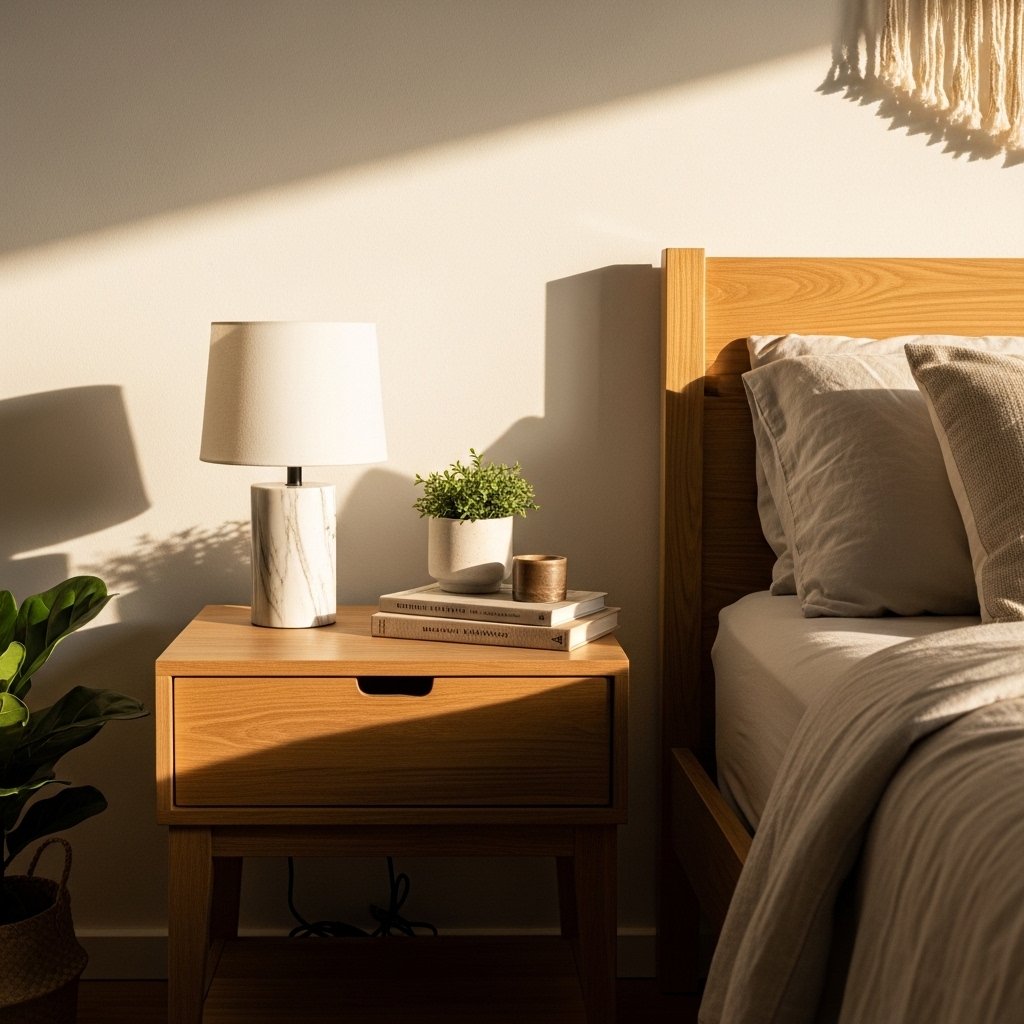
Most bedside lamps are either too bright, too clinical, or shaped like something from a hotel room. A small ceramic lamp with a warm-toned bulb does something different. It pools light downward in a soft circle and gives the nightstand a glow that makes the whole corner feel intentional rather than just functional. The lamp itself does not need to be expensive, but it does need to have some personality. An interesting glaze that is not perfectly even, an unusual silhouette, something handmade-looking that you would notice if it were sitting alone on a shelf. That quality, whatever it is, reads in photos and it reads in person.

10. Natural materials over everything synthetic
Wood, rattan, linen, jute, ceramic, cotton, dried grass. When most things in a room share the same material family, the space reads as intentional even when the choices were made one at a time over months. The opposite of this is mixing too many synthetics carelessly. Plastic, polyester, chrome, and laminate materials all fight with the warm organic quality that makes a boho room feel grounded rather than assembled. Buying secondhand helps with this more than people expect. Objects that have been used tend to have better materials and more honest wear than new things made for the budget market. One genuinely old wooden stool carries more weight than three matching pieces from a fast furniture store.

11. Dried pampas grass, yes, still
Pampas grass got so popular it became a cliche, and then it became popular again because trends work in cycles and also because it is genuinely good. In a tall rattan or ceramic vase placed in the corner of the room, with the feathery heads catching the light from the window, it earns its place without calling too much attention to itself. The trick is not buying the enormous commercial version and not placing it front and center as if it is the main attraction. Let it be a background detail, something a visitor notices on the third look rather than the first. That restraint is what separates it from looking dated.

12. Stack books with intention
Books used as decor sounds a little precious until you see it done well and realize it just looks like someone actually lives in the room. Stack three or four horizontally on your nightstand and put something small on top, a crystal, a spent candle stub, a tiny plant in a two-inch pot. Arrange some on your shelves spine-out for a calmer, more minimal look. The color and texture variation of book spines adds warmth that painted surfaces alone cannot replicate. More than that, books signal a real interior life, and a boho bedroom that feels lived in is always more convincing than one that was assembled purely for aesthetics.

13. Low bed frames sit closer to the floor
A low platform bed or a simple wooden frame without a box spring changes the proportions of the entire room in a way that is hard to explain until you try it. The ceiling reads as higher. The space feels less formal, more like somewhere you would actually want to spend a slow Sunday afternoon rather than somewhere you sleep out of obligation. The lower height also makes layered bedding look more intentional rather than piled up. Pair the frame with a thick mattress and good quality linen and the whole setup feels considered. It is also easier to make the bed look good when the frame is low and simple, which matters more than most people admit.

14. One good mirror, not a gallery wall
A single arched or round mirror on the wall opposite the window does more for a bedroom than most people would guess before trying it. It bounces natural light deeper into the room, makes the space feel genuinely larger without any optical trickery, and acts as a quiet focal point that does not compete with everything else you have going on. Rattan-framed, raw brass, or unfinished wood all work well and fit naturally into an earthy palette. The key word is single. A gallery arrangement of mirrors reads as a trend choice rather than a considered one, and boho rooms that feel timeless tend to have fewer statement pieces, not more.

15. Candles are cheap atmosphere
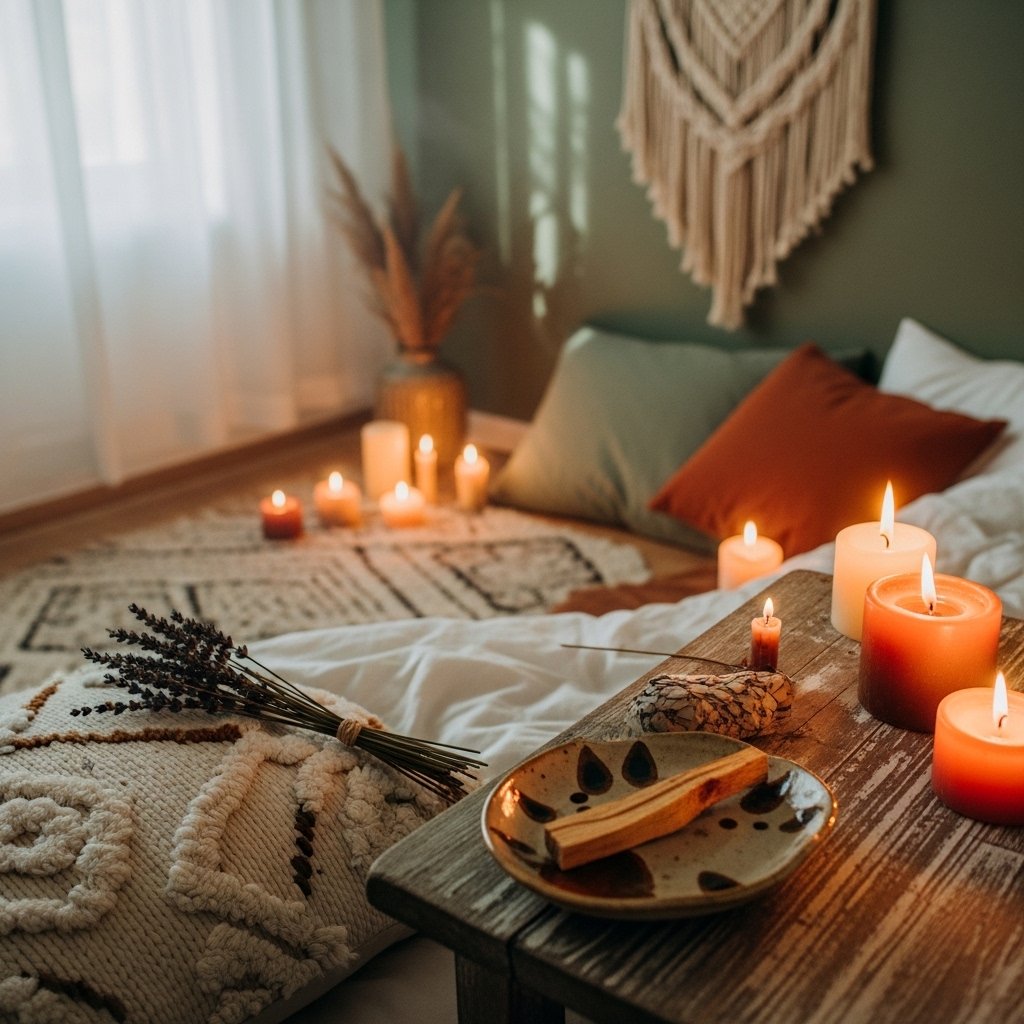
Three or four candles placed around a bedroom do more for the atmosphere than almost any other single thing you can add, and they work even when they are not lit. One on the nightstand, one on a shelf, one on a dresser or windowsill. The visual warmth of the wax, the texture of the wick, the small drips down the side of a candle that has been used regularly: all of it reads as cozy and lived-in in a way that is genuinely hard to manufacture with anything else. Pillar candles in warm ivory or terracotta tones work well. Cluster two or three of different heights in one spot rather than spacing them out evenly, which tends to look more deliberate than it feels.
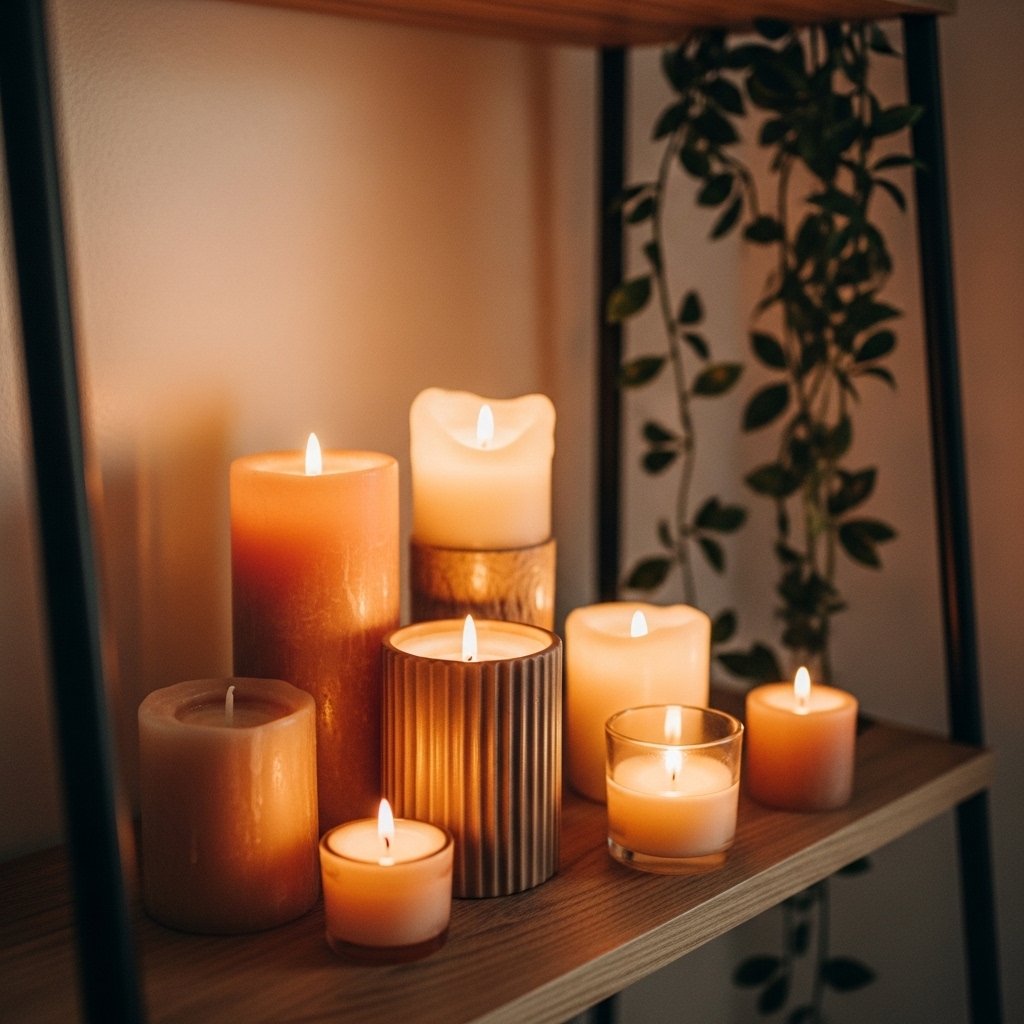
16. Bring the outdoors in with branches
A few long dried branches in a tall floor vase, eucalyptus, olive, or something you found on a walk and liked the shape of, adds height and organic texture without taking up floor space or requiring maintenance. It is the kind of detail that looks like it took some thought but actually took about ten minutes and close to nothing in cost. The best boho bedrooms almost always have at least one element in them that came directly from outside, something that was not designed or manufactured but just found. That quality is difficult to buy and easy to recognize, and it is part of what makes a room feel genuine rather than assembled from a shopping list.
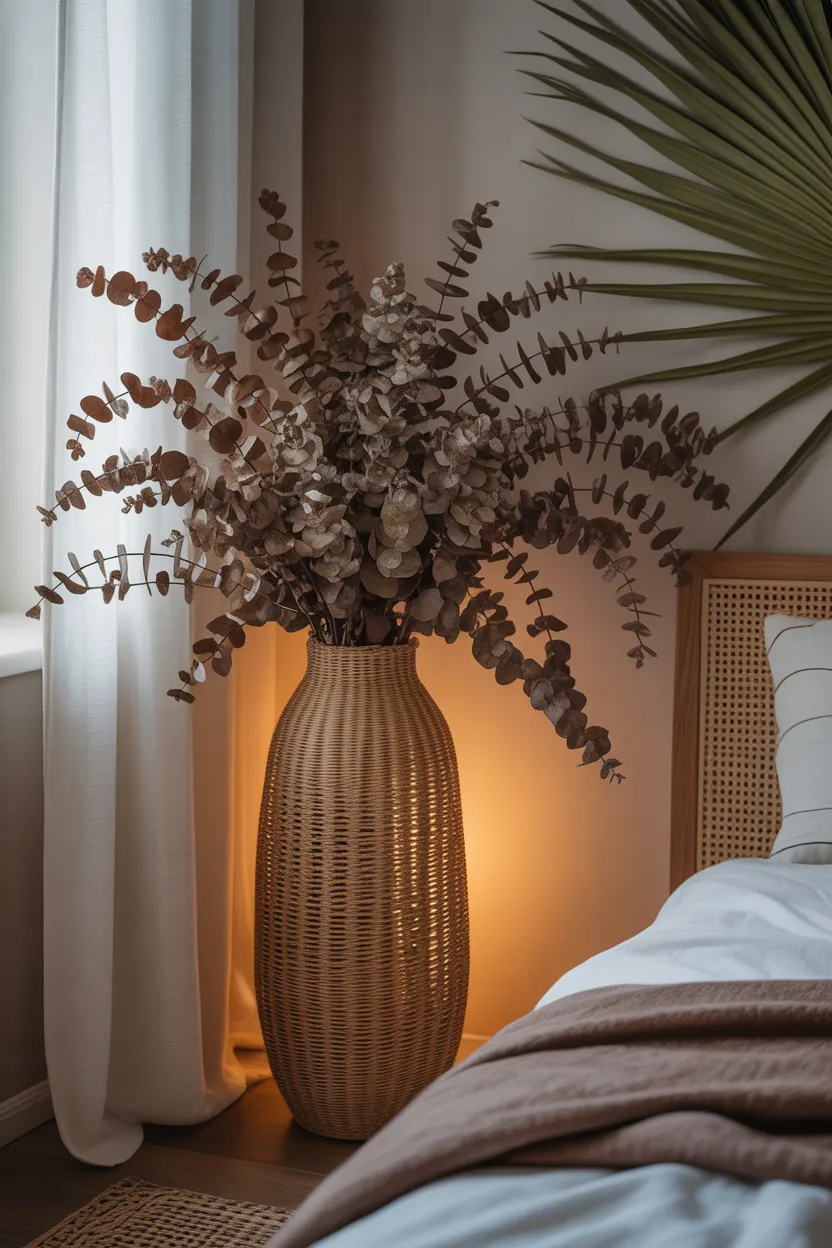
17. Wabi-sabi: imperfect is the point
The cracked ceramic lamp base. The linen pillow that is slightly uneven on one side. The shelf that is not quite level but close enough. Boho style borrows heavily from wabi-sabi without usually naming it directly: the idea that imperfection is not a flaw to be fixed but the place where the beauty actually lives. A room full of perfectly matched, perfectly finished objects has a quality that most people describe as either sterile or staged, even if they cannot quite put their finger on why. The rooms that feel most alive are the ones where you can tell a person made decisions over time, changed their mind occasionally, and left the evidence. That is not a mistake. That is the whole idea.
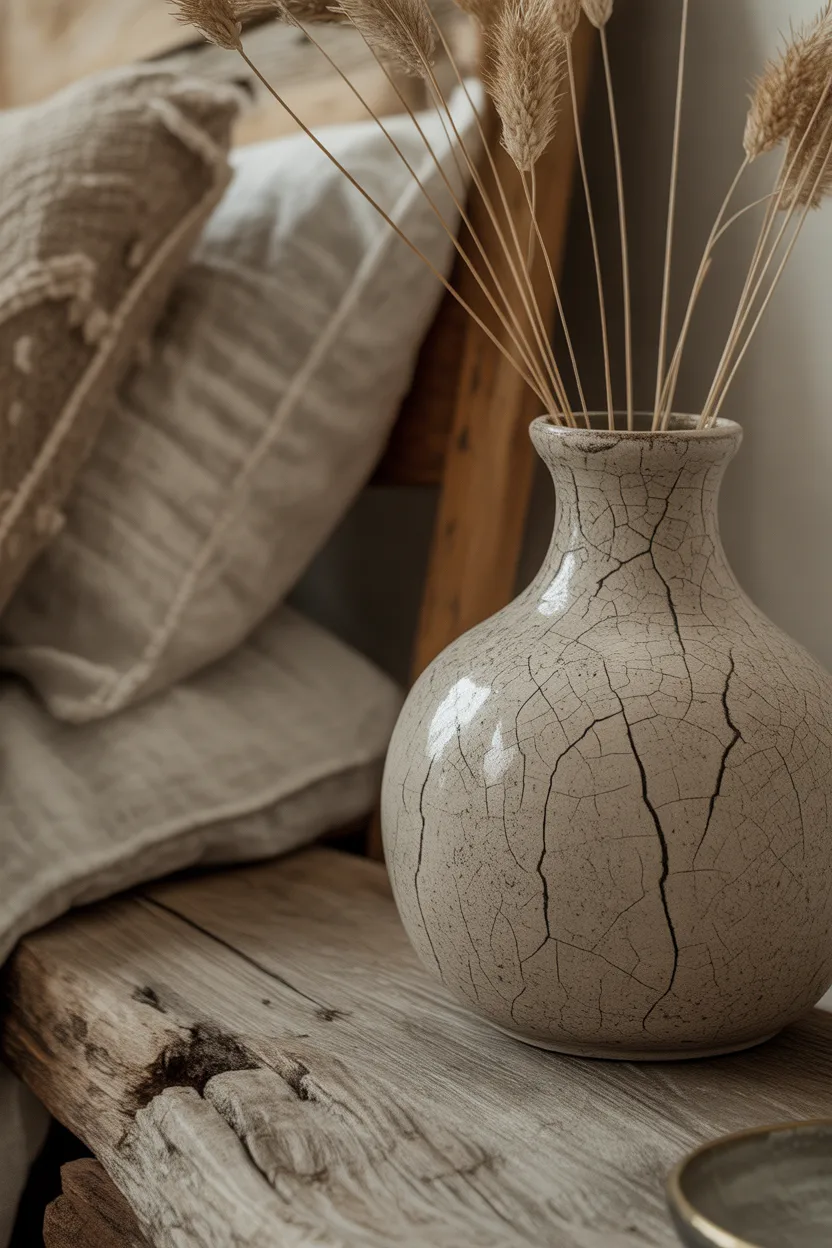
18. Keep the nightstand simple
A wooden nightstand with three things on it beats a cluttered one in every way, visually and practically. Lamp, book, water glass. Or lamp, small plant, candle. The restraint is exactly what makes it look styled rather than just full of things that did not have anywhere else to go. If your nightstand is currently holding everything that ended up there over the last six months, clearing it down to two or three intentional objects costs nothing and changes the feeling of the entire room. The nightstand sits at eye level when you are in bed. It is one of the first things you see in the morning and the last thing you see at night, which makes it worth getting right.
19. Smell matters more than people admit
A boho bedroom that looks exactly right but smells like nothing feels slightly incomplete in a way that photographs cannot capture but visitors feel immediately. Palo santo burning for a few minutes after you make the bed in the morning, a beeswax candle in the evening, dried lavender tucked between the pillows or inside a pillowcase: these are small additions that contribute to an atmosphere rather than just an aesthetic. The rooms that people describe as cozy, or the ones they walk into and say they just want to stay, almost always have a scent that belongs specifically to that space. It is the detail that does not show up in any image but lands first every single time.
Conclusion
Your bedroom does not need to be finished to feel good. That is probably the most useful thing to take from all of this. Boho works because it accumulates rather than arrives all at once. Buy the linen curtains first. Find the ceramic lamp at a secondhand store three weeks later. Add the jute rug when you find one you actually like. The room gets better the less you force it. Stop before it looks like you tried too hard, because the whole point is that it looks like you did not try at all.
Save this to your Pinterest board and come back when you are ready to start. The best boho bedrooms are built slowly, one good decision at a time.