Dark blue in an apartment is not a compromise between bold and livable. It is the version of bold that actually holds up over time. Navy, midnight blue, and deep teal have a quality that most strong colors do not: they work in daylight and in lamplight, they age well, and they make every other material in the room look better by association. These 11 ideas cover every room in the apartment and every interpretation of the palette, from fully committed dark rooms to single accent walls used precisely.
1. Navy shiplap walls with a cream sectional and reclaimed wood coffee table
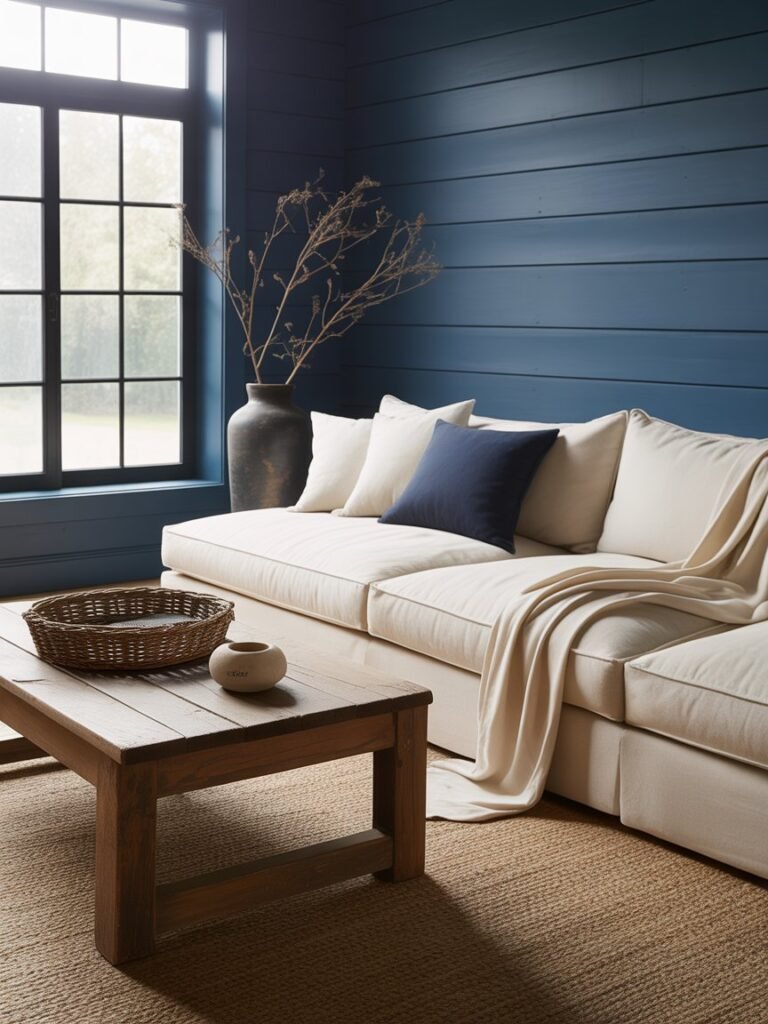
This is the living room combination that keeps getting saved because it looks like it belongs in a coastal farmhouse and a modern apartment simultaneously. Navy painted shiplap on the walls provides texture that flat paint cannot, the horizontal lines of the boards adding a quiet pattern to the dark surface that changes with the light throughout the day. Against that the cream linen sectional reads as genuinely warm rather than cold, and the reclaimed wood coffee table with its visible knots and worn patina brings in the natural material that stops the navy from feeling corporate. Navy accent cushions on a cream sofa create a circular color story where the wall color and the sofa color reference each other without being identical. A tall dark vase with dried stems in the corner beside the window, a woven basket on the coffee table, a jute rug underneath: the natural materials are doing as much work as the color. The black window frames tie the dark walls to the exterior and make the daylight coming through feel like part of the design.
2. Deep blue accent wall behind the bed with a Persian rug and warm Edison lighting
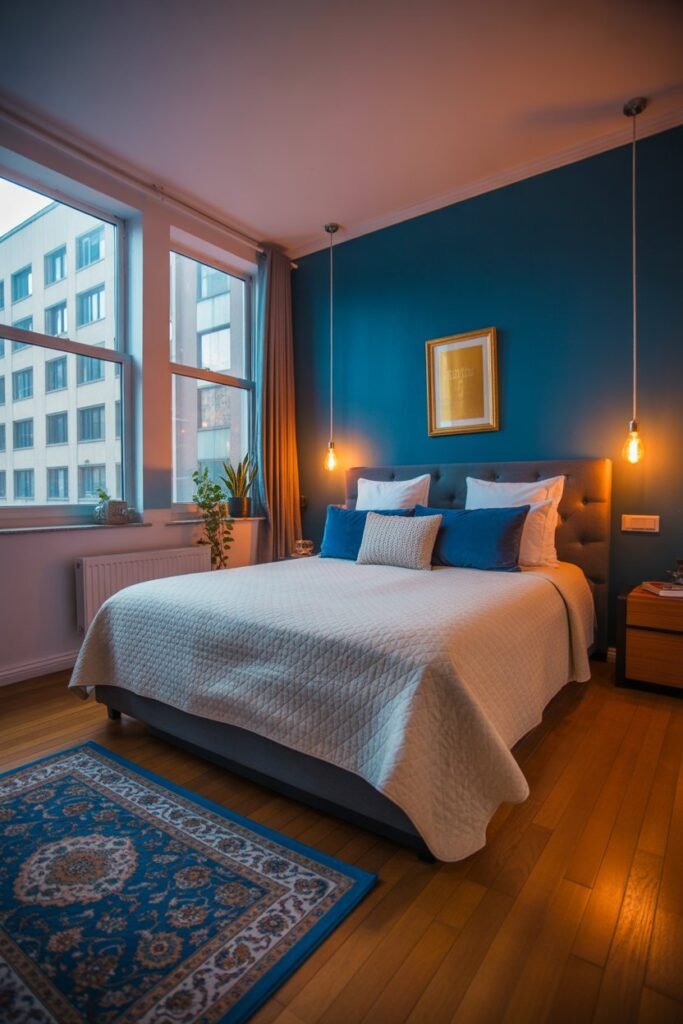
A deep blue accent wall behind the bed in an apartment bedroom does something that a fully painted room cannot quite replicate. It frames the bed as a deliberate focal point while keeping the remaining walls neutral enough to let the space breathe. In a city apartment where the windows look out over buildings rather than landscape, this setup creates an interior atmosphere that competes favorably with whatever is happening outside. The Persian rug in blue and gold beneath the bed bridges the wall color and the warm amber of the Edison bulb lamps on each side, creating a triangle of warm light and color that makes the room feel layered rather than simply furnished. White bedding with blue accent cushions and a textured throw keeps the bed itself from becoming too visually heavy while still connecting to the wall behind it. Plants on the windowsill add the one living element that keeps the room from feeling sealed off from the outside entirely.
3. All-navy bedroom with white linen, rust accents and gold details
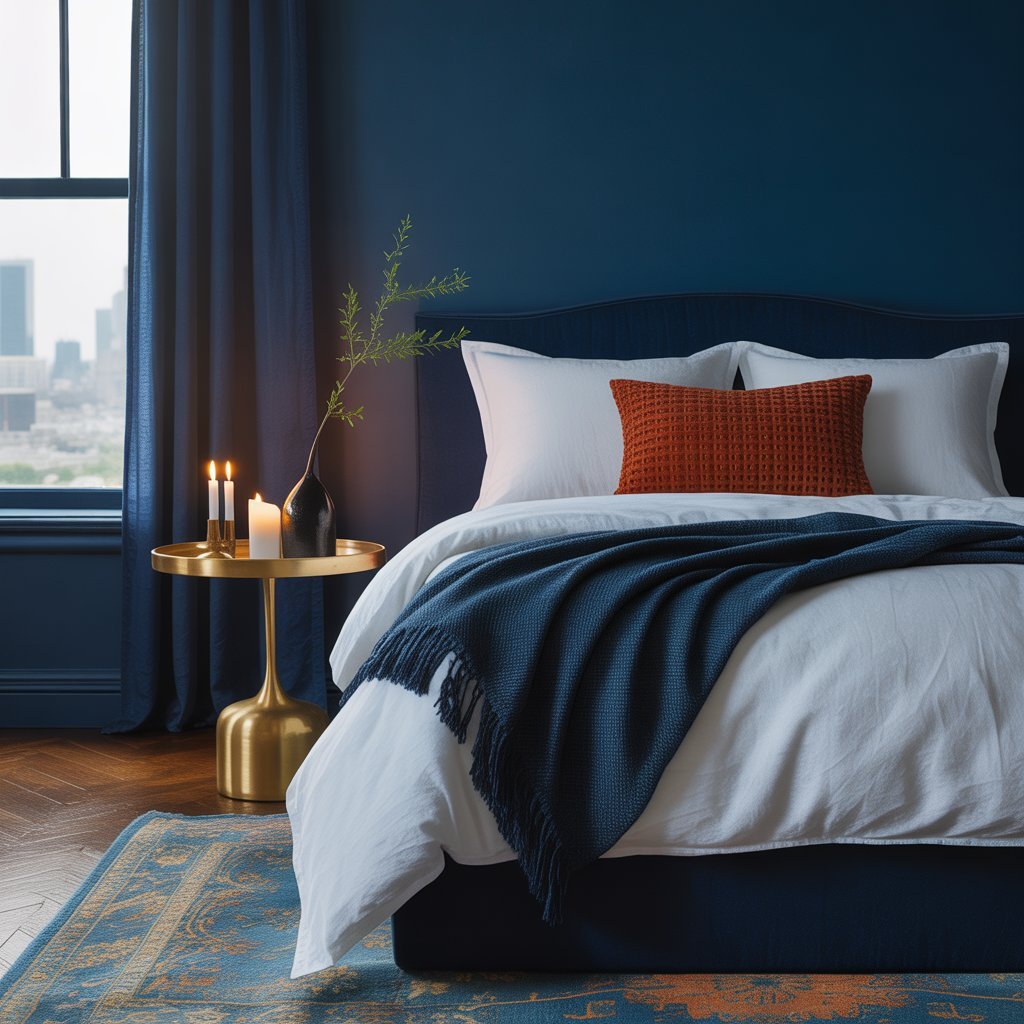
When the walls, the curtains, and the bedding all lean into the same deep navy, the room stops being a bedroom with a color scheme and starts being an atmosphere. This is the version of the dark blue apartment aesthetic that feels most committed and most rewarding when it is done well. The walls and the floor-length curtains in the same deep navy create an envelope that makes the city outside the window feel like a backdrop rather than an intrusion. White linen on the bed provides the necessary contrast that stops the room from closing in, and a rust or burnt orange accent cushion introduces the one warm color that makes the navy look richer rather than colder. A brass or gold side table with candles creates the warm light source that a navy room specifically needs, since cool overhead lighting in a dark room produces an effect closer to a waiting room than a bedroom. The layered vintage rug on the hardwood floor ties the warmth of the gold accents to the floor plane and completes the room without requiring anything else.
4. Moody blue living room with brass accents and velvet
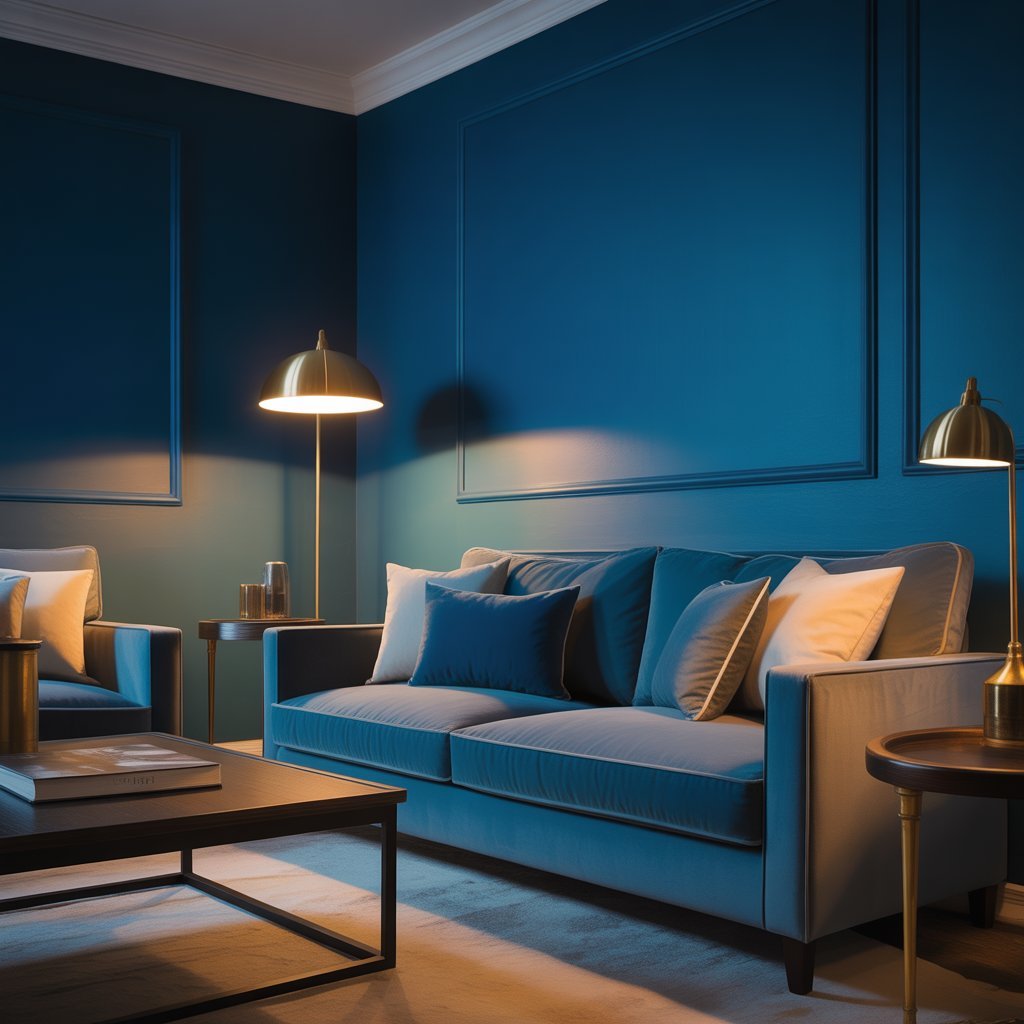
Brass and deep blue is one of those combinations that has been used in interior design long enough to have moved past trend and into something more like a reliable pairing. The warmth of the brass reads against the cool depth of the navy in a way that makes both materials look better than they would in other combinations. In an apartment living room this translates to a deep blue painted wall, a velvet sofa in a slightly different shade of blue or in a complementary deep teal, a brass floor lamp positioned to throw warm light across the seating area, and brass hardware on any cabinetry visible in the room. The velvet is important here because the texture of the fabric catches light differently at every angle and stops the blue from looking flat. A dark wood coffee table grounds the arrangement. White or cream ceiling and trim keeps the room from feeling too enclosed despite the dark walls.
5. Dark blue kitchen with open shelving and warm wood
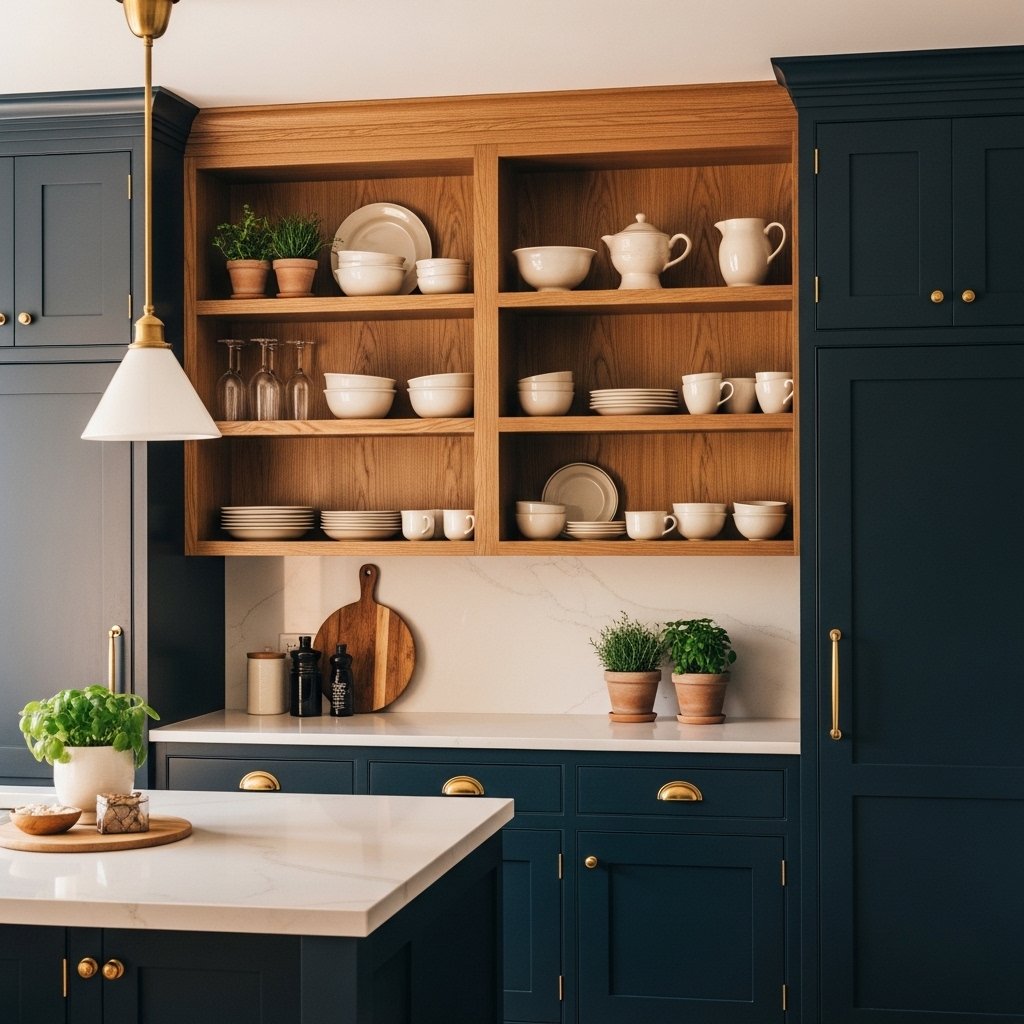
A dark blue kitchen in an apartment is a bolder move than most people are prepared to make and a better outcome than most people expect. The navy or midnight blue cabinet fronts bring the same depth to a kitchen that dark walls bring to a living room, and warm wood open shelving above or beside the cabinets provides the natural material contrast that makes the dark color feel grounded rather than cold. What goes on the open shelves matters more in a dark kitchen than in a light one because the shelves are one of the few surfaces where warm color and natural texture can interrupt the darkness. Ceramic dishes in warm cream or terracotta, a wooden cutting board leaning against the wall, a few plants in simple pots. The dark cabinets below and the natural shelving above create a two-toned kitchen that reads as considered and intentional rather than just dark.
6. Navy bathroom with gold fixtures and white marble
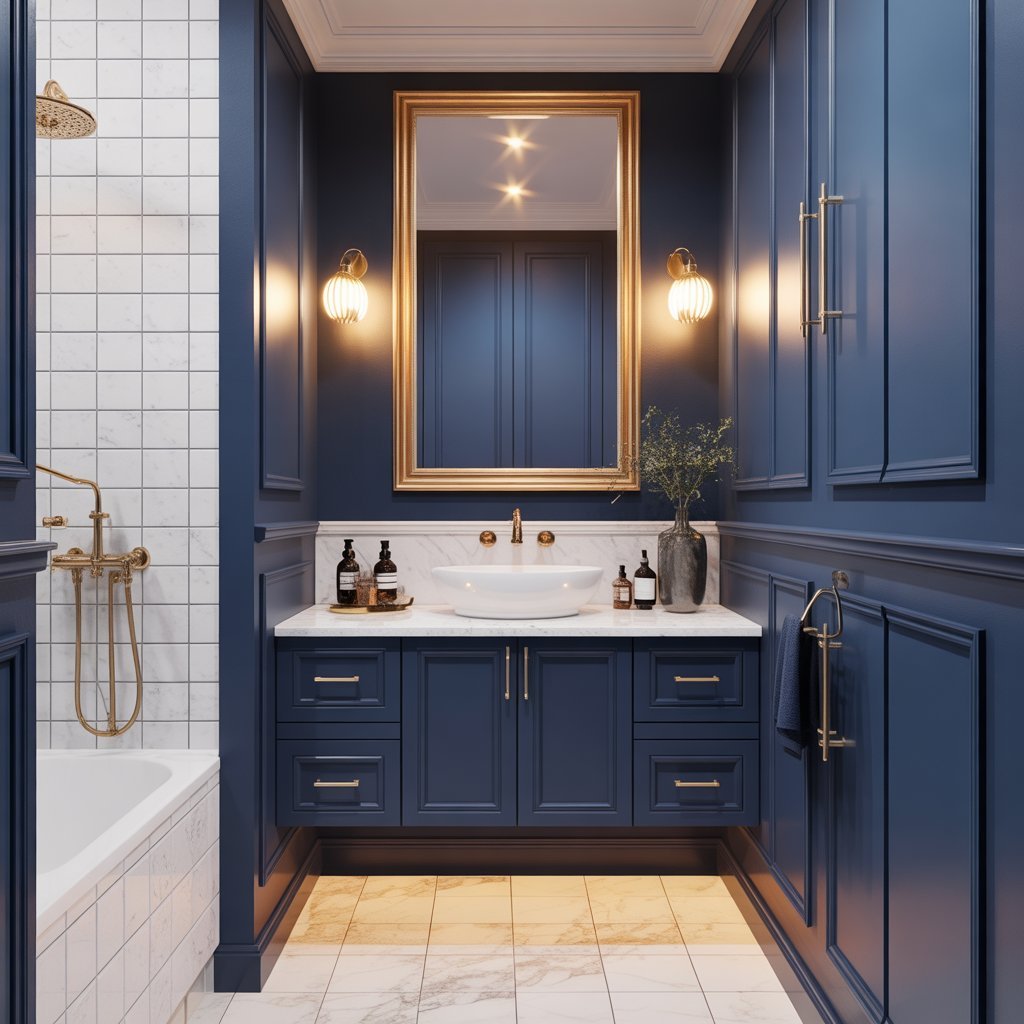
A navy bathroom with gold fixtures and white marble surfaces is a combination that shows up consistently in high-end hotel design for a reason: it works at every scale and in every light condition. The navy provides the sense of enclosure that makes a bathroom feel like a room rather than a utility space. The gold fixtures add the warmth that navy alone cannot provide. The white marble breaks the darkness with a surface that reflects light and adds a material richness that neither paint nor ceramic tile can replicate. In an apartment bathroom where the space is likely small and the layout is fixed, this combination does more to elevate the feeling of the room than almost any structural change. A large mirror with a gold frame above the vanity, a white vessel sink on a navy vanity cabinet, gold taps and towel rings, and white marble on the floor or as a countertop surface.
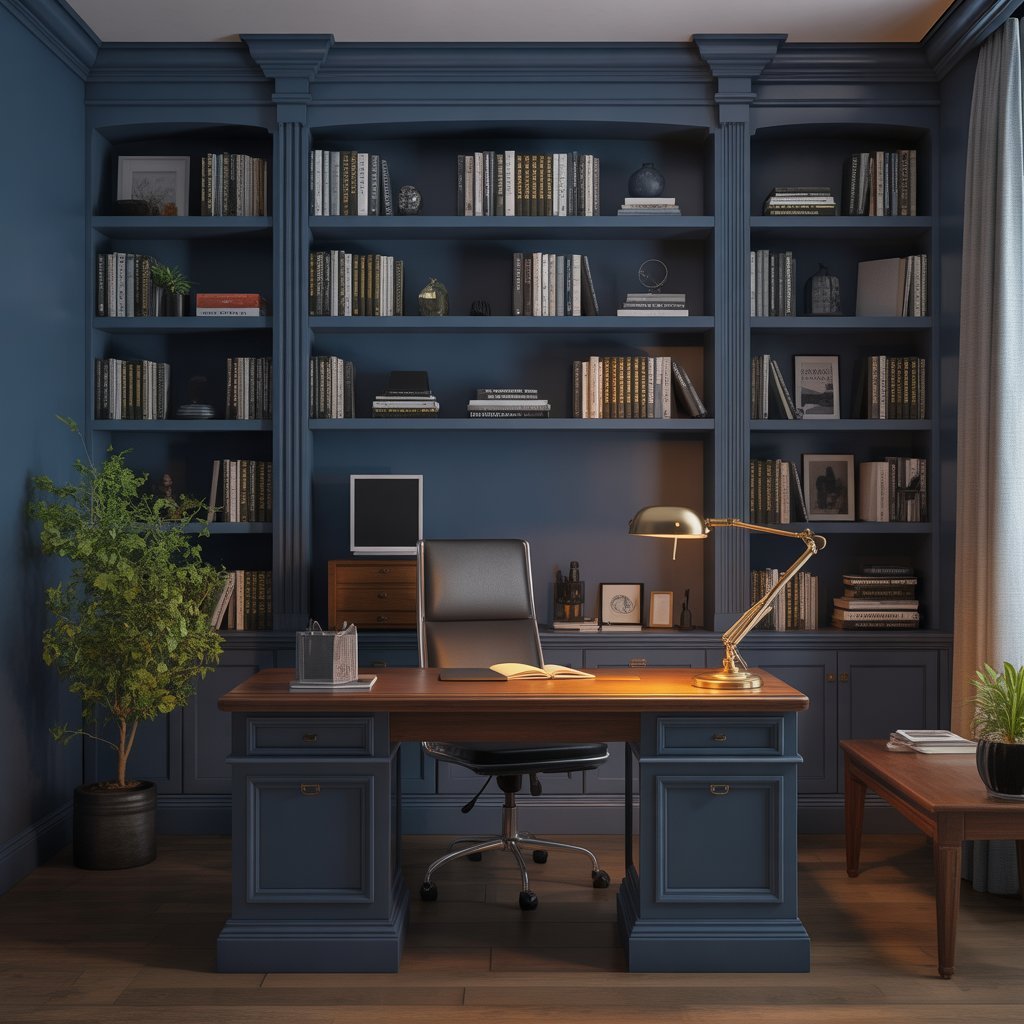
7. Dark blue home office with built-in shelving and task lighting
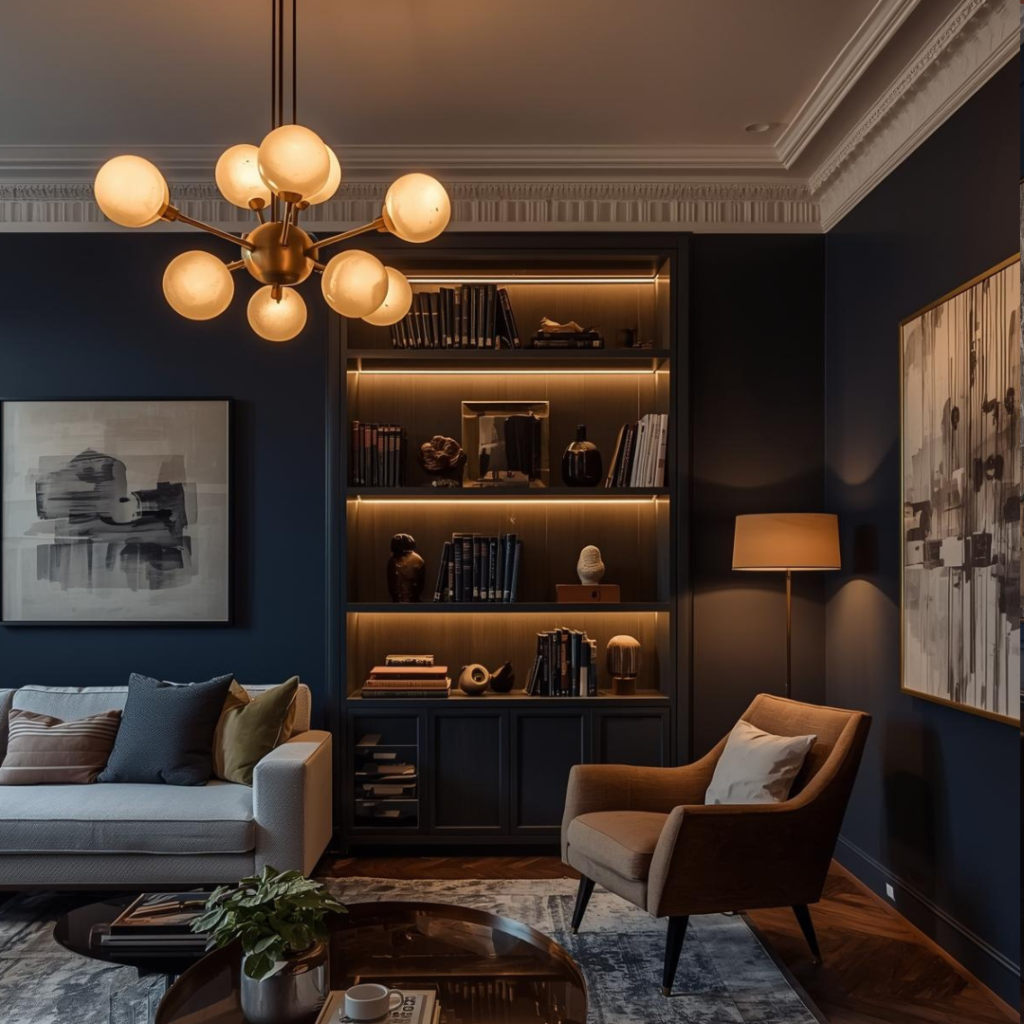
A dark blue home office is one of the specific rooms in an apartment where the dark color actively improves the function of the space rather than just its aesthetics. Deep navy or midnight blue on the walls reduces eye strain during long working sessions by lowering the contrast between the bright screen and the surrounding surfaces, which a white or very light wall amplifies significantly. Built-in shelving painted in the same blue as the walls creates a seamless surface that makes the room feel intentionally designed rather than assembled from flat-pack furniture. Warm task lighting from a brass or warm-toned desk lamp is essential: the combination of dark walls and warm light creates a focused, contained working environment that most people find genuinely easier to concentrate in than a bright, open space. A single large plant in the corner is enough greenery to keep the room from feeling sealed.
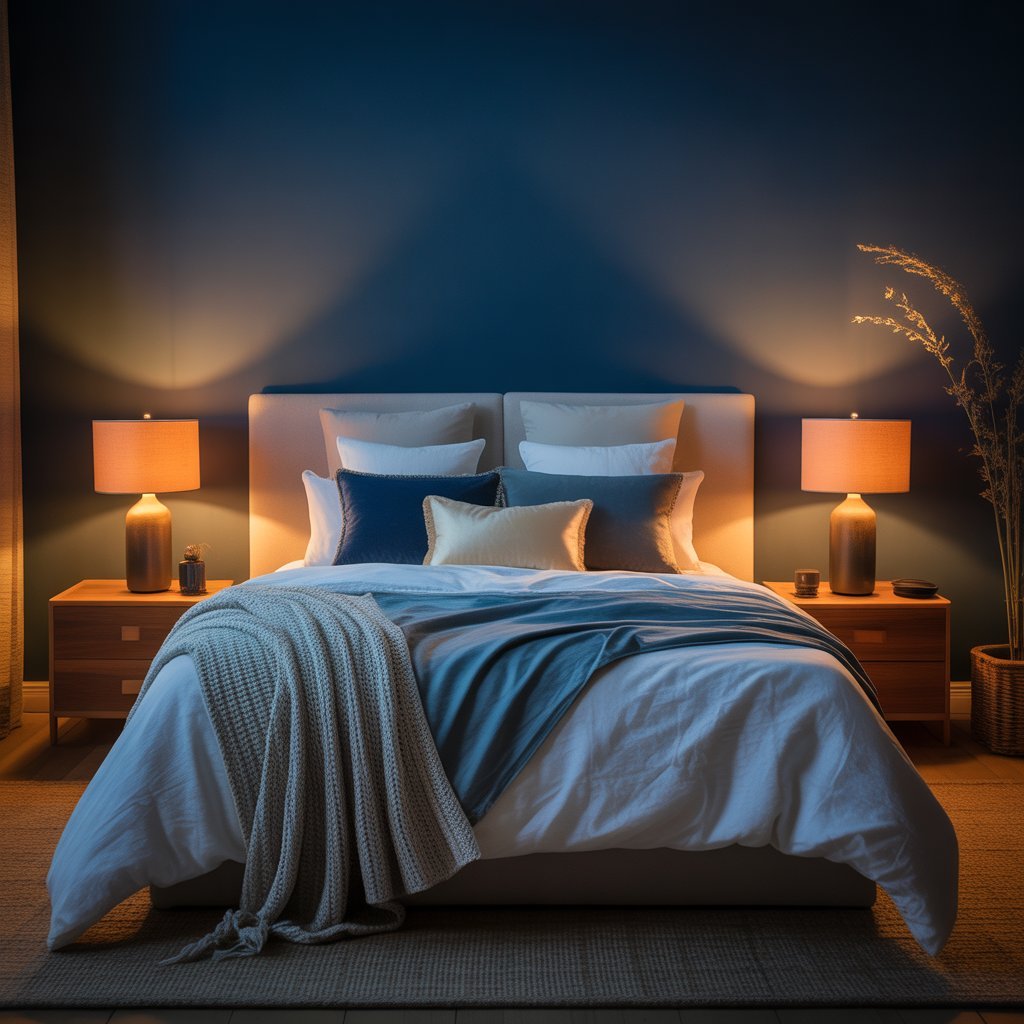
8. Midnight blue bedroom with layered textiles and no overhead lighting
The midnight blue bedroom that uses no overhead lighting at all is a specific and deliberate choice that produces a room unlike anything achievable with a ceiling fixture. Table lamps on each nightstand, a floor lamp in one corner, and perhaps a small lamp on a dresser or shelf create pools of warm light that define areas within the room rather than illuminating the whole space evenly. In a dark blue room this produces shadows and gradients in the color that make the walls look three-dimensional rather than flat. The layered textiles on the bed, a linen duvet base, a heavier knit blanket across the foot, velvet or cotton cushions in varying shades of blue and cream, absorb and reflect that warm light differently and contribute to the overall depth of the room. It is the kind of bedroom that feels genuinely different to be in during the evening than it does during the day, and that quality is worth designing for.
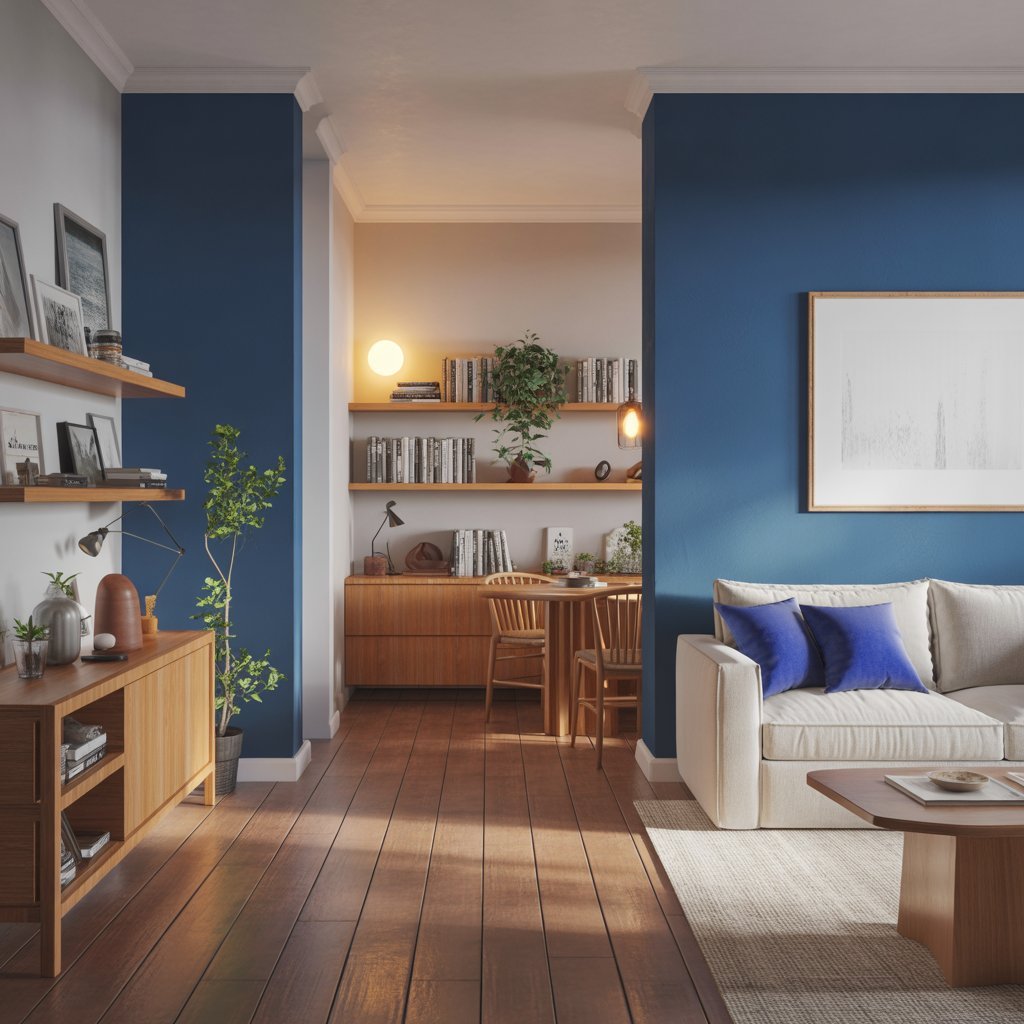
9. Blue and white apartment with pops of natural wood throughout
Not every dark blue apartment aesthetic needs to be fully committed to darkness throughout every room. A blue and white palette with natural wood as the third material is a lighter interpretation of the same direction that works particularly well in apartments where natural light is limited or where more than one person needs to find the space comfortable. Navy or deep blue on one or two feature walls, white on the rest, and natural wood appearing in the floors, the furniture legs, the shelving, and the smaller objects throughout. The wood tone pulls the warmth into a palette that might otherwise feel slightly cold and stops the blue and white combination from reading as nautical rather than residential. The proportion of blue to white is the main decision: more blue produces a moodier result, more white produces something lighter and more open, and the natural wood keeps either version from feeling too stark.
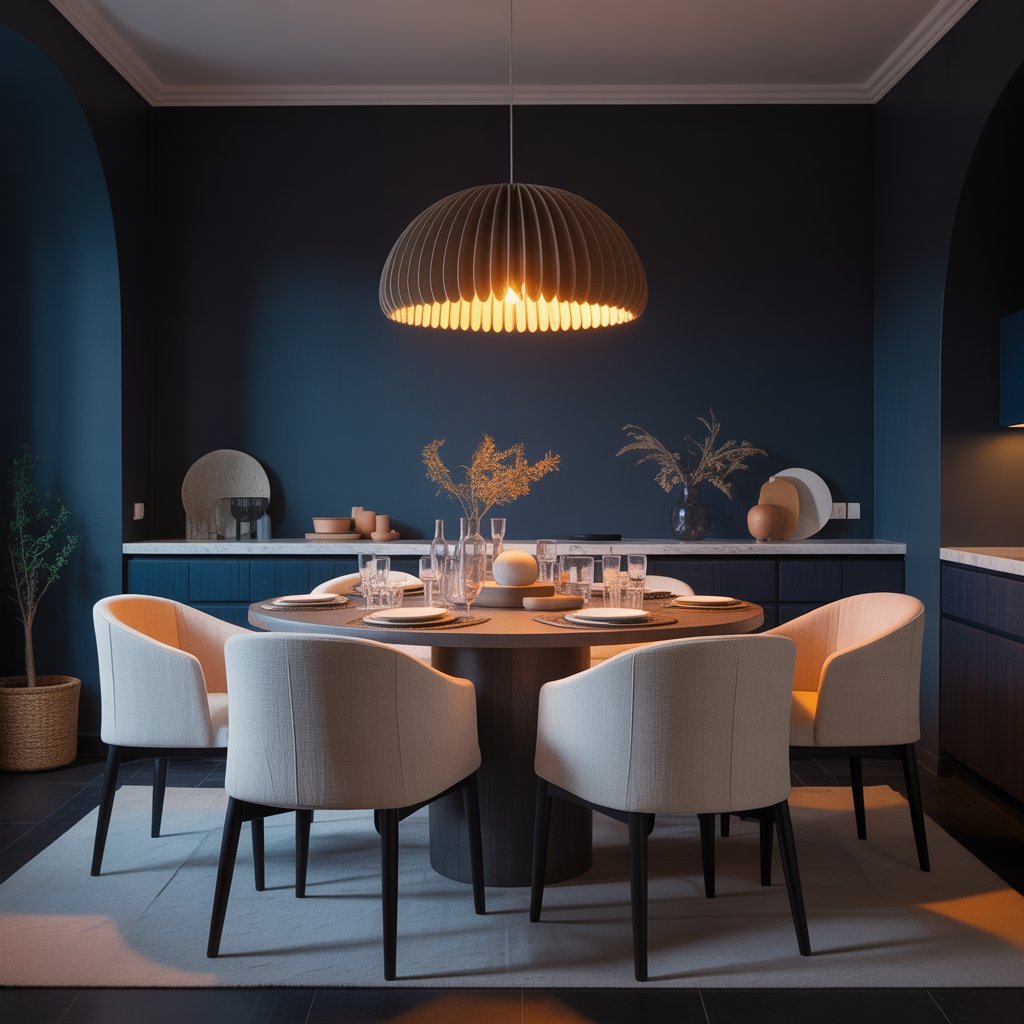
10. Dark blue dining area with a statement pendant and linen chairs
A dark blue dining area in an apartment does something that the other rooms in the same palette cannot quite replicate: it makes meals feel like an occasion without requiring candles, tablecloths, or any deliberate staging. The dark walls create an atmosphere that is already present every time you sit down, which means the room earns its keep on an ordinary Tuesday as much as on a dinner party night. A statement pendant light above the table is the most important single element in this room because it provides the warm focused light that the dark walls need and because it defines the dining zone visually within a larger open-plan space. Linen chairs in a natural or cream tone provide the warm contrast to the navy, and a simple wooden or marble table top completes the material story without introducing anything that competes with the walls.
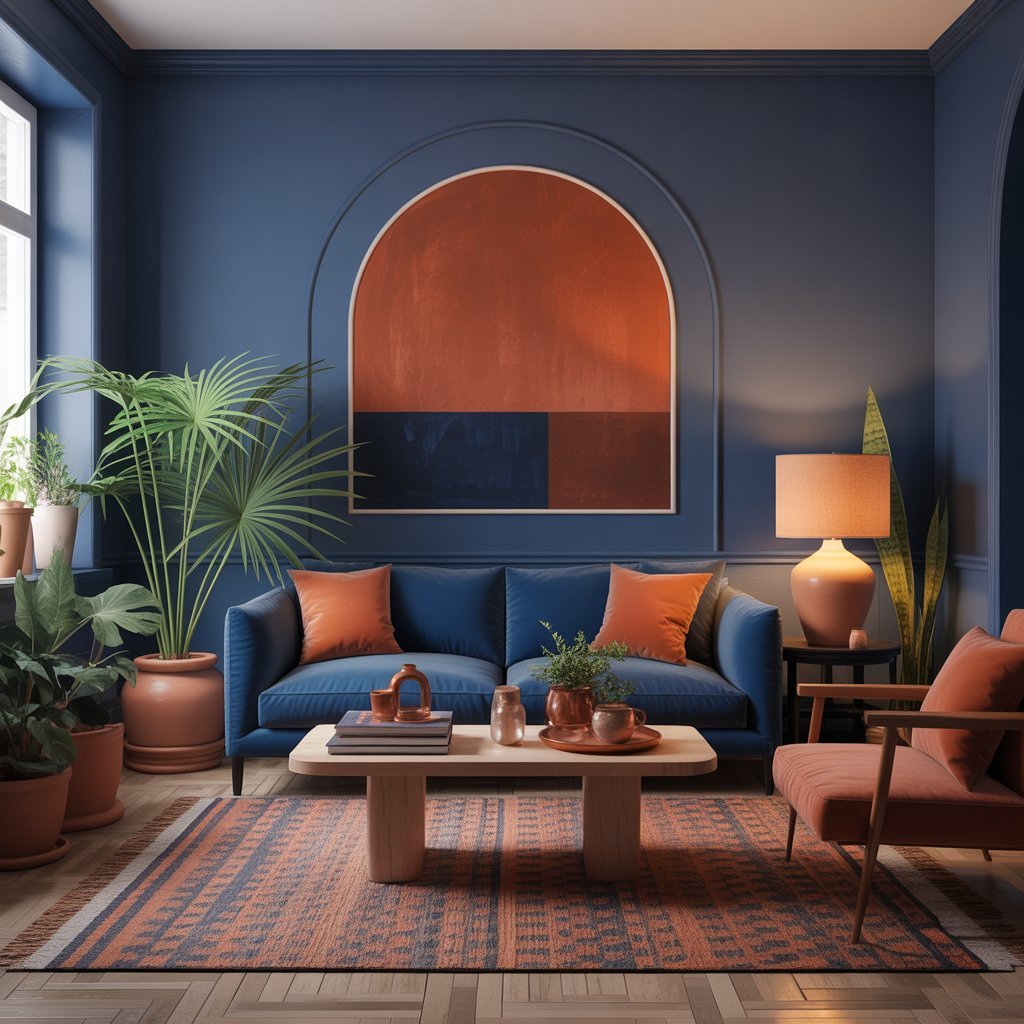
11. Navy and terracotta apartment living room
Navy and terracotta is a combination that borrows from Mediterranean and Moroccan design traditions without committing to either aesthetic fully, which is what makes it work so well in a contemporary apartment context. The navy provides the depth and the modernity. The terracotta provides the warmth and the earthiness that prevents the navy from feeling corporate or cold. In practice this means navy on the walls or as the dominant sofa color, with terracotta arriving through the cushions, a ceramic lamp base, a woven rug with both colors present, and possibly a terracotta painted pot or two holding plants. The two colors do not need to appear in equal proportion. Navy as the dominant tone with terracotta used sparingly as an accent produces a room that reads as sophisticated. Equal proportions of both can feel busy. The restraint with the warmer color is what keeps the combination from tipping into something that feels more decorative than designed.
Dark blue apartments reward the people who commit to them. Start with one wall, one room, or one fixture finish and see what it does before deciding how far to take it. The color does most of the work. You just have to be willing to let it.